
全球降息

Search documents
资源大时代-下一个品种在哪
2026-01-29 02:43
Summary of Key Points from Conference Call Records Industry Overview - The global metal market is characterized by weak interest rate cuts, weak recovery, and weak recession, leading to prolonged cycle transmission times. Gold and industrial metals are in the early stages of a rebound, with potential for further growth as interest rate cuts lead to industrial recovery [1][3]. - The global manufacturing PMI data shows slight stabilization, with China and the US still at the bottom. Aluminum has become a significant representative of China's manufacturing sector, benefiting from low-cost advantages and a complete industrial chain [1][5]. Key Insights and Arguments - **Aluminum Market Dynamics**: - China consumes approximately 450 million tons of electrolytic aluminum, accounting for 6%-7% of national electricity usage. The country has successfully captured upstream ore profits through capacity constraints and earns profits from aluminum exports [1][6]. - The US may shift focus from copper to aluminum inventory replenishment due to significant demand in manufacturing and AI applications [1][6]. - **Profit Recovery and Dividend Increases**: - Industries such as coal, oil, and aluminum have entered a phase of profit and debt recovery, leading to substantial dividend increases. The average dividend payout ratio in the power sector has risen to 50%, indicating a transition to a dividend era for China's manufacturing sector [1][8]. - **Chemical Industry Transformation**: - The chemical industry is expected to undergo significant changes on the supply side, leading to a revaluation of overall industry valuations. China remains the largest producer and supplier of chemical products globally, with a competitive edge as long as domestic capacity is constrained [1][12][13]. Potential Investment Opportunities - **Aluminum Sector**: - Recommended companies include integrated firms like Tianshan, Hongchuang, Nanshan, and others. Non-integrated companies with higher elasticity such as Shuanghuo, Yun Aluminum, and Huadong are also worth considering [1][11]. - **Chemical Sector**: - The chemical sector currently shows no significant bubbles, with valuations below 10 times earnings, indicating good investment potential. Key companies to watch include Wanhua Chemical, Longbai Group, and others [1][16]. Future Trends and Projections - **Aluminum Price Outlook**: - Future aluminum prices may recover to levels above 30,000 yuan, with historical peaks during energy crises providing a benchmark. Seasonal inventory replenishment may also drive price increases [1][7]. - **Aviation Sector Forecast**: - The aviation sector is expected to experience significant price increases by 2026 due to supply constraints and changing demand structures. The pandemic has altered the supply dynamics, with a projected decline in actual supply from 2026 to 2028 [1][19][21]. - **Demand Shifts in Aviation**: - Post-pandemic, domestic tourism demand is expected to grow at 3%-4% annually, while foreign entry demand is projected to increase significantly. This shift may lead to a sustained price increase cycle in the aviation industry [1][22][23]. Additional Important Insights - The chemical industry is cyclical, with demand linked to GDP growth. However, supply-side changes may lead to significant revaluation opportunities [1][12][15]. - The oil and petrochemical sectors are at the beginning of a global economic cycle, with supply constraints driving up prices for by-products [1][4][17]. - The overall investment landscape is shifting towards resource-based products, with potential for significant returns as manufacturing transitions to resource-oriented models [1][9][10].
有色金属主题基金成机构“新宠”
Shang Hai Zheng Quan Bao· 2026-01-14 17:47
Core Viewpoint - The non-ferrous metal sector is becoming a focal point for institutional investment, with a significant increase in the number of themed funds and net subscriptions for ETFs in this category over the past year [1][2]. Group 1: Fund Activity - In the past week, seven non-ferrous metal themed funds have been reported, with several more in the pipeline for issuance [1]. - Over the past year, non-ferrous metal themed ETFs (excluding gold) have seen net subscriptions exceeding 51 billion yuan, with 15 ETFs currently having a total scale of nearly 80 billion yuan [1][2]. - As of January 1, 2025, the total scale of non-ferrous metal themed ETFs was approximately 8.08 billion yuan, which increased to 78.81 billion yuan by January 13, 2026 [2]. Group 2: Index Characteristics - There are multiple non-ferrous metal themed indices, each with different focuses, requiring investors to carefully select ETFs based on their characteristics [1]. - The CSI Shenwan Non-Ferrous Metal Index selects 50 listed companies from the non-ferrous metal and non-metal materials sectors [1]. - The CSI Industrial Non-Ferrous Metal Index focuses on 30 larger market cap companies involved in copper, aluminum, lead-zinc, and rare metals [1]. - The CSI Non-Ferrous Metal Mining Index selects 40 companies with non-ferrous metal mineral resource reserves [1]. Group 3: Market Trends and Drivers - The recent surge in the non-ferrous metal sector is attributed to various factors, including global monetary easing and increased demand from AI data centers for copper, silver, and rare metals [2]. - Supply constraints and regional imbalances in supply and demand, along with frequent mining accidents, contribute to uncertainties in the supply side [2]. - Long-term macroeconomic logic for non-ferrous metals remains intact, with a strategy of accumulating during market adjustments recommended [2]. Group 4: Future Outlook - The current demand for non-ferrous metals is driven by emerging fields such as AI computing and robotics, which have a higher price acceptance for commodities than previously expected [3]. - Despite the strong performance of the non-ferrous sector in 2025, expectations should be moderated for 2026, although the long-term resource cycle is still ongoing [3].

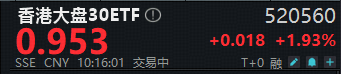
ETF盘中资讯|港股大爆发!阿里巴巴涨超4%,自带哑铃策略的——香港大盘30ETF(520560)跳空大涨,盘中拉升2%!
Jin Rong Jie· 2026-01-13 02:32
Core Viewpoint - The Hong Kong stock market experienced a significant surge, with major indices rising over 1%, driven by a "technology + dividend" strategy, particularly highlighted by the Hong Kong Large Cap 30 ETF (520560) which saw a jump of over 2.1% during trading [1] Group 1: Market Performance - The Hong Kong stock market indices all rose over 1%, with the Hong Kong Large Cap 30 ETF (520560) showing a mid-session increase of over 2.1% and closing up 1.93% [1] - Key stocks such as BYD, Alibaba, and China Life saw gains exceeding 4%, while China Petroleum and Tencent also contributed to the upward trend [1] Group 2: AI and Dividend Strategies - The AI sector in Hong Kong is gaining traction, with companies like MiniMax and Zhiyu Huazhang entering the capital market, leading to a surge in AI applications [2] - Several banks have launched new asset enhancement activities, allowing users to earn rewards, indicating a focus on dividend strategies in the market [2] Group 3: Investment Rationale - Analysts highlight four main reasons for investing in Hong Kong stocks: global interest rate cuts increasing capital availability, significant net inflows from mainland investors, rising valuations for monopolistic and leading global stocks, and structural differentiation within the market [3] - The Hong Kong stock market is expected to attract more overseas capital due to the appreciation of the Renminbi and anticipated declines in the US dollar index [2][3] Group 4: Investment Strategy - GF Securities recommends a "barbell strategy" for investing in Hong Kong stocks, combining stable value assets with growth-oriented assets, emphasizing the Hong Kong Large Cap 30 ETF (520560) as a flexible investment tool [4] - The ETF includes a mix of high-growth technology stocks like Alibaba and Tencent, alongside stable dividend-paying stocks such as China Ping An and China Construction Bank [4][5]


今年钨价已暴涨超200%
Di Yi Cai Jing· 2025-12-31 08:23
Group 1 - The core viewpoint of the article highlights a significant increase in tungsten prices, with major products like tungsten concentrate, ammonium paratungstate, and tungsten carbide seeing price rises exceeding 200% this year, attracting market attention [1] - In 2024, China's tungsten ore production is projected to be 67,000 tons, accounting for 83% of global tungsten ore production [1] - The Chinese government has implemented export controls on various rare metal products, including tungsten, in collaboration with the Ministry of Commerce and the General Administration of Customs, while also intensifying efforts against smuggling and illegal mining [1] Group 2 - The tightening of domestic and international spot resources due to policy constraints has further driven up tungsten prices [1] - Industry insiders indicate that besides the supply-demand fundamentals, the global interest rate cut environment at the end of the year is also contributing to the rise in tungsten prices [1] - Wang Jun, Deputy General Manager of Greeen Dahan Futures, noted that from November to early December, prices of major commodities, especially metals and rare metals, including precious metals, have increased due to a global trend of interest rate cuts and an influx of capital into the market [1]
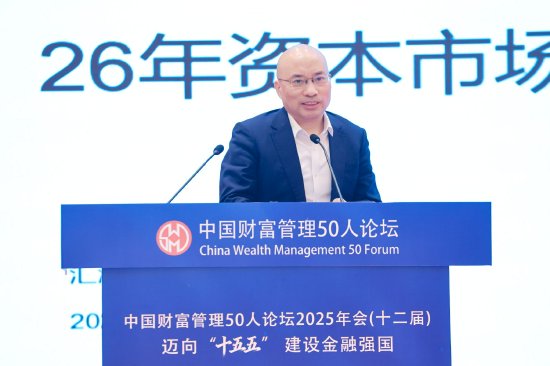
袁建军回应三大关切话题:业绩、信心、居民储蓄齐向好
Xin Lang Cai Jing· 2025-12-29 01:36
Core Viewpoint - The 2025 China Wealth Management Forum emphasizes the theme of building a financial powerhouse, with discussions focusing on asset allocation and investment outlook for 2026, addressing key concerns of institutional investors regarding performance, confidence, and the migration of household savings to capital markets [1][6]. Group 1: Performance Outlook - The worst performance phase is believed to be over, with gradual improvement expected due to two main factors: government measures to curb excessive competition and a decline in capital expenditures by listed companies, leading to a necessary contraction in production capacity [3][8]. - Export growth is significantly contributing to performance, with AI driving 3% of the 6% global trade growth this year, and global interest rate cuts expected to support exports in 2024. Notably, 11 out of the top 20 stocks held by funds have over 50% of their revenue from exports, indicating a shift from quantitative to qualitative performance improvements [3][8]. - By the third quarter of 2025, non-financial listed companies are projected to show year-on-year earnings growth, supported by economic structural transformation, which will provide a fundamental basis for the increase in A-share market capitalization [3][8]. Group 2: Investor Confidence - Historical patterns of A-share market performance, such as the interruptions of three consecutive upward trends since 2005, are not expected to repeat in 2026, as current conditions do not replicate past triggers for significant declines [4][9]. - A substantial improvement in A-share volatility has been observed, supported by a significant reduction in IPOs and refinancing activities over the past two years, which has addressed the issue of market expansion and laid the groundwork for steady index growth [4][9]. Group 3: Household Savings Migration - There is a clear indication that household savings are beginning to migrate towards capital markets, as evidenced by a significant increase in the issuance of rights funds and the majority of public funds achieving a net asset value exceeding 1 yuan, signaling a shift in asset allocation [4][9].
今日(25年9月18日)国内金价行情:金条价格下调,黄金回收价同步走低
Sou Hu Cai Jing· 2025-09-19 01:41
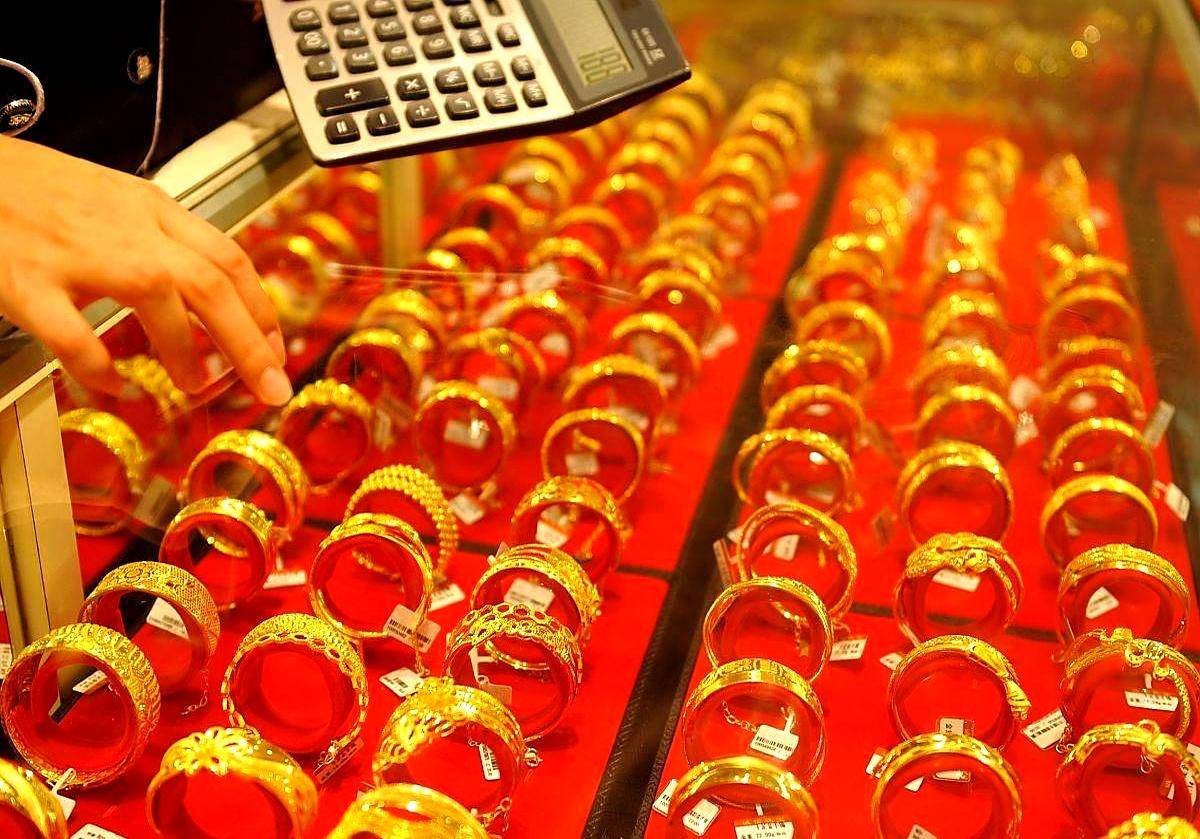
Core Insights - The international gold price reached $3682.2 per ounce on September 18, 2025, leading to a domestic gold recovery price of 822 yuan per gram [1] - The recovery price is uniform regardless of gold purity, affecting both high-purity and common gold [1] - Different types of gold jewelry have varying recovery prices based on their purity levels [2][3] Recovery Prices - 22K gold (91.6% purity) has a recovery price of 718 yuan per gram [2] - 18K gold (75% purity) and 14K gold (58.5% purity) have recovery prices of 592 yuan and 458 yuan per gram, respectively [3] Retail Prices - Retail prices for new gold jewelry vary significantly across brands, with Chow Sang Sang pricing gold at 1092 yuan per gram, targeting high-end customers [6] - Major brands like Chow Tai Fook and Luk Fook set their prices at 1087 yuan per gram, while Lao Feng Xiang and Lao Miao are slightly lower at 1086 yuan [7][8] - Some brands, like Zhou Silu, offer more competitive prices at 1048 yuan per gram for gold and 943 yuan for gold bars [10] - Lower-priced options are available at Sun Gold Store and Qilu Gold Store, with prices at 919 yuan and 906 yuan per gram, respectively [11] Investment Gold Prices - Investment gold bars sold by banks and specialized institutions have more realistic pricing, with Shanghai Gold Exchange quoting 835 yuan per gram [15] - Major banks offer gold bars at prices around 850 yuan, with Agricultural Bank at 850.20 yuan and Construction Bank at 852.10 yuan [15] - Higher prices are noted for investment gold bars from China Gold Investment Company at 873.50 yuan per gram [15] Market Dynamics - The recent surge in gold prices is attributed to a lack of trust in the Federal Reserve, with analysts suggesting that political and trade risks drive demand for gold [18] - Analysts express caution regarding the sustainability of high gold prices, indicating potential declines if global market conditions improve [18] - The domestic gold market appears less volatile compared to international markets, suggesting a more cautious consumer sentiment [18]
1-8月地产链数据联合解读
2025-09-15 14:57
Summary of Conference Call Records Industry Overview - The real estate market is expected to benefit from policy stimulus and the traditional sales peak in the short term, but faces challenges in Q4 due to high base effects. Attention is needed on whether sales data can remain stable, while investment data shows a trend of stabilization despite a decrease, and new home prices still face downward pressure [1][3][4]. Key Points and Arguments Real Estate Sector - The investment success rate in the real estate sector is improving, with a better competitive landscape among leading companies. Gross margins are expected to improve significantly by Q2 next year. Recommended companies include Shenzhen Investment, China Resources, and China Overseas, as well as diversified targets like Zhangjiang Hi-Tech and Quzhou Development [1][7]. - As of August 2025, real estate sales data showed a year-on-year decline of approximately 7%, an improvement from a 14% decline the previous year. This decline is attributed to a significant reduction in land purchases and falling prices of existing assets [3]. - The second-hand housing market is currently more reflective of consumption rather than investment attributes, with price fluctuations primarily influenced by depreciation logic until new housing stabilizes [6]. Construction Industry - The construction industry has been under pressure recently, with cautious performance noted over the past two months. However, there is optimism for Q4 due to expected policy support for stable growth [8][9]. - Investment opportunities in the construction sector are suggested to be focused on high-dividend assets, metal asset revaluation, and companies benefiting from debt resolution policies, such as China Railway Construction [11][12]. Building Materials Sector - August data for the building materials sector was weak, with cement sales down approximately 8% year-on-year. However, expectations for fiscal stimulus are increasing, and companies focused on domestic demand have shown improved fundamentals [10][12]. - The waterproofing sector is highlighted as a key area for investment, with companies like Dongfang Yuhong recommended due to their strong fundamentals and potential benefits from policy planning [1][12]. Additional Important Insights - The global context of interest rate cuts is creating more certainty in external markets, particularly in overseas cement, fiberglass, and photovoltaic glass sectors. Companies like Huaxin Cement, China Jushi, and Xinyi Solar are noted as potential investment opportunities [13]. - The 2025 anti-involution policy is expected to have a profound impact on the supply side, with a focus on sectors like cement and photovoltaic glass, and companies with independent growth logic such as Henkel Group and Puyang Huicheng [14][15]. - Strategies for addressing poor performance in August include focusing on domestic demand, overseas demand, and anti-dumping measures, with specific recommendations for companies like China Jushi, Huaxin Cement, and Xinyi Solar [16].



全球降息大逃杀:为何中国普通人受伤最深?
Sou Hu Cai Jing· 2025-07-15 08:41
Core Viewpoint - The current financial environment in China is characterized by extremely low deposit interest rates and minimal loan availability, creating a sense of urgency and fear among the public regarding their financial future [1][3][5]. Group 1: Interest Rates and Banking Practices - Deposit interest rates have plummeted to as low as 0.05% for savings accounts and 1% for fixed deposits, while loan rates have only decreased by 10 basis points, indicating a significant imbalance in the banking system [1][3]. - The disparity in interest rates has led to a situation where saving money in banks is perceived as detrimental, while borrowing is increasingly difficult, creating a paradoxical financial environment [1][3][5]. Group 2: Public Sentiment and Behavior - The influx of 9.22 trillion yuan into banks in the first quarter is not merely a reflection of savings habits but rather a manifestation of survival anxiety among the populace, driven by rising living costs and economic uncertainty [5][7]. - There is a growing sentiment among the public that despite low loan rates, the economic environment is too unstable for businesses to take on debt, leading to a reluctance to borrow [5][7]. Group 3: Economic Implications - The current economic conditions have resulted in a "survival game" for ordinary citizens, who face the choice between low-yield savings and high-risk investments, exacerbated by inflation concerns [13][14]. - The financial landscape is shifting, with predictions of extreme scenarios such as banks offering incentives for deposits and loan rates becoming increasingly favorable compared to deposit rates, reflecting a potential future of negative interest rates [15].
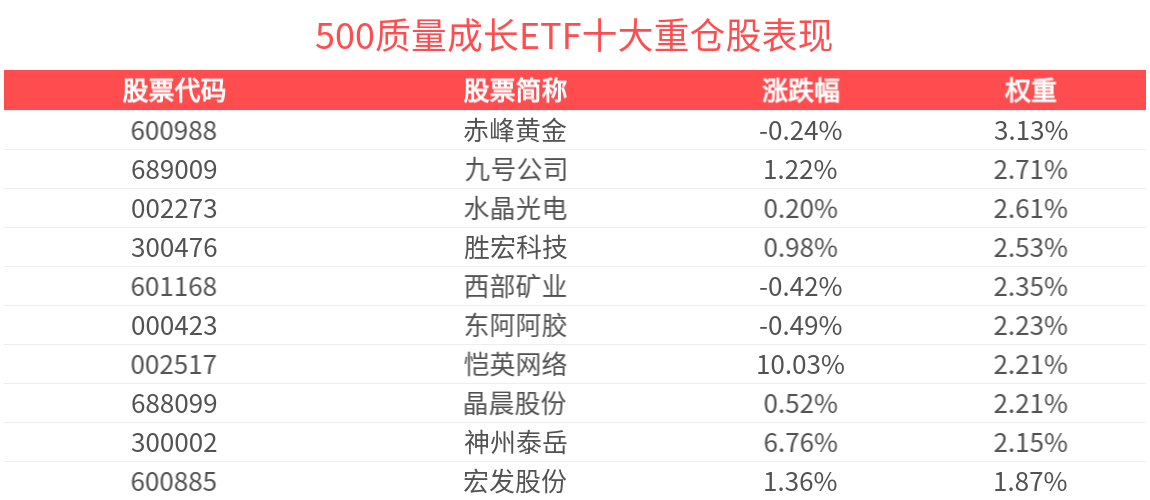
中盘成长风格相对占优,500质量成长ETF(560500)红盘蓄势,成分股恺英网络10cm涨停
Sou Hu Cai Jing· 2025-06-30 04:01
Core Viewpoint - The market outlook for A-shares remains positive, supported by global interest rate cuts and increased domestic capital inflow, leading to a gradual rise in the index center [1][2] Group 1: Market Performance - The CSI 500 Quality Growth Index rose by 0.59% as of June 30, 2025, with notable performances from stocks such as Kaiying Network (up 10%), Jingwang Electronics (up 7.86%), and Shenzhou Taiyue (up 6.76%) [1] - The CSI 500 Quality Growth ETF increased by 0.51%, with the latest price at 0.98 yuan [1] Group 2: Investment Strategy - Huaxi Securities suggests that the A-share market will continue to stabilize and improve, driven by the reopening of global interest rate cuts and a recovery in investor risk appetite [1] - Zheshang Securities indicates that mid-cap growth stocks are currently favored, with upcoming trading opportunities expected in July, although uncertainties may increase [1] - Recommended investment strategy includes focusing on banks as a stable investment, while being optimistic about TMT (Technology, Media, and Telecommunications) sectors [1] Group 3: Index Valuation - The CSI 500 Quality Growth Index is currently at a historical low valuation, with a price-to-book (PB) ratio of 1.84, which is lower than 91.96% of the time over the past three years, indicating strong valuation appeal [2] - The index is characterized by a small and mid-cap value growth style, with a better profitability and lower valuation compared to the broader CSI 500 index [2] Group 4: Top Holdings - As of May 30, 2025, the top ten weighted stocks in the CSI 500 Quality Growth Index account for 23.79% of the index, with notable companies including Chifeng Gold, Ninebot, and Shenghong Technology [2][4]

投资策略周报:全球降息空间再度打开,A股“稳中向好”延续-20250629
HUAXI Securities· 2025-06-29 09:54
Market Review - The global stock market risk appetite has significantly improved due to the rapid de-escalation of the Middle East situation and the growing expectations of interest rate cuts overseas, with the S&P 500 and Nasdaq indices reaching all-time highs. The A-share index has strengthened, driven by the large financial sector, with the Shanghai Composite Index breaking through its year-to-date high after three consecutive days of gains. Active theme investments have emerged, particularly in military, non-bank financials, and stablecoin concepts. Major A-share indices have generally risen, with the North Star 50, micro-cap indices, ChiNext, and CSI 2000 indices leading the gains, while the dividend index declined. In commodities, international oil prices and gold have significantly retreated, and the US dollar index continues to decline, with a year-to-date drop exceeding 10%, while the offshore RMB to USD exchange rate has risen to around 7.15 [1][2]. Market Outlook - The global space for interest rate cuts has reopened, and the A-share market is expected to continue its "steady improvement." Despite significant internal divisions within the Federal Reserve, the market has begun pricing in rate cuts due to the easing of geopolitical risks and falling oil prices. Domestically, the A-share index has gradually risen due to the continuous inflow of medium- to long-term funds. The recent increase in trading volume and improved profitability in the A-share market have boosted investor risk appetite, reopening the upper range of the market's fluctuation center. Looking ahead, the constraints of exchange rates on China's monetary policy have significantly weakened, and the domestic policy of "stabilizing growth" requires a loose monetary environment. The reopening of domestic and foreign interest rate cut spaces will help elevate A-share valuations. Key areas of focus for the market include: balanced industry allocation with a focus on non-ferrous metals, military industry, AI computing power, and AI applications. Thematic investments should pay attention to solid-state batteries, stablecoins, and self-controllable technologies [2]. Overseas Economic Conditions - The expectation of interest rate cuts by the Federal Reserve has increased, with the probability of three rate cuts in the second half of the year rising. The actual GDP of the US in the first quarter was unexpectedly revised down to -0.5%, with personal consumption expenditure, which accounts for about 70% of the US economy, only growing by 0.5%. This has led to a downward adjustment in its contribution to GDP by approximately 0.3 percentage points, primarily due to a decline in service consumption. Consumer confidence in the US has significantly declined this year, raising concerns about the impact of tariffs on US economic data. Recent dovish signals from Federal Reserve officials suggest that if inflation remains moderate, they may support a rate cut in July. Despite significant internal divisions reflected in the June dot plot, the market has begun to price in rate cuts, leading to declines in the US dollar index and Treasury yields, while US stocks have risen. According to CME FedWatch, market expectations for the number of rate cuts by the Federal Reserve this year have increased from two to three [5]. Domestic Economic Conditions - The weak dollar expectation is conducive to global capital flowing into emerging markets, with A-shares benefiting from domestic and foreign liquidity easing. In early May, the Hong Kong dollar triggered the strong-side Convertibility Undertaking multiple times, but within a month, it transitioned from a strong-side to a weak-side guarantee, indicating tightening liquidity expectations for the Hong Kong dollar, which may exert pressure on the Hong Kong stock market. However, this is expected to be a temporary impact. Looking ahead, the weak dollar driven by expectations of Federal Reserve rate cuts is likely to continue, further reducing the constraints of exchange rates on China's monetary policy. In the second half of the year, the impact of tariffs on domestic exports may gradually become apparent, while the focus of domestic policy remains on "stabilizing growth," necessitating a loose monetary environment. The reopening of domestic and foreign interest rate cut spaces, along with ample liquidity, is expected to directly promote the elevation of A-share valuations [5]. Trading Volume and Market Sentiment - The increase in trading volume and profitability has helped boost risk appetite, with the A-share index center expected to rise in July. Year-to-date, medium- to long-term funds have continuously flowed into A-shares, with net purchases by social security, insurance, and annuity funds exceeding 200 billion yuan, contributing to a virtuous cycle of "reporting increases—funds entering—market stability." This week, the daily trading volume of A-shares has repeatedly exceeded 1.6 trillion yuan, with no significant increase in the issuance of equity funds and ETF subscriptions. Meanwhile, financing funds have net purchased for four consecutive trading days (from June 23 to June 26), and after the Shanghai Composite Index effectively broke through 3,400 points, the financing balance has further increased, reflecting an improvement in market risk appetite, which is conducive to further elevating the A-share index center in July [5]. Fundamental Analysis - From a fundamental perspective, the impact of tariffs on corporate profits is gradually becoming apparent, and the marginal weakening of the real estate market is expected to delay the upward trend in A-share earnings. In May, the year-on-year decline in industrial enterprises above designated size was -9.1%, a significant drop from April's 3%, with declines in volume, price, and profit margins. The PPI in May fell by 3.3% year-on-year, remaining in negative territory for 32 consecutive months. Historical experience shows a strong correlation between PPI and non-financial A-share earnings; if PPI continues to weaken, it may interrupt the brief earnings recovery seen in A-shares in the first quarter. On the other hand, the weak fundamental elasticity of A-shares suggests that they are more likely to experience a gradual elevation of the fluctuation center amid volatility [5]. Valuation and Risk Premium - The overall PE (TTM) of A-shares and the PE (TTM) excluding financials and oil & gas sectors are critical indicators for assessing market valuation. The latest valuation metrics for major A-share industries, including PE (TTM) and PB (LF), provide insights into the current market conditions and potential investment opportunities [38][40].