
离岸人民币金融产品

Search documents
表现坚稳 人民币中间价创逾32个月新高
Xin Lang Cai Jing· 2026-01-19 02:44
Group 1 - The central point of the news is the appreciation of the Chinese yuan against the US dollar, reaching its highest level since May 2023, with the onshore yuan rising by 131 basis points and the offshore yuan by 82 basis points last week [1] - The People's Bank of China emphasizes a clear exchange rate policy that maintains the yuan's stability at a reasonable level without devaluation for competitive trade advantages [2] - Analysts predict that the yuan will enter an appreciation phase starting in 2025, with an expected annual increase of 2-3% over the next few years, potentially leading to a total appreciation of over 30% in a decade [2] Group 2 - The recent appreciation of the yuan is attributed to the depreciation of the US dollar and seasonal factors related to exports and consumption ahead of the Chinese New Year [2] - There is a call for a new strategy to balance imports and exports, suggesting an increase in imports settled in yuan to enhance the currency's internationalization and liquidity [3] - Upcoming economic data releases from both the US and China are anticipated to influence the yuan's exchange rate, with expectations of a moderate strengthening trend supported by seasonal factors [3]
刘世锦:经济增长更依托创新和消费
21世纪经济报道· 2025-12-17 01:47
Core Viewpoint - The article emphasizes the importance of building a strong financial system to support China's transition to a consumption-driven economy, highlighting the need for a robust capital market and currency to facilitate this shift [1][3]. Group 1: Financial System and Economic Growth - The main challenge for China's economic growth has shifted from supply constraints to demand constraints, with insufficient consumption being a key issue [1]. - Economic growth will increasingly rely on innovation and consumption, necessitating a modern financial system that bridges manufacturing and consumption [1][3]. - The evolution from a traditional banking system to a modern capital market system is essential for improving project selection and resource allocation efficiency [3]. Group 2: Capital Market Development - As China enters an innovation-driven phase, the capital market will take on a greater role in project selection, directing funds towards promising projects [3]. - With a projected annual increase of at least 30 trillion yuan in social net assets, there will be a significant shift of funds from real estate and bank savings into the capital market [4]. - The capital market must support the growth of large innovative enterprises and a multitude of small and medium-sized enterprises, enhancing resource utilization and increasing investors' income [4]. Group 3: Currency and Internationalization - A strong currency is a critical indicator of a financial powerhouse, with historical examples showing that strong currencies are backed by robust economies and financial systems [5]. - China's manufacturing value added is expected to grow from 26.6 trillion yuan to 33.6 trillion yuan from 2020 to 2024, contributing over 30% to global manufacturing growth [5]. - The internationalization of the renminbi has significant potential, with a focus on increasing offshore renminbi products to enhance liquidity and facilitate its global use [6]. Group 4: Trade Strategy and Consumption - China aims to implement a new trade strategy that balances imports and exports, increasing imports settled in renminbi to strengthen its currency [6]. - The potential for China to become the world's largest consumer market is highlighted, with a focus on improving the quality of human capital through increased consumption [6].


刘世锦:实现强大的货币,需大幅增加离岸人民币数量
Sou Hu Cai Jing· 2025-12-15 09:30
Group 1 - The core viewpoint is that China's economic growth is transitioning from high-speed to medium-speed, driven by a shift from supply-side constraints to demand-side issues, with a focus on innovation and consumption rather than investment and exports [1] - The next steps involve promoting the construction of a manufacturing powerhouse, a consumption powerhouse, and a financial powerhouse [3] - For the manufacturing powerhouse, the emphasis is on the transformation and upgrading of the manufacturing sector, particularly towards productive service industries [4] Group 2 - In terms of becoming a consumption powerhouse, there is a need to address the structural deviation of China's consumption as a percentage of GDP compared to the international average, aiming to become the largest consumer market globally [6] - The financial sector is seen as a bridge, requiring a modern financial system to support the manufacturing and consumption powerhouses, with a focus on selecting projects that have market potential and manageable risks [7] - During the 14th Five-Year Plan period, if China's GDP maintains a growth rate of 4% to 5%, it is expected to generate a net asset increase of no less than 30 trillion yuan annually, with new funds likely flowing into capital markets due to declining risk-free rates [7] Group 3 - A strong currency is essential for a financial powerhouse, with historical evidence suggesting that as a country's real economy grows in global share, its currency's global usage also increases [7] - To enhance the international use of the renminbi, increasing the offshore renminbi supply is crucial, which can be achieved by boosting imports and settling payments in renminbi [8] - Developing offshore renminbi financial products and improving liquidity and convenience will significantly accelerate the internationalization of the renminbi [8]
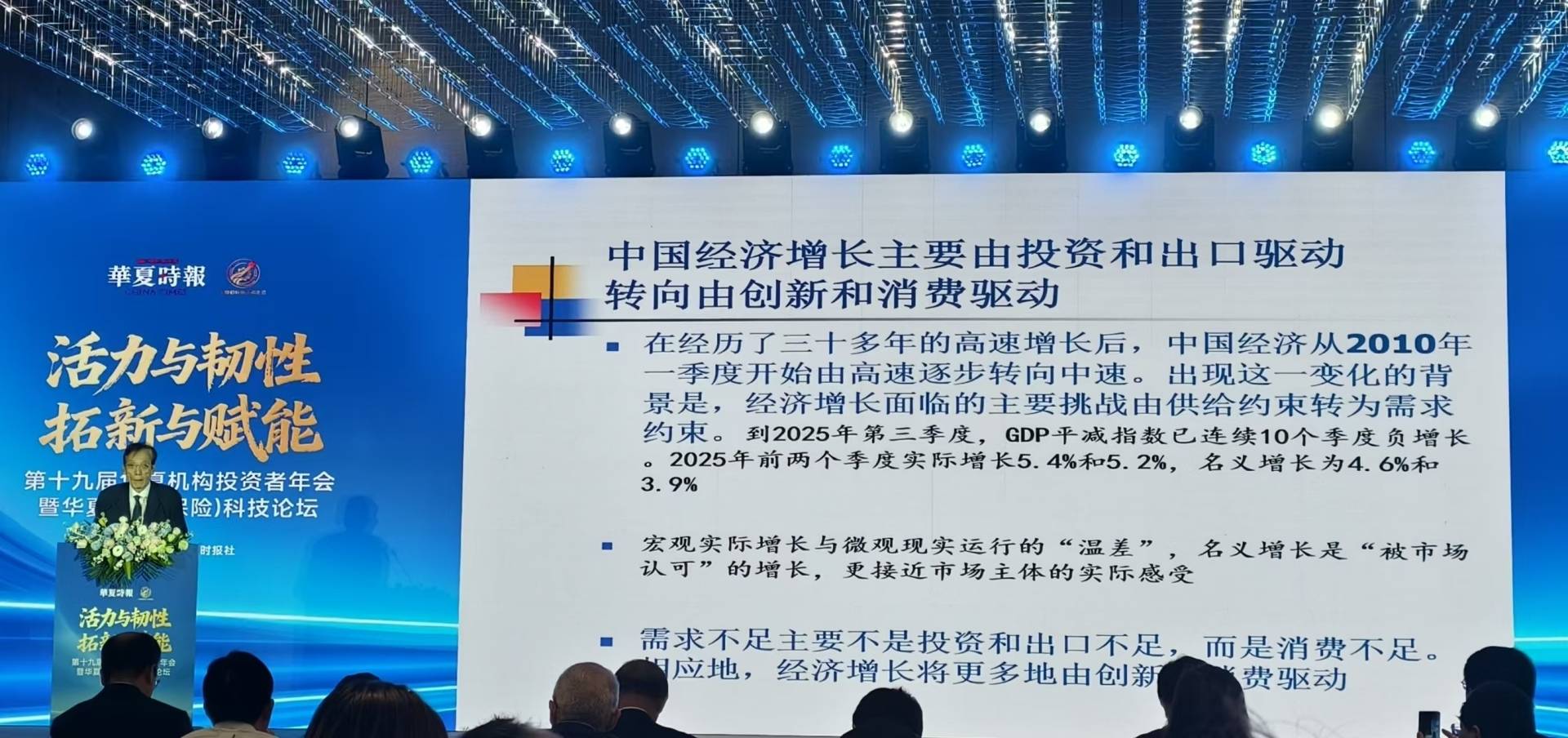
国务院发展研究中心原副主任刘世锦:建设离岸人民币金融产品生态,中国需要形成强大货币|2025华夏机构投资者年会
Hua Xia Shi Bao· 2025-12-12 06:35
Core Insights - The conference emphasized the theme of "vitality and resilience, innovation and empowerment" to address contemporary challenges and explore future pathways [2] Economic Transition - China's economy is transitioning from high-speed to medium-speed growth, with a shift in growth drivers from investment and exports to innovation and consumption [3] - The GDP deflator index has shown negative growth for ten consecutive quarters leading up to Q3 2025, with actual growth rates of 5.4% and 5.2% in the first two quarters of 2025 [3] Long-term Growth Advantages - China possesses three long-term growth advantages: 1. Catch-up potential, with per capita income at approximately $14,000, indicating significant room for growth towards the levels of developed countries [3] 2. Advantages in new technology revolutions, particularly in digital and green technologies, where China is at the forefront of industrial engineering and commercial applications [4] 3. The scale of the market economy, highlighted by a large middle-income group and the potential for 900 million low-income individuals to transition to middle-income status, significantly expanding the consumer market [4] Financial Strength - The construction of a "manufacturing powerhouse, consumer powerhouse, and financial powerhouse" is essential for modernizing China's economy [5] - Financial systems must enhance their project selection capabilities to support the real economy, especially as the economy shifts towards innovation-driven growth [5] Currency and Internationalization - A strong currency is a key indicator of a financial powerhouse, with the need for the RMB to play a more significant role internationally [6] - Recommendations include balancing imports and exports while increasing the use of RMB for international transactions, thereby enhancing its liquidity and facilitating its internationalization [6]

刘世锦:经济增长更依托创新和消费,实施金融强国战略为之架桥
21世纪经济报道· 2025-12-06 13:27
Core Viewpoint - The article emphasizes the need for a robust financial system to support China's transition to a consumption-driven economy, highlighting the importance of capital markets and strong currency in achieving high-quality economic development [1][3]. Group 1: Economic Challenges and Financial Strategy - China's economic growth is shifting from supply constraints to demand constraints, with insufficient consumption being a primary issue rather than investment or exports [1][3]. - The implementation of a financial power strategy aims to bridge the gap between manufacturing and consumption, leveraging a modern financial system to support both sectors [1][3]. Group 2: Capital Market Development - A strong capital market is essential for selecting viable projects that are marketable, profitable, and have manageable risks, thereby enhancing resource allocation efficiency [3][4]. - As China enters an innovation-driven phase, the role of capital markets in project selection will increase, with more societal funds directed towards capital markets, particularly in light of declining real estate investment attractiveness [3][4]. Group 3: Currency and Internationalization - Strong currency is a key indicator of a financial power, historically supported by a robust economy, trade, technology, military strength, and a developed financial system [4][5]. - The internationalization of the Renminbi (RMB) has significant potential, with a focus on increasing offshore RMB availability to enhance liquidity and facilitate its use in international trade [5][6]. Group 4: Manufacturing and Trade Performance - China's manufacturing value added is projected to grow from 26.6 trillion yuan to 33.6 trillion yuan during the 14th Five-Year Plan, contributing over 30% to global manufacturing growth [5]. - In 2024, China's total goods trade is expected to reach 43.8 trillion yuan, maintaining its position as the world's largest trader, with exports surpassing 25 trillion yuan, marking a 7.1% year-on-year increase [5]. Group 5: Implications for Consumption - The anticipated appreciation of the RMB could enable Chinese consumers to purchase better international products, thereby boosting consumption and enhancing the quality of human capital [6].

刘世锦:经济增长更依托创新和消费,实施金融强国战略为之架桥
2 1 Shi Ji Jing Ji Bao Dao· 2025-12-06 09:33
Core Viewpoint - The "Southern Finance Forum 2025 Annual Meeting" emphasizes the need for a strong financial system to support China's transition from supply constraints to demand constraints in economic growth, highlighting the importance of consumption and innovation as key drivers [1][2]. Group 1: Financial System and Economic Growth - The transition to a demand-driven economy necessitates a modern financial system that bridges manufacturing and consumption, enhancing service provision for both sectors [1]. - The financial system's role in selecting projects with market potential, profitability, and manageable risks is crucial for improving resource allocation efficiency as the economy shifts to high-quality development [2]. - As China enters an innovation-driven phase, the capital market will increasingly take on the project selection function, directing more societal funds towards capital markets rather than traditional banking [2]. Group 2: Capital Market Development - The influx of new capital will lead to a distinct new phase in the capital market, focusing on nurturing globally competitive large tech firms and innovative SMEs, thereby promoting industrial transformation and innovation [3]. - Increasing the proportion of institutional investors, such as pension funds, in the capital market will stabilize the stock market and support social security expenditures in an aging society [3]. Group 3: Currency and Internationalization - A strong currency is a key indicator of a financial power, with historical examples showing that robust economic and financial systems underpin strong currencies [5]. - China's manufacturing value added is projected to grow from 26.6 trillion yuan to 33.6 trillion yuan from 2020 to 2024, contributing over 30% to global manufacturing growth [5]. - The total value of China's goods trade is expected to reach 43.8 trillion yuan in 2024, maintaining its position as the world's largest trader for eight consecutive years [5]. Group 4: Trade Strategy and Currency Utilization - China aims to implement a new trade strategy that balances imports and exports, increasing imports to facilitate payments in renminbi, thereby enhancing the currency's international status [6]. - Expanding the offshore renminbi financial product ecosystem will increase liquidity and usability, accelerating the internationalization of the renminbi [6]. - Strengthening the renminbi will allow Chinese consumers to purchase better international products, thereby boosting consumption and improving human capital quality [6].
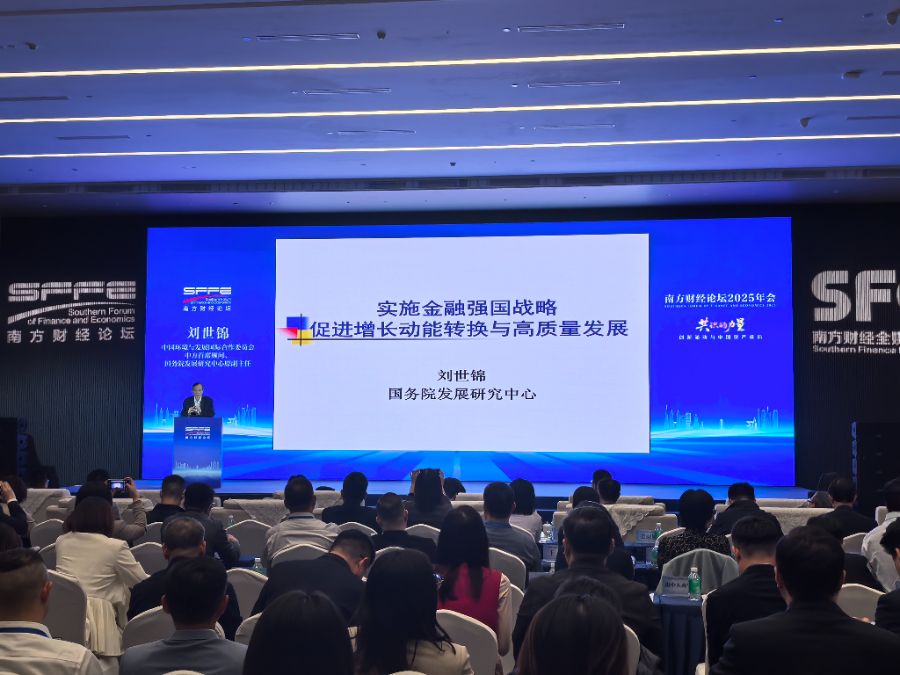
刘世锦:金融强国是实现制造强国和消费强国目标的桥梁
Xin Lang Cai Jing· 2025-12-05 03:23
Core Insights - The "Southern Finance Forum 2025" held in Guangzhou focuses on the theme "The Power of Consensus - Innovation Surge, China's Asset Revaluation" [1][7] - Liu Shijun, a key speaker, highlighted three major advantages of China's economy: catch-up potential, new technology revolution, and super-large market economy [3][10] Economic Advantages - **Catch-up Potential**: This refers to opportunities in areas where developed economies have already advanced, such as service industry development driven by consumption structure upgrades and the transformation of traditional manufacturing and agriculture [3][9] - **New Technology Revolution**: Emphasis on digital and green technologies as focal points for economic advancement [3][9] - **Super-large Market Economy**: While China has 400 million middle-income groups, there are 900 million low-income individuals who could transition to middle-income status, potentially creating a consumption market of 800 to 900 million [3][10] Strategic Goals - **Manufacturing Power**: Aim to cultivate large innovative enterprises at the global forefront [10] - **Consumer Power**: Target to become the largest consumer market globally [10] - **Financial Power**: Financial strength is essential for achieving the first two goals, acting as a bridge for development [10] Financial Development - Liu emphasized the need for a robust capital market and strong currency to support high-quality development, focusing on selecting viable projects to enhance resource allocation efficiency [10][11] - The importance of a strong currency is highlighted, with historical examples of the British pound and the US dollar being tied to strong economic and financial systems [11] Currency Internationalization - Current GDP contribution of China's economy is 18% globally, with manufacturing at 30%, but the currency's functional role is below 10% [11] - Liu proposed increasing offshore RMB supply to achieve scale economy and enhance RMB's international use [11][12] - Suggested adjustments to foreign trade strategy to balance imports and exports while using RMB for transactions, potentially converting a trade surplus of nearly $1 trillion into offshore RMB [12] Recommendations for RMB - Advocated for RMB appreciation to allow consumers to access more international products at better prices, supporting the goal of becoming a consumer powerhouse [12] - Suggested expanding the ecosystem of offshore RMB financial products to improve liquidity and convenience, accelerating the process of RMB internationalization [12]
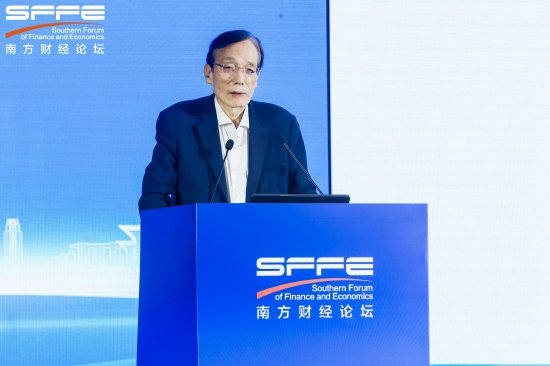
如何解决人民币“不匹配”问题?刘世锦:大幅增加离岸人民币数量,加快人民币国际化进程
Xin Lang Cai Jing· 2025-12-05 03:23
Core Insights - The "Southern Finance Forum 2025" held in Guangzhou focuses on the theme "The Power of Consensus - Innovation Surge, China's Asset Revaluation" [1][7] Economic Advantages - China has three major economic advantages: 1. Catch-up potential, which includes upgrading consumption structures and transforming traditional manufacturing and agriculture [3][9] 2. New technological revolution focused on digital and green technologies [3][9] 3. Super-large market economy, emphasizing the potential of 9 billion low-income individuals transitioning to the middle-income group, creating a larger consumer market [3][10] Strategic Goals - China aims to implement strategies to become a manufacturing powerhouse, a consumer powerhouse, and a financial powerhouse. The manufacturing goal is to cultivate leading large-scale innovative enterprises, while the consumer goal is to become the largest global consumer market. The financial goal is to support the other two objectives, as finance acts as a bridge [3][10] Financial Development - High-quality development requires a strong capital market and robust currency. Financial services should focus on selecting viable projects that enhance resource allocation efficiency [3][10] Currency and Internationalization - The importance of a strong currency is highlighted, with historical examples of the British pound and the US dollar being tied to strong economic and financial systems. Currently, China's GDP accounts for 18% of the global economy, with manufacturing at 30%, but its currency functions are below 10% [4][11] - To address the mismatch between economic strength and currency function, China aims to significantly increase the offshore RMB supply and promote its international use [4][11] Trade Strategy - China's trade strategy needs adjustment to balance imports and exports while using RMB for settlements. For instance, last year's trade surplus was nearly $1 trillion, which could be redirected towards imports paid in RMB, potentially generating over 7 trillion RMB in offshore currency [5][12] - The goal is to enhance the offshore RMB ecosystem, including bonds, stocks, and derivatives, to improve liquidity and facilitate the RMB's internationalization [5][12]
中国银行行长张辉:商业银行要把握机遇完善离岸人民币金融产品体系
Xin Lang Cai Jing· 2025-11-05 06:23
Core Viewpoint - The international trade landscape is undergoing restructuring, and the deepening economic and trade relations between China and various countries highlight the timely promotion of the international use of the Renminbi [1] Group 1: Financial Infrastructure and Products - Commercial banks are encouraged to seize opportunities for interconnected financial infrastructure and enhance the offshore Renminbi financial product system to meet the trade investment and risk hedging needs of overseas entities holding Renminbi [1] - China Bank aims to maintain its leading global position in cross-border Renminbi traditional settlement and clearing services [1] Group 2: Expansion of Renminbi Usage - The bank plans to actively expand the use of Renminbi in pricing and settlement within sectors such as energy, bulk commodities, and cross-border e-commerce [1] - There is a commitment to deeply participate in the promotion of cross-border payment systems to effectively support the liberalization and facilitation of trade and investment [1]
