第八代五粮液(普五)

Search documents
高端白酒局︱高端白酒或将迎来“矩阵式竞争”
Sou Hu Cai Jing· 2026-01-17 11:18
Core Insights - The high-end liquor market is undergoing significant changes as Guizhou Moutai shifts from a centralized model to a pyramid/matrix model, leading to a competitive landscape characterized by "ultra-high-end," "high-end," and "sub-high-end" products [1] Group 1: Ultra-High-End Segment - Guizhou Moutai's flagship product, Feitian Moutai, has lost its ultra-high-end status as its price drops to 1499 yuan, allowing aged Guizhou Moutai to emerge as a representative ultra-high-end product [1] - Competitors like Wuliangye and Jiangxianglang have also developed corresponding ultra-high-end products, with Wuliangye's aged variants priced similarly to aged Guizhou Moutai [1] - Langjiu has established a matrix of ultra-high-end products, including the premium Hongyunlang and the strategic Qingyunlang, indicating early competitive positioning [1] Group 2: High-End Market Dynamics - The high-end liquor market is expected to experience structural contraction, with a focus on the 1000 yuan price range during the 14th Five-Year Plan [2] - Feitian Moutai's pricing power is weakening, leading to intensified competition among top brands like the eighth-generation Wuliangye and Qinghua Lang around the 1000 yuan price point [2] - The concept of "adaptability" is emphasized, with Moutai facing market pressures that may influence its pricing strategy, raising questions about its price floor [2] Group 3: Sub-High-End Market - Guizhou Moutai has introduced two sub-high-end products, including a lower-alcohol version of Moutai, recognizing the importance of maintaining stability in the sub-high-end market [2] - Wuliangye is also prepared to compete in the sub-high-end segment with its lower-alcohol offerings, while Guojiao 1573 stands to benefit significantly from this price range [3] - Langjiu has positioned its sub-high-end brand, Honghualang Hong15, independently, showcasing a strategic approach to the sub-high-end market [3] Group 4: Market Growth Trends - The high-end liquor market is experiencing "expansive growth" when both volume and price increase, while "squeezed growth" occurs during volume and price contraction [4] - The industry is entering a phase of structural contraction, suggesting that only a few high-end liquor players will remain competitive in the future [4]


口子窖打响第一枪:白酒首份业绩预减公告出炉
Xin Lang Cai Jing· 2026-01-09 10:56
Core Viewpoint - The white liquor industry is experiencing a significant downturn, with the decline in demand and sales affecting even major brands, signaling the end of a decade-long prosperity [1][10][22]. Group 1: Company-Specific Insights - Kuozi Jiao announced an expected net profit of 662 million to 828 million yuan for 2025, representing a year-on-year decline of 50%-60% [1]. - The company is facing challenges primarily due to a significant drop in high-end product sales, indicating a shift in consumer behavior from premium purchases to more rational spending [5][12]. - Kuozi Jiao's management and sales expenses are not decreasing at the same rate as revenue, leading to financial strain as promotional efforts are needed to maintain market presence [7][8]. Group 2: Industry Trends - The white liquor sector is transitioning from a high-growth phase to a state that reflects actual consumer purchasing power, with a notable retreat from the previously relied-upon high-end premium pricing strategy [3][5]. - The industry is witnessing a fragmentation where regional brands are struggling, while national brands are also experiencing slowed growth, necessitating strategic adjustments [11][12]. - The overall market dynamics indicate that the focus is shifting from rapid growth to sustainability, with companies needing to maintain brand integrity and operational stability in a low-growth environment [22][23].

五粮液第三季度营收低于汾酒
YOUNG财经 漾财经· 2025-11-02 06:00
Core Viewpoint - Wuliangye's third-quarter performance in 2025 showed a significant decline, with revenue and net profit dropping sharply, raising concerns among investors about the company's future prospects [3][6]. Financial Performance Summary - In the third quarter, Wuliangye reported revenue of 8.174 billion yuan, a year-on-year decrease of 52.66% [4]. - The net profit attributable to shareholders was 2.019 billion yuan, down 65.62% year-on-year [4]. - For the first three quarters, total revenue reached 60.945 billion yuan, a decline of 10.26%, while net profit was 21.511 billion yuan, down 13.72% [4]. - Basic and diluted earnings per share were both 0.520 yuan, reflecting a decrease of 65.63% [4]. - The weighted average return on equity fell to 1.43%, a decrease of 2.97 percentage points [4]. Industry Context - The decline in Wuliangye's performance is part of a broader trend in the liquor industry, with most companies reporting lower earnings, except for Guizhou Moutai, which showed a slight increase [10]. - Comparatively, Wuliangye's decline in net profit was more severe than that of Shanxi Fenjiu and Luzhou Laojiao [10]. Market Reactions and Predictions - Investor sentiment has turned negative, with many expressing confusion and concern over the stock's future trajectory following the disappointing results [6]. - Prior to the earnings release, Guotai Junan Securities had predicted a 30% decline in revenue and a 45% drop in net profit for Wuliangye, which sparked discussions in the market [11]. Strategic Adjustments - Wuliangye attributed its poor performance to the deep adjustment period in the liquor industry and insufficient recovery in effective demand, alongside increased investments to adapt to market changes [4]. - The company is actively seeking new growth avenues, including a low-alcohol strategy targeting younger consumers, international expansion, and cultural marketing upgrades [12]. - Wuliangye plans to distribute a cash dividend of 25.78 yuan per 10 shares, totaling 10.007 billion yuan, indicating a commitment to returning value to shareholders despite current challenges [12].


五粮液,净利骤降超65%
中国基金报· 2025-10-30 14:04
Core Viewpoint - Wuliangye's Q3 revenue and net profit have significantly declined, with revenue down over 52% and net profit down over 65% year-on-year, raising concerns among investors about the company's performance and future stock price trends [2][4][6]. Financial Data Summary - Q3 revenue reached 8.17 billion yuan, a decrease of 52.66% year-on-year [3] - Q3 net profit attributable to shareholders was 2.02 billion yuan, down 65.62% year-on-year [3] - For the first three quarters, total revenue was 60.95 billion yuan, a decline of 10.26% year-on-year, while net profit was 21.51 billion yuan, down 13.72% year-on-year [3] Reasons for Performance Decline - The decline in performance is attributed to the deep adjustment period in the liquor industry and insufficient recovery in effective demand, compounded by increased investments by the company to adapt to market changes [4] - The current decline in net profit is more severe than during previous adjustment periods in 2013 and 2014, where declines were 52.36% and 46.26% respectively [4] Industry Context - Among 20 listed liquor companies in A-shares, Wuliangye's decline is more pronounced compared to peers like Shanxi Fenjiu and Luzhou Laojiao, which reported minor declines or growth [8] - Shanxi Fenjiu reported a Q3 revenue of 8.96 billion yuan, up 4.05% year-on-year, while Luzhou Laojiao's revenue was 6.67 billion yuan, down 9.80% year-on-year [8] Strategic Initiatives - Wuliangye is undergoing a "pain period of energy conversion," actively seeking new growth points through strategies such as launching lower-alcohol products to attract younger consumers, international expansion, and cultural marketing upgrades [9][10] - The company plans to distribute a cash dividend of 25.78 yuan per 10 shares, totaling 10 billion yuan, indicating a commitment to returning value to shareholders despite current performance challenges [10]
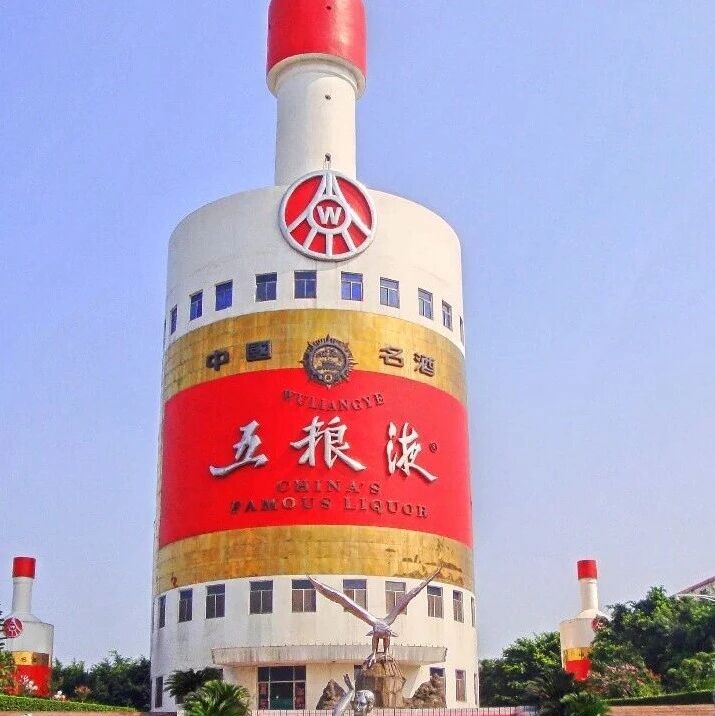
五粮液,净利骤降超65%
Zhong Guo Ji Jin Bao· 2025-10-30 14:04
Core Insights - Wuliangye's Q3 revenue and net profit saw significant declines, with revenue dropping by 52.66% to 8.17 billion yuan and net profit falling by 65.62% to 2.02 billion yuan compared to the same period last year [2][3] - For the first three quarters of 2025, the company reported a revenue of 60.95 billion yuan, down 10.26%, and a net profit of 21.51 billion yuan, down 13.72% [2][3] Financial Performance - Q3 revenue: 8.17 billion yuan, down 52.66% YoY [3] - Q3 net profit: 2.02 billion yuan, down 65.62% YoY [3] - First three quarters revenue: 60.95 billion yuan, down 10.26% YoY [3] - First three quarters net profit: 21.51 billion yuan, down 13.72% YoY [3] - Basic and diluted earnings per share for Q3: 0.52 yuan, down 65.63% YoY [3] - Total assets at the end of the reporting period: 181.07 billion yuan, down 3.81% from the previous year [3] Industry Context - Wuliangye's performance decline is part of a broader trend in the liquor industry, with most companies reporting lower earnings, except for Guizhou Moutai which showed slight growth [8] - Compared to peers, Wuliangye's decline was more severe than Shanxi Fenjiu and Luzhou Laojiao, which reported smaller decreases in revenue and profit [8] Strategic Response - The company is undergoing a "pain period of energy conversion," focusing on new growth areas such as low-alcohol products and international expansion [9] - Wuliangye plans to launch a 29-degree version of its product to attract younger consumers and adapt to health trends [9] - The company is also enhancing its cultural marketing efforts to strengthen its brand [9] Market Reaction - Investor sentiment has been negative, with many expressing confusion and concern over the drastic decline in performance [5][8] - Wuliangye's stock closed at 118.47 yuan per share, with a total market capitalization of 459.9 billion yuan [9]

五粮液华涛“一年考”:周期考题与改革破局的双向作答
Mei Ri Jing Ji Xin Wen· 2025-09-30 06:20
Core Viewpoint - Wuliangye has appointed Huatao as the new general manager, focusing on returning to consumer demand and implementing significant reforms to stabilize prices, optimize channels, and enhance sales efficiency [1][4]. Group 1: Company Leadership and Strategy - Huatao, with over 20 years of experience in government and grassroots management, aims to strengthen Wuliangye's growth by addressing five key areas: quality, brand, product market, capital market, and corporate governance [1]. - The company has reported a revenue of 52.77 billion yuan and a net profit of 19.49 billion yuan for the first half of 2025, marking a year-on-year growth of 4.19% and 2.28% respectively, indicating a slowdown in growth rates [3]. Group 2: Price Stability Measures - Wuliangye has adopted a strategy of "reasonable volume growth" to stabilize the price of its core product, the eighth generation Wuliangye, which faced price declines below 900 yuan per bottle [5][8]. - The company implemented a supply reduction strategy during peak seasons, which led to a quick recovery in market prices, with a reported increase of approximately 30 yuan per bottle within a week [7]. Group 3: Channel Expansion and Optimization - Wuliangye's channel strategy focuses on enhancing direct sales and optimizing the channel structure, with direct sales revenue reaching 21.20 billion yuan, a year-on-year increase of 8.6% [9][10]. - The company has streamlined its online presence by reducing the number of non-compliant e-commerce partners, thereby stabilizing its pricing system [11][12]. Group 4: Internal Efficiency and Sales Management - The company has initiated a major overhaul of its sales system, establishing a vertical management structure to improve decision-making and execution efficiency [13][14]. - Huatao emphasizes a market-oriented approach in talent selection and management to enhance the effectiveness of the sales team [14]. Group 5: Young Consumer Engagement - Wuliangye is focusing on "youthification" by launching products with lower alcohol content and engaging in cross-category ventures, such as introducing a craft beer line [16][17]. - The introduction of a 29-degree Wuliangye product priced at 399 yuan per bottle aims to attract younger consumers, with a marketing campaign featuring a popular celebrity [16].

茅台都扛不住了,这轮白酒寒冬还要持续多久?
3 6 Ke· 2025-09-23 03:44
Core Viewpoint - The Chinese liquor industry, particularly the baijiu sector, is experiencing a significant downturn characterized by declining prices, increased inventory, and shifting consumer preferences, indicating a deep adjustment phase rather than a temporary fluctuation [4][15][22]. Industry Overview - The baijiu industry is facing a dual decline in both volume and price, with a reported production volume of 191.59 million kiloliters in the first half of 2025, a year-on-year decrease of 5.8% [5]. - Approximately 60% of liquor companies are experiencing price inversion, where actual market prices fall below manufacturer guidance, particularly affecting the 800-1500 yuan price range [5]. - The average inventory turnover days for the industry reached 900 days in the first half of 2025, a 10% increase year-on-year, indicating a significant slowdown in sales [11]. Company Performance - Major companies like Moutai and Wuliangye are showing signs of slowing growth, with Moutai's revenue growth target for 2025 set at 9%, the lowest since 2016 [17]. - Wuliangye's revenue for the first half of 2025 was 527.71 billion yuan, with a year-on-year growth of only 4.19% [17]. - Liquor companies are increasingly resorting to price cuts to manage high inventory levels, creating a downward pressure on prices [12]. Consumer Trends - The primary consumer demographic for baijiu is undergoing a generational shift, with younger consumers (born after 1995) showing diverse preferences for alcoholic beverages, including wine and craft beer [24]. - Health consciousness among younger consumers is changing drinking habits, leading to a decline in traditional drinking culture [25]. - The rise of new sales channels, such as e-commerce and community group buying, is disrupting traditional distribution models and further compressing profit margins for liquor companies [25]. Market Opportunities - Despite the challenges, there are emerging structural opportunities in the market, particularly in the lower price segments (100-300 yuan) where demand is shifting [26]. - The focus on family and friend gatherings as primary consumption scenarios is creating new opportunities for products that cater to these social settings [33]. - Companies that can adapt to these changes by enhancing their product offerings and marketing strategies are likely to survive and thrive in the long term [26].




白酒板块6月投资策略:淡季价格体现压力,估值或进入底部布局期
Guoxin Securities· 2025-06-12 06:35
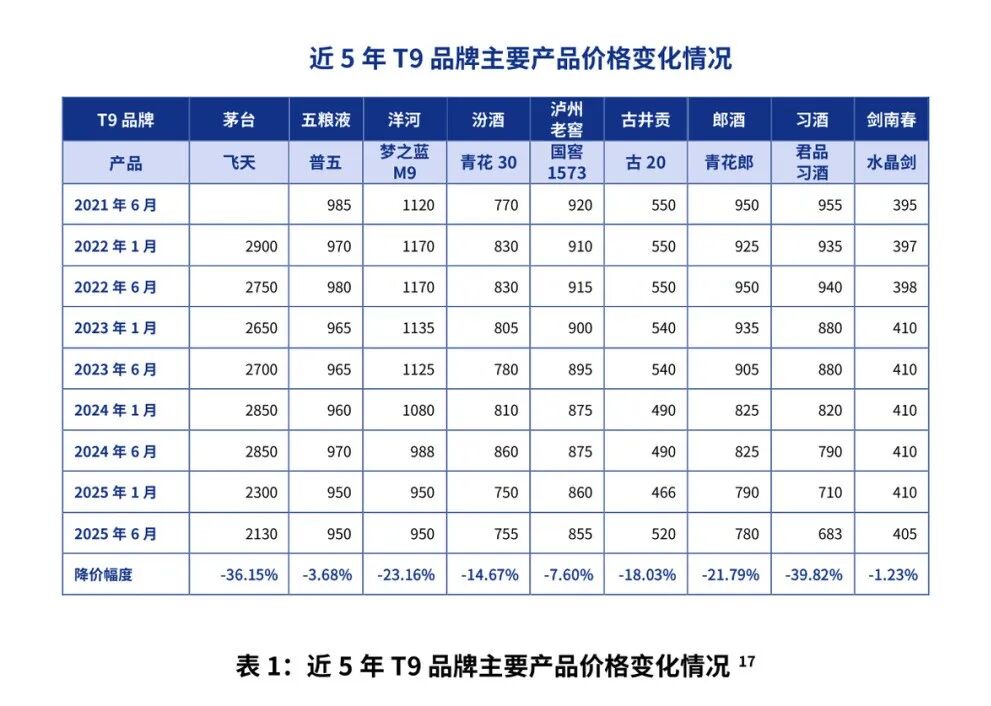
Group 1: Industry Overview - The second quarter marks the traditional off-season for the liquor industry, compounded by increasing environmental uncertainties, leading to a decline in stock prices within the sector [2][5] - The market is experiencing a consensus on deceleration, with individual stock alpha diminishing, as major liquor companies exhibit a rational growth attitude during shareholder meetings [2][3] Group 2: Pricing and Demand Dynamics - The price of high-end liquor, such as Feitian Moutai, has shown a downward trend due to weak demand, with prices dropping to around 2000 yuan [7][13] - The impact of government policies, such as the "Party and Government Agencies Strictly Save and Oppose Waste Regulations," has affected business consumption scenarios, leading to a subdued demand environment [2][3] Group 3: Company-Specific Insights - Guizhou Moutai is expected to achieve a revenue growth target of approximately 9% for 2025, with a focus on expanding sales channels and enhancing consumer engagement [21] - Wuliangye has faced pressure on its pricing, with the price of its flagship product, Pu Wuliangye, declining to 910 yuan, while the company emphasizes maintaining price stability and supporting distributor profits [22] Group 4: E-commerce and Market Trends - The entry of instant retail platforms has significantly boosted online liquor sales, with major brands experiencing substantial growth during the "618" shopping festival [14][18] - The competition in pricing during the "618" event has intensified, impacting traditional distribution channels as e-commerce platforms offer aggressive discounts [18][19]

1935 难维持千元价格带,茅台怎么办?
Sou Hu Cai Jing· 2025-05-13 11:37
Core Viewpoint - The price decline of Moutai 1935 reflects a shift in the industry from incremental competition to stock game, necessitating channel innovation, international expansion, and product innovation to maintain brand value and market position [8] Group 1: Price Decline and Market Impact - Moutai 1935's price collapse began post-Chinese New Year 2023 due to supply-demand imbalance, with prices dropping from 1800 yuan to around 700 yuan, a decline of over 60% [2] - In 2024, Moutai's series liquor revenue grew by 19.65%, but the growth rate slowed compared to 2023's 26.12%, indicating weakening contribution from Moutai 1935 [2][3] - The price drop is eroding brand value as consumers perceive less differentiation between Moutai 1935 and lower-priced products [2] Group 2: Financial Performance and Industry Trends - Moutai's revenue growth rates from 2021 to 2024 were 11.71%, 16.53%, 18.04%, and are projected to drop to 15.66% in 2024, with net profit growth also slowing [3] - The white liquor industry is facing challenges, with production down 1.8% in 2024 and inventory up 12.5%, leading to increased competition from brands like Wuliangye and Luzhou Laojiao [3] Group 3: Consumer Behavior Shift - High-end liquor sales dropped by 15% during the 2024 Spring Festival, while demand for lower-priced liquor surged, indicating a shift from brand loyalty to rational consumption [4] Group 4: Channel and International Expansion - Moutai is enhancing its "4+6" multi-channel system, with direct sales revenue reaching 748.43 billion yuan in 2024, though the proportion of direct sales has slightly decreased [6] - Moutai's international sales exceeded 2100 tons in 2024, with revenue surpassing 5 billion yuan, focusing on markets like Hong Kong, Japan, and Singapore for growth [6] Group 5: Product Innovation - Moutai plans to launch new products in 2025, including zodiac-themed liquor and cultural products, aiming to attract younger consumers through content e-commerce and scenario-based marketing [7]