第六代eDrive电驱技术

Search documents
2025世界智能网联汽车大会 || 宝马集团董事高乐:宝马携手中国合作伙伴以责任守护创新,以合作开创未来
Zhong Guo Qi Che Bao Wang· 2025-10-17 02:27
Core Insights - BMW emphasizes the importance of independent innovation and open collaboration in navigating the significant transformation of the global automotive industry [2][3] - The company views China as not only its largest single market but also a key driver of technological innovation and automotive industry transformation [2] - BMW is accelerating the development of a smart ecosystem in China, collaborating with technology partners like Huawei and Alibaba to enhance core technologies in smart cockpits and autonomous driving [3] Group 1 - BMW's strategy focuses on integrating local innovation with its core technological advantages to meet Chinese consumer expectations for smart mobility [2] - The new generation of vehicles showcases BMW's advancements in electric, digital, and sustainable development, featuring technologies like the sixth-generation eDrive and panoramic iDrive [2] - The company advocates for responsible use of artificial intelligence, ensuring that all smart technologies undergo rigorous safety testing before implementation [3] Group 2 - BMW aims to drive the automotive industry towards a smarter and more sustainable future by leveraging its R&D capabilities and local partnerships in China [3] - The emphasis on safety as a non-negotiable baseline reflects BMW's commitment to responsible innovation in the automotive sector [3]


宝马的「新世代」之路:孤独向前、起大早赶晚集、远水难解近渴
3 6 Ke· 2025-10-09 11:05
Core Viewpoint - BMW officially announced the launch of a direct sales model, set to begin implementation in 2027, marking a significant shift away from traditional dealership partnerships [1] Group 1: Transformation and Strategy - BMW is transitioning from a fuel-centric product era to a new generation of products, focusing on self-developed technologies such as the Panoramic iDrive system and sixth-generation eDrive technology [1] - The new generation represents a culmination of European automotive transformation, showcasing both ambition and a disconnect with global market trends, particularly in smart technology [3][5] - The new generation's energy performance is impressive, featuring an 800V high-voltage platform and an expected range of 900 kilometers, but its smart technology appeal is perceived as weak [3][5] Group 2: Challenges and Comparisons - BMW's new generation is likened to Volkswagen's ID series, facing challenges due to its European roots and a lack of software development capabilities [5][7] - Compared to competitors like Audi and Nissan, which have rapidly developed their new models, BMW's timeline has been slower, with the iX3L model only beginning testing in April 2023, despite the new generation platform being proposed in 2021 [7] - BMW's collaboration with Chinese partners has been less effective than that of its competitors, as its partner, Brilliance, lacks the competitive edge of other Chinese automotive firms [7][8] Group 3: Design and Market Perception - The design of the new generation has sparked controversy, particularly regarding the rear design of the 5 Series and the narrowed kidney grille, which reflects a struggle to balance tradition with modernity [8][10] - The narrowing of the kidney grille is a nod to BMW's historical design, but it raises questions about the brand's ability to innovate while retaining its identity [10][12] Group 4: Recent Developments and Market Performance - In 2023, BMW announced several strategic partnerships aimed at enhancing its technological capabilities, including collaborations with Alibaba and Momenta for AI and autonomous driving systems [14][15] - Despite a recent sales increase of 42% for Brilliance BMW, overall sales for BMW in the first half of the year fell by over 15%, indicating ongoing market challenges [15][17] - BMW's pricing strategy has shifted, with the 5 Series and 3 Series seeing significant price reductions, reflecting a reliance on competitive pricing to maintain market presence [15][17]

佳腾联合威格斯实现PEEK扁线量产 突破800V电机绝缘瓶颈
Feng Huang Wang· 2025-08-06 11:28
Core Insights - The strategic partnership between Jiateng Electric and Wiggins has successfully achieved mass production of PEEK insulated flat wires, overcoming the technical barriers for 800V motor core materials [1] - PEEK, a specialized engineering plastic, is critical for addressing insulation challenges in 800V electric motors, which are essential for enhancing the range and charging speed of electric vehicles [1] Group 1: Company Developments - Jiateng Electric has established itself as a key player in the production of PEEK flat wires, securing project allocations from major automotive manufacturers such as Lotus, BMW, Audi, Mercedes-Benz, and NIO, with over 80% of these being top-tier global automakers [1] - The partnership with Wiggins, which began in 2018 and evolved into a global strategic alliance in April 2023, focuses on the vertical integration of material research and manufacturing capabilities [1] Group 2: Industry Applications - PEEK flat wires have extended their applications into three emerging fields, including robotics, where they enhance motor power density and efficiency [2] - The adoption of PEEK flat wires in various robotic systems has led to significant improvements, such as a 30% increase in torque output for Fanuc's seven-axis robots and a 75% fill rate in motor slots compared to traditional motors [2] - The EH216-S flying vehicle from EHang successfully passed a 5000-meter altitude insulation test using PEEK flat wires, demonstrating their reliability in high-performance applications [2]
宝马合作Momenta,驾控之王要如何做智能辅助驾驶?
36氪· 2025-07-15 10:14
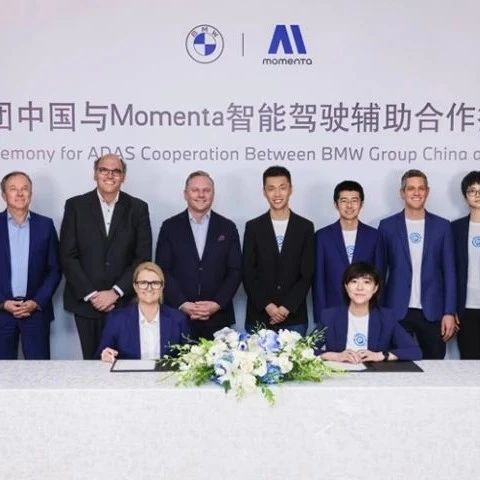
Core Viewpoint - BMW is integrating AI technology into its driving experience, focusing on local Chinese market needs through partnerships with leading tech companies like Momenta, Huawei, and Alibaba to enhance its smart driving capabilities [3][10][12]. Group 1: AI Strategy and Collaborations - BMW announced a partnership with Momenta to develop AI-driven driving assistance software tailored for the Chinese market, leveraging local user demands and scenarios [3][5]. - The collaboration aims to create a comprehensive driving assistance system that covers various driving environments, including highways and urban areas [5][6]. - BMW's AI strategy includes a 360-degree approach, enhancing digital production and user experience while promoting open innovation in R&D [13][20]. Group 2: Technological Advancements - The new AI-driven system will utilize a "perception-planning-control" integrated architecture, allowing vehicles to adapt to complex driving conditions and improve decision-making capabilities [17][18]. - BMW's AI applications span from production to quality control, enhancing efficiency and safety through advanced algorithms and real-time data analysis [19][20]. - The introduction of a new generation of electric vehicles will feature advanced battery technology, improving energy density by 20%, range by 30%, and charging speed by 30% [32][31]. Group 3: Driving Experience and User Interaction - BMW emphasizes a holistic driving experience that integrates interaction, control, and assistance, ensuring seamless transitions between manual and assisted driving [24][28]. - The new iDrive system showcases advanced user interfaces that maintain driver focus while providing essential information [30]. - The company aims to balance smart convenience, driving pleasure, and safety in its vehicle designs, setting it apart from competitors [31][33]. Group 4: Safety and Compliance - Safety remains a top priority for BMW, with the new driving assistance system inheriting over 20 years of safety technology development [38][39]. - The collaboration will ensure compliance with Chinese laws regarding data security and user privacy, embedding these principles into the product design [39][40]. - BMW's integration of local smart technologies with its established quality systems positions it well for future market competition and transformation [40].
宝马700亿订单即将落地!
鑫椤锂电· 2025-03-03 08:23
Core Viewpoint - BMW Group has launched its sixth-generation eDrive technology, featuring advanced cylindrical battery technology and a new 800V high-voltage platform, marking a significant investment in electric and intelligent vehicle development [1][2]. Group 1: Battery Technology and Production - The sixth-generation battery utilizes large cylindrical cells with a standard diameter of 46mm, available in heights of 95mm and 120mm, and capacity options of 75 kWh, 90 kWh, and 105 kWh [2]. - The project has commenced trial production at BMW's Shenyang facility by the end of 2024, with test batteries already delivered for validation [2]. - BMW is collaborating closely with suppliers like CATL and EVE Energy to ensure the large-scale production of cylindrical battery cells [2]. Group 2: Market Impact and Future Plans - The sixth-generation battery will first be applied in a new generation model set to debut in 2025, followed by mass production of domestic models starting in 2026, and will also be used in future pure electric M models [2]. - The cylindrical battery format is gaining recognition in the passenger vehicle market due to its advantages in reliability, safety, and production efficiency [2].