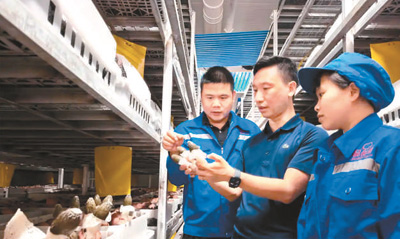
红托竹荪

Search documents
菌香满园产业开花
Xin Lang Cai Jing· 2026-01-22 22:14
Core Insights - The edible mushroom industry in Qianxinan, Guizhou Province, is thriving, with significant contributions from local farmers and a cooperative model involving leading enterprises [1][2] - The company, Shangyi Agricultural Development Co., has established a robust production system, focusing on various mushroom species and achieving an annual output value exceeding 25 million yuan [1] - The local government is committed to enhancing the mushroom industry through financial support and infrastructure improvements, aiming to increase farmers' income by over 10,000 yuan per household by 2025 [2] Group 1 - The edible mushroom industry park in Qianxinan is experiencing a successful harvest, with farmers reporting positive growth in mushroom production [1] - Shangyi Agricultural Development Co. has developed over 800 standardized planting greenhouses, focusing on the cultivation of various mushroom species, including shiitake and morel mushrooms [1] - The company plans to accelerate independent research and development of mushroom strains to improve quality and efficiency, benefiting more local farmers [1] Group 2 - The local government is investing over 1.5 million yuan to improve infrastructure for the mushroom industry, which is expected to create over 300 job opportunities [2] - The cooperative model involving enterprises, cooperatives, and farmers has established a shared interest framework, ensuring stable income for farmers [1][2] - Farmers are provided with mushroom cultivation technology and guaranteed purchase agreements, allowing them to focus on production [1]
贵阳贵安四大经营主体发力,推动农业农村现代化
Sou Hu Cai Jing· 2026-01-12 02:54
Core Insights - The article emphasizes the development of a modern agricultural operating system in Guiyang and Gui'an, focusing on the integration of leading enterprises, cooperatives, family farms, and large-scale farming households to drive rural revitalization and increase farmers' income [2][3][5]. Group 1: Leading Enterprises - Leading enterprises are identified as the "locomotive" of modern agricultural development, with successful examples such as the collaboration between a modern ecological breeding area and Wens Foodstuff Group, achieving a chicken survival rate of over 98% and increasing annual income for farmers by over 110,000 yuan [3]. - Gui'an has introduced four leading enterprises, including Wens and Dekang, and aims for a chicken production capacity of 30 million birds and a production value of 1.22 billion yuan by 2024, maintaining the highest output in the province [5]. - The local government is actively supporting the growth of leading enterprises through financial products like "Shuangnong Direct Loan," with 62 enterprises receiving loans totaling 120 million yuan [5]. Group 2: Cooperatives - Cooperatives serve as a crucial link between farmers and markets, with successful models like the cooperative in Wengjing Village, which integrates pig farming and vegetable planting, benefiting local villagers through land transfer and collective dividends [6]. - The government is enhancing cooperative development by providing project support and facilitating access to funding, leading to the establishment of 73 new professional cooperatives by 2025 [7]. Group 3: Family Farms - Family farms are highlighted as key units for specialized operations and income generation, with examples like Zhang Ya's family farm producing 20,000 kg of fruit annually, generating a total output value of 400,000 yuan [8]. - The local government encourages the establishment of family farms by optimizing the business environment, resulting in the addition of 248 new family farms by 2025 [11]. Group 4: Large-scale Farming Households - Large-scale farming households are strengthening the agricultural foundation, with examples of innovative practices in mushroom cultivation and earthworm farming, contributing to local employment and ecological sustainability [12][14]. - Gui'an is promoting the expansion of large-scale farming households, with plans to cultivate 2,265 households by 2025, supported by financial policies and project assistance [14]. Group 5: Future Directions - Guiyang and Gui'an will continue to focus on the collaborative development of leading enterprises, cooperatives, family farms, and large-scale farming households, aiming to create a competitive agricultural ecosystem with a target of "ten chains, hundred parks, billion-level, and ten thousand entities" [15].



珠海红旗:15亩食用菌试验基地落成,已投入种植
Nan Fang Du Shi Bao· 2025-12-11 06:55
Core Insights - The establishment of a mushroom cultivation experimental base in Daling Community, Hongqi Town, Jinwan District, aims to boost local farmers' income and promote rural revitalization through the "Mushroom Fragrance Enriching People" initiative [1][2] Group 1: Project Overview - The base is part of the "Hundred Thousand Project" to develop local特色产业 (characteristic industries) and has a trial area of approximately 15 acres [1] - Various mushroom species are being tested, including Chanterelle, Red-Headed Bamboo Fungus, Spiny-Headed Bamboo Fungus, Shiitake, Hairy Wood Ear, Giant Portobello, and Straw Mushroom [1] Group 2: Implementation and Support - A standardized cultivation area has been established, and a working group consisting of technical experts and farmer representatives has been formed to support production management and technical promotion [2] - The project has already provided local employment opportunities during the construction phase and plans to implement a model of "enterprise supply of seeds + technical guidance + guaranteed purchase" to enhance farmers' income [2] Group 3: Future Plans - The community and the enterprise plan to optimize cultivation techniques and expand sales channels, aiming to create a comprehensive demonstration garden that integrates cultivation experience, science education, and product exhibitions [2]
(乡村行·看振兴)福建屏南乡村唱响“致富菇”的四季歌
Zhong Guo Xin Wen Wang· 2025-10-22 09:07
Core Insights - The article highlights the transformation of Banqian Village in Fujian Province, where the introduction of smart greenhouses has enabled year-round cultivation of edible mushrooms, particularly Matsutake mushrooms, leading to increased income for local farmers [1][2]. Group 1: Agricultural Innovation - The establishment of six smart temperature-controlled greenhouses by the Zhenxin Agricultural Cooperative has allowed for the cultivation of mushrooms regardless of seasonal constraints, enhancing the stability and profitability of the mushroom industry [1]. - The temperature in the greenhouses is maintained between 9°C and 14°C with humidity over 80%, meeting the growth requirements for Matsutake mushrooms, resulting in sales exceeding 100,000 yuan [1]. Group 2: Economic Impact - Over 80% of families in Banqian Village are engaged in Matsutake mushroom cultivation, with the cooperative's efforts leading to diversified income sources through employment and profit-sharing from the cooperative [2]. - The modern agricultural industrial park in Banqian Village has expanded the variety of mushroom species cultivated, with an annual planting scale nearing 20 million bags and a total output value of 60 million yuan [2]. Group 3: Future Developments - An additional investment of 4 million yuan is planned to further expand the agricultural industrial park and establish a research collaboration base with the Fujian Academy of Agricultural Sciences, aimed at developing superior mushroom varieties suited to the local climate [2]. - The shift from traditional farming methods to technology-driven practices has positioned the mushroom industry as a significant contributor to local economic development, transforming it into a major industry for wealth generation in the village [2].
经济日报:海南白沙 点绿成金生态富民
Jing Ji Ri Bao· 2025-10-17 07:12
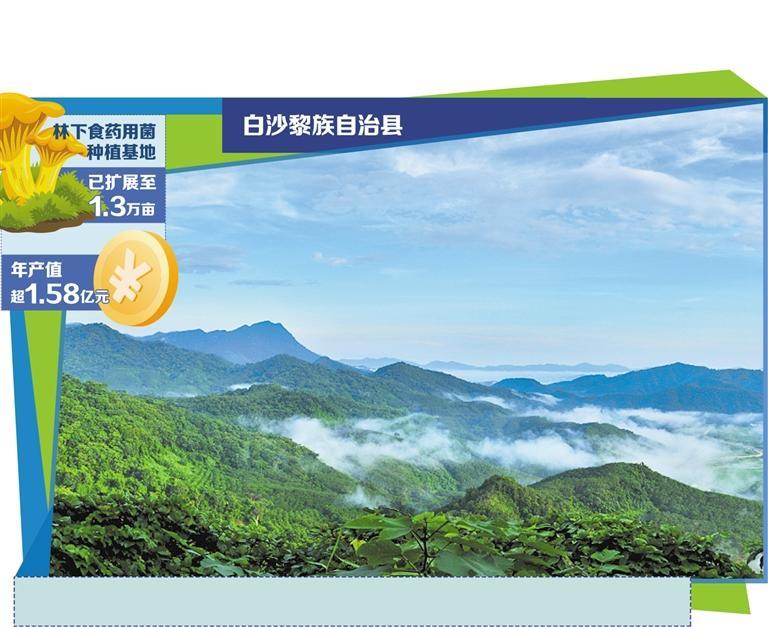
Core Viewpoint - Hainan's Baisha Li Autonomous County is focusing on the development of the southern medicine industry while balancing ecological protection and livelihood improvement, positioning southern medicine as a key industry for local economic growth [1][2]. Industry Development - The county has implemented the "Baisha Li Medicine Protection and Development Regulations," which includes 18 articles detailing government responsibilities, management systems, talent cultivation, and inheritance related to Li medicine [2]. - Baisha County has designated southern medicine as its leading industry, with significant financial investments, including nearly 30 million yuan in rural revitalization funds for under-forest planting [2][3]. - The area has established a standardized demonstration base for the planting of Yizhi (a type of southern medicine) covering 5,700 acres, which has expanded to a scale of approximately 10,000 acres in surrounding towns [3]. Economic Impact - The Yizhi planting area in Qingsong Township has reached 41,700 acres, with an annual production of about 1,200 tons, making it the largest Yizhi planting township in China [3]. - The county is also cultivating various southern medicine species, including Yizhi (125,000 acres), and has expanded its edible fungus planting base to 13,000 acres, generating an annual output value exceeding 158 million yuan [3]. Value Chain and Processing - A southern medicine sorting center has been established to enhance the processing of agricultural products, increasing their added value by 10% to 15%, which translates to approximately 9 million yuan [5]. - The center processes over 3,000 tons of agricultural products annually, with products being sold domestically and exported to countries like Thailand, Malaysia, South Korea, and Japan [5]. Integration of Sectors - The establishment of a Li medicine experience area aims to integrate traditional Li medicine with tourism, enhancing its value and attracting visitors [6]. - The full industry chain development of Li medicine has led to significant economic benefits for local communities, with collective economic income exceeding 1 million yuan for several villages [6]. Future Outlook - The county plans to accelerate the development of the southern medicine industry, focusing on planting, processing, and integration with tourism to transform ecological advantages into sustainable economic benefits [7].
海南白沙:点绿成金生态富民
Jing Ji Ri Bao· 2025-10-11 02:10
Core Viewpoint - Hainan's Baisha Li Autonomous County is focusing on the development of the southern medicine industry while balancing ecological protection and livelihood improvement, positioning southern medicine as a key industry for local economic growth [1][2]. Industry Development - The county has implemented the "Baisha Li Medicine Protection and Development Regulations," which includes 18 articles detailing government responsibilities, management systems, talent cultivation, and inheritance related to Li medicine [2]. - Baisha County has designated southern medicine as its leading industry, with significant financial investments, including nearly 30 million yuan in rural revitalization funds for under-forest planting [2][3]. - The area has established a standardized demonstration base for the planting of Yizhi (a type of southern medicine) covering 5,700 acres, which has expanded to a scale of approximately 10,000 acres in surrounding towns [3]. Economic Impact - The annual production of Yizhi in Qingsong Township is about 1,200 tons, making it the largest township for Yizhi cultivation in China [3]. - The county is also cultivating various southern medicine species, including Yizhi (125,000 acres), and has expanded its edible fungus planting base to 13,000 acres, generating an annual output value exceeding 158 million yuan [3]. Value Chain and Processing - A southern medicine sorting center has been established to enhance the processing of agricultural products, increasing their value by 10% to 15%, with an estimated added value of 9 million yuan [4][5]. - The center can dry over 3,000 tons of agricultural products annually, with products sold to major markets in China and exported to countries like Thailand, Malaysia, and Japan [4][5]. Integration of Sectors - The establishment of a Li medicine experience area aims to integrate traditional medicine with tourism, enhancing the value of Li medicine and attracting visitors [6]. - The county has seen significant economic benefits from the development of the Li medicine industry, with collective economic income exceeding 1 million yuan for several villages and providing temporary employment for over 60,000 people [6][7]. Future Outlook - The county plans to accelerate the development of the southern medicine industry, focusing on sustainable practices that convert ecological advantages into economic benefits [7].
海南白沙 点绿成金生态富民
Jing Ji Ri Bao· 2025-10-10 22:17
Core Insights - Hainan's Baisha County is transforming its ecological advantages into developmental strengths by focusing on the southern medicine industry, which is seen as a pathway to prosperity for local residents [2][8] - The county has implemented specific regulations and support measures to promote the cultivation and development of traditional Li medicine, enhancing both agricultural productivity and local livelihoods [3][4] Industry Development - Baisha County has designated southern medicine as its leading industry, with significant investments in technical standards and financial support for farmers, including nearly 30 million yuan for rural revitalization [3][4] - The area has established a standardized demonstration base for the cultivation of Yizhi (a type of southern medicine), covering 57,000 mu (approximately 9,500 acres) and creating a scale of about 100,000 mu (approximately 16,500 acres) in surrounding towns [4] - The main southern medicine varieties cultivated include Yizhi (125,000 mu), Bare-flowered Purple Pearl (6,687 mu), and various medicinal mushrooms, with a total of 13,000 mu (approximately 2,200 acres) dedicated to rare edible and medicinal fungi, generating an annual output value exceeding 158 million yuan [4][5] Value Chain and Processing - A southern medicine sorting center has been established to enhance the processing and value addition of agricultural products, capable of drying over 3,000 tons of products annually, increasing their market value by 10% to 15% [5][6] - The center operates under a closed-loop model involving seed supply from enterprises, government subsidies, and order-based purchasing, which alleviates concerns for farmers [3][5] Integration of Traditional Medicine and Tourism - The establishment of a Li medicine experience area aims to integrate traditional medicine with tourism, providing services and creating job opportunities for local practitioners [7] - The combination of traditional Chinese medicine and Li medicine is being promoted to enhance the value of Li medicine, with over 2,500 patient visits recorded since the experience area opened [7] Sustainable Development and Future Outlook - The county is committed to a sustainable development model that emphasizes ecological and industrial integration, with plans to further develop the southern medicine industry and enhance its brand recognition [8]
全链赋能出品牌!驻翁源县龙仙镇工作队用林下菌菇撑起乡村振兴“致富伞”
Nan Fang Nong Cun Bao· 2025-09-17 02:30
Core Viewpoint - The article highlights the efforts of a working team in Longxian Town, Wengyuan County, to promote the cultivation of edible mushrooms as a means of rural revitalization and economic development, leveraging local resources and technology [1][5][6]. Group 1: Industry Development - The working team has transformed the local mushroom industry from "scattered planting" to "scale development," enhancing the economic value from "selling fresh" to "brand value-added" [8][10]. - The introduction of high-quality mushroom varieties, such as bamboo fungus and straw mushroom, has been pivotal in utilizing local bamboo resources effectively [23][24]. - The team has also introduced a new variety, red-tipped bamboo fungus, which allows for year-round cultivation and higher economic returns for local farmers [25][27]. Group 2: Technological Innovation - The working team addressed the challenges of traditional mushroom cultivation, such as seasonal limitations and continuous cropping issues, by developing new cultivation techniques that allow for multiple harvests in a year [32][38]. - A patented technology has been implemented to improve the cultivation substrate and control humidity, significantly increasing yield and reducing disease [39][40]. Group 3: Economic Impact - The current production capacity of bamboo fungus in the center village is approximately 400 pounds per day, translating to a daily revenue of around 10,000 yuan based on the price of dried mushrooms [40]. - The working team has secured nearly 900,000 yuan in support funds to establish a comprehensive edible mushroom industry service center, enhancing the value chain from production to sales [50][52]. Group 4: Branding and Marketing - The team has initiated branding efforts by registering the trademark "Xianyi Zhen" and creating unique packaging to enhance market visibility [55][57]. - Future plans include modernizing the production line and expanding the marketing channels to connect with larger markets, particularly in the Greater Bay Area [58][64].

中信银行长沙分行:“点菌成金”拓宽乡村振兴致富路
Chang Sha Wan Bao· 2025-09-04 12:16
Group 1 - The core viewpoint emphasizes the economic value and market potential of the red fungus, known as "the queen of mushrooms," which is seen as a significant contributor to rural income growth [1] - A partnership has been established between the local village committee and Hunan Yuang Agricultural Development Co., Ltd. to transform the existing planting base into a red fungus demonstration garden, with plans to build standardized planting bases and promote new varieties and technologies within two years [1] - The initiative aims to increase the annual income of participating villagers by over 10,000 yuan, while also contributing approximately 10,000 yuan to the village collective income each year [1] Group 2 - The next steps include collaborating with online platforms like Meituan and Pupu Supermarket to explore new domestic sales channels, as well as partnering with cultural tourism companies to enhance the village's cultural brand [2] - The project aims to foster closer cooperation between enterprises and farmers, ultimately striving for shared prosperity in the village [2] - The financial support from the bank is intended to provide strong momentum for the local fungus industry, enhancing the livelihoods of more villagers through inclusive financial services [2]

让小菌菇开出奋斗的青春之花
Ren Min Ri Bao Hai Wai Ban· 2025-04-30 22:01
Core Viewpoint - The article highlights the innovative approach of Guangxi Huiguyuan Biotechnology Co., Ltd. in modernizing mushroom cultivation through technology and community engagement, aiming to expand the industry and improve local livelihoods. Group 1: Company Development - Guangxi Huiguyuan Biotechnology Co., Ltd. has established a factory with an annual production capacity of 50,000 tons of edible mushrooms, utilizing advanced techniques such as liquid strain cultivation and factory-based vertical farming, achieving a daily inoculation of 250,000 bottles of liquid strains [1] - The efficiency of mushroom harvesting has increased over tenfold compared to traditional methods, with the facility capable of producing 130 tons of mushrooms daily [1] Group 2: Community Engagement - The company has revitalized 33 idle mushroom houses in the local community, employing over 30 poverty alleviation households and providing them with job opportunities while teaching them mushroom cultivation techniques [2] - The community cooperation model has benefited over 1,000 people, with the enterprise generating more than 20 million yuan annually for local villagers through the mushroom industry [2] Group 3: Product Innovation and Market Expansion - The company has successfully cultivated the red-tipped bamboo fungus, a high-value mushroom, through a year-long research and development process, aiming to make this premium product accessible to the general public [3] - The company is actively expanding into Southeast Asian markets, with plans to export 10,000 tons of edible mushrooms by 2025, capitalizing on the high demand for fresh mushrooms in countries like Vietnam and Cambodia [5]