纸

Search documents
玖龙纸业:降目标价至10.8港元,维持“买入”评级-20260324
Ubs Securities· 2026-03-24 09:45
Investment Rating - The report maintains a "Buy" rating for Nine Dragons Paper Holdings Limited (玖龙纸业) despite adjustments to earnings forecasts and target price [1] Core Insights - UBS has raised its coal price forecasts for Qinhuangdao Port for 2026 to 2028, predicting prices of RMB 750, 720, and 670 per ton respectively, due to tightening global energy markets and quota reductions in Indonesia [1] - The anticipated increase in energy prices is expected to raise the average cost per ton by approximately RMB 15 to 20 [1] - Earnings forecasts for Nine Dragons Paper for the fiscal years 2026 to 2028 have been revised down by 11%, 2%, and 3% respectively, with the target price adjusted from HKD 11 to HKD 10.8 [1] - The company consumes about 0.26 tons of coal per ton of paper, and rising oil prices may further increase logistics costs, impacting profitability for the second half of fiscal 2026 [1] - Management plans to increase the proportion of imported wood chips from less than 1% to 10% to 20% by the end of 2026, which is expected to enhance supply security and improve wood chip quality, albeit at an additional cost of approximately RMB 200 per ton compared to domestic supply [1] - This shift in sourcing is projected to increase the average production cost by about RMB 5 to 10 per ton [1]
瑞银:降玖龙纸业目标价至10.8港元 维持“买入”评级
Zhi Tong Cai Jing· 2026-03-23 13:22
Core Viewpoint - UBS has raised its coal price forecasts for Qinhuangdao port for 2026 to 2028 due to tightening global energy markets and quota reductions in Indonesia, leading to increased cost pressures for Nine Dragons Paper [3] Group 1: Cost Pressures - The average cost per ton is expected to rise by approximately 15 to 20 RMB due to energy price shocks [3] - The company consumes about 0.26 tons of coal per ton of paper, and rising oil prices may further increase logistics costs, impacting profitability for the second half of the fiscal year ending June 2026 [3] Group 2: Earnings Forecast Adjustments - UBS has lowered Nine Dragons Paper's earnings estimates for the fiscal years 2026 to 2028 by 11%, 2%, and 3% respectively [3] - The target price for the stock has been adjusted from 11 HKD to 10.8 HKD while maintaining a "Buy" rating [3] Group 3: Management Plans - Management plans to increase the proportion of imported wood chips from less than 1% to 10% to 20% by the end of 2026, aiming to enhance supply security and improve wood chip quality [3] - The cost of imported wood chips is approximately 200 RMB more per ton than current domestic supplies, which may increase the average production cost by about 5 to 10 RMB per ton [3]
瑞银:降玖龙纸业(02689)目标价至10.8港元 维持“买入”评级
智通财经网· 2026-03-23 09:54
Group 1 - UBS reports that Nine Dragons Paper (02689) is facing increased cost pressures due to tightening global energy markets and quota reductions in Indonesia, leading to an upward revision of Qinhuangdao port standard coal price forecasts to RMB 750, 720, and 670 per ton for 2026 to 2028 [1] - The overall impact of rising energy prices is expected to increase average costs by approximately RMB 15 to 20 per ton, prompting UBS to lower earnings estimates for Nine Dragons Paper by 11%, 2%, and 3% for the fiscal years 2026 to 2028, and to adjust the target price from HKD 11 to HKD 10.8 while maintaining a "Buy" rating [1] - The company consumes about 0.26 tons of coal per ton of paper, and the rise in oil prices may further elevate logistics costs, which is anticipated to pressure profitability for the second half of the fiscal year ending June 2026 [1] Group 2 - Management plans to increase the proportion of imported wood chips from less than 1% to 10% to 20% by the end of 2026, aiming to enhance supply security and improve wood chip quality, although imported wood chips are approximately RMB 200 more expensive per ton than current domestic supplies [1] - This strategy is expected to increase the company's average production costs by about RMB 5 to 10 per ton [1]
港股异动 | 玖龙纸业(02689)跌超5% 国内OCC成本将于淡季下滑 花旗认为公司股价上行空间有限
智通财经网· 2026-03-03 02:31
Core Viewpoint - Nine Dragons Paper Holdings Limited (玖龙纸业) shares fell over 5%, currently trading at 8.4 HKD, with a transaction volume of 58.02 million HKD, following a downgrade in earnings forecasts by Citigroup due to unexpected price adjustments in waste paper and pulp costs [1] Group 1: Earnings Forecasts - Citigroup has lowered Nine Dragons Paper's earnings forecasts for the fiscal years 2026, 2027, and 2028 by 9%, 12%, and 7% respectively, citing high base effects from Q4 2025 and recent price adjustments due to seasonal factors and weak consumption [1] - The downgrade reflects that the stock price has already increased approximately 50% year-to-date, which is believed to have fully accounted for the strong performance expected in the first half of fiscal 2026 [1] Group 2: Rating and Market Outlook - Citigroup has downgraded the company's rating from "Buy" to "Neutral," indicating limited upside potential for the stock [1] - The firm has initiated a 30-day negative catalyst watch, anticipating a decline in the cost of old corrugated containers (OCC) during the second quarter's off-season, with expectations of a 7% year-on-year drop in net profit for the second half of fiscal 2026, reducing net profit per ton from 129 RMB to 101 RMB compared to the same period last year [1]
玖龙纸业跌超5% 国内OCC成本将于淡季下滑 花旗认为公司股价上行空间有限
Zhi Tong Cai Jing· 2026-03-03 02:31
Core Viewpoint - Nine Dragons Paper Holdings Limited (玖龙纸业) shares fell over 5%, currently trading at 8.4 HKD, with a transaction volume of 58.0163 million HKD, following a downgrade in earnings forecasts by Citigroup due to unexpected price adjustments in waste paper and pulp costs [1] Group 1: Earnings Forecasts - Citigroup has lowered Nine Dragons Paper's earnings forecasts for the fiscal years 2026, 2027, and 2028 by 9%, 12%, and 7% respectively, citing high base effects from Q4 2025 due to internal competition measures [1] - The recent price adjustments in pulp are attributed to the seasonal slowdown during the Lunar New Year and weak consumer demand [1] Group 2: Stock Performance and Rating - The stock price of Nine Dragons Paper has increased approximately 50% year-to-date, which Citigroup believes has fully reflected the strong performance expected in the first half of fiscal year 2026 [1] - Citigroup has downgraded the company's rating from "Buy" to "Neutral," indicating limited upside potential [1] Group 3: Future Expectations - Citigroup has initiated a 30-day negative catalyst observation, anticipating a decline in the cost of old corrugated containers (OCC) during the second quarter's off-season [1] - It is expected that the net profit for the second half of fiscal year 2026 will decrease by 7% year-on-year, with net profit per ton narrowing from 129 RMB in the same period last year to 101 RMB [1]
哪里有破烂哪里就有她!靠收废纸起家,如今开7家公司在美上市
Sou Hu Cai Jing· 2026-02-24 07:59
Core Insights - Zhang Yin is recognized as the first female billionaire in New China, embodying a remarkable entrepreneurial spirit and resilience in the face of adversity [1][12] Group 1: Early Career and Initial Success - Zhang Yin started her career in a stable accounting job in Shenzhen, supporting her family as the eldest daughter among seven siblings [1] - She identified a business opportunity in the waste paper recycling industry during China's rapid development, leading her to leave her job and invest her savings to start a new venture in Hong Kong [3][5] Group 2: Challenges and Market Competition - The waste paper industry in Hong Kong was highly competitive, with organized crime attempting to monopolize the market; Zhang Yin faced threats but chose to resist and maintain her business integrity [5] - Despite initial setbacks, including being deceived in transactions, she learned from her experiences and gradually established herself as a significant player in the market [5] Group 3: Expansion to the United States - After achieving success in Hong Kong, Zhang Yin expanded her business to the United States, where she faced language barriers and a new environment but persevered to establish seven factories [7] - Her efforts led to her company becoming a leader in the U.S. waste paper export industry, earning her the title of "Waste Paper Queen" [7] Group 4: Return to China and Establishment of Nine Dragons Paper - In 1996, Zhang Yin returned to China to establish Nine Dragons Paper, which quickly became the largest paper manufacturing company in China and ranked eighth globally [9] - Under her leadership, Nine Dragons Paper captured a significant market share, making her the first female billionaire in China [9] Group 5: Resilience During Financial Crisis - The global financial crisis in 2008 severely impacted Nine Dragons Paper, leading to a drastic drop in stock prices and financial struggles [11] - Zhang Yin demonstrated resilience by implementing strategic adjustments to improve efficiency and reduce costs, ultimately leading the company back to profitability [11] Group 6: Legacy and Inspirational Impact - Zhang Yin's journey reflects the importance of perseverance and courage in overcoming challenges, serving as an inspiration for aspiring entrepreneurs [12][14] - Her commitment to improving the quality of imported waste paper in China highlights her dedication to industry standards and integrity [12]

草木凝华,纸脉千年
Xin Lang Cai Jing· 2026-02-13 17:28
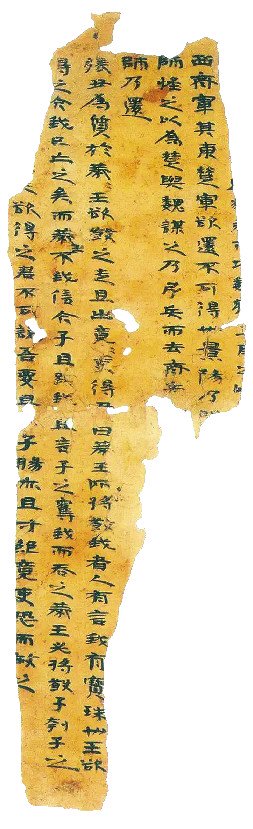
Core Viewpoint - The book "A Sigh for Paper: The Legend and History of Ancient Chinese Paper" by Zhao Hongya explores the evolution of paper in China, highlighting its significance as a transformative invention that reshaped human civilization and knowledge transmission [4]. Group 1: Historical Development of Paper - The origin of papermaking has been debated, with traditional views attributing it to Cai Lun in 105 AD, but archaeological evidence suggests that plant fiber paper existed long before this period [5]. - The earliest recorded use of paper dates back to the Western Han Dynasty, with references found in historical texts indicating its use as early as 12 BC [5]. - Significant archaeological discoveries, such as the "Luo Bu Nao Er Paper" and "Ba Qiao Paper," have provided evidence of early papermaking techniques and materials used in ancient China [6][7]. Group 2: Transition from Bamboo and Wood to Paper - The transition from bamboo and wood slips to paper was gradual, with paper first gaining traction in books and letters during the Eastern Han period [8]. - The turning point for paper's widespread adoption occurred during the Eastern Jin Dynasty, following the destruction of bamboo slips in a conflict, leading to a government mandate to use paper for official documents [8]. - The book emphasizes that the shift from bamboo slips to paper was influenced by the functional advantages of bamboo slips, which were more suitable for administrative needs [8]. Group 3: Innovations in Papermaking - The evolution of papermaking involved continuous exploration of raw materials and technological improvements, leading to the development of four main types of paper: hemp paper, vine paper, bark paper, and bamboo paper [9]. - Hemp paper was the dominant type from the Western Han to the Tang Dynasty, while vine paper flourished during the Wei and Jin Dynasties but faced resource depletion issues [9]. - Bark paper became prominent during the Three Kingdoms period due to its rapid growth and availability, while bamboo paper emerged in the mid-Tang Dynasty, becoming widely used by the Song Dynasty [10]. Group 4: Societal Impact of Paper - The proliferation of paper transformed various aspects of social life, including decoration, communication, and entertainment, becoming a fundamental medium for cultural exchange [10][11]. - Paper's role in education and knowledge dissemination was crucial, as it enabled broader access to literature and facilitated the expansion of the civil service examination system [11]. - The introduction of paper currency and commercial contracts marked significant economic innovations, with paper becoming a vital component of trade and commerce [12]. Group 5: Global Influence of Chinese Papermaking - Chinese papermaking techniques spread to neighboring regions, forming an East Asian papermaking system, with Korea and Japan adopting and adapting these methods [13][14]. - The pivotal moment for the westward transmission of papermaking occurred in 751 AD when Arab forces captured Chinese papermakers, leading to the establishment of the first paper mill in Samarkand [14]. - The adaptation of Chinese papermaking techniques in the West contributed to the Renaissance and the spread of knowledge, significantly impacting European modernization [14].
阅读有“法” 书香致远
Xin Lang Cai Jing· 2026-02-05 18:10
Core Viewpoint - The implementation of the "National Reading Promotion Regulations" marks a significant step in elevating reading from a personal activity to a matter of national importance, ensuring equitable access to reading resources for all individuals [1][2] Group 1: Legislative Impact - The "National Reading Promotion Regulations" came into effect on February 1, aiming to promote and guarantee reading across the nation [1] - The regulations are designed to enhance the construction of reading facilities in urban and rural areas, making resources more accessible to the public [2] Group 2: Cultural Significance - Reading is portrayed as a vital component of cultural heritage, with historical references emphasizing its role in the continuity of Chinese civilization [1] - The promotion of reading is linked to the creation of a harmonious and innovative society, suggesting that a culture rich in literature fosters personal growth and societal progress [1] Group 3: Modern Reading Practices - The rise of digital reading and the integration of various media formats (paper, digital, audio, visual, and courses) are highlighted as trends that enhance the dissemination of quality content [2] - The importance of deep reading is emphasized as a countermeasure against superficial browsing, advocating for a more engaged and thoughtful approach to reading [2]
大摩:料玖龙纸业(02689)今年业绩稳健 评级“与大市同步”
Zhi Tong Cai Jing· 2026-01-29 07:01
Group 1 - Morgan Stanley has set a target price of HKD 6 for Nine Dragons Paper Holdings (02689) and maintains a "Market Perform" rating [1] - The company is expected to achieve a net profit growth of 216% year-on-year in the first half of 2026, reaching between RMB 2.15 billion and RMB 2.25 billion, slightly above Morgan Stanley's forecast of RMB 2 billion [1] - The overall performance for the full year 2026 is anticipated to be stable, despite the first half being a traditional off-peak season for paper consumption, which may lead to slight price corrections [1] Group 2 - Morgan Stanley believes that the company's optimized product structure and improved cost performance will help mitigate the impact of reduced demand during the off-peak season, contributing to stable annual profits [1]
促进农业经济循环发展税收优惠(一至四)
蓝色柳林财税室· 2026-01-26 09:31
Core Viewpoint - The article discusses the tax incentives provided by the government to promote the recycling and utilization of renewable resources, which are crucial for rural revitalization and agricultural economic development. Group 1: Tax Incentives for Biomass and Renewable Resources - From March 1, 2022, a 100% VAT refund policy is implemented for products made from specific renewable resources such as kitchen waste, animal manure, and agricultural residues [4] - Taxpayers must obtain VAT invoices for the recycled resources purchased domestically to qualify for the refund policy [5] - The sales revenue from products that do not meet the invoice requirements will not be eligible for the VAT refund [5][12] Group 2: Conditions for Enjoying Tax Benefits - Taxpayers must maintain a record of the recycled resources acquired, including supplier details, resource type, quantity, price, and whether VAT invoices were obtained [6] - The products sold must not fall under the categories of eliminated or restricted projects as per the industrial structure adjustment guidance [6] - The products must not be classified as high pollution or high environmental risk according to the environmental protection catalog [6] Group 3: Specific Tax Refund Policies - A 90% VAT refund policy applies to products made from agricultural residues such as straw and corn cobs [11] - A 70% VAT refund policy is available for biodiesel and industrial-grade mixed oil produced from waste animal and plant oils [18] - A 50% VAT refund policy is applicable for paper pulp and paper produced from agricultural straw [26] Group 4: Compliance and Regulatory Requirements - Taxpayers must not have received administrative penalties for violating environmental protection laws in the six months prior to applying for the tax refund [8] - Taxpayers must provide a written declaration to the tax authority confirming compliance with the relevant technical standards and conditions [8][14] - The raw materials used in the products must consist of at least 70% from the specified renewable resources [15][39]