联排别墅

Search documents
禁止大型投资机构炒房!国会出手,美国民众“购房难”有解了?
Di Yi Cai Jing· 2026-02-27 05:49
Group 1 - The core issue of the housing affordability crisis in the U.S. is a long-term supply shortage, despite potential short-term inventory release from restricting large investors [1][6] - A bipartisan group of senators introduced legislation to prohibit large institutional investors from purchasing single-family homes, responding to President Trump's call for such measures [1][2] - The proposed "Homes for American Families Act" targets real estate investment trusts (REITs) and other large entities, viewing their purchases as anti-competitive behavior under antitrust laws [2][3] Group 2 - The second proposed bill, an update to the "Hope for Homeownership Act," aims to impose a 15% consumption tax on hedge funds and similar entities with significant assets, encouraging them to divest from single-family homes [3] - Industry experts express concern that while limiting large investors may help some markets, the fundamental issue of housing affordability remains tied to supply constraints [6] - The concentration of institutional investors in certain regions significantly impacts local housing markets, despite their overall low national ownership percentage [4][6]
三四线城市地产,还有活路
3 6 Ke· 2026-01-13 02:51
Core Insights - The article highlights the resilience and growth of small and medium-sized real estate companies in lower-tier cities, despite the general industry trend of larger firms focusing on high-tier cities [1][2] Group 1: Opportunities in Lower-Tier Cities - There are still opportunities in the improvement market of lower-tier cities, as some local small and medium-sized real estate companies are quietly growing while larger firms have lost interest [2][7] - Land acquisition conditions have become more favorable, with local governments showing a friendlier attitude towards real estate companies, allowing for pre-negotiation of conditions before land acquisition [3] - The supply chain has become more accessible, as the withdrawal of larger firms has led to a reduction in new real estate projects, allowing smaller firms to collaborate with previously unattainable top design institutes [5] Group 2: Product Differentiation Strategies - Real estate companies need to either create unique products or become market leaders to escape the saturated competition in lower-tier cities, where there is a structural imbalance in supply and demand [8][10] - By innovating products and addressing common pain points, such as parking space issues, companies can create unique offerings that meet customer needs, as demonstrated by a firm that enhanced parking space dimensions to improve usability [11][12] Group 3: Building Core Competitiveness - Leadership involvement in product development is crucial, with company heads taking direct responsibility for product quality to ensure alignment between design and market needs [14][15] - Establishing a strong supply chain is essential for operational success, with companies encouraged to internalize external capabilities by forming long-term partnerships with top suppliers [16][18] - Long-term commitment to local markets and building a strong reputation can serve as a competitive advantage, as evidenced by firms that have maintained high market shares through consistent performance and customer loyalty [19][20]
布米普特拉北京投资基金管理有限公司:行业情绪低迷 美国新房市场在挑战中寻觅出路
Sou Hu Cai Jing· 2026-01-03 13:06
Core Insights - The U.S. new home construction industry has faced a challenging year, with a significant decline in single-family home starts and an even steeper drop in rental housing starts [1][3] - Developers have been compelled to offer more incentives to stimulate the market, reflecting a persistently low industry confidence index throughout the year [1][3] Group 1: Market Performance - The National Association of Home Builders' chief economist, Robert Dietz, noted that market expectations for the year were overly optimistic compared to actual outcomes [3] - Despite a decent finish to the previous year with a year-on-year increase in single-family home starts, the anticipated momentum for the new year did not materialize as expected [3] - Key regulatory changes regarding development permits have not occurred, and the Federal Reserve's interest rate cuts have been less aggressive than anticipated, limiting the impact on mortgage rates [3][5] Group 2: Cost and Labor Challenges - Developers are facing increased material costs due to tariffs, as reported by a significant portion of surveyed developers [5] - The construction industry is experiencing labor supply fluctuations, with some contractors reporting labor shortages on job sites [5] - In regions like Denver, high financing costs are a major constraint, with current construction loan rates significantly higher than in previous years [5] Group 3: Market Adaptation and Future Outlook - There is a steady increase in the construction of townhouses aimed at first-time homebuyers, and custom home construction has also seen a year-on-year rise [7] - Economists suggest that the increase in new home supply may provide buyers with more options, potentially stabilizing prices and boosting transaction volumes [7] - In active markets like Nashville, developers are offering incentives to reduce inventory, with some new homes priced lower than existing homes, attracting hesitant buyers back into the market [7]

中小房企,开始打翻身仗
3 6 Ke· 2025-12-24 02:37
Core Insights - The article highlights the resilience and growth of small and medium-sized real estate companies in lower-tier cities, despite the general industry trend of larger firms focusing on high-tier cities [1][6]. Group 1: Market Opportunities - There are still opportunities in the improvement market within lower-tier cities, as larger firms have lost interest in these areas, leading to a potential gap for smaller firms to fill [1][5]. - The conditions for land transfer have become more favorable, with local governments showing a friendlier attitude towards real estate companies, allowing for pre-negotiation of conditions before land acquisition [2]. - The supply chain for real estate has become less competitive due to the withdrawal of larger firms, providing smaller companies access to high-quality suppliers that were previously hard to engage [4]. Group 2: Product Differentiation - The market in lower-tier cities is characterized by a structural imbalance, where there is an oversupply of ordinary housing but a lack of quality products, indicating a demand for differentiated offerings [7][11]. - Companies are encouraged to innovate their products to escape homogeneous competition, as demonstrated by a firm that transformed a low-density plot into unique row villas, addressing market saturation in conventional products [10][11]. - Addressing specific pain points, such as parking space issues, can create unique selling propositions, as seen with a company that redesigned parking spaces to enhance usability and appeal to customers [13][15]. Group 3: Building Core Competencies - Leadership involvement in product development is crucial, with executives taking direct responsibility for product quality to ensure alignment with market needs [17]. - Establishing a strong supply chain is essential for operational success, with companies encouraged to internalize external capabilities by forming long-term partnerships with top suppliers [18][20]. - A long-term approach to business, focusing on building a strong reputation and market presence, is vital for survival and success in lower-tier markets, as evidenced by firms achieving significant market shares through sustained efforts [23][24].
天津楼市,这类房子最“模棱两可”!
Sou Hu Cai Jing· 2025-10-11 07:01
Core Viewpoint - The real estate market in Tianjin is experiencing significant changes, particularly with the approval of new row houses, indicating a potential shift in the strict regulations that have been in place since 2019 [1][2][5]. Group 1: New Developments - The first new row house project approved post the "limit villa order" is the Chengtou Dongfang Jiuxi, which includes 50 units and features high-value amenities such as a basement with a height of nearly 6 meters and terraces on upper floors [2][4]. - Another project, Dagang Gejiao Luoteng Garden, is noted for being the first true fourth-generation residence in Tianjin, with a total floor area ratio of 1.2 and plans for both row houses and multi-story apartments [4][5]. - Greenland Shuiyun Chuan is set to launch with 156 units, including 28 row houses, featuring high ceilings and private outdoor spaces, indicating a trend towards more spacious and luxurious living options [28][30]. Group 2: Regulatory Changes - The approval of new row houses suggests that the strict "limit villa order" may be loosening, as these projects are on newly acquired land rather than older sites [33]. - Despite the positive developments, there remains ambiguity in the approval process, as evidenced by the case of the Jinghai Tuanbo East plot, which had a low floor area ratio of 1.01 but did not receive approval for villas [33]. - The article highlights a contrast in regulatory approaches across different cities, with Shanghai easing restrictions while Tianjin's situation remains uncertain, suggesting a need for a clearer regulatory framework [35][38].

闵行这个低密住宅售楼处已开放!样板房抢先看→
Sou Hu Cai Jing· 2025-08-27 16:44
Core Insights - The "Shangyuan" project developed by Minfang Group has garnered significant attention, located in the prestigious Qizhong area of Shanghai, covering approximately 39,000 square meters with a total construction area of about 85,000 square meters, featuring 186 residential units and 14 high-end talent apartments [1][3]. Group 1: Project Overview - The project includes various types of residential units such as stacked villas, townhouse villas, and courtyard villas, with a plot ratio of approximately 1.05 [1]. - The sales office for the project has officially opened to the public, allowing interested citizens to explore the offerings [3]. Group 2: Cultural and Aesthetic Elements - The design of the project integrates elements of Dong Qichang's poetic landscape, merging traditional aesthetics with contemporary living, creating a dialogue between historical beauty and modern expression [7]. - The community features lush greenery and water landscapes, reminiscent of the artistic essence found in Dong Qichang's works, promoting a harmonious blend of modern villa living and ecological lifestyle [10]. Group 3: Cultural Heritage - The project draws from the 4,000-year-old cultural heritage of the Maqiao area, which is considered the foundation of Shanghai, enriching the living space with deep cultural significance [10][13]. - Architectural elements such as the use of Maqiao cultural motifs in the landscape design reflect a contemporary narrative of this ancient culture [13]. Group 4: Technological Integration - The project emphasizes the integration of artificial intelligence, with over 200 AI companies in the Maqiao area, aiming to create a competitive AI industry cluster [14]. - Smart home systems are incorporated throughout the project, enhancing the living experience with features like temperature control, air purification, and security monitoring, all accessible via a mobile app [14].

劲销7成 转定率90% 城建·颐居首开大捷
Qi Lu Wan Bao Wang· 2025-07-22 07:23
Core Viewpoint - The article highlights the successful launch of the Chengjian Yiju project by Dongying Chengjian Group, showcasing its strong market appeal and innovative product offerings in a competitive real estate environment [1][2][6]. Sales Performance - The Chengjian Yiju project achieved a remarkable sales performance, with 70% of the units sold during the initial launch and a customer conversion rate of 90%, indicating strong demand and market confidence [1][6]. Product Features - The project features spacious layouts with a height of approximately 3.1 meters, providing an open and airy feel, and includes south-facing balconies for natural light and ventilation [8][10]. - The residential units range from 152 to 158 square meters for the apartments and 213 to 218 square meters for the townhouses, catering to high-end clientele and families [9][12]. Community and Amenities - Chengjian Yiju boasts a low overall plot ratio of approximately 1.1, which is rare in the main urban area, ensuring a harmonious living environment with ample green space [17][19]. - The community offers comprehensive amenities, including a health management center, educational facilities, and various dining options, designed to meet diverse resident needs [20][21]. Design and Aesthetics - The project incorporates traditional Chinese design elements, creating a serene and culturally rich living environment, reminiscent of a beautiful Jiangnan garden [18][19]. Smart Management - The development includes advanced smart property management systems, enhancing security and convenience for residents through features like 24-hour monitoring and video intercom systems [22].

金山,不给刚需机会!
Sou Hu Cai Jing· 2025-06-04 07:39
Core Insights - The recent supply situation in Jinshan has gained significant attention, with many projects now entering the final stages of development after a period of low supply [1] - A total of 12 commercial land parcels have been made available, covering an area of 469 acres, following a sudden increase in supply last year [1] Group 1: Project Details - The majority of land parcels have been acquired by local state-owned enterprises, with Jianzhong and Zuohai being the main players [3] - Jianzhong secured 6 parcels covering 221 acres, while Zuohai acquired 4 parcels totaling 132 acres [4] - The projects are primarily located on the north and south sides of Jinshan, with the northern area around Tianxiang and the southern area around Gaozhai [4] Group 2: Pricing and Product Segmentation - The floor prices for various projects range from 10,490 to 16,909, with the highest being for the Jinshan Wenqi Pavilion at 16,909, reflecting a premium of 23% [15][18] - The projects are predominantly positioned as improvement products, with a significant portion targeting mid-to-high-end buyers [26][29] - The expected average unit sizes for various projects range from 89 to 222 square meters, with a notable focus on larger units [11][13][19] Group 3: Market Dynamics - The total expected supply in Jinshan is projected to exceed 4,500 units, with approximately 90% classified as improvement products [29][28] - Current inventory includes older projects like Chengshi Zhiyang and Luli Yunzhu, with limited options for first-time buyers [30] - The pricing landscape is described as chaotic, with new projects expected to list at prices above 30,000, particularly for those with desirable features like school district access and river views [31][32]
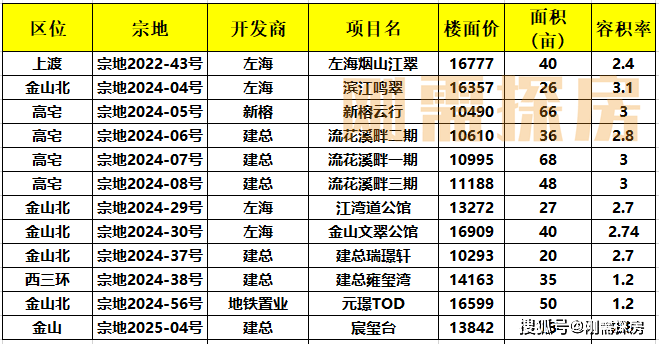
澳洲住房短缺再恶化!公寓审批量暴跌,年轻人买房更难了
Sou Hu Cai Jing· 2025-05-31 06:09
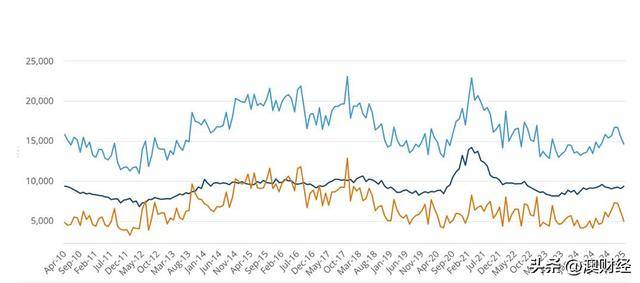
Core Insights - The decline in apartment construction has exacerbated housing challenges for young Australians, who are already struggling to enter the housing market [1][3] - The "Australian Dream" of owning a home has become increasingly unattainable for those born after 1990 without financial support [3] - Residential approvals fell by 5.7% in April to 14,633 units, primarily due to a 19% drop in approvals for non-detached housing [3][6] Housing Market Dynamics - The approval rate for private sector detached homes increased by 3.1%, but this was insufficient to offset the decline in apartment approvals [3][6] - The median house price has risen over 30% since the pandemic, while rental vacancy rates remain near historical lows [6] - The construction of affordable housing suitable for first-time buyers has not kept pace with market demand, leading to a challenging situation for young Australians [6] Government and Policy Response - There are calls for federal and state governments to intervene decisively to accelerate housing construction and reduce regulatory burdens on medium-density developments [8] - The Institute of Public Affairs highlighted that new housing approvals have consistently fallen short of the targets set by the National Housing Agreement, lagging by 27% [8] - The time from approval to completion of a house has increased by 50% over the past decade, indicating inefficiencies in the housing market [11] Future Outlook - The expected net immigration of 1.3 million over the next three years will further widen the supply-demand gap in the housing market [8][9] - Critics argue that the federal government has misjudged the housing market's capacity and underestimated immigration growth, contributing to rising prices and rents [11]