
船舶与海洋工程装备

Search documents
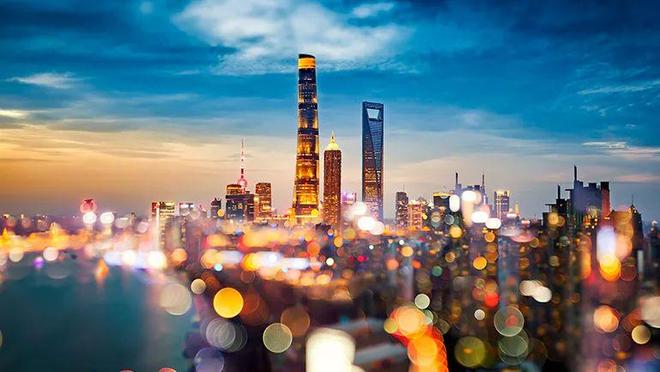
2025上海GDP总量全球第五,增速跑赢全国
Di Yi Cai Jing Zi Xun· 2026-01-21 02:09
Core Viewpoint - Shanghai's GDP is projected to reach 56,708.71 billion yuan in 2025, with a year-on-year growth of 5.4%, surpassing the national average of 5% and ranking fifth globally among cities [2] Economic Growth and Resilience - Shanghai has demonstrated resilient growth amidst significant external uncertainties, marking a recovery after previous years of slower growth compared to the national average [2][3] - The city is positioned at a strategic juncture, balancing structural challenges and opportunities, laying a solid foundation for the "14th Five-Year Plan" [2] Key Economic Indicators - Industrial output from strategic emerging industries in Shanghai is expected to grow by 6.5% in 2025, with their share of total industrial output reaching 45%, up from 43.6% in 2024 [3][4] - The three leading industries in Shanghai are projected to see a 9.6% increase in output, surpassing 2 trillion yuan, with integrated circuit manufacturing growing by 15.1% and artificial intelligence manufacturing by 13.6% [4] Consumption, Investment, and Trade - Shanghai's total retail sales of consumer goods are expected to grow by 4.6% in 2025, outperforming the national growth rate of 3.7%, with significant growth in sectors like new energy vehicles and home appliances [5] - Fixed asset investment in Shanghai is projected to increase by 4.6%, exceeding the national decline of 3.8%, with industrial and infrastructure investments growing by 20% and 11.2%, respectively [5] - The total import and export volume is anticipated to reach 4.5 trillion yuan, growing by 5.6%, with exports increasing by 10.8%, particularly to ASEAN and Belt and Road countries [6] Structural Transformation and Industry Development - Shanghai is accelerating the construction of a modern industrial system, with a focus on advanced manufacturing and emerging sectors such as low-altitude economy and commercial aerospace [9][10] - The financial services sector in Shanghai is also seeing improvements, with the total trading volume in financial markets reaching 40.59 trillion yuan, a growth of 11.2% [10] Urban Development and Global Positioning - The "Five Centers" initiative is crucial for enhancing Shanghai's urban capabilities and competitiveness, with ongoing improvements in global rankings across various indices [7][11] - Shanghai's port trade volume is expected to exceed 11 trillion yuan, maintaining its position as a global leader, with container throughput reaching 55.063 million TEUs [10]

广州:加快建设先进制造业强市,到2035年工业增加值翻一番
Sou Hu Cai Jing· 2026-01-08 11:04
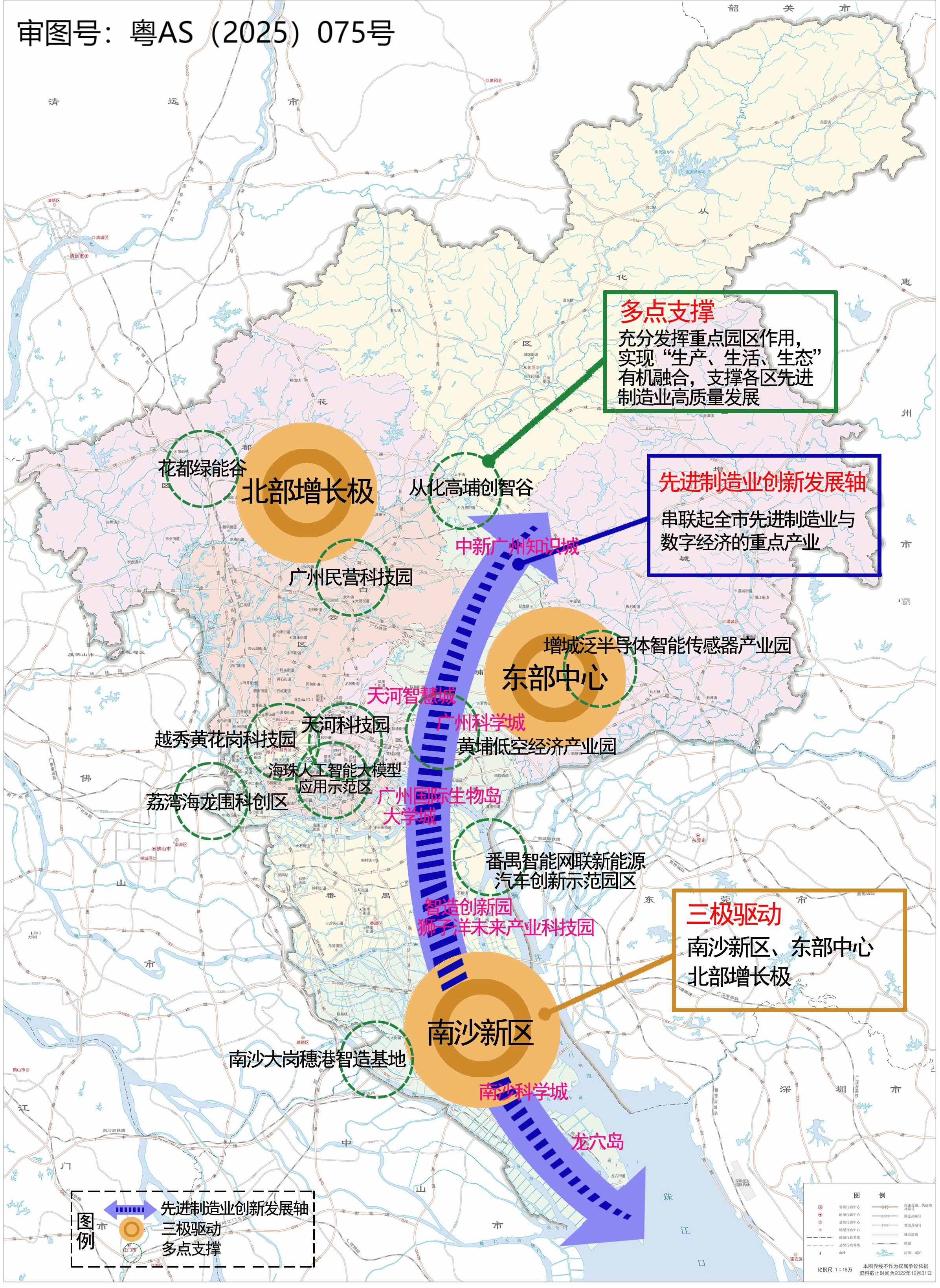
Core Viewpoint - Guangzhou aims to accelerate the construction of an advanced manufacturing city by 2035, targeting a doubling of industrial added value and focusing on the "12218" modern industrial system, integrating advanced manufacturing with modern services, and promoting digital and green transformations [2][14]. Group 1: Key Industrial Directions - The plan emphasizes the development of 15 strategic industrial clusters and six emerging pillar industries, including smart connected new energy vehicles, ultra-high-definition video and new displays, biomedicine and health, green petrochemicals and new materials, software and the internet, and intelligent equipment and robotics [2][38]. - Five strategic leading industries will be cultivated, including artificial intelligence, semiconductors and integrated circuits, new energy and new energy storage, low-altitude economy and aerospace, and biomanufacturing [3][38]. - Four characteristic advantageous industries will be strengthened, such as fashion consumer goods, rail transit, shipbuilding and marine engineering, and intelligent construction and industrialized buildings [4][38]. Group 2: Implementation Strategies - The plan outlines five major projects: industrial agglomeration, industrial innovation, intelligent manufacturing traction, integrated development, and supply chain optimization [14][34]. - Six action plans are proposed, including structural optimization, investment leap, talent attraction and cultivation, digital empowerment, spatial innovation, and element guarantee [14][34]. Group 3: Development Foundations - Guangzhou has a solid manufacturing base, being the most complete industrial city in South China, with significant advantages in technological innovation, green development, and international cooperation [19]. - The city ranks 8th globally in the "Nature Index - Research Cities" and has a robust innovation ecosystem, including numerous national and provincial manufacturing innovation centers [20][27]. Group 4: Opportunities and Challenges - The plan identifies major opportunities from national strategies, such as the manufacturing power strategy and the development of the Guangdong-Hong Kong-Macao Greater Bay Area, which enhances Guangzhou's role as a manufacturing hub [24][18]. - Challenges include the pressure from global economic downturns, the need for industrial upgrades, and competition from other metropolitan areas [28][29]. Group 5: Future Goals - By 2030, the advanced manufacturing city construction is expected to reach significant milestones, with a focus on optimizing industrial structure and enhancing quality and efficiency [36]. - By 2035, Guangzhou aims to solidify its status as an advanced manufacturing city, achieving breakthroughs in key technologies and maintaining a leading position in the global value chain [36][38].
通裕重工:公司的重型模锻压机仍在建设中
Zheng Quan Ri Bao Wang· 2026-01-05 12:12
Core Viewpoint - Tongyu Heavy Industry (300185) is currently constructing a heavy forging press aimed at producing large diesel engine crankshaft forgings for marine applications, marine and offshore engineering equipment, and aerospace forgings [1] Group 1 - The heavy forging press is still under construction [1] - Target products include large diesel engine crankshaft forgings, marine and offshore engineering equipment, and aerospace forgings [1] - The company plans to enhance talent and technology reserves for this project and actively explore product markets [1]

润邦股份:公司始终将船舶与海洋工程装备作为战略性业务予以投入
Zheng Quan Ri Bao Wang· 2025-12-10 12:45
Core Viewpoint - The company emphasizes its commitment to shipbuilding and marine engineering equipment as a strategic business, highlighting its differentiated shipbuilding capacity and solid hardware infrastructure developed over years [1] Group 1: Shipbuilding Capacity - The company possesses self-built shipyards, allowing for flexible production resource allocation, ensuring autonomy in ship segment and whole ship construction, and maintaining controllable progress [1] - The company has high-end stainless steel product manufacturing workshops and capabilities in special material processing and welding, meeting the construction requirements for high-value, high-corrosion environment special vessels such as liquefied gas ships and chemical tankers [1] - The implementation of roof coverage on shipyards enables indoor shipbuilding operations, effectively overcoming weather-related impacts on production progress and quality, ensuring stable construction cycles and reliable product quality [1] Group 2: Experience and Management - Since entering the offshore shipbuilding market in 2011, the company has accumulated experience in ship design, processes, and project management, forming a mature and efficient construction management system [1] - The company is capable of fulfilling complex shipbuilding contracts with high quality and reliability, providing comprehensive service guarantees throughout the project lifecycle [1] - The combination of hardware and experience accumulation constitutes the company's core foundation in the shipbuilding sector, providing a solid guarantee for continuous order acquisition and enhanced market competitiveness [1]

中国经济圆桌会|国家发展改革委:创新成为我国推动高质量发展的主引擎
Xin Hua Wang· 2025-10-18 00:38
Group 1 - Innovation has become the main engine for promoting high-quality development in China, with a shift from quantity to quality and from low-end to high-end industries [1][2] - During the 14th Five-Year Plan, China is focusing on developing new productive forces and integrating technological and industrial innovation, resulting in significant achievements [2] - By 2024, China's total R&D expenditure is expected to increase by nearly 50% compared to the end of the 13th Five-Year Plan, with R&D intensity reaching 2.69%, close to the OECD average [2] Group 2 - The digital economy's core industries are projected to account for about 10% of GDP by 2024, with new industries and business models, such as "Artificial Intelligence+", rapidly emerging [2] - Over the past four years, China's GDP average growth rate reached 5.5%, with significant milestones achieved at 110 trillion, 120 trillion, and 130 trillion yuan [3] - Achievements in economic development, technological innovation, social welfare, ecological civilization, and security have been made despite external pressures and challenges [3]
新的开创性进展、突破性变革、历史性成就
Zhong Guo Zheng Quan Bao· 2025-10-17 20:19
Core Insights - The "14th Five-Year Plan" period is crucial for China's economic and social development, marking the first five years after achieving a moderately prosperous society and setting the stage for the second centenary goal [1] - China's GDP growth averaged 5.5% over the first four years of the "14th Five-Year Plan," with an economic increment expected to exceed 35 trillion yuan, equivalent to recreating a region like the Yangtze River Delta [1] Economic Growth and Stability - China's GDP reached 110 trillion yuan, with projections of 120 trillion and 130 trillion yuan, showcasing resilience against global challenges [1] - The average annual contribution of China to global economic growth from 2021 to 2024 is around 30%, establishing it as a stable and reliable economic driver [2] Quality of Development - The quality and efficiency of development have improved significantly, with advancements in healthcare, renewable energy, and environmental quality [2] - The global innovation index ranking has entered the top ten for the first time, indicating rapid enhancement in innovation capabilities [2] Green Development - China has become a leader in global green transformation, achieving a 4.7% annual growth in energy consumption while maintaining a 5.5% economic growth rate, with a cumulative energy intensity reduction of 11.6% [3] - The country has successfully shifted from a coal-heavy energy structure to a cleaner energy system, with renewable energy generation capacity surpassing that of coal [5] Domestic Market and Consumption - The social retail sales of consumer goods are projected to grow from 39 trillion yuan in 2020 to 48 trillion yuan in 2024, with online retail sales increasing from under 12 trillion yuan to 15.5 trillion yuan [7] - Domestic demand has become a significant driver of economic growth, contributing an average of 86.8% to economic growth from 2021 to 2024 [7] International Trade and Openness - China's goods trade has consistently exceeded 5 trillion and 6 trillion USD during the "14th Five-Year Plan," with an average annual growth rate of 8.1% from 2021 to 2024 [8] - The country has actively expanded high-level openness, reducing the negative list for foreign investment and enhancing trade partnerships [6] Social Development and Welfare - The urban population reached 944 million, with continuous improvements in rural living conditions and social security coverage [6] - The "14th Five-Year Plan" emphasizes social welfare, with over one-third of the 20 major indicators focusing on improving people's livelihoods [6] Future Outlook - The "15th Five-Year Plan" is seen as a critical period for solidifying the foundation for socialist modernization, with a focus on high-quality development and addressing challenges ahead [9] - The upcoming 20th Central Committee meeting is expected to set new historical milestones for China's modernization efforts [9]
国家发展改革委:创新成为我国推动高质量发展的主引擎
Xin Hua She· 2025-10-17 13:59
Core Insights - Innovation has become the main engine for promoting high-quality development in China, with a shift from quantity to quality and from low-end to high-end industries [1][2] - The "14th Five-Year Plan" emphasizes the core position of innovation in China's modernization efforts, with significant achievements in integrating technological and industrial innovation [1] - China's R&D investment is projected to grow nearly 50% by 2024 compared to the end of the "13th Five-Year Plan," with R&D intensity reaching 2.69%, approaching the OECD average [1] - The digital economy's core industries are expected to account for about 10% of GDP in 2024, with new industries and business models rapidly emerging [1] Industry Developments - China's technological innovation capabilities are increasingly translating into real productive forces and national competitiveness, contributing to global development [2] - During the "14th Five-Year" period, China's economy has achieved significant milestones, with an average GDP growth rate of 5.5% over the past four years, reaching milestones of 110 trillion, 120 trillion, and 130 trillion yuan [3] - The achievements have been made despite external pressures and challenges, highlighting the resilience and commitment to high-quality development and structural optimization [3]
上海外贸连续7个月增长
Jie Fang Ri Bao· 2025-09-22 09:14
Group 1 - In August, Shanghai's export value reached 183.08 billion yuan, marking a year-on-year increase of 17.1%, and achieving a historical milestone of surpassing 180 billion yuan in a single month [1] - The total import and export value for Shanghai in August was 387.43 billion yuan, maintaining a growth trend for seven consecutive months since February [1] - For the first eight months of the year, Shanghai's total foreign trade value reached 2.94 trillion yuan, reflecting a growth of 4.5%, with notable characteristics such as active performance from private enterprises and significant increases in exports to emerging markets [1] Group 2 - Exports to emerging markets such as Africa, ASEAN, the Middle East, and India totaled 53.74 billion yuan in August, representing a year-on-year growth of 45%, with shipbuilding and marine engineering equipment, as well as engineering machinery, showing remarkable growth of 1060% and 72.8% respectively [1] - The global energy sector's green and low-carbon transition has made Shanghai's green products highly sought after, with exports of electric vehicles, lithium batteries, and photovoltaic products increasing by 37.1%, 112.1%, and 39% respectively in August [2] - Shanghai's manufacturing strength is reflected in the continuous double-digit growth of shipbuilding, high-end machine tools, and high-end equipment, with companies like Chint Electric exporting transformers worth 5.605 million yuan to Italy [2] Group 3 - The Shanghai Municipal Commission of Commerce has actively promoted initiatives to help enterprises expand into international markets, organizing 245 companies to participate in 38 overseas exhibitions since the second half of the year, with a total intended contract value of 23.68 million USD [2] - These overseas exhibitions focus on key industries such as high-end manufacturing, digital economy, biomedicine, and green energy, with the commission providing support for exhibition fees [2]
前八个月实现外贸额近三万亿元增长百分之四点五 上海进出口保持连续增长势头
Jie Fang Ri Bao· 2025-09-21 02:33
Core Insights - Shanghai's import and export value reached 387.43 billion yuan in August, marking seven consecutive months of growth since February this year [1] - In August, Shanghai's export value hit 183.08 billion yuan, a year-on-year increase of 17.1%, achieving a historical milestone of exceeding 180 billion yuan in a single month [1] - For the first eight months of this year, Shanghai's foreign trade value totaled 2.94 trillion yuan, reflecting a growth of 4.5%, with notable activity from private enterprises and significant increases in exports to emerging markets [1] Export Performance - Exports to emerging markets such as Africa, ASEAN, the Middle East, and India totaled 53.74 billion yuan in August, representing a year-on-year growth of 45%, with shipbuilding and marine engineering equipment, as well as construction machinery, showing remarkable growth of 1060% and 72.8% respectively [1] - The green product sector in Shanghai has seen significant demand, with exports of electric vehicles, lithium batteries, and photovoltaic products growing by 37.1%, 112.1%, and 39% respectively in August [2] - High-end manufacturing products, including high-end machine tools and equipment, have also maintained double-digit growth [2] Government Support - The Shanghai government has actively supported foreign trade growth, organizing 245 enterprises to participate in 38 overseas trade exhibitions since the second half of this year, with an intended contract value of 23.68 million USD [2] - These exhibitions focus on key industries such as high-end manufacturing, digital economy, biomedicine, and green energy, with the municipal commerce department providing support for exhibition fees [2]
上海市单月出口规模首超1800亿元 民营企业进出口占比首次突破四成
Xin Hua Cai Jing· 2025-09-19 13:49
Group 1 - In August, Shanghai's total import and export value reached 387.43 billion RMB, marking an 11.7% year-on-year increase, continuing a growth streak for seven consecutive months since February [1] - Exports amounted to 183.08 billion RMB, surpassing 180 billion RMB for the first time in a single month, with a year-on-year growth of 17.1%; imports were 204.35 billion RMB, up 7.3% [1] - For the first eight months of the year, Shanghai's cumulative import and export value reached 2.94 trillion RMB, reflecting a 4.5% year-on-year increase, with growth rate improving by 1 percentage point compared to the previous seven months [1] Group 2 - Private enterprises in Shanghai achieved an import and export value of 166.85 billion RMB in August, a significant year-on-year increase of 31.5%, contributing 11.5 percentage points to the city's overall trade growth [1] - Exports to emerging markets saw substantial growth, with a total of 53.74 billion RMB in August, representing a 45% year-on-year increase, which boosted the overall export growth rate by 10.7 percentage points [1] - Key export categories included ships and marine engineering equipment, and engineering machinery, with export values increasing by 10.6 times and 72.8% respectively [1][2] Group 3 - In August, Shanghai's export of electromechanical products reached 125.39 billion RMB, a 19% year-on-year increase, accounting for nearly 70% of total exports [2] - Notable growth was observed in the export of high-end machinery, electric vehicles, lithium batteries, and photovoltaic products, with year-on-year increases of 45.1%, 37.1%, 112.1%, and 39% respectively [2] - Import trends indicated stability and recovery in industrial and consumer demand, with significant increases in imports of metal ores, semiconductor manufacturing equipment, and various consumer goods [2]