苹果App Store

Search documents
豆包登顶苹果App Store中国区免费应用榜
Mei Ri Jing Ji Xin Wen· 2026-02-17 14:34
Core Insights - Doubao has topped the free app rankings on Apple's App Store in China, surpassing Alibaba's Qianwen and Ant Group's Mifeng [1] Company Analysis - Doubao's rise in the rankings indicates a significant shift in user preference towards its offerings, reflecting competitive dynamics in the app market [1] - The performance of Doubao may suggest potential growth opportunities in the mobile application sector, particularly in the context of competition with established players like Alibaba [1] Industry Trends - The app market in China is highly competitive, with major players like Alibaba facing challenges from emerging applications [1] - The shift in rankings may signal changing consumer behaviors and preferences, which could impact future app development and marketing strategies within the industry [1]
千问、蚂蚁阿福下载量暴增,包揽苹果应用总榜前二
Bei Jing Shang Bao· 2026-02-11 13:20
Core Insights - The Apple App Store's free application rankings in China show significant increases in downloads for the apps Qianwen and Antifufu, which have taken the top two spots on the overall chart [1] Group 1 - Qianwen launched a milk tea ordering activity, which has directly boosted user download enthusiasm [1] - Antifufu introduced a "Health Fortune" activity, contributing to its surge in downloads [1]

“死了么”App突然下架!创始人:被要求下架的
程序员的那些事· 2026-01-15 13:13
Core Viewpoint - The "Did It Die?" app has been taken down, with the developer stating it was "requested to be removed" but did not disclose specific reasons for the action [1]. Group 1 - Speculation suggests that the app may have voluntarily taken down to avoid penalties due to incomplete compliance filing processes [2]. - The app has experienced a brief but notable lifecycle, having been launched in June 2025, renamed, and subsequently taken down within a short span, leading to humorous commentary on its rapid rise and fall [2]. - According to Qimai data, the "Did It Die?" app has faced one previous takedown and three instances of being removed from rankings since its launch, occurring on June 28, September 20, December 12, and December 15, 2025 [2][3]. Group 2 - The core mechanism for app ranking removal on the Apple App Store involves a combination of algorithmic risk control and manual review, triggered by factors such as malicious traffic manipulation, review violations, data misjudgment, and compliance or quality issues [2].


2025全球移动应用报告:下载量继续下滑 订阅助收入大涨超20%
Feng Huang Wang· 2026-01-15 00:04
Core Insights - The global mobile app downloads are projected to decline for the fifth consecutive year in 2025, with a total of 106.9 billion downloads, representing a 2.7% year-over-year decrease. However, the subscription economy is driving revenue growth in mobile applications, with consumer spending expected to rise by 21.6% to reach $155.8 billion [1][2]. Group 1: Download Trends - Despite a decrease in new user downloads, app developers and marketers are successfully encouraging existing users to make in-app purchases or subscribe [2]. Group 2: Revenue Growth - Mobile gaming's dominance as the primary revenue driver in the app economy is declining. In 2025, consumer spending on mobile games is expected to be $72.2 billion, accounting for approximately 46% of total mobile app spending, which is a 10% year-over-year increase. Conversely, spending on non-gaming mobile applications is projected to surge by 33.9% to $82.6 billion [3].

美媒炮轰苹果谷歌CEO是“懦夫”:害怕马斯克不敢下架X
Feng Huang Wang· 2026-01-11 06:20
Core Viewpoint - The article criticizes Apple CEO Tim Cook and Google CEO Sundar Pichai for not taking action against the social media platform X, which is violating app store guidelines by allowing deepfake pornographic content, due to fear of Elon Musk [1][2]. Group 1: Company Policies and Guidelines - Apple's App Store guidelines prohibit apps from containing offensive, insensitive, or disturbing content, yet X remains available despite clear violations [2][3]. - Google Play has similar policies that explicitly state applications promoting exploitation or abuse of children will be removed, but X continues to operate without repercussions [2][3]. Group 2: Leadership and Accountability - The article portrays Cook and Pichai as lacking backbone, suggesting they prioritize their relationships with Musk and the right-wing media ecosystem over ethical standards [2][3]. - The leadership of both companies is criticized for compromising their principles for power, leading to a situation where they cannot effectively manage their platforms [3][4]. Group 3: Historical Context and Comparisons - The article references past incidents, such as Tumblr being removed from app stores for similar violations, highlighting a perceived double standard in enforcement based on the platform's ownership [4][5]. - It recalls the Epic vs. Apple antitrust case, where Apple argued for strict control over its app store to protect users, contrasting this with its current inaction regarding X [4][5]. Group 4: Broader Implications - The article suggests that the current situation reflects a troubling trend in tech regulation, where companies prioritize shareholder interests over ethical considerations and user safety [6]. - It questions the integrity of both Apple and Google, implying that their actions contradict their stated values, particularly regarding user privacy and safety [6].

【美股盘前】英伟达、AMD、亚马逊和高通集体于CES发布新产品;固态电池股涨跌不一;诺和诺德涨超4%,在美国推出口服GLP-1减肥药;Strategy ...
Mei Ri Jing Ji Xin Wen· 2026-01-06 10:45
Group 1 - Major index futures showed mixed results with Dow futures down 0.19%, S&P 500 futures down 0.06%, and Nasdaq futures up 0.03% [1] - Solid-state battery stocks experienced varied movements, with Plug Power down 0.42%, Solid Power up 1.36%, and Quantumscape Corp up 0.62%. Donut Lab announced the launch of the world's first mass-producible all-solid-state battery for OEM vehicles, set to power Verge Motorcycles by Q1 2026 [1] Group 2 - NVIDIA introduced the open-source AI model Alpamayo aimed at advancing inference-based autonomous driving technology, with the first vehicles expected to hit the road in the US in Q1 and in Europe in Q2 [2] - AMD unveiled the MI455 GPU chip at CES, claiming significant performance improvements, and previewed the MI500 series processors expected to launch in 2027, which will be 1000 times more powerful than the MI300 series [2] Group 3 - Amazon launched a new website, Alexa.com, allowing users to interact with Alexa+ similar to other AI chatbots, now available to all early access users [3] - Qualcomm introduced the Dragonwing IQ10 processor designed for industrial autonomous mobile robots and humanoid robots, emphasizing high performance and energy efficiency [3] Group 4 - Evercore raised Apple's target price to $325, maintaining an "outperform" rating, noting a stabilization in App Store revenue with a 6% year-over-year increase in December [4] - Tesla China announced zero-interest and low-interest financing options for Model 3 and Model Y orders placed by January 31 [4] Group 5 - Novo Nordisk launched the oral GLP-1 weight loss drug Wegovy in the US, priced at $149 per month for the initial 1.5 mg dose, with plans to increase prices for higher doses in the future [5] Group 6 - Strategy reported a Q4 unrealized loss of $17.44 billion due to a decline in the value of its cryptocurrency holdings, with a total Bitcoin holding of 673,783 coins despite the losses [6]


从布鲁塞尔到首尔,“苹果税”连遭质疑
3 6 Ke· 2025-12-23 12:44
Core Viewpoint - The article highlights the global pushback against platform monopolies, particularly focusing on Apple's App Store fee structure, which is perceived as unfair and detrimental to competition and innovation in the digital economy [1][4]. Group 1: Regulatory Responses - In Europe, 20 app developers and consumer groups have united to challenge Apple's App Store fees, indicating a significant regulatory response to perceived unfair competition [1]. - Japan's new competition law mandates Apple to open third-party app stores and payment channels, while South Korea has already implemented similar measures, reflecting a strong regulatory trend in Asia [4]. - The EU is considering a fine against Apple for violating the Digital Markets Act (DMA), potentially amounting to 10% of its global annual revenue, which is approximately $38.3 billion based on 2023 revenue [4]. Group 2: Developer Sentiment and Actions - Developers in Asia are increasingly vocal about their rights, with South Korean companies publicly denouncing unfair practices and Chinese developers organizing collective legal actions against Apple [5]. - The awareness among developers regarding their rights is growing, leading them to prefer markets with more favorable regulatory environments to reduce costs [5]. Group 3: Apple's Compliance Challenges - Apple faces mounting regulatory challenges globally, particularly in Asia, where it must adapt to new regulations while dealing with complaints and lawsuits from developers and consumers [5]. - The company's argument that regulatory requirements threaten user security is losing traction as various countries adopt different regulatory approaches [6]. Group 4: Future Implications - The ongoing regulatory battles will shape the future landscape of the digital economy, emphasizing the need for a balance between innovation and market fairness [7]. - The ultimate goal of tech regulation is to safeguard innovation while ensuring an open and fair digital ecosystem [7].
快手冲到苹果免费榜第二
Bei Jing Ri Bao Ke Hu Duan· 2025-12-23 02:48
Group 1 - The core issue is that Kuaishou experienced a black and gray industry attack on its platform, which was reported to relevant authorities and the police [1] - Kuaishou is actively addressing and repairing the situation, demonstrating a commitment to resisting illegal content [1] - Following the incident, Kuaishou's app surged to the second position in the Apple App Store's free app download rankings [1]

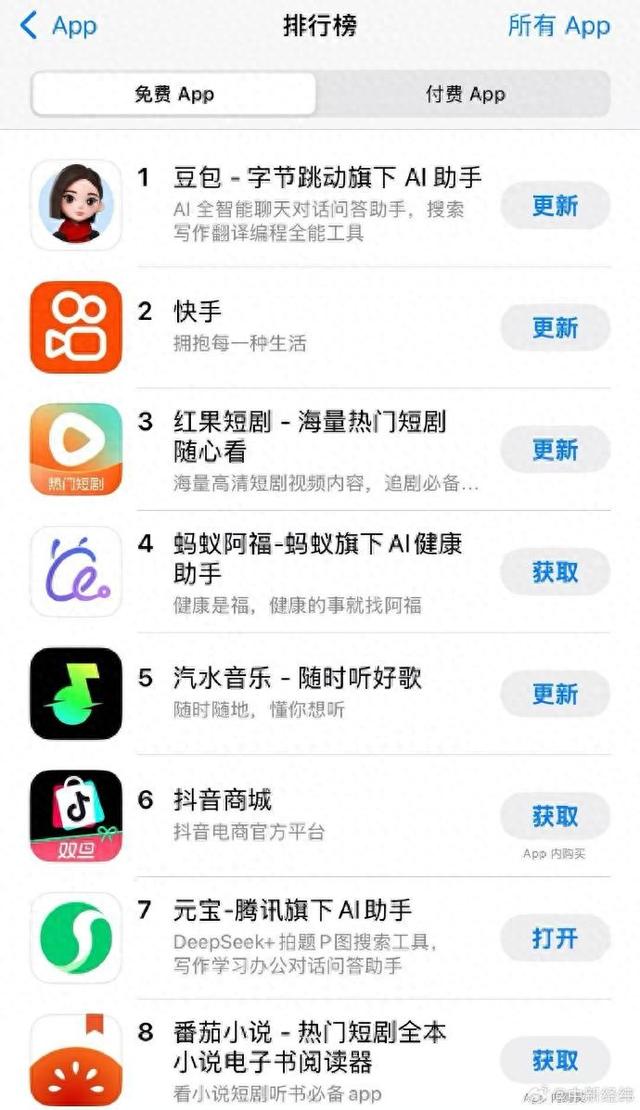
大幅降低日本的“苹果税”,中国用户却在为30%的抽成买单
Sou Hu Cai Jing· 2025-12-23 01:40
Core Viewpoint - Apple has significantly reduced its "Apple tax" in Japan from 30% to 21%, allowing third-party app stores and external payment channels, marking a shift in its previously strict policies [2] Group 1: Changes in Apple's Policies - Apple has lowered the commission rate for small developers and video partners in Japan from 15% to 10% as part of its new initiatives [2] - The company is now opening third-party app stores and external payment channels in Japan, a notable change in its approach to market competition [2] Group 2: Comparison with Other Markets - In the EU, the "Apple tax" for small developers has already been reduced to 10%, with rates for developers earning over $1 million dropping to 17%, which is lower than Japan's new rate [2] - The Chinese market remains a unique case where Apple maintains a 30% commission, despite declining sales and increasing operational costs [3][4] Group 3: Financial Implications - In 2024, the total "Apple tax" paid by Chinese users reached $6.44 billion, accounting for approximately 10% of Apple's revenue in China, compared to 8.8% in the US and 4.6% in Europe [4] - The Chinese market has become crucial for Apple, providing significant profits amidst global pressures to reduce fees and open ecosystems [4] Group 4: Regulatory Environment - Unlike Japan and the EU, China has not yet implemented legislation to force Apple to lower its fees or open its ecosystem, leading to a stable profit environment for the company [4][5] - The lack of collective bargaining power among developers in China has hindered efforts to challenge Apple's high commission rates [3]

《堡垒之夜》放弃日本iOS,Epic硬刚苹果指控违法
Huan Qiu Wang Zi Xun· 2025-12-19 03:08
Group 1 - Epic Games CEO Tim Sweeney announced that the company will not be able to launch Fortnite on the iOS platform in Japan by the end of 2025 due to high fees imposed by Apple's new App Store rules [1][4] - The new rules require Epic to pay a 5% revenue share if distributing games through alternative app stores, or a 5% fee on in-app purchases or a 15% fee for digital purchases via web links if using the Apple App Store [4] - Sweeney criticized Apple for abusing its market position, hindering normal transactions between developers and users, and failing to create genuine competition, which ultimately harms consumer interests [4] Group 2 - The situation arose following the passage of Japan's Mobile Software Competition Law in 2024, which initially led Sweeney to optimistically announce Fortnite's entry into the Japanese iOS market [4] - Apple responded by stating that it had fully cooperated with Japanese regulatory authorities during the formulation of the new rules, asserting compliance with local regulations [4]