行业模型

Search documents
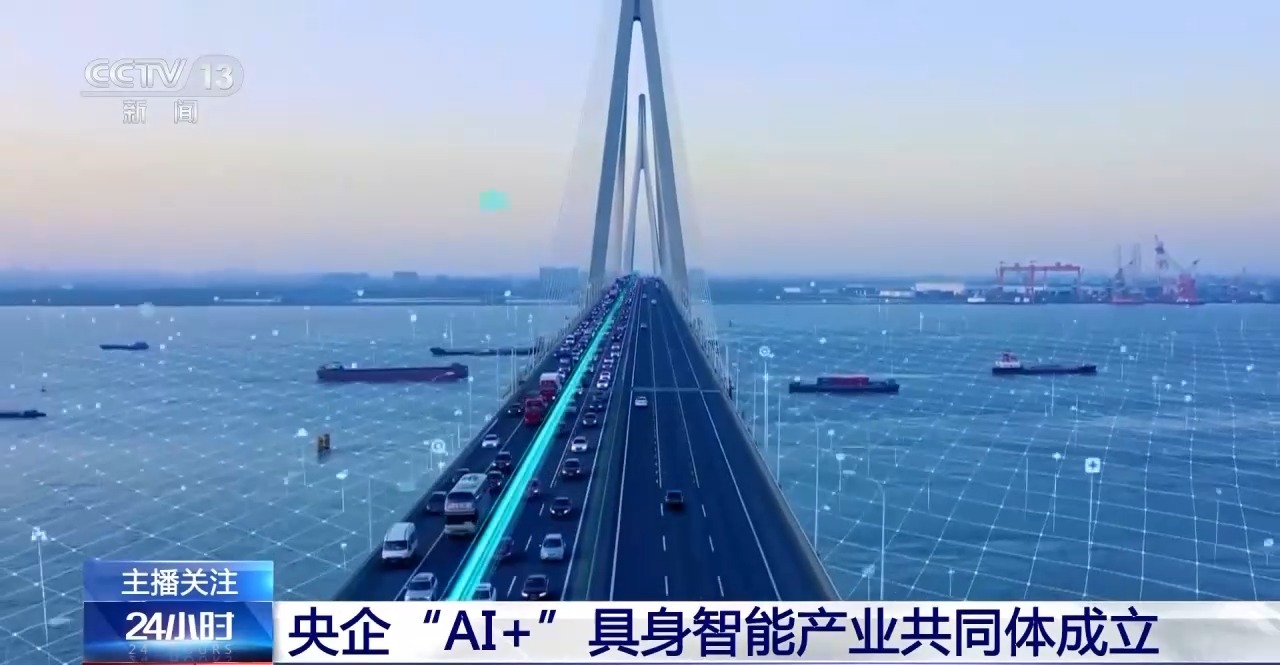
资讯丨央企“AI+”具身智能产业共同体成立
Sou Hu Cai Jing· 2026-02-12 12:27
Group 1 - The establishment of the "AI+" embodied intelligence industry community by central enterprises has been announced, aiming to enhance the development of artificial intelligence in various sectors [1] - The State-owned Assets Supervision and Administration Commission (SASAC) reports that central enterprises have led the construction of 11 industry-specific trusted data spaces, focusing on transportation, energy, green technology, and finance [1] - Central enterprises have registered 17 industry models that serve multiple fields including energy, mining, industrial manufacturing, and logistics, creating over 100,000 industry-specific intelligent applications [1] Group 2 - The total scale of the Jiangsu Province strategic emerging industry fund cluster has reached 275.6 billion yuan, following the signing of five specialized funds totaling 69.1 billion yuan [2] - The Yangtze River Delta venture capital guidance fund, with a scale of 55.1 billion yuan, is one of the first three regional funds established to support the integration of the Yangtze River Delta region [2] - The Jiangsu Province's fund cluster has formed 46 specialized funds with a total scale of 176 billion yuan, and has invested in over 200 projects, leading to direct equity investments exceeding 20 billion yuan [3]
视频丨央企“AI+”具身智能产业共同体成立
Xin Lang Cai Jing· 2026-02-11 17:44
Core Insights - The establishment of the "AI+" embodied intelligence industry community by central enterprises is a significant step in promoting artificial intelligence development in China [1] - The State-owned Assets Supervision and Administration Commission (SASAC) has reported substantial progress in AI initiatives, including enhanced computing power and accelerated development of controllable models [1] Group 1: AI Development Initiatives - Central enterprises have led the construction of 11 industry-specific trusted data spaces, focusing on transportation, energy, green technology, and finance [1] - Over 1,000 application scenarios have been developed in key industries such as energy, manufacturing, and telecommunications [3] Group 2: Model Development and Applications - There are currently 17 registered industry models that support various sectors including energy, mining, industrial manufacturing, and logistics [5] - The creation of over 100,000 industry-specific intelligent applications has been achieved, contributing to high-quality industry development [5] Group 3: Open Source and Data Sharing - The launch of the open-source "Huanxin Community" provides free access to over 2,200 domestic intelligent computing chips and aggregates more than 4,700 models and 1,200 datasets [5][6] - Central enterprises aim to enhance collaboration mechanisms and identify strategic application scenarios to facilitate the large-scale empowerment of AI across various industries [8]

上海制造业新蓝图:三年瞄准百家“10亿+”企业,加速布局航天智能新赛道
Jin Rong Jie· 2026-02-09 15:30
Core Insights - Shanghai's newly released three-year action plan aims to reshape the city's industrial landscape and extend its reach into near-Earth orbit, targeting an industrial output value exceeding 4 trillion yuan by 2025 and setting ambitious goals for 2028 [1] Group 1: Strong Investment Momentum - Industrial investment in Shanghai is projected to grow by 20.0% year-on-year in 2025, with manufacturing investment showing a remarkable increase of 22.8%, providing a solid foundation for the action plan's three-year goals [2] Group 2: Multi-Path Industrial Structure Optimization - The action plan outlines a comprehensive approach with four major actions and 17 measures, focusing on differentiated strategies for various industry levels, emphasizing optimization for traditional industries and strategic guidance for leading sectors like integrated circuits, biomedicine, and artificial intelligence [3] Group 3: Deep Integration of "AI + Manufacturing" - The action plan highlights the importance of smart and digital transformation, aiming for full coverage of smart factories in large enterprises by 2028, increasing robot density to 600 units per 10,000 people, and achieving over 70% digitalization in smart manufacturing equipment [4] Group 4: Targeting New Trillion-Yuan Markets - In addition to consolidating existing advantages, Shanghai aims to guide investments into emerging fields such as low-altitude economy, commercial aerospace, embodied intelligence, biomanufacturing, and smart terminals [5] Group 5: Financial Incentives for R&D Innovation - The action plan includes attractive financial incentives for R&D, offering tiered subsidies based on research investment levels, with significant support for companies investing over 100 million yuan annually [6] Group 6: Comprehensive Resource Support - To ensure the achievement of goals, the action plan proposes extensive support measures, including financial products with lower interest rates and longer terms, as well as addressing industrial land renewal and talent cultivation [7] Group 7: Transition from "Cost Lowland" to "Ecological High Ground" - Shanghai has been optimizing its business environment, with core cost factors for industrial enterprises decreasing annually, leading to a profit margin of 6.3%, which is 1 percentage point higher than the national average [8][9] Group 8: Modern Industrial System Visualization - Shanghai is set to anchor its new industrialization efforts by high-quality mapping of a "2+3+6+6" modern industrial system by 2026 [10]
2025年广东人工智能核心产业规模预计突破3000亿元
Zhong Guo Xin Wen Wang· 2026-01-26 10:49
Core Insights - The core viewpoint of the articles is that Guangdong's artificial intelligence (AI) industry is projected to exceed 300 billion yuan by 2025, achieving over 40% growth and accounting for one-quarter of the national total, thereby reinforcing its leading position in the domestic AI sector [1][2]. Group 1: Industry Growth Projections - By 2025, Guangdong's AI core industry scale is expected to surpass 300 billion yuan, with a growth rate exceeding 40% [1]. - The province aims to have 122 large models registered with the state and over 430 industry models implemented by 2025 [1]. - Guangdong is home to 147 "specialized and innovative" small giant enterprises, the highest number in the country [1]. Group 2: Strategic Initiatives - Guangdong is continuously laying out major projects for the "new generation of artificial intelligence" and optimizing its computing power layout [1]. - The province has established a standardization working group for AI in the Guangdong-Hong Kong-Macao Greater Bay Area and is enhancing its industrial standard system [1]. - A total of 78 types of "AI+" application scenarios have been released across 13 fields, aiming to create replicable industry application benchmarks [1]. Group 3: Challenges and Future Plans - Current challenges include a relative shortage of top talent and the need for deeper and broader integration of AI with application scenarios [2]. - Guangdong plans to accelerate the legislative work for AI industry promotion regulations and develop a high-standard "14th Five-Year" plan for intelligent economic development [2]. - The province aims to establish a national-level AI international cooperation center and a data center for embodied intelligence as part of its second batch of key platforms [2].
事关AI,八部门重磅发布
Zheng Quan Shi Bao· 2026-01-07 11:00
Group 1 - The core viewpoint of the news is the implementation of the "Artificial Intelligence + Manufacturing" initiative by eight departments, aiming to enhance AI technology in the manufacturing sector by 2027 [1] - By 2027, China aims to achieve secure and reliable supply of key AI technologies, maintaining a leading position in industry scale and empowerment levels [1] - The initiative plans to promote the deep application of 3-5 general large models in manufacturing, create 100 high-quality industrial data sets, and establish 500 typical application scenarios [1] Group 2 - The initiative supports breakthroughs in key core technologies such as high-end training chips and edge inference chips to strengthen AI computing power supply [2] - It emphasizes the development of intelligent chip hardware and software, and the establishment of a national integrated computing network monitoring and scheduling platform [2] - The plan includes the promotion of AI cloud services and the deployment of industrial cloud computing capabilities [2] Group 3 - The initiative encourages the development of high-performance algorithm models tailored for the manufacturing industry's real-time, reliability, and safety requirements [3] - It aims to foster a "cloud-edge-end" model system and enhance the generalization capabilities of industry-specific large models [3] - The establishment of a public service platform for models and supporting tools is also part of the plan [3] Group 4 - The initiative promotes the integration of AI technology into the research, manufacturing, and operation of major technical equipment such as large aircraft and ships [4] - It aims to accelerate the development of intelligent medical equipment and autonomous driving features in smart connected vehicles [4] - The focus is on enhancing the capabilities of industrial robots and developing new-generation AI numerical control systems [4] Group 5 - The initiative focuses on key scenarios such as industrial inspection and remote medical care, accelerating the commercialization of new terminals like AR/VR wearable devices and brain-computer interfaces [5] - It supports breakthroughs in edge models and application toolchains for smart devices [5] - The plan includes the establishment of humanoid robot pilot bases and training grounds to promote innovation in embodied intelligent products [5]
东华软件:公司积极响应产业发展政策
Zheng Quan Ri Bao Wang· 2025-12-18 13:12
Core Viewpoint - Donghua Software (002065) is actively responding to industrial development policies and is evaluating different business cooperation models based on market conditions [1] Group 1: Business Focus - The company's key business areas include digital core applications, industry models, intelligent agent development, and related computing power digital infrastructure construction in sectors such as healthcare, finance, cultural tourism, agriculture, and water conservancy [1] - The company has maintained effective business development through direct collaboration with clients in the aforementioned fields [1]

“十四五”以来央企控股上市公司累计现金分红2.5万亿元
Zheng Quan Ri Bao· 2025-09-17 16:13
Group 1 - In 2024, central enterprises' investment in strategic emerging industries will exceed 40% of total investment, with operating revenue approaching 30% [1] - Cumulative investment in strategic emerging industries by central enterprises during the "14th Five-Year Plan" period reached 8.6 trillion yuan, significantly higher than the "13th Five-Year Plan" period [1] - Central enterprises are focusing on nine strategic emerging industries and six future industries, enhancing their capabilities in integrated circuits, biotechnology, and new energy vehicles [1] Group 2 - In 2024, operating revenue from strategic emerging industries surpassed 11 trillion yuan, with an 8 percentage point increase in revenue contribution over the past two years [2] - The "AI+" initiative has accelerated the application of general and industry-specific models, facilitating the digital transformation of traditional industries [2] - Central enterprises have created over 800 application scenarios in 16 key industries, with plans to release 40 high-value scenarios at the 2025 World Artificial Intelligence Conference [2] Group 3 - The quality of listed companies has improved, with central enterprise-controlled listed companies' market value exceeding 22 trillion yuan, a nearly 50% increase since the end of the "13th Five-Year Plan" [3] - Central enterprises have implemented cash dividends totaling 2.5 trillion yuan during the "14th Five-Year Plan," contributing to the stability of the capital market [3] - The State-owned Assets Supervision and Administration Commission (SASAC) aims to strengthen and optimize state-owned capital and enterprises to enhance their role in national economic development [3] Group 4 - During the "14th Five-Year Plan," central enterprises have actively pursued strategic professional restructuring, focusing on strategic security and public service [4] - Six groups of ten enterprises have been restructured through market-oriented methods, and nine new central enterprises have been established [4] - SASAC plans to enhance core functions and competitiveness through systematic and innovative approaches to further improve the efficiency of state-owned capital allocation [4]
“十四五”以来中央企业资产总额从不到70万亿元增至超过90万亿元
Mei Ri Jing Ji Xin Wen· 2025-09-17 13:31
Core Insights - The central enterprises in China have shown significant growth in assets and profits during the "14th Five-Year Plan" period, with total assets increasing from less than 70 trillion yuan to over 90 trillion yuan and total profits rising from 1.9 trillion yuan to 2.6 trillion yuan, reflecting an annual growth rate of 7.3% and 8.3% respectively [2][3] Group 1: High-Quality Development - The quality and efficiency of central enterprises have improved, with the operating income profit margin increasing from 6.2% to 6.7% and labor productivity rising from 594,000 yuan to 817,000 yuan per employee per year [2][3] - Central enterprises have made significant strides in technological innovation, with R&D expenditure exceeding 1 trillion yuan for three consecutive years and the investment intensity increasing from 2.6% to 2.8% [2][3] Group 2: Modern Industrial System - Progress has been made in building a modern industrial system, with a focus on strategic emerging industries such as new-generation information technology, new energy, and high-end equipment, leading to the creation of world-class industrial clusters [3][4] - The central enterprises have implemented over 800 application scenarios under the "AI+" initiative and established 1,854 smart factories, resulting in a reduction of energy consumption and carbon emissions per unit of output by 12.8% and 13.9% respectively [3][4] Group 3: Strategic Emerging Industries - Central enterprises have invested a total of 8.6 trillion yuan in strategic emerging industries during the "14th Five-Year Plan," significantly increasing their investment compared to the "13th Five-Year Plan" [4][5] - The revenue from strategic emerging industries is projected to exceed 11 trillion yuan in 2024, with contributions from new-generation information technology and high-end equipment sectors surpassing 1 trillion yuan each [5]
国家发展改革委署名文章:深入实施“人工智能+”行动 为高质量发展提供强大动能
Ren Min Ri Bao· 2025-09-12 07:53
Core Insights - The Chinese government emphasizes the strategic importance of artificial intelligence (AI) as a transformative technology that will significantly alter production and lifestyle [1][3] - The implementation of the "AI+" initiative is seen as a crucial step for deep integration of AI into various sectors, aiming to enhance economic quality and drive modernization [1][3][4] Group 1: Strategic Importance of AI - AI is recognized as a key driver of the new technological revolution and industrial transformation, with historical evidence showing that each technological revolution leads to exponential productivity growth [3] - The "AI+" initiative is a strategic choice to seize opportunities presented by the new technological revolution and is essential for maintaining global competitiveness in technology [3][5] Group 2: Economic and Social Integration - The "AI+" initiative aims to foster deep integration of AI with the economy and society, addressing urgent tasks and long-term strategic goals [3][4] - AI is positioned as a core element in developing new productive forces, enhancing productivity through innovative allocation of resources [4][8] Group 3: Enhancing Quality of Life - The initiative seeks to improve people's lives by integrating AI into daily activities, particularly in healthcare, education, and transportation [4][5] - Emphasis is placed on addressing key social issues and enhancing the quality of life through AI applications [4] Group 4: Global Participation and Governance - The initiative promotes AI as an international public good, aiming to create a globally influential AI ecosystem and improve governance frameworks [5] - It addresses challenges such as fragmented global governance and disparities in AI development among countries [5] Group 5: Advantages for Implementation - China possesses rich data resources, a complete industrial system, diverse application scenarios, a large market, and abundant talent, all of which create favorable conditions for the "AI+" initiative [7][8][9] - The country is projected to produce 41.06 zettabytes of data by 2024, accounting for 26.67% of the global total, with a 40.95% year-on-year increase in data used for AI development [7] Group 6: Long-term Development and Innovation - The "AI+" initiative is a complex, long-term project requiring coordinated efforts across various sectors and levels of government [11] - It aims to foster an innovative smart economy, enhance intelligent infrastructure, and promote the widespread adoption of AI technologies [12][13] Group 7: Safety and Employment - The initiative includes measures to support AI skills training and mitigate employment risks associated with AI applications [14] - It emphasizes the importance of building a secure AI application environment, including monitoring and risk assessment systems [14]
国家发展改革委署名文章:深入实施“人工智能+”行动 为高质量发展提供强大动能
国家能源局· 2025-09-12 02:41
Core Viewpoint - The article emphasizes the importance of implementing the "Artificial Intelligence+" initiative as a strategic move to drive high-quality economic development and facilitate the digital transformation across various industries [3][5]. Group 1: Significance of the "Artificial Intelligence+" Initiative - The initiative is seen as a strategic choice to seize opportunities presented by the new round of technological revolution and industrial transformation, with AI being a key driver for productivity leaps and societal evolution [5][6]. - It aims to enhance the integration of AI with the economy and society, addressing both immediate tasks and long-term strategic goals [5][6]. - The initiative is also positioned as a means to meet the people's needs for a better life by applying AI in critical areas such as healthcare, education, and transportation [6][7]. Group 2: Advantages for Implementing the Initiative - China possesses rich data resources, with a projected data production total of 41.06 zettabytes (ZB) by 2024, accounting for 26.67% of the global total, which supports AI development [10]. - The country has a complete industrial system, being the only nation with all industrial categories recognized by the United Nations, providing robust support for AI technology from research to application [10]. - There is a wide array of application scenarios across key sectors like smart manufacturing and digital finance, which fosters the evolution of AI technologies [11]. - The vast market space, driven by a population of over 1.4 billion and a growing middle class, offers significant opportunities for AI applications [11]. - China has the largest and highest-quality education system globally, ensuring a strong talent pool for AI innovation and application [12]. Group 3: Future Directions and Actions - The initiative is described as a long-term, complex system project requiring coordinated efforts across various sectors to achieve effective implementation [14]. - It aims to foster an innovative smart economy by promoting AI-driven research and development, as well as the transformation of traditional industries [14][15]. - The focus will also be on creating a more inclusive smart society by lowering barriers to AI technology in essential services like healthcare and education [14]. - Strengthening the support for AI development through improved data management, infrastructure, and talent cultivation is highlighted as crucial for success [15][16].