豆浆机

Search documents
JS环球生活(01691):九阳稳健,SN亚太延续高增
GUOTAI HAITONG SECURITIES· 2026-03-31 15:34
Investment Rating - The investment rating for the company is "Accumulate" [6] Core Insights - The company reported a revenue of USD 1.66 billion for 2025, reflecting a year-on-year increase of 4.14%. However, the net profit was a loss of USD 0.19 billion, compared to a profit of USD 0.09 billion in the previous year. The adjusted net profit was USD 0.31 billion, showing a significant increase of 338.0% year-on-year [10] - The revenue growth is attributed to the stable performance of Joyoung and the continued high growth of SharkNinja in the Asia-Pacific region. The company expects net profits for 2026-2028 to be USD 0.63 billion, USD 0.86 billion, and USD 1.00 billion respectively, with EPS projected at USD 0.02, USD 0.02, and USD 0.03 [10] - The report highlights that the revenue from Joyoung and SharkNinja's third-party customers was USD 1.03 billion and USD 0.53 billion respectively, with year-on-year growth of 1.1% and 55.6%. The overall revenue contribution from these segments was 62.2% and 32.1% of total revenue [10] Financial Summary - The total revenue for 2024A was USD 1.43 billion, with projections for 2025A at USD 1.66 billion, 2026E at USD 1.84 billion, 2027E at USD 2.09 billion, and 2028E at USD 2.31 billion. The net profit for 2025A is projected at a loss of USD 0.24 billion, with a recovery expected in subsequent years [5] - The gross margin for 2025 was 32.17%, a slight increase of 0.15 percentage points year-on-year. However, the gross margin for third-party sales decreased to 33.5%, down 0.5 percentage points [10] - The sales expense ratio for 2025 was 21.4%, an increase of 0.6 percentage points, primarily due to increased advertising and marketing investments by SharkNinja [10]
家用电器行业专题报告:重视红利与全球化
CAITONG SECURITIES· 2026-03-24 13:20
Investment Rating - The industry investment rating is "Positive" (maintained) [1] Core Viewpoints - The report emphasizes the importance of dividends and globalization in the home appliance sector [1] - Domestic sales of color TVs and washing machines have shown good performance in offline channels since 2026, while online sales of some small appliances have also performed well [6][10] - Export performance has been strong since 2026, with a notable increase in home appliance exports to emerging markets [19][24] - The report suggests that despite growth pressures due to high base effects from the previous year, leading brands are showing resilience and growth potential [38] Summary by Sections Domestic Sales - In January-February 2026, offline sales of color TVs and washing machines performed well, while online sales faced pressure. For color TVs, online sales were 1.973 million units with a revenue of 6.94 billion yuan, showing a year-on-year decline of 29.7% and 14.5% respectively. Offline sales were 534,000 units with a revenue of 3.45 billion yuan, showing a year-on-year increase of 25.1% and 27.8% [10] - For refrigerators, online sales were 2.019 million units with a revenue of 5.22 billion yuan, down 17.0% and 4.9% year-on-year, while offline sales were 523,000 units with a revenue of 3.10 billion yuan, up 8.8% and down 0.6% year-on-year [10] - Air conditioning sales faced overall pressure, with online sales of 1.254 million units and a revenue of 3.89 billion yuan, down 37.3% and 35.3% year-on-year [10] Export Performance - Since 2026, the export performance has been strong, with total domestic exports in January-February 2026 amounting to 4.6 trillion yuan, a year-on-year increase of 19%. In USD terms, the total export was 0.7 trillion USD, up 22% year-on-year [19] - Home appliance exports in January-February 2026 were 119.2 billion yuan, reflecting a year-on-year increase of 9% [19] Investment Recommendations - The report recommends focusing on companies such as TCL Electronics, Midea Group, Gree Electric, Haier Smart Home, Hisense Visual, Ecovacs, and Roborock, highlighting their strong dividend yields and defensive attributes in the current market environment [38]





年货节吹起“悦己”风,小家电如何重塑年轻人的年味与日常
Sou Hu Cai Jing· 2026-01-23 13:55
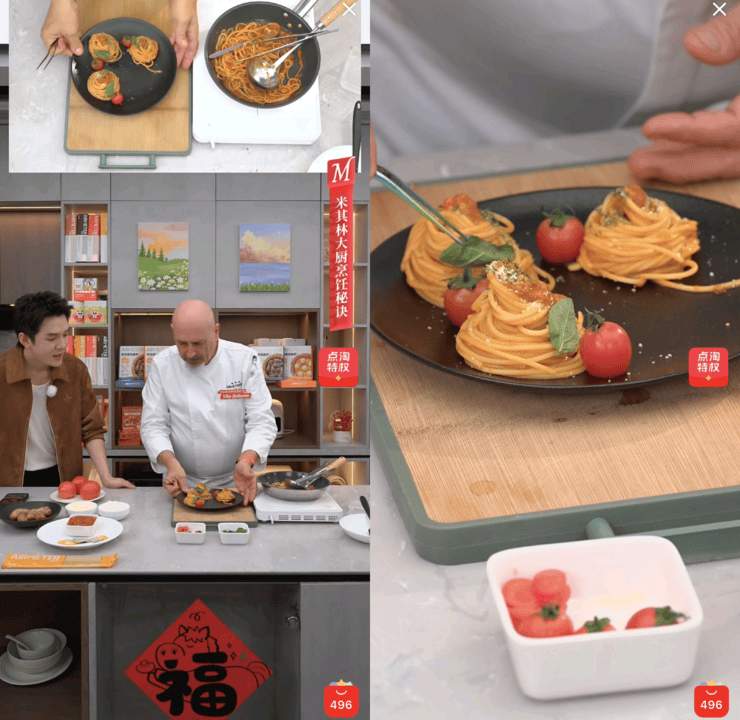
Core Insights - The Tmall New Year shopping festival is witnessing a surge in sales of kitchen small appliances, with products like vacuum machines, air fryers, health pots, soy milk machines, and wall-breaking machines ranking among the top five in live streaming sales, showing significant growth compared to the same period last year [1] Group 1: Consumer Behavior - Consumers are not becoming "lazy"; instead, they are finding a balance between wanting to cook and lacking culinary skills, leading to a demand for convenient cooking tools [3] - Young consumers are no longer satisfied with just "making do" with meals; they seek to create dishes that have a sense of ritual using convenient appliances [3] Group 2: Live Streaming Influence - Live streaming sessions, particularly those hosted by influencers like Li Jiaqi, showcase the transformation of products into appealing food outcomes, enhancing consumer understanding of the appliances' usage and benefits [5] - The immersive demonstration style in live streams highlights the high cost-performance ratio of previously lesser-known products, aligning with young consumers' pursuit of a refined lifestyle [5] Group 3: Social Media and Cooking Trends - The lowering of cooking barriers through small appliances has encouraged many novice cooks to attempt homemade meals, leading to the sharing of their culinary achievements on social media platforms [5] - The popularity of kitchen small appliances during the New Year festival reflects consumers' pursuit of quality of life, embodying the essence of "self-satisfying consumption" by enhancing satisfaction and happiness in daily meals [5] Group 4: Role of Live Streaming - Live streaming serves multiple roles: it is a showcase for product functionality, an interactive platform for user communication, and a trust bridge connecting brands with consumers [5] - The "visible, learnable, and usable" presentation style in live streams transforms small appliances from mere kitchen tools into significant contributors to home dining upgrades and enhanced life rituals [5]

曾卖爆1000万台,豆浆机为何突然消失?
3 6 Ke· 2026-01-22 09:45
Group 1 - The article discusses the decline in popularity of the soybean milk machine, which was once a household staple in China, and how it has seemingly vanished from public discourse [1][2] - The soybean milk machine was invented by Wang Xuning in 1994, simplifying the traditional process of making soybean milk, but it initially struggled to gain traction due to high costs and the low price of ready-made soybean milk [5][6][7] - The turning point for the soybean milk machine came in 2008 after the melamine scandal, leading to a surge in sales as consumers sought safer alternatives, resulting in over 10 million units sold that year [9][13][15] Group 2 - Despite its initial success, the soybean milk machine faced challenges due to its cumbersome cleaning process, leading to many users abandoning it after a few uses [19][22] - Sales began to decline after 2010, with revenue from the soybean milk machine dropping from 4.04 billion to 3.15 billion yuan between 2010 and 2017, indicating a significant downturn [24] - The emergence of the high-speed blender, or "破壁机," provided a new opportunity for the company, which adapted the product to include heating capabilities, thus combining the functions of both machines [25][32][34] Group 3 - The high-speed blender gained popularity due to its versatility and ability to produce smoother beverages, with market size doubling from 2.26 billion to 4.61 billion yuan in just one year [37] - However, the high-speed blender also faced issues such as excessive noise and cleaning difficulties, leading to a decline in its market size after an initial peak in 2018 [41][46] - The company has attempted to diversify its product offerings, including acquisitions and new product launches, but these efforts have largely failed to yield positive results [47][50]

这些安全要点请牢记
Xin Lang Cai Jing· 2026-01-18 17:25
Core Viewpoint - The article highlights the potential fire hazards associated with the use of timed household appliances, emphasizing the need for safety precautions to mitigate risks [1][2]. Group 1: Incident Overview - A recent fire incident in Jinhua, Zhejiang, was attributed to a timed appliance, specifically a soy milk maker, which was left running unattended [1]. - The fire resulted in significant damage, engulfing furniture in flames, and serves as a warning to the public regarding the safety risks of using timed functions on appliances [1]. Group 2: Causes of Fire Hazards - Fire hazards from timed appliances can arise from several factors, including: - Core malfunctions such as failure of temperature sensors or overheating protection devices, leading to overheating and potential ignition [1]. - The nature of timed functions extends the period of unsupervised operation, making it difficult to address faults promptly, which can escalate small fires into larger disasters [1]. - Design flaws and aging components, including poor-quality materials and electrical connections, can create sparks or localized overheating [1]. - Improper usage, such as insufficient water, incorrect placement of the inner pot, or blocked vents, can increase risks [1]. - Environmental hazards, where appliances are placed on flammable surfaces or surrounded by combustible materials, can lead to ignition under high temperatures [1]. Group 3: Safety Recommendations - To safely use timed functions on appliances, the following six protective measures are recommended: - Disconnect power when leaving home for extended periods or before sleeping to eliminate risk [2]. - Regularly replace appliances that exceed their safe usage lifespan of 5 to 8 years [2]. - Clean and dry appliances after each use to ensure proper heat dissipation [2]. - Place appliances on stable, heat-resistant, and ventilated surfaces, away from flammable materials [2]. - Use timed functions cautiously, avoiding unattended operation, and ensure the area is clear of clutter; households should have fire extinguishers and smart smoke detection systems [2]. - Choose certified products and regularly inspect power cords and plugs for damage or overheating, ceasing use if issues are found [2].
一杯定时豆浆,差点把家“煮”没了……
Xin Hua Wang· 2026-01-06 12:16
Core Viewpoint - A recent fire incident in Jinhua, Zhejiang, was triggered by a malfunctioning soy milk machine, highlighting the importance of home safety measures and the need for proper fire prevention equipment [3][4][6]. Group 1: Incident Details - The fire occurred early in the morning when a tenant was awakened by the sound of burning, finding their living room engulfed in flames [4]. - Firefighters responded quickly, and all residents were evacuated safely, with no injuries reported [4]. - The fire caused significant damage, with the dining table and surrounding items nearly destroyed, and walls and floors heavily charred [4]. Group 2: Safety Recommendations - It is advised to keep fire extinguishers at home, as the absence of one hindered the initial response to the fire [6]. - Installing smoke detectors is recommended to provide early warnings, potentially allowing for timely evacuation and firefighting efforts [9]. - Users are encouraged to purchase appliances with national 3C certification and to maintain them properly to prevent electrical fires [11][12].

家电“旧地图”换道宠物“新蓝海”,一个“外行”厂长在拼多多的转型路
Feng Huang Wang Cai Jing· 2026-01-05 13:11
Core Insights - The article highlights the challenges faced by traditional manufacturers in the small appliance industry and how they can leverage e-commerce platforms like Pinduoduo to innovate and transform their business models [1][2][6]. Group 1: Traditional Manufacturing Challenges - Traditional manufacturers are often trapped in high-cost, low-margin production models, making it difficult to adapt to market changes [1][2]. - The lengthy product development cycles and complex distribution channels hinder responsiveness to consumer feedback, leading to missed opportunities for innovation [2][4]. - The rise of e-commerce has intensified competition in low-barrier industries like small appliances, resulting in further pressure on profit margins due to product homogeneity [2][4]. Group 2: Innovative Solutions through E-commerce - The case of a small appliance manufacturer pivoting to the pet care market illustrates how Pinduoduo's platform can provide valuable market insights through user feedback, enabling manufacturers to identify new opportunities [3][4]. - By analyzing consumer behavior on Pinduoduo, the manufacturer was able to develop a pet warming bowl that addressed emotional and practical needs of pet owners, thus tapping into a new market segment [4][6]. - The use of existing product lines and minimal modifications allowed for a cost-effective approach to innovation, akin to software development practices [5][6]. Group 3: Competitive Environment and Support - Pinduoduo fosters a fair competitive environment where products can succeed based on quality and consumer value rather than just low pricing, allowing manufacturers to achieve profitability through effective product differentiation [7][8]. - The platform's proactive support for successful products, including marketing and promotional assistance, enhances the ability of manufacturers to scale their operations [8]. - The transformation story of the manufacturer exemplifies how traditional manufacturing capabilities can be effectively combined with new platform mechanisms to drive growth and innovation in the industry [8].

九阳股份二连板!前一天刚澄清“哈基米”豆浆不是公司产品
Xin Lang Cai Jing· 2025-11-14 05:40
Core Viewpoint - The stock of Joyoung Co., Ltd. (九阳股份) continues to be favored in the capital market despite clarifying that it does not have the trending product "Hachimi Soy Milk" [3][5]. Company Overview - Joyoung Co., Ltd. focuses on kitchen small appliances and has no involvement in food or beverage products [5]. - The company has divested its 25.5001% stake in Hangzhou Joyoung Bean Products Co., Ltd. to refocus on its core small appliance business [7]. Recent Performance - On November 14, Joyoung's stock price reached 12.17 CNY per share, with a market capitalization of approximately 9.286 billion CNY, marking a consecutive trading limit increase [3]. - The company reported a revenue of 15.98 billion CNY for Q3, a year-on-year decrease of 10.99%, while net profit was 854,600 CNY, a year-on-year increase of 101.11% [8]. - For the first three quarters, revenue was 55.85 billion CNY, down 9.66% year-on-year, and net profit was 124 million CNY, up 26.03% year-on-year [8]. Product Launch - Hangzhou Joyoung Bean Products Co., Ltd. launched a new product called "Hachimi North-South Green Bean Soy Milk," which gained popularity on social media [5][6]. - The product is marketed as a plant-based beverage with a shelf life of six months and contains ingredients such as water, green beans, and sugar [6][7].

三季报已阅,小家电需要新故事
3 6 Ke· 2025-11-05 04:00
Core Insights - The small appliance industry has experienced significant growth post a "black swan" event five years ago, but recent quarterly reports indicate a divergence in performance among companies within the sector [2][12] - Leading companies in the cleaning appliance segment, such as Ecovacs and Roborock, continue to show strong growth, while traditional kitchen appliance manufacturers like Supor and Joyoung face revenue declines [2][12] Cleaning Appliances - Ecovacs reported a revenue of 12.877 billion yuan for the first three quarters, a year-on-year increase of 25.93%, with a net profit of 1.418 billion yuan, reflecting a staggering growth of 130.55% [3] - Roborock achieved a revenue of 4.163 billion yuan in the third quarter, a year-on-year growth of 60.71%, significantly surpassing the global average growth rate of 28% for smart cleaning devices [3] - The growth in cleaning appliances is driven by continuous technological upgrades, product innovations, and global channel expansion [3][4] - Despite high growth rates, Ecovacs faces challenges with a sequential decline in revenue and net profit in the third quarter compared to the second quarter, indicating potential market saturation [5] - Roborock is experiencing a "revenue growth without profit increase" scenario, with a net profit decline of 29.51% despite a revenue increase of 72.22% [6] Kitchen Appliances - The kitchen appliance sector is under pressure, with Supor reporting a slight revenue increase of 2.33% but a net profit decline of 4.66% for the first three quarters [7] - Joyoung's revenue decreased by 9.7% in the first three quarters, highlighting the overall market demand weakness in kitchen appliances [7] - Supor's performance is hindered by a reliance on the domestic market, which has stagnated, and an over-dependence on its parent company, SEB Group, for overseas sales [8] - Joyoung needs to find new growth avenues as its traditional product lines, like soybean milk machines, face declining market interest due to increased competition [11] Market Dynamics - The small appliance industry is witnessing a clear divide in performance based on product categories, with cleaning appliances benefiting from low penetration rates and innovation, while kitchen appliances struggle with market transformation challenges [12] - Companies like Bear Electric have managed to achieve growth through product innovation and channel optimization, indicating that adaptability is key in the current market landscape [12] - Recent developments in US-China trade relations may provide opportunities for small appliance companies to negotiate better pricing with overseas clients, potentially benefiting manufacturers like Supor [12]


家电行业情绪消费专题系列之三:积极拥抱具备情绪价值的家电新消费
Chan Ye Xin Xi Wang· 2025-11-04 02:20
Group 1 - The core viewpoint is that China's per capita disposable income is increasing, leading to a rise in service consumption expenditure as a proportion of total consumption [1] - Per capita disposable income in China rose from 30,733 yuan in 2019 to 41,314 yuan in 2024, with a CAGR of 6.10% [1] - The proportion of per capita service consumption expenditure in total consumption increased from 42.61% in 2020 to 46.11% in 2024 [1] Group 2 - Consumers are shifting from material consumption to a pursuit of spiritual life, reflected in the growth of tourism and cultural industries [2] - The emotional economy market in China is steadily increasing, with a projected market size of 23,077.67 billion yuan in 2024, expected to grow to 27,185.50 billion yuan in 2025, representing a year-on-year growth of 17.80% [2] - The emotional consumption market is categorized into three main types: strong stickiness consumption, social consumption, and self-pleasing consumption [3] Group 3 - Investment recommendations suggest embracing new home appliances with emotional value, focusing on three areas: panoramic/action cameras, robotic vacuum cleaners, and kitchen small appliances [4] - The market for handheld smart imaging devices, such as panoramic and action cameras, is expected to enter a high growth phase, driven by consumer demand for emotional and experiential consumption [5] - The robotic vacuum cleaner segment is experiencing rapid growth, with domestic brands expanding their global market share, indicating a shift towards technology-driven emotional value in home cleaning [7] - Kitchen small appliances, such as coffee machines and juice makers, are expected to grow due to their health, convenience, and social attributes, with a focus on emotional value [8]