长久期债券

Search documents
华源晨会精粹20260318-20260318
Hua Yuan Zheng Quan· 2026-03-18 11:10
Group 1: Economic Data Overview - In January-February 2026, the year-on-year growth of social retail sales was +2.8%, an increase of 1.9 percentage points compared to December 2025, but a decrease of 0.89 percentage points compared to the entire year of 2025 [6][7] - Fixed asset investment (FAI) in January-February 2026 showed a year-on-year increase of +1.8%, recovering from a decline of -3.8% in 2025, primarily driven by strong infrastructure investment [8][9] - The industrial added value for large-scale enterprises increased by +6.3% year-on-year in January-February 2026, marking a significant acceleration compared to December 2025 [10][11] Group 2: Banking Sector Insights - The banking sector is experiencing a new normal of "quality over quantity" in credit growth, with a projected loan growth rate of around 6.0% for 2026, influenced by fiscal policies and a focus on supported industries [14][15] - Profitability in the banking sector is stabilizing, with retail risks still present but manageable; large state-owned banks are expected to maintain dividend value due to low valuations [16][17] - Investment strategies should focus on two main lines: banks with strong wealth management capabilities and low valuation targets, as well as city and rural commercial banks with controllable risks and strong profit certainty [17] Group 3: Jiangsu Bank Analysis - Jiangsu Bank, a leading city commercial bank in the Yangtze River Delta, holds a significant market share in loans and deposits within Jiangsu province, with a loan balance accounting for 7.23% of the province's total [19][20] - The bank's corporate lending is supported by strong demand in manufacturing and infrastructure, while retail lending is steadily growing, particularly in consumer loans [20][21] - Jiangsu Bank's financial performance is robust, with a return on equity (ROE) significantly higher than the industry average, and a declining non-performing loan ratio of 0.84% [22][23] Group 4: HaiNeng Technology Overview - HaiNeng Technology reported a revenue of 362 million yuan in 2025, a year-on-year increase of 16.63%, with a net profit of 42.13 million yuan, reflecting a substantial growth in profitability [25][26] - The company is expanding its product lines in high-end scientific instruments, with significant growth in sample preparation and chromatography products, and is expected to continue this trend in 2026 [26][27] - HaiNeng Technology emphasizes shareholder returns, planning to distribute a cash dividend of 1.00 yuan per 10 shares, alongside a share buyback of 348,900 shares [30]

38万亿险资调仓:固收打底但增配放缓 股票占比创近年新高
2 1 Shi Ji Jing Ji Bao Dao· 2026-02-27 10:34
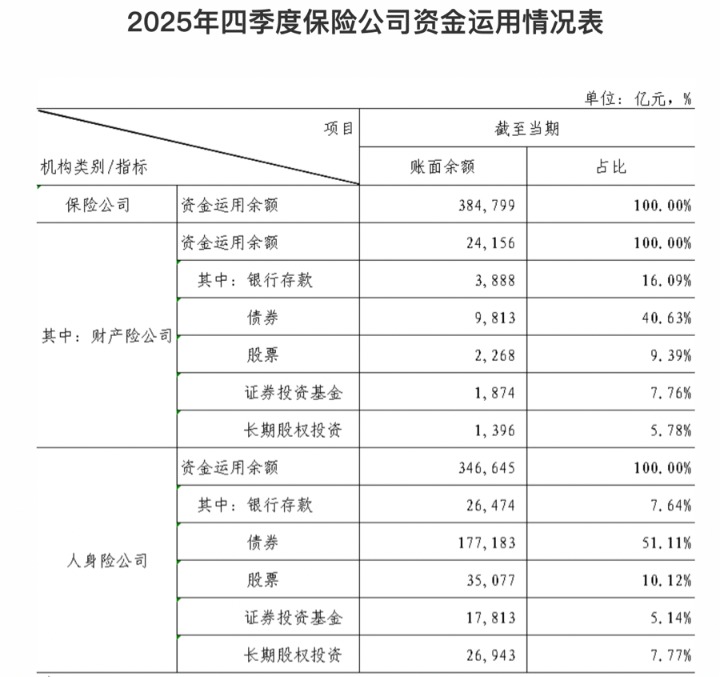
Core Insights - The insurance asset allocation is transitioning from a dominance of fixed income to a more diversified structure, incorporating equities and alternative investments, supported by a steady growth in premium income on the liability side [1] Group 1: Asset Allocation Trends - As of the end of Q4 2025, the total balance of insurance funds reached 38 trillion yuan, marking a 15.7% increase from the beginning of the year, the highest annual growth rate since 2021 [1] - Life insurance companies remain the primary contributors, with a fund balance of 34.66 trillion yuan, up 15.73% year-on-year, accounting for approximately 90.1% of the total industry scale [1] - Property insurance companies had a fund balance of 2.42 trillion yuan, increasing by 8.78%, representing about 6.27% of the total [1] Group 2: Fixed Income and Bond Investments - Long-term bonds continue to be a crucial component of insurance companies' investment strategies, with a combined bond investment balance of approximately 18.7 trillion yuan, making up 48.6% of the total fund balance, a slight increase of 0.7 percentage points from the beginning of the year [2] - The average yield of 10-year government bonds in 2025 decreased by about 40 basis points compared to 2024, leading to a slowdown in the pace of long-term bond allocation by insurance companies [2] - The proportion of bank deposits decreased to about 7.6%, down approximately 0.8 percentage points from the beginning of the year, while non-standard assets also saw a decline [2] Group 3: Equity Investments - Equity assets have become the main focus of reallocation, with the combined proportion of stocks, funds, and long-term equity investments reaching approximately 23.0%, an increase of 2.6 percentage points from the beginning of the year, totaling an increase of 1.97 trillion yuan [5] - The stock allocation balance reached about 3.73 trillion yuan, with a net increase of 1.31 trillion yuan over the year, accounting for 9.68% of the total fund balance, the highest level since Q2 2022 [5] - The balance of securities investment funds was 1.97 trillion yuan, with a net increase of 289.9 billion yuan, representing 5.3% of the total fund balance, showing a slight increase [5] Group 4: Future Outlook - In 2026, insurance funds are expected to continue increasing their allocation to equity assets, driven by policy support and liability-side factors, becoming a significant incremental force in the market [7] - A survey indicated that most insurance institutions are optimistic about domestic investment assets, particularly stocks and securities investment funds, with a tendency to slightly increase stock investments [8] - The focus on A-shares is expected to remain strong, with institutions favoring sectors such as electronics, non-ferrous metals, and pharmaceuticals [9]

38万亿险资调仓:固收打底但增配放缓,股票占比创近年新高
2 1 Shi Ji Jing Ji Bao Dao· 2026-02-27 07:46
Core Viewpoint - The insurance asset allocation is gradually shifting from a focus on fixed income to a more diversified structure that includes equities and alternative investments, supported by steady growth in premium income on the liability side [1][3]. Group 1: Asset Allocation Overview - As of the end of Q4 2025, the total balance of insurance funds reached 38 trillion yuan, marking a 15.7% increase from the beginning of the year, the highest annual growth rate since 2021 [1]. - Life insurance companies accounted for approximately 90.1% of the total insurance fund balance, with a balance of 34.66 trillion yuan, growing by 15.73% year-on-year [1][2]. - Property insurance companies had a fund balance of 2.42 trillion yuan, representing an 8.78% increase, making up about 6.27% of the total [1][2]. Group 2: Fixed Income and Equity Investments - Bonds remain a crucial component of insurance companies' portfolios, with a combined bond investment balance of approximately 18.7 trillion yuan, accounting for 48.6% of total fund utilization, a slight increase of 0.7 percentage points from the beginning of the year [3]. - The average yield of 10-year government bonds in 2025 decreased by about 40 basis points compared to 2024, leading to a slowdown in the pace of long-term bond allocation by insurers [3]. - The proportion of equity investments in the insurance fund balance reached a near four-year high, with stocks accounting for approximately 9.68% of total assets, a net increase of 1.31 trillion yuan over the year [5][6]. Group 3: Future Outlook and Trends - Insurance capital is expected to continue increasing its allocation to equity assets in 2026, driven by policy support and liability-side factors, positioning it as a significant incremental force in the market [7][8]. - A survey indicated that most insurance institutions are optimistic about the A-share market in 2026, particularly favoring sectors such as electronics, non-ferrous metals, and pharmaceuticals [10]. - The majority of insurance institutions plan to slightly increase their allocations to A-shares and public funds, with a focus on stock-type funds and mixed equity funds [10].
政策面前瞻:多元工具下的宽松红利
Sou Hu Cai Jing· 2025-12-26 01:07
Group 1 - The overall change in monetary policy this year includes a shift in the anchor of policy interest rates and diversification of monetary policy tools, with less aggressive easing than initially expected for next year [1] - The central bank's focus on maintaining reasonable interest rate comparisons is crucial, especially as market interest rates may enter a "no man's land" in 2024, raising questions about the pricing logic of long-duration bonds [1][2] - The anticipated return of funds from off-balance sheet to on-balance sheet for banks is expected to enhance the importance of asset pricing comparisons in the coming year [2] Group 2 - The central bank's actions, including the cessation of bond sales and the initiation of bond purchases, have led to significant mid-term liquidity injections through various tools, indicating a more diverse set of liquidity provision methods for next year [2][3] - Market focus is expected to shift towards the duration and structure of bond purchases by the central bank, as well as the operational details of various monetary policy tools [3] - A stable liquidity environment is anticipated for next year, with expectations of one or two interest rate cuts or reserve requirement ratio reductions, primarily aligned with major policy meetings [3] Group 3 - Broad credit is expected to expand moderately, driven by a backlog of projects ready for next year, with government remaining the primary driver of leverage, while household and corporate leverage intentions are relatively weak [4] - The ten-year government bond ETF (511260) is highlighted as a valuable investment, aligning with banks' needs to return off-balance sheet assets and providing opportunities for capturing returns in a low-interest-rate environment [4]
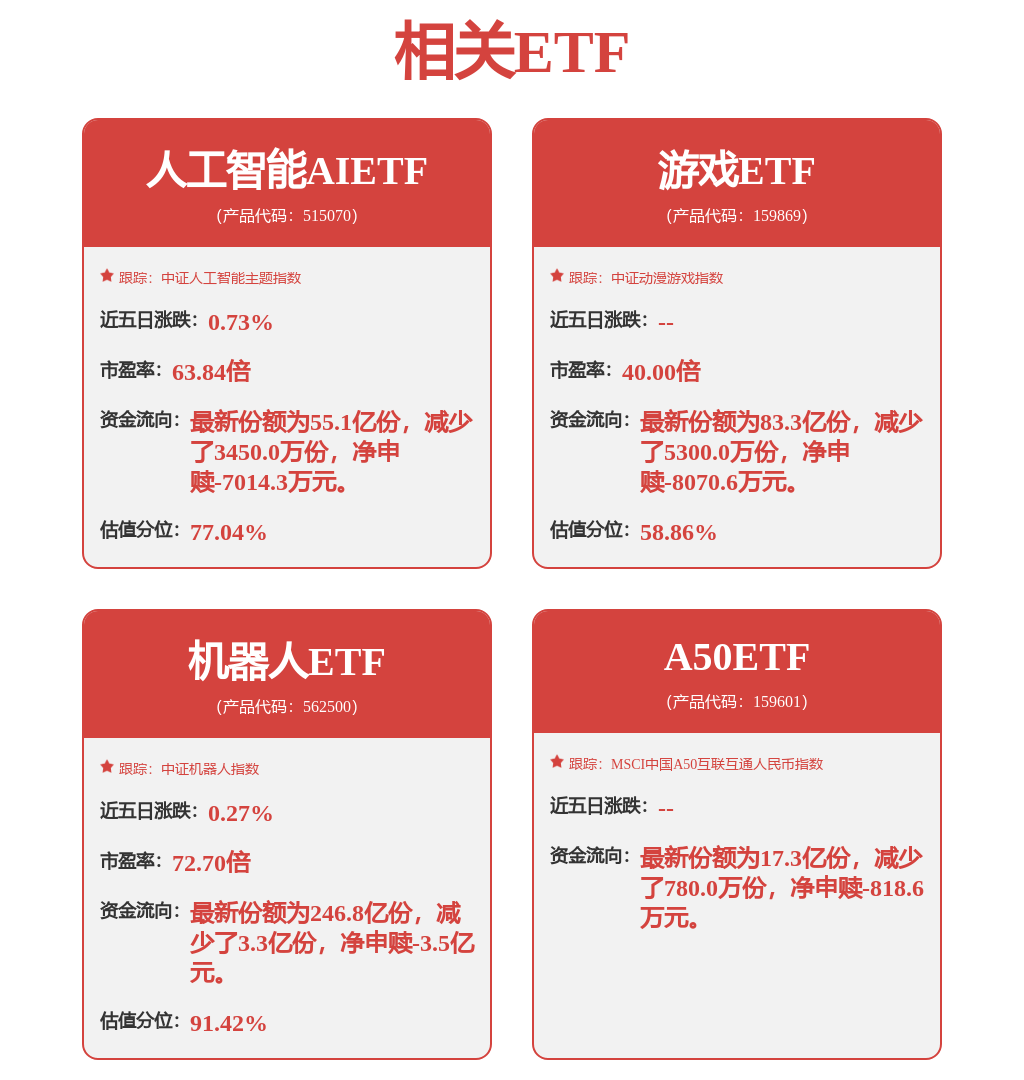
【招银研究】地缘冲突升温,海外动能趋弱——宏观与策略周度前瞻(2025.06.23-06.27)
招商银行研究· 2025-06-23 09:39
Economic Overview - The internal momentum of the US economy is weakening, with the Atlanta Fed's GDPNOW model predicting a 0.4 percentage point decline in Q2 real GDP growth to 3.4% [2] - Personal consumption expenditure (PCE) growth has decreased by 0.6 percentage points to 1.9%, primarily due to a slowdown in the services sector [2] - Private investment growth (excluding inventory) has dropped by 0.8 percentage points to 0.4%, with significant contractions in real estate (-4.4%) and construction (-3.4%) [2] - The job market remains stable, with weekly initial jobless claims falling by 0.3 thousand to 245 thousand, aligning with seasonal levels [2] - The worsening situation in the Middle East is increasing inflationary pressures, as indicated by the Truflation daily inflation index rising by 8 basis points to 2.14% [2] Fiscal and Monetary Policy - Fiscal policy remains expansionary, with a weekly fiscal surplus of $18.5 billion, which is weaker than seasonal levels but stronger than historical averages [3] - The Federal Reserve maintained a wait-and-see stance during the June meeting, with the dot plot indicating that 7 out of 18 members do not expect rate cuts this year [3] Market Performance - Overseas markets showed muted performance last week, with the US dollar slightly rebounding and US Treasury yields fluctuating [4] - The US stock market was nearly flat, up 0.1%, with expectations that the most significant tariff impacts have passed, potentially leading to a renewed upward trend driven by corporate earnings resilience [4] - However, high valuations and increased tariffs may limit upward potential [4] - The strategy suggests maintaining a neutral position on US stocks with a balanced allocation [4] Chinese Economic Conditions - Domestic demand shows mixed signals, with strong automotive consumption but a slowdown in real estate transactions [6] - In June, average daily retail sales of passenger cars reached 48,000 units, a 17% year-on-year increase [7] - Real estate sales are declining, with new home transaction volumes in 30 major cities dropping by 8.6% year-on-year [7] - The land market is also cooling, with land supply and transaction volumes decreasing [7] External Demand and Trade - High-frequency data indicates a potential slowdown in China's export growth in June, with port cargo and container throughput growth rates declining [8] - Exports to the US may have seen some recovery, while exports to non-US regions are expected to decline from previous highs [8] Fiscal Performance - In May, fiscal revenue growth slowed, with public budget revenue increasing by only 0.1% year-on-year [9] - Tax revenue growth decreased to 0.6%, while non-tax revenue turned negative for the first time in 2024 [9] - Government spending growth was also slower, with a 2.6% increase year-on-year [9] Market Strategy - The bond market is showing strength, with short-term rates performing well due to a stable funding environment [10] - The A-share market experienced a slight decline, with uncertainties in corporate earnings and the need for further policy support for real estate and consumption [12] - The Hong Kong stock market is facing risks of correction, with high valuations and unstable fundamentals [12]