零跑 Lafa5

Search documents
——汽车行业周报:阿维塔递交港股IPO申请,蔚小理相继披露三季度财报-20251201
Guohai Securities· 2025-12-01 11:32
Investment Rating - The report maintains a "Recommended" rating for the automotive sector [2] Core Insights - The automotive sector outperformed the Shanghai Composite Index during the week of November 24 to November 28, 2025, with a sector index increase of 3.2% compared to the index's 1.4% rise [5][16] - The report highlights the submission of an IPO application by Avita Technology to the Hong Kong Stock Exchange, marking a significant step in its global strategy [12][30] - The report notes that the new energy vehicle sales reached 177.2 million units in October 2025, accounting for 51.6% of total new vehicle sales [34] Summary by Sections Recent Trends - The automotive sector index increased by 3.2% from November 24 to November 28, 2025, with passenger vehicles, commercial vehicles, parts, and services showing respective increases of 2.6%, 2.0%, 3.7%, and 3.9% [5][16] - The report indicates that major players like Li Auto, Xpeng, NIO, and Geely saw stock price increases of 4.8%, 6.9%, 1.3%, 12.2%, and 1.4% respectively during the same period [5][16] Company Performance - NIO reported a revenue of 21.79 billion yuan for Q3 2025, a year-on-year increase of 16.7%, while its net loss narrowed to 3.48 billion yuan [13][31] - Xpeng's Q3 revenue reached 20.38 billion yuan, showing a significant year-on-year growth of 101.8% [13][31] - Li Auto experienced a decline in deliveries by 39.0% year-on-year, with a revenue drop of 36.2% to 27.365 billion yuan, resulting in a net loss of 624 million yuan [13][31] Market Outlook - The report anticipates a potential decline in passenger vehicle year-on-year growth by the end of 2025 due to high base effects and the temporary withdrawal of certain subsidies [15] - It suggests that the high-end passenger vehicle market may perform better in 2026, particularly for domestic brands with offerings above 300,000 yuan [15] - Recommendations include companies like JAC Motors, Geely, Xpeng, Great Wall Motors, SAIC Motor, Li Auto, Seres, and BYD for passenger vehicles [15] Key Recommendations - For automotive parts, the report recommends companies benefiting from the penetration of high-level intelligence into lower-priced models, including Huayang Group, Desay SV, and Kobot [15][6] - In the commercial vehicle sector, it suggests companies like Weichai Power, Foton Motor, and China National Heavy Duty Truck Group as beneficiaries of the recovering demand for heavy trucks [15][6]


Q4基本面平稳,看好汽车板块1Q26筑底/上行:汽车行业周报(20251124-20251130)-20251130
Huachuang Securities· 2025-11-30 11:42
Investment Rating - The report maintains a "Recommendation" rating for the automotive sector, indicating a positive outlook for investment opportunities in the coming quarters [5]. Core Insights - The automotive sector is expected to stabilize in Q4 2025, with potential upward movement in Q1 2026, driven by policy direction, profit expectations, and valuation adjustments [1]. - Recent retail performance has been subdued due to the impact of trade-in incentives, and the Guangzhou Auto Show has had limited effect on new car sales [1]. - The report highlights the rebound of state-owned enterprises in vehicle manufacturing, influenced by catalyst factors [1]. Data Tracking - In late November, the discount rate for vehicles increased slightly to 10.1%, with a month-on-month rise of 0.1 percentage points and a year-on-year increase of 1.6 percentage points [3]. - October wholesale vehicle sales reached 2.96 million units, a year-on-year increase of 7.5% and a month-on-month increase of 3.6% [3]. - Retail sales in October were 2.09 million units, reflecting a year-on-year decline of 9.2% and a month-on-month decline of 6.4% [3]. Market Performance - The automotive sector saw a weekly increase of 3.33%, ranking 11th among sectors [9]. - The overall market indices also showed positive movement, with the Shanghai Composite Index rising by 1.40% and the ChiNext Index increasing by 4.54% [9]. Industry News - As of October 2025, the automotive industry reported a profit of 389.5 billion yuan, a year-on-year increase of 4.4%, with total revenue reaching 8,877.8 billion yuan [29]. - The inventory level for passenger vehicles at the end of October was 3.41 million units, indicating a seasonal increase in stock [29]. - New energy vehicle company Li Auto announced plans to release AI-powered accessories, indicating a trend towards integrating advanced technology in vehicles [29].




汽车周报:政策交易逐渐升温,T链审厂定点再催化-20251130
Shenwan Hongyuan Securities· 2025-11-30 05:14
Investment Rating - The report maintains a positive outlook on the automotive industry, particularly focusing on the robotics supply chain and related companies [4]. Core Viewpoints - The report highlights that the stock prices of companies in the robotics supply chain have adjusted recently, leading to lower expectations, while industry advancements continue [4]. - Key companies to watch include Tesla and Xiaopeng, along with robotics supply chain firms such as Hengbo, Shuanghuan, Longsheng, Fuda, and Yinlun [4]. - The report emphasizes the importance of companies with strong performance support and relatively low valuations, recommending KBD, Xingyu, Jifeng, and Songyuan [4]. - The report also notes the significant changes brought about by state-owned enterprise reforms, particularly in SAIC and Dongfeng [4]. Industry Updates - According to the China Passenger Car Association, the average daily retail sales of passenger cars in the third week of November were 71,000 units, a year-on-year decrease of 7% but an increase of 7% compared to the previous month [4]. - Recent increases in traditional and new energy raw material price indices were noted, with traditional car raw material prices rising by 0.9% week-on-week and 0.2% month-on-month, while new energy vehicle raw material prices increased by 1.6% week-on-week and 1.4% month-on-month [4]. - The total transaction value of the automotive industry for the week was 402.936 billion yuan, with a week-on-week decrease of 4.29% [4]. Market Situation - The automotive industry index closed at 7545.76 points, with a weekly increase of 3.24%, outperforming the CSI 300 index, which rose by 1.64% [9]. - A total of 252 stocks in the industry rose, while 16 fell, with the largest gainers being Tianpu Co., Chaojie Co., and Fusa Technology, which increased by 35.3%, 28.4%, and 27.3% respectively [13]. - The report identifies key events, including the launch of the Leap Lafa5, which aims to set a new benchmark in the 100,000 yuan pure electric sedan market [5][27]. Investment Analysis - The report recommends focusing on domestic leading manufacturers such as NIO, Xiaomi, Xiaopeng, and Li Auto, as well as companies involved in intelligent trends like Huawei's HarmonyOS [4]. - It suggests monitoring state-owned enterprise consolidations, particularly in SAIC, Dongfeng, and Changan [4]. - The report highlights component manufacturers with strong growth potential and robotics layouts, recommending Xingyu, Fuyao Glass, New Spring, Fuda, Shuanghuan, and Yinlun [4]. Key Events - The report notes significant partnerships and product launches, including BYD's collaboration with Midea to create a smart living paradigm and Changan's plans to release its first vehicle-mounted robot in Q1 next year [20][21]. - The report also mentions the launch of the new electric sedan Lafa5 by Leap, which targets the global market with competitive pricing and features [5][27].
汽车行业周报:小鹏发布四项“物理AI”应用,IRON机器人引关注-20251109
CMS· 2025-11-09 10:00
Investment Rating - The report maintains a "Recommended" rating for the automotive industry, indicating a positive outlook for the sector's fundamentals and expectations for the industry index to outperform the benchmark index [5]. Core Insights - The automotive industry experienced an overall decline of 1.6% during the week from November 2 to November 8, 2025, with significant drops in the passenger and commercial vehicle segments, which fell by 3.4% and 3.0% respectively [2][11]. - Xpeng Motors showcased its advancements in "physical AI" at its technology day, introducing the second-generation VLA large model and the humanoid robot IRON, which is expected to be mass-produced by the end of 2026 [1][25][28]. - The report highlights the performance of individual stocks, with notable gains for Haima Automobile (+50.0%), Weichai Power (+22.1%), and ST Meichen (+17.2%), while Hengshuai Co. (-20.8%) and Biaobang Co. (-20.0%) faced significant declines [3][16]. Market Performance Overview - The automotive sector's secondary segments saw a comprehensive decline, with automotive parts and services experiencing smaller drops of -0.2% and -0.4% respectively, while tire and dealership segments showed positive growth of +1.9% and +1.8% [2][11]. - The overall market indices for the week showed mixed results, with the Shanghai A index rising by 1.1% and the Shenzhen A index by 0.4%, contrasting with the automotive sector's decline [9]. Recent Developments - Xpeng announced its entry into the Robotaxi market, planning to launch three self-developed Robotaxi models in 2026, which will utilize the second-generation VLA model and feature advanced AI capabilities [28]. - BYD plans to launch its high-end brand "Yangwang" in the Middle East in early 2026, marking its expansion into the luxury vehicle market [24]. - The report notes the successful IPOs of autonomous driving companies, including WeRide and Pony.ai, which reflect growing investor interest in the sector [31].


紧抓科技主线,寻找低估成长新机
Shenwan Hongyuan Securities· 2025-10-13 12:39
Investment Rating - The report maintains a positive investment rating for the automotive industry, highlighting potential opportunities in companies with strong performance and growth potential, particularly in the technology and high-end sectors [3][11]. Core Insights - The report emphasizes that the fourth quarter will see a surge in market demand due to tightening subsidy limits, with a focus on companies capable of effectively releasing supply, such as Geely, BYD, Great Wall, Li Auto, and NIO [3]. - It suggests that in an uncertain consumer environment, attention should be directed towards "future industries" where technology continues to create excess returns, recommending companies in robotics, AI, and low-altitude economy sectors [3]. - The report also notes significant changes due to state-owned enterprise reforms, particularly in companies like SAIC and Dongfeng, which should be monitored closely [3]. Industry Situation Update - In the 39th week of 2025, retail sales of passenger cars reached 650,000 units, a month-on-month increase of 27.95% but a year-on-year decrease of 1.02%. Traditional energy vehicle sales were 280,000 units, up 32.70% month-on-month but down 15.07% year-on-year, while new energy vehicle sales were 370,000 units, up 24.58% month-on-month and up 13.15% year-on-year, with a penetration rate of 56.92% [3]. - The report indicates that raw material prices for traditional and new energy vehicles have risen recently, with traditional vehicle raw material price index increasing by 0.8% week-on-week and decreasing by 1.3% month-on-month, while the new energy vehicle raw material price index increased by 1.2% week-on-week and 1.8% month-on-month [3][47]. Market Situation Update - The total transaction value of the automotive industry this week was 266.97 billion yuan, with a daily average decrease of 29.72%. The automotive industry index closed at 8141.23 points, down 1.26% for the week, which is a larger decline compared to the Shanghai and Shenzhen 300 index, which fell by 0.51% [3][11]. - Among individual stocks, 132 rose while 135 fell, with the largest gainers being Meili Technology, Jinlong Automobile, and Kabeiyi, which increased by 18.9%, 13.7%, and 13.2% respectively. The largest decliners were Mingxin Xuteng, Meichen Technology, and Hengshuai Co., which fell by 18.5%, 17.1%, and 10.6% respectively [3][16]. Important Events - The report highlights several key events, including the announcement of the 400th batch of new car approvals by the Ministry of Industry and Information Technology, which includes models from Anhui Volkswagen, Leap Motor, and others [4][29]. - It also notes the joint announcement by three departments regarding the technical requirements for the exemption of vehicle purchase tax for new energy vehicles from 2026 to 2027 [7][8]. - Additionally, the Shanghai government has adjusted the rules for the vehicle trade-in subsidy program, which will be implemented from October 13, 2025, to December 31, 2025 [9][10]. Investment Analysis Recommendations - The report recommends focusing on domestic leading manufacturers such as NIO, Xiaomi, Xiaopeng, and Li Auto, as well as companies that exemplify the trend towards smart technology, such as Jianghuai Automobile and Seres [3]. - It suggests monitoring state-owned enterprise consolidations, particularly with SAIC Group, Dongfeng Group, and Changan Automobile [3]. - The report also highlights component manufacturers with strong performance growth and overseas expansion capabilities, recommending companies like Fuyao Glass, New Spring, and others [3].




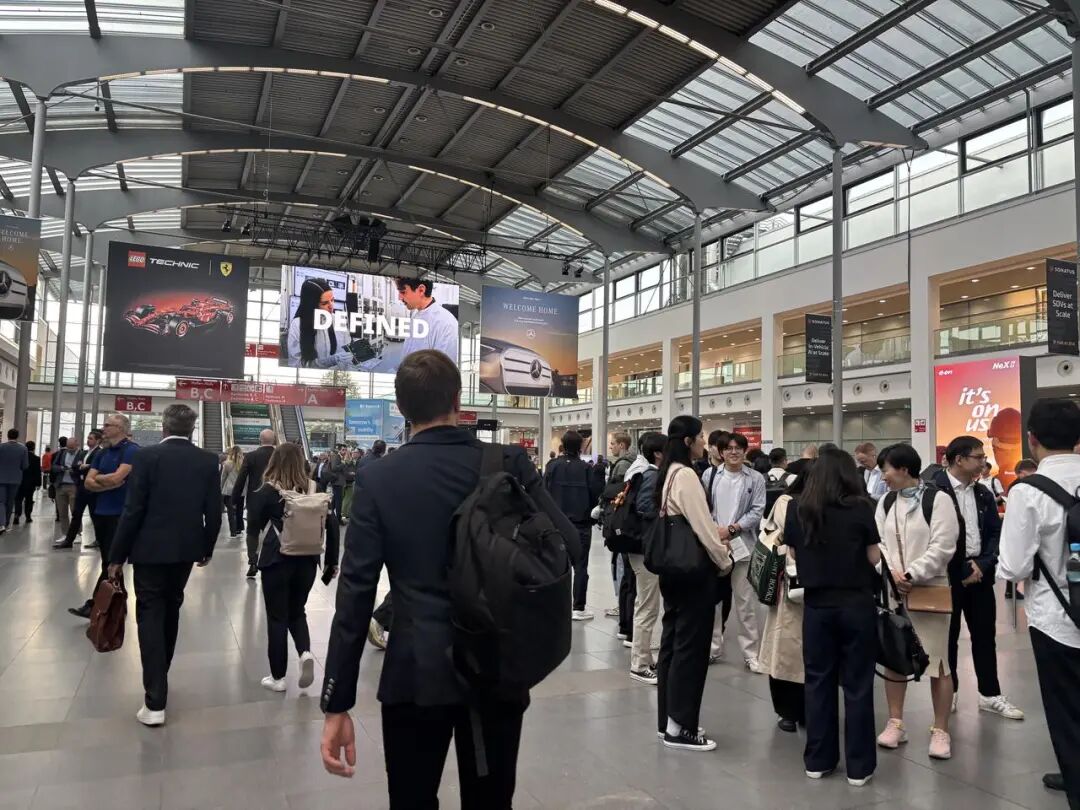
这届慕尼黑车展:新车不多,伤害极大
3 6 Ke· 2025-09-10 12:25
Core Insights - The Munich Auto Show has seen a significant presence of Chinese automotive companies, with one-third of the exhibition space occupied by them, indicating China's rising influence in the global automotive industry [1] - The show highlights a shift in strategy for both Chinese and German automakers, focusing on product innovation and global expansion rather than just vehicle sales [3][18] Group 1: Differences in Auto Shows - Munich Auto Show is characterized by its compactness, with less than half the exhibition space compared to domestic shows, yet it showcases the latest strategic models from major brands [3] - Unlike domestic shows that emphasize vehicle sales, the Munich Auto Show serves as a strategic platform for global players, with Chinese companies using it as a launchpad for international markets [3][18] - The presence of both automakers and suppliers in the same venue reflects a more integrated approach to the automotive supply chain [3] Group 2: German Automakers' Strategies - German automakers, particularly BMW and Mercedes-Benz, are shifting focus from concept cars to new production models, indicating a response to market demands [6][7] - Mercedes-Benz has streamlined its naming strategy for electric vehicles, moving away from the EQ branding to simplify consumer recognition [9] - The new Mercedes-Benz GLC electric version features advanced technology and design, aiming to meet consumer preferences for spacious and comfortable vehicles [15][11] Group 3: Expansion of Chinese Automakers - Chinese automakers are increasingly participating in international auto shows, with a notable increase in the number of Chinese companies at the Munich Auto Show compared to previous years [18] - Companies like AITO and Xiaopeng are using the show to establish their brands in Europe, with plans for direct sales and localized production [20][22] - Leap Motor's Lafa5 is positioned as a sporty model targeting younger consumers, marking a new phase in the company's product strategy [26] Group 4: Competitive Landscape - The competition in the automotive industry is intensifying, with Chinese brands gaining market share in Germany, evidenced by a projected 4% market share for new entrants [32] - Chinese automakers are achieving high customer satisfaction ratings, surpassing traditional German brands in net promoter scores [33] - The shift towards electric vehicles and the need for differentiation in technology and product offerings are driving the evolution of the automotive market [36][41] Group 5: Globalization and Market Strategy - The ultimate goal for Chinese automakers is profitability in international markets, with Europe emerging as a key battleground for growth [37][40] - Successful international expansion requires a combination of technology, product quality, and effective distribution channels [41] - The increasing presence of Chinese brands at international events signals a significant transformation in the global automotive landscape [44]


48岁外卖员送完餐回家途中受伤,平台被判赔偿134万港元;华为发布新款三折叠手机;阿玛尼创始人离世丨邦早报
创业邦· 2025-09-05 00:10
Group 1 - Huawei launched its second foldable smartphone, Mate XTs, with a starting price of 17,999 yuan, featuring the Kirin 9020 chip and a 36% performance improvement [3] - The global smartwatch shipment increased by 8% year-on-year in Q2 2025, with Huawei surpassing Apple for the first time in shipments [17] - The global foldable smartphone market saw a 45% year-on-year growth in Q2 2025, driven by strong demand in China and the US [19] Group 2 - Armani's founder, Giorgio Armani, passed away at the age of 91, marking a significant loss for the luxury fashion industry [5] - ByteDance reported the dismissal of 100 employees in Q2 for violating company policies, with 18 facing serious allegations [6] - Rivian is undergoing layoffs, affecting less than 1.5% of its workforce, as it prepares to launch a more affordable SUV [12] Group 3 - DeepSeek is developing an advanced AI model with improved agent capabilities, aiming to compete with US counterparts [7] - Tesla has opened its Robotaxi application to the public, indicating a broader rollout of the service [11] - Amazon completed the acquisition of Indian online financial platform Axio, enhancing its credit coverage in India [11] Group 4 - Cambricon's stock fell over 13%, resulting in a market value loss of more than 69.4 billion yuan [6] - Xiaohongshu's valuation surged by 5 billion USD in three months, reaching 31 billion USD, reflecting strong market confidence [6] - ZhuiMi Technology reported that its revenue for the first half of 2025 has already surpassed its total revenue for 2024 [10] Group 5 - Honeywell's quantum computing subsidiary, Quantinuum, completed a 600 million USD financing round, achieving a valuation of 10 billion USD [12] - The first batch of Tesla Model Y L vehicles produced at the Shanghai Gigafactory has been delivered [10] - The mini version of Labubu saw a price drop of 10% to 30% within a week of its online sale [7]