
高端汽车板

Search documents
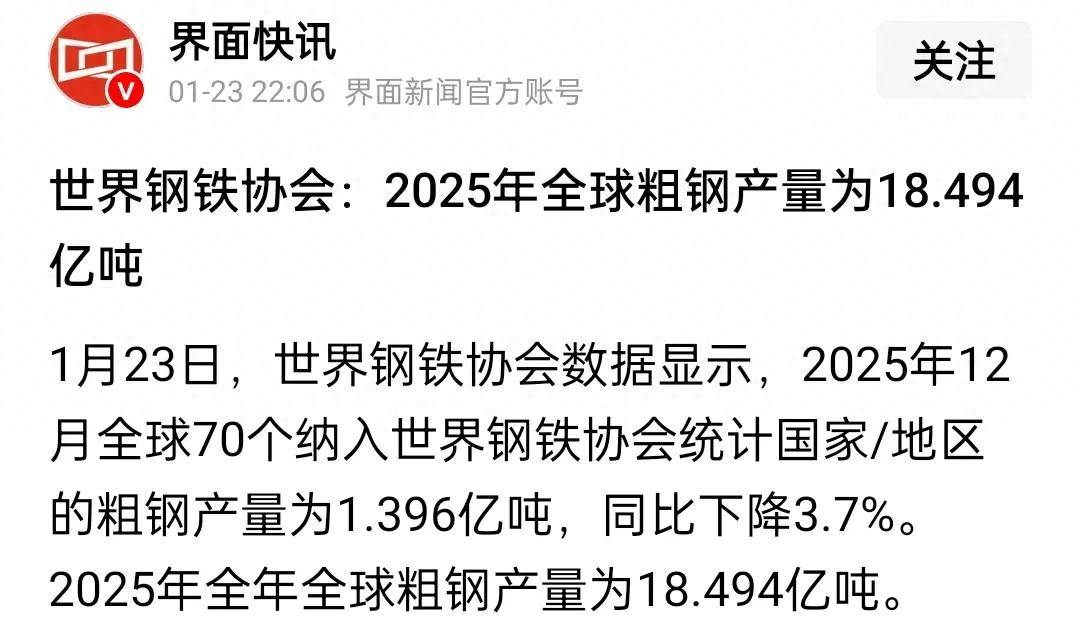
我国去年出钢产量多达9.61亿吨,占全球粗钢总产量的一半以上
Sou Hu Cai Jing· 2026-01-28 06:14
Core Viewpoint - The steel industry is experiencing a significant decline in production, with China's crude steel output projected to drop to 96.1 million tons in 2025, a decrease of 4.4% year-on-year, reflecting a shift towards quality and sustainability rather than sheer volume [1][5][7]. Group 1: Production Data - The World Steel Association forecasts global crude steel production to reach 1.8494 billion tons by 2025, while China's output is expected to be 961 million tons [1]. - China's crude steel production for 2024 is estimated at 1.005 billion tons, indicating a sharp decline of 44 million tons in just one year, which is more than the annual production of Germany [5][7]. - Despite the reduction, China maintains a 52% share of global steel production, significantly outpacing other countries like India and the United States [7][13]. Group 2: Policy and Market Dynamics - The decline in production is attributed to proactive industry adjustments driven by policy changes, particularly under the "dual carbon" goals, which emphasize capacity and output control [9]. - The Ministry of Industry and Information Technology has set clear guidelines to prohibit new capacity and promote the exit of outdated production facilities, particularly in regions like Hebei and Shanxi [9]. - The construction sector, a major consumer of steel, is facing a downturn, with a reported 18.14% drop in building steel sales from January to July 2025, leading to a noticeable demand gap [11]. Group 3: Industry Transformation - The shift from quantity to quality is evident, with high-end steel products now accounting for a larger share of production, and companies like Shagang and CITIC Pacific Special Steel meeting both domestic and export demands [13]. - The adoption of electric arc furnaces is becoming a trend, significantly reducing energy consumption and carbon emissions, with regions like Sichuan achieving a 40% share of electric furnace steel production [15]. - Industry consolidation through mergers and acquisitions is enhancing operational efficiency and cost savings, allowing for increased focus on research and development [15]. Group 4: Future Outlook - The reduction in crude steel output is viewed as a starting point for a transformation towards technological innovation and green low-carbon practices [17]. - Challenges such as limited scrap steel resources and high electricity costs for electric furnaces remain, but opportunities exist through government initiatives to boost infrastructure and manufacturing demand [17]. - The industry's evaluation criteria are shifting from production volume to technological advancement, environmental sustainability, and value chain collaboration, marking a new era for China's steel sector [19][21].

沿着总书记的足迹 看得见摸得着的变化
Liao Ning Ri Bao· 2026-01-23 01:01
Group 1 - Xi Jinping emphasized the need for continuous efforts to improve the industrial structure and contribute to China's modernization during his visit to Benxi Steel's cold-rolled plant [1] - Liaoning's industrial system is well-established, focusing on the transformation of traditional industries and the cultivation of strategic emerging industries [1] - The province aims to enhance technological innovation to drive industrial development and achieve high-quality growth [1] Group 2 - Benxi Steel has implemented digital and intelligent transformations, achieving a 11% increase in factory intelligence index and a 11.2% improvement in labor efficiency [3] - The production of high-end automotive steel plates has reached a precision control of ±0.02 mm, meeting the high standards of manufacturers like Mercedes-Benz and BYD [3] - The proportion of high-end steel products at Benxi Steel has risen to 44.21%, with a 30% reduction in defect rates and a 25% decrease in new product development cycles [3] Group 3 - Dandong Klon Group has invested nearly 250 million yuan to establish a digital workshop, achieving 100% connectivity of key equipment and online collaboration of business processes [5] - The company has developed a cloud-based data sharing mechanism and a dedicated team for product programming, significantly enhancing operational efficiency [5] - The transition to digital transformation is now seen as a necessity for the company, with plans to explore modular and intelligent production further [5] Group 4 - Liaoning has established 193 advanced intelligent factories and digital workshops, with key tool CNC rate and digital design tool penetration rates at 69.3% and 85.8%, respectively, surpassing national averages [7] - The province has made significant strides in integrating technological innovation with industrial innovation, with 216 key technologies developed and over 1,000 million yuan in technology transfer contracts [13] Group 5 - The production of wear-resistant discs by Feixun Technology has filled a domestic gap, with products now outperforming imported counterparts [9] - The company has achieved a fully digital and intelligent production process, ensuring consistency and quality in the manufacturing of agricultural machinery components [11] - The collaboration between Feixun Technology and the Chinese Academy of Sciences has led to breakthroughs in high-strength and high-toughness materials for agricultural machinery [11] Group 6 - The province's consumption promotion activities have significantly contributed to economic growth, with various stakeholders collaborating to enhance market scale [19] - The integration of sports events with tourism and consumption has created new market opportunities, demonstrating a shift from merely stimulating consumption to creating it [20]
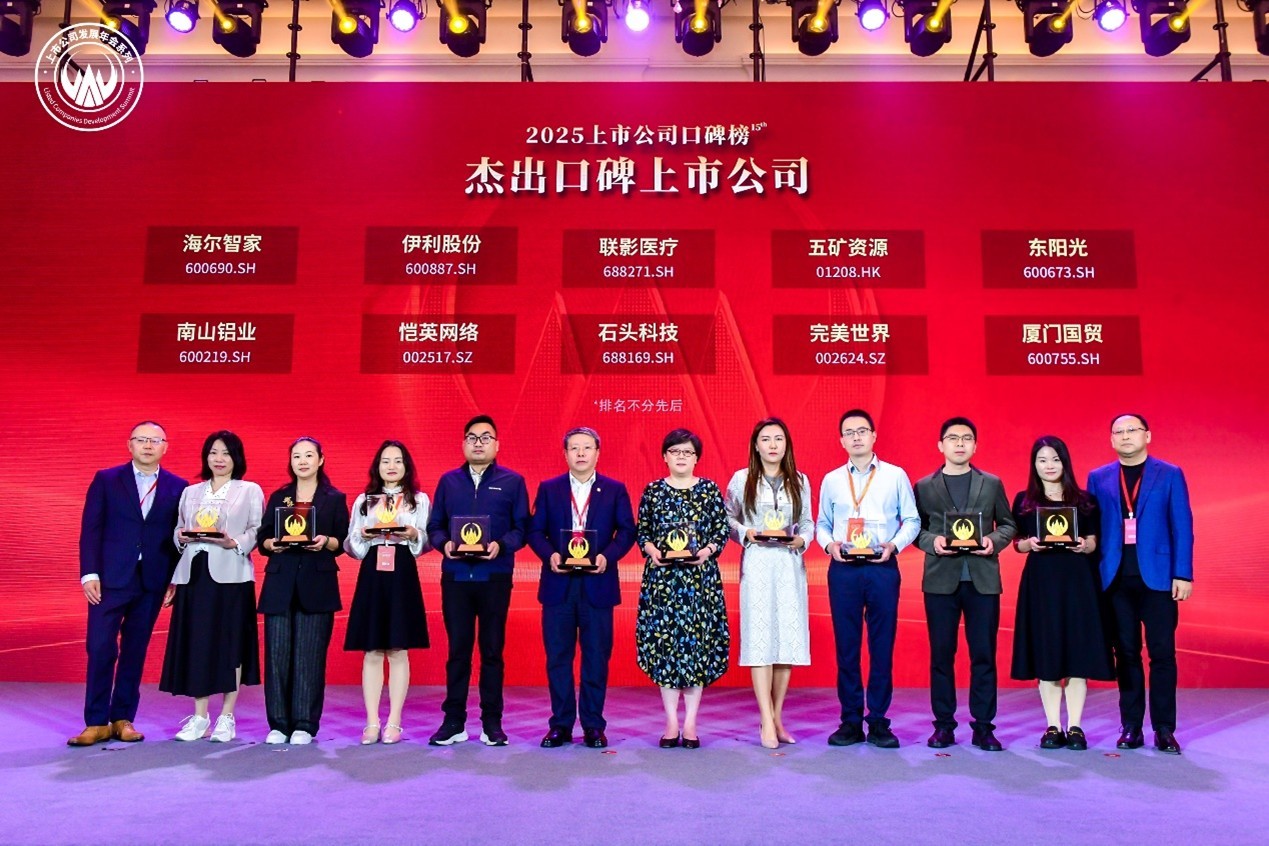
2025年杰出口碑上市公司南山铝业:聚焦机器人高端铝材,精准锚定机器人产业发展机遇
Sou Hu Wang· 2025-12-14 08:21
Core Viewpoint - Nanshan Aluminum has been recognized for its outstanding operational performance and governance, winning two prestigious awards at the "2025 Capital Market Honor Ceremony," highlighting its leading position in the aluminum industry amid high-quality development trends [1] Industry Overview - China's aluminum industry has entered a phase of "stable total volume and optimized structure," playing a crucial role in the development of strategic emerging industries such as new energy and new-generation information technology [3] Company Development Strategy - The core development lines for Nanshan Aluminum are "innovation-driven" and "global layout," focusing on high-end aluminum processing technology and a globalized industrial chain to enhance its competitive edge [4] - The company has established a complete aluminum deep processing industrial chain domestically and has expanded its operations internationally, including a new aluminum deep processing chain in Indonesia since 2015 [4] Market Position and Product Development - Nanshan Aluminum is targeting high-end demands in the transportation sector, particularly in high-value products like aerospace and high-end automotive aluminum plates, leveraging its technological and production advantages [6] - The company has made significant breakthroughs in the aerospace materials sector, being the only domestic supplier of aluminum extrusion materials to major aviation companies like COMAC, Airbus, and Boeing [6] Financial Performance - For Q3 2025, Nanshan Aluminum reported total revenue of 26.325 billion yuan and a net profit of 3.772 billion yuan, reflecting the effectiveness of its high-end and international strategies [8] Emerging Opportunities - The company is exploring opportunities in the rapidly growing robotics market, which is projected to reach a market size of over $150 billion by 2030, with a compound annual growth rate exceeding 20% [9] - Nanshan Aluminum is actively developing materials for humanoid robots, capitalizing on its experience in aluminum alloys to meet the lightweight and high-performance demands of this emerging sector [9][10] Future Outlook - The robotics industry is seen as a new growth node for Nanshan Aluminum, with plans to strengthen its position through collaborations and customized solutions for core materials [10][12] - The company aims to leverage its existing customer base in the electric vehicle sector to explore synergies in the robotics business, creating a comprehensive supply system for global robotics companies [12]

钢铁篇:底部涅槃,曙光渐近
2025-09-22 01:00
Steel Industry Analysis Summary Industry Overview - The steel industry is experiencing a significant recovery in profit margins, with profitability reaching nearly 80% in July 2025, despite a slight recent decline. This recovery is primarily due to a larger decrease in raw material costs compared to steel prices and expectations from production control policies [1][2]. Key Points Profitability and Market Performance - As of 2025, 27 steel companies reported a profitability ratio of 58.87%, a notable improvement from the previous year when most companies faced losses [2]. - The steel sector's stock prices saw a slight increase in the first half of 2025, with a stronger performance in Q1 compared to Q2, which was weaker due to slow policy implementation and market shifts towards technology sectors [3]. Demand Trends - Demand for steel in the real estate sector is declining but at a slower rate, while manufacturing sectors (automotive, machinery, home appliances, and shipbuilding) are showing growth, effectively offsetting the downturn in real estate [1][6]. - Infrastructure demand is expected to stabilize due to increased government bond issuance and special debt issuance, with a projected year-on-year decline in demand of around 1% [9]. Sector-Specific Insights - Manufacturing investment from January to July 2025 grew by 6.2%, with low inventory levels across various sectors, indicating robust demand [10]. - The automotive sector is projected to see an 8% increase in steel demand in 2025, driven by a 12.6% increase in production from January to July [12]. - The shipbuilding industry maintains a strong demand growth of around 20%, supported by long-term orders [14][15]. Export and Pricing Dynamics - Direct exports of steel increased significantly in 2025, with total import and export volumes exceeding 70 million tons, a year-on-year increase of 1.4 million tons [16]. - Domestic steel prices remain low compared to global markets, which has stimulated export growth despite challenges from anti-dumping investigations in Vietnam and South Korea [17]. Policy and Regulatory Environment - The steel industry is undergoing regulatory changes focusing on environmental standards and energy consumption, with a requirement for ultra-low emissions by 2026 [21][22]. - The carbon emissions trading market is being tightened, which will compel companies to reduce production capacity or energy consumption [23]. Raw Material Supply and Pricing - The raw material market is showing mixed trends, with iron ore prices remaining strong while coking coal prices have seen fluctuations due to production controls [24][26]. - Future supply of iron ore is expected to be relatively loose, while coking coal prices may remain firm due to ongoing supply disruptions [27]. Investment Recommendations - Investment focus should be on high-demand sectors within manufacturing, such as high-end automotive components and nuclear power-related needs, as well as capacity optimization strategies [28]. - Key companies to watch include leading firms like Hualing, Baosteel, and Nanjing Steel, along with flexible companies like Fangda Special Steel and New Steel [30]. Conclusion - The steel industry is poised for a recovery with stable long-term demand driven by manufacturing upgrades and infrastructure investments, despite challenges in the real estate sector and regulatory pressures. The focus on environmental compliance and production efficiency will shape the competitive landscape moving forward.
华北15强城市GDP洗牌:唐山第3,邯郸反超太原,吕梁增速近20%!
Sou Hu Cai Jing· 2025-09-12 04:33
Core Insights - The economic landscape of the North China region is undergoing significant transformation driven by the dual engines of coordinated development in the Beijing-Tianjin-Hebei area and an energy revolution, with the total GDP of the top 15 cities surpassing 7.8 trillion yuan, reflecting a year-on-year growth of 5.6% [1] Group 1: Economic Performance - Tangshan ranks third in North China with a GDP of 420.8 billion yuan, continuing its strong development as an industrial hub [2] - Handan has surpassed the provincial capital of Taiyuan with a GDP of 312.6 billion yuan, challenging the traditional notion that provincial capitals lead regional development [2] - Lüliang has achieved an impressive growth rate of 19.8%, emerging as a significant winner in the energy revolution [2] Group 2: Economic Structure and Growth Rates - The 15 leading cities exhibit a clear three-tiered structure, with Beijing (1.98 trillion yuan) and Tianjin (1.14 trillion yuan) in the first tier, while Tangshan and Shijiazhuang (368.2 billion yuan) are in the second tier [3] - Seven cities have outpaced the national average growth rate, with Lüliang (19.8%), Ordos (18.2%), and Baotou (15.6%) leading the way [3] - Four cities are experiencing growth rates below 4%, highlighting regional disparities [3] Group 3: Industrial Transformation - Tangshan's economic strength is attributed to the upgrade of traditional industries and the cultivation of emerging sectors, with significant projects like the high-end automotive sheet production line and hydrogen metallurgy project contributing to a 22% profit increase in the steel industry [4][6] - Handan's economic resurgence is driven by deep optimization of its industrial structure, with projects like the Great Wall Motors engine project and the "retreat to the park" strategy enhancing product value and boosting manufacturing tax revenue by 18% [9][12] - Lüliang's growth is fueled by a reevaluation of its energy sector, with projects in hydrogen energy and new materials significantly increasing the value added of strategic emerging industries by 67% [13][15] Group 4: Future Outlook - The GDP rankings of the top 15 cities in North China reflect new trends in regional economic development, with Beijing maintaining its lead but experiencing a slowdown in growth to 4.1% [16] - The "Hebei Iron Triangle" formed by Tangshan, Shijiazhuang, and Handan showcases strong potential for coordinated development [16] - The competition among cities is intensifying, with energy cities like Ordos and Baotou achieving rapid growth, while Taiyuan needs to accelerate its industrial transformation to remain competitive [16][19]
