
高纤牛肝菌魔芋

Search documents
卫龙“魔”变:构筑魔芋产品矩阵,市占率达61%
Chang Jiang Shang Bao· 2025-12-15 06:55
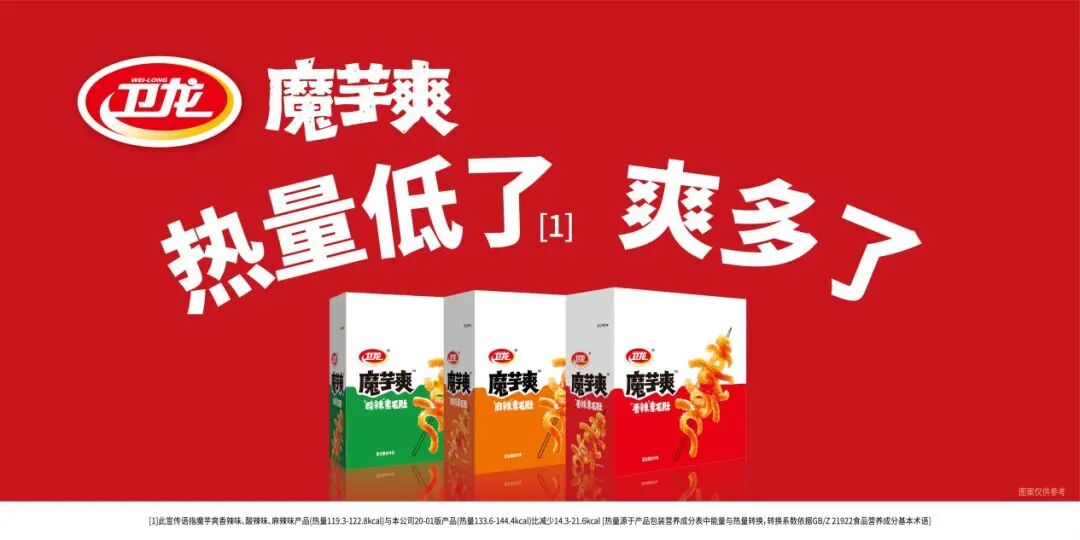
Core Viewpoint - The konjac industry, driven by the health food trend, is transforming from a niche ingredient to a popular snack, with Weidong playing a pivotal role in this transition [1][4]. Group 1: Industry Transformation - China has over 200 konjac processing companies, with more than 10 national-level agricultural leading enterprises and over 150 large-scale companies, primarily located in major production areas like Sichuan, Hubei, Shaanxi, and Yunnan [1]. - China is the world's largest konjac producer, accounting for 65% of global production, with a planting area of approximately 1.6 million acres [1]. - The konjac industry has evolved from being a mere hot pot ingredient to a recognized snack food, largely due to Weidong's innovative efforts [2][5]. Group 2: Weidong's Innovations - Weidong identified the potential of konjac in 2009 and launched the first ready-to-eat konjac product, "Konjac Shuang," in 2014 after five years of development [2]. - The company has continuously innovated within the konjac category, introducing new flavors and products, such as "Sesame Konjac" and "High-Fiber Mushroom Konjac," to cater to diverse consumer preferences [3][5]. - As of 2025, Weidong's konjac products have achieved a 61% market share, maintaining its position as the industry leader and establishing the first group standard for "ready-to-eat konjac food" [5]. Group 3: Financial Performance - Weidong's konjac products have become a significant revenue source, with the vegetable products segment generating 2.11 billion yuan in revenue in the first half of 2025, marking a 44.3% growth [5]. - The company's total revenue reached 3.483 billion yuan in the same period, reflecting an 18.5% year-on-year increase [5]. Group 4: Industry Growth and Future Outlook - The konjac industry in China is projected to reach a total output value of 32 billion yuan by 2024, with an expected annual compound growth rate of 11.8%, potentially growing to 45 billion yuan by 2030 [10]. - The Ministry of Agriculture and Rural Affairs has emphasized the importance of konjac in the "Food and Nutrition Development Outline (2025-2030)," promoting the supply of fiber-rich foods [10]. - The konjac industry is seen as a key driver for rural revitalization, contributing to local economies and creating jobs [11].

云南食用菌“破土成金”变身流量密码
Zhong Guo Chan Ye Jing Ji Xin Xi Wang· 2025-08-20 23:19
Core Insights - The "Jianshouqing" flavor products, including yogurt and beverages, have gained significant popularity, with the "Jianshouqing-flavored yogurt" selling out within four days of its launch, indicating a strong consumer interest in unique and exotic flavors [2][3] - The "Yunnan mushroom" industry is experiencing rapid growth, with the total output value expected to exceed 472 billion yuan in 2024, driven by favorable policies and technological advancements [1][9] Product Innovations - The "Jianshouqing-flavored yogurt" was launched by Yili, selling out quickly and being resold at inflated prices, showcasing the trend of consumers seeking novelty [2][6] - "Jianshouqing cola" was developed by a local company, incorporating wild mushroom flavors through a meticulous extraction process, and has seen strong sales in local tourist areas [3][4] - New tea brands are also entering the market with products like "Jianshouqing rice ice cream," which uses cultivated mushrooms to ensure safety while maintaining unique flavors [4] Market Trends - The current consumer interest in "Jianshouqing" products is largely driven by novelty and curiosity, with many consumers engaging in "tasting" experiences rather than long-term consumption [5] - The market is seeing a trend where companies are branding products as "Jianshouqing-flavored" rather than using the actual ingredient due to safety concerns, indicating a cautious approach to innovation [5][6] Industry Growth - The Yunnan mushroom industry is transitioning from a regional specialty to a national flavor trend, with increasing consumer demand for nutritious and healthy food options [7] - The government has implemented supportive policies to boost the edible mushroom industry, including financial incentives and development plans aimed at enhancing production capabilities [8] Statistical Insights - Yunnan's wild edible mushroom resources account for over 70% of the national market, with a projected total production of 1.1941 million tons and a total output value of 47.249 billion yuan in 2024, reflecting a year-on-year growth of 8.22% and 7.08% respectively [9]
山姆事件背后:中国供应链正从“规模优势”向“标准输出”进阶
智通财经网· 2025-07-22 04:09
Core Viewpoint - Sam's Club is facing criticism over its product selection strategy, with concerns about the introduction of mass-market brands and the removal of high-repurchase-rate items, leading to questions about the perceived decline in quality [1] Group 1: Product Selection and Supply Chain Logic - Sam's Club's product selection is based on a differentiated value creation logic centered around member needs, rather than a simple evaluation of brand prestige [1][4] - The company has a stringent supplier admission system, requiring products to meet high-quality sourcing standards, such as specific beef cuts and traceable cold-chain logistics [2] - Sam's Club emphasizes understanding member needs and trends, often leading the demand by half a step, which translates into high standards for brands regarding product quality and innovation [4][7] Group 2: Customization and Brand Collaboration - The customization process at Sam's Club involves deep supply chain engagement, where products are developed based on member insights and data analysis, pushing suppliers to upgrade their production systems [4][10] - Brands entering Sam's Club must maintain their identity and innovation capabilities, creating a mutually beneficial relationship rather than merely acting as private label producers [7][10] - The successful collaboration with brands like Wei Long demonstrates that market acceptance is driven by the combination of "Sam's standards + brand characteristics," rather than just brand recognition [10][12] Group 3: Consumer Perception and Quality Consensus - The controversy surrounding Sam's Club reflects a shift in consumer understanding of the relationship between customization and quality, indicating that true customized supply chains enhance standards through precise demand matching and rigorous process control [12] - The ability of domestic brands like Wei Long to maintain independence and achieve value output in international retail systems showcases the evolution of Chinese supply chains from scale advantages to standard outputs [12]
山姆,给中产丢脸了
盐财经· 2025-07-20 09:39
Core Viewpoint - The article discusses the recent backlash from Sam's Club members regarding changes in product selection, which has led to concerns about quality and brand trust among its members [2][4][9]. Group 1: Membership and Sales Performance - Sam's Club has over 5 million active members in China, generating annual membership revenue exceeding 1.3 billion yuan, with a high renewal rate of 92% for premium members [6][8]. - Walmart's Q1 report indicated that Sam's Club and e-commerce are significant growth drivers, contributing two-thirds of Walmart China's performance, with net sales reaching $6.7 billion, a 22.5% year-on-year increase [6][9]. Group 2: Product Selection Controversy - Members have expressed dissatisfaction over the replacement of popular products with mainstream brands, perceiving it as a decline in quality [4][12]. - The introduction of products like "减糖·好丽友派" faced criticism for not meeting quality expectations, leading to its temporary removal from shelves [14][20]. - Consumers feel that the new product offerings do not align with their expectations of premium quality, leading to a loss of trust in the brand [18][39]. Group 3: Management and Strategic Changes - The article highlights a management transition at Walmart China, with Jane Ewing taking over as acting president of Sam's Club, emphasizing supply chain efficiency [27][31]. - The rapid expansion of Sam's Club, with plans to open 6 new stores in 2024, has raised concerns about maintaining product quality and supply chain management [35][37]. - Analysts suggest that the quality issues may be linked to the accelerated growth and the need for a more robust logistics and quality control system [37][46]. Group 4: Consumer Sentiment and Future Outlook - Long-time members are reconsidering their membership due to perceived declines in product quality and benefits, with some opting to downgrade their membership [18][21]. - The article concludes that while Sam's Club has made adjustments in response to member feedback, the long-term impact on brand perception and member loyalty remains uncertain [47][48].


入驻山姆产品被质疑装洋品牌,盼盼回应!洽洽也有产品换名字
Nan Fang Du Shi Bao· 2025-07-16 14:37
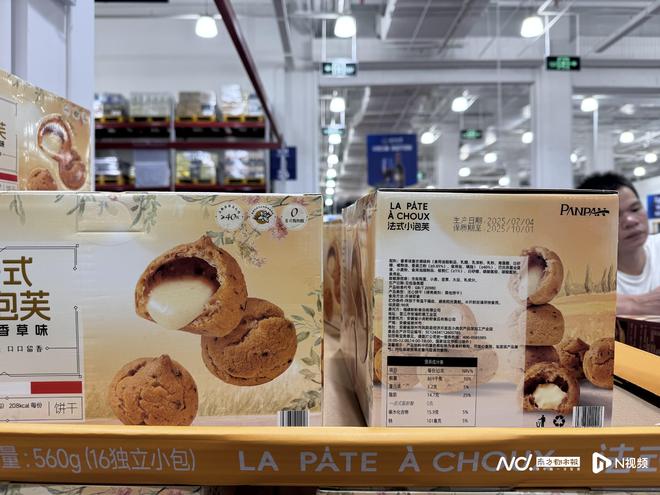
Core Viewpoint - The controversy surrounding Sam's Club's product selection strategy has led to the removal of certain products, including those from the brand "Panpan," which faced accusations of masquerading as an international brand [1][3][15] Group 1: Product Controversy - Sam's Club has faced criticism for its product selection, particularly regarding the brand "Panpan," which was accused of using a misleading brand name [1][3] - Following customer dissatisfaction, Sam's Club quickly removed the "Panpan" products from its shelves [1] - The "Panpan" brand is registered by Panpan Food, which claims to provide high-quality products for consumers [1][13] Group 2: Brand Naming Practices - Products from Panpan sold at Sam's Club did not prominently display the brand name, leading to confusion among consumers [3][5] - Other brands, such as Chacha and Ganyuan, also employed similar strategies by using English names for their products, which were not clearly identified as their own [7][9] - Ganyuan's products had a more subtle branding approach, with the brand name less visible on the packaging [11] Group 3: Market Performance - Panpan Food reported a 50% increase in sales for its "Panpan" brand in Southeast Asia, which constitutes 80% of its export market share [15] - The company has been focusing on expanding its business in Southeast Asia, with key markets including Thailand, Myanmar, Cambodia, and the Philippines [15] - Panpan Food ranked 63rd in the 2024 list of the top 100 private enterprises in Fujian Province, with a revenue of 8.16 billion yuan [15]
山姆选品“不上心”,中产消费者不买账了
2 1 Shi Ji Jing Ji Bao Dao· 2025-07-15 10:52
Core Insights - Sam's Club is facing criticism from its members regarding the selection of products, with many feeling that the offerings have become less thoughtful and more similar to those found in regular supermarkets [2][3] - The membership benefits are reportedly diminishing, leading to dissatisfaction among members who are reconsidering their renewal [3][4] - The membership model is a key competitive advantage for Sam's Club in the Chinese market, with a significant number of paid members contributing to substantial revenue [3] Product Selection - Sam's Club has introduced products that are commonly found in regular supermarkets, such as Liu Liu Mei and Hao Li You, which has led to member complaints about the value of their membership fees [2] - Some products labeled as "exclusive" or "special" are not significantly different from their regular counterparts, raising questions about the authenticity of the offerings [2] - The introduction of products with minor modifications, such as reduced sugar versions, has not met member expectations, as the nutritional content remains similar or even worse in some cases [2] Membership Experience - The benefits associated with the membership card have been reduced, with the removal of perks like car wash and dental vouchers, prompting members to express their dissatisfaction online [3] - The membership model has been crucial for attracting middle-class consumers in China, with a reported membership count exceeding 9 million by June 2025, generating over 2.34 billion yuan in revenue [3] Competitive Landscape - The company is positioned as a consumer "agent," responsible for curating quality products for its members, but a decline in product selection could jeopardize its competitive edge in a highly competitive retail market [4] - If the current trend of product selection continues, it may lead to a loss of consumer loyalty that would be difficult to regain [4]
食品饮料周报:业绩窗口期估值切换,关注回调及低估值个股机会-20250714
Tai Ping Yang Zheng Quan· 2025-07-14 14:19
Investment Rating - The report maintains a neutral investment rating for the food and beverage industry, indicating that the overall return is expected to be within -5% to 5% relative to the CSI 300 index over the next six months [24]. Core Views - The food and beverage sector is experiencing a valuation shift during the earnings window, with a focus on opportunities in undervalued stocks and potential rebounds following recent corrections [4][11]. - The SW food and beverage index increased by 0.8%, ranking 26th among 31 sub-industries, with notable gains in the liquor, health products, and beer sectors, while soft drinks and dairy products saw declines [4][11]. - The report highlights the rebound in the liquor sector, particularly the SW liquor index, which rose by 1.41%, suggesting a recovery from previous overly pessimistic expectations [16][20]. Summary by Sections Liquor Sector - The liquor sector is currently in a bottoming phase, with a focus on the upcoming demand during the Mid-Autumn Festival and National Day [20]. - Key brands such as Guizhou Moutai and Luzhou Laojiao are recommended for investment due to their stable pricing and market performance [20][23]. Consumer Goods Sector - The consumer goods sector is facing a correction due to downward adjustments in earnings expectations for leading companies, particularly in soft drinks and snacks [21]. - Innovative product launches in the snack segment are highlighted, with companies like Youyou Foods and Weidong introducing new items to capture market share [21][22]. - The report emphasizes the growth potential in ready-to-drink beverages and the increasing competition in the tea drink market, with a positive outlook for brands like Mixue and Gu Ming [21][22]. Recommended Companies - The report recommends several companies for investment, including: - Luzhou Laojiao: Buy rating with expected EPS growth [23] - Shanxi Fenjiu: Hold rating with stable performance [23] - Dongpeng Beverage: Buy rating with significant revenue growth forecast [22][23] - Youyou Foods: Buy rating with strong market recovery potential [23] - Nongfu Spring: Buy rating with expected market share recovery [23]


