
800现金流ETF

Search documents
突放巨量!低费率800现金流ETF(159119)盘中成交创阶段新高!鄂尔多斯、君正集团领涨
Sou Hu Cai Jing· 2026-02-11 07:02
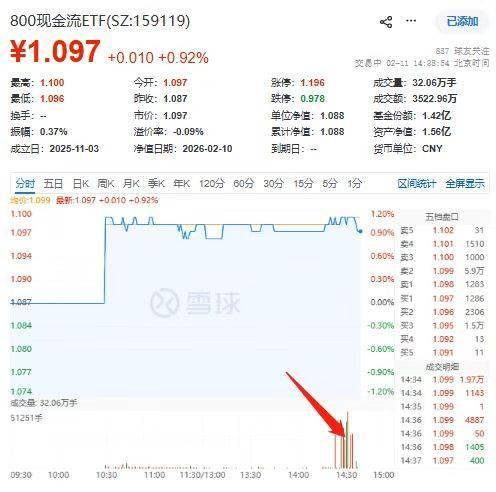
Core Viewpoint - The 800 Cash Flow ETF (159119) has seen a significant increase in trading volume and price, indicating heightened investor interest in high-quality, cash-generating companies amidst market uncertainty [1][3]. Group 1: ETF Performance - On February 11, the 800 Cash Flow ETF rose by 0.92%, reaching a trading volume of 320,600 shares and a transaction value of approximately ¥35.23 million, marking a new high for the period [1][2]. - Key performing stocks within the ETF include Ordos, Junzheng Group, China Power, and Longxin General, which have shown strong performance [1]. Group 2: Investment Strategy - The ETF's investment strategy focuses on selecting companies with the highest free cash flow from a representative sample of 800 stocks, aiming to identify "cash cow" companies that do not rely on external financing [3]. - This strategy is particularly appealing in the current economic environment, where companies generating strong free cash flow are perceived as having robust business models and financial health, aligning with investor preferences for certainty [3]. Group 3: Advantages of the ETF - The ETF helps avoid "value traps" by focusing on free cash flow rather than just dividend yield, which can mislead investors regarding a company's actual operational health [3]. - With an annual fee rate of 0.2%, the ETF offers a low-cost option for long-term investors, making it an attractive choice for those looking to minimize expenses [3].


低费率800现金流ETF(159119)、中证红利质量ETF(159209)午后持续上行!高质量方向获青睐
Sou Hu Cai Jing· 2026-02-09 05:59
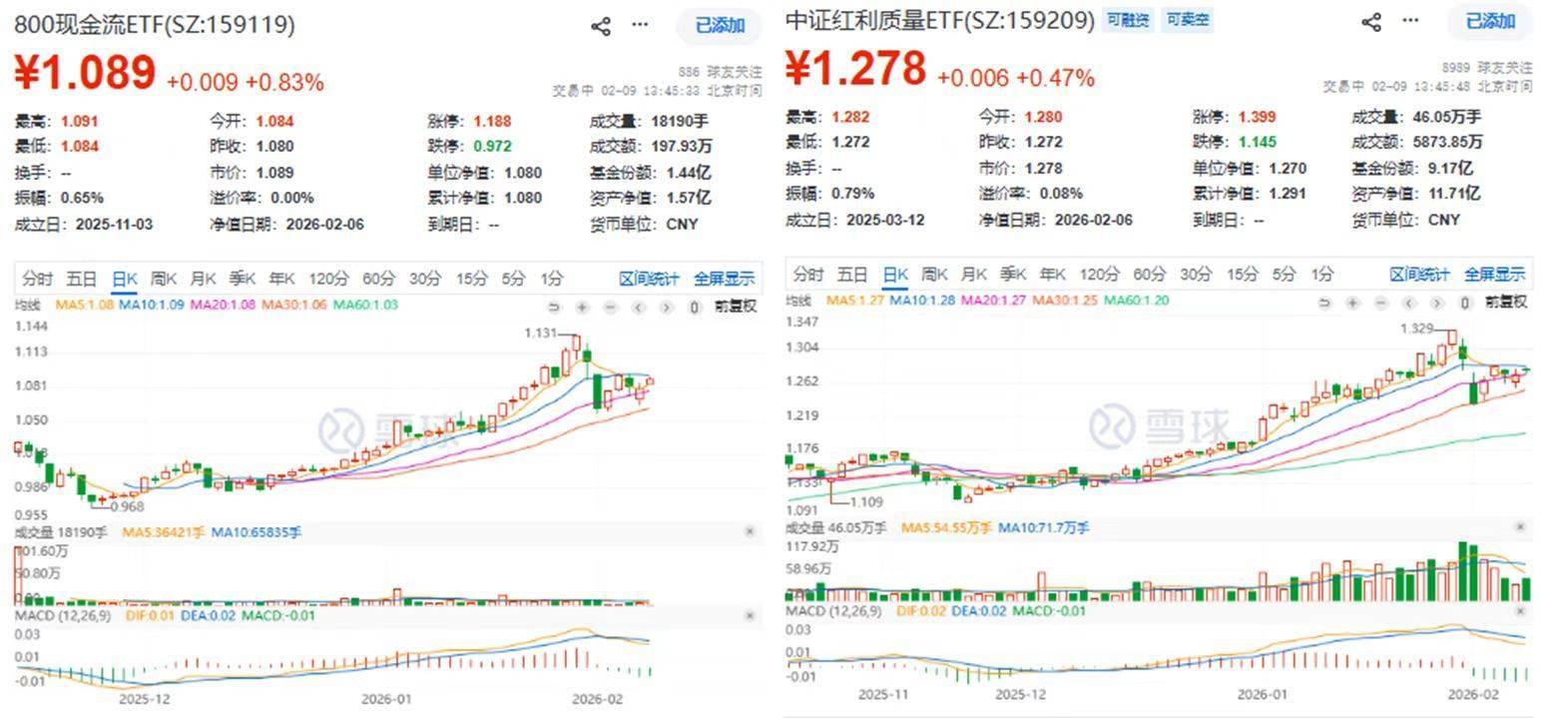
Group 1 - The market is experiencing a recovery, with the lowest fee 800 Cash Flow ETF (159119) and the China Securities Dividend Quality ETF (159209) rising by 0.74% and 0.55% respectively as of 13:44 on February 9 [1] - In a market characterized by a lack of clear direction and declining risk appetite, there is a growing consensus among some investors to pursue high-quality and high-certainty investment strategies, which are showing "safe haven" attributes [3] - The core driver of this shift is a profound change in market pricing logic, emphasizing companies that can generate stable free cash flow and maintain high profitability quality, leading to a revaluation of long-term shareholder returns [3] Group 2 - The focus on dividend quality and cash flow strategies highlights a shift from chasing short-term themes and valuation fluctuations to emphasizing companies' intrinsic growth capabilities and financial stability [3] - The 800 Cash Flow ETF targets companies' real cash generation ability, serving as a core defense against economic cycle fluctuations [3] - The China Securities Dividend Quality ETF not only emphasizes dividend returns but also incorporates stringent screening for company growth and sustainable profitability, representing an evolution in "dividend strategy" [3]
低费率800现金流ETF(159119)、中证红利质量ETF(159209)联袂上行!高质量方向获青睐
Sou Hu Cai Jing· 2026-02-06 03:33
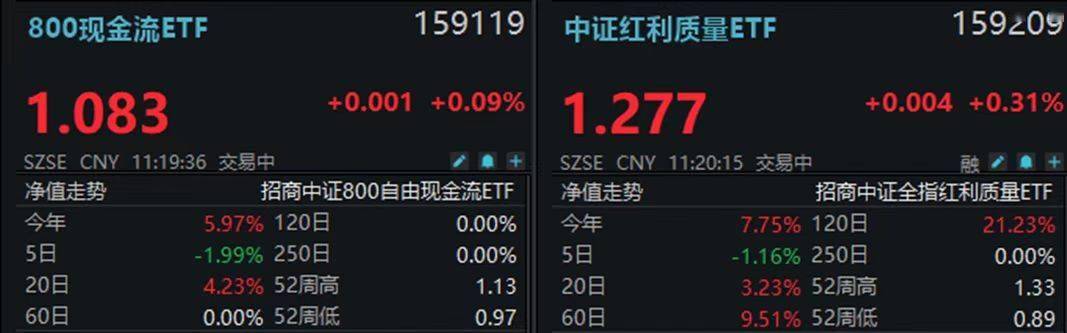
Core Insights - The market is experiencing a recovery, with the low-fee 800 Cash Flow ETF (159119) and the CSI Dividend Quality ETF (159209) showing positive performance, gaining 0.09% and 0.24% respectively, and a total net inflow exceeding 100 million yuan over the past five days [1][2] Group 1: ETF Performance - The 800 Cash Flow ETF has a current value of 1.083, reflecting a 0.09% increase, while the CSI Dividend Quality ETF is valued at 1.277, with a 0.31% increase [2] - Over the past 120 days, the 800 Cash Flow ETF has seen a return of 5.97%, while the CSI Dividend Quality ETF has returned 7.75% [2] - The 5-day performance for the 800 Cash Flow ETF is -1.99%, and for the CSI Dividend Quality ETF, it is -1.16% [2] Group 2: Investment Strategy - In a market characterized by a lack of clear direction and declining risk appetite, there is a growing consensus among investors to pursue high-quality and high-certainty investment strategies, with these ETFs serving as a "safe haven" [2] - The core driver of this shift is a profound change in market pricing logic, emphasizing companies that can generate stable free cash flow and maintain high profitability quality [2] - The focus on dividend quality and cash flow strategies highlights a return to the fundamentals of investment value, moving away from short-term themes and valuation fluctuations [2] Group 3: New Fund Launch - The first CSI Dividend Quality ETF linked fund (code: 026671) is currently being offered, with the subscription period running from February 2, 2026, to February 6, 2026 [3]
低费率中证红利质量ETF(159209)、800现金流ETF(159119)联袂冲击历史新高!贵州茅台涨8.03%!
Sou Hu Cai Jing· 2026-01-29 06:30
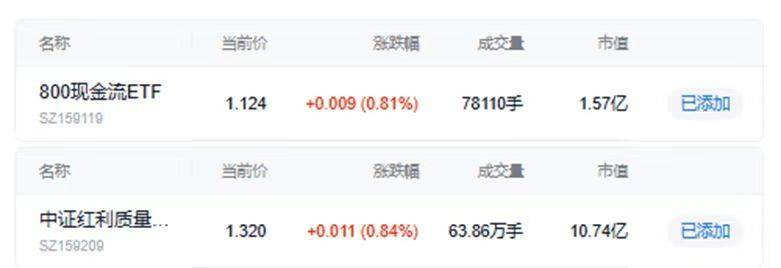
Group 1 - The core viewpoint of the news is that the liquor industry, particularly the high-end liquor segment represented by Moutai, is experiencing a significant price increase and positive market sentiment ahead of the Spring Festival marketing activities [3] - As of January 29, Moutai's stock price rose by 8.03%, with related ETFs also showing gains, indicating strong investor interest and confidence in the sector [1] - The wholesale reference prices for various Moutai products have increased, with the 26-year Moutai original box rising by 35 yuan to 1590 yuan per bottle, reflecting a positive trend in pricing [3] Group 2 - CITIC Securities anticipates that the liquor industry will benefit from the upcoming Spring Festival marketing activities, with distributors learning from leading companies' experiences in channel and product reforms [3] - The firm believes that the industry will refocus on market cultivation and consumer education, which will help stimulate sales and alleviate burdens on distributors [3] - Considering the gradual stabilization of sales and the extended holiday period in 2026, CITIC Securities predicts that actual sales during the Spring Festival will remain stable, suggesting a bottoming opportunity for investments in the liquor sector [3]

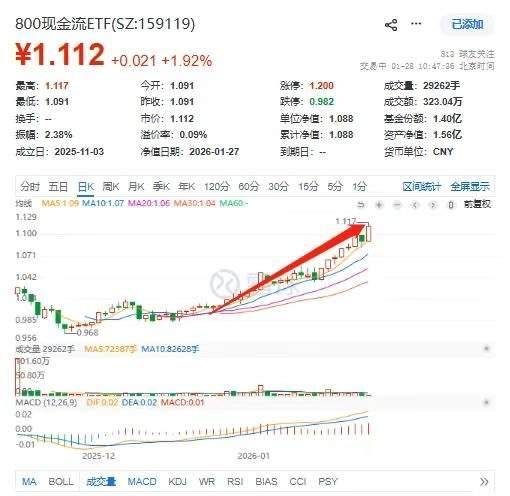
“唯一低费率”800现金流ETF(159119)飙涨超2%创年内第9次历史新高!白银有色、浙江龙盛涨停封板
Sou Hu Cai Jing· 2026-01-28 04:10
Group 1 - The core viewpoint of the articles highlights the strong performance of the dividend sector in the stock market, particularly the 800 Cash Flow ETF (159119), which is noted for its unique low fee rate of 0.2% per year [1][3] - The 800 Cash Flow ETF selects companies with strong cash-generating capabilities, referred to as "cash cows," from the top 800 companies in the market, with leading industries including automotive, petrochemicals, and home appliances [3] - The investment strategy represented by the ETF signifies a shift from traditional high dividend yields to a focus on sustainable free cash flow and company growth potential, indicating a deeper transition in investment philosophy towards value-based investing [3] Group 2 - The current macroeconomic environment is leading to a re-evaluation of the value of high-quality companies that can consistently generate stable free cash flow, highlighting their scarcity in the market [3] - This investment approach serves as a stabilizing force against economic fluctuations and aligns with the evolving trend from "high dividend" to "high quality" dividend investments [3]

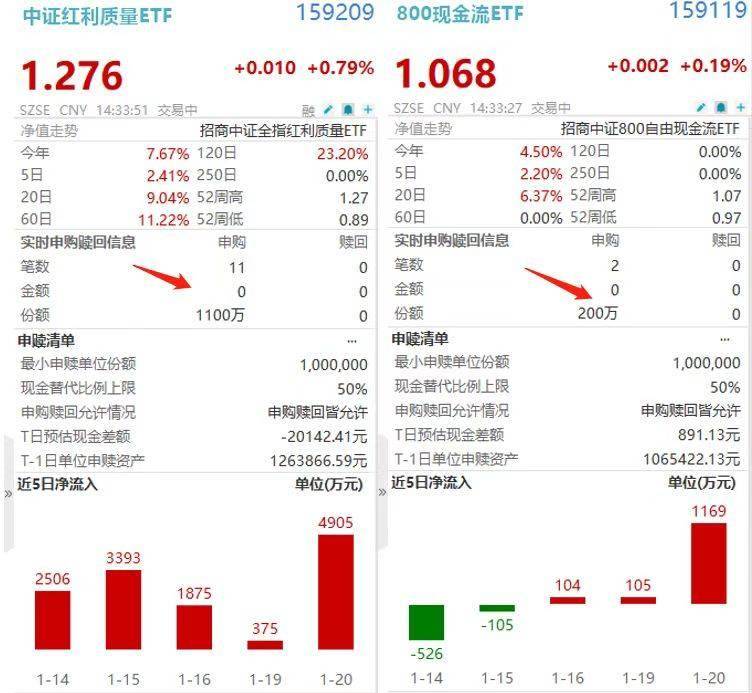
坚定加仓!中证红利质量ETF(159209)、800现金流ETF(159119)逆市红盘,盘中双双录得净流入
Sou Hu Cai Jing· 2026-01-21 06:43
Group 1 - The core viewpoint of the article highlights the shift in investor preferences towards high-quality dividend and cash flow ETFs during a market consolidation phase, indicating a style rebalancing in the market [2] Group 2 - The China Securities Dividend Quality ETF (159209) focuses on selecting high-quality companies based on multiple criteria such as profitability, growth potential, and financial stability, providing both dividend yield and growth potential during market volatility [2] - The 800 Cash Flow ETF (159119) targets companies with strong free cash flow, which is essential for risk resilience, sustainable dividends, and organic growth, reflecting a growing emphasis on financial health and safety in the current market environment [2] - The simultaneous attraction of funds to these two ETFs signals a broader market trend where investors are moving away from high-volatility sectors towards assets with solid financial foundations and sustainable profitability, underscoring the increasing importance of asset quality and certainty in investment decisions [2]
公募新掌门人“批量上岗” 新人能否打开新格局新气象
Zheng Quan Shi Bao· 2025-12-07 17:59
Core Insights - The public fund industry in China is experiencing a significant turnover of senior executives, with 434 changes recorded this year, including 105 chairpersons and 78 general managers [1][2] - The turnover is characterized by a mix of retiring veterans and new leaders with diverse backgrounds, often appointed from within the company or by major shareholders [2][3] - New executives are expected to bring fresh ideas and strategies to enhance the competitiveness of their firms in a challenging market environment [4][6] Executive Changes - A notable trend is the appointment of executives with strong ties to major shareholders, which is believed to enhance strategic alignment and resource utilization [2][4] - For instance, at Bosera Fund, the new chairman and general manager both come from the China Merchants Group, bringing extensive experience from various financial sectors [2] - Internal promotions are also common, as seen with the new general manager of Xinda Australia Fund, who has been with the company since 2020 [3] Industry Dynamics - The public fund industry is undergoing a transformation, with new leaders expected to drive innovation and adapt to changing market conditions [4][6] - Some mid-sized public funds have reported significant growth in assets under management, attributed to the strategic changes implemented by newly appointed executives [5] - However, the industry faces increasing competition from bank wealth management subsidiaries and foreign asset management firms, which intensifies the pressure on public funds [6] Regulatory Impact - Recent regulatory changes, such as fee reforms and performance assessment guidelines, are reshaping the competitive landscape of the industry [7] - These changes may lead to reduced profit margins for public funds, particularly those heavily invested in bond funds, necessitating strategic adjustments [7] - New leaders must navigate these challenges while seizing opportunities in the evolving market, especially in the context of rising demand for "fixed income plus" products [7]

加速更迭!公募新掌舵人批量上岗,影响几何?
Xin Lang Cai Jing· 2025-12-07 06:39
Group 1 - The public fund industry is experiencing a significant turnover of key executives, with 434 changes recorded this year, including 105 chairpersons and 78 general managers [1][12][14] - The new executives are expected to bring fresh ideas and perspectives to invigorate the industry, with many coming from diverse backgrounds and often being familiar faces within the industry [2][14] - The trend of appointing executives with strong ties to major shareholders is seen as a strategy to leverage shareholder resources and enhance strategic collaboration [2][16] Group 2 - Notable appointments include Cui Chun as the general manager of Huatai Baifa Fund, who has over 20 years of experience across various financial sectors [3][15] - Yang Fan, the new general manager of ICBC Credit Suisse Fund, has a rich background in the Industrial and Commercial Bank of China, which is expected to strengthen strategic synergies [4][16] - Some new leaders have been promoted from within their companies, indicating a focus on internal talent development and continuity [4][16] Group 3 - The new leadership is already showing results, with companies like招商基金 (Zhaoshang Fund) successfully launching new products and expanding their market presence [7][19] - 博时基金 (Bosera Fund) aims to align its strategies with national goals, indicating a proactive approach to industry reform and innovation [7][19] - Smaller firms are also seeing significant growth, with one reporting a 1.52 times increase in scale this year, showcasing the potential for rapid expansion under new leadership [8][20] Group 4 - The industry faces ongoing challenges, including intensified competition and the need for precise strategic planning to achieve breakthroughs [9][21] - Regulatory changes, such as fee reforms and performance assessments, are impacting profit margins and competitive dynamics within the industry [10][22] - New leaders must navigate these challenges while enhancing their firms' research and investment capabilities to maintain competitiveness [10][22]
加速更迭!公募新掌舵人批量上岗,影响几何?
券商中国· 2025-12-07 06:24
Core Viewpoint - The public fund industry is experiencing a significant turnover in leadership, with new executives expected to bring fresh ideas and energy to the sector [2][3]. Group 1: Leadership Changes - In 2023, there have been 434 changes in public fund industry executives, including 105 chairpersons and 78 general managers [2]. - The turnover is characterized by a mix of retiring veterans and new leaders with diverse backgrounds, often appointed from within the company or by major shareholders [3]. - Notable examples include Zhang Dong and Chen Yu from Bosera Fund, who both have extensive experience in the financial sector [3]. Group 2: New Leadership Impact - New leaders are beginning to show results, such as the successful fundraising of over 50 billion yuan for a new product by招商基金 (China Merchants Fund) [8]. - The new management at 兴证全球基金 (Xingzheng Global Fund) has successfully launched its first ETF, raising approximately 11.57 billion yuan [8]. - Smaller funds are also seeing significant growth, with one fund in southern China increasing its scale by 152% in Q3, reaching over 10 billion yuan [9]. Group 3: Industry Challenges and Opportunities - The public fund industry faces increasing competition, necessitating precise strategic planning from new leaders [10]. - Regulatory changes, such as management fee reductions and new performance benchmarks, are reshaping the competitive landscape [11]. - New leaders must navigate these challenges while seizing opportunities in the evolving market, particularly in the context of rising demand for fixed-income products [11].

招商基金董事长人选定了!招行副行长王颖兼任
券商中国· 2025-11-26 23:36
Core Viewpoint - The appointment of Wang Ying as the new chairman of China Merchants Fund marks a significant leadership change, with expectations for new strategic directions and enhanced collaboration with the parent company, China Merchants Bank [1][4][7]. Group 1: Leadership Changes - Wang Ying will assume the role of chairman of China Merchants Fund starting November 27, 2023, while also serving as the vice president of China Merchants Bank [1][2]. - The previous chairman, Wang Xiaoqing, stepped down on September 24, 2023, with the general manager, Zhong Wenyue, temporarily taking over the role until Wang Ying's appointment [4][5]. - Zhong Wenyue will officially cease to act as chairman on November 27, 2025, after returning to the fund in May 2025 [4][5]. Group 2: Company Performance and Strategy - As of the latest data, China Merchants Fund has a total asset size of 957.37 billion yuan, with non-monetary management assets amounting to 570.7 billion yuan [6]. - The new leadership aims to leverage their extensive experience within the China Merchants Bank system to drive the fund's development and enhance strategic collaboration with its parent company [7]. - The fund plans to focus on three key areas: deep research sharing, quality asset organization and product creation, and innovation as a testing ground, to strengthen strategic alignment with its shareholders [7]. Group 3: Recent Developments and Market Position - Since Zhong Wenyue's return, China Merchants Fund has successfully launched several new funds, including the招商均衡优选基金, which raised over 5 billion yuan in just one day [8]. - The fund has also been active in the ETF market, with multiple index funds achieving significant fundraising milestones in recent months [8]. - A recent memorandum of cooperation was signed with a New Zealand fund company to enhance cross-border investment product development, indicating a push towards internationalization [8]. Group 4: Industry Context - The year has seen significant turnover in leadership across the public fund industry, with over 20 fund companies changing general managers and more than 30 changing chairpersons, reflecting a trend of banks consolidating control over their fund management subsidiaries [9][10].
