
港股通科技ETF

Search documents
南水再度爆买200亿!中国资产大反攻!“外卖大战”有望落幕,美团狂飙14%!
Ge Long Hui· 2026-03-26 13:09
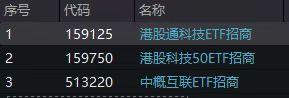
Group 1 - The core viewpoint of the articles highlights a significant surge in Chinese assets, driven by both domestic and international catalysts, with the Nasdaq Golden Dragon China Index rising by 1.86% and the Wind China Concept Technology Leaders Index increasing by 1.93% [1] - The e-commerce sector experienced substantial gains, with Meituan up 14.43%, JD Group up 8.30%, Pinduoduo up 4.61%, and Alibaba up 3.52%, indicating strong market sentiment towards leading companies in this space [1] - On March 25, southbound funds purchased over 20 billion, reflecting a robust inflow into Chinese assets [1] Group 2 - The first catalyst for the surge is a shift in policy expectations, particularly regarding the "takeout war," with a commentary from the National Market Supervision Administration suggesting an end to vicious competition in the platform economy, which is expected to lead to healthier industry development [2] - The second catalyst is the dovish signal from the Federal Reserve, with a statement from Fed Governor Milan indicating a gradual reduction in interest rates to neutral levels, creating a favorable macro environment for global tech growth stocks [2] - The third factor is the valuation gap in Hong Kong tech stocks, which remain at historical lows, attracting strong buying interest as policy expectations improve and liquidity conditions are anticipated to change [2] Group 3 - For investors optimistic about the rebound in Chinese assets, three ETFs are highlighted as effective tools for investment: the Hong Kong Stock Connect Technology ETF (159125), which focuses on leading tech innovators; the Hong Kong Technology 50 ETF (159750), which encompasses the top ten giants in Hong Kong; and the China Concept Internet ETF (513220), which spans across Hong Kong, China, and the US markets [2]


内地投资者大幅抄底美团、小米、腾讯、阿里巴巴
Mei Ri Jing Ji Xin Wen· 2026-03-03 02:29
Group 1 - Southbound funds recorded a net purchase of HKD 6.7 billion from February 24 to February 27, with leading stocks including Meituan-W, Xiaomi Group-W, Tencent Holdings, Alibaba-W, BYD Company, UBTECH, Zhaojin Mining, and SMIC [1] - Most of the aforementioned stocks are components of the Hang Seng Tech Index and the Hong Kong Stock Connect Tech Index, indicating a strong correlation with southbound fund inflows [1] - The Hang Seng Tech Index ETF (513180) and the Hong Kong Stock Connect Tech ETF (159101) have seen significant net subscriptions, with the latter experiencing a year-to-date share growth rate of 40% [1] Group 2 - The Hang Seng Tech Index has faced considerable external liquidity disturbances this year, and current positions reflect a high level of pessimistic expectations, with the RSI indicator indicating an oversold region and limited downside risk [2] - The upcoming March earnings disclosure period is identified as a critical observation point, as the market may reassess the valuation of Hong Kong tech giants towards a "tech growth" pricing model [2]
ETF市场“冷热不均”港股主题ETF受青睐
Zheng Quan Ri Bao· 2026-02-25 02:43
Group 1 - The ETF market has shown a "mixed" trend this year, with broad-based ETFs experiencing net outflows while Hong Kong-themed ETFs have gained traction, indicating a structural allocation logic in the current market [1] - Specific data shows that as of February 24, the Hang Seng Tech ETF saw a net inflow of 29.6 billion, the Hong Kong Stock Connect Internet ETF had a net inflow of 11.3 billion, the Hong Kong Stock Connect Innovative Medicine ETF recorded a net inflow of 3.015 billion, and the Hong Kong Stock Connect Tech ETF had a net inflow of 2.625 billion [1] Group 2 - Investors are increasingly focused on the investment opportunities in the Hong Kong market, with a notable interest in low valuations, sector focus, and liquidity-driven strategies [2] - The outlook for the Hong Kong market remains positive, with expectations of marginal improvements in corporate earnings and liquidity factors, which could provide a buffer against external volatility [2] - The ongoing AI technology wave is expected to continue driving growth, with a focus on technology and innovative sectors, while the supply-demand balance in the metals sector is also highlighted as a potential area of interest [2]
ETF市场“冷热不均” 港股主题ETF受青睐
Zheng Quan Ri Bao· 2026-02-24 15:44
Group 1 - The ETF market has shown a "mixed" trend this year, with broad-based ETFs experiencing net outflows while Hong Kong-themed ETFs have gained traction, indicating a structural allocation logic in the market [1] - Specific data shows that as of February 24, the Hang Seng Tech ETF saw a net inflow of 29.6 billion, the Hong Kong Stock Connect Internet ETF had a net inflow of 11.3 billion, and the Hong Kong Stock Connect Innovative Drug ETF recorded a net inflow of 3.015 billion [1] - The overall trend reflects investors' heightened attention and inclination towards investment opportunities in the Hong Kong market, with a focus on low valuations and core assets in technology, innovative drugs, and internet platforms [2] Group 2 - The current valuation levels in the Hong Kong market are becoming increasingly attractive, with expectations of marginal improvements in corporate earnings and liquidity factors [2] - Investment strategies are focused on low-position layouts, sector concentration, and liquidity-driven approaches, with investors actively using ETFs to capture market opportunities [2] - The outlook for the Hong Kong market remains positive, with expectations of a "structural market" driven by substantial corporate earnings recovery rather than mere valuation expansion [2]
ETF午评 | 金价连续第二日反弹,黄金ETF易方达、黄金ETF博时涨3.92%
Ge Long Hui· 2026-02-04 03:57
Market Performance - The three major A-share indices showed mixed performance in the morning session, with the Shanghai Composite Index closing flat, the Shenzhen Component Index down 0.92%, and the ChiNext Index down 1.74% [1] - The North China 50 Index fell by 1.19%, and the total trading volume in the Shanghai and Shenzhen markets reached 16,297 billion yuan, an increase of 127 billion yuan compared to the previous day [1] - Over 2,900 stocks in the market experienced declines [1] Sector Performance - Sectors that saw gains included coal mining and processing, airport and shipping, photovoltaic equipment, real estate, natural gas, port shipping, construction materials, banking, hydrogen energy, and retail [1] - Conversely, sectors that faced declines included precious metals, AI applications, computing power leasing, semiconductors, and CPO concept stocks [1] ETF Performance - Gold prices rebounded for the second consecutive day, surpassing 5,000 USD, with gold ETFs from E Fund and Bosera both rising by 3.92% [1] - International oil prices increased, leading to a 3.22% rise in the Jiasheng Oil and Gas ETF [1] - The Hong Kong dividend strategy ETFs were active, with the Bosera Hong Kong Dividend ETF rising by 1.67% [1] - However, Hong Kong stocks continued to decline, with the Hong Kong Technology ETF, Hong Kong Internet ETF from E Fund, and the Hong Kong Technology 30 ETF falling by 3.73%, 3.73%, and 3.57% respectively [1] - The New Economy ETF from Yinhua dropped by 2.83% [1]
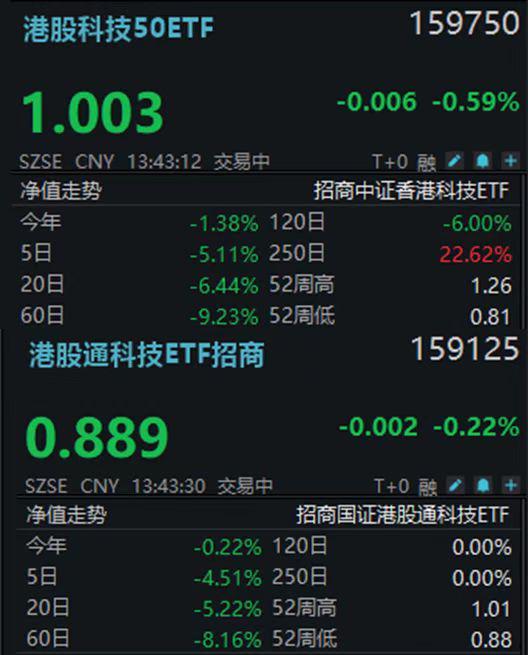
腾讯盘中重挫超6%拖累,港股科技50ETF(159750)、港股通科技ETF(15912)一度跌超2.4%
Jin Rong Jie· 2026-02-03 06:19
Core Viewpoint - The Hong Kong stock market experienced a panic sell-off due to unverified rumors of increased taxes on internet platforms, significantly impacting major stocks like Tencent Holdings [1]. Market Analysis - Tencent Holdings (00700.HK) saw a drop of over 6%, falling below the 600 HKD mark, which led to a broader decline in the technology sector, with the Hong Kong Technology 50 ETF (159750) and the Hong Kong Stock Connect Technology ETF (159125) both dropping over 2.4% [1]. - The recent volatility is attributed to a combination of short-term noise and long-term concerns, with the immediate trigger being the negative rumors during a period of market vulnerability [1][2]. - There is growing anxiety regarding the ability of tech giants to convert their high investment in areas like AI into sustainable profits, leading to a depletion of investor patience and increasing growth concerns [1][2]. Valuation and Investment Opportunities - Despite the short-term emotional impact, analysts suggest that the current valuation of the Hong Kong technology sector is at historical lows, providing a high margin of safety for investors [3]. - Strategic investments by giants like Tencent in cloud computing and artificial intelligence are viewed as long-term options for future growth [3]. - The Hong Kong Technology 50 ETF (159750) is seen as a potential vehicle for investors to position themselves in core assets of China's digital economy amidst market volatility [3]. - A complete market stabilization and rebuilding of confidence will ultimately depend on improvements in fundamentals or clearer policy expectations [3].

稀有金属、半导体设备成为开年热门赛道!稀有金属ETF、港股通科技ETF近20日强势吸金
Ge Long Hui· 2026-01-28 06:41
Group 1 - International gold prices have surpassed $5,200, leading to a surge in the rare metals sector, with a net inflow of 4.076 billion yuan into the Rare Metals ETF (159608) over the past 20 days [1] - The Rare Metals ETF tracks the CSI Rare Metals Index, which excludes industrial metals significantly affected by net inflow cycles, focusing instead on energy metals and strategic minor metals such as rare earths, lithium, cobalt, tungsten, and molybdenum [1] Group 2 - A new wave of price increases has emerged in the global chip sector, with Samsung Electronics and SK Hynix completing negotiations with Apple to significantly raise the prices of LPDDR memory used in iPhones, with Samsung's price increase exceeding 80% and SK Hynix approaching 100% [1] - In China, companies like Zhongwei Semiconductor and Guokai Microelectronics have announced price adjustments for products such as MCU and Norflash, with increases ranging from 15% to 50% and 40% to 80%, respectively [1] Group 3 - Hong Kong's Hua Hong Semiconductor has seen its stock rise over 5.6%, reaching a historical high, while the Hong Kong Stock Connect Technology ETF (159262) has experienced a net inflow of 871 million yuan over the past 20 days [1] - The Hong Kong Stock Connect Technology ETF covers "hard technology" sectors such as AI and semiconductors, with major holdings in Alibaba, Tencent, Xiaomi, Meituan, and SMIC, indicating a high technology purity [1] Group 4 - The Semiconductor Equipment ETF (Guanfa, 560780) has recorded a net inflow of 2.583 billion yuan over the past 20 days [1] - This ETF closely tracks the CSI Semiconductor Materials and Equipment Theme Index, with 62.8% allocated to semiconductor equipment and 23.7% to semiconductor materials, covering key segments such as lithography machines, etching machines, and critical leading companies in the industry [1] - The top two holdings in this ETF are Zhongwei Company and Beifang Huachuang, which together account for over 28%, aligning closely with the domestic substitution theme [1]
缺席本轮躁动行情的港股科技,最近发生了哪些积极的变化?
Mei Ri Jing Ji Xin Wen· 2026-01-22 01:44
Group 1 - The Hong Kong stock market has been lagging behind the A-share market since December, primarily due to structural differences and varying funding environments [1] - The current market hotspots in A-shares, such as artificial intelligence and commercial aerospace, have strong representation and high capital concentration, while Hong Kong stocks are dominated by internet giants, biomedicine, and high-dividend financial real estate [1] - The liquidity environment is more favorable for A-shares, driven by domestic capital, while Hong Kong's offshore market relies heavily on global capital flows, particularly from the US [1] Group 2 - Future opportunities for the Hong Kong market may depend on key "trigger points," including the expansion and rotation of market hotspots from A-shares to Hong Kong's unique assets [2] - Changes in the funding landscape, particularly regarding the Federal Reserve's monetary policy and the trend of southbound capital inflows, could significantly impact Hong Kong stocks [2] - Positive surprises in economic data could lead to substantial revisions in market expectations, benefiting both A-shares and Hong Kong stocks, with the latter potentially showing greater rebound elasticity due to previous declines [3] Group 3 - Recent positive changes in the funding and fundamental outlook for the Hong Kong market suggest potential opportunities in core assets, including the Hang Seng Tech Index ETF, which covers internet, hard tech, and new energy vehicles [4] - The Hong Kong Stock Connect Tech ETF offers higher sharpness by reducing retail and automotive exposure while increasing biopharmaceutical allocations [4] - The Hang Seng Internet ETF focuses on software applications and internet media, with significant weight in Alibaba, Tencent, and Meituan, while the Hang Seng Pharma ETF targets innovative drugs and CXO leaders, currently characterized by low valuations and low crowding [4]

港股酝酿春季攻势
Xin Lang Cai Jing· 2026-01-12 02:32
Group 1 - The Hong Kong stock market has seen increased trading activity since the beginning of the year, with the Hang Seng Index's average daily turnover returning to the level of 250 billion HKD [1] - The Hong Kong thematic ETFs have attracted over 10 billion HKD in inflows since the start of the year, with several products reaching record high shares, indicating strong capital inflow into the Hong Kong technology sector, including the Hong Kong Stock Connect Technology ETF [1] - The listing of AI companies such as Zhipu Huazhang and MiniMax on the Hong Kong Stock Exchange in January 2026 marks a transition from technology validation to commercial value realization, particularly in advertising, gaming, and social sectors [1] Group 2 - The A-share technology sector is experiencing rising enthusiasm, which is positively impacting the performance of the Hong Kong technology sector [2] - Investment firms suggest focusing on new consumer sectors benefiting from the Federal Reserve's easing expectations and the recovery of the domestic economy, as well as technology sectors with growth potential amid the AI wave [2] - The Hong Kong Stock Connect Technology ETF reached a new scale of 10.117 billion HKD and a share count of 9.224 billion, both record highs since its inception, with significant net inflows observed recently [2] Group 3 - The Hong Kong Stock Connect Technology ETF closely tracks the Hang Seng Stock Connect Technology Index, which reflects the performance of Hong Kong-listed companies related to technology themes, excluding pharmaceuticals, automobiles, and home appliances [3] - Major constituents of the index include leading AI companies such as Tencent, Alibaba, and Xiaomi, which together account for over 40% of the index weight, with Tencent alone representing nearly 15% [3]
AH溢价指数阶段高点!华泰证券:港股或重现9~10月追涨A股行情
Mei Ri Jing Ji Xin Wen· 2026-01-12 01:17
Group 1 - The Hong Kong stock sentiment index has fallen to 28.6, entering the panic zone for the first time in four months, indicating a potential investment opportunity as historical data shows a 100% success rate for Hong Kong stocks in the following month after entering this zone [1] - The AH premium index has risen to a peak of 122.7, reflecting a significant divergence between the performance of A-shares and Hong Kong stocks, with the latter showing historically low sentiment scores [1] - Huatai Securities suggests that Hong Kong stocks may enter a relative return period, driven by factors such as increased liquidity, inflows from southbound capital nearing 30 billion yuan, and upward revisions in earnings expectations [1] Group 2 - The Hang Seng Technology Index ETF (513180.SH) serves as a benchmark for Hong Kong's technology sector, covering internet, hard technology, and new energy vehicle companies [2] - The enhanced Hang Seng Technology ETF (159101.SZ) adds exposure to the biotechnology sector and increases the weight limit for individual component stocks to 15% [2] - The Hang Seng Internet ETF (513330.SH) focuses on software applications and internet media, with major holdings including Alibaba, Tencent, and Meituan, which together account for nearly 40% of the index [2] - The Hang Seng Pharmaceutical ETF (159892.SZ) targets innovative drugs and leading CXO companies, currently characterized by low valuations and low crowding [2]
