DeepSeek一体机

Search documents
0302脱水研报
2026-03-03 02:51
Summary of Key Points from Conference Call Records Industry or Company Involved 1. **AI Integrated Machines**: The focus is on the domestic AI integrated machine market, particularly the DeepSeek model, with significant developments expected by 2025 [1][3][30]. 2. **Fertilizer Industry**: The report discusses the phosphate chemical industry, particularly the demand for fertilizers as spring approaches [2][17][30]. 3. **Aviation Industry**: The report highlights the progress in China's large aircraft manufacturing, specifically the C919 and C929 models [4][23][30]. Core Points and Arguments AI Integrated Machines 1. **Market Growth**: The domestic AI integrated machine market is expected to flourish, with multiple companies developing DeepSeek integrated machines, marking 2025 as a pivotal year for application [1][3][30]. 2. **China Mobile's Achievement**: On February 28, China Mobile secured its first overseas deployment of the DeepSeek integrated machine, indicating strong market interest and potential for growth [4][30]. 3. **Industry Collaboration**: At least 20 domestic chip manufacturers have partnered with DeepSeek, indicating a shift towards a domestic AI ecosystem that reduces reliance on foreign technologies [7][30]. Fertilizer Industry 1. **Phosphate Resource Scarcity**: The phosphate rock market faces challenges due to years of unregulated mining, leading to declining quality and increasing scarcity of resources [2][17][30]. 2. **Price Trends**: Fertilizer prices, particularly for monoammonium phosphate and calcium phosphate, have seen significant increases, with monoammonium phosphate rising by 9.74% month-over-month [20][21][30]. 3. **Spring Demand**: As the spring planting season approaches, the demand for fertilizers is expected to rise, with production rates increasing to meet this demand [21][30]. Aviation Industry 1. **C919 Production and Delivery**: China Commercial Aircraft Corporation (COMAC) has received nearly 1,500 orders for the C919, with production expected to ramp up to 50 units by 2025 [23][25][30]. 2. **Market Value**: The projected market value for the delivery of 9,323 aircraft over the next 20 years is approximately $1.4 trillion, indicating a robust future for the domestic aviation sector [23][25][30]. 3. **Supply Chain Development**: The domestic supply chain for large aircraft is expected to improve as the localization of materials and components increases, enhancing the overall value of the industry [27][29][30]. Other Important but Possibly Overlooked Content 1. **Macroeconomic Impact on Computing Power**: The decline in computing power is attributed to global economic conditions and underperformance of AI models like GPT-4.5, but the fundamental demand for computing power remains intact [10][12][14][30]. 2. **Emerging Trends in AI**: The report emphasizes the importance of monitoring marginal changes in the computing power industry, as domestic AI development is still in its early stages [13][14][30]. 3. **Investment Opportunities**: The report suggests focusing on emerging growth areas and companies within the data center and AI sectors, indicating potential investment opportunities [16][30].
莲花控股2025年扣非预增超37.74% 主业稳健加码算力打造新增长点
Chang Jiang Shang Bao· 2026-01-13 23:46
Core Viewpoint - Under the dual drive of "consumption + technology," Lianhua Holdings is expected to achieve record high performance in 2025, with a projected net profit of 290 million to 330 million yuan, representing a year-on-year increase of 43.15% to 62.90% [1][3] Group 1: Financial Performance - For 2025, the company's net profit is forecasted to reach between 290 million and 330 million yuan, with a growth rate of 43.15% to 62.90% year-on-year [1][3] - The non-recurring net profit is expected to be between 280 million and 320 million yuan, with a year-on-year increase of 37.74% to 57.42% [1][3] - Revenue is projected to grow from 1.691 billion yuan in 2022 to 2.646 billion yuan in 2024, with net profit increasing from 46 million yuan to 203 million yuan during the same period [3] Group 2: Core Business Growth - The seasoning business has shown steady growth, with compound seasoning products like chicken essence and matsutake performing well, achieving revenue of 343 million yuan in the first three quarters of 2025, a year-on-year increase of 38.13% [3] - Liquid seasoning products, such as soy sauce, have seen rapid growth with a staggering year-on-year increase of 911.68%, significantly contributing to revenue growth [3] - Online sales revenue reached 281 million yuan in the first three quarters of 2025, a substantial increase of 154.47% year-on-year, while offline sales revenue was 2.196 billion yuan, up 20.48% [4] Group 3: Technology Business Development - Since entering the smart computing sector in 2023, Lianhua Holdings has shown effective strategic execution, with the computing segment becoming a second growth curve, achieving revenue of 97.67 million yuan in the first three quarters of 2025, a 75.32% year-on-year increase [2][5] - The company has signed a 200 million yuan procurement contract for 4,000 accelerator cards to enhance its computing service capabilities, with the first payment of 120 million yuan already made [5] - Lianhua Holdings has established a complete system for its computing business, focusing on personalized industry needs and extending to consumer markets with products like Lianxiaobox and Lianxiaomiao [6] Group 4: Future Strategy - The company plans to deepen its "consumption + technology" dual-drive strategy, consolidating its advantages in the seasoning sector while optimizing product matrices and channel layouts [7] - The technology sector will focus on enhancing independent research and development in computing, algorithms, and intelligent systems to further improve core competitiveness [7]

中美CIO对话:负责任AI的价值重构与跨境破局之道在哪?
Xin Lang Cai Jing· 2026-01-12 12:28
Core Insights - Responsible AI is transitioning from a practice of a few companies to an industry standard, with deeper collaboration emerging in the US-China AI ecosystem driven by the strategic foresight and practical actions of CIOs [1][9]. Group 1: CIO Role Evolution - The role of Chief Information Officers (CIOs) has evolved from traditional technology managers to core drivers of enterprise strategy, guardians of risk control, and bridges for cross-border technology cooperation [3]. - CIOs are now expected to balance innovation with risk management, requiring a shift in mindset to become strategic business enablers rather than just technical supporters [8][9]. Group 2: Responsible AI Adoption - Only 28% of US respondents view "responsible AI" as a core business priority, and only 33% have implemented clear applications across their organizations, indicating a significant gap in AI governance maturity [3][4]. - The rapid pace of AI technology evolution has outstripped the development of governance frameworks, leading to a low maturity level in responsible AI practices [4][10]. Group 3: Data Governance Importance - Data is recognized as the fuel for AI, with high-quality data being essential for generating valuable AI outcomes. Effective data governance is crucial for the successful implementation of responsible AI [7]. - Companies with established data governance frameworks see a 2.8 times higher success rate in AI projects compared to those without such frameworks [7]. Group 4: Global AI Regulation Perspectives - There are significant regional differences in AI regulation, with the US and China adopting a more relaxed approach compared to Europe and the Middle East, which favor stricter regulations [5]. - The EU's AI Act introduces stringent compliance requirements for high-risk AI systems, which can inhibit innovation, particularly for small and medium-sized enterprises [5]. Group 5: Multi-AI Model Strategy - A multi-AI model strategy is essential for global enterprises to navigate varying regulatory requirements and business needs across different regions [9]. - Companies must adapt their AI model choices based on local compliance and operational demands, ensuring flexibility in their AI deployments [9]. Group 6: Future of AI in Business - The future of AI is seen as a dual opportunity and challenge for CIOs, who must navigate technological advancements, regulatory differences, and data governance to drive responsible AI development [9]. - As AI technology continues to evolve, responsible AI practices are expected to become standard across industries, fostering deeper collaboration in the US-China AI ecosystem [9].

中美CIO对话:负责任AI的价值重构与跨境破局之道在哪?丨2025 T-EDGE全球对话
Tai Mei Ti A P P· 2026-01-12 10:15
Group 1 - The role of Chief Information Officers (CIOs) has evolved from traditional technology managers to core drivers of enterprise strategy, guardians of risk control, and bridges for cross-border technology collaboration [2][3] - A recent PwC survey indicates that only 28% of U.S. respondents view "responsible AI" as a top business priority, and only 33% of companies have implemented clear applications across the organization [2][11] - McKinsey's 2024 global AI survey shows that while about 60% of companies have initiated AI projects, only 15% have established comprehensive AI governance frameworks, with average returns on AI investments falling short of the expected 30% [2][3] Group 2 - Responsible AI should not only focus on risk mitigation but also on helping businesses extract more commercial value from AI systems, transforming it from a compliance tool to a value extraction engine [3][4] - The low maturity of responsible AI practices is attributed to the imbalance between the rapid pace of technological iteration and the development of governance frameworks [3][4] - The emergence of AI agents has highlighted the inadequacy of traditional application management models, complicating the establishment of forward-looking governance frameworks [3][4] Group 3 - Global differences in AI regulation were discussed, with the U.S. and China seen as more relaxed compared to Europe and the Middle East, which adopt stricter regulatory approaches [4][5] - The EU AI Act categorizes AI systems by risk levels, imposing stringent compliance requirements on high-risk AI systems, which can inhibit innovation, particularly for small and medium enterprises [5][6] - A unified global AI standard is desired to reduce cross-border operational costs, similar to telecommunications standards [5][6] Group 4 - Data governance is crucial for responsible AI implementation, with high-quality data being essential for generating quality AI outcomes [6][7] - Companies must invest significant effort in data governance, ensuring proper data management and access control to prevent sensitive information leaks [6][7] - Organizations with established data governance frameworks see a 2.8 times higher success rate in AI projects compared to those without such frameworks [6][7] Group 5 - The evolution of the CIO role requires a balance of entrepreneurial spirit and a strong sense of responsibility, as they must drive innovation while safeguarding data security and compliance [7][8] - CIOs are now seen as strategic business enablers, leveraging core data assets to enhance productivity and differentiate business offerings [7][8] - The challenges posed by geopolitical uncertainties have led to a focus on "supply chain resilience" among global enterprises [7][8] Group 6 - The importance of a multi-AI model strategy was emphasized, as different AI models have varying service terms and usage restrictions, necessitating compliance with regional regulations [8][9] - CIOs must navigate the complexities of cross-border regulations while ensuring the selection of the most suitable AI models for their business needs [8][9] - The dual-supplier strategy is being adopted to mitigate risks associated with reliance on a single technology source [8][9] Group 7 - The rapid evolution of AI technology presents both opportunities and challenges for CIOs, who must adapt to changing landscapes and governance requirements [9][10] - The future of responsible AI is expected to shift from being a practice of a few companies to becoming an industry standard, driven by the strategic foresight and pragmatic actions of CIOs [9][10]

祛魅之年:2026科技凉点展望
Tai Mei Ti A P P· 2026-01-01 15:49
Group 1 - The core sentiment for 2026 is that the technology industry will enter a digestion phase of existing capabilities, moving away from the rapid conceptual advancements seen in previous years [1][30] - The AI and computing market is expected to experience a significant slowdown in growth, with the increase in the intelligent computing market projected to drop from nearly 80% in 2025 to about 38% in 2026 [4][6] - The rise of domestic AI computing capabilities, such as Huawei's Ascend and Kunlun chips, is expected to alleviate the previous supply shortages and challenge the dominance of Nvidia [6][7] Group 2 - The AI algorithm and model companies are facing challenges in establishing sustainable business models, with many still in the money-burning phase and struggling to find a viable revenue stream [12][14] - The consumer market for AI products is becoming increasingly competitive, with major internet companies vying for market share, leading to a potential decline in user engagement and revenue [13][16] - The focus for AI terminals in 2026 will shift towards niche markets, targeting specific user needs rather than attempting to appeal to the mass market [17][19] Group 3 - The cloud service industry is facing difficulties, with many companies unable to cover costs due to a lack of demand for comprehensive cloud solutions, leading to a concentration of market power among firms with full-stack capabilities [21][23] - The integration of AI and communication technologies is expected to slow down, as existing network capabilities are often sufficient for current AI applications, limiting the need for new infrastructure [25][27] - The market for communication services is shifting from large-scale projects to smaller, more manageable upgrades for SMEs, creating opportunities for companies that can provide reliable and cost-effective solutions [26][27]

企业AI应用率提升,投入产出不明显成AI落地首要挑战
Xin Lang Cai Jing· 2025-11-21 18:17
Core Insights - The primary challenge for large-scale AI application is the unclear return on investment, which is becoming a significant barrier to its widespread adoption [1][2][3] - Companies are increasingly focusing on the practical value of AI projects, with a core emphasis on improving investment returns [1][2] Group 1: AI Application Challenges - A recent survey by the Australian Accounting Association revealed that over one-third of large enterprises are concerned about the uncertainty of technology application effectiveness, data quality issues, and complex legacy systems [2] - The upfront investment in AI infrastructure is substantial, with some systems costing hundreds of thousands to millions, leading to difficulties in quantifying AI's actual business value [2][3] - Both large and small enterprises face common pain points, including a lack of transparency and explainability in AI outputs, as well as privacy and security concerns [3] Group 2: Strategic Investment Approaches - Companies are advised to focus resources on core business and development strategies, addressing specific business pain points, and matching technology precisely to avoid unnecessary investments [3] - A phased investment approach is recommended to balance costs and risks, along with establishing governance mechanisms covering the entire AI lifecycle [3] Group 3: Talent and Workforce Implications - The survey indicated that 32% of respondents reported a reduction in hiring entry-level accounting staff, while 18% expanded their finance departments to include professionals with AI expertise, reflecting a shift in talent acquisition strategies [4] - Companies should enhance existing employee training to improve AI application capabilities and create a clear framework for AI usage to ensure compliance and efficiency [5] - The long-term success of finance professionals will depend on their ability to combine traditional expertise with technological skills and a mindset geared towards lifelong learning [5]
“感知无锡”调研行 | 科创赋能创新突围 无锡现代化产业体系建设加速推进
Xin Hua Cai Jing· 2025-11-12 12:38
Core Viewpoint - Wuxi is leveraging technological innovation to drive the development of a modern industrial system, focusing on key industries such as the Internet of Things (IoT), integrated circuits, and biomedicine, while also fostering future industries like artificial intelligence and aerospace [1][2][9]. Group 1: Technological Innovation and Industry Development - Wuxi has successfully developed the first domestically produced 28-nanometer electron beam measurement equipment, marking a significant breakthrough in semiconductor technology [1]. - The city has established itself as a global leader in the IoT sector, with over 3,500 IoT companies and an industry revenue exceeding 250 billion yuan [2]. - Wuxi's integrated circuit industry has over 600 companies, generating a total output value of 251.2 billion yuan, ranking second in the country [3]. Group 2: Major Projects and Collaborations - At the 2025 World Internet of Things Expo, Wuxi showcased significant innovations and signed 26 major projects worth over 32 billion yuan [2]. - The establishment of key innovation platforms has been crucial for the development of Wuxi's landmark industries, including the creation of national and provincial manufacturing innovation centers [4]. Group 3: Digital Transformation and Upgrading - Wuxi is focusing on digital transformation in traditional industries, emphasizing high-end equipment, textiles, and new energy sectors to enhance competitiveness [6][7]. - The city has implemented action plans to support the digital transformation of manufacturing, aiming to reduce costs and improve efficiency [6]. Group 4: Future Industry Development - Wuxi is strategically targeting future industries such as artificial intelligence, quantum technology, and commercial aerospace, with specific measures to promote the aerospace sector [9][10]. - The establishment of a 12 billion yuan fund for low-altitude economy and aerospace industries aims to support long-term development in these sectors [11]. Group 5: Ecosystem and Collaboration - Wuxi is fostering a collaborative ecosystem involving government, industry, academia, and finance to enhance innovation and industrial support [11]. - The integration of technology research, market operations, and talent development is being emphasized to create a sustainable innovation model [8][11].
燧原科技更换上市辅导券商,称继续推进科创板IPO
Nan Fang Du Shi Bao· 2025-11-01 07:49
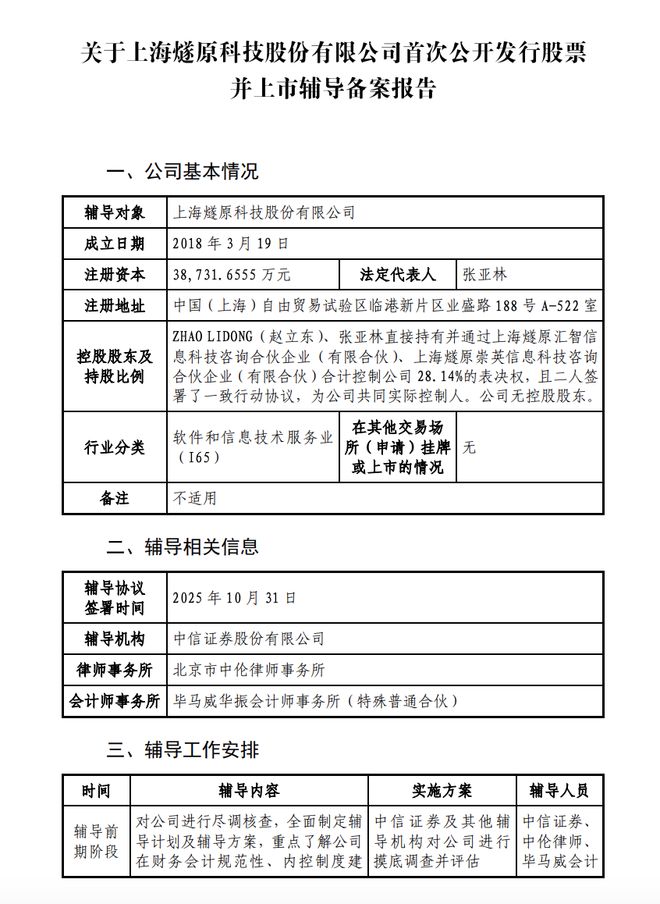
Core Viewpoint - Suiyuan Technology, an AI chip "unicorn," has re-registered for listing guidance with a new advisory firm, CITIC Securities, due to changes in the capital market environment and strategic development needs, while continuing its progress towards listing on the Sci-Tech Innovation Board [1][4]. Group 1: Listing Guidance and Advisory Changes - Suiyuan Technology has changed its listing guidance advisory firm from China International Capital Corporation (CICC) to CITIC Securities as of November 1 [1][3]. - The company emphasizes its commitment to advancing its listing process on the Sci-Tech Innovation Board, which it believes supports the development of key technology enterprises [1][4]. Group 2: Company Background and Financials - Suiyuan Technology was valued at 20.5 billion yuan and ranked 395th on the Hurun Global Unicorn List published in June [5]. - The company has no controlling shareholder; its founders, Zhao Lidong and Zhang Yalin, collectively control 28.14% of the voting rights, down from 32.51% reported last year [5]. Group 3: Product Development and Market Position - The company launched its new AI chip, L600, which took two and a half years to develop, featuring 144GB of storage and a bandwidth of 3.6TB/s, suitable for both training and inference of large models [6]. - Suiyuan Technology's previous chip, S60, has shipped 70,000 units and is widely used across five major intelligent computing clusters in China [6]. Group 4: Investment and Financing - Tencent has been a significant investor in Suiyuan Technology, participating in six rounds of financing since 2018 [7]. - The latest financing round, E round, was completed in May with investments from Shanghai Guotou, Shanghai International Group, and Guotou Juliy [7].
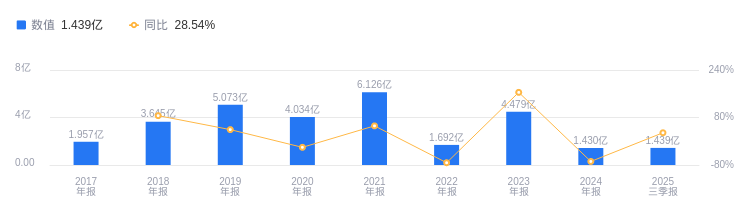
罗普特的前世今生:陈延行掌舵下安防业务深耕,2025年Q3营收1.44亿,资产负债率高于行业均值
Xin Lang Zheng Quan· 2025-10-31 08:29
Core Viewpoint - 罗普特科技集团在人工智能和数字经济领域的整体解决方案中处于领先地位,但在行业内的营收和净利润表现较弱,面临较高的资产负债率和低毛利率的挑战 [1][2][3] Group 1: Company Overview - 罗普特科技集团成立于2006年,2021年在上海证券交易所上市,专注于计算机视觉领域 [1] - 公司的主营业务包括社会安全系统解决方案、安防视频监控产品的开发与销售等 [1] Group 2: Financial Performance - 2025年三季度,罗普特实现营业收入1.44亿元,行业排名20/26,远低于海康威视的657.58亿元和大华股份的229.13亿元 [2] - 同期净利润为-9557.01万元,行业排名26/26,行业第一名海康威视净利润为102.54亿元 [2] Group 3: Financial Ratios - 2025年三季度,罗普特的资产负债率为42.60%,高于行业平均的31.60% [3] - 毛利率为17.65%,低于行业平均的38.30% [3] Group 4: Shareholder Information - 截至2025年9月30日,罗普特的A股股东户数为8161,较上期减少1.98% [5] - 户均持有流通A股数量为2.27万,较上期增加2.02% [5] Group 5: Future Outlook - 开源证券给予罗普特"买入"评级,预计2025-2027年归母净利润分别为-0.85亿元、0.60亿元和1.10亿元 [5] - 2025年上半年公司营收同比增长81.4%,净利润减亏203.61万元,经营活动现金流转正 [5] - 公司与浪潮合作推出DeepSeek一体机,预计将成为新的增长点 [5]

新窗口指导大范围取消补贴;智算中心建设先算亏多少;已过会GPU公司成立新业务组;头部大厂收缩服务器供应商丨算力情报局
雷峰网· 2025-10-30 08:06
Core Viewpoint - The article discusses the impact of recent regulatory changes and market dynamics on the domestic AI chip industry, particularly focusing on the shift towards domestic chips and the evolving landscape of computing power rental and supply chain management. Group 1: Regulatory Changes and Market Dynamics - A new "window guidance" document mandates that projects with local subsidies must exclusively use domestic chips, prohibiting the use of foreign GPUs like H20 in new market-oriented projects [2] - Projects outside the "national hub computing power facility cluster" will not receive financial or electricity subsidies, leading to the cancellation of existing local policies [2] - The ban on foreign chips and the push for domestic alternatives create a favorable environment for domestic AI chip manufacturers [3] Group 2: Computing Power Rental Market - Major companies in East China are paying significantly higher rental prices for computing power, which benefits both the companies and their IDC partners by enhancing cloud business collaboration and easing financial pressures [5] - The rental market is seeing a shift, with a model company planning to lease 60 H200 servers, indicating a trend towards smaller, more flexible rental agreements that align with technology upgrade cycles [8] - GPU rental prices have drastically decreased, with H100 prices dropping from 60,000-80,000 yuan to around 40,000 yuan, while H200 is priced at 60,000 yuan, making it a more attractive option for companies [9] Group 3: Supply Chain and Vendor Management - Leading companies are tightening their supplier networks, imposing penalties exceeding 100 million yuan on non-compliant suppliers, indicating a move towards a more stable and closed supply chain [6] - The construction of computing centers is now focused on calculating potential losses rather than profits, reflecting a more cautious approach in project planning due to delayed subsidy disbursements [7] Group 4: Emerging Trends in Chip Technology - Domestic RISC-V chip companies are expected to aggressively enter the server market next year, with several firms already developing high-performance RISC-V server chips [10][11] - The storage chip market is experiencing price increases driven by strong demand from AI and high-performance computing sectors, with distributors adopting strategies to hold inventory until prices rise further [12]