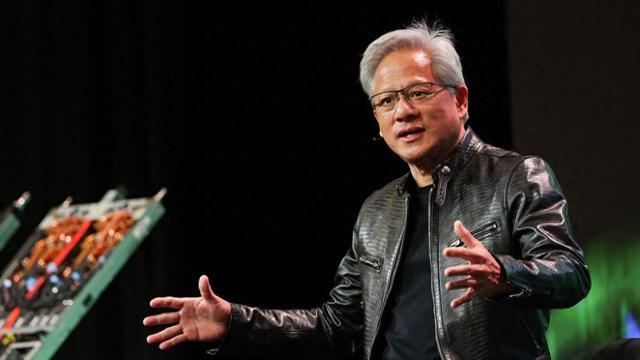
Feynman系列芯片

Search documents
英伟达财报“炸裂” 黄仁勋:AI拐点已至
Bei Jing Shang Bao· 2026-02-27 01:03
Core Viewpoint - Nvidia's record-breaking financial report aims to counter skepticism regarding the AI bubble, showcasing significant revenue and profit growth amid concerns about capital expenditures in the AI sector [1][4]. Financial Performance - In Q4 of FY2025, Nvidia reported record revenue of $68.127 billion, a 73% increase from $39.331 billion year-over-year; net profit reached $42.96 billion, up 94% from $22.091 billion [2]. - For the entire fiscal year, Nvidia's revenue was $215.938 billion, with a net profit of $120.067 billion, equating to daily earnings of approximately $32.8 million (RMB 220 million) [2]. - The data center business contributed $193.48 billion in revenue for the year, a 68% increase, and accounted for over 91% of total revenue in Q4, with $62.3 billion in revenue, a 75% year-over-year increase [2]. Business Segments - Within the data center segment, the "compute business" (primarily GPU products) generated $51.3 billion, a 58% increase year-over-year, while the "network business" contributed $11 billion, growing 263% [2]. - Nvidia plans to continue selling Blackwell and Rubin architecture chips, while the gaming segment faces tight memory supply [3]. Market Outlook - Nvidia's guidance for Q1 of FY2027 anticipates revenue of $78 billion, exceeding analyst expectations [3]. - Concerns remain regarding the Chinese market, as Nvidia has yet to generate revenue from the H200 licensing project [3]. Industry Context - High capital expenditures by tech firms for AI infrastructure are beneficial for Nvidia, but there are investor concerns about potential slowdowns in tech investments impacting Nvidia [5]. - A recent survey indicated that 23% of investors view the AI bubble as a significant concern, up from 9% in December [4]. Strategic Initiatives - Nvidia aims to solidify its position in the AI ecosystem, with plans to integrate various sectors onto its platform, including AI, robotics, and manufacturing [7]. - Nvidia is nearing an agreement with OpenAI for a potential $100 billion AI infrastructure project and has acquired technology from AI startup Groq for $20 billion [7]. - The upcoming GTC 2026 conference is expected to unveil new, unprecedented chips, with speculation around the Rubin and Feynman series [8]. Competitive Landscape - Nvidia faces competition from custom AI chips like Google's TPU and Amazon's Inferentia, which are challenging the dominance of general-purpose GPUs [8]. - TrendForce predicts that the shipment share of ASIC AI servers will rise to 27.8% by 2026, surpassing GPU AI servers in growth rate [8].

英伟达财报“炸裂”,黄仁勋:AI拐点已至
Bei Jing Shang Bao· 2026-02-26 08:36
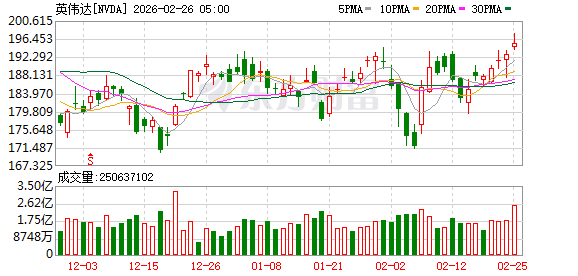
Core Viewpoint - Nvidia's record-breaking financial report aims to counter skepticism regarding the AI bubble, showcasing significant revenue and profit growth amid concerns about capital expenditures in the AI sector [2][3]. Financial Performance - In Q4, Nvidia reported a record revenue of $68.127 billion, a 73% increase from $39.331 billion year-over-year; net profit reached $42.96 billion, up 94% from $22.091 billion [3]. - For the entire year, Nvidia's revenue was $215.938 billion, with a net profit of $120.067 billion, equating to daily earnings of approximately $32.8 million (RMB 220 million) [3]. - The data center business contributed $193.48 billion in revenue for the year, a 68% increase, and accounted for over 91% of total revenue in Q4, with Q4 revenue reaching $62.3 billion, up 75% year-over-year and 22% quarter-over-quarter [3]. Business Segments - Within the data center segment, the "compute business" (primarily GPU products) generated $51.3 billion, a 58% increase, while the "network business" contributed $11 billion, growing 263% [3]. - Nvidia plans to continue selling the Blackwell architecture and the Rubin architecture chips, while the gaming segment faces tight memory supply [4]. Market Outlook - Nvidia's guidance for Q1 of FY2027 anticipates revenue of $78 billion, exceeding analyst expectations [4]. - Concerns remain regarding the Chinese market, as Nvidia has not generated any revenue under the H200 licensing project to date [4]. Industry Context - Wall Street is worried about high capital expenditures from tech giants potentially leading to systemic credit risks, with an estimated $700 billion to be spent on AI expansion by companies like Google, Microsoft, Meta, and Amazon this year [5][6]. - Despite the positive outlook for Nvidia, analysts caution that a slowdown in tech investments could significantly impact the company [6]. Strategic Initiatives - Nvidia is working to solidify its position in the AI ecosystem, with CEO Jensen Huang indicating a near agreement with OpenAI for a potential $100 billion AI infrastructure project [7]. - The upcoming GTC 2026 conference is expected to unveil "world's first" new chips, with speculation around the Rubin and Feynman series [7][8]. Competitive Landscape - Nvidia faces competition from custom AI chips like Google's TPU and Amazon's Inferentia, which are challenging the dominance of general-purpose GPUs in data centers [8]. - TrendForce predicts that the shipment share of ASIC AI servers will rise to 27.8% by 2026, surpassing GPU AI servers in growth rate [8].

英伟达财报“炸裂“,黄仁勋:AI拐点已至
Bei Jing Shang Bao· 2026-02-26 08:19
Core Viewpoint - Nvidia's record-breaking financial report aims to counter skepticism regarding the AI bubble, showcasing significant revenue and profit growth amid concerns about capital expenditures in the AI sector [1][4]. Financial Performance - In Q4, Nvidia reported record revenue of $68.127 billion, a 73% increase from $39.331 billion year-over-year; net profit reached $42.960 billion, up 94% from $22.091 billion [3]. - For the entire year, Nvidia's revenue was $215.938 billion, with a net profit of $120.067 billion, equating to daily earnings of approximately $32.8 million (RMB 220 million) [3]. Business Segments - The data center segment generated $193.48 billion in revenue for the year, a 68% increase, and accounted for over 91% of total revenue in Q4, with $62.3 billion in revenue, up 75% year-over-year and 22% quarter-over-quarter [3]. - Within the data center segment, the "compute business" (primarily GPU products) contributed $51.3 billion, a 58% increase, while the "network business" generated $11 billion, a 263% increase [3]. Future Guidance - Nvidia's guidance for Q1 FY2027 anticipates revenue of $78 billion, exceeding analyst expectations [4]. - The CFO indicated ongoing sales of Blackwell and Rubin architecture chips, while the gaming segment faces tight memory supply [4]. Market Sentiment - Concerns persist among investors regarding potential threats from the AI bubble, with 23% of surveyed investors citing it as their primary concern, up from 9% in December [6]. - Despite positive performance, there are worries that capital expenditures by major tech firms may peak this year, impacting Nvidia [6][7]. Strategic Initiatives - Nvidia aims to solidify its position in the AI ecosystem, with plans to integrate various sectors onto its platform, including AI, robotics, and life sciences [8]. - The company is nearing an agreement with OpenAI for a potential $100 billion AI infrastructure project and has acquired technology from AI startup Groq for $20 billion [8]. Upcoming Developments - Nvidia's GTC 2026 conference is set for March 15, where new, unprecedented chips are expected to be unveiled [8][9]. - Speculation surrounds the new chips, likely from the Rubin series or the next-generation Feynman series, which are anticipated to be revolutionary [9].

英伟达黄仁勋:Agentic AI拐点到来
Zhong Guo Zheng Quan Bao· 2026-02-26 04:40
Core Viewpoint - Nvidia's financial performance is seen as a benchmark for assessing the sustainability of AI investments amid concerns about an "AI bubble" [1] Group 1: Financial Performance - Nvidia reported Q4 revenue of $68.13 billion, a 20% quarter-over-quarter increase and a 73% year-over-year increase, surpassing analyst expectations of $66.2 billion [2] - Data center revenue reached $62.3 billion, exceeding market expectations of $60.62 billion and up from $35.58 billion in the same quarter last year [2] - Networking revenue was $10.98 billion, above analyst expectations of $9.02 billion, while gaming revenue was $3.7 billion, slightly below the forecast of $4.01 billion [2] Group 2: Future Growth and AI Development - Nvidia's CEO expressed confidence in customer cash flow growth, stating that increased computing power equates to revenue generation, emphasizing the importance of AI capabilities [2] - The company is at a pivotal point in the development of Agentic AI, with no concerns about future revenue growth [2] Group 3: Strategic Partnerships and Ecosystem - Nvidia is nearing a partnership with OpenAI, focusing on building a comprehensive ecosystem that spans from large language models to robotics, which is a key reason for customer preference [3] Group 4: Upcoming Product Launches - Nvidia's upcoming GTC conference on March 16 is highly anticipated, with expectations of unveiling unprecedented new chips [4] - The conference is likely to feature two major chip series: the Rubin series derivatives and the next-generation Feynman series, which is considered revolutionary [4] - Nvidia will showcase a new system-level AI infrastructure encompassing GPUs, CPUs, networking, software, and data centers, highlighting innovation directions [4]
多款“世界前所未见”芯片将亮相,AI最顶尖会议盛会英伟达GTC三月中旬启幕
Xuan Gu Bao· 2026-02-25 07:32
Event Overview - The GTC 2026 conference will be held from March 16 to 19, 2026, in San Jose, California, focusing on the new era of AI infrastructure competition [1] - The conference will feature over 500 sessions and activities, with a keynote speech by Jensen Huang, lasting two hours, discussing the future of accelerated computing and artificial intelligence [1] New Chip Developments - Jensen Huang has indicated that multiple "unprecedented" new chips are ready for the GTC 2026, with significant challenges in their development [5] - The new chips are expected to come from two main series: the Rubin series, which includes six new designs that are already in mass production, and the next-generation Feynman series, described as "revolutionary" [5] - The Feynman series is exploring extensive integration based on SRAM or 3D stacking technology for LPUs [5] AI Infrastructure Innovations - GTC 2026 will showcase a comprehensive new system-level AI infrastructure, covering GPUs, CPUs, networking, software, and data centers [5] - The conference may act as a potential catalyst for CPO (Co-Packaged Optics), following the introduction of the first Scale-out co-packaged optical switches at GTC 2025 [5] Historical Performance of Related Companies - Prior to GTC 2025, the stock price of Nvidia's power supply vendor, Magmi, rose over 40% from its low point [7] Nvidia's Supply Chain - Nvidia's supply chain includes various segments such as GPU foundry, packaging, storage, and optical modules, with key manufacturers listed [9] - Major foundries include TSMC and Samsung, while packaging is handled by companies like ASE and Amkor [9] - Storage components involve HBM from SK Hynix, Samsung, and Micron, and HDD/SSD from Toshiba, Seagate, Western Digital, and others [9]

存储涨价持续,关注英伟达3月GTC大会亮点
Zhong Guo Neng Yuan Wang· 2026-02-24 01:11
Core Viewpoint - Nvidia's CEO Jensen Huang announced that the company will unveil a "world-first" new chip at the GTC 2026 conference on March 16, 2026, likely from the Rubin or next-generation Feynman series [1][2] Group 1: Nvidia's New Chip Announcement - The new chips are expected to come from two main series: the Rubin series, which includes six new designs that are already in mass production, and the revolutionary Feynman series, which focuses on broad integration using SRAM or 3D stacking technology [1][2] - The development of these new chips is described as highly challenging, with all technologies nearing their limits, but Nvidia's technical team, including engineers from SK Hynix, is optimistic about overcoming these challenges [2] Group 2: Market Trends and Demand - There is a continuous increase in storage prices driven by strong demand from AI customers, with SK Hynix reporting that all customer demands cannot be met and that DRAM and NAND inventories are down to about four weeks [2] - The price of the new generation high-bandwidth memory (HBM4) from Samsung is approximately $700, which is a 20% to 30% increase compared to HBM3E, indicating a significant rise in memory costs [2] - Major tech companies like Amazon, Google, and Meta have provided optimistic forecasts for their 2026 capital expenditures, suggesting a robust demand for AI-related hardware [2] Group 3: Investment Recommendations - The report recommends focusing on AI-related printed circuit boards (PCBs) and core computing hardware, as well as the Apple supply chain, due to the expected strong demand and growth in these sectors [3] - The semiconductor industry is showing stable growth across various segments, including consumer electronics, PCB, and semiconductor manufacturing, indicating a positive outlook for the industry [3]
黄仁勋:将发布“世界前所未见”的新芯片,“所有技术都逼近极限”
Guan Cha Zhe Wang· 2026-02-20 00:13
Core Insights - Nvidia's CEO Jensen Huang announced in an interview that the upcoming GTC 2026 conference will unveil "unprecedented" new chips [1] - Huang expressed confidence in the team's efforts to tackle the challenges posed by the next-generation AI accelerator, Vera Rubin, and the critical HBM4 component supplied by SK Hynix [1] - Huang stated that the current AI landscape does not exhibit a bubble, emphasizing that it marks the beginning of a massive infrastructure project worth trillions of dollars [1] Group 1 - Huang dined with over 30 engineers from SK Hynix and Nvidia, highlighting collaboration between the two companies [1] - The HBM4 component is seen as crucial for the performance of Nvidia's Vera Rubin AI accelerator, amidst fierce competition with Samsung Electronics [1] - Huang did not disclose specific models of the new chips but hinted they may belong to the Rubin series or the next-generation Feynman series [1][2] Group 2 - The Rubin series has already been showcased at the 2026 CES, featuring six new chip designs that are now in full production [1] - The Feynman series is described as a "revolutionary" product, with Nvidia exploring extensive integration based on SRAM or 3D stacking technology for LPUs, though details remain unconfirmed [2]
黄仁勋:将在3月发布“世界前所未见”的全新芯片
天天基金网· 2026-02-19 07:30
Core Viewpoint - NVIDIA's CEO Jensen Huang announced a new chip set to be revealed at the upcoming GTC 2026 conference, which is expected to further solidify the company's leadership in AI infrastructure [2][5]. Group 1: Upcoming GTC 2026 Conference - The GTC 2026 conference will take place on March 15 in San Jose, California, focusing on a new era of AI infrastructure competition [5]. - Huang acknowledged the challenges in developing these new chips, stating that "all technologies are nearing their limits," yet the industry remains optimistic due to NVIDIA's past performance [5]. Group 2: New Chip Series - The specific models of the new chips have not been disclosed, but speculation suggests they may come from two main series: the Rubin series and the next-generation Feynman series [5]. - The Rubin series includes six new chip designs that have already entered mass production, while the Feynman series is described as "revolutionary," exploring extensive integration with SRAM and potential 3D stacking technology [5]. Group 3: AI Computing Demand Adaptation - NVIDIA is adapting to quarterly changes in AI computing demands, shifting focus from the Hopper and Blackwell series, which emphasize model pre-training, to the Grace Blackwell Ultra and Vera Rubin series, which target inference scenarios [6]. - The new products are expected to address latency and memory bandwidth bottlenecks, which are critical for AI applications [6]. Group 4: Strategic Positioning - Huang emphasized that extensive collaboration and investment are key to maintaining NVIDIA's leading position, as the company is strategically positioning itself across the entire AI industry chain, including energy, semiconductors, and data centers [6].

英伟达CEO黄仁勋:将发布“世界前所未见”的全新芯片,所有技术都已逼近极限
Sou Hu Cai Jing· 2026-02-19 06:18
Group 1 - The GTC 2026 conference will focus on the new era of AI infrastructure competition, with a keynote speech scheduled for March 15 in San Jose, California [3] - Jensen Huang acknowledged the challenges in developing new chips, stating that "all technologies are approaching their limits," yet there is high industry anticipation for NVIDIA's upcoming products based on its past performance [3] - The specific models of the new products have not been disclosed, but speculation suggests they will likely come from two major chip series: the Rubin series derivatives and the next-generation Feynman series, with the former already in mass production [3] Group 2 - The Rubin series includes six newly designed chips that were showcased at the 2026 CES and are now fully in production, while the Feynman series is described as "revolutionary" and may utilize SRAM and 3D stacking technology [3] - NVIDIA is adapting to quarterly changes in AI computing demands, shifting focus from model pre-training with the Hopper and Blackwell series to inference scenarios with the Grace Blackwell Ultra and Vera Rubin series, aiming to address latency and memory bandwidth bottlenecks [3] - Huang emphasized that extensive collaboration and investment are key to NVIDIA maintaining its leadership position, as the company is strategically positioning itself across the entire AI industry chain, including energy, semiconductors, and data centers [3]
黄仁勋:将在GTC 2026发布“世界前所未见”芯片
Xin Lang Cai Jing· 2026-02-19 05:36
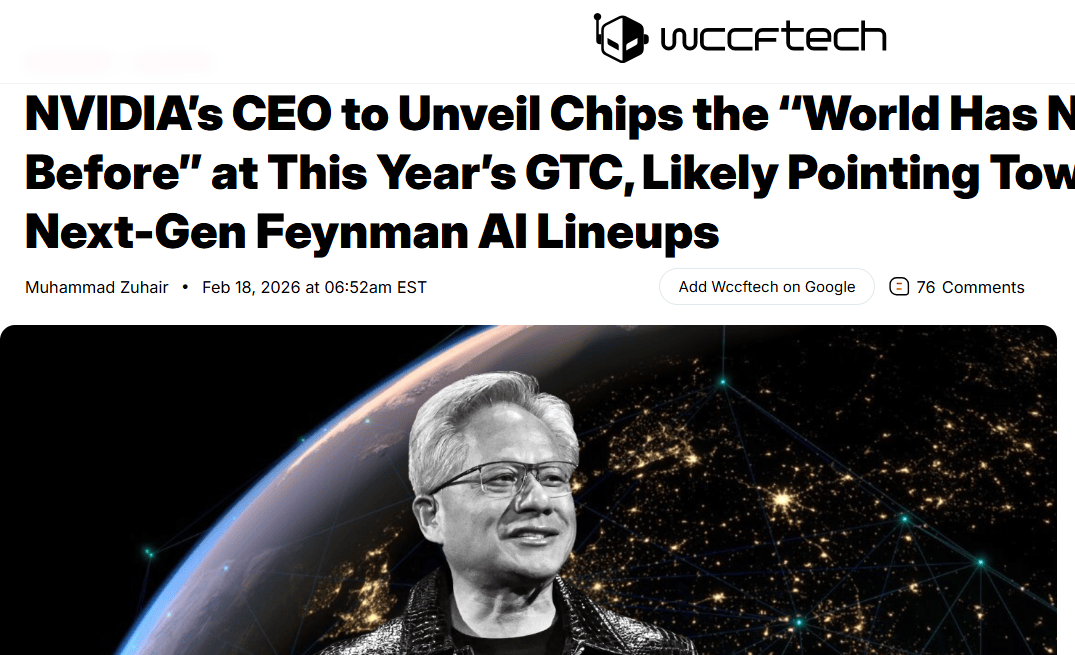
Group 1 - Nvidia's CEO Jensen Huang announced a new chip that will be unveiled at the upcoming GTC 2026 conference, generating significant industry interest [2] - The GTC 2026 conference will take place on March 15 in San Jose, California, focusing on a new era of AI infrastructure competition [2] - The new chips are expected to come from two main series: the Rubin series and the next-generation Feynman series, with the latter being described as a "revolutionary" product [2] Group 2 - Nvidia is adapting to quarterly changes in AI computing demands, with products targeting pre-training and inference scenarios to address latency and memory bandwidth bottlenecks [3] - The company emphasizes that broad collaboration and investment are key to maintaining its leadership in the AI industry, covering sectors such as energy, semiconductors, and data centers [3]