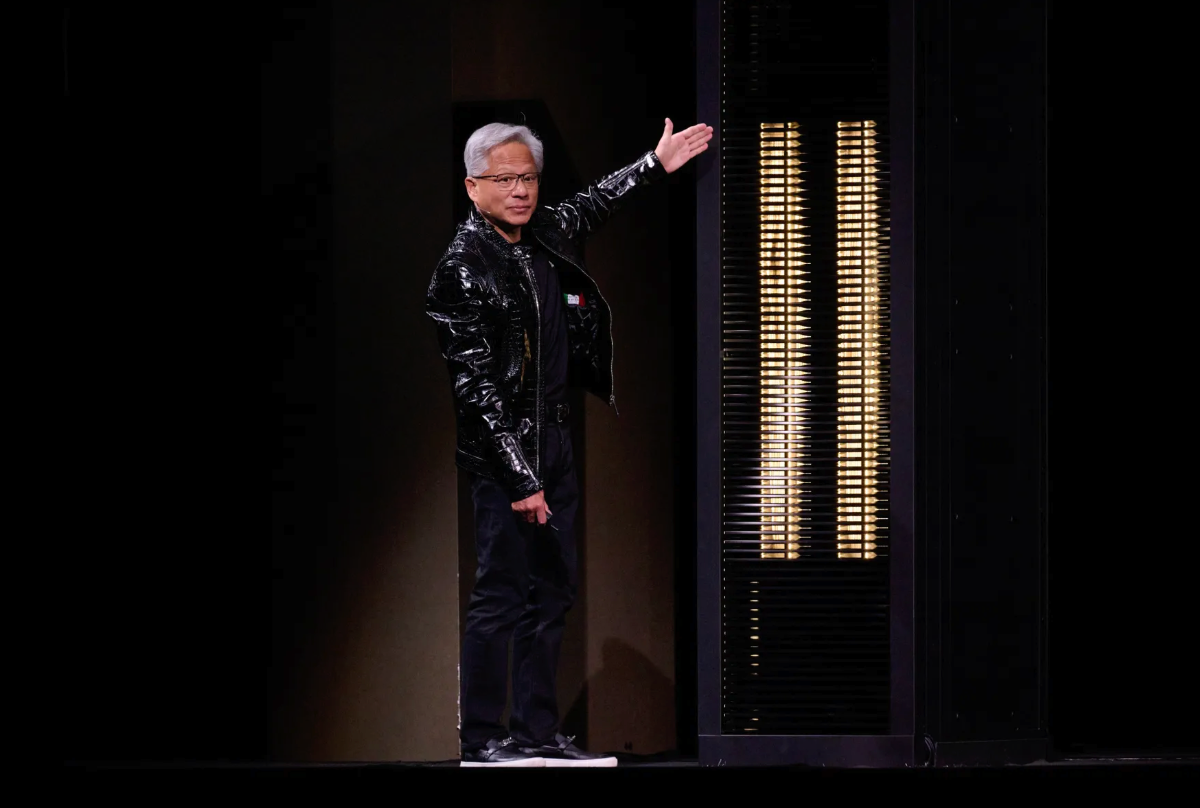
Rubin架构芯片

Search documents
腾讯研究院AI速递 20260319
腾讯研究院· 2026-03-18 16:06
Group 1: OpenAI Developments - OpenAI has released two lightweight models, GPT-5.4 mini and nano, with the mini achieving 54.4% on SWE-Bench Pro coding tests, only 3.3% lower than the flagship version [1] - The pricing for mini is $0.75 per million tokens for input and $4.5 for output, which is one-third of the flagship model's cost; the nano model is even cheaper at $0.2 for input and $1.25 for output, now available to ChatGPT free users [1] - OpenAI introduced a "large model decision + small model execution" architecture, where the mini consumes only 30% of the flagship's quota in Codex, although long context processing remains a challenge [1] Group 2: Anthropic Innovations - Anthropic launched a new feature called Dispatch, allowing users to remotely control Claude on a Mac via their mobile phone, marking a shift from "AI doing tasks" to "AI autonomously performing tasks" [2] - The success rate for operations is approximately 50%, with capabilities including file searching and email summarization, but struggles with application opening and cross-application tasks [2] - All operations are executed locally on the Mac, with the phone acting merely as a remote control, complementing the existing Claude Code Remote Control for programmers [2] Group 3: MiniMax Advancements - MiniMax introduced M2.7, the first model to deeply engage in its own iteration, autonomously constructing RL Harness and optimizing processes, achieving a 30% performance improvement after over 100 internal iterations [3] - The model scored 56.22% on SWE-Pro coding tests, nearing Opus levels, and supports multi-agent collaboration with a 97% adherence rate across 40 complex skills [3] - M2.7 can autonomously conduct research analysis and revenue modeling, delivering complete outputs in formats like PPT, Word, and Excel [3] Group 4: Tencent QClaw Updates - Tencent QClaw announced a significant update, upgrading its WeChat entry from a customer service account to a mini-program, enabling direct file reception from computers and upcoming support for multimodal interactions [4] - The new "Inspiration Square" feature allows users to run common tasks and skills with a single click, enhancing productivity without the need for coding [4] - QClaw is based on OpenClaw's minimalistic design, aiming for a zero-threshold user experience, with future plans for task scheduling and real-time message reception [4] Group 5: LibTV Launch - LiblibAI launched LibTV, a video creation platform catering to both human creators and agents, providing tools for a full-cycle creative process from script to final video [5][6] - The platform introduced over 20 exclusive AI capabilities, including advanced video editing features and multi-angle presentations, at a competitive pricing model [6] - Agents can utilize integrated skills to complete the entire video production process with a single command, significantly reducing costs compared to competitors [6] Group 6: Quantum Computing Recognition - The ACM awarded the 2025 Turing Award to Charles Bennett and Gilles Brassard for their foundational work in quantum information science, marking the first time the award is given for research directly related to quantum physics [7] - Their 1984 BB84 quantum cryptography protocol is rooted in quantum mechanics laws, establishing a secure basis for quantum communication [7] - The collaboration between Bennett and Brassard has evolved quantum information from a fringe idea to a fully developed academic discipline and national strategy [7] Group 7: Anthropic Skill Development Insights - Anthropic's Claude Code team has developed hundreds of active skills, categorized into nine types, including API references and business process automation [8] - Key insights include treating skills as folders for progressive information disclosure and focusing on common pitfalls rather than stating obvious knowledge [8] - The team recommends using log files or SQLite for skill memory capabilities and suggests creating an internal plugin marketplace for skill discovery and distribution [8] Group 8: Transformer Optimization - Yang Zhilin emphasized the need to restructure foundational elements like optimizers and attention mechanisms rather than merely increasing computational power, introducing Kimi Linear and Attention Residuals [9] - The K2.5 evolution logic focuses on token efficiency, long context, and agent clusters, utilizing an Orchestrator mechanism to decompose complex tasks for parallel processing [9] - The valuation of Moonlight Dark Side surged from $4.3 billion to $18 billion in less than six months, with ongoing open-source innovations planned [9] Group 9: AI's Impact on Employment - Huang Renxun stated that AI will not lead to unemployment but rather increase workloads, allowing tasks that previously took a month to be completed in 30 minutes [10] - NVIDIA announced new products, including seven chips and five racks, projecting chip revenue to reach $1 trillion and workforce growth from 42,000 to 75,000 employees over the next decade [10] - Huang expressed strong confidence in OpenClaw, likening it to the Linux ecosystem, which will continue to attract contributions from global developers [10]




黄仁勋100分钟交流会,信息量巨大
第一财经· 2026-03-18 04:13
Core Viewpoint - NVIDIA's CEO Jensen Huang predicts significant growth in AI infrastructure, projecting $1 trillion in revenue from Blackwell and Rubin chips alone, reflecting the increasing demand for AI technologies [7][11]. Group 1: Product Launch and Market Outlook - At the GTC event, NVIDIA unveiled a new product lineup, including seven chips based on the Rubin architecture and five machines, alongside new space computing modules and open-source models [3]. - Huang emphasized that the $1 trillion revenue forecast is based on business visibility and purchase orders, excluding revenues from CPUs and other diverse business lines [7]. - The company is experiencing rapid growth, with record orders in the last quarter and an accelerating demand for AI-related computing [7][10]. Group 2: AI Infrastructure and Storage Solutions - Huang highlighted the need for enhanced manufacturing capabilities to meet growing computational demands, particularly in storage systems, which are crucial for AI memory capabilities [8]. - NVIDIA is innovating storage systems for AI, utilizing various memory technologies, including LPDDR4 and LPDDR5, to ensure supply and performance [8]. Group 3: Business Diversification - NVIDIA's business extends beyond chips, with 40% of its revenue coming from diverse AI applications, including autonomous vehicles and robotics [11]. - The company has established strong relationships with cloud service providers, which contribute significantly to its revenue, while also emphasizing the importance of software and AI factory construction for clients [11][12]. Group 4: Future Workforce and AI Impact - Huang predicts that the future workforce at NVIDIA will grow to 75,000 employees, alongside 7.5 million AI agents working continuously [18]. - The introduction of AI technologies is expected to increase productivity, making people busier rather than reducing job opportunities, as tasks can be completed much faster than before [18][19]. - Huang believes that AI will lead to economic growth and job creation, filling labor gaps and transforming the nature of work [19].

黄仁勋称“不太可能实现”英伟达对OpenAI千亿美元投资,OpenAI机器人业务负责人辞职
Sou Hu Cai Jing· 2026-03-08 08:04
Core Insights - Nvidia's recent $30 billion investment in OpenAI is likely its last, with CEO Jensen Huang stating that the previously mentioned $100 billion investment is "unlikely" to materialize [1] - OpenAI's head of robotics and consumer hardware, Karlinowski, resigned, citing insufficient discussions before deploying AI models to the U.S. Department of Defense's secure network [1] Financial Performance - Nvidia reported record revenue of $68.1 billion for Q4 of fiscal year 2026, a 73% year-over-year increase, with a GAAP net profit of $42.96 billion, up 94% [3] - For the entire fiscal year 2026, Nvidia's revenue reached $215.9 billion, also a 65% increase, with a GAAP net profit of $120.07 billion [3] - The data center revenue for Q4 was $62.3 billion, a 75% increase year-over-year, marking a historical high [6] Market Reactions - Nvidia's stock rose by 1.44% on the day of the earnings report, briefly exceeding a 2% increase before narrowing [5][12] - The earnings report is viewed as a barometer for AI demand, with analysts noting that Nvidia's performance exceeded market expectations [6] Business Segments - Nvidia's data center revenue for fiscal year 2026 was $193.7 billion, a 68% increase, while gaming revenue was $16 billion, up 41% [7] - The professional visualization segment saw revenue of $3.2 billion, a 70% increase, and automotive and robotics revenue reached $2.3 billion, up 39% [7] Industry Trends - There is a growing concern about an AI bubble, with significant capital expenditures from tech giants like Google, Microsoft, Meta, and Amazon projected to reach nearly $700 billion this year [10] - A recent Bank of America survey indicated that 23% of fund managers view the threat from an AI bubble as their primary concern, up from 9% in December [10] Future Outlook - Nvidia's CFO expressed confidence in continued demand for AI infrastructure, noting that the company's data center revenue has increased nearly 13 times since the launch of ChatGPT [7] - Huang mentioned that the demand for AI computing is at a turning point, with significant growth expected in the coming years [11]

计算机行业“一周解码”:黄仁勋称代理式AI拐点已至,朱雀三号有望年内复用飞行
Bank of China Securities· 2026-02-28 14:57
Investment Rating - The industry investment rating is "Outperform the Market" [31] Core Insights - Nvidia's latest quarterly revenue exceeded expectations, with Q4 revenue reaching $68.1 billion, a 73% year-on-year increase, and a GAAP net profit of $42.96 billion, up 94% [10][11] - The CEO of Nvidia, Huang Renxun, stated that the turning point for agent-based AI has arrived, indicating a shift from content generation to complex task execution, which is expected to drive a new wave of computing demand [12][13] - The report highlights the potential for commercial spaceflight, with Blue Arrow Aerospace planning to conduct a recovery test for the Zhuque-3 rocket in Q2 2026, aiming for its first reuse flight within the year [14][16] Summary by Sections Investment Recommendations - Focus on companies in the AI Agent, cloud and infrastructure, and commercial aerospace sectors, including Hancloud Information, Yonyou Network, Saiyi Information, Dingjie Smart, Runze Technology, Borui Data, Star Ring Technology, Zhongke Xingtou, Xingtou Measurement and Control, Jiayuan Technology, Aerospace Hongtu, Shanghai Hantong, and Shengbang Security [3] Industry News - Nvidia's data center business revenue has increased nearly 13 times since the emergence of ChatGPT, with over 50% of revenue coming from large-scale cloud service providers [11] - The report mentions that Nvidia plans to continue selling Blackwell and Rubin architecture chips, while the gaming business anticipates supply constraints for memory to persist in the coming quarters [11] - The Zhuque-3 rocket's recovery test is seen as a significant step for China's commercial aerospace sector, with successful recovery and reuse expected to lower costs for future large constellation networks [16]
英伟达财报“炸裂” 黄仁勋:AI拐点已至
Bei Jing Shang Bao· 2026-02-27 01:03
Core Viewpoint - Nvidia's record-breaking financial report aims to counter skepticism regarding the AI bubble, showcasing significant revenue and profit growth amid concerns about capital expenditures in the AI sector [1][4]. Financial Performance - In Q4 of FY2025, Nvidia reported record revenue of $68.127 billion, a 73% increase from $39.331 billion year-over-year; net profit reached $42.96 billion, up 94% from $22.091 billion [2]. - For the entire fiscal year, Nvidia's revenue was $215.938 billion, with a net profit of $120.067 billion, equating to daily earnings of approximately $32.8 million (RMB 220 million) [2]. - The data center business contributed $193.48 billion in revenue for the year, a 68% increase, and accounted for over 91% of total revenue in Q4, with $62.3 billion in revenue, a 75% year-over-year increase [2]. Business Segments - Within the data center segment, the "compute business" (primarily GPU products) generated $51.3 billion, a 58% increase year-over-year, while the "network business" contributed $11 billion, growing 263% [2]. - Nvidia plans to continue selling Blackwell and Rubin architecture chips, while the gaming segment faces tight memory supply [3]. Market Outlook - Nvidia's guidance for Q1 of FY2027 anticipates revenue of $78 billion, exceeding analyst expectations [3]. - Concerns remain regarding the Chinese market, as Nvidia has yet to generate revenue from the H200 licensing project [3]. Industry Context - High capital expenditures by tech firms for AI infrastructure are beneficial for Nvidia, but there are investor concerns about potential slowdowns in tech investments impacting Nvidia [5]. - A recent survey indicated that 23% of investors view the AI bubble as a significant concern, up from 9% in December [4]. Strategic Initiatives - Nvidia aims to solidify its position in the AI ecosystem, with plans to integrate various sectors onto its platform, including AI, robotics, and manufacturing [7]. - Nvidia is nearing an agreement with OpenAI for a potential $100 billion AI infrastructure project and has acquired technology from AI startup Groq for $20 billion [7]. - The upcoming GTC 2026 conference is expected to unveil new, unprecedented chips, with speculation around the Rubin and Feynman series [8]. Competitive Landscape - Nvidia faces competition from custom AI chips like Google's TPU and Amazon's Inferentia, which are challenging the dominance of general-purpose GPUs [8]. - TrendForce predicts that the shipment share of ASIC AI servers will rise to 27.8% by 2026, surpassing GPU AI servers in growth rate [8].
「寻芯记」英伟达业绩光环下的阴影:高端芯片缺席中国市场,H200入华仍存变数
Hua Xia Shi Bao· 2026-02-26 10:34
Core Insights - Nvidia has achieved record high performance in the AI era, with fiscal year 2026 revenue reaching $215.94 billion, a 65% year-over-year increase, and net profit of $120.07 billion, also up 65% [2] - CEO Jensen Huang expressed confidence in the exponential growth of computing power demand, stating that the tipping point for generative AI has arrived, with enterprises accelerating the deployment of intelligent systems [2] Group 1: Financial Performance - For Q4 of fiscal year 2026, Nvidia reported revenue of $68.13 billion, a 73% year-over-year increase and a 20% quarter-over-quarter increase; net profit was $42.96 billion, up 94% year-over-year and 35% quarter-over-quarter [5] - Gross margin for the quarter reached 75%, compared to 73% in the same period last year [5] - Despite missing significant revenue from the Chinese market, Nvidia's performance remained strong, with revenue growth driven by the release of Blackwell and Blackwell Ultra products [6] Group 2: Market Challenges - Nvidia's high-end chips have not yet generated revenue in the Chinese market, despite U.S. government approval for limited exports of the H200 product [3] - The absence of high-end chips in China represents a significant loss, as revenue from this market previously accounted for 20% of Nvidia's total revenue [3][4] - Local Chinese competitors have gained market share during Nvidia's absence, with recent IPOs indicating their growing strength [4] Group 3: Future Outlook - Nvidia anticipates revenue of approximately $78 billion for Q1 of fiscal year 2027, supported by the upcoming mass production of Rubin architecture chips [6] - The data center segment remains the largest revenue source, with Q4 revenue reaching $62.31 billion, a 75% year-over-year increase [6] - Concerns exist regarding the sustainability of growth from cloud computing giants, as their capital expenditures are projected to reach $700 billion in 2026, with potential cash flow pressures [7][8]

英伟达营收创新高,黄仁勋称AI已到拐点
Di Yi Cai Jing Zi Xun· 2026-02-26 00:44
Core Insights - Nvidia reported record revenue of $68.1 billion for Q4 FY2026, a 73% year-over-year increase, with a GAAP net profit of $42.96 billion, up 94% [2] - The company anticipates continued exponential growth in AI demand, with CEO Jensen Huang stating that the adoption of agentic AI is at a turning point [2] - Nvidia's Q4 revenue and guidance for the next quarter exceeded analyst expectations, indicating strong market performance [3] Financial Performance - For Q4 FY2026, Nvidia's data center revenue reached $62.3 billion, a 75% increase year-over-year, while gaming revenue was $3.7 billion, up 47% but down 13% quarter-over-quarter [4] - The company achieved a total revenue of $215.9 billion for FY2026, a 65% increase, with net profit of $120.07 billion, also up 65% [2][4] - Nvidia's data center revenue has grown nearly 13 times since the launch of ChatGPT, with over 50% of this revenue coming from large cloud service providers [4] Business Segments - Nvidia's professional visualization revenue was $1.3 billion, a 159% increase year-over-year, while automotive and robotics revenue was $604 million, up 6% [4] - The company plans to continue selling its Blackwell and Rubin architecture chips, while facing tight memory supply in the gaming sector [5] - Nvidia is exploring opportunities in space data centers, indicating potential future applications for AI in space [5] Strategic Investments - Nvidia is nearing an agreement with OpenAI and is focused on expanding its ecosystem through strategic investments [6] - The company has entered a non-exclusive technology licensing agreement with Groq to enhance AI infrastructure performance [6] Market Concerns - There are ongoing concerns about an AI bubble, with analysts noting that high capital expenditures by tech giants could pose systemic credit risks [7] - A recent survey indicated that 23% of investors view the threat from an AI bubble as their primary concern, up from 9% in December [7] - Analysts express confidence in customer cash flow growth driven by AI applications, despite concerns about potential peaks in capital expenditures for large data centers [8]
英伟达最新季度营收创新高,黄仁勋称AI已到拐点
Di Yi Cai Jing· 2026-02-26 00:18
Core Insights - Nvidia's latest quarterly earnings report is seen as a bellwether for the AI boom, with significant revenue and profit growth indicating strong demand for AI technologies [1][2][7] Financial Performance - For Q4 of FY2026, Nvidia reported revenue of $68.1 billion, a 73% year-over-year increase, and a GAAP net profit of $42.96 billion, up 94% [1] - The gross margin for the quarter was 75%, an increase of 2 percentage points year-over-year [1] - For the entire FY2026, Nvidia's revenue reached $215.9 billion, a 65% increase, with a GAAP net profit of $120.07 billion, also up 65% [1] Business Segments - Data center revenue for Q4 was $62.3 billion, a record high and a 75% year-over-year increase; gaming revenue was $3.7 billion, up 47% year-over-year but down 13% quarter-over-quarter [5] - Professional visualization revenue was $1.3 billion, a 159% increase year-over-year, while automotive and robotics revenue was $604 million, up 6% [5] - For FY2026, data center revenue was $193.7 billion, a 68% increase; gaming revenue was $16 billion, up 41%; professional visualization revenue was $3.2 billion, up 70%; and automotive and robotics revenue was $2.3 billion, up 39% [5] Market Outlook - Nvidia's CFO noted that since the emergence of ChatGPT, data center revenue has increased nearly 13 times, with over 50% of this revenue coming from large cloud service providers [5] - Analysts predict that the top five cloud providers will spend nearly $700 billion on capital expenditures by 2026, indicating a diverse customer base for Nvidia [5] Strategic Initiatives - Nvidia is focusing on expanding its ecosystem and filling gaps in its technology offerings, with ongoing sales of Blackwell and Rubin architecture chips [5][6] - The company is also exploring opportunities in space data centers, which could lead to innovative AI applications [6] Market Sentiment - Despite Nvidia's strong performance, there are concerns about a potential AI bubble, with 23% of fund managers citing it as a major concern, up from 9% in December [8] - Analysts express worries that high capital expenditures by tech giants could peak this year, impacting Nvidia's future growth [8][9]
光大期货金融期货日报-20260114
Guang Da Qi Huo· 2026-01-14 03:50
1. Report Industry Investment Ratings - Stock Index Futures: Oscillating [1] - Treasury Bond Futures: Relatively Strong [2] 2. Core Views of the Report - The A-share market adjusted with oscillations throughout the day, with the ChiNext Index dropping nearly 2%. AI-related concepts and some sectors like oil and gas and power grid equipment showed strength, while the commercial spaceflight concept declined. The trading volume reached 3.7 trillion yuan, setting a new record. The rise of the A-share index at the beginning of 2026 was driven by global technological development, the Fed's potential interest rate cuts, and the weakening dollar. The tense global geopolitical situation led to a short-term surge in rare metals. With the index at a high level and heavy trading volume, caution is advised when chasing high prices, and it is recommended to wait and see [1]. - On Tuesday, treasury bond futures closed with gains in some contracts. The central bank conducted reverse repurchase operations, resulting in a net capital withdrawal. The short-term sufficient liquidity supports the bond market, but factors such as economic stability, rising inflation, and cautiousness towards interest rate cuts pose certain constraints. The bond market is expected to remain in a range-bound oscillation pattern in the short term [2]. 3. Summary by Relevant Catalogs 3.1 Research Views - **Stock Index Futures**: The market adjusted with oscillations, with the ChiNext Index down nearly 2%. AI medical, AI pharmaceutical, AI marketing, oil and gas, and power grid equipment sectors performed well, while the commercial spaceflight concept retreated. The trading volume reached 3.7 trillion yuan, a new record. The index rise at the beginning of 2026 was driven by global technological development, the Fed's potential interest rate cuts, and the weakening dollar. The tense geopolitical situation led to a short - term surge in rare metals. With the index at a high level and heavy trading volume, caution is needed when chasing high prices, and it is advisable to wait and see [1]. - **Treasury Bond Futures**: On Tuesday, the 30 - year, 10 - year, and 5 - year treasury bond futures contracts closed higher, while the 2 - year contract remained stable. The central bank conducted 3586 billion yuan of 7 - day reverse repurchase operations, resulting in a net capital withdrawal of 2576 billion yuan. The short - term sufficient liquidity supports the bond market, but economic stability, rising inflation, and cautiousness towards interest rate cuts pose constraints. The bond market is expected to remain range - bound in the short term [2]. 3.2 Price Changes on the Day - **Stock Index Futures**: On January 13, 2026, IH decreased by 0.08%, IF by 0.32%, IC by 1.28%, and IM by 1.82% compared to the previous day [4]. - **Stock Indexes**: The Shanghai Composite 50 Index decreased by 0.34%, the CSI 300 Index by 0.60%, the CSI 500 Index by 1.28%, and the CSI 1000 Index by 1.84% [4]. - **Treasury Bond Futures**: TS decreased by 0.01%, TF remained unchanged, T increased slightly by 0.00%, and TL increased by 0.13% [4]. 3.3 Market News - The market adjusted with oscillations throughout the day, with the ChiNext Index down nearly 2%. AI - related concepts and some sectors like oil and gas and power grid equipment showed strength, while the commercial spaceflight concept declined. The trading volume reached 3.7 trillion yuan, a new record. The Shanghai Composite Index closed down 0.64%, the Shenzhen Component Index down 1.37%, and the ChiNext Index down 1.96% [5]. - AI medical, AI pharmaceutical, AI marketing, and oil and gas sectors led the gains, while commercial spaceflight, controlled nuclear fusion, quantum technology, and optical communication sectors led the losses [5]. - There were 1520 rising stocks, 74 daily limit stocks, 3547 falling stocks, 56 daily limit down stocks, and 58 stocks with broken daily limits, with a broken - limit rate of 47% [5]. 3.4 Chart Analysis - **Stock Index Futures**: The report presents the historical price trends and basis trends of IH, IF, IC, and IM contracts [7][9][11]. - **Treasury Bond Futures**: The report shows the historical price trends, basis trends, inter - period spread trends, cross - variety spread trends, and capital interest rate trends of treasury bond futures contracts [14][16][19][22]. - **Exchange Rates**: The report displays the historical trends of the central parity rate of the US dollar against the RMB, the euro against the RMB, forward exchange rates, the US dollar index, and exchange rates between major currencies [24][25][26][28][30].
英伟达市值高位缩水超3万亿 2026面临空前威胁
Feng Huang Wang· 2026-01-07 05:45
Core Viewpoint - Nvidia's stock price has declined by 9.1% since reaching an all-time high on October 29, 2022, raising concerns about the sustainability of investments in the AI industry and Nvidia's market dominance [1] Group 1: Stock Performance - Nvidia's stock price has dropped significantly, with a cumulative decline of 9.1% since its peak, underperforming compared to the S&P 500 index [1] - The company's market capitalization has evaporated by approximately $460 billion (around 3.2 trillion RMB) in a few months, reducing its three-year stock price increase to nearly 1200% [1][5] Group 2: Competitive Landscape - Nvidia holds over 90% market share in the AI accelerator sector, but faces increasing competition from traditional rivals like AMD and new entrants such as Alphabet and Amazon [1][6] - AMD is projected to see a 60% growth in data center revenue by 2026, reaching nearly $26 billion, as major clients seek to develop their own chips to avoid high costs associated with Nvidia's products [6] Group 3: Profitability and Valuation - Nvidia's gross margin is expected to remain in the mid-70% range for fiscal years 2024 and 2025, but is projected to decline in fiscal year 2026 due to rising costs from the Blackwell chip series [7] - Analysts express concerns that any signs of weakness in Nvidia's pricing strategy could negatively impact its profit margins, which are critical indicators of profitability [7] - Some analysts believe that the current valuation of Nvidia suggests an end to the industry cycle, presenting a potential investment opportunity, contrasting with previous market peaks [7]