
Gemini 3.0

Search documents
Avocado on Ice: Can Meta Afford to Pause While Google and OpenAI Sprint Ahead?
247Wallst· 2026-03-13 15:30
Core Insights - Meta Platforms has delayed the launch of its Avocado AI model from Q1 to May or June due to internal tests indicating it lags behind competitors like Google's Gemini 3.0 and Anthropic's Claude in key areas such as reasoning, coding, and writing [1] - The shift from open-source Llama models to a proprietary, closed-source system aims to enhance profit margins and create a stronger competitive moat [1] - The delay raises questions about Meta's substantial investments in AI infrastructure, with capital expenditures for 2026 projected between $115 billion and $135 billion, primarily for AI data centers and chips [1] Group 1: AI Model Development - Avocado was initially targeted for a Q1 launch but has been postponed due to performance concerns compared to rivals [1] - The new model still outperformed previous Meta offerings, but the gap with leading competitors is significant [1] - Analysts express concern that even with a May or June launch, Avocado may still fall short of the latest versions from competitors [1] Group 2: Strategic Shift - The transition to a closed-source model represents a departure from Meta's previous open-source philosophy, which facilitated rapid community adoption [1] - Proprietary models allow Meta to control distribution and potentially charge for premium access, enhancing profit margins [1] - Owning intellectual property outright can provide a sustained competitive advantage and recurring revenue streams [1] Group 3: Competitive Landscape - Meta is currently behind in the AI arms race, with rapid advancements from competitors like Google and Anthropic [1] - The company has considered temporarily licensing Gemini to enhance its AI features, highlighting the urgency of the situation [1] - While the delay may risk losing momentum, prioritizing quality over speed could protect Meta's long-term relevance in the market [1]



段sir也投AI了
虎嗅APP· 2026-03-12 00:05
Core Viewpoint - The article discusses the investment strategy of Duan Yongping, highlighting his recent moves into AI stocks, indicating a shift towards technology investments while maintaining his traditional cautious approach of "not investing in what he doesn't understand" [4][5][16]. Investment Strategy - Duan Yongping has made a notable entry into three AI vertical companies: CoreWeave, Credo, and Tempus AI, with a total investment of approximately 0.28% of his portfolio, amounting to about 3.4 billion RMB (483.1 million USD) [4][5]. - His significant increase in holdings of Nvidia, with an increase of 1110% from 0.7% to 7.72%, positions it as his third-largest holding after Apple and Berkshire Hathaway, valued at around 9.5 billion RMB (1.35 billion USD) [4][5]. Company Summaries - **CoreWeave**: An AI computing power rental company that transitioned from cryptocurrency mining to GPU cloud computing. It has a revenue concentration risk, with 67% of its revenue coming from Microsoft. In 2025, it is projected to generate over 5 billion USD in revenue but is currently unprofitable with a net loss of 1.17 billion USD [7][9]. - **Credo**: Founded in 2008, Credo specializes in high-speed connectivity solutions for AI data centers. It has achieved a revenue of 437 million USD in 2025, marking a 126% year-over-year growth and has turned profitable for the first time. Its market capitalization has increased significantly since its IPO [10][12]. - **Tempus AI**: A precision medicine company that focuses on genomic testing and AI applications. It is projected to generate 1.27 billion USD in revenue in 2025, reflecting an 83% increase, and has recently turned profitable. Tempus has established a strong client base among major pharmaceutical companies [14][15]. Market Positioning - The three companies represent a shift from traditional industry giants to emerging AI firms that are in the growth phase and have unique market positions. This indicates Duan Yongping's proactive stance in the AI sector, which he views as a significant trend [16][19]. - Duan Yongping's approach to AI investments reflects a systematic and detailed analysis of the sector, moving from observation to trial and then to substantial investment [16][19].


段sir也投AI了
投中网· 2026-03-11 07:36
Core Viewpoint - The article discusses the investment strategies of prominent investors, particularly focusing on their recent moves in AI-related stocks, highlighting the aggressive stance of Duan Yongping and the more conservative approach of Li Lu [4][21]. Investment Strategies - Duan Yongping has made significant investments in three AI vertical companies: CoreWeave, Credo, and Tempus AI, with a total allocation of only 0.28% of his portfolio, indicating a cautious observation approach [4][6]. - He has substantially increased his stake in NVIDIA by 1110%, making it his third-largest holding, valued at approximately 95 billion yuan (13.5 billion USD) [4][5]. - Duan's investment philosophy remains consistent, emphasizing understanding before investing, and he views AI as a fundamental area of focus for future growth [6][20]. Company Summaries - **CoreWeave**: An AI computing power rental company, initially focused on cryptocurrency mining, now providing GPU cloud computing infrastructure. It has a projected revenue of over 5 billion USD in 2025 but is currently unprofitable with a net loss of 1.17 billion USD [7][8]. - **Credo**: Founded in 2008, it specializes in high-speed data center connectivity solutions. It is expected to achieve 437 million USD in revenue in 2025, marking a 126% increase and achieving profitability for the first time [9][12]. - **Tempus AI**: An AI precision medicine company that has raised 1.3 billion USD before its IPO. It is projected to generate 1.27 billion USD in revenue in 2025, with a profit of approximately 12.9 million USD [13][14]. Market Trends - The article notes that Duan Yongping's investments reflect a broader trend among investors recognizing AI as a critical area for future growth, with many major firms increasing their stakes in AI technologies [17][20]. - Li Lu's investment in Google, which has become a significant part of his portfolio, showcases a more cautious approach to AI investments, focusing on established companies with strong fundamentals [21][22]. Conclusion - The contrasting strategies of Duan Yongping and Li Lu illustrate different approaches to investing in the rapidly evolving AI sector, with Duan taking a more aggressive stance while Li remains grounded in value investing principles [4][21].


软件巨头被恐慌抛售,SaaS的黄昏来了?
投中网· 2026-02-27 08:19
Core Viewpoint - The software industry is undergoing a significant transformation driven by AI technologies, which are reshaping the definition and functionality of SaaS products, leading to a potential decline in traditional software value and pricing [6][12][21]. Group 1: Impact of AI on Software Development - OpenClaw and Anthropic's Claude 3.5 have triggered a panic sell-off in the software and SaaS sectors, with OpenClaw allowing software development to bypass traditional coding processes, resulting in a rapid increase in user engagement [6][9]. - A report by Citrini Research predicts that by 2027, the development of complex software will require significantly fewer resources, with costs potentially dropping by 85% within 18 months due to AI advancements [9][21]. - The software ETF IGV saw a nearly 4.8% decline, with major companies like Applovin and CrowdStrike experiencing drops exceeding 9% [9][10]. Group 2: Transformation of SaaS Business Models - The traditional SaaS model, which relies on subscription fees, may shift towards a "Results as a Service" (RaaS) model, emphasizing payment based on outcomes rather than tasks [21][25]. - Companies like DingTalk and Feishu are attempting to evolve from mere tools to "Agent operating systems" to adapt to the changing landscape [21][22]. Group 3: Future of Software and AI Integration - The integration of AI into workflows is expected to redefine software's role, with traditional applications potentially becoming backend capabilities rather than standalone products [17][18]. - The emergence of AI-driven development models, where AI autonomously generates code, is expected to drastically reduce production costs and timelines [18][19]. - Companies must embrace AI to enhance product experiences, moving from providing software to offering API and AI-native experiences [24][25]. Group 4: Strategic Recommendations for SaaS Companies - SaaS companies need to develop clear and stable APIs to remain competitive, as users will gravitate towards services that can be easily integrated with AI [24]. - A proactive strategy involves embedding AI deeply into products to create unique user experiences, such as integrating AI sales coaches into CRM systems [24][25]. - Ultimately, SaaS companies should aim to become the AI entry point in their respective verticals, evolving from software providers to comprehensive workflow operating systems [25].
Prediction: These 3 Stocks Will Crush the Market in 2026
Yahoo Finance· 2026-02-16 18:05
Group 1: Alphabet (Google) - Alphabet has shown significant gains over the past year, with expectations for continued growth driven by its artificial intelligence (AI) initiatives [2][3] - Google Cloud's backlog increased by 55% quarter over quarter and more than doubled year over year to $240 billion, indicating strong demand for its services [3][4] - The annual revenue run rate for Google Cloud at the end of 2025 was approximately $70 billion, highlighting the substantial growth potential as the backlog converts to recognized revenue [4] - The introduction of Google Antigravity, a platform utilizing AI agents, has been well-received by developers and is expected to enhance Alphabet's offerings in the advertising space [5] Group 2: BeOne Medicines - BeOne Medicines, previously known as BeiGene, is anticipated to have three significant catalysts in 2026, particularly with its leading drug, Brukinsa [6][7] - Brukinsa has become the top BTK inhibitor in the market, gaining market share from the previous leader, Imbruvica [7] - The company plans to announce results from a Phase 3 study for Brukinsa in combination with rituximab as a first-line treatment for mantle cell lymphoma in the first half of 2026, which could further boost its market position [7]
光模块卖铲人逻辑较强,资金抢筹布局,通信ETF(515880)近20日资金净流入超27亿元
Mei Ri Jing Ji Xin Wen· 2026-02-10 13:47
Group 1 - The core viewpoint highlights strong investment interest in optical modules, with significant capital inflow into the communication ETF (515880), exceeding 2.7 billion yuan over the past 20 days [1] - Overseas cloud providers are significantly increasing their capital expenditure (Capex) guidance, leading to a valuation recovery in the industry chain. Google expects its 2026 Capex to be between 175 billion to 185 billion USD, nearly doubling year-on-year; Meta's full-year Capex guidance is 115 billion to 135 billion USD, a 73% increase; and Amazon's guidance is 200 billion USD, a 53% year-on-year growth [1] - The industry outlook is positive, with US earnings reports reaffirming the certainty of AI, and a continued shortage in computing power supply. Google reports that its Gemini 3.0 model is the fastest in its history, with over 750 million monthly active users. Management indicates that AI infrastructure investment will gradually increase throughout the year, with a pre-calculated power shortage expected to persist [1] Group 2 - Recent strong rebounds in the US computing chain and optical communication sectors have positively influenced sentiment and risk appetite in the A-share market. A-share segments like optical modules and servers are positioned at the core of the global AI industry chain, suggesting a strong "sell shovel" logic that may continue to benefit [1] - The communication ETF (515880) holds key overseas computing industry stocks, with core components such as optical modules, servers, optical fibers, and copper connections accounting for over 76%, effectively representing the fundamental industry outlook [1]
ETF日报:影视板块正迎来一波显著的“春节档预热”行情 关注影视ETF
Xin Lang Cai Jing· 2026-02-09 15:20
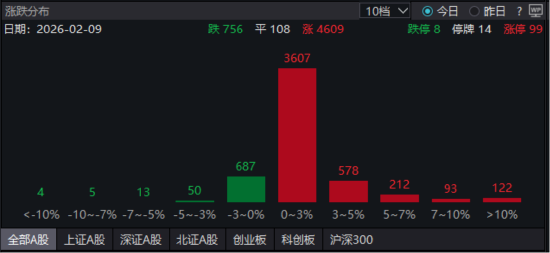
Group 1: A-Share Market Performance - The A-share market experienced a significant increase on the first trading day of the last week before the Spring Festival, with the Shanghai Composite Index rising by 1.41% to 4123.09 points and the Shenzhen Component Index increasing by 2.17% to 14208.44 points [1][12] - Over 4600 stocks in the two markets rose, with a total trading volume of approximately 2.27 trillion yuan, remaining stable compared to the previous trading day [1][12] - Most sectors showed positive performance, particularly in telecommunications, internet, and semiconductors, while only a few sectors like oil and gas experienced a pullback [1][12] - The A-share market has absorbed some valuation pressure during previous adjustments, suggesting a potential continuation of a slow bull market in the medium to long term [1][12] Group 2: Gaming Industry Insights - The gaming sector has shown promising signs with the issuance of 182 game licenses in January 2026, including 177 domestic games and 5 imported games, indicating regulatory support for the industry's healthy development [3][14] - The Chinese gaming market's actual sales revenue reached 350.79 billion yuan in 2025, marking a year-on-year growth of 7.68%, and the user base grew to 683 million [3][14] - The investment logic in the gaming sector focuses on "performance realization" and "AI technology transformation," with a confirmed recovery point in 2025 after previous adjustments [4][15] - The application of AI technology in game development is reshaping valuation logic, reducing development costs, and enhancing user willingness to pay through innovative gameplay [4][15] - The China Securities Animation and Gaming Index's price-to-earnings ratio is currently in a relatively reasonable historical range, indicating high upward elasticity for the sector [4][16] Group 3: Film and Television Sector Dynamics - The film and television sector is experiencing a significant pre-Spring Festival rally, with the Film and Television ETF rising over 7% in a single day, driven by the upcoming 2026 Spring Festival holiday and the release of major films [6][17] - The domestic box office for 2025 reached 51.83 billion yuan, a year-on-year increase of approximately 22%, recovering to over 80% of historical highs [7][17] - AI technology is deeply empowering the film industry, with advancements in scriptwriting and special effects production, which can significantly lower production costs and enhance profitability for leading companies [7][17] - The Film and Television ETF tracks the China Securities Film Index, covering traditional cinema leaders and new media giants, reflecting the overall performance of the film and television content production and distribution industry [7][17] Group 4: Gold Market Trends - The gold market has shown resilience after a sharp correction, with the Gold ETF rising by 3.52% and the Gold Stock ETF increasing by 2.71% [8][18] - China's central bank has increased its gold reserves for the 15th consecutive month, reaching 74.19 million ounces (approximately 2307.57 tons) by the end of January [8][18] - The long-term trend for gold remains strong, supported by challenges to the dollar credit system and increasing demand for gold as a safe asset amid global geopolitical uncertainties [8][18] Group 5: Cloud Computing and AI Investment - Major cloud companies have significantly raised their capital expenditure guidance, with Google projecting between $175 billion and $185 billion for 2026, nearly doubling year-on-year [9][19] - The AI supply chain remains tight, with companies like Google and Microsoft reporting high demand for AI infrastructure, indicating ongoing investment in AI capabilities [9][19] - The A-share market's segments related to optical modules and servers are positioned at the core of the global AI supply chain, likely benefiting from the increased capital expenditure [10][20]
Capex超预期背景下的超跌修复——海外算力大涨点评
Mei Ri Jing Ji Xin Wen· 2026-02-09 05:15
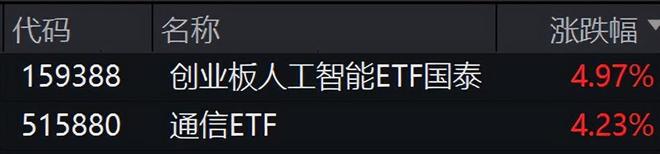
Market Performance - Overseas computing power recovery led to a rise of over 4% in the Communication ETF (515880) and the ChiNext AI ETF (159388) during trading today [1] Factors Driving the Increase - Recent US earnings reports indicate several key points: - Capital expenditures are accelerating, with Google projecting 2026 capital spending between $175 billion and $185 billion, nearly doubling year-on-year; Meta's full-year capital expenditure guidance is $115 billion to $135 billion, a 73% year-on-year increase; Amazon's guidance is $200 billion, a 53% increase year-on-year [2] - Microsoft did not provide full-year guidance but noted a seasonal quarter-on-quarter decline, likely due to factors like financing leases. The market previously expected a 42% growth in North American CSP capital expenditures for 2026, but recent earnings reports show capital expenditure growth significantly exceeding expectations [2] CPO Penetration and Market Sentiment - CPO penetration is exceeding expectations, but attention is needed on scale-up and scale-out dynamics. The consensus is that scale-up will dominate CPO, while scale-out remains led by pluggable optical modules. The domestic optical module leaders may secure some orders in the scale-up segment, indicating that CPO penetration in scale-up represents incremental growth rather than a replacement [3] - Market sentiment has rebounded from previous lows, with US markets recovering last Friday, influencing A-shares today. Both markets have faced issues related to funding and sentiment, with A-shares experiencing declining trading volumes since late January [3] Future Outlook - US earnings reports reaffirm the certainty of AI, with ongoing shortages in computing power. Google reported that Gemini 3.0 is the fastest model in its history, with over 750 million monthly active users for Gemini applications. Google also announced a partnership with Apple to develop the next-generation Apple foundational model. The management indicated that investments in AI infrastructure will gradually increase throughout the year, with a continued tight supply of computing power expected [4] - The focus remains on core segments like optical modules and servers, which are positioned at the heart of the global AI industry chain. With capital expenditures for 2026 significantly exceeding expectations, the outlook for optical modules and servers is strengthening, making Communication ETF (515880) and ChiNext AI ETF (159388) attractive for interested investors [4]



谷歌财报大超预期,印证AI确定性,天弘中证全指通信设备指数基金(A/C:020899/020900)长期配置价值凸显
Sou Hu Cai Jing· 2026-02-05 09:47
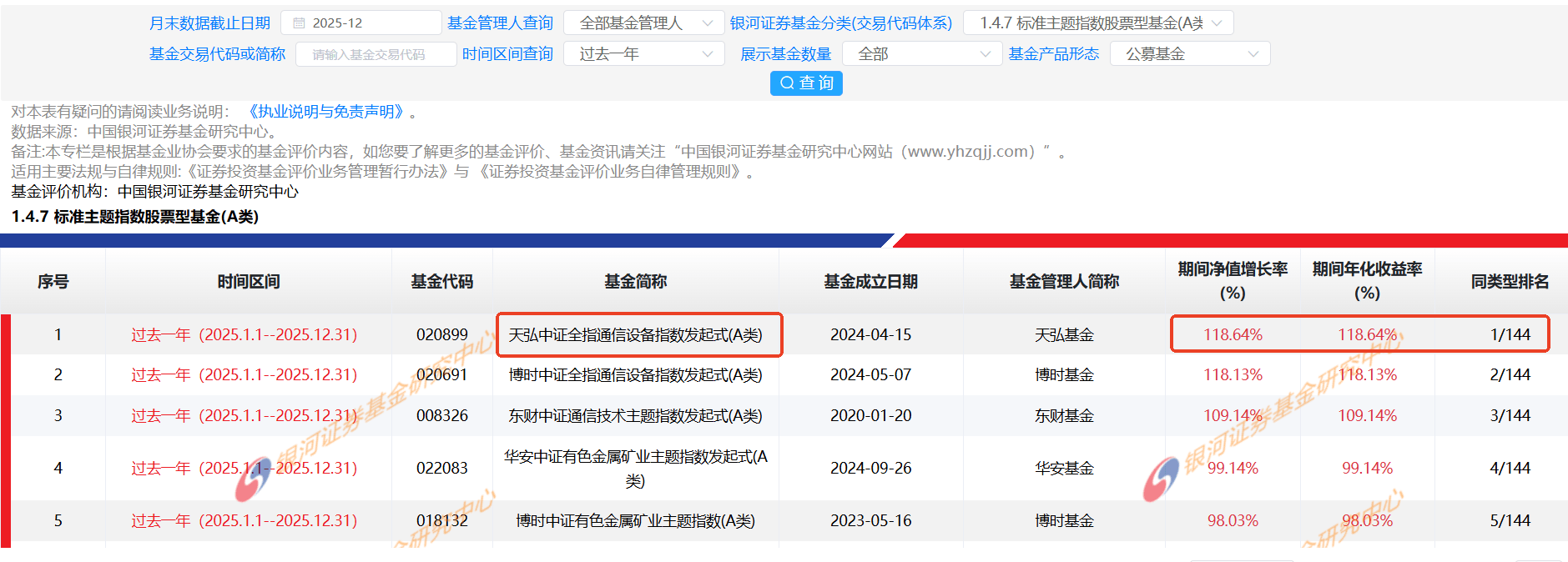
Group 1 - Meta has signed a long-term supply agreement with Corning worth $6 billion for fiber optic cables to expand capacity for AI data centers, with a single data center project in Louisiana requiring 8 million miles of fiber [1] - Nvidia is hosting a CPO webinar on February 3, 2026, focusing on co-packaged silicon photonic switches, highlighting the strategic value of CPO as a physical foundation for scaling AI computing power [1] - Alphabet's Q3 earnings report shows Google Search revenue growth accelerating from 15% to nearly 17%, while Google Cloud revenue growth surged by 14 percentage points to 48%, alleviating concerns about AI chatbots impacting search business [1] Group 2 - Google's earnings report confirms the certainty of AI, with a continued shortage of computing power; Gemini 3.0 is noted as the fastest model in the company's history, and its monthly active users exceed 750 million [2] - Google has reduced the unit cost of Gemini services by 78% through model optimization, and the company is in a tight computing power supply situation, which is expected to persist throughout the year [2] - The Tianhong CSI Communication Equipment Index Fund has ranked first among similar funds in 2025, benefiting from the AI computing power boom [2] Group 3 - The Tianhong CSI Communication Equipment Index Fund focuses on the optical communication sector, with top holdings including leading optical module companies, which collectively account for nearly 35% of the fund [3] - The fund manager emphasizes a dual-driven investment framework of "AI computing power explosion + communication infrastructure upgrade," which provides clear direction for fund operations [4] - The Tianhong CSI Communication Equipment Index Fund closely tracks the CSI Communication Equipment Index, which includes 50 listed companies in the communication equipment sector [4]
谷歌财报全面超预期,或可持续关注通信ETF(515880)
Mei Ri Jing Ji Xin Wen· 2026-02-05 03:41
Financial Performance - Google's Q4 revenue reached $113.8 billion, a year-over-year increase of 18%, setting a new record and exceeding analyst expectations of $111.4 billion [2] - The net profit for the quarter was $34.455 billion, up 30% year-over-year, with an EPS of $2.82, which is 31% higher than the previous year and above the expected $2.65 [3] - Operating profit grew 16% year-over-year to $35.9 billion, maintaining an operating margin of 31.6%, despite including a one-time expense of $2.1 billion related to Waymo employee compensation [3] - Capital expenditures for the quarter were $27.9 billion, nearly doubling from $14.3 billion in the same period last year, but slightly below market expectations of $28.2 billion [4] Cloud and Service Revenue - Cloud revenue reached $17.7 billion, a significant year-over-year increase of 48%, accelerating from 34% in the previous quarter and surpassing Wall Street's expectation of $16.2 billion [5] - Service revenue totaled $95.9 billion, a 14% year-over-year increase, slightly above the expected $94.9 billion, with advertising revenue contributing $82.3 billion, also up 14% and exceeding the forecast of $80.9 billion [5] Capital Expenditure Guidance - For 2026, capital expenditures are projected to be between $175 billion and $185 billion, with a median estimate of $180 billion, nearly doubling year-over-year and exceeding market expectations by over $60 billion, representing a more than 50% increase [6] AI and Infrastructure Insights - The financial report reinforces the certainty of AI investments, with Google revealing that Gemini 3.0 is the fastest adopted model in the company's history, and it has over 750 million monthly active users [7] - The company has reduced the unit cost of Gemini services by 78% through model optimization, and it is collaborating with Apple to develop the next generation of Apple foundational models [7] - Management indicated that investments in AI infrastructure will gradually increase throughout the year, despite ongoing supply constraints in computing power, which are expected to persist [7] Industry Outlook - Recent cloud company earnings reports indicate that capital expenditures have mostly exceeded expectations, suggesting continued interest in communication ETFs (515880) [8] - North American cloud companies, including Meta and Microsoft, have provided strong capital expenditure guidance, with Meta projecting $115 billion to $135 billion for 2026, reflecting a year-over-year increase of 73% [8] - Overall, the capital expenditure growth rate for North American cloud companies is expected to be around 42%, significantly exceeding previous Wall Street expectations, further confirming the certainty of AI investments [8]