
HeartMate 3

Search documents
IPO最新进展!国产人工心脏冲刺第一股
思宇MedTech· 2026-02-03 04:18
Core Viewpoint - Shenzhen Core Medical Technology Co., Ltd. has entered the IPO inquiry stage on the Sci-Tech Innovation Board, marking it as a representative enterprise in the innovative medical device sector [1][2]. Company Overview - Core Medical was established in 2016 and focuses on the research and industrialization of high-end innovative medical devices, particularly artificial hearts and mechanical circulatory support devices [2][5]. - The company aims to raise 1.217 billion yuan, primarily for the development of cutting-edge products, construction of an artificial heart industrialization base, marketing network, and digital system [2]. Financial Performance - Core Medical has not yet achieved profitability, with revenues of 0 yuan in 2022, 16.55 million yuan in 2023, 93.69 million yuan in 2024, and 70.48 million yuan in the first half of 2025. Corresponding net losses were -178 million yuan, -170 million yuan, -132 million yuan, and -72.75 million yuan [3]. - The company has completed six rounds of financing since its inception, with a valuation of approximately 3.545 billion yuan after the D round in April 2025 and around 3.388 billion yuan during a share transfer in August 2025 [2]. Product Matrix - Core Medical has developed a comprehensive product matrix from implantable to interventional systems, including the Corheart® 6, DuoCor®, and CorVad® series, targeting over 60 million heart failure patients globally [5][9]. - The Corheart® 6, an implantable left ventricular assist device, received NMPA approval in June 2023 and is designed for end-stage heart failure patients [12]. Competitive Landscape - Core Medical's products are positioned against competitors like Abbott's HeartMate 3 and other domestic devices, with a focus on innovative features and clinical data supporting their efficacy [12][13][16][20]. - The company is recognized for its advanced technology in miniaturizing artificial hearts, enhancing its competitiveness in the international market [5][7]. Investment and Financing - In April 2025, Core Medical completed a D round financing exceeding 100 million USD, marking one of the largest market-oriented financings in China's innovative medical device sector that year [10]. - The company has received multiple rounds of institutional investment and is supported by recognized professional institutional investors [10]. Regulatory and Market Considerations - As the inquiry phase begins, Core Medical's market valuation, commercial sustainability, and profitability path are expected to be key areas of regulatory focus, providing important reference points for similar innovative medical device companies [3][22].


人工心脏厂商竞速科创板
Bei Jing Shang Bao· 2026-01-12 15:26
Core Insights - Two companies, Suzhou Tongxin Medical Technology Co., Ltd. and Shenzhen Core Medical Technology Co., Ltd., are currently in the IPO queue on the Sci-Tech Innovation Board, focusing on artificial heart development [1][3] - Both companies have not yet achieved profitability but are seeking market recognition with different product strategies [1][3] - The artificial heart market in China is still in its early development stage, lacking a mature competitive landscape [1][3] Company Summaries - Core Medical has five implantable and six interventional artificial heart products in development, with one implantable product already commercialized and two interventional products in the registration phase [3] - Tongxin Medical's first implantable full magnetic levitation left ventricular assist device (CH-VAD) has been approved for sale in China, marking it as the first of its kind in the country [3] - Core Medical aims to raise 1.217 billion yuan through its IPO for various projects, while Tongxin Medical plans to raise 1.064 billion yuan for its own initiatives [4] Financial Performance - Core Medical's revenue for 2022-2025 shows a growth trajectory, with figures of approximately 0, 16.55 million, 93.69 million, and 70.48 million yuan, but it has incurred significant net losses [8] - Tongxin Medical's revenue for the same period is approximately 0.861 million, 5.045 million, 7.735 million, and 7.207 million yuan, also reflecting net losses [8] - Both companies have experienced a decline in the average selling price of their core products during the reporting period [5][6] Market Dynamics - The pricing strategy of both companies aims to expand market share and establish a solid customer base, despite short-term profit compression [7] - The domestic artificial heart market is still developing, with significant challenges in market education and patient awareness [7] - Core Medical is working on its Cor-Vad series, which is in the registration phase and aims to be the first interventional artificial heart product approved in China [7] Industry Outlook - The rush to IPO among artificial heart manufacturers is seen as a necessary step for early commercialization in the industry [4] - The potential for growth in the domestic artificial heart sector is substantial, supported by demand, policy, and technological advancements [10] - Long-term sustainability will depend on technological innovation and cost control, despite the current competitive pricing environment [10]

核心医疗、同心医疗相继申报IPO,人工心脏厂商竞速科创板
Sou Hu Cai Jing· 2026-01-12 12:33
Core Insights - Two companies, Suzhou Tongxin Medical Technology Co., Ltd. and Shenzhen Core Medical Technology Co., Ltd., are currently in the IPO queue for the STAR Market, focusing on artificial heart development [1][4] - Both companies have not yet achieved profitability but are seeking recognition in the capital market with different product strategies [1][4] - The artificial heart market in China is still in its early development stage, lacking a mature competitive landscape [1][4] Company Summaries - **Core Medical**: - Aims to provide comprehensive and innovative artificial heart products, with five implantable and six interventional products in development [4] - The first commercial product, the implantable left ventricular assist device (Corheart6), was approved in June 2023, with projected revenues of 16.55 million yuan in 2023, increasing to 93.69 million yuan in 2024 [6][9] - Plans to raise 1.217 billion yuan through its IPO for product development, industrial base construction, and marketing [5][9] - **Tongxin Medical**: - Focuses on breakthrough technologies for advanced heart failure treatment, with its first product, the CH-VAD, being the first fully magnetic levitation left ventricular assist device approved in China [4][9] - Plans to raise 1.064 billion yuan through its IPO for production base construction and global clinical trials [5][9] Financial Performance - Both companies reported no profitability during the reporting period, with Core Medical's revenues ranging from 0 to 93.69 million yuan from 2022 to 2025, and Tongxin Medical's revenues ranging from 0.861 million to 7.735 million yuan [9][10] - Core Medical's net losses decreased from 178 million yuan in 2022 to 72.75 million yuan in the first half of 2025, while Tongxin Medical's losses increased from 189 million yuan in 2022 to 193 million yuan in the first half of 2025 [9][10] Market Dynamics - Both companies experienced a decline in product prices during the reporting period, with Core Medical's average sales price for its product decreasing from 290,400 yuan to 229,600 yuan [6][9] - Tongxin Medical's CH-VAD prices decreased from 459,600 yuan to 362,300 yuan, attributed to efforts to expand market share and customer base [7][9] - The artificial heart market in China is still developing, with significant challenges in market education and patient awareness [8][10]
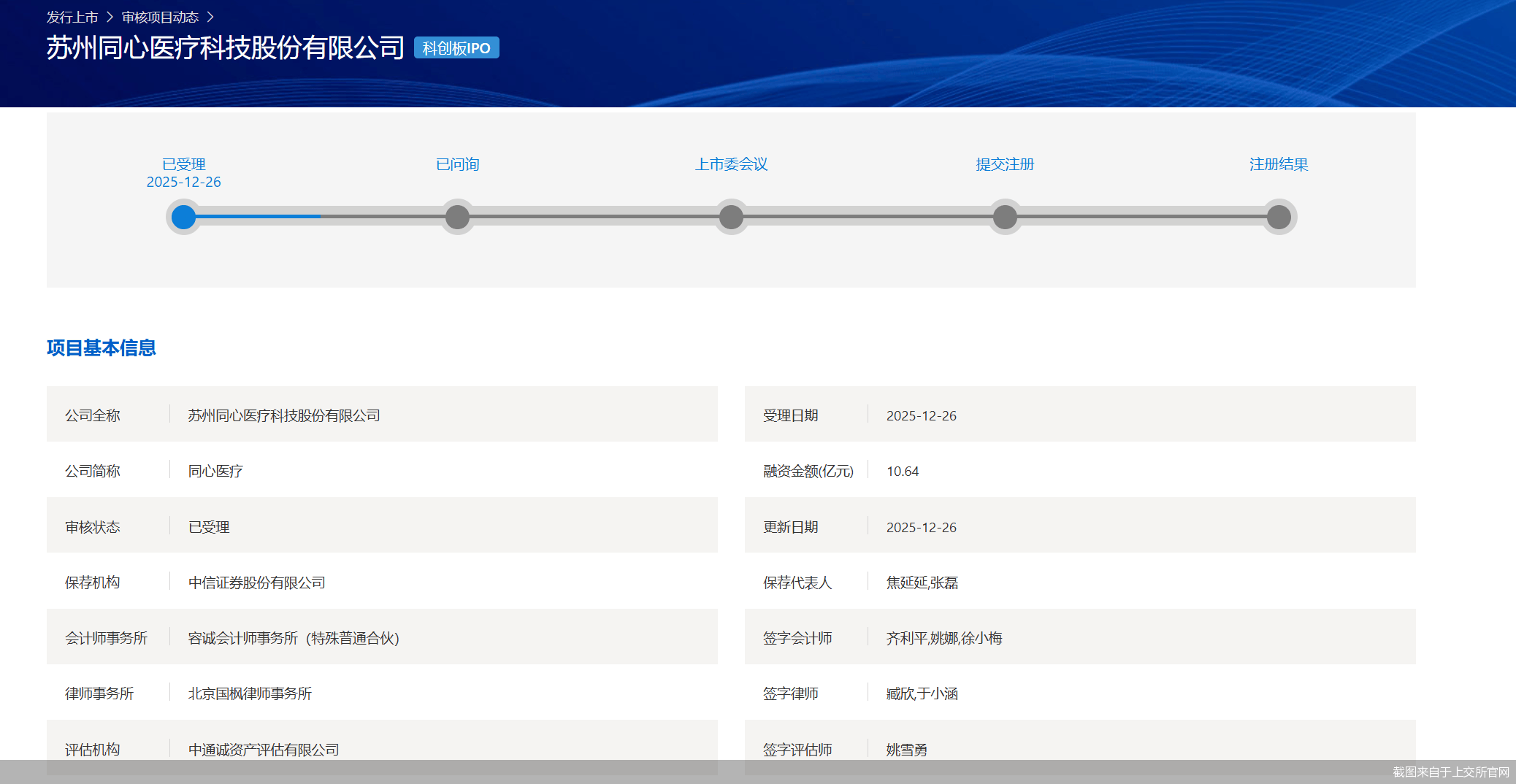
同心医疗冲刺科创板:有望打破全球植入式人工心脏领域垄断,红杉、高榕为股东
IPO早知道· 2025-12-27 02:21
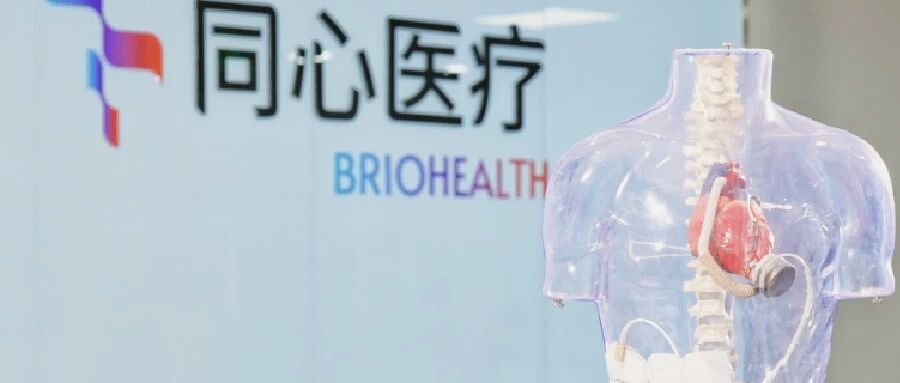
Core Viewpoint - Tongxin Medical aims to transform the competitive landscape of the artificial heart market globally through innovative technologies and solutions for advanced heart failure treatment [2]. Group 1: Company Overview - Tongxin Medical, established in 2018, focuses on addressing the urgent need for effective treatments for advanced heart failure patients and aims to become a leader in the global artificial heart sector [2]. - The company has set up operational entities in China, the United States, and Europe, with its core product being the implantable artificial heart [3]. Group 2: Product Development and Market Position - In China, Tongxin Medical's first full magnetic levitation left ventricular assist system, CH-VAD, has been approved for market entry, making it the first of its kind in the country [4]. - The next iteration, CH-VAD Plus, is expected to receive approval in early 2026, while the BrioVAD system has gained FDA approval for clinical trials in the U.S. [4]. - In Europe, the company has submitted an application for the BrioLife clinical study, anticipated to start in the first half of 2026 [4]. - As of the date of the prospectus, over 670 CH-VAD implants have been completed in China, and 108 patients have undergone BrioVAD implantation across 22 centers in the U.S. [5]. Group 3: Competitive Landscape - The full magnetic levitation artificial heart technology is the most widely used globally, with CH-VAD being the first approved in China [6]. - By the end of 2024, Tongxin Medical is projected to hold a 26.9% market share in the domestic implantable artificial heart market [6]. - The BrioVAD product is designed to be smaller and lighter than competitors, with potential advantages in blood compatibility, infection resistance, and patient quality of life, and is currently undergoing head-to-head clinical trials against Abbott's HeartMate 3 [6]. Group 4: Investment and Financial Backing - Since its inception, Tongxin Medical has attracted investments from notable institutions such as Sequoia China, Gao Rong Capital, and others [7].
人工心脏掀起术语争议,“全磁悬浮”概念陷入技术迷雾
Hua Xia Shi Bao· 2025-12-18 07:30
Core Viewpoint - The article discusses the controversy surrounding the terminology and classification of artificial heart pump technologies, particularly the term "full magnetic suspension," which has implications for patient safety and scientific transparency [1][10]. Industry Overview - Heart failure is a terminal stage of cardiovascular disease, with approximately 5% of cases progressing to severe heart failure. The World Health Organization estimates around 64.3 million heart failure patients globally, with about 13 million in China [2]. - Artificial hearts serve as a "life pump" for end-stage heart failure patients, designed to replace the heart temporarily or permanently, facilitating blood circulation [2]. - There are two types of artificial hearts: partial replacement and total artificial hearts, with the latter being more advanced in terms of technology [2]. Technology Classification - Blood pump bearings are categorized into three main types: contact sliding bearings, fluid dynamic bearings, and magnetic bearings. The latter operates without contact, relying solely on magnetic forces [3]. - The term "full magnetic suspension" is considered the industry benchmark, associated with advanced and safe technologies. However, the precise definition of this term is under dispute [3][10]. - Kurt Dasse emphasizes that if a device requires fluid dynamic effects for stability, it cannot be classified as "full magnetic suspension" [3]. Clinical Implications - The ambiguity surrounding the definition of "full magnetic suspension" may affect the accurate assessment of device performance by clinicians and researchers [10]. - Abbott's HeartMate 3 is highlighted as a benchmark in the industry, demonstrating significant clinical advantages over other devices [11]. - A systematic review comparing three ventricular assist devices showed that HeartMate 3 had the best performance across all major clinical endpoints, reinforcing the link between technology choice and clinical outcomes [11]. Market Competition - Abbott leads the global market with its HeartMate 3 product, while Chinese companies are increasingly participating in the artificial heart sector, with several products approved since 2021 [12][13]. - Major domestic companies are adopting different technological routes, with notable products like the CH-VAD and CorHeart 6 entering the market [12][13]. - The potential market for artificial hearts in China is substantial, with projections indicating that by 2033, the number of implant surgeries could exceed 25,000, corresponding to a market size of over 5.5 billion yuan [14]. Future Outlook - The choice of technology route will significantly influence industry competition, with full magnetic suspension technology being a key focus area [14]. - The transparency and standardization of technology definitions are crucial for building trust among companies and ensuring accurate evaluations by researchers and clinicians [14][15]. - Ongoing discussions aim to standardize definitions and identify high-risk components in various designs, which is essential for independent assessments and patient safety [15].



出海时代的技术沟通:为什么人工心脏需要统一语言?
思宇MedTech· 2025-12-03 05:18
Core Viewpoint - The article emphasizes the necessity for a unified language in the medical technology field, particularly regarding the terminology used for blood pump bearing technologies, to ensure ethical communication and patient safety [2][3]. Group 1: Importance of Terminology - Accurate terminology in medical devices is crucial as it directly impacts clinical decisions and patient safety [2]. - The inconsistency in terminology, particularly regarding "fully magnetically levitated" blood pumps, can lead to misunderstandings among manufacturers, clinicians, and regulators [3][4]. - The call for a standardized language is essential as more Chinese medical devices enter international markets, facing diverse regulatory and cultural challenges [3][4]. Group 2: Case Study of Blood Pump Technologies - The article discusses a specific case involving the CorHeart 6 blood pump, which was described differently by industry representatives and independent experts, highlighting the need for open scientific discussions to resolve such discrepancies [3][4]. - The classification of blood pump bearings is critical, with three fundamental types identified: contact-type plain bearings, hydrodynamic bearings, and magnetic bearings [6][22]. - The differences between magnetic and hydrodynamic bearings are significant, particularly regarding their impact on hemocompatibility and blood damage characteristics [10][27]. Group 3: Recommendations for Manufacturers - Manufacturers are urged to ensure that their descriptions align with international consensus and that the terminology used in marketing and technical documents is clear and consistent [4][5]. - It is recommended that manufacturers disclose the rotor suspension methods of their products, including any combination of magnetic and hydrodynamic support, to promote transparency [5][18]. - The article advocates for the establishment of an independent working group to standardize definitions and classifications of blood pump technologies to enhance scientific clarity and patient safety [12][32].

异种器官移植60多年进步何以仅“两天”? 陈忠华:猪器官移植已进入下一轮冲刺阶段
Mei Ri Jing Ji Xin Wen· 2025-11-30 13:00
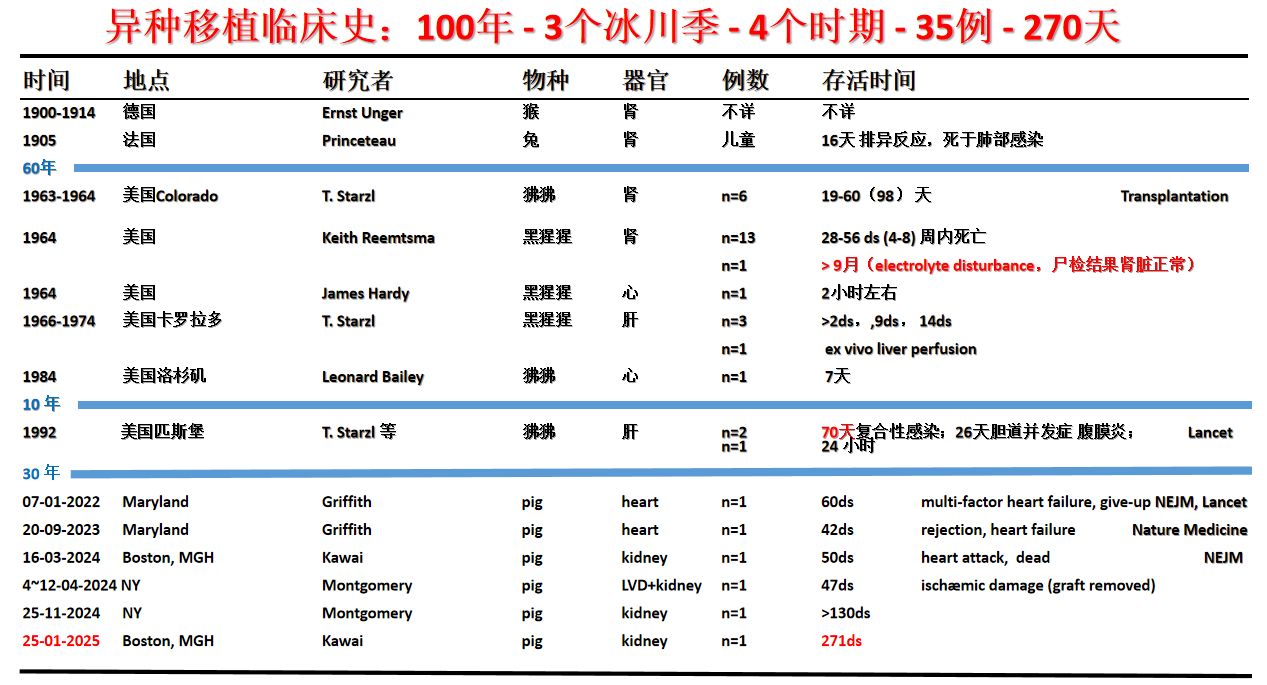
Core Insights - The field of xenotransplantation has made significant advancements in 2025, achieving breakthroughs that surpass the last century's progress [1] - A genetically edited pig kidney was successfully transplanted into a patient, Tim Andrews, who survived for 271 days, setting a new record for pig kidney transplants [1][2] - The comparison with a historical case from 1964 shows only a marginal improvement in survival time for xenotransplantation over 60 years [2] Group 1: Historical Context and Comparisons - The previous record for xenotransplantation was held by a female teacher who survived 269 days after receiving a chimpanzee kidney [2][3] - The advancements in genetic editing and immunosuppressive therapies have contributed to the increased survival time of xenotransplant patients [2][3] Group 2: Challenges and Limitations - Current challenges in xenotransplantation include immune rejection, infection risks, and biological compatibility issues [6][7] - The use of genetically modified pigs is preferred over primates due to ethical concerns, biological safety risks, and practical breeding considerations [5][6] Group 3: Technological and Regulatory Hurdles - Gene editing techniques have limitations, including the potential for new antigen production and the complexity of determining effective gene combinations [8][9] - Immunosuppressive drugs currently used are not specifically designed for xenotransplantation, leading to complications such as infections and organ toxicity [11][12] Group 4: Future Prospects and Comparisons with Artificial Organs - The development of artificial organs, particularly artificial hearts, is progressing rapidly, with several products nearing market readiness [13][15] - In contrast, the development of artificial kidneys and livers faces significant challenges, making them less competitive with xenotransplantation at this stage [16][17] Group 5: Expert Opinions and Future Directions - Experts believe that achieving a one-year functional survival for xenotransplanted organs could lead to broader acceptance and further advancements in the field [18]
深度对话|60年进步何以仅“2天”?陈忠华:猪器官移植已进入下一轮的冲刺阶段
Mei Ri Jing Ji Xin Wen· 2025-11-27 15:04
Core Insights - The field of xenotransplantation has made significant advancements in 2025, surpassing breakthroughs achieved in the past century, particularly highlighted by the case of a genetically edited pig kidney functioning in a human for 271 days [1][2] - The comparison between the recent pig kidney transplant and a historical chimpanzee kidney transplant reveals only a marginal improvement in survival time, raising questions about the progress in xenotransplantation compared to other medical advancements like artificial hearts [1][5] Summary by Sections Historical Context - The longest survival record for a kidney transplant from a chimpanzee was set in 1964, lasting 269 days, while the recent pig kidney transplant extended this record to 271 days [2][5] - The historical context shows that despite over 60 years of research, the improvement in survival time for xenotransplantation has been minimal when compared to advancements in other areas of organ transplantation [1][5] Technological Advancements - The recent case of Tim Andrews demonstrates the potential of genetically edited pig kidneys, which have been modified to enhance compatibility with human immune systems [1][9] - The use of modern immunosuppressive therapies has allowed for longer survival times in xenotransplantation, indicating progress in managing immune rejection [6][10] Challenges and Limitations - The field faces significant challenges, including the need for more effective immunosuppressive drugs specifically designed for xenotransplantation, as current medications are primarily developed for same-species transplants [15][17] - The approval process for clinical trials in xenotransplantation varies significantly between countries, with the U.S. having a more structured approach compared to China's relatively unregulated environment [17] Future Prospects - The potential for xenotransplantation to provide a sustainable source of organs is promising, especially given the increasing demand for organ transplants and the shortage of human donors [10][18] - The development of artificial organs, particularly artificial hearts, is advancing rapidly, which may create competition for xenotransplantation in the future [18][22] Ethical and Practical Considerations - Ethical concerns regarding the use of primate organs have shifted the focus to pigs, which are more practical for large-scale organ production and genetic modification [9][19] - The complexity of developing artificial kidneys and livers remains a significant barrier, with current technologies not yet capable of producing viable implantable organs [22][23]
同心医疗核心产品即将试水美国儿科临床,出海进程提速
Cai Jing Wang· 2025-11-19 11:26
Core Viewpoint - The announcement by Tongxin Medical regarding the Brio4Kids clinical trial marks a significant step towards international pediatric applications of their full magnetic levitation artificial heart, BrioVAD, indicating a shift from filling domestic gaps to competing globally in the left ventricular assist device (LVAD) market [1][6]. Group 1: Technology and Market Position - Heart failure, often referred to as the "cancer of cardiovascular diseases," affects approximately 64 million people globally, with about 8.9 million patients over 35 in China, and the incidence is on the rise [2]. - The global VAD market is currently dominated by Abbott's HeartMate 3, which has been implanted in over 40,000 cases since its launch in 2017, generating annual revenues of around $1 billion [2][3]. - Tongxin Medical has focused on full magnetic levitation technology since its establishment in 2008, achieving significant advancements with its self-developed artificial heart, the Cizhi VAD, which received approval from the National Medical Products Administration (NMPA) in November 2021 [3][4]. Group 2: Clinical Data and Performance - Clinical data from Tongxin Medical's products show a one-year and two-year survival rate of 91.3%, compared to Abbott's 86.6% and 79% respectively, highlighting the effectiveness of their technology [4]. - The company has the fewest global lead wires (4) and the thinnest diameter (3.3mm) for its percutaneous cables, resulting in a significantly lower long-term infection risk, with an infection event rate of only 0.07 per patient per year [5]. Group 3: International Expansion and Regulatory Milestones - Following the withdrawal of Medtronic's HVAD from the market, there has been a call for new competitors, leading to Tongxin Medical's FDA approval for clinical trials of BrioVAD, marking it as the first Chinese active implantable medical device to receive such approval [6][7]. - The Brio4Kids clinical trial aims to address pediatric heart failure, expanding Tongxin Medical's reach in the U.S. market and showcasing its leadership in high-end ventricular assist technology [7][8]. - The company has established a robust clinical trial framework, with 60 research centers and 800 participants enrolled, demonstrating its commitment to meeting stringent U.S. regulatory standards [7].
第五套重启后,首单“人工心”械企核心医疗冲刺科创板IPO
Hua Er Jie Jian Wen· 2025-11-17 12:48
Core Viewpoint - The resumption of the fifth set of IPO standards on the Sci-Tech Innovation Board has led to significant developments for innovative medical device companies, with Shenzhen Core Medical Technology Co., Ltd. being the first to have its IPO application accepted under these new standards, focusing on artificial hearts [1][2]. Company Overview - Core Medical specializes in artificial hearts, reporting a revenue of 94 million yuan in 2024, which represents a growth of over 400% year-on-year, despite a net loss of 132 million yuan during the same period [1]. - The revenue surge is attributed to the successful market launch of its magnetic levitation implantable left ventricular assist device, Corheart® 6, which has generated substantial income [1][4]. Product Details - Corheart® 6 is the first commercially available third-generation magnetic levitation artificial heart, recognized for being the smallest and lightest of its kind globally, weighing only 0.8 kg, which is nearly 50% lighter than its competitor, Abbott's HeartMate 3 [3][4]. - The production cost of Corheart® 6 is approximately 70,000 yuan per unit, with a selling price of 247,200 yuan, resulting in a gross margin close to 70% [9]. Market Challenges - The high price of Corheart® 6, along with the overall surgical costs reaching up to 700,000 yuan, limits the affordability for many patients in China, posing a challenge for its commercialization [1][9]. - Core Medical faces competition not only from Abbott but also from domestic companies like Tongxin Medical and Aerospace Taiheart, which have already launched their products [6][11]. International Expansion - To expand its market, Core Medical aims to penetrate overseas markets, particularly the U.S., where it has yet to initiate clinical trials for Corheart® 6, although it has received approvals in Colombia and Ukraine [6][7]. - The company has other products, such as DuoCor® 2 and CorVad® 4.0/6.0, which are expected to gain approval in the U.S. by 2030, indicating a longer timeline for revenue realization [7]. Industry Landscape - The global heart failure market is projected to grow, with the number of heart failure patients expected to rise from 62.98 million in 2024 to 71.51 million by 2033, presenting a significant opportunity for artificial heart technologies [11]. - However, the emergence of alternative therapies, such as minimally invasive atrial shunt devices, poses additional competition for artificial heart products [11].