K3模型

Search documents
100亿现金,100亿估值:90后创始人如何引爆中国AI最大赌局?
Sou Hu Cai Jing· 2026-02-17 13:57
Core Viewpoint - A Chinese AI company, Kimi, has raised $700 million in funding, achieving a valuation of over $10 billion, just a month after securing $500 million. The founder, Yang Zhilin, emphasizes that the company does not aim to go public [1]. Group 1: Industry Power Dynamics - In 2023, the emergence of ChatGPT has caused anxiety among Chinese internet giants, leading them to choose between developing their own large models or investing in promising startups [3]. - Alibaba is pursuing a dual strategy by internally incubating Tongyi Qianwen while heavily investing in Kimi [4]. - Tencent has made a rare move to co-invest in this funding round alongside its traditional rivals [4]. - Baidu and ByteDance are focusing on their own products to build a closed ecosystem, indicating a competitive landscape driven by capital investments [4]. Group 2: Financial Realities and Challenges - Yang Zhilin's internal communication reveals a harsh reality: Kimi's cash reserves exceed 10 billion yuan, but the costs of training a K3-level model are substantial [5]. - The estimated cost for a single training session ranges from 1 to 2 billion yuan, with annual electricity costs for a large cluster exceeding 500 million yuan [6]. - The current cash reserves may only sustain operations for 2-3 years, while the goal is to develop a K3 model that enhances computational power by tenfold [7]. - The competitive nature of the industry leaves no room for retreat, emphasizing the high stakes involved [8]. Group 3: Valuation and Market Perception - The capital market is experiencing a "valuation magic," with Kimi's valuation of $10 billion being compared to Inflection AI's $38 billion, suggesting a seemingly reasonable benchmark [9]. - Kimi's K2 model is touted as China's first trillion-parameter model, but questions remain regarding user experience and commercial viability [9]. - Despite a reported 170% month-over-month increase in paid users, concerns linger about the actual user base and the timeline for covering high computational costs [9]. - Yang Zhilin's statement about not aiming for an IPO implies a strategy to secure cheaper funding in the primary market rather than facing potential losses in the secondary market [10]. Group 4: Investor Insights - Investors are advised to be cautious of "valuation bubbles," as 90% of companies in the AI sector are projected to have annual revenues below 10 million yuan, making traditional valuation metrics like PS (price-to-sales) less applicable [10]. - It is crucial to focus on the "technological moat," as Kimi's advantage lies in its long context capabilities, which are being challenged by competitors like Google's Gemini [10]. - Embracing "ecosystem binders" is essential, as major players like Alibaba and Tencent are willing to invest heavily in Kimi to enhance their AI ecosystems, while independent AI companies may merely serve as pawns in this larger game [10]. Group 5: The Founder’s Gamble - Yang Zhilin is taking a significant risk by betting that Kimi can develop a K3 model that matches GPT-5's capabilities [11]. - His stance on not going public reflects a belief that capital patience may outlast the need for technological breakthroughs [12]. - The current investment frenzy highlights a harsh truth: while capital can inflate valuations, it cannot guarantee the underlying technological success, leaving potential vulnerabilities exposed when market conditions change [12].


太突然!中国知名AI公司,拿下7亿美元融资,估值超百亿美元,阿里、腾讯都投了!90后创始人:持有现金超100亿元,“不以上市为目的”
Mei Ri Jing Ji Xin Wen· 2026-02-17 07:30
Core Insights - Kimi, a company under Moonshot AI, is set to complete a new funding round of over $700 million, following a previous $500 million round just over a month ago, with a valuation expected to exceed $10 billion [1][2] - The recent funding rounds have raised a total of over $1.2 billion, marking the highest funding amount in the large model industry in the past year [2] - Kimi's founder, Yang Zhilin, indicated that the company is not in a hurry to go public, preferring to raise more funds from the primary market instead [4] Funding and Valuation - Kimi's latest valuation has doubled to over $10 billion, with the total amount raised in consecutive funding rounds exceeding $1.2 billion [2] - The recent funding round was led by existing investors including Alibaba, Wuyuan, and Jiuyuan, with Tencent also participating [1] Business Strategy and Growth - Kimi plans to use the funds from the C round to aggressively expand GPU resources and accelerate the training and development of the K3 model [5] - The company has seen a significant increase in paid users, with a monthly growth rate of over 170% from September to November [4] - Kimi aims to enhance its K3 model through technological improvements and scaling, focusing on creating unique capabilities that differentiate it from competitors [6] Talent Acquisition and Market Competition - The company is preparing to significantly increase employee incentives and stock buyback plans in 2026, reflecting the competitive landscape for AI talent [5] - The demand for AI positions has surged, with a tenfold increase in job openings in the first seven months of 2025, highlighting the ongoing talent war in the industry [5]

争做全模态顶尖 “六小虎”想重塑AI赛道
Nan Fang Du Shi Bao· 2026-01-20 23:14
Core Viewpoint - The competition in the AI sector is evolving, with companies like "Big Model Six Little Tigers" focusing on next-generation technologies and full-modal capabilities, moving away from traditional labels of large and small firms [4][5]. Group 1: Industry Trends - The AI landscape is shifting towards a new competitive logic, with companies aiming to excel in full-modal capabilities rather than traditional traffic competition [4]. - Baichuan Intelligence, once perceived as lagging, is re-entering the market with a focus on the healthcare sector, planning to launch consumer applications and develop sleep-related hardware [4][5]. - Ant Group's AI health product "AQ" has been rebranded to "Ant Afu," emphasizing health companionship and achieving over 15 million monthly active users within six months of its launch [4]. Group 2: Company Strategies - Baichuan Intelligence's CEO Wang Xiaochuan emphasizes their unique advantages, including superior model performance, targeted problem-solving, and a stable professional team, distinguishing them from larger firms [5]. - The company is focusing on high-value scenarios rather than consensus-driven approaches typical of larger firms [5]. - The "Dark Moon" project has shifted its strategy from aggressive user acquisition to enhancing model technology, completing a $500 million Series C funding round to accelerate model training and development [6]. Group 3: Technological Developments - Some smaller players are targeting the AI smartphone market by providing underlying operating systems rather than hardware, such as Zhipu's AutoGLM, which supports over 50 application scenarios [7]. - The AI Agent series model "Step-GUI" from Jiyue Xingchen has been upgraded to enhance privacy control while expanding its operational capabilities across numerous applications [7]. Group 4: Market Challenges - AI hardware faces challenges related to privacy and security, with examples of user issues in AI smartphone applications highlighting the need for improved functionality [10]. - The commercial viability of large models remains unclear, with no company having established a complete business model, leading to significant risks in hardware investments compared to software [10][11]. - The concept of a "super entrance" in the AI market is debated, with the potential for more neutral and open platforms to emerge as true leaders rather than established giants [11].

大模型时代小公司,怎么走出OpenAI的路
新财富· 2026-01-14 08:05
Core Insights - The article discusses the recent IPOs of AI companies, highlighting the significant oversubscription rates and initial stock price surges, indicating strong market interest in AI ventures [3][5] - It emphasizes the challenges faced by AI startups in a landscape dominated by major tech firms like Tencent, ByteDance, and Alibaba, suggesting that these giants create a difficult environment for smaller companies to thrive [7][15] Group 1: Market Dynamics - The IPO of Zhihua Huazhang on January 8, 2026, had an issue price of HKD 116.2 per share, with a subscription rate of approximately 1,159 times, and a first-day price increase of 13.17%, leading to a market cap of nearly HKD 90 billion [3] - MiniMax, established only four years prior, went public on January 9, 2026, at HKD 165 per share, with an oversubscription of over 1,800 times and a first-day price increase of 109.1%, resulting in a market cap exceeding HKD 100 billion shortly thereafter [5] Group 2: Technological Paradigms - The article argues that the current AI landscape is shaped by the "Scaling Law," which suggests that increasing model size, data, and computational power leads to predictable improvements in performance [9][10] - It notes that the success of OpenAI is seen as a unique historical occurrence that may not be replicable, as the current environment is characterized by concentrated computational resources and homogenized model capabilities [12][13] Group 3: Competitive Landscape - The emergence of DeepSeek has altered industry perceptions by significantly reducing training and inference costs, challenging the narrative that only large investments can yield viable models [19][22] - Major companies are now treating models as foundational infrastructure rather than profit centers, which complicates the ability of startups to justify their value propositions to clients [22][23] Group 4: Strategies for Startups - Startups like MiniMax and Zhihua Huazhang are finding sustainable paths by avoiding direct competition with large firms, focusing instead on niche markets or specific applications [26][30] - MiniMax is targeting overseas markets with products centered on companionship and interaction, while Zhihua focuses on complex enterprise applications that larger firms may overlook [28][31] - The article suggests that successful startups must carve out unique positions within existing paradigms rather than attempting to replicate the success of giants like OpenAI [42]

AI产品经理迷茫?旧玩法失效,大厂都在转型,搭世界才是破局关键
Sou Hu Cai Jing· 2026-01-12 09:53
Core Insights - The evolution of AI has transitioned from simple chatbots to advanced agents capable of performing tasks independently, indicating a significant shift in product design and functionality [1][3] - The role of product managers is changing from merely developing features to creating environments where AI can thrive, emphasizing the need for a new approach in AI product development [3][19] Group 1: Evolution of AI - The AI landscape has evolved through four distinct phases: tool era, automation era, intelligent era, and now the agent era, each altering the rules of engagement [3][10] - In the tool era, products relied entirely on human input, with no environmental awareness [5] - The automation era introduced products that could operate based on fixed rules, but still required stable environments to function effectively [7][8] - The intelligent era saw products adapting to their environments, capable of handling some uncertainties but limited to familiar contexts [10][12] Group 2: Agent Era and Design Philosophy - The current agent era represents a qualitative leap where AI actively seeks resources and modifies environments to achieve set goals, shifting the focus from human-driven commands to AI autonomy [10][19] - Successful AI agents require a well-defined environment, necessitating a systematic approach to design that considers all influencing factors and potential challenges [12][14] - Clear boundaries must be established for AI capabilities, including strategies for handling complex situations and human intervention when necessary [14][15] Group 3: Industry Implications - The automotive industry exemplifies the importance of operational design domains (ODD) in defining the limits of AI capabilities, as seen in the implementation of autonomous driving standards [15][17] - Major companies are investing heavily in optimizing AI models to enhance their understanding of environments and improve functionality, as demonstrated by advancements in open-source models [17][19] - The future of AI product management will favor those who can create conducive environments for AI, rather than those who rely on outdated methodologies [19]
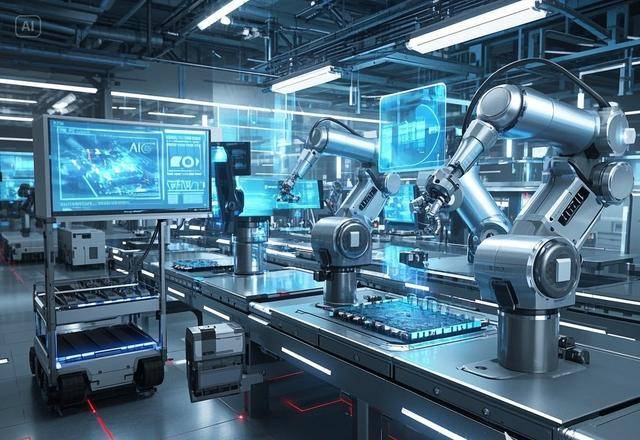
八部门发文推进“人工智能+制造”专项行动,AI人工智能ETF(512930)备受关注
Xin Lang Cai Jing· 2026-01-08 02:11
Group 1 - The core viewpoint of the news highlights the positive momentum in the AI sector, driven by government initiatives and significant investments in AI companies [1][2] - The Ministry of Industry and Information Technology, along with eight other departments, has issued implementation opinions to promote the integration of AI in manufacturing, focusing on intelligent equipment and medical innovations [1] - The AI-themed ETF (512930) closely tracks the performance of the CSI Artificial Intelligence Theme Index, which includes 50 listed companies involved in providing resources, technology, and application support for AI [2] Group 2 - Domestic large model company Kimi has recently completed a $500 million Series C financing round, aimed at accelerating the training of its next-generation K3 model and focusing on the commercialization of productivity tools [2] - Meta's acquisition of the Chinese AI application company Butterfly Effect, with its core product Manus achieving an annual recurring revenue exceeding $100 million, indicates strong market recognition for AI applications [2] - As of December 31, 2025, the top ten weighted stocks in the CSI Artificial Intelligence Theme Index account for 58.08% of the index, showcasing the concentration of investment in key players within the AI sector [2]
90后清华学霸,又融资35亿
创业家· 2026-01-06 10:10
Core Viewpoint - The article discusses the recent developments of the company "月之暗面" (Kimi), highlighting its successful C round financing of $500 million (approximately 3.5 billion RMB) and its strategic decision to delay going public while focusing on raising funds through private markets [6][11][12]. Group 1: Financing and Valuation - The C round financing was led by IDG, with participation from major investors like Alibaba, Tencent, and Meituan's co-founder Wang Huiwen, resulting in a post-financing valuation of $4.3 billion [11]. - The company has raised significant amounts in previous rounds, including a $1 billion B round led by Alibaba in early 2024, indicating strong investor confidence [12]. - The company currently holds over 10 billion RMB in cash reserves, providing a solid financial foundation for future growth [5][22]. Group 2: Strategic Direction - The founder, Yang Zhilin, stated that the company is not in a hurry to go public, believing that it can raise more funds through private markets than through IPOs [12]. - Future plans include using the C round funds to aggressively expand GPU resources and accelerate the training and development of the K3 model [13]. - The company aims to enhance its K3 model's performance significantly and focus on creating unique user experiences and commercial value [14]. Group 3: Product Development and Market Performance - In 2025, the company launched several new intelligent agent features and released the Kimi-K2 model, which boasts 1 trillion parameters, positioning it among a select few capable of developing such large models [16]. - The company has achieved a significant increase in paid user numbers, with a monthly growth rate exceeding 170% from September to November [17]. - The release of K2 Thinking has led to a fourfold increase in overseas API revenue, showcasing the commercial success of its products [18]. Group 4: Company Culture and Leadership - The company is characterized by a unique and efficient culture, described as "harmonious volatility," allowing for rapid communication and decision-making among top talent [20]. - Yang Zhilin, the founder, is noted as a valuable asset to the company, with a strong academic background and a history of innovation [21]. - The company's focus on curiosity and exploration in AI development drives its strategic direction and product offerings [21].

国泰海通:维持计算机板块“增持”评级 AI应用层获资本押注
智通财经网· 2026-01-05 22:48
Group 1 - The core viewpoint of the report from Guotai Junan Securities maintains an "overweight" rating for the computer sector, highlighting the implementation of the "Automobile Industry Digital Transformation Implementation Plan" by the Ministry of Industry and Information Technology and other departments, focusing on key equipment such as intelligent robots and intelligent detection devices [1][2] - The plan emphasizes strengthening independent research on key technologies to enhance the resilience and security of the industrial supply chain, covering areas such as simulation design, research and testing, and core technologies like Cyber-Physical Systems (CPS) [2] - The policy encourages collaboration between key enterprises and academic institutions to form innovation alliances for coordinated technological breakthroughs, aiming to shorten the industrialization cycle through improved data sharing and platform co-construction [2] Group 2 - The AI industry is shifting its value focus towards Agent applications that solve practical problems, with domestic company Kimi recently completing a $500 million Series C financing, achieving a post-investment valuation of $4.3 billion [3] - Meta's acquisition of the Chinese AI application company Butterfly Effect for several billion dollars marks its third-largest acquisition, with the core product Manus generating an annual recurring revenue (ARR) exceeding $100 million [3] - The digital renminbi is entering a new phase with key institutional arrangements, as the People's Bank of China and other departments propose to explore innovative applications of digital renminbi in cross-border payments and financing [4] - The digital renminbi's transaction scale has significantly expanded, becoming the dominant currency in cross-border transactions through the multilateral central bank digital currency bridge, indicating its internationalization potential [4] - The comprehensive promotion of digital renminbi is expected to drive demand growth in payment collection, cross-border business, banking IT system upgrades, and related industries [4]

摆脱「投流噩梦」,月之暗面的100亿元与杨植麟的信心
36氪· 2026-01-05 13:35
Core Viewpoint - The article discusses the strategic shifts and recent developments of the company "月之暗面" (Kimi) in the AI industry, highlighting its recent funding round, internal communications, and competitive landscape against major players like ByteDance, Tencent, and Alibaba [5][6][10]. Funding and Valuation - 月之暗面 completed a new funding round of $500 million, led by IDG, with existing shareholders like Alibaba and Tencent participating, resulting in a post-investment valuation of $4.3 billion [5]. - The concept of "Super Pro Rata" was explained, indicating that early investors can increase their stake in subsequent funding rounds [5]. Competitive Landscape - The AI sector is experiencing intense competition, particularly among the "大模型六小虎" (Big Model Six Tigers), with companies like 智谱 and MiniMax preparing for IPOs [6]. - Major companies are heavily investing in advertising and user acquisition, making it challenging for startups like 月之暗面 to sustain similar levels of spending [7][10]. Strategic Shifts - 月之暗面 has decided to focus on model capabilities and agent products, moving away from aggressive user acquisition strategies [11][12]. - The company has transitioned from a closed-source to an open-source model, aiming to enhance its product offerings and commercial strategies, particularly in overseas markets [13][14]. Performance Metrics - The company reported a significant increase in its overseas API revenue, which grew fourfold from September to November [9]. - The cash reserves of 月之暗面 exceed 10 billion yuan, providing a buffer as it navigates its strategic pivots without immediate pressure to go public [9][14]. Future Outlook - The company faces the challenge of maintaining its competitive edge in model capabilities while exploring new commercial pathways, particularly in vertical markets and overseas [14].

国泰海通|计算机:AI应用层获资本押注,存款货币型2.0时代来临
国泰海通证券研究· 2026-01-05 12:55
Group 1 - The core viewpoint of the article emphasizes the digital transformation of the automotive industry, driven by a new implementation plan from four government departments, focusing on key technologies such as intelligent robots and smart detection equipment [2] - The AI industry is shifting towards practical applications, with significant investments in companies like Kimi, which recently raised $500 million in Series C funding, achieving a post-money valuation of $4.3 billion [3] - The digital renminbi framework is being upgraded, marking a transition from a "cash-type" to a "deposit currency-type," which is expected to drive systemic changes in payment systems and related industries [4] Group 2 - The implementation plan for the automotive industry aims to enhance the resilience and security of the supply chain by focusing on independent technological breakthroughs in areas such as simulation design and vehicle operating systems [2] - Kimi's founder indicated that the new funding will be used to accelerate the training of the next-generation K3 model and to focus on the commercialization of agent applications [3] - The digital renminbi is becoming a dominant currency in cross-border transactions, with its internationalization potential highlighted by its significant growth in transaction volume [4]