Physical AI

Search documents
Innoviz Technologies Ltd. (INVZ) Discusses White Paper on Physical AI and Applications Beyond Automotive Transcript
Seeking Alpha· 2026-03-23 17:13
PresentationAda MenakerVice President of Corporate Development & IR Hello, everyone, and welcome to the Innoviz Physical AI webinar. Before we get started, I would like to remind you that our discussion today will include forward-looking statements that are subject to risks and uncertainties relating to future events and the future financial performance of Innoviz. Actual results could differ materially from those anticipated in the forward-looking statements. Forward-looking statements made today speak on ...



The Friday Checkout: Regional grocers hustle to keep pace with national competitors
Yahoo Finance· 2026-03-20 10:54
This story was originally published on Grocery Dive. To receive daily news and insights, subscribe to our free daily Grocery Dive newsletter. The Friday Checkout is a weekly column providing more insight on the news, rounding up the announcements you may have missed and sharing what’s to come. The grocery industry is cutthroat. Between discounters, specialty grocers and larger chains, the pressure is on for regional and independent grocers. And while it may appear there’s no room for these smaller grocery ...
Reply at NVIDIA GTC: Digital twins and physical AI driving the next stage of industrial value creation
Prnewswire· 2026-03-13 14:30
Core Insights - Reply will showcase how digital twin technology and physical AI can optimize production and logistics processes at NVIDIA GTC 2026, highlighting the integration of digital and physical worlds in industrial environments [1][1][1] Group 1: Event Details - The NVIDIA GTC conference will take place from March 16 to 19, 2026, in San Jose, California, with over 30,000 participants expected from more than 190 countries [1][1][1] - Reply will present two use cases: self-learning edge AI in manufacturing and logistics, and an intelligent robot coordination system for the Otto Group [1][1][1] Group 2: Technological Solutions - On March 17, Reply will introduce "The AI Fast Lane for the Industrial Edge powered by NVIDIA on AWS," which optimizes AI models on connected edge devices, processing sensor data in real time and ensuring model quality through a human-in-the-loop approach [1][1][1] - Reply and Google will jointly present a solution for intelligent robot coordination using NVIDIA Isaac Sim on Google Cloud, enabling the creation of precise digital twins for logistics environments and accelerating validation processes [1][1][1] Group 3: Case Study - Otto Group - The Otto Group will demonstrate a digital twin that replicates its warehouse and robotic systems, showcasing centralized fleet coordination and optimized processes during peak periods [1][1][1] - The project will be presented on March 17, focusing on leveraging physical AI to simulate and orchestrate robotic fleets for retail fulfillment centers [1][1][1] Group 4: Company Overview - Reply specializes in designing and implementing solutions based on new communication channels and digital media, supporting key industrial sectors such as telecom, media, banking, and public administration [1][1][1]


AI panic has been erasing value all around the market. Here's where 3 investing pros see it hitting next.
Business Insider· 2026-02-28 10:30
Group 1: AI Market Sentiment - The AI hype has diminished as investors express concerns about the technology's disruptive potential on businesses and the economy, leading to market unease [1] - The tech sector, particularly software, has experienced significant sell-offs, exacerbated by updates from companies like Anthropic and labor market concerns [1][2] - Experts note a violent sell-off in tech stocks, with investors feeling precarious about future developments in the AI sector [2][6] Group 2: Private Credit Concerns - There are growing worries about the private credit market, with analysts suggesting a "death bomb" scenario that could lead to a near-term slowdown [7][9] - Recent headlines surrounding Blue Owl Capital have reignited concerns reminiscent of the pre-2007 financial crisis, compounding market anxieties [8][10] - Big banks are also at risk due to their exposure to private credit and AI disruptions, with potential vulnerabilities highlighted by comparisons to past financial crises [10][11] Group 3: Physical AI Opportunities - Physical AI, which includes technologies like automated machinery and self-driving cars, is projected to be a significant growth area, with a total addressable market for warehouse automation expected to reach $112 billion by 2029 [13] - Analysts believe that companies adopting physical AI will find substantial opportunities, while those that do not may face significant threats [14] - The current market rotation towards cyclical stocks may expose investors to risks associated with physical AI disruptions in the industrials sector [15] Group 4: Software Sector Outlook - The software sector has been one of the hardest-hit areas during the tech sell-off, with expectations of uneven recovery [16][17] - Companies that went public during the SaaS boom and lack a strong data moat or integration into larger platforms are at risk of consolidation or elimination [17][18] - Analysts predict further declines for software companies that are vulnerable to replacement by agentic AI technologies [18]

谷歌蚂蚁24小时对决:世界模型大战谁主沉浮
Sou Hu Cai Jing· 2026-02-02 12:15
科技巨头们正在上演一场"现实模拟器"的军备竞赛——谷歌和蚂蚁集团几乎同时开放世界模型技术,这 场技术革命将彻底改变我们与数字世界的互动方式。 2026年1月30日凌晨,谷歌DeepMind宣布向美国AI Ultra订阅用户开放Project Genie体验入口。就在24小 时前,蚂蚁集团旗下灵波科技刚刚开源了LingBot-World。两大巨头的这一动作,标志着世界模型技术 正式从实验室走向商业应用。 行业影响已经开始显现。游戏开发中3D建模成本可能降低70%,具身智能训练效率提升3倍,自动驾驶 仿真测试成本有望下降85%。 技术路径的分化导致供应链呈现区域化特征:美国企业侧重商业API生态,中国企业聚焦垂直场景适 配。欧盟则在两者间寻找平衡,将通用大模型纳入高风险系统监管。 商业化进程面临两大挑战:内容审核问题(谷歌采用实时过滤,蚂蚁依赖社区监管)和算力门槛 (LingBot-World需要企业级CPU支持)。 从技术参数看,两家公司采取了截然不同的策略。谷歌采用125美元/月的订阅制,仅限美国成年用户; 蚂蚁则选择了完全开源。但两者都实现了关键突破:交互延迟控制在1秒内,连续生成时长达到10分 钟,物理碰 ...


亚信科技(01675.HK)与ABB机器人共建"具身智能实验室"
Ge Long Hui· 2026-01-26 04:35
Core Viewpoint - The establishment of the "Embodied Intelligence Laboratory" marks a significant step in the strategic collaboration between AsiaInfo Technology and ABB Robotics in the field of Physical AI, with support from Alibaba Cloud and NVIDIA for technological backing [1][2] Group 1: Laboratory Establishment - The laboratory was officially inaugurated on January 25, 2026, symbolizing the practical implementation of the partnership between AsiaInfo Technology and ABB Robotics [1] - The laboratory aims to integrate AsiaInfo's strengths in AI applications, 5G-A communication technology, and cybersecurity with ABB's expertise in robot control [1] Group 2: Technological Collaboration - The collaboration will leverage Alibaba Cloud's visual-language-action (VLA) large model and NVIDIA's simulation platform to focus on industrial simulation and Physical AI [1] - The goal is to overcome the limitations of intelligent agents in complex real-world scenarios regarding perception, decision-making, and execution capabilities [1] Group 3: Industry Impact - The laboratory is expected to create a full-chain innovation system that encompasses technology research and development, result transformation, and industrial application [1] - The establishment of the laboratory is anticipated to enhance cooperation with partners like ABB Robotics, Alibaba Cloud, and NVIDIA, driving the application of Physical AI in manufacturing [2]

机器人长期展望:物理 AI 与工业机器人复兴的下一阶段-The Long View Robotics -- Physical AI and the next phase of industrial Robot Renaissance
2026-01-23 15:35
Summary of the Conference Call on Robotics and Physical AI Industry Overview - The discussion centers around the **industrial robotics industry**, highlighting a significant shift in adoption since 2020, referred to as a **Robot Renaissance** [1][16]. - The industry is experiencing a new phase driven by advancements in **AI**, which is expected to elevate the **CAGR** (Compound Annual Growth Rate) to the low-teens and significantly increase the long-term **TAM** (Total Addressable Market) [1][2]. Key Points and Arguments Evolution of Robotics - The original Robot Renaissance involved a transition from **pre-programmed, fixed paths** to **real-time flexible path planning**, enabling applications like machine tending, palletizing, and smart welding [2][6]. - The next phase focuses on **complex task planning**, allowing for high dexterity tasks and deeper collaborations between machines and humans [2][6]. - Without these advancements, growth in the industrial robot sector would likely slow to single digits; however, the forecasted ten-year CAGR is expected to accelerate to **12%** [2][11]. Role of Physical AI - **Physical AI** is described as a multi-layer AI ecosystem that enhances robot capabilities without disrupting existing robot manufacturers [3][4]. - The ecosystem includes: 1. Robots and their **digital twins** 2. **Task/path planning software** powered by multimodal AI 3. **Sensors** for collecting physical data 4. A **digital representation** of the environment for simulating interactions [3][30]. Market Dynamics - Demand for **sensors**, both vision and non-vision, is expected to rise significantly, supporting advanced robotic task planning and the development of "world models" [4][38]. - Leading companies like **FANUC** are expanding into the "brain" layer of Physical AI while seeking collaborations in both the "brain" and "world" layers [4][38]. Key Beneficiaries - Major beneficiaries of the trends in industrial robotics include **FANUC**, **Keyence**, and **Mech-Mind** (the latter being a private company) [5][35]. - The report recommends an **Outperform** rating for FANUC, Keyence, Inovance, Cognex, Hikvision, and Harmonic Drive, while suggesting a **Market Perform** rating for Estun [51]. Additional Insights - The report emphasizes the **variance in robot penetration** across different industries, indicating significant growth potential in sectors with low automation adoption rates [2][19]. - The integration of **NVIDIA's technology** with FANUC's systems is highlighted as a strategic move to enhance simulation capabilities in production environments [49]. Conclusion - The industrial robotics sector is poised for substantial growth driven by advancements in Physical AI and complex task planning, with key players positioned to benefit from these trends. The forecasted CAGR of **12%** over the next decade reflects the optimistic outlook for the industry [2][11].

Honeywell CEO: Why “Physical AI” Won’t Replace All Industrial Jobs—and What It Will Change
Yahoo Finance· 2026-01-21 21:34
Core Insights - The article discusses how Honeywell is leveraging "physical AI" to enhance operations in factories and refineries, addressing the challenge of skilled labor shortages [1] Company Strategy - Honeywell's CEO, Vimal Kapur, emphasizes the transition of AI from digital tools to physical infrastructure, indicating a strategic shift in how the company integrates technology into its operations [1] - The company aims to augment human workers rather than replace them entirely, showcasing a focus on collaboration between technology and skilled labor [1] Industry Context - The implementation of "physical AI" is positioned as a solution to current labor shortages in various industries, highlighting a broader trend of technology adoption in response to workforce challenges [1]

英伟达还是放不下自动驾驶
远川研究所· 2026-01-12 13:12
Core Viewpoint - Nvidia is launching a comprehensive offensive in the autonomous driving sector with its open-source VLA model, Alpamayo, which aims to provide car manufacturers with a robust foundation for developing their own autonomous driving technologies [6][10][21]. Group 1: Nvidia's Innovations - At CES 2026, Nvidia announced the Alpamayo model, which utilizes a Vision-Language-Action (VLA) approach to enhance decision-making in autonomous driving by making the reasoning process interpretable and traceable [7][10]. - Alpamayo is the first open-source VLA model, allowing car manufacturers to customize it based on their data and needs, thus reducing development complexity while ensuring algorithmic differentiation [10][11]. - Alongside Alpamayo, Nvidia also introduced AlpaSim for closed-loop testing and the Physical AI dataset, which contains over 1,727 hours of driving data, providing a comprehensive toolkit for developers [11][13]. Group 2: Competitive Landscape - Other companies, such as Xiaopeng and Li Auto, are also developing VLA models, indicating a competitive shift towards this technology in the autonomous driving space [8][10]. - Tesla's FSD appears to be adopting a similar VLA-like architecture, although it remains less transparent compared to Nvidia's approach [10][14]. Group 3: Nvidia's Business Strategy - Nvidia's automotive business, while dominant in high-level driving assistance, has not met revenue expectations compared to its data center operations, prompting a strategic shift to provide more comprehensive support to car manufacturers [15][20]. - The company aims to create a closed-loop toolchain for intelligent driving, integrating cloud training and vehicle-side inference, thus facilitating easier adoption of its hardware and software solutions by automakers [21][22]. - Nvidia's strategy reflects a balance between standardization and customization, as it seeks to provide a rich software toolbox while avoiding direct involvement in specific autonomous driving projects [22][24].
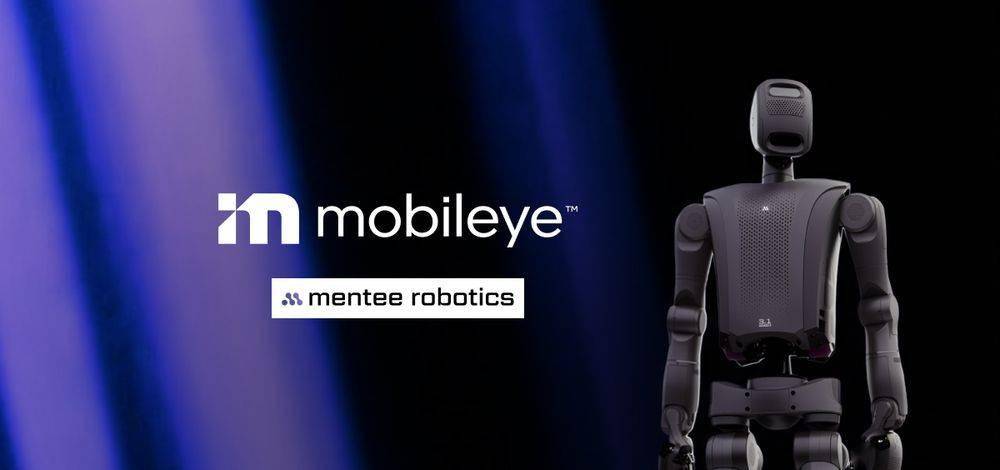
扩展物理AI业务,Mobileye宣布将收购人形机器人企业Mentee
Sou Hu Cai Jing· 2026-01-07 01:36
Core Viewpoint - Mobileye, an Intel-controlled smart driving technology company, announced the acquisition of Israeli humanoid robot company Mentee for a total of $900 million in cash and stock, expected to be completed in the current quarter [1] Group 1: Acquisition Details - The acquisition is valued at $900 million, approximately 62.96 billion RMB at current exchange rates [1] - The transaction is anticipated to be finalized within the current quarter [1] Group 2: Strategic Implications - Mobileye aims to expand its business centered around physical AI through this acquisition [1] - Both companies utilize the same physical AI technology stack for their products [1] Group 3: Future Developments - Mentee's humanoid robots are expected to undergo customer site deployment for concept validation in 2026 [1]