
TPU(张量处理器)

Search documents
谷歌挑战英伟达,摩尔线程、沐曦内部人士怎么看?
第一财经· 2025-12-18 14:06
Core Viewpoint - The release of Google's next-generation AI model Gemini 3 series, showcasing the performance and cost advantages of its self-developed TPU, poses a strong challenge to NVIDIA's dominance in the GPU market, leading to a significant market reaction where NVIDIA's market value dropped by over $100 billion [3]. Group 1: Hardware Competition - The core debate centers around the division of labor between general-purpose GPUs and specialized chips like TPUs, rather than a simple replacement relationship [4]. - Google's ability to develop TPUs is attributed to its status as a full-stack integrated company, leveraging its strong infrastructure, foundational models, and cloud services to optimize costs [4]. - The continued advantage of GPUs is attributed to their flexibility, full functionality in a multi-modal era, and the established ecosystem, particularly NVIDIA's CUDA ecosystem, which has created a significant competitive barrier [5]. Group 2: Perspectives on Chip Architecture - The founder of Moex, Sun Guoliang, emphasizes that no chip architecture is inherently superior; the key lies in the application scenarios [6]. - Both GPUs and ASICs like TPUs are expected to coexist due to the diverse and rapidly evolving application scenarios in the industry [6]. - Despite acknowledging the value of general-purpose chips, there is recognition of the potential for specialized chips in specific scenarios, particularly for large cloud service companies once their algorithms stabilize [6]. Group 3: Infrastructure and Performance - In the current AI model competition, the peak computing power of a single card is not the sole determining factor; the ability to construct high-performance networks that connect thousands of cards and deeply integrate with software stacks is crucial [7]. - Moex has multiple production-grade thousand-card clusters operational, indicating a shift from experimental setups to real-world applications supporting training and inference [7]. - The primary challenge in AI infrastructure is to provide a reliable general computing power platform that supports large-scale model training and inference, rather than isolated cards or servers [8].



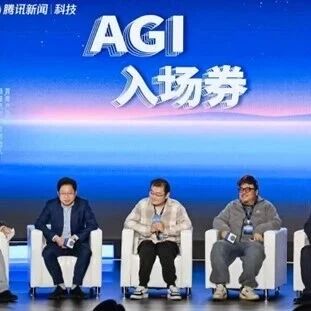
谷歌挑战英伟达,摩尔线程、沐曦内部人士怎么看?
Di Yi Cai Jing· 2025-12-18 10:48
Core Insights - The release of Google's next-generation AI model Gemini 3 series, featuring its self-developed TPU, poses a significant challenge to NVIDIA's dominance in the GPU market, leading to a market reaction that saw NVIDIA's market value drop by over $100 billion [1] - This shift raises the question of whether the hardware paradigm in the AI era is transitioning from general-purpose GPUs to specialized chips like TPUs, indicating a potential structural change in the industry [1] Group 1: Perspectives on Hardware - Li Feng from Moore Threads emphasizes that the debate is about the division of labor between generalists and specialists rather than a simple replacement, noting that Google's ability to optimize costs with TPUs stems from its full-stack integration capabilities [1][2] - He identifies three reasons for the continued advantage of GPUs: flexibility as a "dessert," full functionality in a multi-modal era, and the ecological moat established by NVIDIA's CUDA ecosystem [2] - Sun Guoliang from Muxi argues that no chip architecture is inherently superior; the key lies in the application scenarios, suggesting that GPUs and ASICs like TPUs will coexist due to diverse customer needs [3] Group 2: Market Dynamics and Infrastructure - The competition in AI models indicates that peak computing power of a single card is no longer the sole determinant of success; the ability to connect thousands of cards into high-performance networks is crucial [4] - Moore Threads is currently operating multiple production-level thousand-card clusters, indicating a shift towards end-to-end solutions rather than focusing solely on individual card performance [4][5] - Muxi has deployed thousands of card-scale clusters nationwide, successfully completing training tasks across various model architectures, highlighting the need for a reliable general computing platform for large-scale model training and inference [5]
12月降息概率飙至84%!日本疑成最大黑天鹅,美联储将如何应对
Sou Hu Cai Jing· 2025-12-09 17:57
Group 1: Federal Reserve and Market Dynamics - The market is anticipating a significant shift towards interest rate cuts, with the probability of a December rate cut rising from below 50% to over 80% according to CME's FedWatch tool [5] - San Francisco Fed President Mary Daly highlighted the tightness of the U.S. job market, suggesting a potential spike in unemployment, while inflation appears to be temporarily subdued [3][5] - The absence of key economic data, such as Q3 GDP and September PCE index, creates uncertainty for the Federal Reserve, likening their current situation to "blind flying" [5][7] Group 2: Global Economic Concerns - Concerns are growing over the global liquidity situation, with warnings from Bank of America that the numerous rate cuts by central banks this year may soon reach their limits [7] - The decline in Japan's 30-year government bond prices and the weakening yen could trigger a significant outflow of capital, impacting global equity and bond markets [7] Group 3: Company Insights - Broadcom has seen a 60% increase in stock price this year, driven by its role in supplying core components for Google's AI initiatives, positioning it as a key player in the AI supply chain [8][10] - The tech sector is experiencing a surge in bond issuance, with major companies like Meta, Google, and Oracle contributing to a significant increase in overall debt levels [11][13] Group 4: Investment Strategies - Investors are advised to focus on "interest rate sensitive" assets, such as long-term government bonds and fundamentally strong mid-cap stocks, if rate cuts materialize [14][15] - Companies deeply integrated into the AI supply chain, like Broadcom, are seen as solid investment opportunities due to their stable order flow from major tech players [15] - High-leverage companies that rely on debt to finance operations should be approached with caution, as rising CDS prices indicate increasing concerns over default risks [13][17]

英伟达CFO:云厂商收入占比一半以上,大模型厂商正寻求直接合作
Di Yi Cai Jing Zi Xun· 2025-12-03 02:45
Core Viewpoint - Nvidia is significantly investing in partnerships with major AI companies like OpenAI and Anthropic, focusing on long-term collaborations to enhance computing infrastructure for AI models [1][3]. Group 1: Nvidia's Investments and Partnerships - Nvidia announced an investment of up to $100 billion in OpenAI, which includes deploying at least 10 gigawatts of data center capacity [1]. - The partnership with OpenAI is described as a collaboration lasting over ten years, with Nvidia projecting a demand of approximately $500 billion for its Blackwell and Rubin systems this year and next [1]. - Nvidia is also investing in Anthropic, with a focus on direct collaboration for computing resources, indicating a shift from reliance on cloud service providers [3]. Group 2: Market Dynamics and Competition - Nvidia's revenue is heavily reliant on large cloud service providers, with over 50% of quarterly income coming from these clients [3]. - The company is aware of the financial challenges faced by many AI startups, which require significant funding and computing resources to develop their models [3]. - Recent competition from Google's TPU has been noted, with Morgan Stanley increasing its 2027 production forecast for TPUs from approximately 3 million to 5 million units [4]. Group 3: Product Development and Performance - Nvidia's products are designed to be versatile, capable of handling various workloads, and the company emphasizes the importance of software optimization in enhancing hardware performance [4]. - The transition to new hardware is driven by advanced models migrating to the latest chip architectures while retaining existing infrastructure [5]. - Nvidia's Blackwell architecture is expected to generate increased profits as more tokens are produced and users engage with the models, leading to higher demand for computing resources [5]. Group 4: Market Position and Valuation - Nvidia became the first company to surpass a market capitalization of $5 trillion, although its stock has recently experienced a pullback amid investor skepticism regarding the actual demand for computing power [5]. - As of December 2, Nvidia's stock rose by 0.86%, bringing its market capitalization to $4.4 trillion [5].
谷歌抢英伟达“饭碗”,与Meta密谈大规模TPU合作,A股谷歌链应声暴动!
Ge Long Hui· 2025-11-25 03:30
Core Insights - Google's technological strength and strategic outlook are being rapidly re-evaluated by the market following the release of its next-generation flagship AI model, Gemini 3 [1] - Google is in negotiations with Meta for a large-scale TPU supply deal, which could disrupt NVIDIA's core customer base in the AI chip sector [1][2] - The release of Gemini 3 has garnered overwhelmingly positive reviews, positioning Google as a strong competitor in the AI landscape [5][6] TPU Supply Negotiations - Google is negotiating a multi-billion dollar TPU deal with Meta, marking a significant shift in strategy as it aims to enter the AI chip device market dominated by NVIDIA [2][4] - Meta plans to integrate Google's TPU into its global data centers starting in 2027, with initial TPU capacity rental from Google Cloud expected as early as next year [4] - If successful, this partnership could lead to a structural shift in NVIDIA's core customer relationships, as Meta has historically relied on NVIDIA GPUs [4] Gemini 3 Model Performance - The Gemini 3 model has received near-unanimous positive feedback, with claims of surpassing OpenAI's GPT-5.1 in key tasks such as code generation and logical reasoning [5][6] - Salesforce CEO Marc Benioff expressed a strong preference for Gemini 3 over ChatGPT after testing the model [5] - OpenAI's CEO acknowledged the strength of Gemini 3, indicating that the company is working to catch up in the competitive landscape [6] Financial Performance and Market Reaction - Google's third-quarter earnings exceeded expectations, with a 35% increase in earnings per share to $2.87 and a 16% rise in total revenue to $102.35 billion [6] - The company has raised its capital expenditure forecast for 2025 by 8% to $92 billion, primarily for AI data center and cloud computing expansion [6] - Following these developments, A-share stocks related to Google's supply chain have seen significant gains, with companies like Dekoli and Guangku Technology experiencing notable stock price increases [7][9] Market Outlook - Analysts suggest that Google's comprehensive technology ecosystem, from chips to applications, creates a strong AI moat and drives continued capital expenditure growth [9] - The recent shift in investment strategies, such as Berkshire Hathaway selling Apple shares to buy Google, reflects confidence in Google's position in the AI industry [9] - The performance of Gemini 3, trained on self-developed TPU, is expected to enhance ROI and establish a commercial loop, positioning Google as a leader in the ongoing AI revolution [9]


谷歌、英伟达开始将算力运上太空
Di Yi Cai Jing· 2025-11-07 00:36
Core Insights - The construction of data centers in space is becoming a viable solution for addressing the energy supply constraints faced by terrestrial data centers, with predictions indicating that energy demand for U.S. data centers will nearly double by 2027 [1][3] Group 1: Industry Trends - Major tech companies, including Google and SpaceX, are exploring the feasibility of building scalable machine learning computing systems in space, with Google's "Suncatcher" initiative leading the charge [3][5] - SpaceX plans to expand its Starlink V3 satellite capabilities to facilitate the construction of data centers in space, while Jeff Bezos anticipates that within the next 10 to 20 years, humans will be able to build gigawatt-scale data centers in space [3][4] Group 2: Technological Advancements - Starcloud is set to launch a satellite equipped with NVIDIA H100 GPUs, marking the first instance of advanced data center GPUs being deployed in space, with the satellite expected to provide 100 times the GPU computing power of previous space computing facilities [4] - The potential for unlimited low-cost renewable energy in space is highlighted as a significant advantage, with Starcloud's data center projected to save 10 times the carbon dioxide emissions compared to terrestrial data centers [4][5] Group 3: Future Projections - Industry experts predict that within the next decade, space could emerge as a primary location for new data centers, with the cost of building these facilities expected to decrease significantly [6][7] - Historical data suggests that by the mid-2030s, launch costs could drop below $200 per kilogram, making the operational costs of space data centers comparable to those of ground-based facilities [6][7]
谷歌、英伟达开始将算力运上太空
第一财经· 2025-11-07 00:35
Core Viewpoint - The article discusses the increasing energy demands of AI data centers and the potential shift towards building data centers in space as a solution to energy constraints on Earth [3][4]. Group 1: Energy Demand and Constraints - FTI Consulting predicts that energy demand for data centers in the U.S. will nearly double by 2027, leading to significant strain on utility companies and grid capacity [3]. - The construction of data centers in space is being considered by several Silicon Valley tech companies due to the limited availability of power on Earth [4]. Group 2: Initiatives by Tech Companies - Google has launched a project called "Suncatcher" to explore scalable machine learning computing systems in space, as announced by CEO Sundar Pichai [6]. - SpaceX, led by Elon Musk, plans to build data centers in space using Starlink V3 satellites equipped with high-speed laser links [7]. - Jeff Bezos has indicated that within the next 10 to 20 years, humanity will be able to construct gigawatt-scale data centers in space [7]. Group 3: Technological Developments - Google and Planet Labs are collaborating to launch two satellites in early 2027 to explore the feasibility of large-scale space data center clusters [7]. - Starcloud plans to launch a satellite carrying NVIDIA H100 GPUs, marking the first advanced data center GPUs to enter space, with a projected performance increase of 100 times compared to previous space computing facilities [7]. Group 4: Advantages of Space Data Centers - Space data centers will benefit from abundant renewable energy, eliminating the need for water cooling and backup power sources [8]. - The lifecycle carbon emissions of space data centers could be ten times lower than those of terrestrial data centers [9]. - Solar energy in space can produce eight times more output than on Earth, providing continuous power without weather interruptions [9]. Group 5: Cost Considerations and Feasibility - High launch costs have historically been a barrier to large-scale space systems, but costs may drop below $200 per kilogram by the mid-2030s, making space data centers potentially cost-competitive with terrestrial counterparts [10]. - Google has conducted preliminary studies indicating that their next-generation TPUs have strong radiation resistance, although challenges such as thermal management and system reliability remain [10].
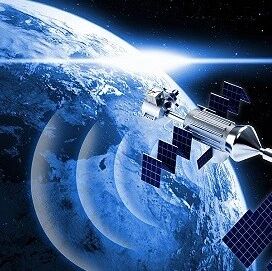
谷歌拿下AI大单!深度绑定Anthropic,构筑算力护城河
2 1 Shi Ji Jing Ji Bao Dao· 2025-10-24 13:00
Core Insights - Anthropic has entered a significant partnership with Google, involving a multi-billion dollar deal for AI computing resources, including up to one million TPU chips and 1 gigawatt of power capacity [1][2] - This collaboration marks a critical phase in the AI infrastructure race, with estimated costs for building a 1 gigawatt data center around $50 billion, primarily for chip procurement [1] - Anthropic's rapid growth is evident, with annual revenue nearing $7 billion and a substantial increase in its customer base, particularly large clients [3] Company Developments - Anthropic's partnership with Google is built on a solid foundation of previous collaboration, including a $300 million investment from Google in February 2023 [2] - Despite deepening ties with Google, Amazon remains Anthropic's largest investor, with a total investment of $8 billion [2] - Anthropic's Claude product line has seen explosive growth, with a reported annual revenue of $500 million within two months of launch, making it the fastest-growing product in the company's history [3] Industry Context - The AI sector is witnessing a surge in high-value transactions, with concerns about a potential investment bubble reminiscent of the internet bubble in the early 2000s [4] - Analysts suggest that the current AI boom differs fundamentally from the internet bubble, as AI is transforming production tools rather than just production venues [5] - There is a noted disparity in AI adoption among businesses, with only about 10% of small enterprises and 40% of medium to large enterprises currently utilizing AI, indicating room for deeper integration [5]
最高斥资21亿,“AI新秀”中昊芯英或入主天普股份
Huan Qiu Lao Hu Cai Jing· 2025-08-26 10:12
Core Viewpoint - The actual controller of Tianpu Co., Ltd. has changed from You Jianyi to Yang Gongyifan of Zhonghao Xinying, following a series of complex transactions including share transfers and capital increases [1][2]. Group 1: Share Transfer Details - The first share transfer involves Tianxing Trading, Tianpu Holdings, and You Jianyi transferring a total of 10.75% of Tianpu's total share capital to Zhonghao Xinying for a total price of 346 million yuan, at a price of 23.98 yuan per share [1]. - The second share transfer involves Puen Investment and Tianxing Trading transferring 8.00% of Tianpu's total share capital to Fang Donghui for a total price of 257 million yuan, also at a price of 23.98 yuan per share [1]. - Before the transfers, the four companies held a combined 75% of Tianpu's shares, with the remaining 25% held by minority shareholders [1]. Group 2: Capital Increase and Control - Following the share transfers, Zhonghao Xinying, Hainan Xinfan, and Fang Donghui plan to increase capital in Tianpu Holdings by 619 million yuan, 395 million yuan, and 507 million yuan respectively [2]. - After the capital increase, Zhonghao Xinying will hold 30.52%, Hainan Xinfan 19.49%, and Fang Donghui 24.99% of Tianpu Holdings, while You Jianyi will hold 25% [2]. - Zhonghao Xinying and Hainan Xinfan will collectively hold 50.01% of Tianpu Holdings, allowing Yang Gongyifan to control Tianpu Holdings and, consequently, Tianpu Co., Ltd. [2]. Group 3: Financial Overview of Zhonghao Xinying - Zhonghao Xinying is one of the few companies in China that possesses core technology for TPU (Tensor Processing Unit) training and inference architecture [3]. - The projected revenues for Zhonghao Xinying from 2022 to 2024 are 81.69 million yuan, 485 million yuan, and 598 million yuan respectively, with net profits of -42.98 million yuan, 81.33 million yuan, and 88.91 million yuan for the same years [3].
