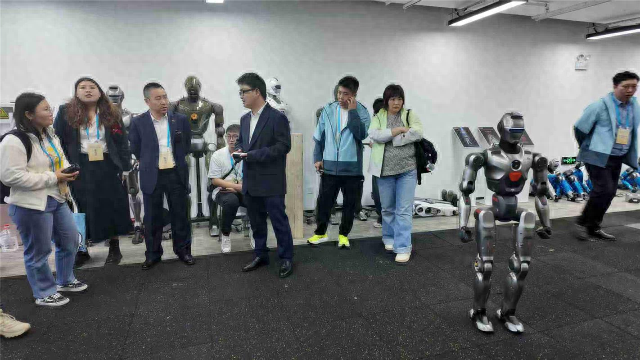
Walker S2人形机器人

Search documents
A股回调!地产股异动拉升,002208,直线涨停
Zheng Quan Shi Bao· 2026-01-20 03:02
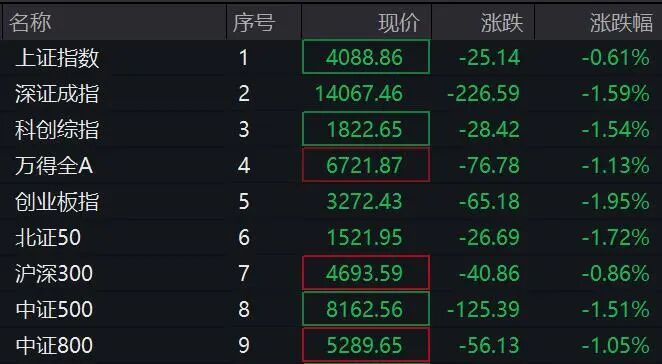
Group 1: Market Overview - The A-share market opened higher but turned negative, with the ChiNext Index down nearly 2% and sectors like commercial aerospace, non-ferrous metals, and Hainan showing significant declines [1][2] - The Hang Seng Index turned negative, with the Hang Seng Tech Index dropping over 1%, while Pop Mart saw a surge of over 10% [2][11] Group 2: Real Estate Sector - The real estate sector experienced a notable rise, with Hefei Urban Construction (002208) hitting the daily limit, and other companies like City Investment Holdings and Yingxin Development also seeing gains [1][8] - According to the National Bureau of Statistics, new residential sales prices in first-tier cities decreased by 0.3% month-on-month in December 2025, a slight narrowing of the decline compared to the previous month [10] Group 3: AI and Robotics Sector - The AI application concept was active, with Zhejiang Wen Internet hitting the daily limit and companies like Tiandi Online and Liujin Technology also rising [3] - The robotics sector saw gains, with companies like New Times Da hitting the daily limit and Top Group rising over 6% [6] - A report from CounterPoint Research indicated that the humanoid robot industry is expected to see a commercial explosion in 2025, with an estimated installation of around 16,000 units [8] Group 4: Semiconductor and Construction Materials - The semiconductor sector experienced a rise, with companies like Zhongwei Semiconductor hitting the daily limit [10] - The construction materials sector also saw gains, with companies like Zhizhi New Materials hitting the daily limit and others like Jiu Ding New Materials and Hai Luo Cement following suit [10] Group 5: Pop Mart Developments - Pop Mart announced a share buyback of approximately HKD 251 million, repurchasing 1.4 million shares at prices ranging from HKD 177.7 to HKD 181.2 per share, which is expected to attract more investor attention [13]

马斯克称特斯拉基本完成AI5芯片设计,已开始开发下一代AI6;美光科技斥资18亿美元收购晶圆厂丨智能制造日报
创业邦· 2026-01-19 04:34
Group 1 - Micron Technology plans to acquire a wafer facility from Powerchip Semiconductor Manufacturing Corporation in Taiwan for $1.8 billion to expand its memory chip production capacity. The deal is expected to significantly increase DRAM wafer output by the second half of 2027 [2] - Tesla's CEO Elon Musk announced that the design of the AI5 chip for fully autonomous driving systems is nearly complete, and the company has begun developing the next-generation AI6 chip. Tesla aims for a 9-month design cycle for future chip iterations [2] - Airbus has signed a service agreement with UBTECH Robotics to procure humanoid robots for its manufacturing facilities. This partnership signifies UBTECH's expansion into global aviation manufacturing applications, following a previous collaboration with Texas Instruments [2] Group 2 - NASA's Artemis 2 manned lunar mission has entered a critical preparation phase, with the rocket and spacecraft transported to the launch pad at Kennedy Space Center. The mission is set to launch no earlier than February 6, marking the first crewed lunar mission in over 50 years [2]



优必选创始人周剑:人形机器人最快3到5年进入家庭,首先实现情感陪伴
Xin Lang Cai Jing· 2026-01-09 14:34
Group 1 - The core viewpoint is that humanoid robots are expected to enter households within 3 to 5 years, with emotional companionship being the first application, depending on the maturity of embodied intelligent brains [1][3] Group 2 - The multi-modal data collection testing center serves as a training facility for humanoid robots, which will be deployed in various manufacturing scenarios to replace human workers, achieving the goal of "dark factories" [2] - The Walker S2 humanoid robot is notable for being the world's first full-sized industrial humanoid robot capable of autonomously changing its battery in 3 minutes without human management [2] - The company plans to expand the humanoid robot training center across the Southwest region of China, aiming for an industrial humanoid robot production capacity of over 1,000 units by 2025 and a target of 10,000 units by 2026 [2] Group 3 - The choice of Zigong for the testing center is attributed to its rich scene resources, including the world's largest simulation dinosaur manufacturing base, which can enhance the capabilities of humanoid robots in various applications [3] - The integration of humanoid robots into family settings is seen as the ultimate goal, with high requirements for general capabilities and world models [3] - The first household applications of humanoid robots are expected to focus on emotional companionship, followed by physical tasks such as washing dishes and cooking, with a timeline of 3 to 5 years for rapid industry development [3]

广东经济的新三驾马车
21世纪经济报道· 2025-12-27 15:00
Core Viewpoint - Guangdong is transitioning from a traditional growth model reliant on real estate, finance, and local government infrastructure to a new growth cycle focused on technology, industry, and finance, as it approaches the end of the "14th Five-Year Plan" period [1][2]. Technology Breakthroughs - Significant advancements in technology have been made in Guangdong, including the discovery of a new antiviral treatment target and the development of a high-energy neutron scattering spectrometer, which supports various cutting-edge research areas [3][4]. - The number of valid invention patents in Guangdong has increased from 439,600 in 2021 to 792,300 in 2024, reflecting a strong emphasis on innovation [4]. R&D Investment - Guangdong's R&D expenditure has risen from 400.22 billion yuan in 2021 to 509.96 billion yuan in 2024, with an average annual growth rate of nearly 10%, and R&D spending as a percentage of GDP reaching 3.60% in 2024 [4][6]. Industrial Growth - By 2024, Guangdong had over 77,000 high-tech enterprises, accounting for 15.4% of the national total, with total revenue exceeding 1.3 trillion yuan [9]. - The export value of high-tech products in Guangdong reached 1,828.46 billion yuan in 2024, marking a 10% year-on-year increase [9]. Financial Acceleration - From 2021 to 2024, the value added by Guangdong's financial sector grew from 1,111.56 billion yuan to 1,239 billion yuan, with the number of domestic listed companies increasing from 762 to 875 [13]. - As of November 2025, Guangdong's new RMB loans increased by 1.5 trillion yuan, a year-on-year increase of 191.1 billion yuan, indicating a recovery in financial growth [2][13]. Key Projects and Innovations - The establishment of the Guangdong Artificial Intelligence and Robotics Industry Investment Fund signifies a strategic move towards supporting early-stage investments in technology [15]. - The semiconductor company, Yuexin Semiconductor, has become Guangdong's first 12-inch wafer manufacturer, with revenues projected to grow significantly in the coming years [13][14].

曾经他们说:中国只会代工
Xin Lang Cai Jing· 2025-12-27 00:17
Core Viewpoint - The article discusses the transformation of China's manufacturing capabilities over the past two decades, highlighting its shift from low-end manufacturing to becoming a leader in advanced manufacturing and technology, challenging previous Western narratives about China's industrial limitations [6][15][24]. Group 1: Manufacturing and Technological Advancements - China's share in global industrial production increased from less than 5% in 1995 to 32% in 2025, while Western countries' share fell below 50% [6]. - The article emphasizes that China's advancements in high-speed rail, shipbuilding, and aviation demonstrate its ability to develop core technologies and set industry standards [8][9][12]. - In the electric vehicle sector, China produced nearly 15 million new energy vehicles in the first 11 months of 2025, with exports growing over 100% year-on-year [12]. Group 2: Innovation and Systemic Changes - China has established a complete lithium battery supply chain, with 80% of global lithium batteries produced by Chinese manufacturers, showcasing its comprehensive industrial ecosystem [12]. - The article notes that China is not only a user of technology but is becoming a provider of systemic solutions, as seen in the advancements in robotics and artificial intelligence [14][20]. - China's R&D investment has increased nearly fivefold from 2007 to 2023, approaching levels seen in the United States, indicating a significant shift in innovation capabilities [20]. Group 3: Global Standards and Market Influence - China is increasingly participating in and even leading the formulation of global standards, such as those for new energy vehicle batteries and 5G technology, which alters the narrative of China as merely a low-end manufacturer [15][17]. - The article highlights that the ability to set standards translates to control over market access, technology pathways, and long-term profitability [17]. - International assessments are shifting, with experts acknowledging China's rise as a technology power in various fields, including AI and advanced manufacturing [21].
广东新“三驾马车”:经济第一大省动力嬗变
2 1 Shi Ji Jing Ji Bao Dao· 2025-12-26 11:06
Core Insights - Guangdong's economy, historically the largest in China, is facing challenges as its GDP growth has lagged behind the national average for four consecutive years during the "14th Five-Year Plan" period, with a projected GDP surpassing 14 trillion yuan in 2024 [2] - The traditional growth model based on real estate, finance, and local government infrastructure is losing momentum, prompting a shift towards a new growth cycle centered on technology, industry, and finance [2] - Significant increases in R&D spending and patent filings indicate a strong focus on high-tech industries, with R&D expenditures rising from 400.22 billion yuan in 2021 to 509.96 billion yuan in 2024, averaging nearly 10% annual growth [6][8] Technology Development - Guangdong's effective invention patents increased from 439,600 in 2021 to 792,300 in 2024, reflecting a robust innovation environment [5][8] - The province's high-tech enterprises grew from approximately 59,475 in 2021 to over 77,000 by 2024, leading the nation [4][8] - Major breakthroughs in various fields, including biomedicine and artificial intelligence, have been reported, showcasing Guangdong's commitment to advancing its technological capabilities [5][6] Industrial Growth - By 2024, Guangdong's high-tech enterprises accounted for 15.4% of the national total, with total revenue exceeding 1.3 trillion yuan [8] - High-tech product exports rebounded to 182.85 billion yuan in 2024, marking a 10% year-on-year increase after two years of decline [8] - The province's advanced manufacturing and high-tech manufacturing sectors saw value-added growth rates of 5.4% and 6.4%, respectively, in 2025 [10] Financial Sector Dynamics - Guangdong's financial sector value added increased from 1.11 trillion yuan in 2021 to 1.24 trillion yuan in 2024, with the number of domestic listed companies rising from 762 to 875 [13] - New RMB loans in Guangdong returned to positive growth in 2025, with an increase of 1.5 trillion yuan by November, reflecting a 191.1 billion yuan year-on-year increase [3][13] - The establishment of numerous government investment funds, totaling 1.77 trillion yuan in subscribed capital, supports the province's financial innovation and investment in key industries [14][15] Strategic Initiatives - Guangdong has initiated the "卓粤" plan for local basic research and implemented reforms to enhance the autonomy of scientific personnel in fund usage, fostering a more innovative environment [7][8] - The province's focus on integrating technology and industry innovation is expected to drive new productivity and economic transformation [11] - The successful IPO applications of companies like粤芯半导体 highlight the growing synergy between technology and finance in Guangdong's economic landscape [14][15]
优必选谭旻:十三载迎“历史性时刻”,机器人开启量产“加速度”
2 1 Shi Ji Jing Ji Bao Dao· 2025-12-11 16:03
Core Insights - The Walker S2 humanoid robot from UBTECH has become a focal point at the 15th National Games, symbolizing the integration of technology and culture [1] - The robot is designed for industrial applications, capable of autonomous battery replacement in just three minutes, and is already operational in various training factories [1] - The company has set a clear "three-step" strategy for future development, focusing first on industrial smart manufacturing before expanding into household applications [2] Group 1 - The Walker S2 robot is recognized as a significant productivity tool, achieving work efficiency comparable to skilled workers in sorting, handling, and quality inspection [1] - The company has received a substantial number of orders concentrated in core industrial manufacturing scenarios, marking a historic moment in its 13-year journey [1] - The robot features dual-vision and fisheye lenses for 360-degree environmental awareness, ensuring safety and efficiency in complex industrial settings [1] Group 2 - UBTECH's first step in its strategy is to focus on large-scale applications of humanoid robots in factories, aiming for a scale of 100,000 units to achieve a significant leap in intelligence [2] - The company currently has a production capacity of approximately 300 units per month, with a goal to deliver over 500 units this year and scale up to 3,000 to 5,000 units next year [2] - By 2027, UBTECH aims to achieve an annual production scale of 10,000 units, leveraging rapid iteration and cloud-based collaborative learning to enhance the capabilities of its robots [2] Group 3 - The company's long-term strategic focus and continuous investment in core technologies have been crucial to its development over the past 13 years [3] - UBTECH emphasizes the importance of application scenarios to drive technological breakthroughs and commercial validation [3] - The company is now positioned at a new starting point, aiming for large-scale applications and deep industry empowerment [3]
小米人事大调整;海光信息终止与中科曙光资产重组丨新鲜早科技
2 1 Shi Ji Jing Ji Bao Dao· 2025-12-10 02:01
Group 1: Company Adjustments and Developments - Xiaomi has initiated a series of personnel adjustments in its China operations, with key positions being reassigned to enhance performance amid pressure on sales [2] - Alibaba has established a new business unit, Qianwen C-end, aimed at transforming its Qianwen app into a super app and an AI assistant for users [3] - Insta360's new drone brand, Yingling, reported sales exceeding 30 million yuan within 48 hours of launch, countering rumors of poor sales performance [3] Group 2: Technology Innovations and Collaborations - Google and XREAL have launched Project Aura, integrating AI into AR glasses, with significant contributions from a Chinese team [2] - Group Nuclear Technology aims to provide foundational space intelligence capabilities, emphasizing the need for practical applications of AI in three-dimensional environments [7] - UBTECH has secured over 50 million yuan in orders for its humanoid robots, focusing on the Walker S2 model [7] Group 3: Market Responses and Strategic Moves - JD.com has acknowledged a bug in its "Sui Xin Tun" feature, committing to cover all losses incurred by merchants due to the issue [4] - Anker Innovation is advancing its global flexible supply chain strategy to mitigate the impact of fluctuating tariff policies [9] - Huagong Information has terminated its major asset restructuring with Zhongke Shuguang due to unfavorable market conditions [14] Group 4: Financing and Growth Opportunities - Yundongchu Technology has completed a C-round financing exceeding 500 million yuan, with participation from various investment firms [16] - Galaxy General has denied rumors regarding its IPO plans in Hong Kong, clarifying that recent corporate restructuring is aimed at accommodating new investors [17]




机械设备行业周报:关注AI基建、人形机器人、工程机械等板块投资机会-20251208
CHINA DRAGON SECURITIES· 2025-12-08 09:44
Investment Rating - The report maintains an investment rating of "Recommended" for the mechanical equipment industry [2][3]. Core Views - The mechanical equipment industry saw a 2.9% increase last week, ranking second among 31 primary industries. Sub-industries such as engineering machinery (+6%) and specialized equipment (+3.45%) showed strong performance, while rail transit equipment experienced a decline of 0.82% [3][14]. - The report suggests that with the completion of the third-quarter reports, market risk appetite is expected to improve. It recommends a balanced approach between technology growth and cyclical investments, focusing on sectors and stocks with performance support [3][4]. - Key areas of focus include humanoid robots, PCB equipment, semiconductor equipment, and cyclical recovery in engineering machinery and general equipment [3][4]. Summary by Sections 1. Recent Trends - In November 2025, excavator sales reached 20,027 units, a year-on-year increase of 13.9%. Domestic sales were 9,842 units (+9.11%), while exports were 10,185 units (+18.8%). Cumulatively, from January to November, 212,162 excavators were sold, marking a 16.7% increase year-on-year [5][44]. - The report highlights a structural recovery in the industry, driven by domestic demand from large projects and a new round of replacement cycles [5][44]. 2. Sub-Industry Performance - The engineering machinery sector is experiencing a significant recovery, with excavator sales showing strong growth. The report emphasizes the importance of technological upgrades and global expansion for leading companies [5][44]. - The industrial robot sector saw a production increase of 17.9% in October 2025, indicating potential investment opportunities as the industry adjusts to new demands [28][44]. 3. Key Companies and Recommendations - The report identifies several companies for investment consideration, including XCMG Machinery (000425.SZ), SANY Heavy Industry (600031.SH), and Huazhong CNC (688697.SH), which are expected to benefit from the ongoing recovery and technological advancements in the industry [7][44]. - The semiconductor equipment sector is highlighted as a critical area for investment, with companies like North Huachuang (002371.SZ) and Zhongwei Company (688012.SH) recommended due to their strong market positions and growth potential [4][7]. 4. Policy and Market Drivers - The report notes that government policies are strongly supporting the high-end machine tool sector, with initiatives aimed at accelerating domestic production and technological breakthroughs [5][46]. - The global demand for high-end manufacturing is recovering, as indicated by Japan's machine tool orders, which have seen continuous growth driven by exports [5][46].




中蒙媒体广东内蒙古行|这届机器人太“卷”了!不仅会打拳还会跳舞?
Nei Meng Gu Ri Bao· 2025-12-07 03:53
Core Insights - The article highlights the vibrant and innovative landscape of the robotics industry in Shenzhen, showcasing two representative companies, Zhongqing Technology and UBTECH Robotics, during a joint media interview event [1][3][5]. Group 1: Company Highlights - Zhongqing Technology has developed the humanoid robot PM01, which stands 1.38 meters tall, weighs approximately 40 kilograms, and features 24 degrees of freedom, with a maximum running speed of 12 kilometers per hour [3]. - The company has achieved significant technological breakthroughs, including the world's first humanoid robot capable of performing a front flip, demonstrating its excellence in dynamic balance and flexibility [3]. - UBTECH Robotics, a leading player in the humanoid robot sector, has launched the Walker S2 robot, which is 1.76 meters tall, has 52 degrees of freedom, and features an industrial-grade dexterous hand with sub-millimeter precision [5]. Group 2: Industry Overview - Shenzhen's robotics industry is experiencing explosive growth, with the number of robotics companies reaching 74,032 in 2024, a year-on-year increase of 39.64% [7]. - The total output value of the robotics industry chain is projected to reach 201.2 billion yuan in 2024, reflecting a 12.58% year-on-year growth, indicating a shift from quantity to quality in the industry [7]. - The Shenzhen government plans to enhance support for the AI and robotics sectors by opening 100 application scenarios and establishing a special fund of 10 billion yuan to further promote innovation and development [7].