悟空机器人

Search documents
这个年“智”感十足——当传统新春邂逅前沿科技
Xin Hua She· 2026-02-16 03:59
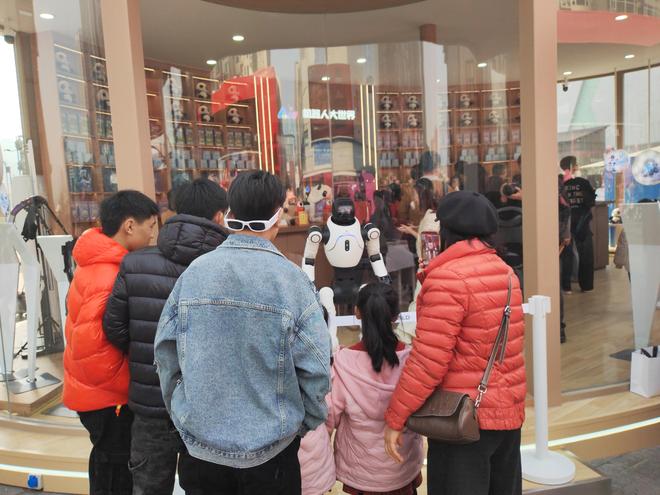
Group 1 - The core theme of the news is the integration of innovative technology into traditional celebrations, exemplified by the showcasing of AI and robotics during the Spring Festival in Chengdu [1][2]. - Chengdu launched an innovation technology product display event during the Spring Festival, featuring over 100 "Chengdu-made" tech products, with more than 20 related to artificial intelligence and robotics [2]. - The collaboration between technology and traditional festivities creates immersive consumer experiences, providing local tech companies with valuable feedback for product iteration and market validation [2]. Group 2 - The "Robot World" pop-up store in Chunxi Road attracted many visitors, showcasing humanoid robots that engage with the public, highlighting the growing interest in tech-related consumer goods [4]. - Educational companion robots and AI plush toys with emotional interaction features have become popular among consumers, particularly parents looking for innovative products for their children [4]. - The combination of policy support and technological advancements is enhancing the "tech-enabled festive atmosphere," driving innovation products from laboratories to everyday life [4].

2035年我国具身智能市场规模或破万亿元 具身智能多领域应用场景爆发
Xin Lang Cai Jing· 2025-12-29 11:02
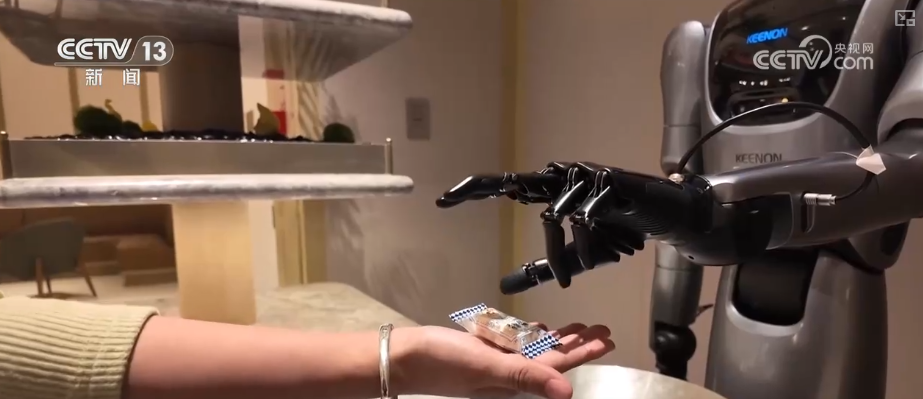
Core Insights - The article discusses the integration of robots into daily life, highlighting their roles in hospitality, manufacturing, and maintenance sectors in China [1] - It predicts that the embodied intelligence market in China will reach a scale of 400 billion yuan by 2030 and exceed 1 trillion yuan by 2035 [1] Industry Overview - Robots are being utilized in various settings, such as hotels for greeting and delivering food, and in manufacturing for autonomous handling using visual sensors [1] - The presence of robots is noted in diverse environments, including parks and nuclear power maintenance sites, showcasing their versatility and advanced capabilities [1] Market Forecast - The year 2025 is identified as a pivotal point for the commercialization of embodied intelligence in China [1] - The projected growth of the embodied intelligence market indicates significant investment and development opportunities within the sector [1]
“硬核”助手上岗 具身智能“七十二变”走出实验室融入各类实体应用场景
Yang Shi Wang· 2025-12-29 07:23
Core Insights - The embodied intelligence market in China is projected to reach 400 billion yuan by 2030 and exceed 1 trillion yuan by 2035, indicating significant growth potential in this sector [1] Group 1: Definition and Characteristics - Embodied intelligence refers to artificial intelligence that possesses both cognitive capabilities ("brain") and physical execution abilities ("body"), enabling it to perform tasks in the real world [10][14] - Unlike traditional AI, which operates within screens, embodied intelligence can physically interact with environments, such as in factories or hospitals, transforming digital algorithms into tangible actions [10][15] - The distinction between embodied intelligence and other forms of AI is highlighted, with examples like DeepSeek representing "disembodied intelligence" and traditional robotic arms lacking true intelligence [12][14] Group 2: Applications and Impact - Embodied intelligence is seen as a new engine for economic development, capable of enhancing production and service sectors by integrating digital intelligence into physical operations [15] - It can alleviate labor shortages and improve working conditions in various fields, including elderly care, healthcare, logistics, and domestic services [15] - The technology is already being piloted in various industries, such as logistics and assembly lines, showcasing its practical applications [19] Group 3: Future Outlook - The year 2025 is anticipated to be a pivotal moment for the commercialization of embodied intelligence, with numerous products transitioning from virtual to physical spaces [17] - Current developments in embodied intelligence are still in the early stages, with most applications operating at a relatively low level of intelligence (L2) [30] - The technology is evolving rapidly, with potential for higher levels of autonomy and learning capabilities in the future [30]
AI守护暖人心!大湾区助残科技亮相残特奥会
Hua Xia Shi Bao· 2025-12-08 11:20
Core Viewpoint - The article highlights the integration of technology in enhancing the lives of individuals with disabilities, showcasing innovative assistive products at the Special Olympics, emphasizing the theme of "technology empowerment and humanistic care" [2][12]. Group 1: Assistive Technology Innovations - A demonstration area for assistive technology products was established at the Special Olympics, featuring cutting-edge solutions from the Greater Bay Area aimed at addressing various challenges faced by people with disabilities [2]. - The all-terrain stair-climbing robot wheelchair from Foshan Kaiyang Medical Equipment Co., Ltd. can automatically adjust its seating position and climb up to 1,120 steps, with a flat terrain range of 35 kilometers [4]. - The brain-controlled wheelchair developed by Huazhong Brain Control (Guangdong) Intelligent Technology Co., Ltd. utilizes a headband to collect brain and eye signals for comprehensive control, specifically designed for patients with severe physical disabilities [6]. Group 2: Vision Assistance Technologies - The AI-based smart glasses, known as "Guide Rabbit," provide real-time environmental perception and precise path planning for visually impaired individuals, capable of describing surroundings through voice [8]. - The smart guide dog, priced at 30,000 yuan, offers navigation and obstacle avoidance features, previously showcased at the United Nations and set to assist visually impaired attendees during the Special Olympics [10]. Group 3: Broader Impact and Community Engagement - The showcased products reflect the technological capabilities and social responsibility of companies in the Greater Bay Area, with Shenzhen Youbixun Technology Co., Ltd. presenting the Wukong robot for companionship and support [10]. - The event serves as a platform to promote awareness of assistive technology advancements, fostering inclusivity and improving the quality of life for individuals with disabilities [12].

中蒙媒体广东内蒙古行|这届机器人太“卷”了!不仅会打拳还会跳舞?
Nei Meng Gu Ri Bao· 2025-12-07 03:53
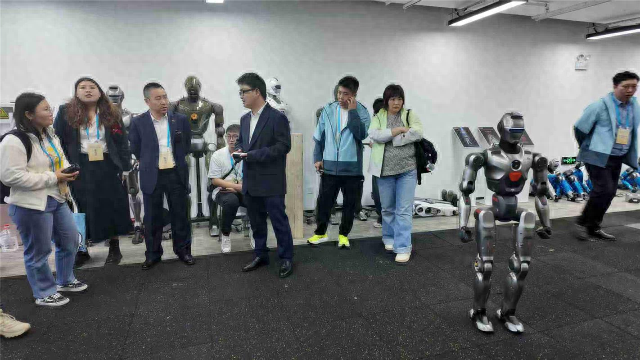
Core Insights - The article highlights the vibrant and innovative landscape of the robotics industry in Shenzhen, showcasing two representative companies, Zhongqing Technology and UBTECH Robotics, during a joint media interview event [1][3][5]. Group 1: Company Highlights - Zhongqing Technology has developed the humanoid robot PM01, which stands 1.38 meters tall, weighs approximately 40 kilograms, and features 24 degrees of freedom, with a maximum running speed of 12 kilometers per hour [3]. - The company has achieved significant technological breakthroughs, including the world's first humanoid robot capable of performing a front flip, demonstrating its excellence in dynamic balance and flexibility [3]. - UBTECH Robotics, a leading player in the humanoid robot sector, has launched the Walker S2 robot, which is 1.76 meters tall, has 52 degrees of freedom, and features an industrial-grade dexterous hand with sub-millimeter precision [5]. Group 2: Industry Overview - Shenzhen's robotics industry is experiencing explosive growth, with the number of robotics companies reaching 74,032 in 2024, a year-on-year increase of 39.64% [7]. - The total output value of the robotics industry chain is projected to reach 201.2 billion yuan in 2024, reflecting a 12.58% year-on-year growth, indicating a shift from quantity to quality in the industry [7]. - The Shenzhen government plans to enhance support for the AI and robotics sectors by opening 100 application scenarios and establishing a special fund of 10 billion yuan to further promote innovation and development [7].

定调:六大未来产业发令枪响!万亿级城市之争,开始了
Sou Hu Cai Jing· 2025-11-01 19:39
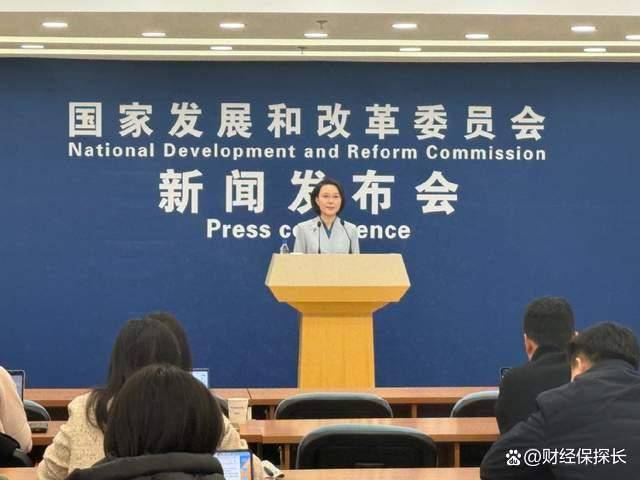
Core Insights - The recent press conference by the National Development and Reform Commission indicates a shift in the engine of China's economic development [1] - Emerging fields such as quantum technology, brain-computer interfaces, and nuclear fusion energy are identified as "new economic growth points," emphasizing their transformation into economic benefits [3][5] - The inclusion of hydrogen energy and nuclear fusion energy in the latest recommendations signals their critical roles in energy transition [10] Quantum Technology - Hefei ranks second globally in quantum industry, with three-quarters of leading companies located there, supported by the University of Science and Technology of China [7] - Key applications for quantum computing include financial modeling, drug development, and materials design, with Beijing and Shanghai focusing on practical applications [9] - Beijing aims for a complete industrial chain in hydrogen energy, while Shanghai leads in practical applications with significant data on fuel cell vehicles [11] Hydrogen Energy - Hydrogen energy is positioned as a future clean energy source, though its technology is not fully mature, presenting challenges for large-scale application [10] - Beijing's strategy involves a comprehensive approach to the hydrogen industry, while Shanghai demonstrates practical applications with substantial mileage data [11] - Cities like Guangzhou and Shenzhen are also making significant investments and advancements in hydrogen energy projects [11] Brain-Computer Interfaces - Brain-computer interface technology has rapidly developed, with Shanghai covering all technical routes and Beijing focusing on non-invasive applications [12][13] - Shenzhen is targeting commercial applications, with major companies planning to launch multiple application scenarios by 2026 [13] - The overall market for brain-computer interfaces remains in its early stages, with uncertain future developments [13] Humanoid Robots - The development of humanoid robots in China has gained attention, with significant contributions from institutions like Tsinghua University and Peking University [14] - Shenzhen leads in the number of industry chain enterprises, with a total output value of 170 billion yuan, while Shanghai aims to create a complete ecosystem for humanoid robots [14] - The success of companies like the one in Hangzhou is attributed to long-term technological accumulation [14] 6G Technology - Although not yet commercialized, countries are actively laying the groundwork for 6G technology, with Beijing focusing on standardization and Shenzhen on practical applications [15] - Nanjing's achievements in terahertz communication demonstrate significant technological capabilities [15] - Cities like Chengdu and Wuhan are developing 6G technology but lag behind Beijing and Shanghai [15] Interconnected Technologies - Technologies such as quantum technology, bio-manufacturing, hydrogen and nuclear fusion energy, brain-computer interfaces, and 6G are interconnected, forming the underlying logic of future economies [16] - Cities that strategically invest in these fields are positioned to become leaders in the next era of competition [16][17]
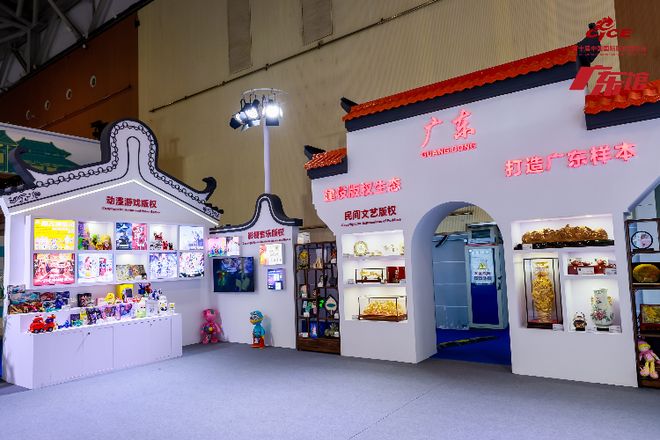
“穿越”宋代广府、机器人弹古筝……广东馆亮相第十届版博会
Nan Fang Du Shi Bao· 2025-10-17 07:05
Group 1 - The 10th China International Copyright Expo was held from October 16 to 18 in Qingdao, showcasing Guangdong's strength and vitality in the copyright sector with 68 enterprises and 236 exhibits [2] - On the first day of the expo, Guangdong exhibitors achieved significant results, with 325 items traded amounting to over 57,500 yuan and five strategic cooperation projects worth over 420 million yuan [2] - The Guangdong pavilion featured immersive experiences using VR technology, allowing visitors to "travel" back to Song Dynasty Guangzhou and interact with various cultural elements [3] Group 2 - The expo highlighted the launch of the theme song for the 15th National Games, enhancing the atmosphere of the Guangdong pavilion [4] - The 15th National Games merchandise includes 20 categories, covering plush toys, PVC ornaments, and creative games related to the mascot [5] - Guangdong emphasized the transaction and transformation of copyright achievements, hosting significant activities such as copyright product launches and strategic signing events [6] Group 3 - Guangdong's innovative exploration in copyright finance attracted attention, with the introduction of the first copyright pledge financing product in the toy industry and comprehensive insurance solutions for copyright enterprises [6][7] - By 2025, Guangdong will participate in a comprehensive pilot program for intellectual property finance, with specific credit products launched for local technology enterprises [7] - The expo showcased various insurance products from major companies, demonstrating the role of insurance in supporting the high-quality development of the copyright industry [7]
奇瑞墨甲抢招商,智元、宇树拿大单,人形机器人竞速跑
2 1 Shi Ji Jing Ji Bao Dao· 2025-07-12 14:16
Group 1 - The commercialization of humanoid robots is accelerating, with significant developments reported in the industry [1][2] - Chery and AiMOGA's collaboration on the Moja robot is set to launch in late September, targeting both dealers and individual consumers [1][2] - The recent procurement orders from China Mobile for humanoid robots worth 120 million yuan indicate a growing interest in deploying these robots in marketing scenarios [1][4] Group 2 - Chery has a long history in robotics, evolving from industrial robots to humanoid robots, with significant milestones including the launch of the CheryGPT language model [2][3] - The Moja robot, designed for automotive 4S stores, aims to enhance customer interaction by providing vehicle information and sales guidance [2][3] - The humanoid robots are designed with a focus on realism, featuring detailed human-like attributes [2] Group 3 - The humanoid robot market is divided into production robots for factories and service robots for customer interaction, with the latter requiring advanced emotional intelligence [3] - The effectiveness of humanoid robots in sales environments remains uncertain, as they may not yet possess the necessary skills to fully engage customers [3][5] - The recent large-scale orders for humanoid robots exceed industry expectations, suggesting a shift towards integrating these robots into specific marketing applications [5] Group 4 - The procurement project by China Mobile includes a total budget of 124.05 million yuan, with significant portions allocated for both full-size and small-size humanoid robots [4][5] - Other telecom companies, such as China Telecom, are also exploring humanoid robots for various applications, indicating a broader trend in the industry [5] Group 5 - The evolution of humanoid robots is expected to progress through three stages: developing leading technology, creating relevant content for specific industries, and ensuring a smooth user experience [6]


优必选20250616
2025-06-16 15:20
Summary of the Conference Call for UBTECH Robotics Company Overview - UBTECH Robotics is a leader in the humanoid robotics industry, established in 2012, focusing on service robots and intelligent solutions design, production, commercialization, and sales [10][12][24] - The company has built strong partnerships with major clients such as Tianqi, Liuzhou Automobile, and Geely, which has facilitated the training of its robots in these clients' factories [2][3][10] Industry Position - UBTECH is recognized as a top player in the domestic humanoid robotics sector, having made significant advancements in research and development over the years [3][8] - The company has a first-mover advantage, having showcased its technology on major platforms like the Spring Festival Gala in 2016 [4][12] Product Development and Orders - The product line has evolved from Walker X to Walker S1, Walker S2 (2025), and plans for Walker S3 (2026), demonstrating consistent technological upgrades [2][3] - In 2025, UBTECH secured orders for 500 humanoid robots from Juran Home, with a target of 10,000 units, and a deployment plan for 20 Walker C1 industrial robots with Dongfeng Liuzhou [2][5][6] Market Expansion and Projections - The company anticipates a production volume of 300-500 units in 2025, with expectations for accelerated market share growth in 2026 [2][6] - Revenue projections for 2027 are estimated at 1.9 billion, 2.8 billion, and 3.6 billion yuan, with year-on-year growth rates of 45%, 49%, and 40% respectively [4][9] Software and Technology Innovations - UBTECH is enhancing its software capabilities through data collection from industrial applications, which is expected to facilitate rapid market share expansion [6][22] - The introduction of group intelligence technology in 2025 aims to improve collaboration in high-demand industrial scenarios [7][22] Competitive Landscape - The global humanoid robotics market is rapidly evolving, with competitors like Tesla and Yushutech launching new products, indicating a dynamic industry environment [17] - UBTECH's valuation of 35 billion HKD is relatively low compared to international peers, suggesting significant growth potential [4][8][24] Policy and Industry Support - National policies, such as the "14th Five-Year" robotics development plan, are expected to drive growth in the humanoid robotics sector, with government emphasis on innovation and technology breakthroughs [16] Conclusion - UBTECH Robotics is positioned for substantial growth in the humanoid robotics market, supported by strong partnerships, innovative product development, and favorable industry policies, with a clear path towards profitability and market leadership in the coming years [9][24]
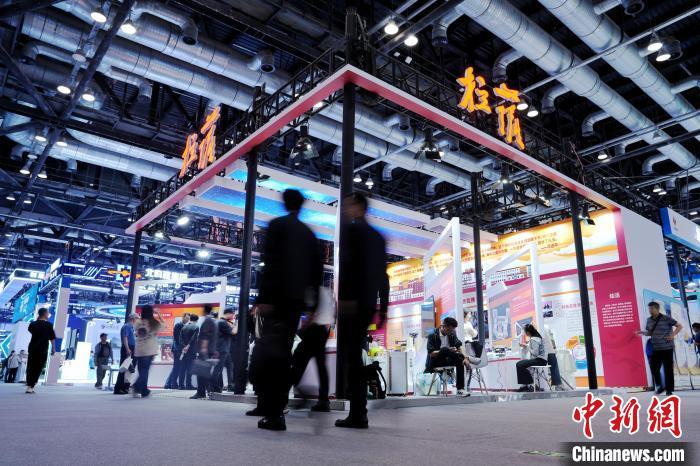
拉萨市在北京科博会首次设立独立展馆 展示高原特色产业
Zhong Guo Xin Wen Wang· 2025-05-09 02:15
Core Viewpoint - The 27th China Beijing International Science and Technology Industry Expo (Beijing Sci-Tech Expo) opened on May 8, showcasing Lhasa's independent exhibition hall for the first time, featuring 30 selected enterprises and 130 representative exhibits to demonstrate the latest achievements in technological innovation and new productivity development in collaboration with Beijing [1][3]. Group 1: High-Altitude Characteristic Industry Upgrades - Jin Hada Pharmaceutical has developed various Tibetan health foods and cosmetics based on unique Tibetan medicine [3]. - Lhasa Gengsang Trading showcased Tibetan incense products made from rare natural materials using traditional hand-ground techniques [3]. - Shengxin Industry and Trade introduced yak wool scarves featuring advanced processing technology with Thangka patterns [3]. Group 2: Digital Economy Empowerment - Wangzhi Tianyuan exhibited products such as the Wukong robot and smart devices supporting Han-Tibetan translation [3]. - Chawa Cloud Technology presented the Huiyan integrated machine for Han-Tibetan translation and a locally deployed secure translation system [3]. - Yizhou Technology showcased an AI-enabled intelligent patrol system for urban safety, management, environmental governance, and ecological protection in high-altitude areas [3]. - Tibet Telecom launched a bilingual integrated smart platform for grassroots governance [3]. Group 3: Innovative Achievements Improving Livelihoods - Chongyangbao Technology displayed oxygen enrichment products with proprietary technology, achieving oxygen content over 23% [4]. - Shangchu presented a series of kitchenware suitable for high-altitude environments [4]. - Other products included barley-based goods, beer, and high-quality mineral water produced using advanced technology [4]. Group 4: Green Technology for Ecological Protection - Huizhen New Materials showcased efficient and environmentally friendly new cementing materials for mining, demonstrating excellent mechanical properties and stability [4]. - CRRC presented wind power models tailored for high-altitude green energy needs [4]. - Angbiter Energy displayed black ceramic solar collectors with high efficiency and stability for high-altitude use [4]. Group 5: Cultural and Technological Integration - Changhong Industry and Yushang Hemei exhibited a series of cultural and creative products reflecting the ancient charm of Tibetan culture, showcasing the integration of traditional culture and modern technology [4]. Group 6: Strategic Development Goals - The Lhasa exhibition aims to accelerate the construction of a high-altitude characteristic technology innovation ecosystem, promoting deep integration of technology with industry, ecology, and culture for high-quality development [6]. - The event serves as a platform for Lhasa to enhance technology-driven industrial development, facilitating connections between local tech enterprises and domestic and international market resources [6]. - The collaboration between Beijing and Lhasa is expected to deepen high-tech industry exchanges and cooperation, injecting more wisdom and strength from Beijing into Lhasa's high-quality development [6].