Workflow
xAI
icon
Search documents
Elon Musk calls for Delaware judge to recuse herself in lawsuits, alleging bias
CNBC· 2026-03-25 20:38
Elon Musk's legal team is demanding that a judge in the Delaware Court of Chancery, Kathaleen McCormick, recuse herself from two Tesla lawsuits, alleging she showed bias in supporting a LinkedIn post that was critical of Musk."In light of the Court's recent public support of LinkedIn posts that create a perception of bias against Mr. Musk in these cases, recusal is necessary and warranted," Musk's attorney's wrote in their motion for recusal on Wednesday. "These cases should be re-assigned to another random ...
星舰驶向华尔街,史上最大IPO启动
Sou Hu Cai Jing· 2026-02-24 07:17
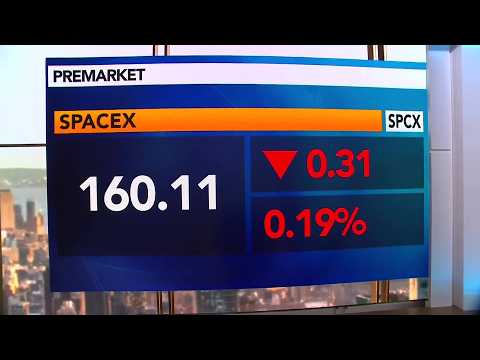
Core Insights - SpaceX is preparing for an unprecedented IPO in 2026, with a valuation exceeding $1 trillion, marking the largest public offering in history and testing valuation models to their limits [1][3]. Group 1: Valuation and Financial Structure - Following the acquisition of xAI in February 2026, the combined entity's valuation reached $1.25 trillion, with SpaceX's core business valued at approximately $1 trillion and xAI contributing $250 billion [3]. - The IPO aims for a target valuation of $1.5 trillion, which translates to a price-to-sales ratio exceeding 60, significantly higher than competitors like Rocket Lab and Planet Labs [3]. - The $50 billion raised from the IPO will fund three capital-intensive projects: the development of the Starship rocket, the deployment of an "orbital data center," and ongoing support for NASA's lunar system [3]. Group 2: Market Reactions and Investor Sentiment - Since the announcement of the IPO plan in December 2025, SpaceX's private market valuation surged from approximately $80 billion, reflecting investor optimism about the potential $1.5 trillion listing [5]. - The underwriting team, including major banks like JPMorgan, Goldman Sachs, Bank of America, and Morgan Stanley, must substantiate the $1.5 trillion valuation with financial data in the prospectus [5]. - SpaceX plans to allocate a significant portion of shares to retail investors, challenging the traditional allocation favoring institutional buyers, which could increase demand but also pricing uncertainty [5]. Group 3: Strategic Vision and Risks - Elon Musk's strategy involves using solar-powered orbital data centers to overcome terrestrial limitations on AI growth, with plans to launch a system of up to 1 million satellites [8]. - Critics highlight challenges such as high costs of launching payloads, the need for maintenance and cooling of data centers, and the reliance on terrestrial data for AI training [8]. - The integration of rockets, satellites, AI models, and distribution channels presents both synergies and unprecedented concentration risks, as failures in one area could disrupt services across the board [10]. Group 4: Timing and Market Conditions - The IPO is speculated to occur in June 2026, coinciding with Musk's birthday and a significant astrological event, reflecting Musk's personal influence on the timing [10]. - Some bankers and investors express concerns that the June timeline may be too ambitious, given the need for regulatory filings and market conditions, which are increasingly unpredictable [10]. Group 5: Overall Market Implications - The success of SpaceX's IPO hinges on how much the market is willing to pay for exposure to space, AI, and global connectivity narratives [12]. - SpaceX holds a dominant position in the commercial launch market with approximately 90% market share, and its Starlink service has become highly profitable [12]. - The IPO represents a critical test of valuation discipline for Wall Street, requiring a balance between grand narratives and tangible cash flow [12].
Elon Musk Says NASA Will Account For Only 5% Of SpaceX's Revenue In 2026: 'I Love NASA, But...'
Yahoo Finance· 2026-02-10 23:31
Core Insights - NASA is projected to account for only 5% of SpaceX's revenue in 2026, with the majority of income expected to come from the Starlink satellite internet service [1][2][3] Revenue Projections - SpaceX's revenue for 2025 was approximately $16 billion, with an $8 billion profit, primarily driven by the Starlink business, which contributed between 50% to 80% of the revenue [4] - The projected revenue for SpaceX in 2026 is estimated to be around $24 billion, indicating a significant increase from the previous year [6] NASA's Contribution - Previously, Elon Musk suggested that NASA would contribute close to 7% of SpaceX's total revenue, but this has now been revised to approximately 5% for 2026 [5] - If the 5% projection holds true, NASA's contribution would rise from nearly $1 billion in 2025 to about $1.2 billion in 2026 [6] Strategic Focus - SpaceX is shifting its focus towards lunar missions, aligning with Musk's long-term vision of establishing a colony on Mars, emphasizing the importance of securing the future of civilization [7]
心智观察所:马斯克究竟想干什么?
Xin Lang Cai Jing· 2026-02-06 00:22
【文/观察者网专栏作者 心智观察所】 近期,太空光伏概念反复活跃,资本市场又在为"马年就炒马斯克"、"跟着马老师炒概念"兴奋地调高估 值。 还有消息说,马斯克近期"摸底"了中国光伏产业链,SPACE X团队走访了多家中国光伏企业。 马斯克究竟想干什么? 2026年初,SpaceX宣布收购xAI,并同步披露将在近地轨道部署由太阳能驱动的AI数据中心。与此同 时,特斯拉与SpaceX联合提出"三年内在美国建设200吉瓦光伏产能"的目标——这一数字相当于当前美 国全部太阳能装机容量的十倍。 表面看,他是在能源、算力与航天交叉地带豪赌;但若深入其逻辑底层,便会发现,马斯克正在构建 的,根本不是一家公司或几项技术,而是一套脱离地球物理限制的新文明操作系统。 并不是又一个资本故事会 过去几年,AI的爆炸式增长让全球陷入一种集体焦虑:算力需求正以指数级速度攀升,而地球的能源 供给却仍困在线性轨道上。据国际能源署(IEA)最新估算,仅训练一个前沿大模型所消耗的电力,就 足以支撑一个中等城市数月之久。微软、谷歌和Meta的数据中心集群年耗电量已逼近比利时全国水 平。 更令人不安的是,这种趋势没有刹车迹象。马斯克本人曾预测,未来 ...
马斯克究竟想干什么?
Guan Cha Zhe Wang· 2026-02-06 00:13
Core Viewpoint - The article discusses Elon Musk's ambitious plans to revolutionize energy and computing through space-based solar power and AI, suggesting a shift towards a new civilization operating system beyond Earth's physical limitations [2][4][12]. Group 1: Space Solar Power and AI Integration - Musk's SpaceX plans to deploy solar-powered AI data centers in low Earth orbit, aiming for a target of 200 gigawatts of solar capacity in the U.S. within three years, which is ten times the current solar capacity [2][9]. - The near-Earth solar intensity is over 1.4 times that of the ground, allowing for nearly continuous power generation without interruptions from clouds or day-night cycles [5][21]. - The integration of xAI into SpaceX's framework is strategic, as it requires vast, stable computing power that can only be achieved in space, avoiding the limitations of terrestrial power grids [8][21]. Group 2: Challenges and Solutions - Current energy demands for AI are projected to reach 100 terawatts in the next decade, while global power generation capacity is only 3 terawatts, indicating a potential energy crisis [3][4]. - Traditional solutions focus on optimizing ground systems, which are insufficient due to Earth's resource limitations and geopolitical issues [4][10]. - Musk's approach bypasses the most challenging aspects of energy transmission by utilizing power directly in space, thus avoiding efficiency losses associated with ground transmission [11][12]. Group 3: Economic and Engineering Considerations - The cost of launching payloads to orbit is targeted to be below $10 per kilogram with the Starship, making it economically viable to deploy large-scale infrastructure in space [8][10]. - The current efficiency of energy transmission from geostationary orbit to Earth is below 15%, presenting significant challenges for the proposed solar power systems [10][11]. - Musk's strategy emphasizes a "good enough and fast" approach, focusing on creating a self-sustaining orbital ecosystem rather than achieving immediate profitability [11][12]. Group 4: Broader Implications and Future Vision - The shift of high-energy computing tasks to space is seen as a way to "liberate Earth" from the burdens of energy-intensive data centers, allowing for a more sustainable environment [14][15]. - This transition is compared to historical shifts in industrial practices, suggesting a significant reorganization of how civilization interacts with energy and technology [16][18]. - Musk's long-term vision aligns with the concept of a Kardashev Type II civilization, aiming to harness energy from the sun on a massive scale, which could redefine humanity's future [20][21].
2月全球十大富豪
Sou Hu Cai Jing· 2026-02-04 10:19
Core Insights - The global billionaire rankings have seen significant changes at the start of the year, with half of the top ten billionaires experiencing shifts in their positions, while Elon Musk remains the wealthiest individual with an estimated net worth of $775 billion as of February 1, 2026 [2][5]. Group 1: Wealth Increases - Elon Musk's net worth increased by $48 billion over the past month, driven by the success of xAI Holdings and the rising valuations of SpaceX and Tesla [2][3]. - Larry Page's wealth rose by $20 billion due to an 8% increase in Alphabet's stock price, making him the second-largest gainer this month [3][7]. - Sergey Brin's net worth increased by $18 billion, reaching $255 billion, as he also benefited from Alphabet's stock performance [3][9]. - Jeff Bezos saw an increase of $8 billion in his wealth, bringing his total to $250 billion [3][11]. - Mark Zuckerberg's net worth rose by $19 billion to approximately $246 billion, aided by an 8% rise in Meta's stock price [3][13]. Group 2: Wealth Decreases - Larry Ellison experienced the largest decline, with a $34 billion drop in his net worth to $211 billion, following a 17% decrease in Oracle's stock price [4][15]. - Bernard Arnault's wealth decreased by $26 billion to $169 billion, as LVMH's stock fell by 14% [4][17]. - Amancio Ortega's wealth decreased by $1 billion to approximately $145 billion, despite returning to the top ten [4][21]. - Warren Buffett's net worth fell by $7 billion to $142 billion, reflecting a decrease in Berkshire Hathaway's stock value [4][23]. Group 3: Billionaire Rankings - The total wealth of the top ten billionaires remains stable at $2.6 trillion, with all individuals having a net worth of at least $147 billion [5][25]. - The top ten billionaires include eight Americans, with Bernard Arnault from France and Amancio Ortega from Spain being the only non-Americans [5][25]. - As of February 1, 2026, the wealthiest individuals are predominantly male, with the highest net worth being $775 billion for Elon Musk [5][25].
观察 | 苹果谷歌突然“联姻”,科技圈天变了?
Core Viewpoint - The collaboration between Apple and Google signifies a strategic shift in the tech industry, where Apple aims to enhance its AI capabilities by leveraging Google's advanced technology, while Google seeks to gain access to Apple's vast user base and data [2][21]. Group 1: Key Facts - Apple and Google announced a partnership where Apple's next-generation AI model will be built on Google's Gemini, specifically the Gemini 2.5 Pro version, which has 1.2 trillion parameters, surpassing GPT-4 [5][6]. - Apple will pay Google an annual licensing fee of $1 billion, translating to over $270,000 daily, to utilize Google's AI model [6]. - The agreement is for multiple years, indicating a long-term reliance on Google's technology while Apple maintains control over user data [7]. Group 2: Underlying Logic - Apple's strategy is to quickly catch up in the AI race after falling behind competitors like Microsoft and Google, opting to purchase the best technology rather than developing it in-house [9][10]. - Google, on the other hand, is using this partnership to gain a foothold in the mobile ecosystem, as integrating Gemini into Siri allows Google to access data from over a billion iPhone users, which is more valuable than the licensing fee [10]. Group 3: Market Dynamics - The biggest losers in this partnership are OpenAI and Microsoft, as Apple shifts from using OpenAI's ChatGPT to Google's Gemini, potentially sidelining OpenAI in Apple's ecosystem [12][13]. - This collaboration may solidify the market position of Apple and Google, making it difficult for new entrants like Musk's xAI to compete effectively [13]. Group 4: Beneficiaries - AI chip manufacturers, such as NVIDIA and TSMC, are likely to benefit from increased demand for AI processing capabilities as both Apple and Google expand their AI applications [14]. - Ordinary users may experience improved AI functionalities in Siri, leading to enhanced user experiences and potentially reshaping consumption habits and work methods [20]. Group 5: Future Implications - The partnership model observed between Apple and Google may inspire similar collaborations among domestic tech giants in China, where competitive pressures could lead to strategic alliances for technological and market advantages [19][21].
Tesla's surprising delivery data hide a serious problem
Yahoo Finance· 2025-10-14 16:47
Core Insights - Tesla's stock has surged 72% over the past six months, driven by strong third-quarter deliveries of 497,099 electric vehicles, exceeding analyst expectations of fewer than 440,000 [1][3]. Delivery Performance - Tesla delivered 497,099 vehicles in Q3 2025, up from 462,890 in the same period last year, indicating a robust year-over-year growth [1][4]. - The production for the quarter was 447,000 vehicles, which is down year-over-year, suggesting a fundamental shrinkage in production capacity [6]. Market Dynamics - The expiration of the $7,500 EV tax credit at the end of September incentivized car buyers to purchase electric vehicles, benefiting Tesla significantly [3]. - Despite the strong delivery numbers, there are concerns regarding the sales performance of Tesla's other models, which have not seen an increase, indicating limited growth outside of the core Model Y and Model X [6]. Valuation Concerns - Analysts have mixed views on Tesla's valuation, with some, like Cathie Wood from Ark Invest, believing it is undervalued with a five-year price target of $2,600, largely based on potential from Robotaxi and autonomous driving software [7]. - Other analysts, such as Jed Dorsheimer from William Blair, maintain a more cautious stance, suggesting that Robotaxi is crucial for Tesla's future, contributing significantly to their price target [8].
马斯克称将就特斯拉投资xAI举行股东投票
news flash· 2025-07-13 23:36
Core Viewpoint - Tesla's CEO Elon Musk indicated that the decision regarding Tesla's investment in xAI is not solely his, suggesting that a shareholder vote will be held on the matter [1] Group 1 - Elon Musk expressed that if it were solely his decision, Tesla would have already invested in xAI [1] - A shareholder vote will be conducted to determine the future of Tesla's investment in xAI [1]
本周精华总结:马斯克 & 特斯拉|从一个“吃瓜”动作聊开
老徐抓AI趋势· 2025-06-15 03:40
Core Viewpoint - The article discusses Elon Musk's unconventional approach to problem-solving and leadership, highlighting his extreme dedication and willingness to take risks in order to achieve his goals, particularly in the context of Tesla and its future developments, such as Robotaxi [2][8]. Group 1: Elon Musk's Leadership Style - Musk is characterized as someone who is not afraid to express his opinions and emotions, often engaging with negative content about others, which reflects his bold personality [2]. - His approach to challenges is extreme; for instance, during the development of the Model S, he slept at the factory to ensure the project’s success [2]. Group 2: Tesla's Product Development - The Model Y has faced initial issues but has seen increased sales, although user experience concerns, such as the sunshade design, have been raised [7]. - Musk prioritizes overall system optimization over individual user comfort, which is evident in the design philosophy of Tesla vehicles [7]. Group 3: Future Developments and Robotaxi - The upcoming Robotaxi launch on July 8 is seen as a pivotal moment for Tesla, as it aims to create a comprehensive autonomous driving system that integrates vehicles, chips, algorithms, and dispatching [8]. - If successful, Tesla could transition from a traditional car manufacturer to a data and network-driven company, fundamentally changing its business model [8]. - Despite short-term sales pressures, Musk's strategy is to push forward rather than resort to price cuts, demonstrating his resilience and determination [8].