
Jing Ji Ri Bao

Search documents
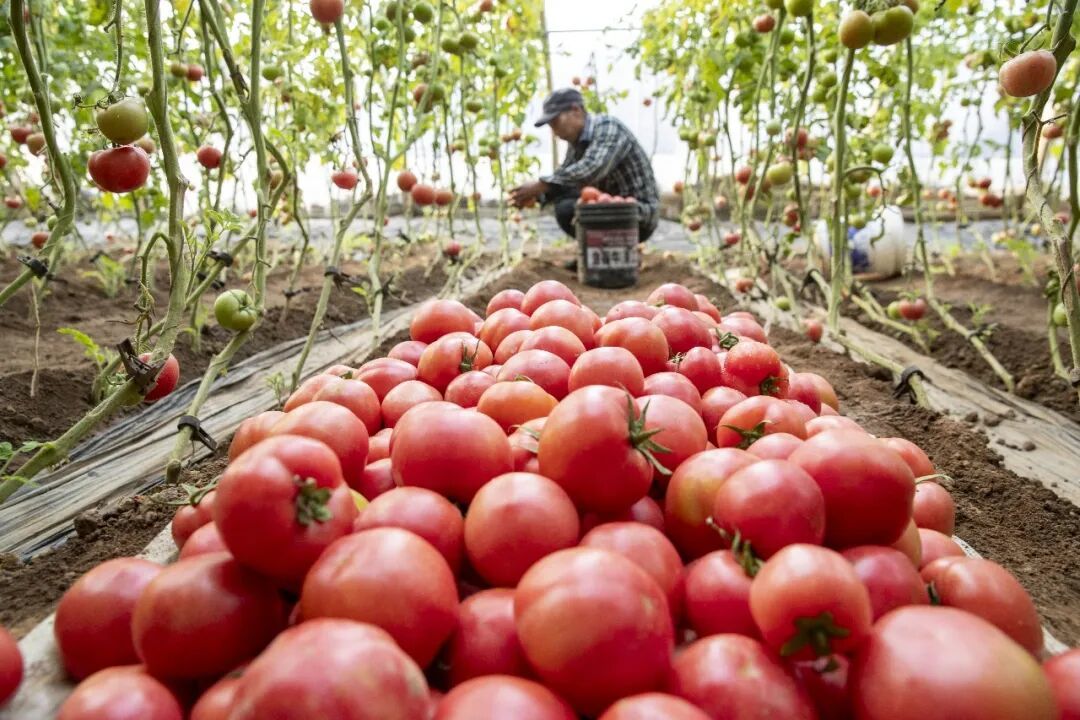
比去年贵了近一倍?西红柿为何涨价,何时能降?
Jing Ji Ri Bao· 2026-01-13 05:55
Core Viewpoint - The price of tomatoes has significantly increased, becoming a focal point in the vegetable market, driven by multiple factors including reduced planting area, extreme weather, and seasonal cost increases [5][6][10]. Price Trends - As of January 8, 2026, local prices for tomatoes in Yanggu County, Shandong, reached 5 to 6.5 yuan per jin, nearly double compared to the previous year [1]. - The average wholesale price of tomatoes in December 2025 was 8.59 yuan per kilogram, marking a 23.4% increase month-on-month and a 76.4% increase year-on-year [4]. - The highest price recorded was 9.36 yuan per kilogram on December 26, 2025, with a slight decrease to 8.4 yuan per kilogram by January 4, 2026 [4]. Supply Factors - The planting area for tomatoes has decreased due to low prices in previous years, leading to a contraction in supply [6][8]. - Adverse weather conditions, including excessive rainfall and temperature drops, have severely impacted tomato yields and delayed market entry [8][9]. - The transition to winter production has increased costs, as supply shifts from open-field to high-cost greenhouse production [9]. Market Dynamics - The demand for tomatoes is expected to remain high due to the upcoming Spring Festival, which will likely support elevated price levels [10][11]. - Experts predict that the market will experience high price fluctuations leading up to the festival, with a potential return to normal levels around late March 2026 [13]. Supply Chain Insights - There is a reliance on regions like Hebei for potential relief in supply, as they have replanted after adverse conditions [13]. - Local agricultural departments are providing support to farmers to improve yield and reduce supply chain pressures [13].

京津冀协同创新成效显著
Jing Ji Ri Bao· 2026-01-13 03:55
Core Insights - The "Beijing-Tianjin-Hebei Collaborative Innovation Index (2026)" was released to monitor and evaluate the collaborative innovation development in the region, showing significant growth from 100 in 2013 to 388 in 2024, with an average annual growth rate of 13.1% [1] Group 1: Innovation Index Growth - The index measures collaborative innovation across five dimensions: innovation capability, research cooperation, technology connections, innovation performance, and innovation environment [1] - Beijing's collaborative innovation index saw the largest increase, growing from 657.7 to 1198.4 from 2013 to 2024, indicating strong radiative power [1] Group 2: Regional Performance - Tianjin's collaborative innovation index increased by 14.7% in 2024 compared to 2023, while Hebei maintained a steady growth rate of 13.1% [2] - The gap in innovation indices between Beijing and Hebei has narrowed, while the gap between Beijing and Tianjin has widened [2] Group 3: Industry Collaboration - The three regions have formed a new development pattern characterized by mutual benefits and complementary advantages, leading to breakthroughs in industries, transportation, and environmental sectors [2] - Beijing leads in hydrogen and biomedicine, Tianjin in high-end industrial mother machines and cybersecurity, and Hebei in new energy and intelligent connected vehicles [2] Group 4: Technological Innovation - The technology innovation network in the region is primarily led by Beijing, which accounted for 40.9% of patent cooperation in 2024 [3] - The total value of technology contracts in the region reached 1.3 trillion yuan, representing nearly 20% of the national total [3] Group 5: Innovation Environment - The development of the "Beijing-Tianjin-Hebei on Tracks" initiative has facilitated smoother flow of innovation elements, supported by a combination of policies for high-quality innovation and entrepreneurship [3] - A total of 13 innovation platforms have been established across the three regions, accelerating the incubation and transformation of innovative results [3] Group 6: Future Development Strategies - Strengthening international technological capabilities and building a collaborative innovation network centered around leading technology enterprises is crucial for future development [4] - The strategy includes enhancing original and disruptive technological innovations and fostering a collaborative innovation community in the Beijing-Tianjin-Hebei region [4][5]
A股科技型企业整体业绩为估值提供支撑——上市公司市值稳步抬
Jing Ji Ri Bao· 2026-01-13 02:50
Group 1: Market Overview - As of the end of 2025, there are 5,469 listed companies in A-shares with a total market capitalization of 123 trillion yuan, reflecting a year-on-year growth of 22.5% for existing companies [1] - The average price-to-book ratio of listed companies increased from 3.3 at the beginning of the year to 4.4 by the end of 2025, indicating a steady rise in overall market valuation [2] Group 2: Sector Performance - Technology-driven sectors, particularly manufacturing and scientific research, saw significant market value increases, with total market capitalization growing by 33.3% and 32.1% respectively, contributing to a 4.2 percentage point and 0.1 percentage point increase in their share of A-share market capitalization [2] - Nearly half of the listed companies in manufacturing and scientific research sectors achieved a net asset return rate greater than 5%, supporting their valuations [2] Group 3: Policy and Governance - The report highlights that market capitalization performance reflects national strategic directions, with notable performance in emerging industries such as integrated circuits, artificial intelligence, and high-end manufacturing [3] - Regulatory bodies have introduced a series of policies to enhance the framework for market capitalization management, including improvements in mergers and acquisitions, cash dividends, and share buybacks [3] - Over 98% of companies held their annual shareholder meetings by June 30, and more than 70% of boards consist of 7 or 9 members, indicating a trend towards improved corporate governance [4] Group 4: Corporate Governance - The governance structure is becoming more standardized, with over 96% of companies having a high attendance rate at board meetings and a low incidence of proposal rejections [4] - More than 99% of companies disclosed their 2024 audit reports and internal control audit reports, with over 96% receiving unqualified opinions [4] - The governance report indicates a positive trend in corporate governance, although attention is needed on issues like related party transactions and internal supervision effectiveness [5]
金观平:变固废“包袱”为绿色财富
Jing Ji Ri Bao· 2026-01-13 02:08
Core Viewpoint - The State Council has issued the "Solid Waste Comprehensive Management Action Plan," emphasizing the importance of solid waste reduction, resource utilization, and harmless disposal as key measures for achieving a comprehensive green transformation in economic and social development [1] Group 1: Solid Waste Management Framework - The action plan aims to establish a comprehensive management system for solid waste that includes source reduction, process control, end-use, and harmless management throughout the entire chain [1] - The Ministry of Ecology and Environment will release the "Solid Waste Classification and Code Directory" in 2024, which will detail the types of solid waste, laying a foundation for enhanced environmental management [1] - A new version of the "Solid Waste Identification Standard" will be published in 2025 to address challenges in identifying by-products and the attributes of imported materials, providing precise criteria for scientific management and resource utilization [1] Group 2: Source Control and Reduction - Source control and reduction are fundamental strategies for solid waste management, especially given the large volume of waste generated during rapid industrialization and urbanization [2] - The action plan targets key areas such as industry, urban areas, and agriculture, proposing measures like the elimination of outdated production capacity and enhanced precision in industrial production management [2] - The plan aims to achieve a balance between economic and ecological benefits by focusing on immediate waste reduction and long-term transformation [2] Group 3: Resource Utilization - Resource utilization is identified as the core aspect of transforming waste into valuable resources, with significant achievements noted in the industrial sector [2] - By 2024, the comprehensive utilization rate of major solid waste is expected to reach 59%, with a replacement rate of over 50% for primary resources [2] - The action plan encourages the implementation of extended producer responsibility, promoting the recycling of electronic products, automobiles, and batteries, and supports the development of the remanufacturing industry [2] Group 4: Comprehensive Harmless Management - Comprehensive harmless management is crucial for maintaining ecological safety, with the action plan requiring pre-treatment of major industrial solid waste and the implementation of fly ash treatment in new waste incineration projects [3] - The plan addresses issues like illegal dumping and historical waste storage through five major special rectification initiatives, setting clear goals and deadlines for remediation [3] - The action plan aims to transform solid waste from a burden into green wealth through a series of actionable policies, requiring collaboration among government, enterprises, and society to sustain the effectiveness of solid waste management [3]
经济日报金观平:变固废“包袱”为绿色财富
Jing Ji Ri Bao· 2026-01-13 01:30
Core Viewpoint - The State Council has issued the "Solid Waste Comprehensive Management Action Plan," emphasizing the importance of solid waste reduction, resource utilization, and harmless treatment as essential measures for achieving a comprehensive green transformation in economic and social development [1]. Group 1: Solid Waste Management Framework - The action plan aims to establish a comprehensive management system for solid waste based on reduction, resource utilization, and harmless treatment, covering the entire process from generation to disposal [1]. - The Ministry of Ecology and Environment will release a "Solid Waste Classification and Code Directory" in 2024, which will detail the types of solid waste, laying a foundation for enhanced environmental management [1]. - A new "Solid Waste Identification Standard" will be published in 2025 to address challenges in identifying by-products and the attributes of imported materials, providing precise criteria for scientific management and resource utilization [1]. Group 2: Source Control and Resource Utilization - Source control and reduction are fundamental strategies for solid waste management, with the action plan targeting key areas such as industry, urban areas, and agriculture to eliminate outdated production capacity and enhance industrial production management [2]. - The comprehensive utilization rate of major solid waste in the industrial sector is projected to reach 59% by 2024, with a replacement rate for primary resources exceeding 50% [2]. - The action plan encourages the implementation of extended producer responsibility, promoting the recycling of electronic products, automobiles, and batteries, and supports the development of the remanufacturing industry [2]. Group 3: Comprehensive Harmless Management - The action plan emphasizes the need for comprehensive harmless management of solid waste, including pre-treatment of major industrial solid waste and the establishment of waste incineration projects with proper fly ash treatment [3]. - It addresses issues such as illegal dumping and historical waste storage through five major special rectification initiatives, setting clear goals and deadlines for remediation [3]. - The action plan aims to transform solid waste from a burden into green wealth through a combination of policies, requiring collaboration among government, enterprises, and society to ensure effective implementation and enhance ecological development advantages [3].
防控贴护眼仪能改善视力吗
Jing Ji Ri Bao· 2026-01-13 01:22
Core Viewpoint - The article discusses the limitations of myopia correction surgeries and emphasizes the importance of proper eye care practices post-surgery, as well as addressing common misconceptions about myopia and presbyopia. Group 1: Myopia Correction Surgeries - Myopia correction surgeries, including laser procedures and artificial lens implantation, are effective but not a permanent solution, as prolonged near work can lead to fluctuations in vision [1] - Proper eye care practices, such as maintaining a regular schedule and using eyes scientifically, are crucial for protecting vision after surgery [1] Group 2: Eye Care Products and Practices - Current eye care products like "myopia prevention patches" and "eye care devices" lack clear medical evidence supporting their effectiveness, and their use is not recommended without proper validation [2] - Effective myopia prevention methods include at least 2 hours of outdoor activity daily, wearing OK lenses or functional glasses under medical guidance, and using low-concentration atropine as prescribed [2] Group 3: Myopia and Presbyopia Misconceptions - Myopia and presbyopia have different causes and do not counteract each other; individuals with myopia may experience both conditions as they age [2] - Older adults should regularly update their presbyopic glasses, as the prescription may change with age, and using outdated prescriptions can lead to eye fatigue and potentially accelerate vision decline [2][3] Group 4: Eye Health Monitoring - Symptoms such as blurred vision, double vision, and headaches may indicate serious eye conditions like cataracts or glaucoma, necessitating prompt medical attention [3] - Regular eye examinations are recommended, especially for individuals with hypertension, diabetes, or a family history of eye diseases, ideally every six months to a year [3]
《经济日报》专访工业和信息化部部长李乐成
Jing Ji Ri Bao· 2026-01-13 01:22
Core Viewpoint - The "14th Five-Year Plan" emphasizes the construction of a modern industrial system, focusing on strengthening the real economy and advancing manufacturing towards higher quality and stronger capabilities by 2026 [1]. Group 1: Industrial Economic Development - In the past year, the industrial economy achieved a qualitative improvement and reasonable quantitative growth, with industrial added value above designated size increasing by 6% year-on-year in the first 11 months of 2025 [1]. - High-tech manufacturing and equipment manufacturing saw added value growth of 9.2% and 9.3% respectively, indicating a significant acceleration in industrial upgrading [1]. - The Ministry of Industry and Information Technology (MIIT) will focus on four areas: stability, expansion, innovation, and enhancement to ensure steady industrial economic growth [2]. Group 2: Stability in Key Industries - Stability will be maintained in key industries and regions, which account for 80% of the total industrial output value [2]. - The MIIT plans to implement a new round of growth stabilization plans for ten key industries and support major industrial provinces [2]. Group 3: Expansion of Effective Demand - The strategy includes expanding domestic demand and enhancing supply-demand matching, promoting flexible manufacturing, and accelerating the application of new technologies [2]. - Major engineering projects under the "14th Five-Year Plan" will be initiated to maintain effective investment in manufacturing [2]. Group 4: Innovation and Value Creation - The MIIT aims to promote value creation and quality improvement through traditional industry renewal and the development of emerging industries [3]. - Actions will be taken to enhance competitiveness in traditional sectors like metallurgy and machinery while fostering new pillar industries such as integrated circuits and aerospace [3][5]. Group 5: Enhancing Business Vitality - The MIIT will establish a nurturing system for quality enterprises and support small and medium-sized enterprises in improving cash flow and reducing burdens [3]. - Monitoring and governance of production capacity in key industries will be strengthened to ensure a healthy competitive environment [3]. Group 6: Modern Industrial System Construction - The MIIT will focus on achieving new industrialization, emphasizing high-quality development and the integration of technological and industrial innovation [4]. - Traditional industries will undergo renewal actions, while new industries will be developed as new growth engines [5]. Group 7: Future Industry Layout - The MIIT will enhance forward-looking planning for future industries, including future manufacturing and future health, to seize opportunities in emerging sectors [6]. - Actions will be taken to cultivate high-tech zones and promote innovation in future industries [6]. Group 8: Digital Transformation in Manufacturing - The MIIT will promote the digital transformation of manufacturing, with a focus on building a robust digital foundation and enhancing network connectivity [10][11]. - The integration of artificial intelligence in manufacturing will be prioritized to drive smart upgrades and explore new application scenarios [11].
场景是撬动创新的关键支点
Jing Ji Ri Bao· 2026-01-13 01:09
近年来,"场景"一词在经济领域被频频提及。"十五五"规划建议对培育壮大新兴产业和未来产业、加快 重大科技成果高效转化应用、大力提振消费等作出重要部署,其中都涉及应用场景建设和打造新场景的 内容。2025年,国务院办公厅印发《关于加快场景培育和开放推动新场景大规模应用的实施意见》,首 次在国家层面对场景培育和开放进行系统部署。场景为何变得如此重要? "场景"一词最早起源于戏剧、影视领域。随着新一轮科技革命和产业变革深入发展,"场景"被赋予了新 的内涵,即用于系统性验证新技术、新产品、新业态产业化应用以及配套基础设施、商业模式、制度政 策的具体情境。在诸多领域的实践中,场景已经成为连接技术和产业、打通研发和市场的桥梁,成为推 动科技创新和产业创新融合发展的重要载体,对促进新技术新产品规模化商业化应用表现出显著的牵引 作用。 原标题:场景是撬动创新的关键支点 就当前的国际竞争态势来看,哪个国家能在推动新场景大规模应用上先走一步,哪个国家就能在新赛道 上抢占先机。对此,需用好我国丰富应用场景优势,加快培育拓展经济社会应用场景。 加强多主体协同,构建开放共享的创新生态。政府要强化示范引领,各行业部门应建立健全支撑场景培 ...
西红柿价格为何走高
Jing Ji Ri Bao· 2026-01-13 01:03
Core Viewpoint - The price of tomatoes has significantly increased, driven by multiple factors including reduced planting area, adverse weather conditions, and seasonal cost increases, leading to a tight supply situation in the market [5][6][9]. Price Trends - As of January 8, 2026, local prices for tomatoes in Shandong's Yanggu County reached 5 to 6.5 yuan per jin, nearly double compared to the previous year [2]. - The average wholesale price of tomatoes in December 2025 was 8.59 yuan per kilogram, marking a 23.4% increase month-on-month and a 76.4% increase year-on-year [4]. - The highest price recorded was 9.36 yuan per kilogram on December 26, 2025, with a slight decrease to 8.4 yuan by January 4, 2026 [4]. Supply Factors - The planting area for tomatoes has decreased due to low prices in previous years, which discouraged farmers from planting [5]. - Adverse weather conditions, including excessive rainfall and temperature drops, have severely impacted tomato yields and delayed market entry [6][7]. - The transition to winter production has increased costs due to reliance on high-cost greenhouse production and long-distance transportation [7]. Future Price Outlook - Experts predict that tomato prices may remain high in the short term, especially with the upcoming Spring Festival driving demand [8][9]. - The recovery of damaged production capacity will take time, and supply is expected to remain tight until new crops are harvested [9]. - A potential easing of supply constraints may occur with the upcoming harvests from regions like Hebei, which could help stabilize prices [9].

江西上犹县江头村深耕稻虾种养生意经
Jing Ji Ri Bao· 2026-01-13 00:24
Core Insights - The article highlights the successful integration of aquaculture and agriculture in Jiangtou Village, showcasing a model of sustainable rural development through "rice-shrimp rotation" farming, which has led to significant income generation for local farmers [1][2] Group 1: Agricultural Development - Jiangtou Village has established a "rice-shrimp rotation" base that produces 100,000 pounds of shrimp and 310,000 pounds of rice annually, contributing to a comprehensive income exceeding 800,000 yuan by 2025 [1] - The village's agricultural model emphasizes ecological sustainability while increasing production and income, aligning with the directives from the 20th National Congress of the Communist Party of China [1] Group 2: Tourism and Economic Integration - The emergence of homestay projects like Jiangtou Mugge has led to infrastructure upgrades and the development of diverse businesses such as cafes and amusement parks, significantly boosting local tourism [2] - The introduction of "watching events + accommodation" packages during local sports events has resulted in an 80% occupancy rate and a threefold increase in online bookings, extending the average tourist stay from 1 day to 3 days [2] - The homestay industry contributes 40% of its revenue back to the village collective, creating job opportunities for over 100 households and increasing average household income by approximately 6,000 yuan [2] Group 3: Future Development Plans - Future plans include enhancing the "Jiangtou Hero" cultural tourism IP, expanding aquaculture scale, improving product quality, and further integrating agriculture with tourism to create a comprehensive industry chain [3]