
Jing Ji Guan Cha Bao

Search documents
进博会消费观察|达能加码成人专业营养布局
Jing Ji Guan Cha Bao· 2025-11-07 06:52
Core Insights - Danone showcased multiple adult nutrition products at the 8th China International Import Expo, including the newly launched probiotics series for elderly gut health and specialized nutrition for cancer patients [1][2] - The company is expanding its investment in China, with a new production facility in Wuxi aimed at enhancing the capacity for enteral nutrition solutions, catering to clinical and rehabilitation needs [2] Group 1 - Danone's participation in the expo highlights its commitment to the adult medical nutrition sector, featuring products like Souvenaid for early Alzheimer's and other recovery-focused nutrition solutions [1] - The new products are set to enter the Chinese market and are designed to meet the growing health demands domestically while also being exported to nearly 30 countries [2] Group 2 - Danone's President for China, North Asia, and Oceania emphasized that China is the company's second-largest market globally and a key area for its "Renewed Danone" strategy [2] - The company aims to leverage research innovation and advanced manufacturing to enhance its offerings and contribute to high-quality development in Chinese society [2]

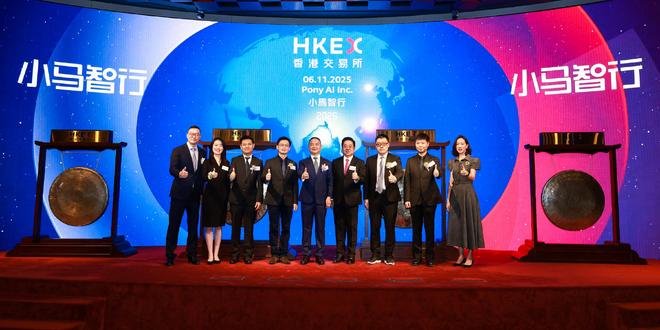
小马智行在港上市,中国AI迈入“定义时代”
Jing Ji Guan Cha Bao· 2025-11-07 02:05
Core Insights - Pony.ai, founded in 2016, is set to go public on the Nasdaq in 2024, followed by a listing in Hong Kong, indicating a global capital strategy and accelerated commercialization in the Robotaxi industry [1] - The company raised approximately HKD 7.7 billion, setting a record for IPO financing in the autonomous driving sector since 2022 and marking the largest listing in the AI sector on the Hong Kong market this year [1] - As the electric vehicle boom slows, the automotive industry in China is shifting from manufacturing-driven to intelligence-driven, with Pony.ai's growth path reflecting this transformation [1] Industry Evolution - The Chinese automotive industry has undergone three significant transitions, with the latest being the shift towards electrification and now intelligence, redefining competition metrics from mechanical attributes to cognitive capabilities [2] - The transition is not just an energy revolution but a cognitive revolution, where vehicles evolve from mechanical devices to computational platforms, emphasizing algorithms and data over traditional metrics [2] - This shift has led to a deep restructuring of the industry, moving the focus from mechanical manufacturing to artificial intelligence, providing fertile ground for new autonomous driving companies like Pony.ai [2] Market Positioning - Pony.ai's dual listing strategy in both the US and Hong Kong reflects its ambition to establish a comprehensive capital presence [3] - The Chinese AI industry is projected to exceed CNY 900 billion in 2024, growing by 24%, with autonomous driving becoming a key strategic focus [5] - The Chinese approach to autonomous driving emphasizes engineering organization and institutional integration, contrasting with the US focus on testing, positioning China as a leader in this field [5][6] Commercialization Efforts - Pony.ai's seventh-generation Robotaxi has achieved mass production and is operational in cities like Beijing, Guangzhou, and Shenzhen, demonstrating rapid commercialization capabilities [8] - The company has reduced the overall BOM cost of its systems by approximately 70%, making the Robotaxi's production cost close to commercial viability [11] - Pony.ai's strategy includes a gradual rollout of its Robotaxi services across major cities, with expectations of reaching breakeven as fleet size increases [11] Technological Advancements - The company's technology framework integrates perception, prediction, decision-making, and control into a unified software architecture, enhancing operational stability and safety [9] - Pony.ai's internal statistics indicate that its system's accident rate is about ten times lower than that of human drivers, showcasing significant safety improvements [9] - The modular design of its systems allows for adaptability across different vehicle models, reducing development costs and increasing efficiency in testing and certification [11] Global Expansion - Pony.ai's international operations in countries like South Korea, Luxembourg, and the UAE highlight its ambition to establish a global presence, aligning with China's strategy for high-end manufacturing and AI globalization [14] - The company is not just competing on price but is leveraging technological expertise and engineering execution to build trust in various markets [14] Conclusion - Pony.ai's listing in Hong Kong signifies a pivotal moment in the evolution of China's automotive industry, showcasing a shift from manufacturing to innovation and self-definition [15] - The future of autonomous driving will hinge on organizational capability and resilience, with companies that prioritize long-term strategies and engineering authenticity likely to succeed [15]

AI对决AI!金融科技打响AI欺诈攻防战
Jing Ji Guan Cha Bao· 2025-11-07 01:53
Core Insights - The rapid development of AI technology has led to the emergence of deepfake fraud techniques, posing significant risks to individuals and financial institutions [2][3] - Ant Group's digital technology team has identified new fraudulent methods involving phishing attacks that exploit personal information to bypass security measures [2][5] - Financial institutions are engaged in a continuous "AI vs. AI" battle, developing advanced algorithms to counteract increasingly sophisticated fraud techniques [3][6] Fraud Techniques - Fraudsters use phishing traps to impersonate banks, tricking victims into providing sensitive information [2][5] - New injection attacks allow criminals to hijack mobile devices and use deepfake images or videos to bypass identity verification [2][5] - Traditional fraud methods have evolved from simple presentations to more complex AI-generated manipulations [5][7] Defense Mechanisms - Financial technology companies are implementing defensive strategies by simulating fraud techniques to better understand and counteract them [6][7] - Algorithms are being developed to detect AI-generated images and assess their authenticity based on technical traces left by AI tools [7][8] - Multi-dimensional defense strategies are necessary, combining image recognition with system-level checks to prevent injection attacks [7][8] Application Scenarios - AI anti-fraud technologies are being integrated into various sectors requiring electronic identity verification, including banking, insurance, and e-commerce [8][9] - The Hong Kong Monetary Authority is facilitating AI fraud testing programs to help banks combat deepfake scams [8][9] - AI models are being trained using historical transaction data to enhance real-time fraud detection capabilities [12][13] Industry Collaboration - Financial institutions are collaborating with regulatory bodies to create a cross-bank fraud data exchange platform to share information on fraudulent activities [10][12] - The integration of AI in identity verification processes is being expanded to government services, enhancing security for public applications [11][12] - Companies like Dyna.AI are focusing on refining their models through compliance-driven data analysis to improve fraud detection accuracy [13]

从李诫到梁思成:关于《营造法式》的千年对话
Jing Ji Guan Cha Bao· 2025-11-07 01:52
Core Viewpoint - The article highlights the historical significance of Li Jie and his work "Yingzao Fashi," which established the foundation for ancient Chinese architectural standards and practices, influencing generations of architects and builders in China [4][5][6]. Group 1: Li Jie’s Background and Contributions - Li Jie, a prominent architect from the Northern Song Dynasty, was born into a family with a strong governmental background, which influenced his extensive knowledge in various fields [2][3]. - His career progressed through various positions in the government, ultimately becoming the head of the "Jiangzuo Jian," where he oversaw significant architectural projects, earning the trust of Emperor Huizong [3][6]. - The compilation of "Yingzao Fashi" was initiated to address the lack of standardized building practices during a period of extensive construction, aiming to reduce waste and corruption in the construction industry [5][6]. Group 2: "Yingzao Fashi" Overview - "Yingzao Fashi" is recognized as the first comprehensive manual on ancient Chinese architectural standards, consisting of 36 volumes and over 3,500 articles, detailing construction techniques and materials [5][7]. - The text was developed over approximately 20 years, with its final version completed in 1100, and it provided a unified standard for construction practices across the country [6][7]. - The manual emphasizes the importance of precise measurements and material usage, which were crucial for effective project management and reducing costs [7][8]. Group 3: Lasting Impact and Legacy - The principles outlined in "Yingzao Fashi" continue to resonate in modern architecture, as evidenced by the enduring appeal of historical structures like the Yellow Crane Tower and the Wooden Pagoda in Ying County [10][9]. - The text not only serves as a historical document but also as a practical guide for contemporary architects, revealing construction methods and design principles that are still relevant today [9][10]. - The rediscovery of "Yingzao Fashi" in the 20th century by architects like Liang Sicheng and Lin Huiyin marked a significant revival of interest in traditional Chinese architecture, leading to further research and documentation of ancient building techniques [15][19].
孩子有3特征,说明父母“关系不好”,很多人还以为是孩子的问题
Jing Ji Guan Cha Bao· 2025-11-07 01:52
Core Viewpoint - The article emphasizes that children's behavioral issues often reflect the state of their parents' relationship, suggesting that parents should reflect on their interactions and conflicts rather than solely attributing problems to the child [4][25]. Group 1: Signs of Parental Relationship Issues - Children displaying uncontrolled emotions and aggression may indicate underlying family tensions, as their behavior often mirrors parental conflicts [6][8]. - A child who frequently self-denies or feels responsible for parental arguments is likely internalizing the stress of the family environment, believing they are the cause of the discord [10][14]. - Sudden maturity or emotional detachment in children can signify they are trying to cope with family instability, often taking on adult-like responsibilities or withdrawing emotionally to protect themselves [17][20]. Group 2: Psychological Insights - The article references developmental psychology, noting that young children often attribute their parents' emotions to their own behavior, leading to feelings of guilt and self-blame [14][15]. - The concept of "little adult syndrome" is introduced, where children suppress their own needs to fulfill parental expectations, which can lead to emotional distress [17][18]. - The article concludes with a reminder that parents should examine their relationship dynamics, as children's issues often reflect the health of the family unit [23][25].
汇绿生态控股公司在马来西亚买地 拟用于光模块项目建设基地
Jing Ji Guan Cha Bao· 2025-11-07 01:51
Core Viewpoint - Huilv Ecology (001267) is making significant strides in its overseas optical module project, with recent developments including a land purchase in Malaysia for project construction [1][2]. Group 1: Project Developments - Huilv Ecology's subsidiary, Junheng Technology (Malaysia) Co., Ltd., signed a purchase agreement to acquire industrial land in Penang, Malaysia, for 24 million MYR (approximately 40.99 million RMB) [1]. - The acquired land spans a total area of 7,844.3 square meters, designated for the optical module project [1]. Group 2: Investment and Strategic Expansion - The company plans to establish a subsidiary in Singapore with Wuhan Junheng Technology Co., Ltd., with a total investment of 200 million RMB, where Huilv Ecology will hold a 70% stake [2]. - The Singapore subsidiary aims to fully fund a Malaysian subsidiary, which will serve as an overseas production base for optical communication products, including research, development, and sales [2]. - Huilv Ecology is diversifying into the optical module sector to create a "second growth curve" for its business, marking a strategic shift from its traditional focus on ecological environment construction [2]. Group 3: Market Response - On November 6, Huilv Ecology's stock closed at a limit-up price of 18.93 RMB per share, indicating positive market sentiment regarding the company's recent developments [3].
“有为政府+有效援助”见实效——“丝绸之路 光明之行” 墨玉站书写公益新篇
Jing Ji Guan Cha Bao· 2025-11-06 13:17
Core Insights - The "Silk Road Bright Journey" initiative successfully completed its 26th station in Moyu, Xinjiang, providing free cataract surgeries to 100 patients and conducting eye health consultations for 1,035 individuals over four days [1][2][4]. Group 1: Event Overview - The initiative was organized by the Shanghai Charity Foundation and the Moyu County People's Hospital, with support from various educational institutions and local government bodies [1][4]. - The program established a comprehensive service system encompassing screening, surgery, and training, allowing local residents to access high-quality medical services [1][4]. Group 2: Medical and Training Achievements - The event marked the first implementation of "day surgery" for ophthalmology at Moyu County People's Hospital, enabling patients to undergo pre-surgery checks and receive treatment on the same day [4]. - A training program was conducted for over 40 local healthcare workers, enhancing their professional skills through hands-on teaching and case discussions [4]. Group 3: Community Engagement and Support - The initiative included a health check program for military personnel, emphasizing the importance of mental and physical health for active and retired soldiers [5]. - The "Bright Journey" has evolved over 20 years from a medical aid program to a comprehensive public welfare platform, addressing various health issues and promoting social responsibility [5]. Group 4: Broader Impact - The initiative aims to root quality medical services in border areas, contributing to the goals of a healthy China and national unity [7]. - The collaboration between educational institutions and local resources fosters economic and social development in the region [6].
八年三闯关IPO,陕西文旅此番能否圆梦A股?
Jing Ji Guan Cha Bao· 2025-11-06 09:16
Core Viewpoint - Shaanxi Tourism is making a third attempt to go public on the A-share market, with its IPO application set for review on November 7, 2025, after a lengthy and challenging journey since 2017 [1][2]. Business Overview - Shaanxi Tourism's business structure includes tourism performances, cableway operations, and dining services, leveraging high-profile attractions like the Huaqing Palace and Mount Huashan [1][3]. - The company plans to raise approximately 1.555 billion yuan, primarily for various cableway projects and acquisitions [1]. Historical IPO Attempts - The company first attempted to list in 2017 but faced multiple setbacks, including halted reviews due to investigations into its accounting and legal advisors [2]. - After a brief revival in 2022, the company withdrew its application, leading to the current attempt in 2025 [2]. Revenue Composition - The main revenue sources are tourism performances and cableway operations, with the "Chang Hen Ge" performance significantly contributing to total revenue, increasing from 33.50% in 2022 to 57.63% in the first half of 2025 [3][4]. - Cableway revenue has seen a decline in its share of total revenue, dropping from 39.56% in 2022 to 29.51% in the first half of 2025 [4]. Performance Analysis - The company reported revenues of 2.32 billion yuan in 2022, increasing to 12.63 billion yuan in 2024, but faced a decline in 2025 due to extreme weather conditions [6]. - The net profit fluctuated, with a loss of 720.73 million yuan in 2022, followed by profits in subsequent years, but projected a loss of 371 million to 436 million yuan in 2025 [6][7]. Weather Impact - Extreme weather events in 2025, including cold waves and strong winds, have negatively impacted visitor numbers and operational capacity, leading to a projected revenue decline of 24.69% to 11.54% compared to 2024 [7]. - The company anticipates that adverse weather conditions will continue to affect its performance, particularly in winter months when snow can reduce visitor flow [7]. Long-term Challenges - The company faces structural challenges due to the nature of its mountain tourism operations, which are sensitive to climate conditions and have long product profitability cycles [8]. - The heavy asset nature of its operations requires significant upfront investment, with returns taking longer to materialize, posing risks if market demands are not accurately assessed [8].
我把“体育外卖”送上门
Jing Ji Guan Cha Bao· 2025-11-06 09:16
Core Viewpoint - The rise of "door-to-door sports coaching" is reshaping the sports training industry, driven by the demand for improving children's physical education scores for middle school entrance exams [4][12]. Group 1: Industry Overview - The "door-to-door sports coaching" model is gaining traction in various cities, with a focus on convenience and flexibility for families [3][4]. - The market is primarily driven by the need for children to improve their physical education scores, particularly in the context of middle school entrance exams [12][14]. - Companies like Beijing Leshi Sports Technology and others are establishing platforms to standardize and regulate the market, with thousands of coaches registered [10][14]. Group 2: Market Demand - Approximately 40% of the customer base seeks services specifically to improve physical education scores [12]. - The demand is particularly high among families with higher incomes who are willing to pay for convenience and professional training [10][14]. - The physical education scores can significantly impact a child's ability to gain admission to preferred high schools, making this service a "score protection" choice for parents [12][14]. Group 3: Business Models - Coaches operate on a flexible schedule, with earnings based on the number of classes taught, leading to variable monthly incomes [7][10]. - Companies are implementing a rating system for coaches based on performance and customer feedback, which influences their ability to secure future clients [10][14]. - The revenue model typically allocates 70% of earnings to coaches, with the remainder divided between the platform and partners [10]. Group 4: Challenges and Opportunities - The industry faces challenges such as the lack of formal recognition and stability for coaches, leading to high turnover rates among less experienced trainers [16]. - There is a growing recognition of the need for regulatory frameworks to provide basic protections for gig economy workers, including those in sports coaching [17]. - Future plans include offering insurance and retirement benefits for coaches to enhance job security and attract more qualified professionals [17].
对话“泡沫先生”朱宁:拥抱非线性时代的正确姿势
Jing Ji Guan Cha Bao· 2025-11-06 09:16
Core Insights - The article discusses the evolving understanding of bubbles and debt in the context of the current economic paradigm shift, emphasizing the need for sustainable debt management and market risk pricing [1][2][3] Group 1: Economic Risks and Market Dynamics - The global financial system faces three overlapping risks: debt leverage traps, asset bubble rigidity, and nonlinear shocks from technology finance, particularly AI [2][5] - The current tight funding environment in the U.S. is a result of a combination of policy expectations, fiscal constraints, and asset valuations, which increases volatility in global risk assets [3][4] - The U.S. stock market is at historically high valuations, raising concerns about potential corrections that could impact global innovation and risk asset performance [5][6] Group 2: China's Economic Outlook - Despite global uncertainties, China's market shows relative attractiveness due to improvements in stock market expectations and structural economic transitions [7][8] - The Chinese economy is undergoing a painful but necessary process of clearing out systemic costs, which could create space for new productive forces [7][8] - The Chinese government is focusing on high-quality growth through technological innovation, expanding domestic demand, and enhancing social welfare [8] Group 3: Investment Strategies and Recommendations - Investors are advised to adopt extreme diversification and to be aware of the inherent risks in the current market environment, particularly regarding AI-related assets [19][20] - The article suggests that the next significant market volatility may occur in the U.S. stock market, driven by high valuations and structural weaknesses [20]