
Jing Ji Guan Cha Bao

Search documents
进博会消费观察|康维他六赴进博,开启“鎏金时刻”
Jing Ji Guan Cha Bao· 2025-11-08 15:43
Core Insights - Comvita, a leading brand of New Zealand Manuka honey, has participated in the China International Import Expo (CIIE) for the sixth consecutive year, showcasing its immersive exhibition themed "Golden Moments" [1][2] - The company emphasizes its commitment to quality control, with a full traceability system from honey source to finished product, and rigorous testing to ensure the potency of its Manuka honey [1] Company Overview - Comvita is a founding member of the Unique Manuka Factor Honey Association (UMFHA) and has cultivated third-generation Manuka trees to enhance honey quality over decades [1] - The company has a certified laboratory that meets both IANZ and MPI standards, ensuring the UMF value of its honey is accurately measured [1] Product Highlights - At this year's expo, Comvita presented its flagship product, UMF29+ Manuka honey, which is the highest UMF value product the company has offered to date [2] - Each batch of Comvita Manuka honey undergoes 34 tests before leaving the factory, ensuring sufficient active ingredient content and stability throughout its shelf life [1] Market Strategy - Comvita views the CIIE as a vital platform for deepening its integration with the Chinese market, recognizing the growing demand for high-quality natural health products [2] - The CEO of Comvita, Karl Gardon, highlighted the company's commitment to sustainable development and its role as a long-term partner in promoting healthy lifestyles for Chinese consumers [2]
进博会消费观察|阿拉福兹深耕“健康与美味”
Jing Ji Guan Cha Bao· 2025-11-08 15:43
Core Insights - Arla Foods showcased its commitment to innovation by launching three globally debut products at the China International Import Expo, highlighting its focus on health and taste integration for Chinese consumers [1][2] - The company is experiencing strong growth in its "Arla Baby & Me" infant formula series, particularly with its cross-border HMO products and organic A2 offerings [1] Product Launches - Arla introduced Cocio coconut-flavored chocolate milk, which contains only four ingredients and has a calorie count of 76 per 100ml, appealing to health-conscious consumers [1] - Two new cream cheese products were launched in 50g packaging to help consumers control portion sizes [1] Market Strategy - Arla plans to expand its cross-border and large trade channels in China, focusing on early life nutrition products [2] - The company will upgrade its "Arla Baby & Me" series with six core HMO formulas in early next year and continue to enhance its organic product offerings in the offline large trade channel [2]
进博会观察 | 转化中国技术服务世界市场,日立希望在华“协创”
Jing Ji Guan Cha Bao· 2025-11-08 12:29
Group 1: Company Strategy and Innovations - Hitachi's advantage lies in integrating technology with domain knowledge to transform social infrastructure, focusing on combining advanced Chinese technology with Hitachi's expertise [1] - At the China International Import Expo, Hitachi showcased a robot for elevator services that utilizes its expertise in elevator safety standards and incorporates advanced environmental perception and autonomous movement technologies from Chinese robotics companies [1] - Hitachi Energy operates in over 140 countries, providing power equipment to 3 billion people, and has been deeply engaged in the Chinese market for over 40 years while also collaborating with Chinese clients to explore overseas markets [2][4] Group 2: Market Trends and Demand - The global demand for electrical equipment is surging due to energy transition, with clean energy replacing traditional sources and increasing electricity needs driven by electric vehicles and data center construction [5] - China leads globally in clean energy installed capacity and has the most developed power transmission network, with over 50% of domestic electric vehicles and more than 8 million data center racks [5] - Europe is pushing for energy transition through offshore wind power, necessitating specialized electrical equipment, with China being the largest manufacturer of wind power equipment [6] Group 3: Technological Developments - Hitachi Energy has developed a dry-type transformer for offshore wind projects to reduce operational costs and enhance equipment reliability, successfully implemented in a project by Huaneng [6] - The company is also leveraging flexible direct current technology to transmit variable current from offshore wind turbines to the mainland [6] - In the hydrogen sector, Hitachi Energy plans to collaborate with Chinese manufacturers to develop electrical equipment suitable for hydrogen production [6]

出口收款账期拉长了
Jing Ji Guan Cha Bao· 2025-11-08 10:51
Core Viewpoint - Increasing requests from overseas clients to extend payment terms to 90-120 days are causing significant challenges for foreign trade enterprises, leading to concerns over cash flow and potential defaults [1][2][3] Group 1: Payment Term Changes - Approximately 20% of overseas clients are now requesting extended payment terms, a situation that has never been encountered in the past 20 years of foreign trade experience [1][3] - The reasons cited by clients for extending payment terms include macroeconomic fluctuations, decreased consumer spending, and geopolitical risks affecting local economies [2][3][4] Group 2: Impact on Cash Flow - Extended payment terms are creating cash flow pressures for foreign trade companies, forcing them to use personal savings to cover supplier costs [6][8] - Companies are facing the risk of significant profit loss if clients default on payments, with some indicating that a few defaults could consume an entire year's profit [2][6] Group 3: Industry Response - Many foreign trade enterprises are exploring strategies to mitigate risks, such as offering discounts for early payments or requiring higher upfront deposits [6][7] - Some companies are also considering legal measures and contract adjustments to protect against potential defaults [10][11] Group 4: Financing Challenges - Banks are tightening lending criteria in response to the increased risk of payment defaults, making it harder for companies to secure trade financing [9][10] - Companies are attempting to use export credit insurance to hedge against payment risks, but face challenges due to clients' lack of credit ratings [10][11]
毁掉一个孩子最快的方式,只要不停地做5件事
Jing Ji Guan Cha Bao· 2025-11-08 05:21
Group 1 - The article discusses how seemingly trivial behaviors of parents can gradually harm their children [2][3] - It emphasizes the importance of understanding the impact of parental actions on children's self-worth and development [4][5] Group 2 - Continuous nagging and criticism from parents can lead to children feeling a lack of self-worth and may result in rebellious or overly submissive behavior [3][4][5] - Parents should adopt a more empathetic communication style, focusing on listening and understanding rather than lecturing [6] Group 3 - Excessive demands from parents, regardless of the significance of the issue, can strip children of their sense of autonomy and intrinsic motivation [7][8][9] - Healthy parenting involves allowing children to make choices and learn from their experiences [10][11] Group 4 - Comparing children to others can lead to feelings of inadequacy and the development of impostor syndrome [12][13][14] - Parents should focus on recognizing and celebrating their children's unique strengths and progress [14] Group 5 - Keeping children indoors for extended periods can hinder their physical and mental development [15][16][17] - Outdoor activities and social interactions are crucial for children's growth and well-being [18] Group 6 - Parents often impose adult perspectives on children, which can limit their self-exploration and growth [19][20][21] - Respecting children's individuality and allowing them to explore their interests is essential for their development [22]
追溯高价山姆
Jing Ji Guan Cha Bao· 2025-11-08 03:46
Core Insights - The price difference between Sam's Club and Walmart for similar products is raising concerns among members, with approximately 25% of sampled items priced higher at Sam's Club [1][4][6] - Sam's Club's traditional value proposition of "good products at low prices" is being questioned as members compare prices across platforms [2][3] - The strict supplier selection process that once supported Sam's Club's reputation for quality is facing challenges as pricing pressures increase [6][8] Pricing Discrepancies - A specific example shows a Clarins Double Serum priced at 699 yuan at Sam's Club, while the same product is available for 599.31 yuan on Walmart's platform, indicating a price difference of 99.69 yuan [3][4] - An analysis of 40 products revealed that about a quarter had lower prices on Walmart's platform compared to Sam's Club, with price differences ranging from a few cents to 50 yuan [4][5] - Price competition is weakening for Sam's Club, as some products are found to be cheaper on other platforms, such as a 24-pack of tea priced at 59.9 yuan at Sam's Club compared to 52.29 yuan on Taobao [4][6] Supplier Dynamics - The pressure to maintain both quality and low prices is shifting the balance for suppliers, with some feeling the strain and choosing to exit the Sam's Club system [8][10] - Suppliers must navigate a rigorous selection process to become part of Sam's Club's supply chain, which includes a comprehensive evaluation of various factors [6][7] - The increasing emphasis on low prices has led to a broader selection of suppliers, with some lower-quality brands entering the system due to competitive pricing [8][10] Membership and Expansion - Sam's Club has seen significant growth in membership, with approximately 900,000 paying members and plans to continue expanding its store presence in China [9][10] - The rapid increase in store numbers necessitates a larger supply chain, leading to ongoing adjustments and evaluations of suppliers [10][11] - The membership fee structure, which ranges from 260 to 680 yuan annually, is designed to attract middle-class consumers seeking quality and value [6][9]
马桥文化:长三角考古学文化的余响
Jing Ji Guan Cha Bao· 2025-11-08 02:14
Core Viewpoint - The article discusses the archaeological significance of the Maqiao culture in the Yangtze River Delta, highlighting its historical context and cultural characteristics as the last recognized archaeological culture in the region before the emergence of historical cultures like Wu and Yue [2][10]. Summary by Sections Discovery and Excavation - The Maqiao site was discovered in the late 1950s during the Great Leap Forward, with significant findings including various pottery and stone tools [3][4]. - The first scientific excavation was conducted by a small team of archaeologists, marking the beginning of scientific archaeology in Shanghai [3][4]. - Subsequent excavations revealed a stratified cultural layer, confirming the presence of Maqiao culture alongside earlier cultures like Liangzhu and Wu-Yue [4][5]. Cultural Characteristics - The Maqiao culture is characterized by its unique artifacts, including pottery, stone tools, and early bronze items, with a notable absence of high-grade jade artifacts [8][11]. - The culture reflects a transition from the advanced Liangzhu culture to a more primitive state, influenced by environmental changes and cultural exchanges with neighboring regions [10][11]. - The pottery from Maqiao culture includes various types such as red pottery and impressed pottery, showcasing a diversity of forms and decorative techniques [8][9]. Historical Context - The Maqiao culture dates back approximately 3,900 to 3,200 years, placing it in the early to mid Shang Dynasty, and is considered part of the Bronze Age cultural landscape of the Taihu basin [5][10]. - The findings suggest a decline in agricultural practices and a shift in subsistence strategies, with hunting becoming more prominent compared to earlier periods [10][11]. - Recent discoveries indicate the existence of urban settlements associated with Maqiao culture, challenging previous notions of its societal structure [12]. Archaeological Impact - The excavation of the Maqiao site has significantly advanced the understanding of Shanghai's historical timeline, suggesting human habitation as far back as 6,000 years ago [12]. - The research conducted at Maqiao has contributed to the broader understanding of cultural development in the Yangtze River Delta, emphasizing the importance of archaeological evidence in reconstructing historical narratives [12].
从“囤货”到“淘新”,双11进口消费风向开始变了
Jing Ji Guan Cha Bao· 2025-11-07 14:01
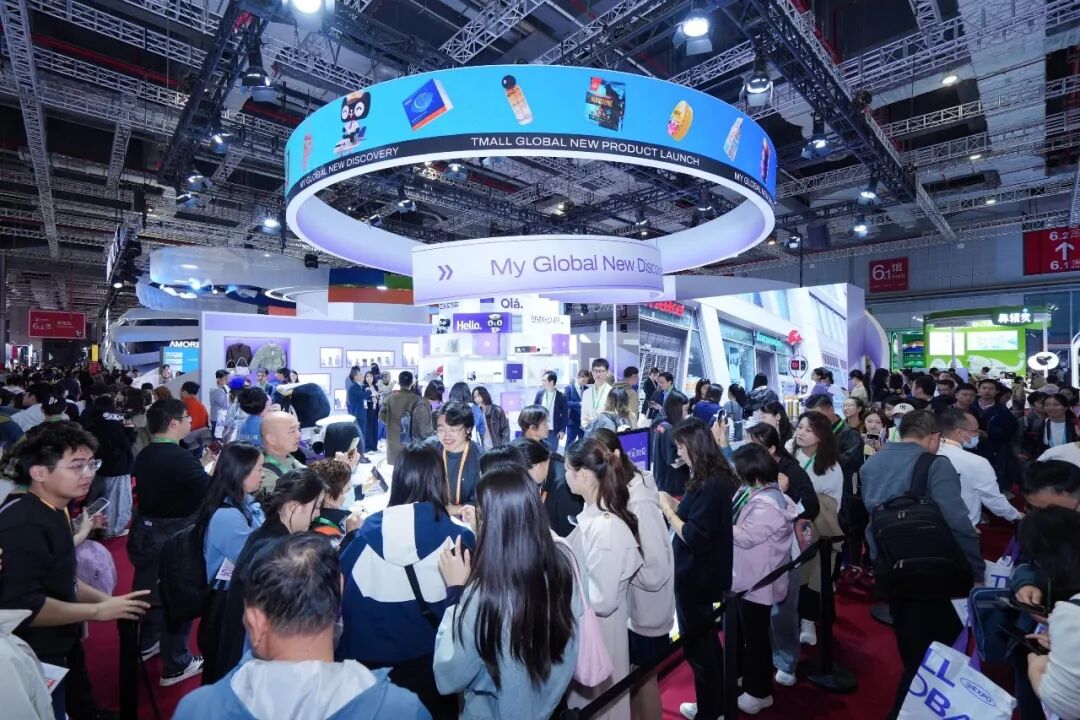
Core Insights - The article highlights the acceleration of import consumption upgrades in China, particularly during the "Double 11" shopping festival and the China International Import Expo, indicating a shift from bulk discount purchases to a focus on quality and specialized experiences [2][3]. Group 1: Import Consumption Trends - Import consumption is showing strong resilience and vitality, with 927 imported brands doubling their sales compared to last year, and 9 brands surpassing 100 million in sales [2]. - Consumers are moving from "stockpiling" to "trying new" products, with a willingness to pay for niche brands and specialized functions, indicating a shift in purchasing behavior [3][9]. - The demand for high-quality products is increasing, with significant growth in categories like oral anti-aging products, which saw a sales increase of 353% during "Double 11" [3][4]. Group 2: Consumer Behavior Changes - Consumers are becoming more knowledgeable about product ingredients and formulations, leading to a demand for scientifically-backed content from brands [4]. - The beauty and personal care sector is witnessing a rise in niche products, with scalp care products growing by 98% and specific brands like Gotukola and MY.ORGANIC achieving over 400% growth [4][10]. - The trend of "scientific nutrition" is emerging in the pet care market, with brands like VERSELE-LAGA seeing success due to a shift in consumer awareness [6]. Group 3: Market Dynamics and Brand Strategies - The integration of the China International Import Expo with "Double 11" has created a rapid "new product access chain," allowing over 100 global new products to launch simultaneously [7]. - Brands are required to establish a streamlined process for research, compliance, and market entry, enhancing operational efficiency [7][8]. - The shift from price competition to value consumption is evident, with 57% of consumers willing to pay for emotional value, reflecting a deeper market transformation [9][10]. Group 4: Future Growth Potential - The Chinese market is seen as a rapid growth engine for global brands, with the ability to turn innovative products into popular items within weeks [10]. - As "quality," "professionalism," and "individuality" become core themes in import consumption, the next growth curve for global brands is quietly unfolding in China [10].
双11文创酒破局:剑南春以文物活化重构白酒高端叙事
Jing Ji Guan Cha Bao· 2025-11-07 12:31
Core Insights - The Chinese liquor industry is transitioning from a "price war" to a "cultural war," with a focus on cultural experiences rather than just product functionality [1][2] - Jian Nan Chun is pioneering a new cultural competition track in the high-end liquor market through its cultural liquor strategy, particularly with its zodiac liquor series [1][2] Industry Trends - The annual Double 11 shopping festival is evolving from a simple price-cutting event to a platform for brand culture display and new product launches [1][2] - There is a strong consumer purchasing intent for high-end liquor, particularly for year-end gifting and family gatherings, leading to a surge in inventory preparation [1][2] Company Strategy - Jian Nan Chun has successfully launched zodiac and cultural liquors during major promotional events for three consecutive years, transforming Double 11 into a "Cultural New Product Day" [2][3] - The company has introduced the "Bing Wu Ma Nian" zodiac liquor, which is part of a collaboration with the National Museum of China, creatively integrating historical artifacts into its product design [3][4] Product Details - The "Bing Wu Ma Nian" zodiac liquor is limited to 30,000 bottles with a suggested retail price of 1,099 yuan per bottle, enhancing its scarcity and collectible value [3] - Jian Nan Chun's previous cultural product, "Jian Nan Chun·Liu Jin Ji," was also released in a limited edition of 20,000 bottles, showcasing the company's strategy of creating exclusive offerings [3] Cultural Integration - Jian Nan Chun's cultural practices redefine the "cultural premium" of liquor, emphasizing the importance of cultural depth and brand heritage in the competitive zodiac liquor market [5][7] - The design of the zodiac liquor incorporates cultural symbols and aesthetic values, enhancing brand recognition and consumer engagement [6][8] Market Positioning - Jian Nan Chun's approach to cultural integration provides a new perspective on defining "cultural premium" in the liquor industry, focusing on brand value and cultural positioning [7][9] - The company has established a narrative system that combines Tang Dynasty culture, artifact activation, and contemporary aesthetics, creating a unique brand identity [8][9]
进博会消费观察|达能加码成人专业营养布局
Jing Ji Guan Cha Bao· 2025-11-07 06:52
Core Insights - Danone showcased multiple adult nutrition products at the 8th China International Import Expo, including the newly launched probiotics series for elderly gut health and specialized nutrition for cancer patients [1][2] - The company is expanding its investment in China, with a new production facility in Wuxi aimed at enhancing the capacity for enteral nutrition solutions, catering to clinical and rehabilitation needs [2] Group 1 - Danone's participation in the expo highlights its commitment to the adult medical nutrition sector, featuring products like Souvenaid for early Alzheimer's and other recovery-focused nutrition solutions [1] - The new products are set to enter the Chinese market and are designed to meet the growing health demands domestically while also being exported to nearly 30 countries [2] Group 2 - Danone's President for China, North Asia, and Oceania emphasized that China is the company's second-largest market globally and a key area for its "Renewed Danone" strategy [2] - The company aims to leverage research innovation and advanced manufacturing to enhance its offerings and contribute to high-quality development in Chinese society [2]
