
Zhong Guo Qing Nian Bao

Search documents
四川启动“和美五粮·筑梦远航”公益品牌项目
Zhong Guo Qing Nian Bao· 2026-02-02 09:56
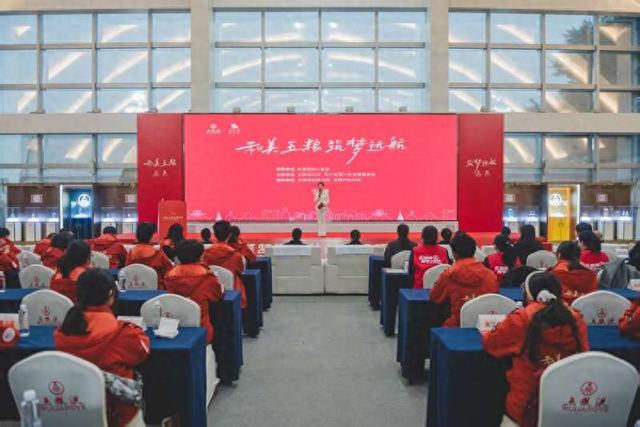
Group 1 - The "He Mei Wu Liang · Dream Sailing" public welfare brand project was launched in Yibin, Sichuan, aimed at providing support for 300 high school students [1][3] - The project will select 300 academically excellent and economically disadvantaged first-year high school students from 10 schools in Sichuan, offering them three years of financial assistance [3] - A volunteer service team composed of employees from Wuliangye Company will partner with the project schools to provide academic tutoring, personal growth support, and career planning for the students [3] Group 2 - The project aims to create a public welfare brand that is impactful, effective, and warm, adhering to the donor's intentions and management norms [3]


中方:要求美方立即停止对中国企业人员的无端盘查
Zhong Guo Qing Nian Bao· 2026-02-02 09:09
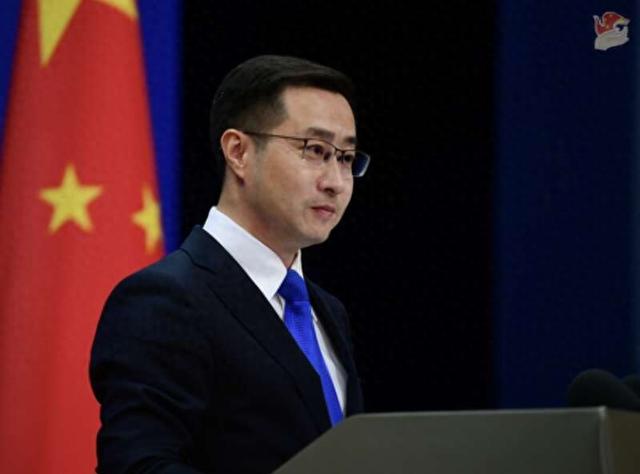
中国青年报客户端北京2月2日电(中青报·中青网记者 国新冠)针对近期有中国企业人员入境美国时遭 美方无端盘查、扣留近60小时并被遣返,中国外交部发言人林剑2月2日在例行记者会上应询表示,中方 敦促美方严肃认真对待中方关切,要求美国执法部门立即停止错误行径,停止对中国企业人员的无端盘 查,切实落实两国元首重要共识,保障两国人民正常友好交流。中方将继续采取坚决有力措施,坚定维 护中国公民的正当合法权益。 言人林剑。图片来自外交部 "近期,美方执法部门多次对中国企业人员进行长时间无理盘查、扣押并遣返,执法手段粗暴,严重侵 犯中国公民的正当合法权益,严重破坏两国正常的商务交流合作和人文交往氛围,与两国元首釜山会晤 关于加强经贸领域合作的共识严重不符。"林剑表示,中方对此强烈不满、坚决反对。 来源:中国青年报客户端 外交部发 ...
中国青年报:海南自贸港封关后的首个春运“大考”
Zhong Guo Qing Nian Bao· 2026-02-02 08:06
海南自贸港封关后的首个春运"大考" 司机无需下车,即可"无感通关" 《中国青年报》 (2026年02月02日 01版) 春运期间,为维护良好的过海秩序,琼州海峡执行"小车提前购票、货车预约过海、提前不超两小 时进港"制度。"此前货车离岛要到港口去买票,现在增加了预约功能,专门设置预约服务点。货车轿车 还实行分流,更好管控,也更便利了。"王培泽说,"集中查验场应对过2025年台风停航的紧急情况,我 们有足够的经验和能力保障好集中查验场的首次春运。" 王培泽介绍:"集中查验场占地800亩,1-7号是普通货车安检通道。8-9号是海关查验通道。预留的 10-16号通道,会根据未来的业务量情况分配。" "通关时效最慢2分48秒,最快的30多秒。"1月30日上午,海口新海港和南港"二线口岸"(货运)集 中查验场,一辆货车紧接着一辆通过查验通道内的大型安检机器,道闸打开后即驶向不远处的海口新海 港和南港待渡出岛。 海口产投集团下属恒港公司运营管理部部长王培泽在货车查验通道旁向记者介绍查验过程:"货车 通过安检通道,就像做了一次CT,司机不需要下车,做到了'无感通关'。" 2026年春运于2月2日拉开帷幕,为期40天。这是海 ...
草原铁路预计春运发送旅客447.5万人次
Zhong Guo Qing Nian Bao· 2026-02-02 07:44
Core Insights - The 2026 Spring Festival travel season has officially begun, with the China Railway Hohhot Bureau Group Co., Ltd. expecting to send 4.475 million passengers, averaging 112,000 passengers per day, representing a 5% year-on-year increase [1] Group 1: Passenger Flow and Trends - The pre-festival passenger flow peak is anticipated from February 12 to February 15, while the post-festival peak is expected from February 21 to February 24 [1] - Due to the late timing of the Spring Festival this year, the pre-festival flows of students, migrant workers, and family visits are relatively dispersed, while the post-festival flows will overlap, leading to greater capacity pressure [1] - Popular travel routes include high-speed trains to Beijing, as well as destinations such as Northeast China, Shanghai, Guangzhou, and Chengdu, with new routes emerging due to the opening of the Baotou-Yinchuan high-speed railway [1] Group 2: Services and Initiatives - The Hohhot Railway Bureau has introduced several convenience measures during the Spring Festival, including silent carriages on high-speed trains, pet transportation services, and multi-functional charging seats at major stations [2] - Additional services include luggage storage and delivery, a "silver hair service window" at Baotou Station with stationed doctors, and the introduction of VR equipment at Ordos Station for travelers to learn about station services and nearby attractions [2] - A total of 182 volunteers are participating in Spring Festival services to enhance passenger experience [2] Group 3: Cultural Activities - On the first day of the Spring Festival travel season, Hohhot East Station hosted a cultural event themed "Culture into Thousands of Homes, Warm Journey Home," featuring performances and activities aimed at enriching the travel experience [5] - Activities included calligraphy demonstrations, book giveaways, and educational sessions on Inner Mongolia's history and natural sciences conducted by museum staff [5] - Similar cultural initiatives are being carried out at other stations such as Baotou, Ordos, and Bayannur, providing travelers with blessings for their journeys [5]
如何让科普点燃“精神火花”?天津大中小学“组队”作答
Zhong Guo Qing Nian Bao· 2026-02-02 02:13
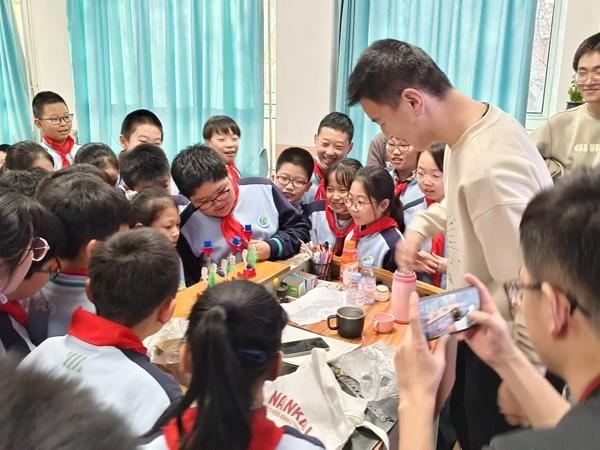
Core Viewpoint - The article highlights the integration of science popularization and ideological education in Tianjin's primary and secondary schools, showcasing how university students engage with younger students to foster scientific curiosity and national spirit through hands-on experiments and storytelling [4][11]. Group 1: Science Popularization Activities - University students from Tianjin University of Commerce and Nankai University are conducting science experiments for middle and primary school students, such as assembling air-powered rockets and demonstrating optical phenomena [3][5]. - The "Science and Ideology" initiative aims to convey scientific knowledge while instilling values like innovation and patriotism among students [4][11]. - Events like the "Hand-Brain Sports Meeting" at Tianjin Yuhua Middle School encourage students to engage in scientific exploration through practical tasks [9]. Group 2: Educational Impact and Methodology - The approach emphasizes experiential learning, where students not only learn scientific concepts but also the stories of China's scientific achievements, enhancing their understanding and appreciation of science [5][12]. - The integration of ideological education into science classes is seen as a way to subtly instill values without being didactic, making the learning process more engaging [6][11]. - The curriculum encourages university students to simplify complex scientific concepts for younger audiences, which in turn deepens their own understanding [6][12]. Group 3: Institutional Support and Development - The Tianjin Science Popularization Ideology Research Association has been established to support the integration of science and ideological education across various educational levels [11]. - The initiative has received significant participation, with 272 project proposals submitted for research and practical applications in science education [8]. - Collaborations with experts, such as academicians, enhance the credibility and impact of the science popularization efforts [8][10].
新春走基层 | 司机无需下车,即可“无感通关”
Zhong Guo Qing Nian Bao· 2026-02-02 02:06
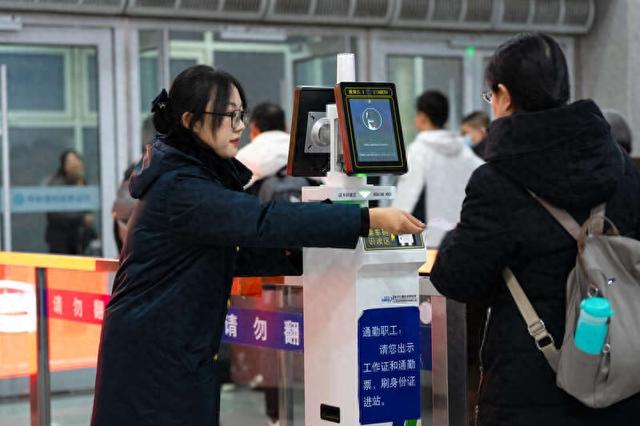
Core Insights - The article discusses the operational efficiency and enhancements at the Haikou New Port and South Port, particularly focusing on the newly established centralized inspection area that facilitates cargo inspections and streamlines the transportation process during the 2026 Spring Festival travel season [1][2]. Group 1: Operational Efficiency - The centralized inspection area is the only shared cargo inspection facility in the country, handling over 75% of Hainan's cargo and express mail inspection tasks, and is crucial for the operation of the Hainan Free Trade Port [1][2]. - The inspection process allows trucks to pass through security without the need for drivers to exit their vehicles, achieving a "no-sense customs clearance" experience [1]. - Daily traffic through the new inspection area is over 2,500 trucks, with peak periods expected to reach 3,000 to 4,000 trucks, supporting an annual capacity of 1.72 million vehicle trips and 44 million tons of cargo [3]. Group 2: Spring Festival Travel Impact - During the Spring Festival, it is anticipated that over 4.66 million passengers and more than 1.17 million vehicles will travel through the Qiongzhou Strait, representing a year-on-year increase of 12% and 10%, respectively [2]. - The centralized inspection area has implemented a "separate waiting and flow management" model for passenger and cargo vehicles to optimize traffic flow and reduce congestion on main roads [3]. Group 3: Facilities and Services - The "Driver's Home" facility at the inspection area spans 800 square meters and includes dining areas, restrooms, and entertainment options, accommodating over 200 people at a time [4]. - The facility provides amenities such as 24-hour hot water, shower facilities, and laundry services, enhancing the experience for long-haul drivers [4]. Group 4: Passenger Experience - The new security measures at the Haikou New Port have improved the overall travel experience for passengers, with stricter checks ensuring identity verification alongside ticketing [5]. - The port is expected to operate 53 vessels during the Spring Festival, with a daily capacity of 31,000 vehicles and 200,000 passengers, supported by an increase in staff and facilities [5][6].
既要努力也要从容: 从传统文化视角理解网络流行语里的“行动”
Zhong Guo Qing Nian Bao· 2026-02-02 01:09
过去一年中,"助我破鼎"在评论区里刷屏,"千百次练习只为这一刻"被贴在备考笔记的扉页,"如何 呢,又能怎"成了深夜聊天时的口头禅,穿搭博主的"下身基础,上身不基础"被网友改写成"过程基础, 结果不基础"……这些围绕"行动"的流行表达在青年群体中频繁出现,进入学习、求职、职场与日常生 活的多个场景。它们有的在鼓劲,有的在自嘲,有的在提醒自己保持节奏,有的在用一句反差句式重新 定义重点。这些围绕"行动"展开的网络表达,在反复被使用、改写和传播的过程中,成为青年理解自身 处境的话语方式。在数字技术深度渗透、社会节奏持续加快的今天,青年的"行动"表达呈现出既要把事 情往前推,也要把心态稳住的交织状态。 传统行动观亦始终关注节奏与分寸。类似于"如何呢"背后的从容感之所以频繁出现在当代青年的表达 里,往往不是因为事情不紧,而是因为事情太紧。急到一定程度,继续加码不再提升效率,反增耗损。 《论语》一句"过犹不及"说得很直白:过头的用力与不足的用力,结局常常一样,都走不到想去的地 方。《中庸》进一步把这种分寸感提炼为"中"与"和",节奏感本身就是能力。从这个角度看,青年 在"努力"和"松弛"之间寻找平衡,实质上是在对行动节奏 ...
青年早新闻|2026 年春运今日开启!这些自驾/铁路/民航实用实信息请收好
Zhong Guo Qing Nian Bao· 2026-02-02 01:06
今天是2月2日,星期一,中国青年报"青年早新闻"来了——"青年关注、关注青年"! 几分钟速览最新热点,带你走近"宝藏学校"、触达"青春团讯"、学习"榜样人物"、了解"服务动态"。 2026年春运今日开启 这些实用信息出行必看 2026年春运今日开启,全社会跨区域人员流动量预计将达95亿人次,创历史新高。今年春运服务有何新 举措?出行需要关注哪些细节?这份实用指南请收好。 2月1日, 北京西站候车室,乘客排队陆续通过检票口。中青在线记者 陈思阳/摄 自驾出行 春节假期高速免费 2月15日0时至2月23日24时农历腊月二十八至初七,全国高速公路将对七座及以下小型客车免收车辆通 行费。 图片来 源:央视新闻 电动汽车充电保障 截至2025年底,我国电动汽车充电设施已累计超过了2000万个,全国高速公路服务区已建成电动汽车充 电枪7.15万个。 铁路出行 2026年春运,全国铁路预计发送旅客5.4亿人次。全国铁道团委统计数据显示,1.8万余名青年志愿者将 在527个客运车站、7014个志愿服务点集中上岗,为广大旅客提供信息咨询、客流引导、设备使用协 助、文明宣传等服务。 春运期间,京广、京沪、沪昆等主要高铁干线通道开 ...

硕士生教育该如何定位
Zhong Guo Qing Nian Bao· 2026-02-02 00:14
编者按 硕士研究生教育既是培养高层次创新人才的阵地,也是学子实现自我提升、奔赴理想的路径。近年来, 考研热成为社会热议话题,与之相伴的是研究生教育质量、人才培养定位等相关议题被广泛关注,本文 从多个维度提供了专业分析与理性思考。 --------------- 其次,许多硕士生还面临"研究生"与"就业预备生"之间的身份矛盾。这种张力反映的"学生性"与"职业 性"冲突本来并非对立关系,而是阶段性共生的身份属性,矛盾根源在于二者的评价标准与时间分配存 在差异。当前,我国硕士生教育从"增量扩招"逐步转向"结构优化""分类培养",学术型硕士招生计划趋 于稳定、专业型硕士招生比例持续提升,加之专业学位硕士培养周期的延长、学费标准的提高,这些因 素显著增加了考研的投入成本,也已深刻影响考生的报考动机。 华中师范大学测量与评价研究中心开展的调研显示,学生报考研究生的主要动因正由"学历提升"转 向"职业发展",实践经验与综合能力在就业竞争中的作用进一步凸显。55.87%的本科生将"攻读研究 生"作为主要毕业选择之一,51.4%倾向于直接就业,另有23.24%的学生计划报考公务员或事业单位, 6.7%的学生考虑出国深造。 面向 ...
考研不再是“默认选项”,如何更好抉择
Zhong Guo Qing Nian Bao· 2026-02-02 00:14
近年来,考研报名人数自2023年达到峰值后,呈现连续下降态势,引发社会各界持续关注。考研报名人 数下降这一现象,既是高等教育提质扩容与劳动力市场供需进入新阶段的直观反映,也是大学生群体升 学心理调整与择业价值观变迁的表现。在当前高校毕业生人数逐年递增而就业形势日益严峻的情况下, 把握大学生考研心态变化趋势,进行多层次、多方面、多渠道的有效引导,助力大学生理性抉择考研与 就业方向,已成为高校学生工作的重要课题。 从盲从到理性:大学生考研心态的结构性变化 目前大学生考研心态变化呈现出以下几个趋势: 一是考研盲从心理明显消退。2019年年末至2022年,新冠疫情对我国经济发展和社会生活造成显著冲 击。在就业市场承压、出国留学受到影响的情况下,大批高校毕业生转向备考研究生。2023年以来,各 行各业在经济复苏过程中释放大量就业岗位,为高校毕业生提供了更广阔的择业空间,出国留学也不再 受到限制。众多原本因就业岗位选择受限而被动加入考研的学生,得以依据自身兴趣与职业规划,更为 主动地选择就业或出国留学。 构建多元协同引导体系,让大学生理性决策 在人工智能快速发展、高等教育普及化推进、社会劳动结构深度变革的时代背景下,构建 ...