
Zhong Guo Chan Ye Jing Ji Xin Xi Wang

Search documents
实施自贸试验区提升战略全面建设改革开放新高地
Zhong Guo Chan Ye Jing Ji Xin Xi Wang· 2025-07-13 22:45
Group 1 - The core viewpoint of the articles emphasizes the importance of Free Trade Zones (FTZs) in China's reform and opening-up strategy, highlighting their role as experimental fields for institutional innovation and economic development [1][2][3] - The Chinese government has established 22 FTZs, creating a comprehensive reform and opening-up innovation pattern that covers various regions, including coastal, inland, and border areas [1] - FTZs have introduced significant institutional innovations, such as the first foreign investment negative list and the first cross-border service trade negative list, showcasing their pioneering role in reform [1] Group 2 - There are existing constraints in the reform exploration within FTZs, necessitating deeper reforms to grant them greater autonomy, allowing businesses to innovate and adapt freely [2] - The core mission of FTZs is to generate replicable and promotable institutional innovation results, linking new open measures and institutional innovations with industrial development [2] - The implementation of the FTZ enhancement strategy is crucial for exploring new paths for high-level opening-up and accumulating new experiences for comprehensive deepening of reform [3]
四川乐山坚持“四个聚焦” 护航渔业高质量发展
Zhong Guo Chan Ye Jing Ji Xin Xi Wang· 2025-07-13 22:41
Core Viewpoint - The article emphasizes the high-quality development of the aquatic industry in Leshan, Sichuan Province, through the implementation of a "big food concept" and a focus on green transformation, leading enterprises, smart development, and enhancing the industrial chain efficiency [1] Group 1: Industry Development - In the previous year, Leshan's total aquatic product output reached 146,500 tons, with a total fishery economic output value of 4.089 billion yuan [2] - Key species leading the province include Longfin Mullet at 15,600 tons, Catfish at 31,700 tons, and Carp at 23,000 tons [2] - The city is optimizing the structure of "famous, special, and superior" varieties and innovating aquaculture models to improve breeding efficiency [2] Group 2: Infrastructure and Technology - The city has established 30 facility aquaculture pilot projects, including land-based circular pools and factory-based recirculating water systems, covering a water body of 195,000 cubic meters [3] - Financial investments of 120 million yuan have been made to integrate resources and cultivate new business entities, resulting in the emergence of several high-value production entities [3] Group 3: Environmental Sustainability - Leshan has implemented a comprehensive aquaculture planning document to regulate production and establish designated breeding zones [4] - The city has invested 43.235 million yuan in projects aimed at improving water quality and ecological conditions, including the management of tailwater from 56,000 mu of ponds [4] Group 4: Economic Impact on Local Communities - The city has facilitated the transfer of 28,000 mu of land for large-scale pond aquaculture, benefiting over 12,000 households and generating an annual rental income of 25 million yuan [5] - Employment opportunities have been created for 5,678 individuals in fishing and breeding activities, with average annual earnings of 48,000 yuan and 24,000 yuan respectively [5]
数据智能产业规模持续扩大 面临三大安全挑战
Zhong Guo Chan Ye Jing Ji Xin Xi Wang· 2025-07-13 22:39
Core Insights - The data intelligence industry is experiencing rapid growth and is becoming a core engine for driving innovation and growth in the digital economy [1][3] - The integration of data and artificial intelligence (AI) is deepening, with AI serving as a crucial means for releasing the value of data, while data fuels AI innovation [1][2] - The industry is facing three major security challenges: unresolved technical bottlenecks, increased complexity in governance of new business models, and insufficient practical implementation of security governance [6] Industry Development - The global data intelligence industry is expanding, with approximately 30,000 data intelligence companies worldwide as of December 2024, of which 4,696 are in China, accounting for 15% of the total [3] - The number of high-level papers published in the data intelligence field is increasing, with over 250,000 papers expected in 2024, including 1,941 high-level papers globally and 1,100 from China [3] - China is the largest exporter of top-tier data intelligence talent, with 47% of the world's top 20% data intelligence talents receiving their undergraduate education in China [3] Policy and Support - Recent policies such as the "Interim Measures for the Management of Generative AI Services" and the "Three-Year Action Plan for Data Elements (2024-2026)" have provided strong momentum for the development of the data intelligence industry [4] - Various provinces in China, including Beijing, Shanghai, Jiangsu, and Shandong, are implementing policies to promote AI and digital economy applications through the establishment of intelligent computing centers and innovation development pilot zones [4] Security Challenges - The data intelligence industry is currently facing three main security challenges: the inability to overcome technical bottlenecks, the rising complexity of governance in new business models, and the lack of mature governance frameworks for practical implementation [6] - There is a need for a comprehensive governance framework that includes data security, model algorithm security, application security, and service security to support the entire lifecycle of large models [6] - Companies should undergo structural changes in governance models, ensuring that security responsibilities permeate all levels of the organization, from decision-making to supervision [6]
广州花都出台“扶商”新政,奖励扶持全面升级
Zhong Guo Chan Ye Jing Ji Xin Xi Wang· 2025-07-13 22:17
Group 1 - The core viewpoint of the news is the introduction of a series of new policies in Huadu District aimed at promoting high-quality development of enterprises and stimulating market vitality through innovative measures and substantial rewards [1] Group 2 - The "Advanced Manufacturing Capacity Expansion and Upgrade Reward" has been established to support advanced manufacturing enterprises in expanding production scale and enhancing technology levels, offering rewards up to 3 million yuan for companies achieving over 100 million yuan in annual revenue with a 10% year-on-year growth [2] - For industrial enterprises with a revenue increase exceeding 100 million yuan, a reward of up to 2 million yuan is available based on the incremental revenue [2] - Companies utilizing outsourcing for scale expansion can receive rewards up to 500,000 yuan, providing solid financial support for advanced manufacturing [2] Group 3 - The modern service industry, a key component of Huadu District's economic development, receives significant policy support, with one-time rewards of 500,000 yuan and 1 million yuan for wholesale and retail enterprises achieving sales of 1 billion and 2 billion yuan, respectively [3] - Emerging sectors like live e-commerce can receive up to 1.5 million yuan based on growth rates if they achieve over 500 million yuan in annual retail sales [3] - The accommodation and catering industry is also supported, with a reward of 50,000 yuan for every 10 million yuan increase in annual revenue, promoting transformation and new consumption models [3] Group 4 - Huadu District encourages digital transformation by offering rewards up to 1 million yuan for companies recognized as national "Digital Leaders" or intelligent manufacturing demonstration factories [4] - Companies developing first-version software products in cutting-edge fields such as AI, blockchain, and big data can also receive up to 1 million yuan in rewards, fostering innovation and supporting digital transformation [4] Group 5 - To tap into the potential of existing enterprises, Huadu District reserves at least 600 acres of industrial land annually to prioritize land needs for expansion [5] - The district supports enterprises in increasing investment through improved land use regulations and encourages the revitalization of inefficient land, particularly for projects that do not require additional land [5] Group 6 - Huadu District optimizes the innovation and entrepreneurship ecosystem by providing 50,000 yuan rewards for each successful cultivation of enterprises into larger-scale industrial or high-tech companies, enhancing the growth environment for businesses [6]
"文化+创意"赋能 中国潮玩掀起全球消费热潮
Zhong Guo Chan Ye Jing Ji Xin Xi Wang· 2025-07-13 22:15
Industry Overview - The toy industry has evolved from simple entertainment tools to multifaceted carriers of emotions, culture, and education, becoming an integral part of human growth [1] - Since the reform and opening up, China has become the world's largest toy producer and exporter, maintaining this status since the 1990s [1] - In 2022, China's toy exports reached a peak of $46.2 billion, representing over 67% of global toy exports, with an annual compound growth rate of 11.6% since joining the WTO [1] Market Dynamics - The rise of adult consumers in the toy market, driven by trends like "Kidult" culture, has led to the emergence of new consumption formats such as trendy toys and blind boxes [2] - China's trendy toy industry has gained international traction, with unique designs and cultural integration, exemplified by the global popularity of LABUBU [2] Export Performance - In 2024, China's exports of dolls and animal toys reached 47.63 billion yuan, a steady growth of 4.9% year-on-year, with significant exports to the US, EU, Japan, UK, and South Korea [3] - Guangdong and Zhejiang provinces are leading in toy exports, with Guangdong's exports growing from 27.33 billion yuan in 2001 to 105.37 billion yuan in 2024 [4][5] Regional Insights - Guangdong's toy export growth is supported by its integrated supply chain and technological innovation, maintaining its position as a key player since the 1990s [4] - Zhejiang has seen a remarkable increase in toy exports, growing 43.3 times since 2001, with a focus on cultural depth and design premium, achieving a compound annual growth rate of 17.9% [5] Future Trends - The Chinese trendy toy industry is transitioning from a "blind box craze" to a phase of "multi-dimensional value creation," indicating a shift towards cultural output and global recognition of Chinese design [6] - The industry is expected to become a pillar of cultural export, alongside animation and gaming, promoting Eastern aesthetics and innovation globally [6]
政策套餐+精准服务” 安徽税务部门支持46家绿色企业成长为行业“隐形冠军
Zhong Guo Chan Ye Jing Ji Xin Xi Wang· 2025-07-13 22:09
Group 1: Green Development Initiatives - Anhui Province has 73 enterprises recognized as national "green factories," with 46 of them being "invisible champions" in their respective fields, ranking fifth among all provinces in China [1] - The tax department in Anhui is actively responding to the green development needs of enterprises by implementing "policy packages + precise services" to support the growth of these "invisible champions" [1] Group 2: Company Innovations and Achievements - KLT Aluminum Co., Ltd. has become a leading enterprise in the aluminum processing industry in Anhui, utilizing tax policy support to upgrade its recycling aluminum smelting technology, saving 13 million yuan through R&D expense deductions [2][3] - New Tai Alloy Co., Ltd. has developed a green closed-loop industrial chain for aluminum recycling, achieving a 95% reduction in energy consumption and over 90% reduction in carbon emissions [3] - Senhua Carbon Adsorbent Co., Ltd. has established itself as an industry benchmark by developing coal-based activated carbon and benefiting from tax department support for R&D breakthroughs [4] Group 3: Tax Support and Services - The tax departments in Anhui have tailored services for green development enterprises, including risk and benefit lists, and have implemented "green express" services to facilitate tax policy understanding [4] - Anhui Yuanchen Environmental Technology Co., Ltd. emphasizes compliance as a key to maintaining industry leadership, benefiting from tax department support in navigating R&D expense deductions and risk management [5]
节能增效 焕新引领解锁中国铁塔的绿色低碳密码
Zhong Guo Chan Ye Jing Ji Xin Xi Wang· 2025-07-13 22:02
Core Viewpoint - The company is actively promoting green development and transformation in response to national strategies, achieving significant results in building shared communication infrastructure and supporting high-quality development under the "dual carbon" goals [1][2]. Group 1: Green Development Initiatives - The company is committed to ecological priority and green development, focusing on shared communication infrastructure to enhance resource efficiency and support the telecommunications industry in building a high-quality 5G network [2]. - As of March 2025, the company has constructed over 5.6 million base stations, with public network coverage along high-speed rail and subways exceeding 66,000 kilometers, and indoor signal coverage in key areas surpassing 17.3 billion square meters [2]. - The sharing rate of newly built towers has increased from 14.3% at the company's inception to 85% currently, with over 95% of 5G base stations built using existing resources, saving land equivalent to 1.22 million new towers and reducing carbon emissions by 31 million tons [2]. Group 2: Resource Sharing and Collaboration - The company collaborates with various sectors, including municipal, transportation, and power, to promote mutual sharing of communication and utility resources, achieving significant cost savings in infrastructure investment [3]. - By the end of 2024, 30% of new tower sites will utilize social resources for construction, with over 10,000 kilometers of railway ducts and more than 3,000 utility poles shared, enhancing the efficiency of digital infrastructure development [3]. Group 3: Digital Transformation and Smart Governance - The company is transforming traditional communication towers into "digital towers," contributing to smart governance across multiple industries, with over 234,000 digital towers deployed for applications such as environmental monitoring and disaster response [4]. - The company supports smart city initiatives, enhancing meteorological observation capabilities in Beijing by utilizing existing tower sites for advanced weather monitoring technologies [4]. Group 4: Renewable Energy and Charging Infrastructure - The company leverages its extensive site resources to develop distributed power networks and energy storage systems, establishing a comprehensive charging and battery swap network across over 320 cities, with more than 80,000 swap points and 139,000 users [5]. - As the largest lightweight electric vehicle battery swap operator in the country, the company continues to drive green and low-carbon development [5].

2025 绿色算力(人工智能)大会启动仪式:多项突破性成果奠定绿色算力产业新基石
Zhong Guo Chan Ye Jing Ji Xin Xi Wang· 2025-07-13 10:28
Core Insights - The 2025 Green Computing (AI) Conference held in Hohhot marked significant achievements in the development of green computing and AI industries, impacting regional industrial upgrades and national computing ecosystem layout [1][10] Group 1: National Computing Network Integration - The Hohhot multi-cloud computing resource monitoring and scheduling platform has officially connected to the national integrated computing network, breaking regional computing barriers and enhancing national computing resource coordination [3] - This integration supports the "East Data West Computing" initiative, transitioning from decentralized management to centralized scheduling, significantly improving computing resource allocation efficiency [3] Group 2: Financial Data Industry Park - The Hohhot Financial Data Industry Park was officially inaugurated, representing a key national strategic deployment with approval from the State Council and the Inner Mongolia government [5] - The park has attracted major financial institutions, becoming the largest and most diverse financial technology hub in China [5][6] - This development fills a gap in large-scale financial data aggregation in northern China and supports the digital transformation of the financial industry [6] Group 3: Green Computing and Energy Integration - The launch of the first national green computing and energy collaborative industrial base provides a systematic solution to the high energy consumption and green transformation challenges in the computing industry [8] - This base includes shared energy storage, data center clusters, and green energy supply, establishing a comprehensive green system from energy supply to computing output [8][10] - The national pilot project for computing and energy collaboration has commenced operation, marking a significant step in energy security for green computing in Hohhot [10][11] Group 4: Innovation and Research Development - Four laboratories focusing on quantum information, AI applications, and liquid cooling technology have been inaugurated, enhancing innovation capabilities in the computing industry [12] - These labs aim to fill gaps in key technology research and development, accelerating the transformation of technological achievements into practical applications [12] Group 5: Computing Scale and Economic Impact - Hohhot's computing scale has officially reached 101,000 P, establishing it as a core hub for green computing in China [13][14] - This scale not only enhances regional computing supply capabilities but also reduces the unit cost of green computing, positioning Hohhot as a preferred location for AI industry development [13]

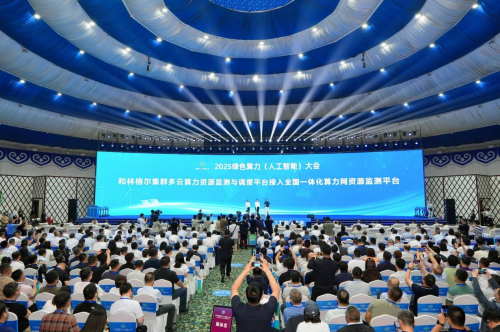
10大项目落地,总投资约200亿元 “中国云谷”绿色算力与AI产业再提速
Zhong Guo Chan Ye Jing Ji Xin Xi Wang· 2025-07-13 10:00
Core Insights - The signing of 10 key projects with a total investment of approximately 20 billion yuan marks a significant milestone for Hohhot and the Inner Mongolia region in the development of digital economy, particularly in green computing and artificial intelligence sectors [1][7] Group 1: Key Projects and Collaborations - The cooperation agreement between the Inner Mongolia government and Baidu focuses on leveraging Baidu's AI technology and Inner Mongolia's green computing resources to enhance applications in intelligent search, large model training, and autonomous driving [2] - The signing of the Beijing-Inner Mongolia data industry collaborative development strategy agreement aims to establish a tighter data circulation and cooperation mechanism, aligning Beijing's computing demand with Inner Mongolia's green computing supply [4] Group 2: Infrastructure and Application Developments - Lenovo Group plans to build an urban super-intelligent body and IT manufacturing project in Hohhot's Helinger New District, enhancing the local computing industry ecosystem [6] - The China Post Group's data center project in Helinger New District will create a green and low-carbon data storage base, providing efficient and secure data services [6] - The Wusuo Intelligent Charging Robot project aims to deploy multiple smart charging stations in Hohhot, integrating advanced AI algorithms to promote urban transportation and computing network synergy [6] Group 3: Industry Ecosystem and Future Prospects - The projects cover various critical aspects of the computing industry, including infrastructure, AI application implementation, and data industry ecosystem construction, indicating a multi-point support and chain development model [6][7] - The successful signing of these projects is expected to strengthen Inner Mongolia's integration into the national "East Data West Computing" strategy, establishing it as a northern hub for a nationwide integrated computing network [7]

协同打造产业链条 推动低空经济稳健落地
Zhong Guo Chan Ye Jing Ji Xin Xi Wang· 2025-07-12 23:28
Core Viewpoint - The low-altitude economy is emerging as a significant new sector, integrating various industries such as aviation, transportation, logistics, and tourism, and is expected to drive traditional industry transformation and regional economic development [1] Policy Environment - The Chinese government has intensified its focus on the low-altitude economy, with over twenty provinces and cities prioritizing it as a key development industry, and the market size projected to exceed 500 billion yuan by 2024 [2] - The Central Economic Work Conference in December 2023 emphasized the importance of developing strategic emerging industries, including the low-altitude economy [2] - A series of policies have been introduced, including the "Green Aviation Manufacturing Development Outline (2023-2035)" which aims for eVTOL pilot operations by 2025 [2] Industry Development - 2024 is anticipated to be a pivotal year for the development of the low-altitude economy and drone regulations in China, marking unprecedented opportunities [3] - The low-altitude economy requires a new set of rules distinct from traditional economic models, emphasizing regulatory awareness and product planning that aligns with operational support [5] Regulatory Standards - Airworthiness certification is crucial for ensuring the safety of low-altitude aircraft, necessitating innovative assessment methods to keep pace with the complexity of new technologies like eVTOL and drones [6][7] - The establishment of a comprehensive airworthiness regulatory framework is urgent, particularly for unmanned aerial vehicles, to ensure product quality and safety [8] Industry Collaboration - A robust low-altitude economy relies on a complete industrial chain, necessitating collaboration across upstream, midstream, and downstream sectors [9] - Upstream, there is a pressing need to overcome challenges in key materials and components, with companies increasing R&D investments to enhance product autonomy [9] - Midstream, improving the manufacturing standards of low-altitude aircraft is critical, alongside the development of essential infrastructure [10] - Downstream, expanding diverse operational scenarios such as low-altitude logistics and tourism is vital for market demand stimulation [10] Safety and Regulation - Safety is a non-negotiable aspect of low-altitude economic development, requiring a well-defined safety regulatory system and enhanced safety education for enterprises and personnel [11] - The establishment of a real-time monitoring platform for low-altitude flights is essential for ensuring public safety and airspace order [11] Conclusion - The successful implementation of the low-altitude economy is a complex system engineering task that requires coordinated efforts in policy guidance, airworthiness certification, industry collaboration, technological innovation, and safety regulation [12]