
Zhong Guo Chan Ye Jing Ji Xin Xi Wang

Search documents
华美浩联签约中国医学科学院血液病医院
Zhong Guo Chan Ye Jing Ji Xin Xi Wang· 2025-07-03 03:03
Group 1 - The core viewpoint of the collaboration between Huamei Haolian and the Chinese Academy of Medical Sciences Blood Disease Hospital is to focus on mutual benefits and joint development, addressing challenges in the diagnosis and treatment of complex blood diseases through innovative cooperation in various fields such as medical services, telemedicine, and academic exchanges [1][5][7] - The Chinese Academy of Medical Sciences Blood Disease Hospital is the only tertiary specialized hospital for blood diseases in China, established in 1957, and is recognized as the largest national research-oriented medical institution for blood diseases, with over 300,000 annual patient visits and a leading expert team [3][4] - Huamei Haolian has extensive experience in medical technology services, integrating advanced digital technology platforms and global medical resources, serving over 40 million end-users through customized AI health management solutions [4][5] Group 2 - The collaboration will create a dedicated channel for Huamei Haolian's commercial insurance clients, covering the entire process from outpatient to inpatient services, significantly reducing waiting times for patients and enhancing access to quality medical resources [5][6] - A highlight of the partnership is the establishment of a remote medical consultation platform that connects domestic and international experts, allowing patients with complex conditions to receive tailored treatment plans without the need for long-distance travel [5][6] - An academic exchange platform will be developed to facilitate the transformation of academic achievements and the iteration of diagnostic technologies, supporting talent cultivation and research breakthroughs in the field of hematology [6][7] Group 3 - The strategic cooperation is based on a framework agreement aimed at meeting patient needs and establishing a foundation for long-term collaboration, with plans to continuously expand the depth and breadth of cooperation [7] - The partnership signifies an important step for Huamei Haolian in optimizing medical resource allocation and innovating service models, contributing to the construction of a blood disease diagnosis and treatment ecosystem under the "Healthy China" strategy [7]



贵州省低空经济如何破局的几点思考
Zhong Guo Chan Ye Jing Ji Xin Xi Wang· 2025-07-03 02:36
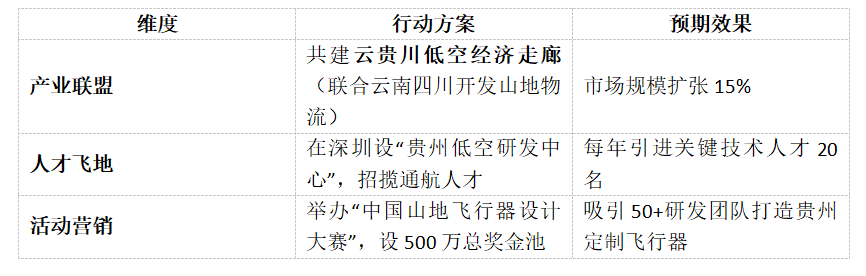
Group 1: Industry Focus and Opportunities - The article emphasizes the development of a logistics network in rural areas of Guizhou, addressing the "last mile" delivery challenges through the establishment of drone delivery centers [1] - It highlights the activation of tourism through low-altitude sightseeing routes in scenic areas, enhancing visitor experiences with VR technology [2] - The creation of a geological flight study route focusing on the unique karst landscape of Guizhou is proposed to build a "Fly Over Guizhou" brand [3] Group 2: Infrastructure and Cost Reduction - The plan includes the establishment of low-altitude service stations across nine cities, utilizing existing airport resources to lower industry entry barriers [5] - The introduction of a digital low-altitude management system is mentioned, which includes an app for quick approval of agricultural and aerial photography operations [6] Group 3: Policy and Regulatory Framework - The article discusses the establishment of a low-altitude open experimental zone, including a trial for a "low-altitude flight corridor" and a streamlined airspace approval process [7] - It outlines a policy package for attracting investment in the low-altitude industry, including a 50% VAT refund for aircraft manufacturing companies and a dedicated fund for eVTOL enterprises [8] Group 4: Data Utilization and Environmental Monitoring - The creation of a geographic information database using drone-collected data is proposed, which could serve as a resource for foreign enterprises in exploration and tourism [9] - The use of drones for environmental monitoring, such as forest fire prevention and pollution detection, is highlighted as a significant application of low-altitude technology [13] Group 5: Emergency Response and Public Services - The article describes the transition from passive to proactive emergency response systems using drones for forest fire surveillance and illegal activity monitoring [13][14] - It emphasizes the importance of integrating various aerial technologies to enhance emergency response capabilities, aiming for a comprehensive low-altitude rescue network [14] Group 6: Future Development and Strategic Value - The roadmap for the low-altitude economy includes building 50 service stations and launching initial cargo routes by 2025, with further advancements in eVTOL fleets and data utilization planned for subsequent years [15] - The strategic value of Guizhou's low-altitude economy is underscored, focusing on leveraging geographical advantages and innovative policies to drive growth [15]
智屿公关:全民AI时代下品牌传播回归本质
Zhong Guo Chan Ye Jing Ji Xin Xi Wang· 2025-07-03 02:16
当流量成本持续攀升蚕食品牌利润,当算法推荐加剧内容同质化迷局,AI技术正在深刻重构品牌与消 费者的连接方式。在这个智能搜索主导决策入口、信息过载稀释品牌记忆点的时代,传统公关模式遭遇 前所未有的挑战。 2025年6月6日,智屿公关(Wisland PR)于浙江南浔举办闭门专项研讨会,针对目前客户面临的传播困 局,重磅打造新产品-品牌Ai SEO。研讨会当天,共计探讨百余个红黑榜经典品牌公关案例,随后发布 智屿最新公关工作流智能体应用。 公关创建品牌,广告维护品牌 "公关的唯一使命,是在公众心智中播种信任的种子。"智屿公关创始人陆悠在培训会开场指出。在她看 来,当前主流营销模式内容营销,其底层逻辑实为公关思维——通过价值/兴趣共鸣建立情感纽带,而 非简单粗暴的信息灌输。 对于初创企业,陆悠直言一个认知误区:"许多企业将广告视为品牌建设的起点,实则公关才是奠基 者。"广告是直接的促销工具,以重复曝光达成"洗脑式"转化;公关则通过构建价值认同实现"呼唤 爱"的深层对话。 "品牌如果具备基础的舆情管理知识和意识,既不会在危机来临前视若无睹,也不会在危机到来前草木 皆兵。"她强调:"危机具有'危险'与'机遇'的两面性这 ...
能效标识家电每年超5.5亿台 累计节电4.2万亿千瓦时
Zhong Guo Chan Ye Jing Ji Xin Xi Wang· 2025-07-03 00:41
Core Insights - The implementation of the energy efficiency labeling system in China has significantly improved over the past 20 years, enhancing energy efficiency and consumer awareness [1][3][4] - The system has expanded its coverage to 45 categories and 4 million models, with over 5.5 billion appliances benefiting from the green labeling initiative [1][3] - The energy efficiency labeling system has become one of the most recognized product labels in China, contributing to a 20% to 40% overall improvement in energy efficiency levels [2][3] Group 1: System Development and Impact - The energy efficiency labeling system was established in 2004 and has evolved through government leadership, market collaboration, and public participation [1][4] - The system has led to the sale of nearly 100 million appliances this year alone, generating over 330 billion yuan in sales [2] - Cumulatively, the system has saved 4.2 trillion kilowatt-hours of electricity, equivalent to a significant reduction in carbon emissions [3][4] Group 2: Future Directions - The future of the energy efficiency labeling system will focus on promoting digital and intelligent technologies to support energy-saving and carbon reduction policies [4] - The system aims to enhance the global reach of green products and contribute further to achieving energy-saving and carbon reduction goals [4]
2024年北京市人工智能核心产业规模近3500亿元 占全国一半
Zhong Guo Chan Ye Jing Ji Xin Xi Wang· 2025-07-03 00:39
Group 1 - Beijing aims to establish itself as a global benchmark for digital economy development, focusing on four dimensions: technology, industry, application, and openness [1] - In Q1 of this year, Beijing's digital economy added value grew by 8.3% year-on-year, with core industries increasing by 9.7%, indicating a strong start to the year [1] - The city boasts significant advantages in digital industries, particularly in artificial intelligence, where it holds 43% of the nation's top talent and has 14 national key laboratories in the AI field [1] Group 2 - The Beijing International Big Data Exchange added 152 high-quality data products from January to May, with a trading scale exceeding 44 million yuan, reflecting a year-on-year growth of 37.63% [2] - Beijing's telecommunications infrastructure has completed IPv6 upgrades across all networks, supporting the deployment of gigabit optical networks and 5G, with all major commercial websites now supporting IPv6 access [2] - The city has launched the "Moli AI Lecture Hall" service brand, creating a comprehensive service system for enterprise development, and has seen 132 large models approved for online use, accounting for one-third of the national total [2]
黑龙江省人社厅等5部门提出18项服务举措 进一步健全就业公共服务体系
Zhong Guo Chan Ye Jing Ji Xin Xi Wang· 2025-07-03 00:32
Group 1 - The core viewpoint of the news is the issuance of a notification by multiple departments in Heilongjiang Province aimed at enhancing the employment public service system through 18 specific measures to improve accessibility and equality in services [1][2][3] Group 2 - The notification emphasizes the establishment of an equitable and inclusive employment public service mechanism, requiring local service responsibilities and the creation of a unified service standard and visual identification system [1][2] - It highlights the need for comprehensive employment public service content, including efficient policy implementation, unemployment management, and dynamic adjustment of employment assistance [1][2] - The notification focuses on targeted support for employment services, including the development of identification mechanisms for unemployed individuals and the implementation of a tiered service model [2] - It calls for strengthening the foundational employment public service framework by enhancing local service capabilities and integrating services into grassroots governance [2] - The notification promotes the use of digital technologies such as AI and big data to enhance employment services and improve data utilization [2]
四川内江“甜味+”产业释放强劲动能
Zhong Guo Chan Ye Jing Ji Xin Xi Wang· 2025-07-03 00:32
Core Insights - The city of Neijiang in Sichuan Province is experiencing significant growth in its "sweet" industry, with a 12.6% year-on-year increase in industrial added value from January to April, and the "sweet flavor+" sector growing at 16.7%, making it the fastest-growing industry in the region [1][2] Industry Overview - Neijiang has established a food and beverage industry system centered around "sweet fruits, sweet products, sweet drinks, and sweet vegetables," aiming to cultivate a 50 billion yuan "sweet flavor+" industry cluster [2] - The city has implemented supportive policies, such as controlling water prices for food and beverage companies below non-residential living water prices and offering gas discounts to reduce production costs [2] Company Highlights - Wangji Food, a full-chain meat product enterprise, has an annual output value of 12 million yuan, with its beef jerky exemplifying the growth of the "sweet flavor+" industry in Neijiang [1] - Jialin Food Factory, a key production base for candied fruits, has introduced a low-sugar series of products, achieving a 15% year-on-year increase in sales [1] Future Outlook - Neijiang plans to focus on optimizing the layout of the "sweet flavor+" industry, enhancing technological innovation, and improving brand effects to drive the industry towards high-end, intelligent, and green development [2] - The city aims to position the "sweet economy" as a crucial engine for high-quality development and contribute to the collaborative economic growth in the Chengdu-Chongqing economic circle [2]
山东东营抢占海洋经济发展新高地
Zhong Guo Chan Ye Jing Ji Xin Xi Wang· 2025-07-03 00:32
Group 1: Core Insights - The conference in Dongying, Shandong Province, emphasized the importance of developing a high-quality marine economy and outlined four key tasks to accelerate the construction of a marine strong city [1][2] - The marine economy is projected to see significant growth, with the national marine GDP expected to exceed 10 trillion yuan in 2024, and Shandong's marine GDP reaching 1.81 trillion yuan, reflecting a year-on-year growth of 5.9% [2][3] - Dongying aims to enhance its ecological protection efforts while developing its marine economy, with successful initiatives like the creation of the Yellow River Estuary National Park [2][3] Group 2: Marine Economy Development - Major infrastructure projects, including a 10,000-ton channel and multiple large-scale terminals, are being developed to support Dongying's goal of becoming a deep-water port [3][4] - The marine chemical industry in Dongying has established a complete industrial chain, contributing to a marine GDP of over 120 billion yuan in 2024, with a growth rate of 7.1%, the highest in Shandong Province [3][4] - The conference highlighted the need to focus on ecological sustainability, traditional industry upgrades, and the development of new growth points in the marine economy [4][5] Group 3: Focus on Marine Food Industry - Dongying has a strong foundation for marine food industry development, with significant achievements in aquaculture, processing, and brand building [5][6] - The Yellow River Estuary crab has become a flagship product, with an annual production of 7,000 tons and a market value of 1 billion yuan, alongside other successful seafood products [5][6] - Innovative aquaculture practices, such as smart farming and water recycling technologies, are being implemented to enhance productivity and sustainability in the marine food sector [6][7] Group 4: Future Directions - Dongying plans to increase support for the marine food industry, focusing on integrating the entire supply chain and enhancing brand recognition [7] - The city aims to leverage technology to drive the marine food sector towards intelligence, sustainability, and high-end development, contributing to the overall marine economy [7]
多向赋能,中国外贸竞争力稳增
Zhong Guo Chan Ye Jing Ji Xin Xi Wang· 2025-07-03 00:19
Group 1: Global Trade Environment - The global manufacturing PMI new export orders index fell below the growth line for two consecutive months, indicating a contraction in trade due to rising protectionism and uncertainty [1] - Despite these challenges, China's foreign trade maintained steady growth in the first five months of the year, with a total import and export value of 17.94 trillion yuan, a year-on-year increase of 2.5% [1] Group 2: China's Foreign Trade Strategy - China is committed to expanding high-level opening-up and diversifying its trade partnerships, as evidenced by recent agreements with African nations and the completion of the China-ASEAN Free Trade Area 3.0 negotiations [2][3] - Chinese foreign trade enterprises are increasingly shifting from a "single-polar dependence" to a "multi-polar resonance" strategy to mitigate risks [3] Group 3: Product Structure and Competitiveness - In the first five months, China's exports of electromechanical products grew by 9.3%, with integrated circuit exports increasing by 18.9%, reflecting a shift from scale advantages to technological advantages in the global supply chain [4] - The growth in high-tech product exports, which rose by 7.4%, indicates an ongoing optimization of China's export structure, with green technology products gradually replacing traditional low-value goods [4] Group 4: R&D Investment and Innovation - China's robust growth in high-tech product exports is closely linked to increased R&D investment, which is projected to reach 2.68% of GDP in 2024, surpassing the EU average [5] - This innovation investment is transforming into tangible export competitiveness, with technology-intensive products becoming a new engine for foreign trade growth [5] Group 5: Trade Facilitation and Support - China's foreign trade policies have become more precise and pragmatic, providing support through financial assistance, customs facilitation, and market expansion [6] - Measures include expanding export credit insurance coverage and enhancing cross-border trade facilitation, which have boosted the confidence of foreign trade enterprises [6] Group 6: Market Potential and Economic Stability - China's vast market potential continues to be released, with policies aimed at stabilizing the economy and foreign trade showing positive effects [7] - The fundamental outlook for China's foreign trade remains optimistic, with confidence to face various risks and challenges [7]
深圳建成全国首个“通用﹢专业”民营企业信用评价应用体系
Zhong Guo Chan Ye Jing Ji Xin Xi Wang· 2025-07-02 23:52
Core Viewpoint - Shenzhen has established the first "General + Professional" credit evaluation system for private enterprises in China, leveraging 2.7 billion public credit data points to cover 20 key industries, providing a comprehensive credit assessment for 4.4 million business entities in the city [1][2]. Group 1: Credit Evaluation System - The credit evaluation system includes five dimensions: business changes, registration permits, penalty records, complaints, and commendations, with a total of 63 core indicators [1]. - The system generates a dynamic "credit ID" for enterprises, transitioning from static proof to real-time updates [1]. - Shenzhen's credit evaluation operates on a monthly cycle, categorizing entities from the highest A+ level to risk warning E level [1]. Group 2: Data Collection Mechanism - Shenzhen has implemented a public credit data collection mechanism, achieving comprehensive data integration across 12 categories and 735 items, ensuring efficient sharing among 73 data source units [2]. - The system allows for monthly updates of credit files for business entities, reflecting their latest operational status and predicting potential credit risk fluctuations [2]. Group 3: Industry-Specific Applications - The credit evaluation system has been tailored for specific industries, with sub-models developed for healthcare, environmental protection, and construction, enhancing regulatory efficiency [3]. - The "Zhenxin+" unified social credit service platform connects various credit service applications, providing convenient access for government departments and the public [3]. Group 4: Regional and International Integration - Shenzhen's credit system is integrated into the Guangdong-Hong Kong-Macao Greater Bay Area, facilitating mutual recognition of credit evaluation results between Shenzhen and Hong Kong enterprises [4]. - The city has enabled over 3 billion yuan in credit loans for Hong Kong-funded enterprises in mainland China, addressing cross-border credit needs [4]. - Shenzhen is generating "credit electronic cards" for local enterprises, incorporating 37 internationally recognized indicators to support their international market expansion [4]. Group 5: Community and Governance Applications - The credit system has been applied in community governance, such as "credit medical services" in public hospitals, allowing eligible patients to receive treatment before payment [4]. - The "Integrity + Rental Housing" model has established detailed credit records for 173,000 rental properties, creating a national first in rental housing credit mapping [4]. - The "credit tax" application in Qianhai aims to provide more conveniences for businesses with good tax credit records [4]. Group 6: Future Directions - The Shenzhen Market Supervision Administration plans to focus on data collection and sharing, model optimization, and application expansion to create a replicable national credit reform model [5].