kimi

Search documents
未来10年,这是唯一能让你幸免于难的顶级能力……
虎嗅APP· 2026-03-06 09:59
Core Viewpoint - The article discusses the rapid evolution of AI and its implications for various professions, emphasizing the need for individuals to adapt by developing agency and a vision rather than relying solely on specific skills [4][6][72]. Group 1: The Impact of AI on Professions - Many skills will become irrelevant in the next 10-20 years due to AI advancements [6]. - Individuals must transition from being passive executors to active agents who can command AI tools [26][46]. - The traditional notion of specialized skills is diminishing as AI can perform tasks more efficiently [30][36]. Group 2: The Concept of Agency - Agency is defined as the ability to be the subject in one's life rather than an object [10][11]. - Individuals need to cultivate the ability to define problems and integrate resources, which is crucial in the AI era [44][46]. - The article highlights the importance of having a clear vision and the ability to adapt to changes in the environment [37][43]. Group 3: Skills for the Future - Five human capabilities that cannot be fully automated by AI are identified: 1. Computation based on lived experience, which emphasizes human intuition [50]. 2. Transformation, the ability to turn abstract ideas into reality [52]. 3. Variation and innovation, which involve creative and cross-disciplinary thinking [54]. 4. Selection and taste, the ability to curate and discern quality in a world flooded with content [58]. 5. Attention control, the capacity to focus amidst distractions [56]. Group 4: Actionable Steps for Individuals - Individuals are encouraged to take initiative without waiting for external validation or permission [61]. - Embracing failure as a learning opportunity is essential for rapid iteration and improvement [64][66]. - Building a personal brand and establishing trust online is crucial for future success [70]. Group 5: Future Outlook - The article predicts a bifurcation in society where "super individuals" leveraging agency and AI will thrive, while others remain trapped in traditional roles [72]. - The call to action is for individuals to define their own paths and create meaningful contributions, moving away from dependency on traditional systems [72].


影视ETF(516620)回调超1.9%,AI时代传媒有望承接应用新增量,回调或可布局
Mei Ri Jing Ji Xin Wen· 2026-01-26 12:26
Group 1 - The core viewpoint is that the film and television ETF (516620) has experienced a decline of over 1.9%, but the AI era in media is expected to capture new application growth, making this a potential opportunity for investment [1] - In the first quarter of 2026, the Chinese New Year holiday will bring a diverse range of films, with four films already scheduled for release, catering to various audience preferences [1] - Cinema companies are not only focusing on their core business but are also actively embracing AI and new interactive experiences, exploring new commercial boundaries [1] Group 2 - The film and television ETF (516620) tracks the CSI Film Index (930781), which selects listed companies involved in film production, distribution, and exhibition from the A-share market to reflect the overall performance of the film industry chain [2] - The index covers multiple fields, including content creation, television broadcasting, video media, and cinema chains, with the highest proportion in film and animation production, followed by television broadcasting, video media, and cinema segments [2]
豆包日活已突破1亿,字节亿级APP再添一员丨36氪独家
36氪· 2025-12-25 13:43
Core Viewpoint - Doubao, a product from ByteDance, has surpassed 100 million daily active users (DAU), marking it as one of the lowest-cost products to achieve this milestone in ByteDance's history [5][7]. Group 1: Product Performance and Market Position - Doubao's DAU has exceeded 100 million, contributing to ByteDance's portfolio of billion-level DAU products [5]. - The user retention rate for Doubao is reported to be satisfactory, with its features like Seedream and Seedance models continuously activating creative scenarios [7]. - Doubao has maintained a top position in app download rankings, benefiting from its early launch compared to competitors like Kimi and Tencent Yuanbao [7]. Group 2: Competitive Landscape and Industry Dynamics - The rapid rise of Doubao is reshaping the competitive landscape in the domestic AI application market, prompting other tech giants to increase their investments [8]. - Tencent Yuanbao has significantly ramped up its promotional spending, with a cumulative investment of nearly 6 billion yuan by July [8]. - Alibaba is set to launch its AI to consumer initiatives by the end of the year, with several products already achieving substantial user engagement shortly after launch [8]. Group 3: Technological and Organizational Support - The Seed team, responsible for Doubao's underlying models, is considered a core strategic business within ByteDance, undergoing organizational upgrades to enhance focus on foundational research and application [8]. - ByteDance has incentivized its Seed team with additional stock options and adjusted performance metrics to foster innovation [8]. Group 4: Future Prospects and Commercialization - Doubao is expected to play a significant role in the upcoming 2026 Spring Festival Gala, enhancing its visibility and user engagement through interactive features [9]. - Despite concerns about the clarity of Doubao's commercialization path, its MaaS service has shown promising progress, achieving high cost-effectiveness and decent profit margins [10][11].

十五五规划十大投资机会梳理:精益求精-20251206
Shenwan Hongyuan Securities· 2025-12-06 14:26
Group 1: Strategic Overview - China is transitioning from a global rule adapter to a co-builder and responsible stakeholder in international governance[3] - The 14th Five-Year Plan (14th FYP) focused on economic security, while the 15th Five-Year Plan (15th FYP) emphasizes "development and security" across all sectors[3] - The 15th FYP identifies emerging industries as "pillar industries," focusing on new energy and new materials, with a core strategy of cluster development and large-scale application[3] Group 2: Investment Opportunities - The 15th FYP highlights ten key investment areas: 1) Artificial Intelligence, 2) Robotics, 3) Aerospace, 4) Drones/Low-altitude Economy, 5) Strategic Resource Metals, 6) Shipping, 7) Controlled Nuclear Fusion, 8) Energy Storage, 9) Brain-Machine Interfaces, 10) Innovative Pharmaceuticals[3] - The Chinese robotics industry is transitioning from product definition to commercialization, with AI expected to empower various sectors by 2026[3] - The aerospace industry is a key focus, with the establishment of a new space administration and a three-year action plan for commercial aerospace development[3] Group 3: Economic and Security Considerations - The 15th FYP emphasizes the strategic importance of national defense and security, with a focus on political security as a priority[3] - The plan includes new initiatives for the development and reserve of strategic mineral resources, enhancing the national security framework[3] - Risks include potential delays in policy implementation and slower-than-expected industry capacity adjustments, influenced by international geopolitical changes[3]
算法化生存的认知税:谁在替你提问?
3 6 Ke· 2025-11-12 07:42
Core Insights - The article discusses the increasing influence of AI on human questioning and cognition, highlighting the phenomenon of "cognitive tax" where algorithms shape the questions individuals ask, leading to a loss of original inquiry [2][8][19] - It emphasizes the importance of reclaiming the autonomy of questioning in an era dominated by algorithmically pre-formed inquiries, which can lead to cognitive inequality and a superficial understanding of complex issues [2][13][21] Group 1: AI's Role in Question Formation - AI is seen as a facilitator that pre-forms questions based on user behavior, which can lead to a narrowing of inquiry and a loss of deeper, personal confusion [4][9] - The article illustrates how algorithms optimize questions, transforming original feelings into standardized, consumable inquiries, thus replacing nuanced human experiences with simplified options [5][8] - The concept of "cognitive tax" is introduced, where individuals pay a price for clarity, sacrificing the richness of their original, unarticulated feelings for more straightforward, algorithm-friendly questions [8][11] Group 2: Implications for Society and Individuals - The article argues that the current digital environment creates a disparity in question visibility, where not all inquiries are recognized or validated by society, leading to a new form of cognitive hierarchy [13][14] - It highlights the shift from internal contemplation to external prompting, where individuals increasingly rely on algorithms to define their questions, resulting in a loss of the ability to articulate personal confusion [16][19] - The discussion raises concerns about the commodification of inquiry, where questions must be framed in a way that is socially shareable and marketable, further entrenching cognitive inequality [14][20] Group 3: The Need for Authentic Inquiry - The article posits that true questioning must remain open-ended and uncomfortable, resisting the urge to conform to algorithmically defined norms [21][22] - It suggests that the ability to maintain discomfort with algorithmically generated questions is crucial for resisting cognitive manipulation and reclaiming authentic inquiry [15][21] - The piece concludes that the challenge lies in distinguishing between genuine questions and those shaped by external influences, emphasizing the need for a critical approach to questioning in the digital age [20][21]

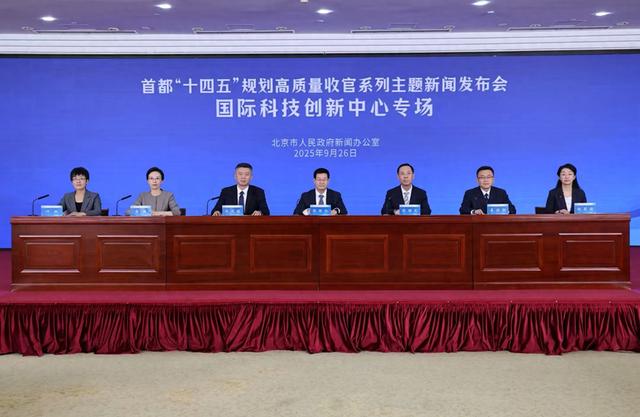
五个全球前列、五个创新领先,北京已成全球创新网络关键枢纽
Bei Jing Ri Bao Ke Hu Duan· 2025-09-26 05:29
Core Insights - Beijing International Science and Technology Innovation Center has significantly enhanced its innovation capacity, competitiveness, and influence, becoming a key hub in the global innovation network [1][3] - The city has achieved important progress with 1,105 key projects and major tasks implemented during the 14th Five-Year Plan period, aiming for global leadership in multiple innovation metrics [3][4] Investment and Economic Growth - Research and development expenditure intensity remains around 6%, ranking among the top global innovation cities [3] - The high-tech industry added value is projected to reach 1.49 trillion yuan in 2024, representing a 56.9% increase from 2020 [3] Industry Development - Beijing has established three trillion-yuan industry clusters in new-generation information technology, technology services, and seven hundred-billion-yuan industry clusters including intelligent manufacturing and artificial intelligence [3] - The city is fostering 23 future industries, including commercial aerospace and biomanufacturing [3] Innovation Achievements - Beijing has maintained its position as the top city in the "Nature Index" for eight consecutive years and ranks third globally in the number of unicorn companies [3] - The city has registered 159 large models in artificial intelligence, leading the nation in this area [3][4] Healthcare and Technology - The city leads the nation in the number of approved innovative medical devices, with globally pioneering products such as single-port laparoscopic systems and high-field MRI-compatible brain pacemakers [4] - The commercial aerospace sector has developed a complete industrial chain, including rocket manufacturing and satellite services [4] Future Outlook - The city aims to become a global center for scientific innovation and a leader in future industries, focusing on high-level talent development and the production of world-class original achievements [5]
北京独角兽企业数量连续四年位列全球城市第三
Xin Jing Bao· 2025-09-26 04:09
Core Insights - Beijing ranks third globally in the number of unicorn companies for four consecutive years [1] - The city has achieved significant advancements in its "14th Five-Year Plan," with 1,105 key projects and major tasks implemented [2] - Beijing has established itself as a critical hub in the global innovation network, achieving "five global leading positions" [2] Group 1: Innovation and Research - Beijing has maintained its position as the top city in the "Nature Index" for eight consecutive years, with 431 highly cited scientists [2] - The city ranks third globally in the "International Science and Technology Innovation Center Index" for three years [2] - The number of high-value invention patents per 10,000 people is projected to reach 159.8 in 2024, doubling since 2020 [3] Group 2: Economic Growth and Industry Development - The total value of technology contracts increased from 631.62 billion to 915.33 billion yuan from 2020 to 2024 [3] - Beijing's high-tech industry added value is expected to reach 1.49 trillion yuan in 2024, a 56.9% increase since 2020 [5] - The digital economy's added value is projected to exceed 2.2 trillion yuan, growing by 53.1% since 2020 [5] Group 3: Infrastructure and Future Industries - Beijing has launched 159 large models, leading the nation in this area [4] - The city has established 145 national key laboratories and 37 scientific facilities in the Huairou Comprehensive National Science Center [4] - The city is focusing on future industries, including commercial aerospace and biomanufacturing, with a comprehensive policy framework for artificial intelligence [4]
北京五年累计备案上线大模型158款,全国占比约三成
Bei Jing Shang Bao· 2025-09-15 04:20
Core Insights - Beijing has positioned itself as the "Artificial Intelligence Capital" during the 14th Five-Year Plan period, leveraging industrial transformation opportunities [1] - A total of 158 large models have been registered and launched, accounting for approximately 30% of the national total [1] - Benchmark models such as Doubao, Zhipu, and Kimi are performing at the top tier globally [1] - Nearly 200 innovative robotic products have been applied in over 130 different scenarios, indicating a shift of robotic technology from laboratories to everyday life [1]
生成式AI崛起,它会给移动通信带来怎样的改变?
Hu Xiu· 2025-08-29 05:09
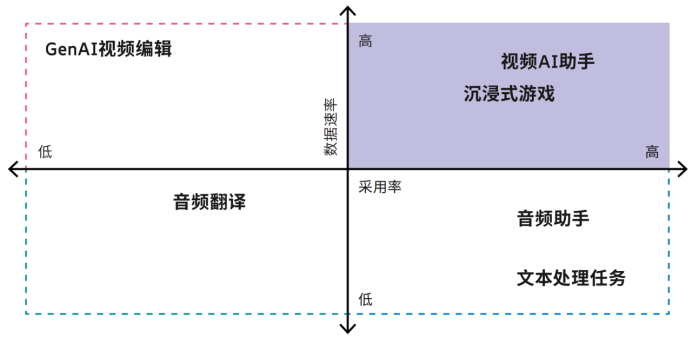
Group 1 - The mobile communication industry is experiencing a transformative wave driven by the rise of Generative AI (GenAI), which is expected to lead to a new era of development [1][2][42] - GenAI applications are becoming increasingly integrated into daily life, providing personalized experiences and practical services, thus potentially initiating a new network revolution [2][5] - The latest Ericsson Mobile Market Report provides comprehensive insights into the impact of GenAI on mobile communication networks, highlighting the need for adaptation and innovation within the industry [3][4] Group 2 - GenAI applications are characterized by their interactive and personalized content delivery, which significantly differs from traditional applications that rely on passive user engagement [14][15][8] - The rise of high-performance AI devices and bandwidth-intensive media formats will lead to a substantial increase in video traffic consumption from GenAI applications [11][12] - The demand for network resources will shift, with a notable increase in upstream bandwidth requirements due to user interactions and content sharing [17][28] Group 3 - The report identifies three key strategies for mobile communication networks to effectively respond to the changes brought by GenAI: refined network planning, expansion of frequency spectrum resources, and the introduction of differentiated connectivity [31][32][39] - Enhanced network management capabilities are essential to accommodate the complex and dynamic traffic patterns generated by GenAI applications [33][34] - Increasing mid-band and centimeter-wave frequency spectrum resources will directly support the high traffic demands of GenAI applications, particularly the growing upstream traffic [35][36] Group 4 - The emergence of AI agents and immersive technologies will further transform user interactions, necessitating continuous upstream connectivity for data transmission and real-time processing [21][25] - The shift towards a more intelligent, flexible, and scalable network architecture is imperative for the future of mobile communication, driven by the demands of GenAI applications [42][41]

AI们数不清六根手指,这事没那么简单
Hu Xiu· 2025-07-11 02:54
Core Viewpoint - The article discusses the limitations of AI models in accurately interpreting images, highlighting that these models rely on memory and biases rather than true visual observation [19][20][48]. Group 1: AI Model Limitations - All tested AI models, including Grok4, OpenAI o3, and Gemini, consistently miscounted the number of fingers in an image, indicating a systemic issue in their underlying mechanisms [11][40]. - A recent paper titled "Vision Language Models are Biased" explains that large models do not genuinely "see" images but instead rely on prior knowledge and memory [14][19]. - The AI models demonstrated a strong tendency to adhere to preconceived notions, such as the belief that humans have five fingers, leading to incorrect outputs when faced with contradictory evidence [61][64]. Group 2: Experiment Findings - Researchers conducted experiments where AI models were shown altered images, such as an Adidas shoe with an extra stripe, yet all models incorrectly identified the number of stripes [39][40]. - In another experiment, AI models struggled to accurately count legs on animals, achieving correct answers only 2 out of 100 times [45]. - The models' reliance on past experiences and biases resulted in significant inaccuracies, even when prompted to focus solely on the images [67]. Group 3: Implications for Real-World Applications - The article raises concerns about the potential consequences of AI misjudgments in critical applications, such as quality control in manufacturing, where an AI might overlook defects due to its biases [72][76]. - The reliance on AI for visual assessments in safety-critical scenarios, like identifying tumors in medical imaging or assessing traffic situations, poses significant risks if the AI's biases lead to incorrect conclusions [77][78]. - The article emphasizes the need for human oversight in AI decision-making processes to mitigate the risks associated with AI's inherent biases and limitations [80][82].