Guo Ji Jin Rong Bao

Search documents
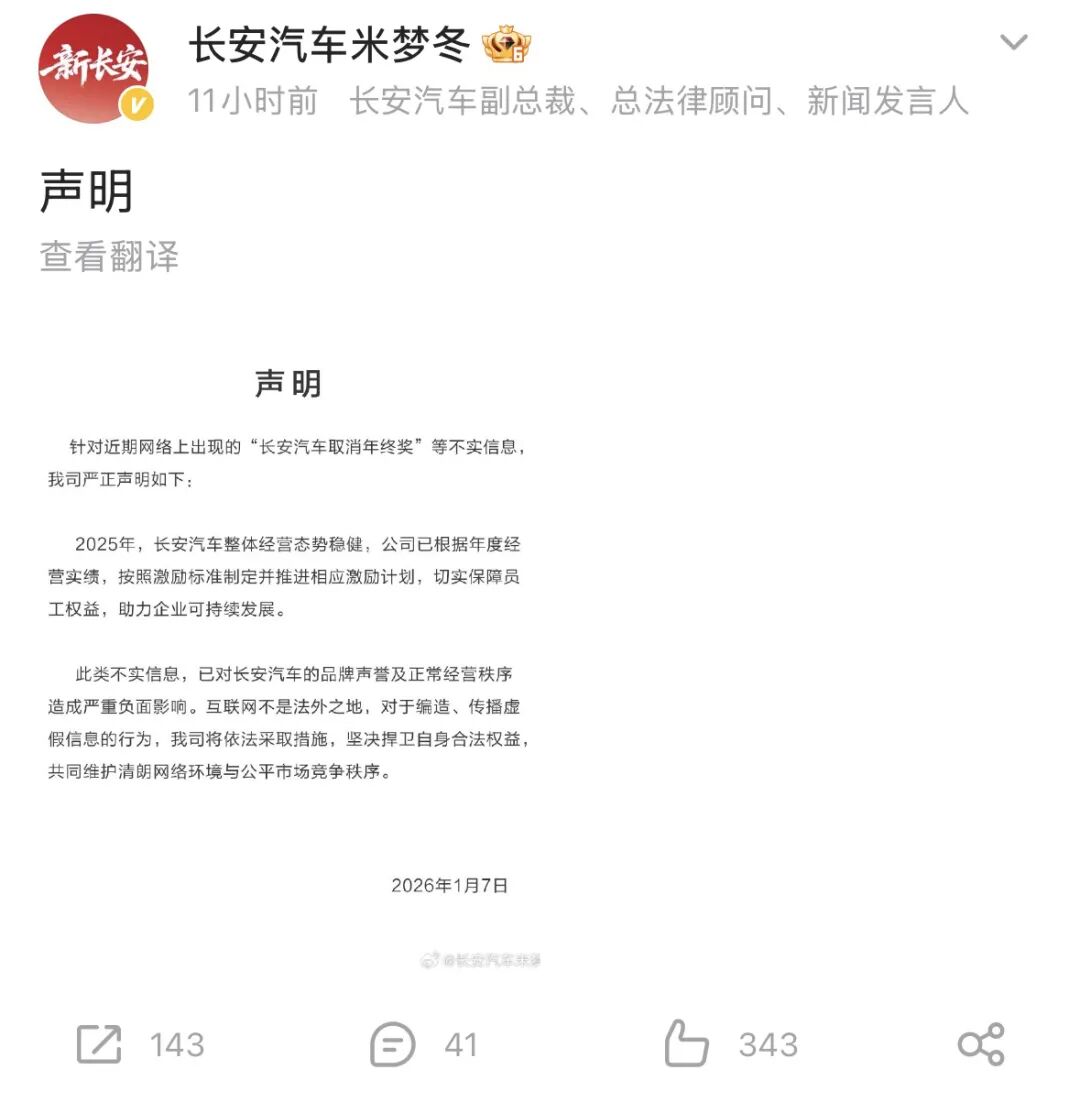
长安汽车辟谣“取消年终奖”:激励计划正推进
Guo Ji Jin Rong Bao· 2026-01-07 12:25
Core Viewpoint - Recent rumors about Changan Automobile canceling year-end bonuses due to unmet sales targets have been addressed by the company, which confirmed the information is false and that an incentive plan based on 2025 performance has been established and is being implemented [1][4]. Group 1: Company Response - Changan issued a formal statement on January 7, clarifying that the rumors regarding the cancellation of year-end bonuses are untrue and that the company has developed an incentive plan based on its operational performance for 2025 [1][4]. - The company emphasized that the dissemination of false information has negatively impacted its brand reputation and normal business operations, and it will take legal action against those who spread such rumors [4]. Group 2: Employee Incentives - An internal source claimed that the employee year-end incentive structure consists of 4.3 times the monthly salary plus a fixed amount of 3,000 yuan, with payments expected to be completed by February 10 [7]. - An internal notice that circulated in early January suggested that due to unmet sales and profit targets for 2025, there would be no year-end incentive; however, the company is considering a corresponding incentive to be announced later [7]. Group 3: Performance Metrics - In 2025, Changan achieved a total sales volume of 2.913 million vehicles, a year-on-year increase of 8.5%, reaching 97% of its target [9]. - The company reported that its electric vehicle sales reached 1.109 million units, up 51% year-on-year, and overseas sales were 637,000 units, an 18.9% increase [9]. - Changan's total revenue for 2025 was approximately 286 billion yuan, achieving 95.33% of its 300 billion yuan target, marking historical highs for both sales and revenue despite not fully meeting all targets [9].


联诚精密:乘舟投资拟受让公司6.71%股份
Guo Ji Jin Rong Bao· 2026-01-07 12:24
联诚精密公告,公司于2026年1月7日与上海乘舟投资管理有限公司签署了《关于山东联诚精密制造股份 有限公司之股份转让协议》,约定转让方将其合计持有的公司1000万股无限售条件流通股股份(占公司 总股本的6.71%)转让给受让方。本次协议转让完成后,受让方持有公司1000万股股份,占公司总股本的 6.71%,成为公司持股5%以上股东。 ...

宜家中国宣布关闭7家商场,受影响员工将获安置费
Guo Ji Jin Rong Bao· 2026-01-07 12:23
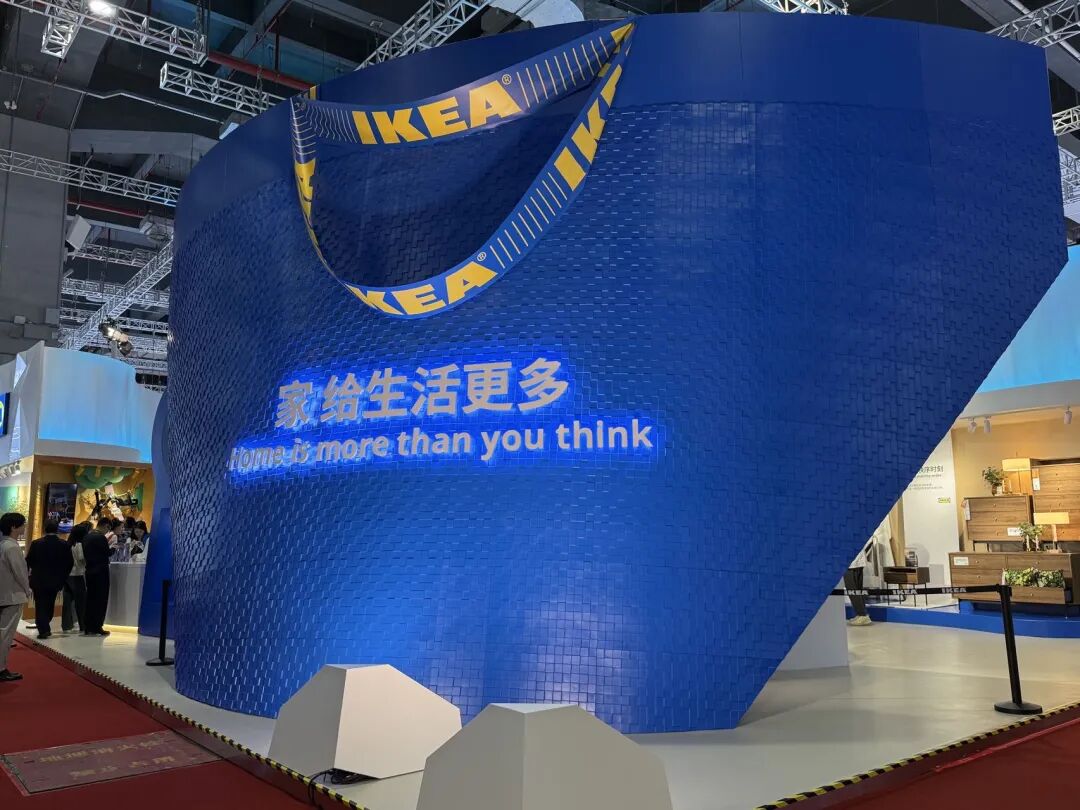
Core Viewpoint - IKEA China is undergoing a transformation focused on optimizing costs, improving efficiency, and reallocating resources, which includes the closure of seven physical stores starting February 2, 2026 [1][3]. Group 1: Store Closures - IKEA China will close seven stores, including locations in Shanghai, Guangzhou, Tianjin, Nantong, Xuzhou, Ningbo, and Harbin, as part of its strategic adjustment [1][3]. - After the closures, IKEA will still operate 34 stores in China, along with three digital channels and two flagship e-commerce stores [3]. Group 2: Customer Access - Customers in affected cities can continue to access IKEA products and services through other nearby stores, the IKEA website, the IKEA app, and major e-commerce platforms like Tmall and JD [3]. Group 3: Employee Support - IKEA China has committed to providing necessary support for affected employees, ensuring open communication and a fair, transparent process for comprehensive relocation assistance [3]. Group 4: Future Plans - IKEA China plans to enhance its multi-channel strategy by developing smaller stores closer to communities, with a focus on Beijing and Shenzhen, aiming to open over ten small stores in the next two years [4]. - Upcoming store openings include the Dongguan store in February 2026 and the Tongzhou store in Beijing in April 2026 [4]. - IKEA is also deepening its partnership with JD to pilot instant retail services in seven cities across China [4]. Group 5: Global Context - The store closures in China are part of a broader trend, as IKEA Japan announced the closure of two stores in Tokyo by early 2026, while maintaining the Shibuya store as a key location [6]. - IKEA has a strategic plan to invest over €5 billion by the fiscal year 2027 to open new stores and optimize existing ones across various markets [6]. - The company recently opened its first store in Auckland, New Zealand, as part of its global expansion strategy [6].
又是“秒空”!马年茅台下调购买门槛
Guo Ji Jin Rong Bao· 2026-01-07 12:23
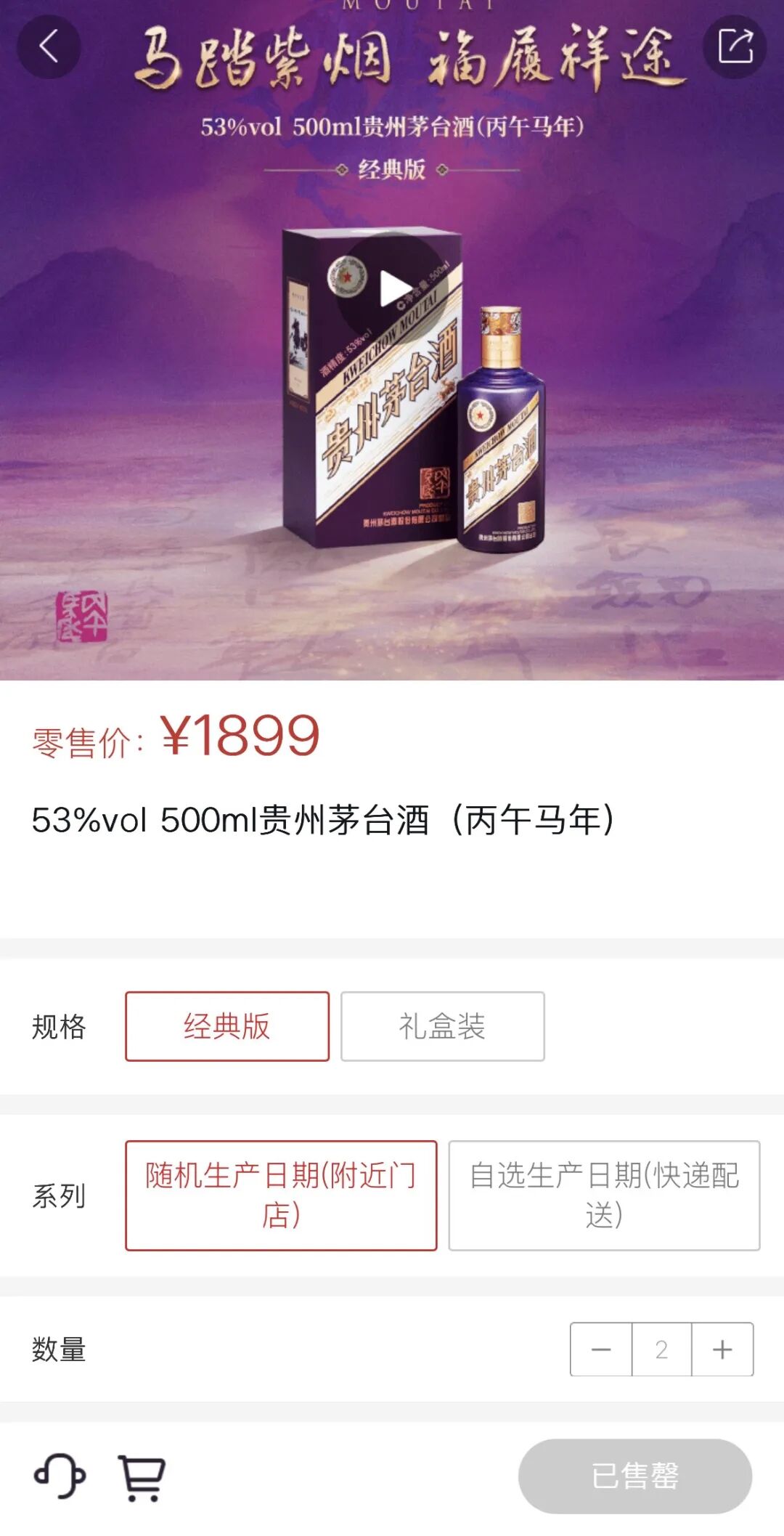
1月7日9时,贵州茅台(600519)新品马年生肖酒再次上演"上线秒售罄"的盛况。 昨天,马年生肖茅台正式在i茅台app上市发售,在白酒行业调整加剧的大背景下,变化正在发生——过去五年生肖茅台的官方指导价都是2499元/瓶, 今年购买门槛有所降低:提供了经典版、礼盒装和珍享版三个版本,官方定价分别为1899元/瓶、3789元/盒(两瓶)和2499元/瓶。其中,经典版和礼盒装 还支持自选生产日期。 从二级市场表现来看,目前经典版马年生肖茅台普遍溢价50—100元/瓶,珍享版则因投放量较小,身价暴涨至超6000元。 水芙蓉/摄 今年的马年生肖茅台会延续以往的高投放量吗? 从产品结构来看,生肖酒被视为茅台"金字塔"系列中的"塔腰"产品,兼具消费与收藏需求任务。重要的是,今年茅台明确提出会"尽努力避免价格炒 作",取消了分销机制、并将飞天茅台上线i茅台app,以激发真实消费需求,提高开瓶率。 马年春节将至,除了茅台,五粮液、洋河、泸州老窖、古井贡酒等多家头部酒企已推出生肖酒产品。 | 相较于普通版飞天茅台,生肖酒具有一定的收藏和文化属性。 | | | --- | --- | | 值得一提的是,上一轮马年茅台生肖酒(2 ...

一年暴涨76%后仍在加速,韩国股市动力在哪?
Guo Ji Jin Rong Bao· 2026-01-07 12:04
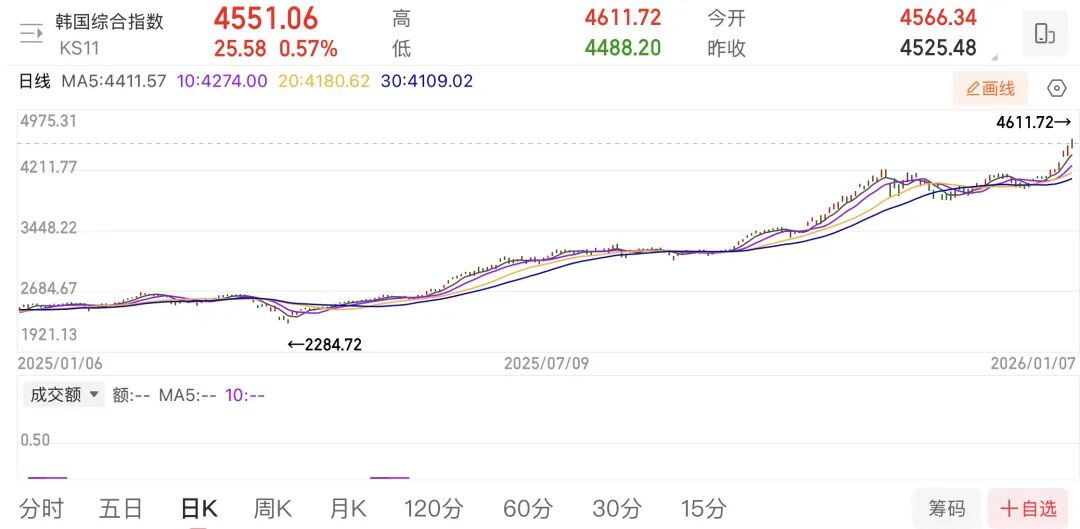
2026年开年,韩国股市延续去年强劲涨势,继续高歌猛进。 眼下正值韩国总统李在明对中国进行国事访问,探讨深化双边经贸合作之际,韩国资本市场的这一轮跨年度行情正受到全球投资者的密切关注。 上涨核心逻辑增强 2025年,韩国股市涨幅在亚洲市场中表现最为突出,韩国首尔综指全年飙涨将近76%,创1999年以来最大涨幅,远超标普500指数约17%和MSCI亚太 指数约25%的年内涨幅。 历史性行情的背后,是多重利好因素的共振。 首要驱动力来自于全球半导体行业的周期性回暖。作为韩国经济的支柱,三星电子、SK海力士等半导体巨头的业绩和股价表现对大盘影响举足轻 重。 高盛集团亚太区首席策略师在去年末的报告中指出:"半导体库存去化结束和人工智能(AI)驱动的新需求周期,为韩国科技股带来了强劲的盈利修 复预期。这是推动KOSPI指数上行的核心引擎。" 随着行业盈利改善,三星电子会长李在镕的持股价值在过去一年内实现惊人增长,达到25.88万亿韩元,增幅高达117%,创下了韩国股票财富新纪 录,超越了其已故父亲李健熙创下的22.3万亿韩元的纪录。 其次,李在明上任后推行的以"价值提升计划"(Value-up Program)为代表的 ...
英伟达加快重返中国高端AI芯片市场步伐
Guo Ji Jin Rong Bao· 2026-01-07 11:57
Core Insights - Nvidia is accelerating its return to the high-end AI chip market in China after obtaining U.S. government export licenses, with strong demand for its H200 advanced AI processors [1][2] - The approval for H200 exports is a significant development, as Nvidia had been effectively excluded from the Chinese high-end AI chip market since April 2025 due to stricter export controls [1][2] - Nvidia's CFO indicated that the company could ship chips worth between $2 billion to $5 billion to China each quarter, with potential for further growth in orders [2] Group 1 - Nvidia's CEO Jensen Huang stated that the H200 chips are currently in production and supply chain arrangements are underway, pending final export license procedures [1] - The export approval for H200 is a result of a decision made by the Trump administration, which includes a requirement for Nvidia to share 25% of sales with the U.S. federal government [1] - Huang emphasized that actual procurement demand is more critical than policy statements, anticipating that orders will materialize once the execution process is completed [2] Group 2 - Nvidia previously entered the Chinese market with a downgraded version of its chip, the H20, in August 2025, agreeing to share 15% of sales revenue with the U.S. government [2] - Despite the recent approval, the Trump administration had previously denied Nvidia's request to sell a weaker version of its Blackwell chip to China [2] - Reports indicate that Chinese companies like Huawei and Baidu are rapidly advancing in chip development, narrowing the performance gap with U.S. chips [2][3] Group 3 - A report from Frost & Sullivan shows that Baidu and Huawei control over 70% of the Chinese cloud computing chip market, with Chinese tech companies developing comprehensive "full-stack" solutions to compete with Nvidia's CUDA ecosystem [3] - Nvidia has announced the launch of its new AI chip and server platform, Vera Rubin, which has entered full production and is expected to ship in the second half of 2026 [3] - The global demand for AI computing power continues to rise, prompting Nvidia to engage in multiple significant collaborations and investments, including a three-tier investment strategy focused on new product launches, ecosystem investments, and strategic acquisitions [3]

小米SU7迎来首次改款,4月正式上市
Guo Ji Jin Rong Bao· 2026-01-07 11:52
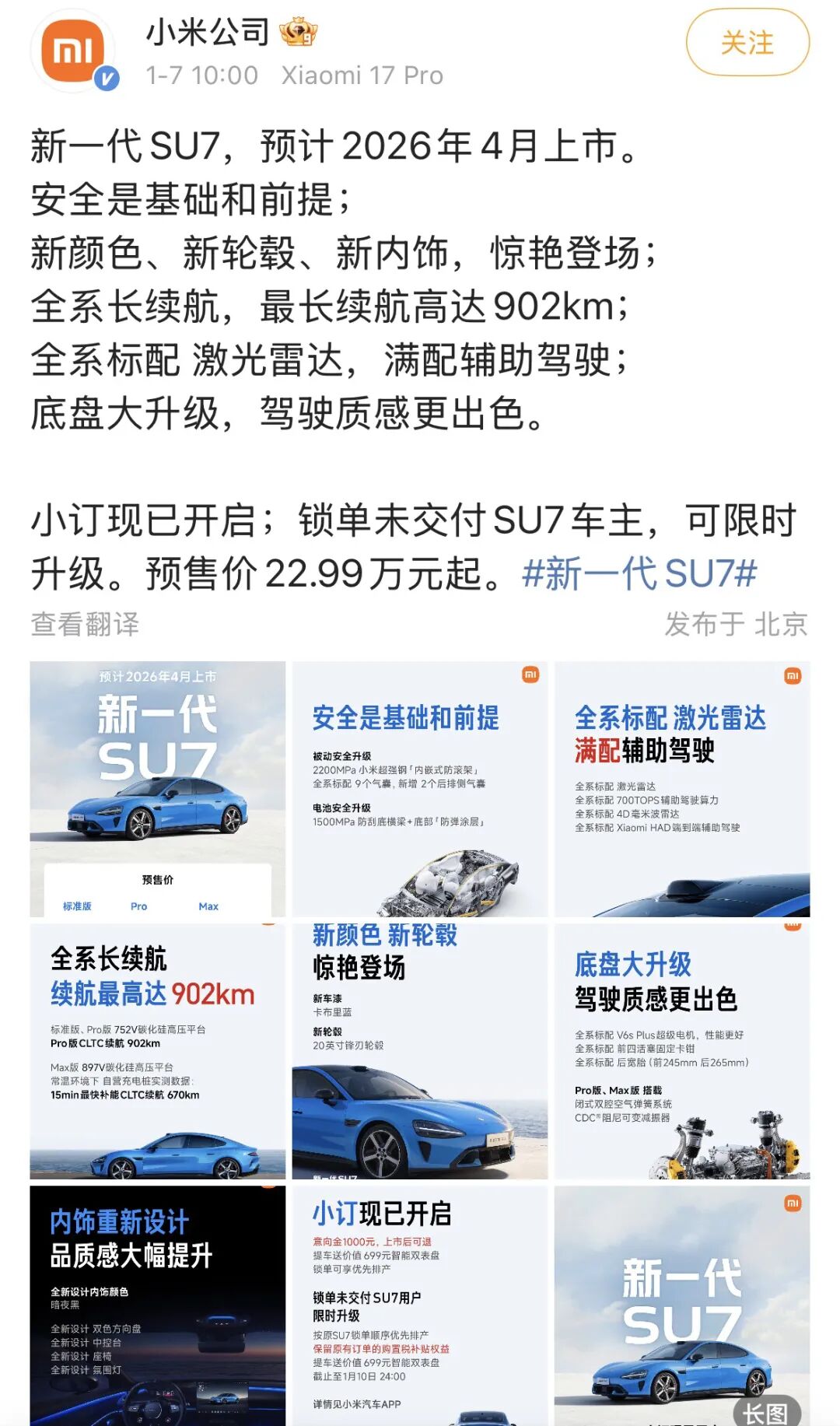
Core Viewpoint - Xiaomi Auto officially announced the first facelift of its mass-produced model SU7, with pre-orders starting immediately and an expected launch in April 2024 [1][6]. Group 1: Product Upgrades - The facelift of the SU7 focuses on four main areas: safety features, chassis technology, range capability, and design enhancements [6]. - Safety upgrades include an optimized battery thermal runaway prevention system and improved vehicle body strength, with all models now equipped with lidar [6]. - The new intelligent chassis system aims to enhance driving quality and stability through software and hardware collaboration [6]. - The maximum range of the vehicle has been significantly improved, exceeding 900 kilometers, addressing user concerns about range anxiety [6]. - New design elements include a "Capri Blue" paint option, new wheel styles, and refreshed interior design [6]. Group 2: Pricing and Market Position - The new SU7 will be available in three configurations: Standard, Pro, and Max, with pre-sale prices set at 229,900, 259,900, and 309,900 yuan, respectively, reflecting an increase of 10,000 to 14,000 yuan compared to the previous model [6]. - The emphasis on safety in this upgrade is likely a response to the increasing safety concerns in the electric vehicle industry, particularly in light of recent safety incidents [7]. Group 3: Sales Performance and Future Goals - In 2023, Xiaomi Auto's overall sales exceeded 410,000 units, surpassing the initial target of 300,000 and the revised target of 350,000 [7]. - The SU7 model contributed significantly to sales, with 230,000 units sold in the first eleven months of 2023, while the YU7 model sold 130,000 units during the same period [8]. - For 2026, the company has set an ambitious delivery target of 550,000 units, with hopes of exceeding this goal [9].

中邮科技:股东国华卫星完成减持3%
Guo Ji Jin Rong Bao· 2026-01-07 11:32
中邮科技公告,持股5%以上股东国华卫星于2025年10月16日~2026年1月7日通过集中竞价减持136万 股、大宗交易减持272万股,合计减持408万股,占公司总股本3%,减持价格47~68.8元/股。减持后其 持股降至374.34万股,占2.7525%。与一致行动人航天投资合计持股由1072.73万股降至833万股,占比 由7.89%降至6.13%,权益变动触及1%刻度,本次减持计划已实施完毕。 ...

底价1.84亿元!诚泰财险1.9亿股股份再寻接盘方
Guo Ji Jin Rong Bao· 2026-01-07 11:24
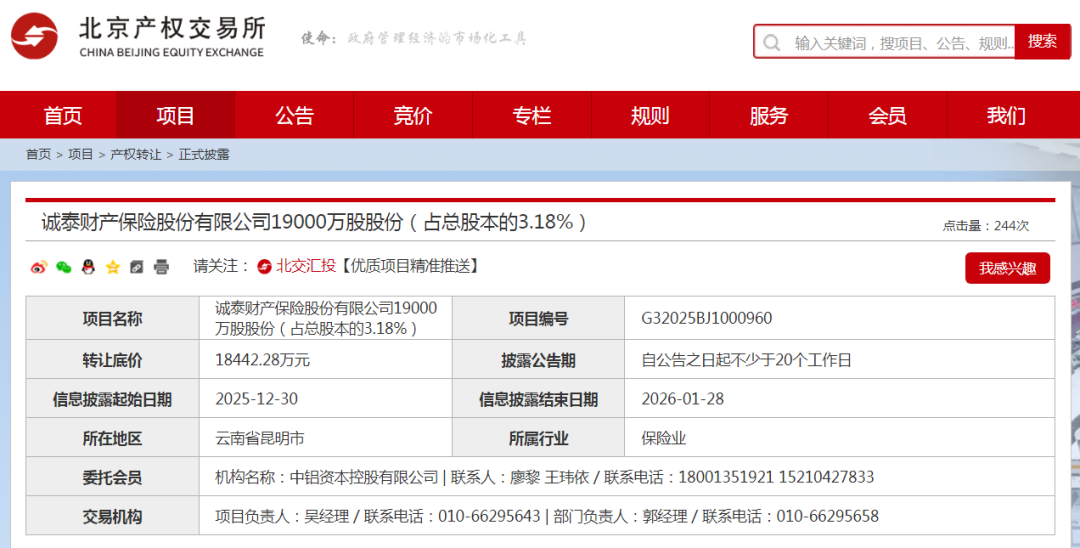
Group 1 - The core issue is the frequent listing of equity stakes from small and medium-sized insurance companies, with a specific focus on the transfer of 190 million shares (3.18% of total equity) of Chengtai Property Insurance Co., Ltd. at a base price of 184.42 million yuan [1][2] - Yunnan Metallurgical Group, the transferor, has previously attempted to sell its shares in Chengtai Insurance, with the transfer price decreasing from 156 million yuan to 125 million yuan, but these attempts ended in failure [2][4] - The current market condition for small and medium-sized insurance companies is characterized by a lack of buyers, leading to a situation described as "having a price but no market" [3][5] Group 2 - Yunnan Metallurgical Group, established in 1990, is a state-controlled enterprise and one of the original shareholders of Chengtai Insurance, which has seen its stake diluted from 19% to 3.18% over time [4][6] - The recent equity transfer actions are seen as a response to the "retreat from finance" directive issued by the State-owned Assets Supervision and Administration Commission, which emphasizes focusing on core business and limiting non-core investments [4][5] - Many state-owned enterprises have begun to divest their stakes in insurance companies, indicating a broader trend in the industry [4][5] Group 3 - Chengtai Insurance has faced significant financial challenges, transitioning from profitability to a net loss of 248 million yuan in 2023, with losses expected to increase to 297 million yuan in 2024 [8] - However, there are signs of recovery in 2025, with a reported insurance business revenue of 1.763 billion yuan, a year-on-year increase of 15.86%, and a net profit of 19 million yuan [8][9] - The company has a complex ownership structure, with 56.96% of its shares under pledge or freeze, indicating potential liquidity issues [6][7] Group 4 - To enhance competitiveness, small and medium-sized insurance companies are advised to focus on differentiation, utilize AI and big data for operational efficiency, strengthen capital through various financial strategies, and deepen partnerships with intermediaries and technology platforms [9]
昆仑芯拟赴港IPO,募资或不超过20亿美元
Guo Ji Jin Rong Bao· 2026-01-07 11:15
Group 1 - The core point of the news is that Kunlun Chip, a subsidiary of Baidu, is planning to go public in Hong Kong with an IPO fundraising target of up to $2 billion [1] - Baidu announced that Kunlun Chip submitted its listing application to the Hong Kong Stock Exchange on January 1, 2026, and the proposed split will involve a global offering of Kunlun shares [1][3] - The split aims to enhance Kunlun Chip's image among clients and partners, improve its negotiation position, and allow it to independently access equity and debt capital markets [4] Group 2 - Kunlun Chip, as one of the earliest players in the AI accelerator chip sector in China, was valued at 13 billion yuan ($1.9 billion) during its first round of financing in April 2021 and reached a valuation of 21 billion yuan ($3 billion) after its latest round in July 2025 [3] - According to IDC, Kunlun Chip ranks third in the Chinese GPU market, with Nvidia holding a 70% market share and Huawei's Ascend at 23% [3] - Nomura forecasts that Kunlun Chip's revenue will reach 6.6 billion yuan ($0.93 billion) in 2026, driven by the demand for large language model inference chips, and has raised Baidu's target stock price from $140 to $178 [5]