Guo Ji Jin Rong Bao

Search documents
港交所拟优化每手买卖单位的做法值得A股借鉴
Guo Ji Jin Rong Bao· 2025-12-23 08:40
最近,港交所刊发咨询文件,就优化香港证券市场每手买卖单位框架的相关建议征询市场意见,以 提升交易、结算及交收效率。 根据咨询文件,适用证券的每手股数将整合为八种标准选项,同时下调每手价值的指引下限,并增 设指引上限。具体来看,八种每手股数包括1股、50股、100股、500股、1000股、2000股、5000股和1万 股。港交所表示,优化后每手价值的指引下限将由现行的2000元下调至1000元,以避免因每手价值过低 而出现"负价值交易"。 当然,对于发行规模较大的新股,可根据实际情况进行差异化安排。例如,当新股首发规模超过10 亿股时,可恢复500股的最小申报单位;若首发规模超过20亿股,则可进一步提高至1000股。总体而 言,应根据新股发行规模灵活调整最小申报单位,在保持合理中签率的同时,更好地满足中小投资者打 新的需求,这也是保护中小投资者利益的体现。(作者系财经评论员) 事实上,A股市场并非只有一只"千元股"。爱美客、石头科技、禾迈股份等个股都曾进入"千元 股"行列,目前寒武纪仍属其中。每手100股的交易规定,不仅将不少中小投资者挡在"千元股"之外,也 在一定程度上影响了这类股票的流动性。 因此,对于"千 ...

快手遭黑灰产攻击,专家呼吁筑牢双重安全防线
Guo Ji Jin Rong Bao· 2025-12-23 08:13
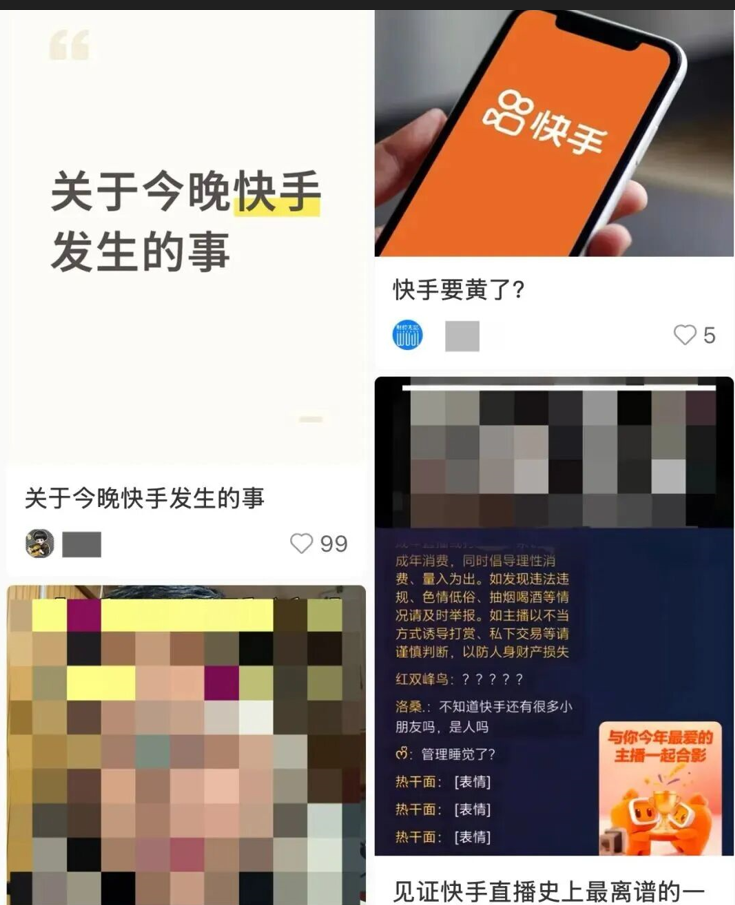
Core Insights - The recent cyber attack on Kuaishou highlights the vulnerability of digital platforms to automated attacks by hacker organizations [1][3] - The incident serves as a wake-up call for the entire industry regarding the need for advanced security measures in the face of evolving threats [5] Group 1: Attack Details - Kuaishou experienced a severe attack on December 22, where hackers infiltrated the system within 60 to 90 minutes, leading to a collapse of the platform's security [1] - Approximately 17,000 zombie accounts were used to create live streams that broadcasted illegal content, with some streams attracting nearly 100,000 viewers [1] Group 2: Security Challenges - The attack was facilitated by the shift to an "automated attack" era, where traditional manual defense mechanisms are inadequate [3] - The rapid influx of violating content overwhelmed manual review processes, resulting in a "ban not keeping up with new additions" scenario [4] Group 3: Recommendations for Improvement - Experts emphasize the need for companies to adopt a dual defense strategy that addresses both external attacks and internal vulnerabilities [4] - The implementation of AI-driven automated security measures is crucial to counteract the increasing sophistication of cyber threats [4][5] - A zero-trust architecture is recommended to strengthen internal defenses against insider threats and unauthorized access [5]


周大生:控股股东周氏投资解除质押1.70%股份
Guo Ji Jin Rong Bao· 2025-12-23 08:07
Core Viewpoint - The controlling shareholder, Zhou's Investment, has released a pledge of 18.5 million shares, which accounts for 3.04% of its holdings and 1.70% of the company's total share capital [1] Summary by Relevant Sections - **Share Pledge Details** - The pledge release date is December 22, 2025, with the pledge starting on May 6, 2024 [1] - The pledgee is China Galaxy Securities Co., Ltd [1] - **Current Shareholding Status** - As of the announcement date, Zhou's Investment and its concerted parties hold 694 million shares, representing 63.94% of the total shares [1] - A total of 32.78 million shares are currently pledged, which is 4.72% of their holdings and 3.02% of the company's total share capital [1]
海南“半价豪车”真相:代购违规,15年强制报废还得补缴巨款
Guo Ji Jin Rong Bao· 2025-12-23 08:01
Core Viewpoint - Hainan is set to become the world's largest free trade port, surpassing Singapore, Dubai, and Hong Kong, following the official operation of its customs closure policy [1] Group 1: Luxury Car Market Impact - The launch of Hainan's customs closure has led to significant discounts on luxury cars, with prices dropping by 35%-40% compared to mainland market prices, attracting considerable consumer interest [3] - The high tax rates on imported vehicles in mainland China, which can reach up to 116.58%, have been a barrier, but the new policy allows for substantial price reductions, making luxury cars more accessible [3] - However, the zero-tariff policy for imported vehicles is limited to enterprises engaged in transportation and tourism, with strict conditions that must be met [4][5] Group 2: Automotive Industry Cost Structure - The zero-tariff policy is expected to reduce the tax burden on automotive manufacturers by 20%-22%, leading to a decrease in overall vehicle production costs by 18%-20% [7] - For example, a medium-sized car manufacturer importing 1 billion yuan worth of parts could save approximately 25 million yuan annually due to the elimination of tariffs and taxes [8] - The simplification of customs procedures has also improved efficiency, reducing the number of required declaration items from 105 to 33 [8] Group 3: Attracting Investment and Industry Growth - Hainan's favorable tax policies, including a 15% corporate income tax rate for qualifying electric vehicle and technology companies, are designed to attract foreign investment and encourage local manufacturing [9] - The "processing value-added 30% exemption" policy allows multinational companies to establish assembly bases in Hainan, enhancing their market access to mainland China [9] - These policies are expected to create a dual advantage of a "tariff-free zone" and logistical convenience, potentially attracting more businesses to the region [9]
特朗普政府全面叫停海上风电项目
Guo Ji Jin Rong Bao· 2025-12-23 08:00
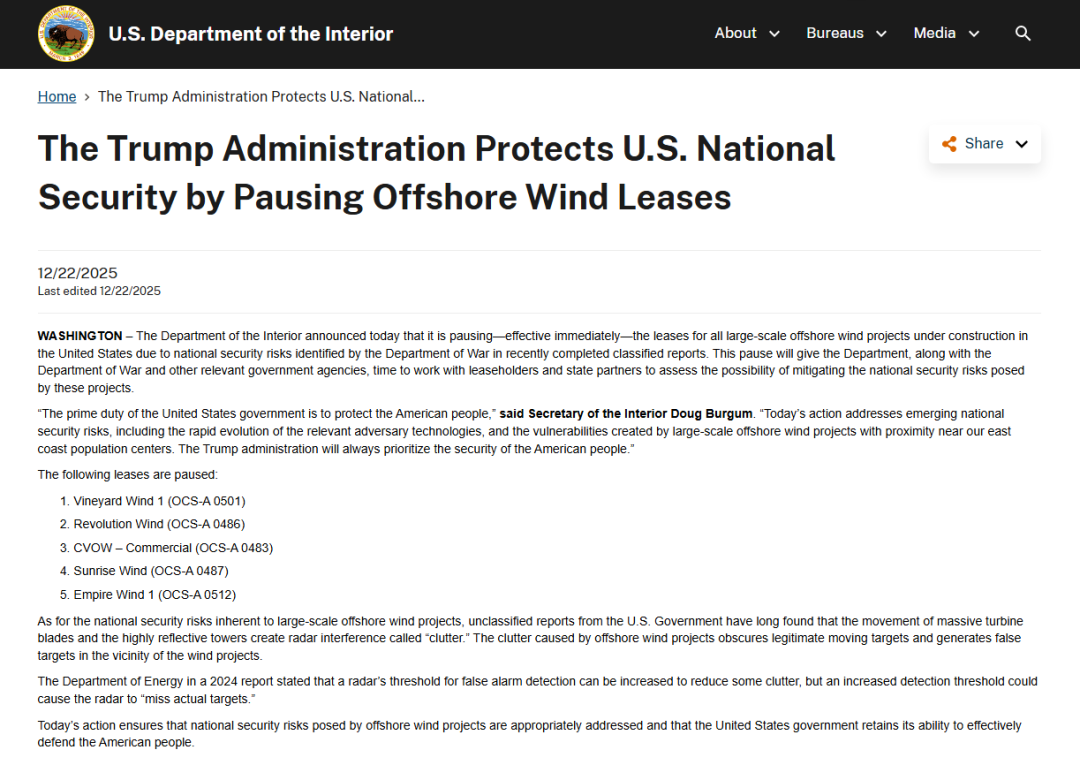
Core Viewpoint - The Trump administration has announced a suspension of all ongoing offshore wind projects along the U.S. East Coast, marking the most severe action taken against the offshore wind industry to date. This decision introduces significant uncertainty for an industry already facing cost pressures [1][3]. Group 1: Project Suspension Details - The U.S. Department of the Interior has paused federal leases for five offshore wind projects from Massachusetts to Virginia due to a recent confidential assessment by the Department of Defense identifying potential "national security risks" [1][3]. - Affected projects include Vineyard Wind 1 off Martha's Vineyard, Revolution Wind supplying Rhode Island and Connecticut, Coastal Virginia Offshore Wind, Sunrise Wind, and Empire Wind 1, most of which are in advanced stages of construction [3][6]. Group 2: Market Reaction and Company Responses - Following the announcement, shares of Ørsted, responsible for two of the projects, fell over 11%, while Dominion Energy, leading the Virginia project, saw a 3.7% drop [6]. - Ørsted has received a notice to suspend all construction activities on the U.S. outer continental shelf for 90 days, with the federal government retaining the right to extend this suspension. The company is evaluating response strategies, including potential legal avenues [6]. - Dominion Energy emphasized the critical nature of its Virginia project for national security and local electricity demand, serving important military facilities and data centers [6]. Group 3: Political and Industry Reactions - Local officials, including Connecticut's Governor Ned Lamont, have questioned the federal decision, suggesting that safety concerns regarding offshore wind turbines interfering with ground radar systems are unfounded [7]. - Massachusetts Governor Maura Healey criticized the action as "illegal," warning that it would lead to job losses during the holiday season [8]. Group 4: Industry Challenges - The offshore wind industry has faced ongoing tensions with the Trump administration, which has previously halted federal permitting processes for wind projects, creating prolonged uncertainty [11]. - The industry is also grappling with structural pressures, including rising labor costs post-pandemic, increased financing costs due to higher interest rates, and a shortage of specialized vessels for offshore construction, leading to project delays and renegotiations [11].
“茅台系”华贵人寿再增资6亿元,仍有募资计划推进中
Guo Ji Jin Rong Bao· 2025-12-23 07:59
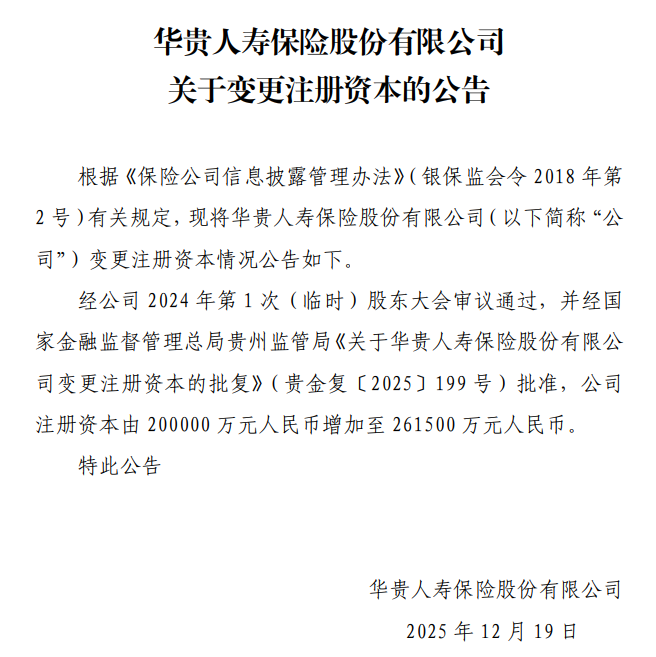
12月23日,《国际金融报》记者注意到,华贵人寿保险股份有限公司(下称"华贵人寿")日前披露公告称,经公司2024年第1次(临时)股东大会审议 通过,并经贵州金融监管局批准,公司注册资本由20亿元增加至26.15亿元。不过,公告中并未明确出资方及出资比例情况。 作为贵州省第一家本土保险法人机构,华贵人寿成立于2017年2月,总部位于贵州省贵安新区,实控人为贵州省国资委,主要股东有中国贵州茅台酒厂 (集团)有限责任公司(下称"茅台集团")、贵州省黔晟国有资产经营有限责任公司(下称"黔晟国资")、贵州金融控股集团有限责任公司(贵州贵民投资 集团有限责任公司)等。 | | | | 贵阳贵安国有资产 | | --- | --- | --- | --- | | | | | 交易平台 | | 首页 | 政策法规 | 业务指南 分支机构 会员专家中心 | 企业 党建工作 | | ▲ 首页 / 项目 / 产权交易 / 增资扩股 | | | | | | 挂牌项目 | 华贵人寿保险股份有限公司增资项目 | | | 产权交易 | | 2025-12-17 ● 3012 | | | 招标采购 | | ハ 项目名称:华贵人寿保险股份有 ...
家门口的湖北好物盛宴!2025湖北特色产品上海消费周举行
Guo Ji Jin Rong Bao· 2025-12-23 07:32
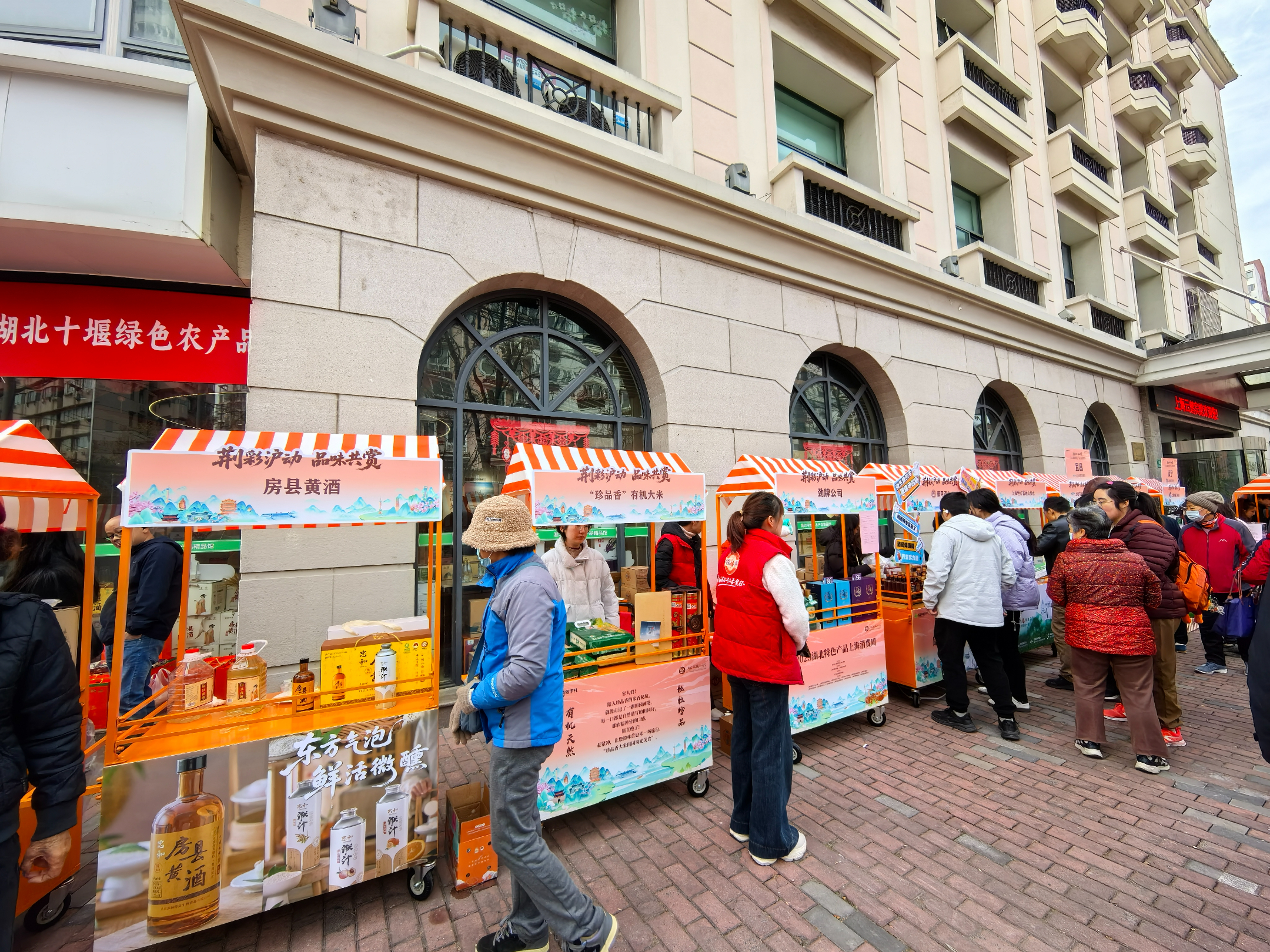
Core Viewpoint - The "Hubei Specialty Products Shanghai Consumption Week" aims to enhance economic and cultural exchanges between Hubei and Shanghai, showcasing Hubei's quality products and cultural charm while helping Hubei enterprises expand into the Yangtze River Delta market [1][2]. Group 1: Event Overview - The event is scheduled from December 23 to 30 in Shanghai's Hongkou District, featuring over 1,000 quality products from more than 100 leading Hubei enterprises [6][9]. - The opening ceremony highlighted the importance of building a two-way bridge for mutual understanding and appreciation of Hubei products among Shanghai residents [1][2]. Group 2: Objectives and Strategies - The Shanghai Hubei Chamber of Commerce aims to promote Hubei products through three main strategies: enhancing product service and promotion, facilitating precise supply-demand matching, and establishing a long-term operational platform for Hubei specialties in Shanghai [2]. - The event includes five themed exhibition areas, such as "Hubei Quality Selection" and "Healthy Hubei Products," designed to attract local consumers and provide a one-stop service platform for Hubei products [6][9]. Group 3: Consumer Engagement - The event allows for product tasting and direct purchasing, with attendees expressing satisfaction with the quality and taste of Hubei products, such as Enshi selenium-rich tea [9]. - The initiative is supported by various local organizations and aims to strengthen emotional ties and collaborative development between Hubei and Shanghai [9].
沈晗耀:三大国际科创中心引领中国经济高质量发展
Guo Ji Jin Rong Bao· 2025-12-23 07:32
Core Insights - The article emphasizes the need for China to accelerate its transformation into a global technology powerhouse to lead world development, addressing current economic challenges such as overcapacity, insufficient demand, and real estate downturns [1] Group 1: Strategic Solutions - The construction of three major international innovation centers in Beijing, Shanghai, and the Guangdong-Hong Kong-Macau Greater Bay Area is proposed as a national core strategy to drive high-quality economic development [2] - The central bank is urged to play a pivotal role in the economy by facilitating a direct monetary channel to support public goods and stimulate private sector growth, creating a virtuous cycle of GDP and tax revenue [3] - Establishing real estate, stock market, and commodity stabilization funds is recommended to stabilize the economy and promote high-quality development in key sectors [4] Group 2: Economic Framework - A closed-loop system is proposed, integrating technology-driven development, stabilization funds, and distribution reforms to achieve high-quality economic growth and common prosperity [5] - The need for deep distribution system reforms is highlighted to address unemployment and income inequality, ensuring a multi-tiered distribution system that supports various levels of wealth [4]
华顿在沪发布2025年世界500强企业排行榜
Guo Ji Jin Rong Bao· 2025-12-23 07:32
Core Insights - The "Wharton Version 2025 World 500 Companies Ranking" was released, focusing on profit as the ranking criterion, differing from the Fortune magazine's revenue-based ranking [1] - The total profit of the world's top 500 companies reached approximately $4.02 trillion, a 5% increase from the previous year [1] - The median profit increased from $4.47 billion to $4.58 billion, reflecting a growth of 2.4% [1] - The threshold for inclusion in the ranking rose from $2.17 billion to $2.31 billion, marking a 6.8% year-on-year increase [1] - The total revenue of all listed companies was about $33.41 trillion, with a year-on-year growth of approximately 4% [1] Company Rankings - Apple topped the profit ranking with $112.01 billion, followed by Saudi Aramco at $104.98 billion [2] - Other notable companies in the top ten include Microsoft ($101.83 billion), Alphabet ($100.12 billion), and Berkshire Hathaway ($88.99 billion) [2] - Among the top 20, seven companies are from China, including China Construction Bank and China Agricultural Bank [2] Industry Trends - The 2025 ranking reflects a core pattern of "U.S. dominance, followed by China, with Europe and Japan diversifying and emerging forces rising" [3] - The industry distribution is concentrated in technology, finance, and energy sectors, indicating pressures for traditional industries to transform [3] - The top 100 companies contributed 57% of total profits, with the top 10 accounting for 20%, highlighting a structural characteristic of "head concentration and tail pressure" [3] Regional Insights - The U.S. has 191 companies on the list, an increase of 9 from the previous year, generating a total profit of approximately $1.77 trillion, which is 44% of the total profits of the top 500 [3] - China (including Hong Kong, Macau, and Taiwan) has 114 companies, accounting for 22.8% of the total, with a total profit of $989.28 billion, representing 24.6% of the total [4] - The financial sector is significant in China, with 39 financial companies listed, 13 of which are in the top 100 [4]






A股放量上涨,CPO龙头股“易中天”集体大涨,海南自贸概念爆发
Guo Ji Jin Rong Bao· 2025-12-23 00:45
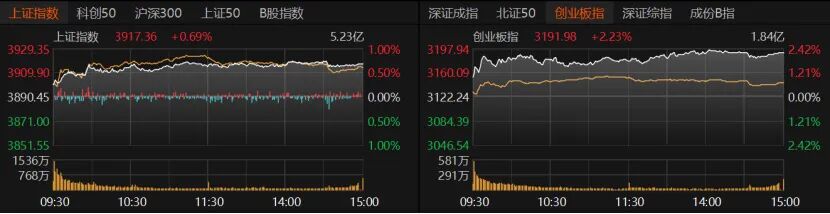
Market Overview - A-shares experienced a significant rise with the ChiNext Index increasing by over 2%, driven by technology stocks, while the total trading volume remained below 1.9 trillion yuan [1][2] - The Shanghai Composite Index closed up 0.69% at 3917.36 points, and the ChiNext Index rose 2.23% to 3191.98 points, indicating a warming trading environment [2][4] - The market's trading volume increased by 133.5 billion yuan compared to the previous trading day, reaching 1.88 trillion yuan [2] Sector Performance - The CPO (Co-packaged Optical) concept stocks, including leading companies like "Yizhongtian" (Xinyi Sheng, Zhongji Xuchuang, Tianfu Communication), saw substantial gains [1][12] - The technology, retail, and precious metals sectors performed well, with the CPO concept rising by 5.08% and the F5G concept increasing by 6.12% [5][6] - Among the 31 first-level industries, 22 sectors closed in the green, with telecommunications leading the gains [4][6] Notable Stocks - Key stocks such as Zhongji Xuchuang rose by 8.01% to 617.50 yuan, Xinyi Sheng increased by 6.61% to 462.99 yuan, and Tianfu Communication gained 4.19% to 223 yuan [12] - The telecommunications sector saw a rise of 4.28%, with several stocks hitting the daily limit up [6][7] - The electronic sector also performed well, with a 2.62% increase, and notable stocks like Hehe Tree Technology and Aisen Co., Ltd. saw significant gains [8] Investment Strategy - Analysts suggest a balanced investment approach, focusing on stocks with stable cash flow and solid fundamentals, while being cautious of potential market corrections [1][13] - The market is expected to oscillate between 3800 and 3900 points in the short term, indicating a cautious outlook for investors [1][13]