
Guo Ji Jin Rong Bao

Search documents
比委内瑞拉更危急?油市紧盯伊朗
Guo Ji Jin Rong Bao· 2026-01-12 11:30
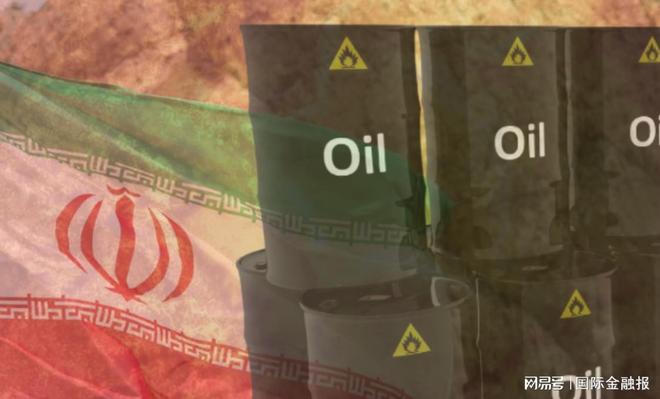
Core Viewpoint - The situation in Iran is escalating with significant social unrest, which may have profound implications for the global oil market as the country faces internal and external pressures [3][5][11]. Group 1: Social Unrest in Iran - Iran is experiencing its largest social unrest in three years, triggered by the devaluation of its currency and rising living costs, leading to protests across approximately 20 provinces [5]. - The International Monetary Fund (IMF) forecasts Iran's inflation rate to soar to 43.3% in 2025, while the real GDP growth rate is expected to drop to 0.6%, a significant decline from 3.7% in 2024 [5]. - The Iranian government has announced a monthly subsidy of 10 million rials (approximately 48 RMB) for eligible citizens to alleviate economic burdens, although many locals view this as insufficient [6][5]. Group 2: External Pressures and Military Considerations - The U.S. government, under President Trump, is considering various intervention strategies in Iran, including military options and support for protestors [9][10]. - Iran's leadership has expressed a strong stance against U.S. and Israeli involvement, warning that any military action could lead to significant retaliatory measures [10]. Group 3: Oil Market Implications - The unrest in Iran has led to increased volatility in the oil market, with Brent crude prices rising over 5% recently, reflecting concerns over potential supply disruptions from the fourth-largest OPEC producer [12]. - Iran's current oil production exceeds 3 million barrels per day, with exports around 2 million barrels per day, contrasting sharply with Venezuela's declining production capabilities [12]. - The strategic importance of the Strait of Hormuz is highlighted, as it carries about 20% of global oil consumption; any blockade could lead to oil prices soaring above $150 per barrel, triggering a global energy crisis [13].

国博电子:目前在民用通信卫星领域的营收占比较小
Guo Ji Jin Rong Bao· 2026-01-12 11:09
Core Viewpoint - The company has a significant revenue structure focused on active phased array T/R components and series RF integrated circuit products, primarily applied in radar detection and other specialized fields, with a relatively small revenue share from the civil communication satellite sector, indicating potential unpredictability in future industry development [1] Revenue Structure - The company's revenue is mainly derived from active phased array T/R components and RF integrated circuit products, which are utilized in specialized fields such as radar detection [1] - The revenue contribution from the civil communication satellite sector is currently low, suggesting limited exposure to this market [1] Market Volatility - The company's stock price has exhibited significant short-term volatility, highlighting the need for investors to be cautious and make informed investment decisions [1]

大为股份:拟以自有资金向全资子公司增资1.4亿元人民币,再由大为创芯向其全资子公司增资2000万美元
Guo Ji Jin Rong Bao· 2026-01-12 11:01
Core Viewpoint - The company plans to increase its capital investment in its wholly-owned subsidiary Shenzhen Dawi Chuangxin Microelectronics Technology Co., Ltd. by 140 million RMB, which will subsequently invest 20 million USD into its wholly-owned subsidiary Chip汇群 Technology Hong Kong Co., Ltd. [1] Group 1 - The registered capital of Dawi Chuangxin will increase from 30 million RMB to 170 million RMB after the capital increase [1] - The registered capital of Chip汇群 Hong Kong will rise from 1 million USD to 21 million USD following the investment [1]

万华化学:股东Prime Partner已减持0.508%
Guo Ji Jin Rong Bao· 2026-01-12 09:49
Group 1 - The core point of the article is that Prime Partner International Limited, a shareholder of Wanhua Chemical, has reduced its shareholding from 156 million shares (4.98%) to 140 million shares (4.48%) through a planned reduction [1] - The reduction plan was disclosed on November 14, 2025, allowing for a maximum reduction of 0.50% of shares within 15 trading days until January 31, 2026 [1] - The actual reduction occurred between December 5, 2025, and January 8, 2026, where 15.8999 million shares (0.508%) were sold, exceeding the planned reduction by 247,500 shares (0.008%) [1] Group 2 - The shares were sold at prices ranging from 68.69 to 77.25 yuan per share, resulting in a total reduction amount of 1.195 billion yuan [1]

吉宏股份:拟将所持深圳吉客拓40%的股权以259.89万元的价格转让给西安丹骏数字科技有限公司
Guo Ji Jin Rong Bao· 2026-01-12 09:46
吉宏股份公告,为进一步建立健全子公司的长效激励机制,优化子公司股权结构,以期引进更多管理人 才、整合积累更多资源,促进子公司经营业务的长足发展,公司拟将所持深圳吉客拓40%的股权以 259.89万元的价格转让给控股子公司西安丹骏数字科技有限公司(公司持股比例55%),将所持深圳吉客 拓20%的股权以129.94万元的价格转让给王亚朋先生,将所持深圳吉客拓15%的股权以97.46万元的价格 转让给窦剑先生,将所持深圳吉客拓10%的股权以64.97万元的价格转让给李柯莹女士。 ...

开山股份:SMGP2025年发电量146.72万兆瓦时,同比增长25.38%
Guo Ji Jin Rong Bao· 2026-01-12 09:28
Core Viewpoint - The company announced that its subsidiary, Sorik Marapi Geothermal Power Company (SMGP), achieved significant growth in electricity generation and revenue for the year 2025, indicating a strong performance in the geothermal energy sector [1] Group 1: Electricity Generation - The total electricity generation for SMGP in 2025 was approximately 1.5 million megawatt-hours [1] - The electricity generation increased by 25.38% compared to the previous year [1] Group 2: Revenue Performance - The electricity revenue for SMGP reached $127 million in 2025 [1] - The revenue saw a year-on-year increase of 25.74% [1]

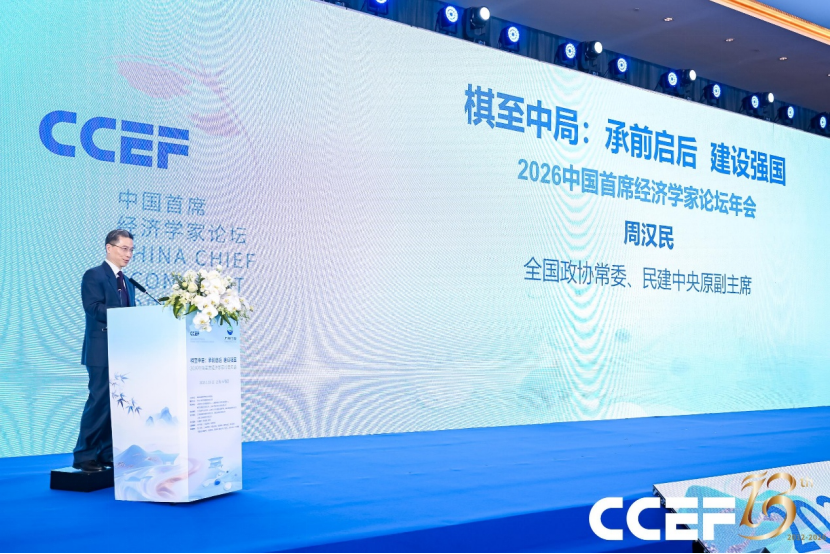
周汉民:中国要在不确定的世界中提供确定性、连续性和可合作性
Guo Ji Jin Rong Bao· 2026-01-12 09:05
Group 1 - The core viewpoint of the article is that the instability of the global economy in 2026 is primarily driven by three structural roots: weak and uneven global growth, a low tolerance state in the global financial system, and the shift from efficiency logic to geopolitical economic logic [1][3][4] Group 2 - The first structural root is the long-term weakening and highly uneven global growth momentum, with a noticeable decline in the global potential growth rate compared to the early 21st century. Developed economies are constrained by aging populations and declining investment returns, while emerging economies face debt constraints and limited development space [3] - The second structural root is the low tolerance state of the global financial system, where the combination of high interest rates, high debt, and high uncertainty has significantly narrowed the buffer space of the financial system. Risks may not manifest as a comprehensive crisis but could erupt locally and transmit across markets, exacerbating systemic instability [3] - The third structural root is the replacement of efficiency logic with geopolitical economic logic, where certain countries systematically weaponize trade, investment, technology, and financial policies, leading to a new form of globalization characterized by higher costs, lower efficiency, and greater fragmentation [3] Group 3 - In response to these challenges, China aims to provide stability to the global economy through four levels of certainty: macroeconomic growth certainty, industrial supply certainty, institutional rule certainty, and financial stability [4][5] - On the macro level, China plans to maintain stable and predictable growth by expanding domestic demand, optimizing investment structures, and fostering new productive capacities [4] - On the industrial level, China's core advantages will shift from cost-based to a complete industrial system, continuous technological iteration, and scalable application scenarios, particularly in sectors like new energy, high-end manufacturing, and digital economy [4] - On the institutional level, China will promote high-level institutional openness and reduce institutional friction costs through regional and multilateral cooperation, opposing protectionism disguised as security measures [4] - On the financial level, China will accelerate the internationalization of the renminbi, deepen regional financial cooperation, and enhance financial regulatory coordination to provide diverse risk mitigation options for global southern countries [4] Group 4 - Overall, the world economy in 2026 lacks stability, predictability, and reliable institutional supply, despite not being short of capital and technology. China's responsibility is to provide certainty, continuity, and cooperation in an uncertain world, which is essential for its own high-quality development and for overcoming structural challenges in the global economic system [5]
800亿元!上海低空经济亮出冲刺目标
Guo Ji Jin Rong Bao· 2026-01-12 08:33
Core Viewpoint - Shanghai aims to establish itself as the "world eVTOL capital" by 2028, targeting a core industry scale of over 80 billion yuan and nurturing 10 leading enterprises in the sector [1][2]. Industry Development - The implementation of the new policy marks a transition from nurturing the low-altitude economy to a phase of scaling and commercialization [2]. - By the end of 2025, Shanghai is expected to have at least 251 low-altitude economy startups, with 66 of them focusing on eVTOL and drones [2]. - Over 50% of the leading eVTOL companies in China have chosen to establish their operations in Shanghai, with five key players referred to as the "eVTOL Five Dragons" [2]. Regional Collaboration - The low-altitude economy industry alliance in Minhang District has gathered over 40 member units, covering the entire industry chain from core components to complete manufacturing [3]. - Yangpu District has introduced measures to promote low-altitude economic development, attracting over 130 related enterprises and initiating several innovative drone delivery routes [3]. Technological and Financial Support - Shanghai's comprehensive aviation industry chain, including large aircraft R&D and manufacturing, positions it advantageously in the low-altitude economy sector [4]. - The new measures include 16 support initiatives focusing on equipment R&D, industrial ecology, regional collaboration, and application scenarios [5]. - Financial support is emphasized, with initiatives to guide low-altitude industry funds to attract social capital for equity investments [7]. Future Outlook - The low-altitude economy is projected to reach a scale of over 100 billion yuan by the end of the 14th Five-Year Plan, with a focus on technological innovation and commercial demonstration [4]. - The policy aims to address key industry challenges, such as airworthiness certification, which is crucial for commercial operations [6]. - The collaboration within the Yangtze River Delta region is expected to enhance resource integration and optimize industry layout, facilitating long-term development [8].
罗兰贝格:中国供应链正逐步升级为中资主导的亚洲供应链
Guo Ji Jin Rong Bao· 2026-01-12 08:26
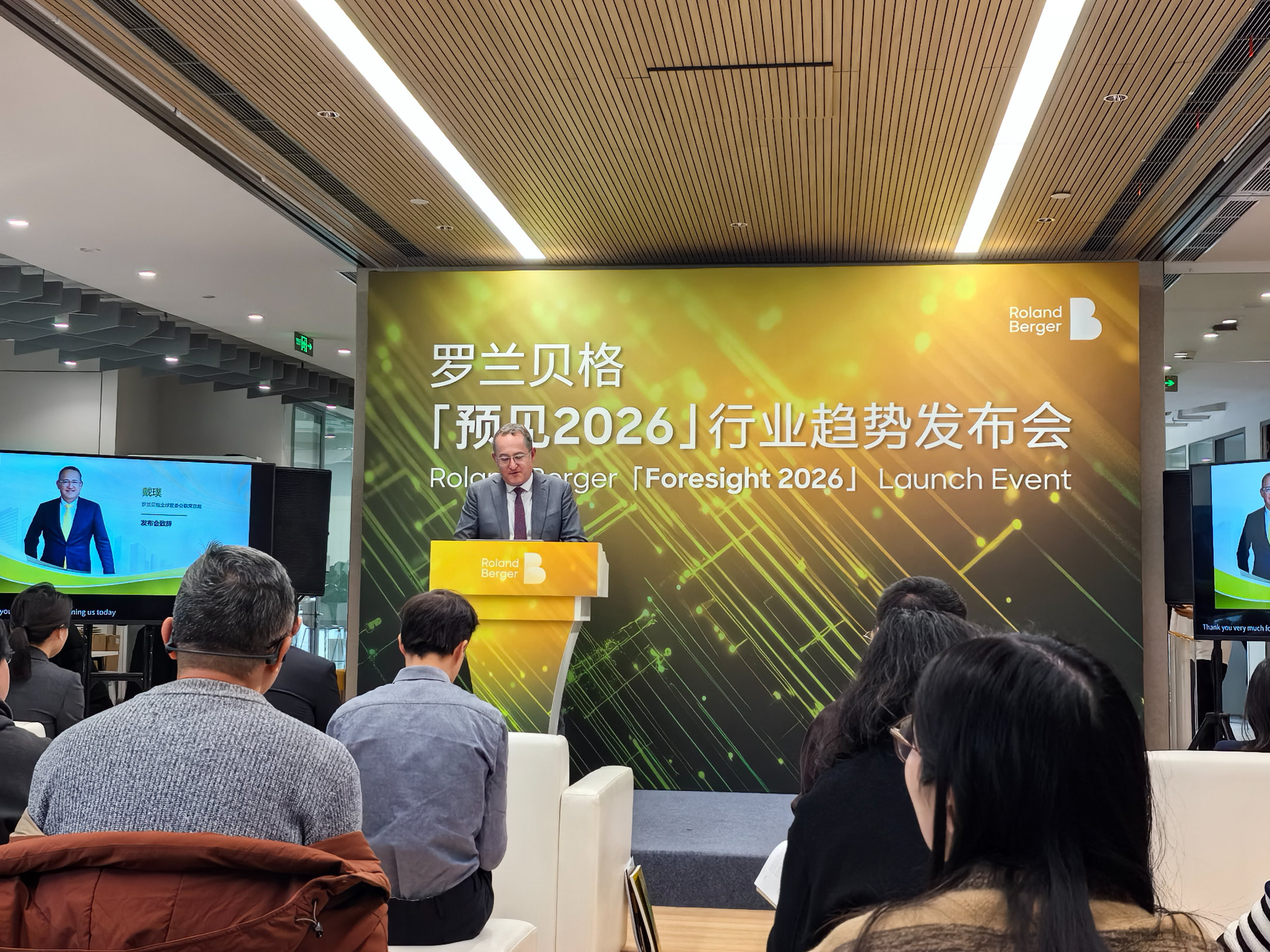
"2026年中国经济增速预计在4.5%—5%区间,这一温和的增长目标,是为实现更高优先级目标而做出的权衡,即推动中国经济的深度转型。"近日,罗 兰贝格全球管委会联席总裁戴璞(Denis Depoux)在"预见2026"行业趋势会上如是表示。 吴钊据2025年1月至11月数据推演,全年投资并购交易金额超3500亿美元,同比增长超30%;中企海外并购上半年金额近200亿美元,同比增长八成,体 现出海进程的深度本地化。资本市场方面,A股与港股合计融资额占全球IPO市场的1/3,A股重大资产重组案例超130笔,较前一年数量翻倍,募投管退各环 节全面修复,全年交易数量超1.1万笔,市场活跃度显著提升。 戴璞表示,当前,部分行业收缩规模,另一部分行业则加速升级,这正是"创造性破坏"的生动写照,也恰恰印证了读懂中国经济的难度所在:它正处 于"一边增长、一边收缩"的分化状态,这种分化的背后是一场深刻的经济转型变革。 "我们或许会看到增速放缓,但实则是在为构建更强劲、更具韧性的经济根基铺路。增速数字本身并不重要,关键在于理解其背后的转型逻辑。"他说。 会上,罗兰贝格发布《预见2026:中国行业趋势报告》(下称"报告"),该报告 ...
全球经济2025年闪耀板块与2026年主要风险
Guo Ji Jin Rong Bao· 2026-01-12 07:21
Global Economic Outlook - The global economy is projected to grow by 3.2% in 2025, with developed economies at 1.6% and emerging markets at 4.2% [1] - The year 2025 is expected to showcase several sectors that significantly exceed market expectations [1] Capital Market Dynamics - The evolution of global capital markets in 2025 is influenced by three core drivers: a shift in monetary policy towards interest rate cuts, escalating geopolitical tensions, and asset revaluation and reallocation [3] - Global mergers and acquisitions (M&A) are anticipated to reach $4.5 trillion in 2025, a nearly 50% increase from 2024, marking the second-highest level on record [4] - The M&A landscape will focus on strategically driven "super deals," with 68 transactions exceeding $10 billion, including significant deals in the streaming and railway sectors [4] International Trade Trends - Despite facing challenges from U.S. unilateral tariff policies and trade protectionism, global trade is expected to grow by approximately 7% in 2025, reaching a record $35 trillion [6] - The global value chain trade remains robust, accounting for about 46% of global trade, with a shift towards resilience, sustainability, and inclusivity [6] Future Economic Drivers - Artificial Intelligence (AI) and green transition are projected to shape global economic growth trajectories in 2026, with AI expected to contribute trillions to global GDP [10] - The green industry is transitioning from policy-driven to market-driven, with significant investments anticipated in clean energy and green technologies [10] Risks and Uncertainties - The global economy faces numerous risks, including trade policies and geopolitical tensions, which could disrupt recovery processes [11] - High levels of debt in various countries, particularly in the U.S., may constrain fiscal policy and impact market confidence in dollar assets [11]