Huan Qiu Wang Zi Xun

Search documents
深层海相钾盐开发关键技术被攻克
Huan Qiu Wang Zi Xun· 2026-02-05 01:45
"深层海相钾盐埋藏深、赋存条件复杂,常规开采技术难以实现资源高效分离利用,曾长期被视为难以 动用的呆矿。"四川巴人恒创钾盐有限公司总工程师贾晓华说,"而今困扰行业20余年的难题终于被破 解,我们提取出的钾盐品质与纯度均达到高标准要求。" 科研团队提出,基于"新型杂卤石钾盐矿"可溶性的特点,可以直接采用水溶法进行溶采:打对接井,淡 水从中间的直井注入,沿水平井段溶解地下"新型杂卤石钾盐矿",在注水压力和地层压力的共同作用 下,溶矿卤水和天然卤水会从两侧的对接井涌出。 来源:光明日报 本报达州2月4日电(记者李晓东、周洪双) 近日,四川达州宣汉县深层海相钾盐资源分采分运攻关实验配套装置顺利完成试车,成功提取出高纯度 氯化钾产品。这标志着我国在深层海相钾盐开发领域攻克核心技术瓶颈,为亿吨级海相钾盐资源规模化 开发筑牢技术根基。 钾盐是重要的矿产资源,主要用于生产钾肥。近年来,我国钾盐对外依存度达43%~67%。 此前,国内钾盐开发主要集中于青海、新疆的陆相盐湖,四川达州宣汉县发现的全国首个海相富锂钾资 源矿,圈定"新型杂卤石钾盐矿"富矿区面积达179平方千米,估算推断资源量超7.1亿吨,推算可采储量 约2.45亿吨 ...
两枚足迹揭秘侏罗纪两栖动物世界
Huan Qiu Wang Zi Xun· 2026-02-05 01:45
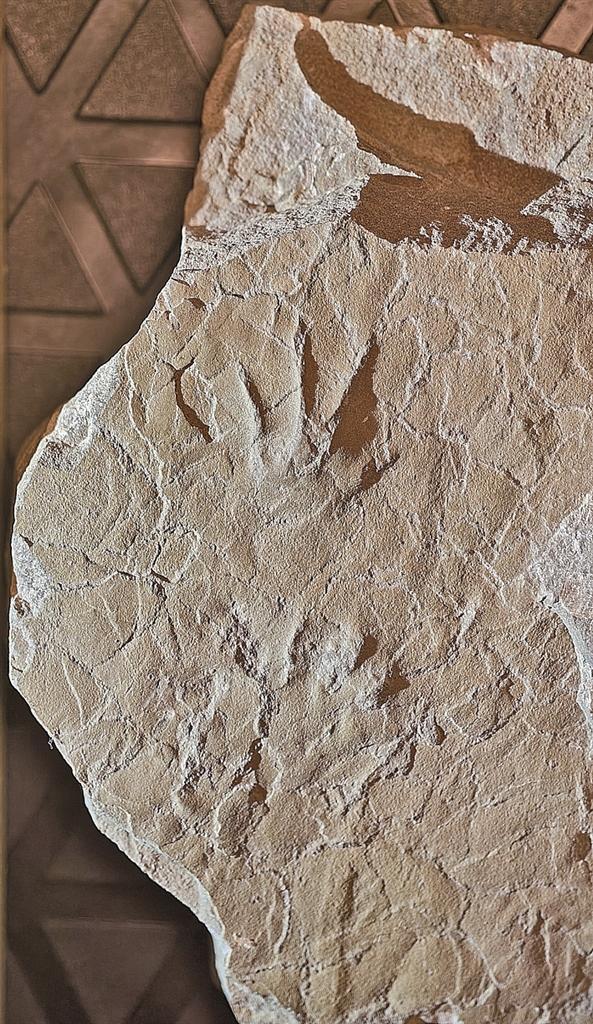
来源:光明日报 e 研究团队透露,这一化石的最初发现者,是当时就读于北京市第二实验小学德胜校区、年仅12岁的化石 爱好者倪景辰。2025年1月11日,在北京市门头沟区九龙路森林保护站附近的山坡出露岩层上,倪景辰 与父母偶然注意到该化石。倪景辰回忆:"由于风化严重,我在现场只注意到了一枚足迹化石,有很明 显的四趾痕迹。" 面对如此微小的四足动物足迹,首要问题是确定造迹者的类别。研究团队整理了来自21篇文献的24件中 生代蝾螈化石标本的前后肢骨骼数据,对36幅骨骼照片和线描图进行定量测量,构建出规范化的指骨比 例数据库。 "为消除不同物种和个体体形差异的影响,研究人员采用最长指归一化的方法,对各指长度比例进行统 计分析,并完成数据处理和箱线图可视化。"邢立达表示。 "该区域因富含侏罗纪植物化石而长期吸引着化石爱好者。2023年夏季暴雨导致的山体滑坡,使更多岩 层得以暴露,为这次偶然却关键的发现创造了条件。"研究团队主要成员、中国地质大学(北京)地球 科学与资源学院副教授邢立达分析。 倪景辰随后将此发现发表在社交媒体上,引起了邢立达的关注。2025年6月,研究团队在倪景辰的带领 下到现场考察确认,发现化石产自一套黄 ...

超越工具,赋予“人味”——AI玩具激发情感消费
Huan Qiu Wang Zi Xun· 2026-02-05 01:45
来源:科技日报 科技日报记者 符晓波 圆滚滚、毛茸茸的"毛球"可以磁吸于肩头,它的"眼睛"饱含生动的情绪,能对每一次抚摸作出独特反 应……近日,科技日报记者在厦门麦明智能科技有限公司见到这款可爱的AI玩具。 "与传统玩具相比,AI玩具可以通过抚摸、语音等互动方式,学习用户偏好,感知其情绪变化,提供情 绪价值,带来独一无二的陪伴体验。"厦门麦明智能科技有限公司总经理吴苇铭介绍,过去一年,基于 多种大语言模型和自研的心智算法,公司团队成功开发出4款应用于家庭陪伴、车载、文旅等不同场景 的AI玩具。 产品的快速落地,得益于厦门深入实施"AI+"行动。自2023年7月福建省(厦门)人工智能产业园获批 复成立以来,当地从应用场景破题,强政策、搭平台、优服务,加速释放"AI+"效应,推动AI赋能千行 百业。 此前,工业和信息化部消费品工业司司长何亚琼表示,玩具已发展成AI技术集成应用和融合创新的重 要载体;在人们生活中的角色从单一的娱乐功能进化为融合教育启蒙、情感陪护、创造力激发等属性于 一体的"智慧伙伴";打破了传统玩具产品的年龄限制,极大满足了各年龄层群体的多样化消费需求。 广东等传统玩具产业集群地纷纷出台政策举措, ...
关键测试遇燃料泄漏,美载人绕月任务再推迟一个月
Huan Qiu Wang Zi Xun· 2026-02-04 23:04
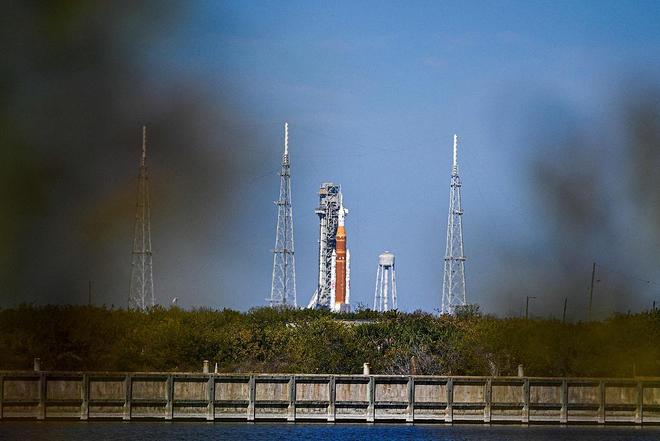
Core Viewpoint - The "Artemis 2" manned lunar mission by NASA has been delayed again due to a hydrogen leak detected during a wet dress rehearsal of the Space Launch System (SLS) rocket, pushing the launch date from February 8 to March [1][3]. Group 1: Mission Details - The "Artemis 2" mission is crucial as it aims to send astronauts to the Moon using the SLS rocket and the Orion spacecraft [5]. - The mission is expected to set a new record for the farthest distance from Earth achieved by humans, while also laying the groundwork for the subsequent "Artemis 3" mission [5]. Group 2: Technical Issues - During the wet dress rehearsal, over 700,000 gallons of cryogenic fuel were injected into the SLS rocket, but a hydrogen leak was detected, leading to the suspension of fueling operations [3][4]. - The leak was identified in the cavity between the umbilical plate and the rocket, causing the fueling process to be interrupted multiple times [4]. - The repair of the hydrogen leak is complex, requiring testing under the same conditions as the launch day, which can only be conducted at the launch pad [4]. Group 3: Future Plans - NASA plans to conduct another wet dress rehearsal to address the hydrogen leak and complete the remaining objectives that were not achieved in the first rehearsal [5]. - Potential new launch windows are set for March 6, 7, 8, 9, and 11, contingent on the resolution of the current issues [5].
AI能否像艺术天才那样去创作
Huan Qiu Wang Zi Xun· 2026-02-04 10:38
来源:光明日报 随着AI(人工智能)工具的大量涌现及不断迭代,艺术创作的门槛大大降低。进入AI艺术创作平台, 输入一段简单的提示词,短短几秒钟,便可创作出诗歌、图片、视频等不同类型的作品。不过,观察对 比大量的AI作品后会发现,这些作品高度同质化,自然传神、新颖独创的作品非常稀缺——这已经是 人们的共识。AI艺术创作有没有可能像人类艺术创作那样迸发出灵感的火花?笔者认为,AI艺术创作 要想突破同质化,须从算法创新、模型构建以及用户素养培养等方面协同发力。 从提示词撰写到作品遴选修改,构建提升作品独创性的机制 中国传统画论中有一个至高标准曰"传神",顾恺之讲"传神写照",谢赫讲"气韵生动",这些观点都在强 调同一个道理:艺术不是对物理表象的机械复刻,而是对生命内在精神和世界本质的揭示。 当下的AI艺术创作,面临的一大困境是擅长"写形",却不擅长"传神"。要理解这一困境,必须回到艺术 创作的逻辑原点。郑板桥曾精辟地将画竹的过程概括为三个阶段,即"眼中之竹""胸中之竹""笔中之 竹"。"眼中之竹"是艺术家深入生活、体验万物,通过感性认识直观获取的生活真实;"胸中之竹"是艺 术家经过审美情感的浸润、过滤、重构与升华形 ...
助力跨越“数字鸿沟”:梨花教育打造有温度的适老服务
Huan Qiu Wang Zi Xun· 2026-02-04 10:38
Core Insights - The article emphasizes the importance of addressing the digital divide for the elderly, highlighting the need for technology solutions that are patient and wise to ensure social equity and warmth [1] Group 1: Digital Divide and Elderly Engagement - The essence of the digital divide extends beyond interface adaptation issues to the capability and psychological barriers faced by the elderly, with only 38% of elderly internet users able to independently use ride-hailing apps and a mere 25% actively using AI health management tools [2] - The report from the China Internet Network Information Center (CNNIC) indicates that as of July 2025, the number of internet users aged 60 and above reached 161 million, with an internet penetration rate of 52.0%, yet their digital engagement remains superficial [2] Group 2: AI Innovations for Elderly Services - In response to societal needs and policy guidance, tech companies are exploring deeper empowerment paths, such as Shenzhen-based AI education company Shifang Ronghai, which launched the "AI Mentor" to provide learning and emotional support for the elderly [3] - The AI Mentor utilizes 75 proprietary algorithms and professional voice models to address the physiological and psychological characteristics of the elderly, achieving a satisfaction rate of 95.81% with over 110,000 AI-generated works [3] Group 3: Human-Centric Approach to Elderly Services - The core of elderly adaptation is not merely technological iteration but a precise response to the real needs of the elderly, moving from superficial adjustments to comprehensive AI companionship [4] - Building a quality elderly ecosystem requires collaboration among policy, market, and society, with a focus on creating low-threshold, highly adaptable products that genuinely address the issues of "ability to use, willingness to use, and desire to use" [4] - Bridging the digital divide is fundamentally about safeguarding social equity, necessitating the integration of humanistic care into every design aspect to ensure the elderly feel a sense of belonging and achievement in the digital age [4]
为算力时代“降温”,瑞为新材以金刚石散热技术攻克芯片散热“卡脖子”难题
Huan Qiu Wang Zi Xun· 2026-02-04 09:15
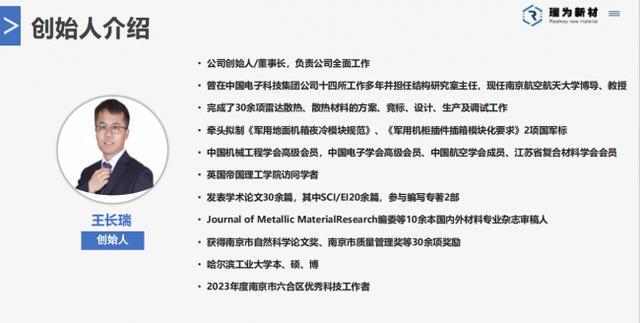
Core Insights - The article highlights the achievements of Nanjing Ruiwei New Materials Technology Co., Ltd. in overcoming challenges in the heat dissipation sector for chips, led by an 80s-born PhD, Wang Changrui [1][3] Company Background - Wang Changrui, with a strong academic background from Harbin Institute of Technology and roles as a professor and doctoral advisor, founded Ruiwei New Materials in 2021 to address national strategic needs in chip heat dissipation [3][4] - The company aims to transform laboratory research into practical solutions for the Chinese chip industry, focusing on breaking foreign technology monopolies [3] Technological Breakthroughs - Ruiwei New Materials has developed a new formula that effectively combines diamond and metal, addressing the compatibility issues that have historically limited the use of diamond in chip cooling applications [4] - The company has achieved significant advancements in manufacturing techniques, enabling the production of diamond-copper composite materials that meet the high thermal conductivity requirements of modern electronics [4] Product Development - The company has completed three iterations of its products, each tailored to meet industry demands: - The first generation offers a thermal conductivity improvement of 275%-300% over conventional materials, reducing chip temperature by 20-30°C [6] - The second generation integrates chip heat sinks with housing for enhanced cooling efficiency [6] - The third generation features an all-in-one design that minimizes thermal resistance and simplifies manufacturing processes [6] Market Position and Growth Potential - Ruiwei New Materials is the first company in China to achieve mass production of diamond heat dissipation materials, supplying major industries including aerospace and automotive [7] - The demand for cooling solutions is expected to rise significantly due to the rapid growth of AI and big data industries, with China's computing power scale growing at an annual rate of approximately 30% [7] - The company has successfully completed four rounds of financing, raising several hundred million yuan to support ongoing research and capacity expansion [7]
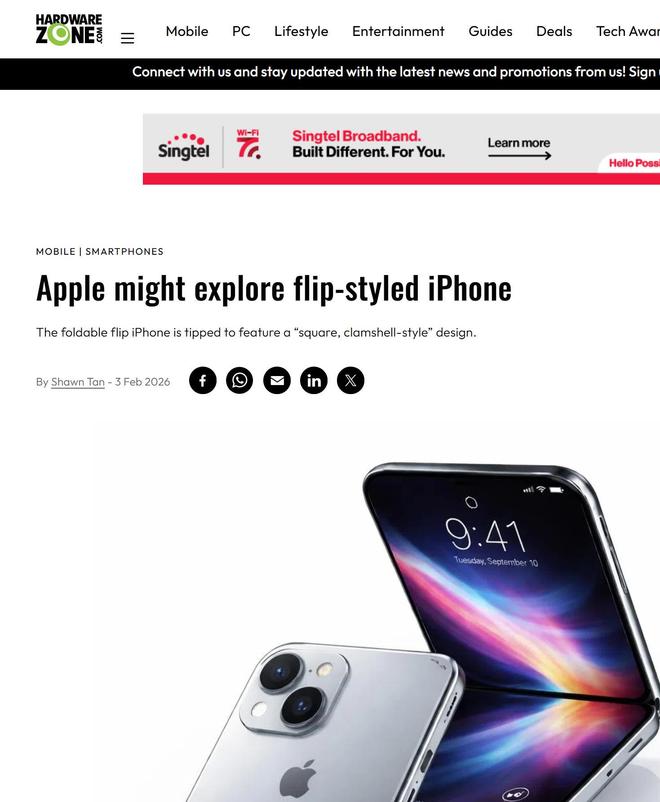
为丰富高端智能手机产品线,苹果将探索翻盖式iPhone设计
Huan Qiu Wang Zi Xun· 2026-02-04 08:35
来源:环球网 【环球网科技综合报道】2月4日消息,据hardwarezone援引彭博社报道称,苹果公司正在积极探索一款 采用"方形翻盖式"设计的可折叠iPhone。这一动向表明,尽管市场普遍预期苹果将在2026年晚些时候率 先推出书本式(横向对折)可折叠iPhone,但该公司并未排除同步开发翻盖式(竖向对折)机型的可能 性。 据介绍,这款翻盖式可折叠iPhone将主打便携性与口袋友好型设计,目标用户群体更注重设备的小巧轻 便,而非追求极致的大屏体验。通过引入不同形态的可折叠产品,苹果有望覆盖更广泛的市场细分,满 足多样化消费者需求。 事实上,关于苹果研发可折叠设备的传闻由来已久。早在2021年,外媒就曾披露,苹果已开发出两款可 折叠iPhone原型机,其中一款即为采用柔性OLED屏幕的翻盖式设计。2024年,相关消息再度浮现,称 苹果内部正积极推进翻盖式可折叠设备的测试与评估。 不过,彭博社记者马克·古尔曼(Mark Gurman)也强调,目前这款翻盖式可折叠iPhone仍处于早期探索 阶段,"远未保证会上市"。苹果对新产品上市持高度谨慎态度,尤其在涉及全新形态和用户体验的关键 技术节点上,通常会进行多轮验证 ...

英伟达将参与OpenAI新一轮融资及IPO,投资规模或创历史纪录
Huan Qiu Wang Zi Xun· 2026-02-04 08:35
来源:环球网 【环球网科技综合报道】2月4日消息,据can援引彭博社和CNBC报道称,彭英伟达首席执行官黄仁勋 (Jensen Huang)于日前表示,该公司正积极考虑参与人工智能初创企业 OpenAI 的最新一轮私募融 资,并计划在其未来首次公开募股(IPO)中进行投资。 黄仁勋称:"我们将投资下一轮融资",并称这轮融资有望成为"历史上规模最大的私募融资"。他强调, 尽管此前有报道称双方合作遇阻,但英伟达对 OpenAI 的投资计划仍在推进中,并否认了有关其对 OpenAI 不满的猜测。 据彭博社援引知情人士消息,英伟达已接近完成一笔高达200亿美元的投资,作为 OpenAI 最新一轮融 资的重要组成部分。该交易目前尚未最终敲定,条款仍可能调整。此外,路透社早前报道称,OpenAI 正寻求筹集高达1000亿美元资金,投后估值或达8300亿美元。 值得注意的是,英伟达与 OpenAI 的关系近期出现微妙变化。路透社周一披露,OpenAI 对英伟达部分 最新人工智能芯片的性能表现并不满意,自2025年以来已开始评估替代方案。这一动向可能为两家在 AI热潮中占据核心地位的公司带来合作上的复杂性。 尽管如此,英伟达 ...


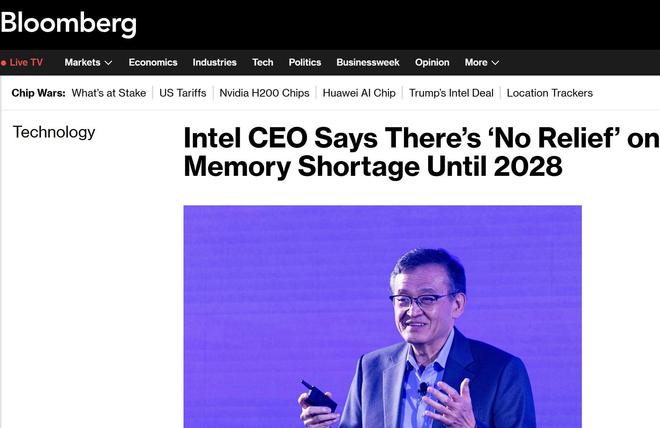
英特尔CEO警告:全球内存芯片短缺将持续至2028年,AI需求成主要推手
Huan Qiu Wang Zi Xun· 2026-02-04 08:35
"据我所知,目前没有任何缓解措施,"陈立武透露,自己近期与两位业内关键人士进行了深入交流,对 方均明确表示,"2028年之前都不会有任何实质性缓解"。 这一严峻预测的背后,是人工智能(AI)基础设施的迅猛扩张对高性能内存芯片的空前需求。而当前 内存市场的供需失衡已引发价格上涨,可能削弱消费者对电脑和手机等终端设备的购买意愿,进而影响 整个消费电子生态。 来源:环球网 【环球网科技综合报道】2月4日消息,据彭博社报道称,英特尔首席执行官陈立武(Lip-Bu Tan)近日 在一场行业会议上表示,当前全球计算机行业面临的内存芯片短缺问题短期内难以缓解,预计将持续至 2028年。 陈立武特别提到,作为AI处理器供应商,英伟达即将推出的Rubin平台及后续产品将进一步加剧内存消 耗。"人工智能将会消耗大量内存。"他强调。 资料显示,作为全球最大的PC处理器制造商,英特尔高度依赖稳定的内存供应链以确保其CPU产品的 性能与交付能力。全球主要内存芯片制造商包括三星电子、SK海力士和美光科技,这些企业正全力扩 产以应对AI驱动的需求激增。然而,从产能建设到实际产出仍需时间,短期内难以填补缺口。(青 云) ...