Qian Zhan Wang

Search documents
越重越伤路!蔚来CEO李斌:电动汽车电池越大续航越高,但对马路的破坏越大【附新能源汽车行业市场分析】
Qian Zhan Wang· 2025-07-07 09:16
Core Insights - The core argument emphasizes that the electric vehicle (EV) industry should focus on optimizing battery technology and vehicle weight rather than merely increasing battery size for extended range [2][3][4] Group 1: Battery Technology and Vehicle Weight - Li Bin, CEO of NIO, argues that while larger batteries can improve range, they also increase vehicle weight, leading to safety challenges and higher road damage, which many countries tax based on vehicle weight [2] - The concept of "diminishing marginal returns" is highlighted, where increasing battery size may not yield proportional benefits in range due to increased energy consumption from heavier vehicles [2] - The importance of battery performance is underscored, as it directly affects key metrics such as range, acceleration, and charging time, with high-performance batteries being essential for both daily commuting and long-distance travel [3] Group 2: Market Trends and Consumer Behavior - The Chinese EV market has seen explosive growth, with the total number of EVs reaching 24.72 million by mid-2024, of which 73.35% are pure electric vehicles [6] - As the EV ownership surpasses ten million, the industry is shifting from "scale expansion" to "value cultivation," indicating a focus on improving the quality and efficiency of EVs [7] Group 3: Industry Structure and Competition - The competition in the EV sector is fundamentally a competition in battery technology, with battery manufacturing occupying a core position in the upstream of the EV supply chain [4] - In 2024, the battery segment is projected to account for over 40% of the total output value of China's EV industry chain [4]



爆发式增长!小米王晓雁:东北内蒙持续高温,小米空调单日销量飙至去年同期20倍【附白色家电行业市场分析】
Qian Zhan Wang· 2025-07-07 09:10
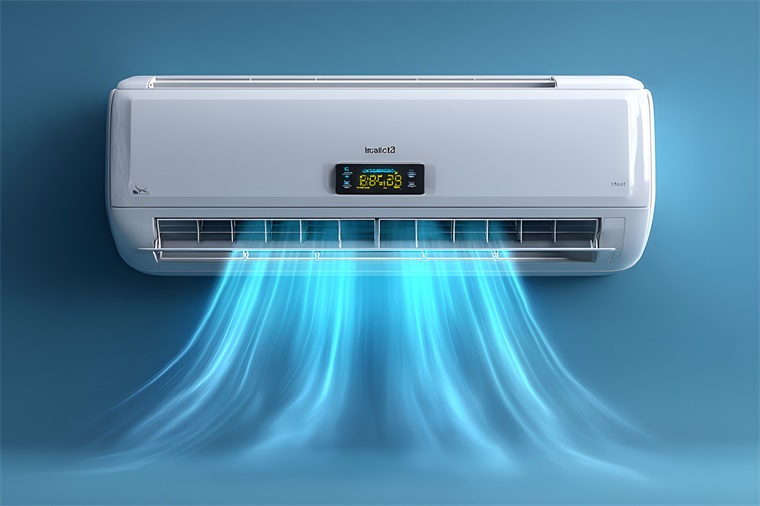
中信建投研报指出,2025年炎夏侵袭全球,空调需求景气向好。今年夏季极端高温天气频发。根据历史数据 回溯,气温变化与空调销量显著正相关。受"热穹顶"效应和全球变暖趋势影响,北半球出现极端高温天气, 按历史经验有望大幅拉动空调内、外销量提升。同时,新一轮的限额式国补资金将陆续到位,有望接力刺激 国内需求释放,三季度夏季空调需求整体向好。 空调是白色家电行业重要组成部分。 从市场份额看,2023年空调线上市场形成"两超一强"格局:美的、格力零售额占比均达28.1%,海尔以 11.6%位列第三;线下市场则呈现"美格争霸"态势,美的以34.6%的占比微弱领先格力的32.4%,海尔14.4%的 份额稳居第三。 (图片来源:摄图网) 近期,我国东北地区及内蒙古出现罕见持续高温天气,部分地区最高气温超过35℃,甚至达到37℃以上。内 蒙古根河市6月27日气温飙升至33.4℃,其下属乡镇最高达36.5℃,呼伦贝尔市多地气温持续在35℃以上。东 北多所高校学生纷纷在社交媒体吐槽"热到怀疑人生",极端天气不仅改变了人们对东北"避暑胜地"的固有认 知,更直接引爆了空调市场的消费热潮。 7月7日,小米集团副总裁、中国区总裁王晓雁微博 ...




前瞻全球产业早报:特朗普称各国将于8月1日开始支付新关税
Qian Zhan Wang· 2025-07-07 05:19
Group 1 - Zeekr officially announced the launch of its new hybrid architecture, the Vast-S (SEA-S), which is the world's first luxury super hybrid architecture based on a pure electric platform and the first full-stack 900V high-voltage hybrid architecture [2] - Taobao has initiated a subsidy plan worth 50 billion yuan, which has led to a significant increase in business for restaurant chains and small businesses, with growth rates of 170% and 140% respectively [3] - Apple's iPhone sales in China increased by 8% year-on-year in Q2, marking the first quarterly growth since 2023, attributed to promotional pricing strategies for the iPhone 16 series, especially the Pro and Pro Max models [8] Group 2 - Tesla announced a price reduction for the Model 3 in Hong Kong, with some models seeing tax-inclusive discounts of up to 18%, bringing the entry-level Model 3 price down to 249,000 HKD [5] - The Chinese Academy of Information and Communications Technology reported that in May 2025, domestic smartphone shipments reached 23.716 million units, a year-on-year decline of 21.8%, with 5G smartphones accounting for 89.3% of total shipments [4] - BYD's Han family of vehicles has achieved cumulative global deliveries exceeding 1 million units, becoming the first model in the 200,000 yuan segment from a Chinese brand to reach this milestone [11]






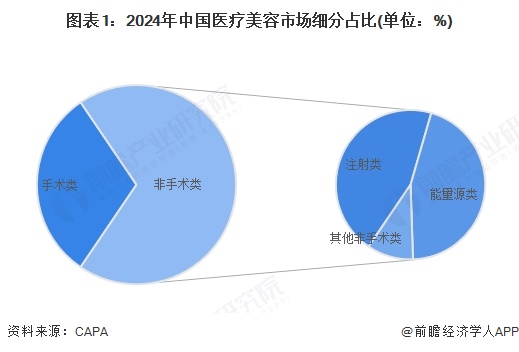
2025年中国医疗美容细分市场分析:轻医美市场贡献过半
Qian Zhan Wang· 2025-07-07 04:14
Core Insights - The light medical beauty market in China has surpassed half of the overall medical beauty market, becoming the mainstream beauty method by 2024, with significant contributions from non-invasive and minimally invasive procedures [1][2] Market Overview - Light medical beauty is defined as professional medical beauty projects that fall between surgical procedures and lifestyle beauty, utilizing non-invasive or minimally invasive methods for skin management, contour modification, and anti-aging effects [1] - The rapid growth of the light medical beauty market is attributed to its advantages such as minimal trauma, quick recovery, significant results, and relatively low risks, aligning with modern consumers' dual demands for beauty and quality of life [2] Consumer Trends - The penetration rate of the light medical beauty market is increasing, with 34% of consumers planning to engage in light medical beauty services in the coming year, marking a 36% increase from the previous year [4] - Among the interested consumer group, over one-third are new entrants, injecting fresh growth vitality into the Chinese medical beauty industry [4] Popular Products - Injectable and photothermal products are the main attractions for light medical beauty consumers, with ultrasound-based products (e.g., ultrasound scalpel) rapidly gaining popularity [5] Consumption Behavior - Consumers are increasingly rational in their light medical beauty choices, prioritizing needs-based combinations of projects and products, with over half selecting options based on specific needs [7] - The average planned consumption has increased to 2.4 projects per consumer, reflecting a 14% year-on-year growth [7] Consumer Demographics - The consumer base for light medical beauty exhibits high retention and strong growth, with seasoned consumers making up 35% of the existing market, indicating their essential role in the market [10] - Among the new consumer group, high-end novices represent 38%, characterized by high standards for beauty and a willingness to pay, with a focus on facial anti-aging solutions [10]





【干货】2025年物联网芯片行业产业链全景梳理及区域热力地图
Qian Zhan Wang· 2025-07-07 03:08
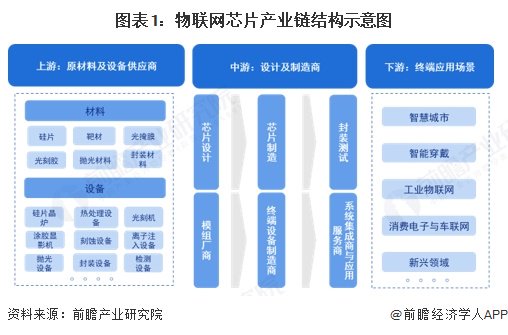
Industry Overview - The Internet of Things (IoT) chip industry has a comprehensive supply chain, with upstream suppliers providing raw materials and equipment, midstream manufacturers handling design, production, and testing, and downstream application service providers integrating chips into various devices [1][2]. Key Players - Major upstream suppliers include SMIC, Zhonghuan, Nanda Optoelectronics, and others, while midstream manufacturers consist of ZTE, Tailin Microelectronics, and others. Downstream service providers include Alibaba Cloud, China Mobile IoT, and Xiaomi [2]. Regional Distribution - Key IoT chip companies are concentrated in economically developed regions such as Jiangsu, Guangdong, Beijing, and Shanghai, with Jiangsu and Shanghai showing rapid development in the IoT chip sector [4]. Business Layout Comparison - Companies like Silan Micro, SiTewave, and Allwinner Technology focus primarily on the domestic market, while Beijing Junzheng, Zhaoyi Innovation, and Ankai Micro target international markets. Tailin Microelectronics has a significant focus on IoT chips, with 90.62% of its revenue coming from this sector [6][8]. Investment Trends and Business Plans - Companies are increasing R&D investments to enhance chip performance. For instance, Ruixin Micro plans to launch a new AI vision chip by May 2025, while Allwinner Technology is focusing on low-power designs for its IoT Bluetooth audio chips [9][10].


【全网最全】2025年靶材产业上市公司全方位对比(附业务布局汇总、业绩对比、业务规划等)
Qian Zhan Wang· 2025-07-06 03:08
Industry Overview - The target material industry in China has a diverse range of listed companies, covering upstream high-purity metal target material production, midstream target material manufacturing, and downstream applications in semiconductors, flat panel displays, and solar cells [1][3][10] Key Companies - Major upstream companies include Dongfang Tantalum Industry, Yuguang Gold Lead, Jinmoly Co., Zijin Mining, and Shengda Resources, focusing on deep processing of metals like copper, aluminum, silver, and tantalum [1][3] - Leading midstream companies are Jiangfeng Electronics, Ashi Chuang, Longhua Technology, Youyan New Materials, and Oulai New Materials, specializing in target material production [1][3] - Notable downstream companies include BOE Technology Group, Qianzhao Optoelectronics, CATL, and Longi Green Energy, which utilize target materials in their manufacturing processes [1][3] Financial Performance - In 2024, Youyan New Materials and Antai Technology are projected to have significant revenue, exceeding 7 billion yuan, while Jiangfeng Electronics and Ashi Chuang are expected to see revenue growth rates of 38.57% and 23.50%, respectively [6][8] - The industry is characterized by high revenue growth but fluctuating net profits, indicating a competitive and developing market [6][8] Target Material Business Performance - Jiangfeng Electronics, Ashi Chuang, Longhua Technology, and Oulai New Materials show diverse product structures and application areas, with Jiangfeng Electronics' production volume increasing by 38.29% and Ashi Chuang's by 56.88% [10][11] - Revenue from target material businesses is growing significantly, with Youyan New Materials' thin film materials business increasing by 46.53% year-on-year [12][13] Profit Margins - In 2024, Jiangfeng Electronics leads with a gross margin of 31.35% in its high-purity target material business, followed by Longhua Technology at 22.12% and Oulai New Materials at 18.69% [16] International Business - Jiangfeng Electronics achieved overseas revenue of 1.445 billion yuan, accounting for 40.10% of total revenue, with a year-on-year growth of 26.31% [19][21] - Longhua Technology's overseas revenue grew by 41.67%, while Youyan New Materials experienced a decline of 42.05% in overseas revenue [19][21] R&D Investment - Jiangfeng Electronics and Youyan New Materials have high R&D investments of 217.29 million yuan and 207.14 million yuan, respectively, indicating a focus on enhancing technological capabilities [22] Business Planning - Companies are actively planning to innovate and expand their market presence, with Youyan New Materials focusing on high-purity target materials and Longhua Technology aiming for sustainable development through new material integration [25][27]




预见2025:《2025年中国中硼硅玻璃行业全景图谱》(附市场现状、竞争格局和发展趋势等)
Qian Zhan Wang· 2025-07-06 01:10
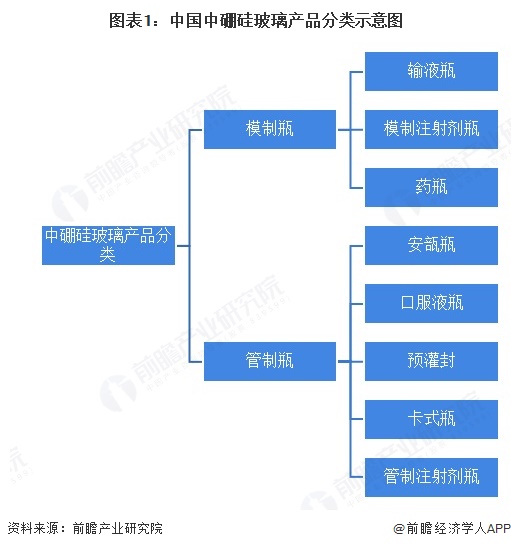
Industry Overview - Borosilicate glass is a specialized product with excellent thermal shock resistance and water resistance, widely used for packaging pharmaceuticals such as injections, blood products, and vaccines [1][2] - The market for borosilicate glass in China is projected to reach approximately 8.6 billion yuan by 2024, with a penetration rate of about 25% [20] Industry Chain Analysis - The upstream materials for borosilicate glass production include quartz sand, boron sand, and other raw materials, while the downstream applications primarily involve medical institutions and pharmaceutical logistics [2][6] - Key players in the upstream supply include companies like Quartz Co. and Corning, while major manufacturers in the midstream include domestic firms like Shandong Pharmaceutical Glass and Zhengchuan Co. [6] Development History - The development of borosilicate glass in China began in the 1950s, with significant advancements occurring after 2004 when Shandong Pharmaceutical Glass introduced the first domestic production technology [9] - The industry has seen a shift towards domestic production capabilities, reducing reliance on imports and addressing long-standing supply chain issues [9] Policy Background - Recent policies emphasize the importance of quality in pharmaceutical packaging materials, with the National Medical Products Administration reinforcing standards for injection packaging [11][12] - The "14th Five-Year Plan" for the pharmaceutical industry aims to enhance the standardization and quality of pharmaceutical excipients and packaging materials [11][12] Market Structure - The market for borosilicate glass is segmented, with molded bottles accounting for 44% of the market share in 2024, while ampoules and tubular bottles hold similar shares [21] - The competitive landscape features a tiered structure, with leading companies like Shandong Pharmaceutical Glass and Zhengchuan Co. dominating the market, while other firms lag behind in market share and technological advancement [26][29] Future Outlook - The market for borosilicate glass is expected to grow significantly, potentially reaching 21.5 billion yuan by 2030, driven by increased demand and ongoing policy support [32] - The industry is anticipated to experience a trend towards technological innovation and increased competition, with domestic companies improving product quality and reducing costs [35]


商业遥感卫星产业招商清单:长光卫星、中国卫星、中科星图等最新投资动向【附关键企业名录】
Qian Zhan Wang· 2025-07-05 06:48
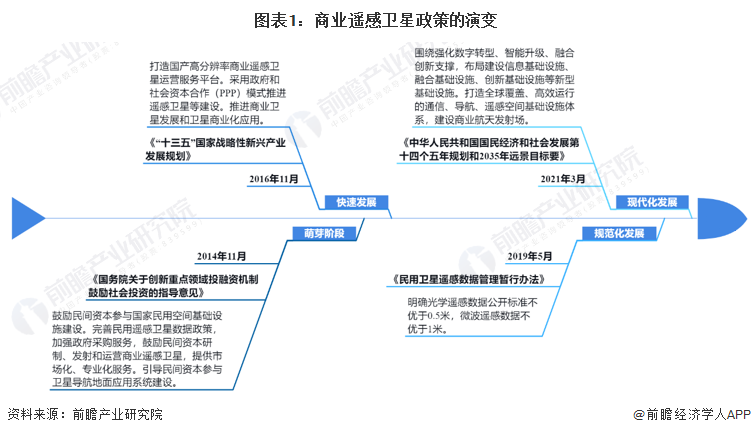
Core Viewpoint - The Chinese government is intensifying support for emerging industries, particularly commercial aerospace, as highlighted in the 2025 government work report, which emphasizes the development of strategic emerging industries and the large-scale application of new technologies and products [1][3]. Industry Overview - The commercial remote sensing satellite industry in China has formed a complete industrial chain, consisting of three key segments: upstream (manufacturing and launching satellites), midstream (operating satellite data services), and downstream (various application fields) [3][6]. - The industry is experiencing rapid growth due to policy support, technological innovation, and market demand, with significant encouragement for private capital participation in satellite development, launch, and operation [1][3]. Application Scenarios - The applications of commercial remote sensing satellites are diverse, including land resource management, environmental protection, agricultural monitoring, disaster prevention, urban planning, national defense, marine monitoring, transportation logistics, and social governance [6][8]. - Specific applications include monitoring land use changes, detecting environmental pollution, assessing crop growth, providing disaster early warnings, and supporting urban infrastructure planning [6][8]. Market Potential - The commercial remote sensing satellite industry in China is showing vast market prospects and economic potential, attracting numerous enterprises and leading to the emergence of influential companies [9]. - The market is expected to grow significantly, with projections indicating that by 2027, the market size could exceed 20 billion yuan, driven by increasing demand for remote sensing data and supportive government policies [19][22]. Key Players - Leading companies in the commercial remote sensing satellite sector include Changguang Satellite Technology Co., Ltd., which is the first commercial remote sensing satellite company in China, and has developed the "Jilin-1" satellite constellation, the largest sub-meter commercial remote sensing satellite constellation globally [13][16]. - Changguang Satellite has launched 219 satellites as of May 2025, with 140 belonging to the "Jilin-1" constellation, providing high-quality remote sensing information across various fields [16]. Investment Trends - The commercial remote sensing satellite sector has seen explosive growth in investment, with total investments exceeding 20 billion yuan from 2016 to 2024, reflecting strong investment attractiveness [18]. - The highest investment year was 2024, with over 12 billion yuan in funding across 19 events [18]. Policy Environment - The Chinese government is actively creating a favorable policy environment for the commercial remote sensing satellite industry, including land use incentives, tax reductions, research and development subsidies, and talent introduction support [6][8].

小米汽车何时才会出国?雷军:优先把国内交付问题解决,2027年才会有出海计划【附新能汽车进出口分析】
Qian Zhan Wang· 2025-07-04 04:23
Group 1 - Xiaomi's founder Lei Jun announced that Xiaomi's automotive products will not consider international expansion until 2027 due to high domestic demand and delivery issues [2] - The president of Xiaomi Group, Lu Weibing, indicated that the complexity of international expansion for Xiaomi's automotive division is higher than expected, marking 2027 as the potential year for overseas ventures [2] - China's automotive industry has shown significant growth in the export of new energy vehicles, with exports rising from $338 million in 2018 to $22.907 billion in 2022, achieving a compound annual growth rate of 186.92% [2][4] Group 2 - The explosive growth in new energy vehicle exports is attributed to the release of technological dividends and advantages in the supply chain, with Chinese brands now entering developed markets like Europe [4] - BYD's international strategy exemplifies the global expansion of Chinese automotive companies, having established its first overseas branch in the Netherlands in 1998 and now operating in 96 countries [7][8] - BYD's electric buses have achieved an 80% market share in London, and the company has delivered over 470,000 vehicles overseas by mid-2025 [8][10] Group 3 - The shift in Xiaomi's international strategy aligns with the broader transition of China's new energy vehicle industry from "scale expansion" to "quality competition," facing potential trade barriers in the future [11] - The combination of Xiaomi's delayed international expansion and BYD's deep localization strategy outlines a new path for Chinese automotive companies to evolve from "Made in China" to "Global Brands" [12] - Recommendations for Chinese automotive companies include enhancing compliance capabilities, supply chain resilience, and cultural integration to succeed in global markets [11][12]

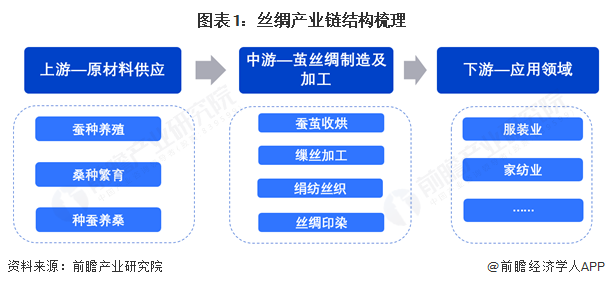
【干货】2025年丝绸产业链全景梳理及区域热力地图
Qian Zhan Wang· 2025-07-04 03:40
Group 1 - The silk industry in China has developed a complete industrial chain, including raw material supply, silk manufacturing, and finished product circulation [1][4] - Major companies in the silk industry are adopting a full industrial chain layout, covering silkworm breeding, silk weaving, and the manufacturing of silk clothing and home textiles [4] - The majority of silk industry enterprises are concentrated in Zhejiang, Jiangsu, and Guangxi provinces, with Zhejiang having the highest number of silk enterprises [7][10] Group 2 - As of April 27, 2025, there are 3,673 registered enterprises in the silk textile and dyeing industry in China, with Zhejiang accounting for nearly 40% of the total [7] - The silk industry parks in China are primarily located in Zhejiang, with a total of 34 major parks, including 9 in Zhejiang [12] - The types of industrial parks include production and manufacturing parks, with cultural industry parks making up nearly one-third of the total [12]