Qian Zhan Wang

Search documents
2025年中国餐饮配送机器人行业销售市场分析:市场需求强劲,供应厂商之间售价差距不大
Qian Zhan Wang· 2025-06-17 04:14
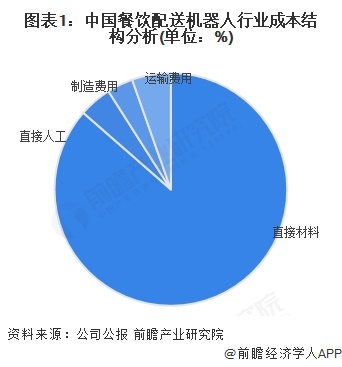
Group 1 - The cost structure of restaurant delivery robots shows that direct materials account for over 80% of total costs, with direct labor, manufacturing expenses, and transportation costs being relatively small and decreasing [1] - The pricing mechanism of the restaurant delivery robot market is influenced by supply-side costs, manufacturing costs, and consumer demand elasticity, creating a "price-demand-price" transmission path [3] - The current market price for restaurant delivery robots ranges from 20,000 to 50,000 yuan, with minor price differences among products [7] Group 2 - The commercial models in the restaurant service robot industry include direct sales, agency sales, and leasing operations, each with distinct characteristics that cater to different market needs [9][10] - The demand for restaurant delivery robots is strong, with market supply gradually balancing out after a period of high demand due to the COVID-19 pandemic, as evidenced by the production and sales growth of leading companies like Ninebot [12]


史无前例!中国第一个“跨省建城”,来了
Qian Zhan Wang· 2025-06-17 00:45
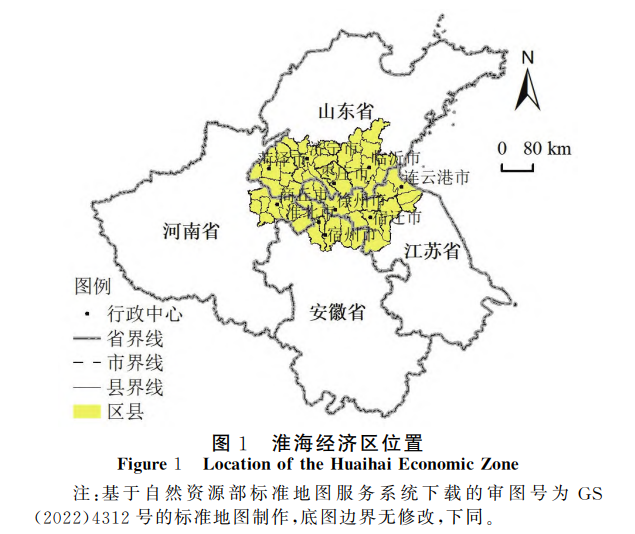
Core Viewpoint - The establishment of the "Yejian-Gushi 'One River, Two Banks' Ecological Priority Green Development Industrial Cooperation Zone" marks a significant step towards cross-provincial urban development in China, aiming to create a collaborative industrial zone between the Central Plains and the Yangtze River Delta [1][10]. Summary by Sections Economic Context - China's economy is transitioning from factor-driven to innovation-driven growth, necessitating industrial upgrades amidst global competition and geopolitical risks [1]. - The construction of a unified market and the facilitation of internal circulation are critical for China's economic future, requiring the breaking down of regional barriers to achieve efficient resource allocation [1][2]. Historical Background - Previous attempts at cross-provincial cooperation, such as the Huaihai Economic Zone, have shown limited success, with significant disparities in GDP per capita compared to more developed regions like the Yangtze River Delta [5][6]. - The Huaihai Economic Zone, established in 1986, has not achieved its potential, with GDP per capita in 2024 projected at around $9,900, compared to over $26,000 in the Yangtze River Delta [5]. New Cooperation Zone - The Yejian-Gushi cooperation zone covers an area of 3,514 square kilometers, focusing on industrial cooperation, urban integration, and shared prosperity [10][11]. - The zone aims to develop a 5 square kilometer industrial cooperation demonstration park and create a new city with a population exceeding 500,000 [11][12]. Geographical and Cultural Advantages - The geographical proximity and historical ties between Yejian and Gushi provide a solid foundation for collaboration, with easy transportation and resource flow [12][14]. - The two regions complement each other economically, with Yejian having a stronger industrial base and Gushi being a major agricultural and labor resource hub [12][14]. Development Strategies - The cooperation zone emphasizes three key strategies: industrial integration, project construction, and mechanism innovation [15][18]. - Industrial integration focuses on merging local strengths in furniture manufacturing and wood processing, aiming to create significant industry clusters [15][16]. - Project construction will involve major infrastructure developments, including transportation networks and public service projects [17]. - Mechanism innovation will address administrative barriers through unified governance and shared economic benefits [18]. Future Outlook - By 2028, the cooperation zone is projected to achieve a GDP of 77 billion yuan, with industrial value added accounting for 26.3% of the total [16][18]. - The initiative serves as a potential model for breaking down administrative barriers and fostering regional economic collaboration across China [18][20].
前瞻全球产业早报:成品油价或现今年最大涨幅
Qian Zhan Wang· 2025-06-16 23:09
Group 1: Macroeconomic Policies and Investments - The National Bureau of Statistics indicates that macroeconomic policies are showing sustained effects, with investments continuing to grow steadily in the first five months of 2025 [2] - The focus is on effectively utilizing various government investment tools to expand beneficial investments and promote high-quality development in manufacturing [2] Group 2: Energy Prices - Due to recent conflicts in the Middle East, international oil prices have surged, leading to an expected domestic price increase of approximately 300 CNY per ton for gasoline and diesel, resulting in an additional cost of around 16 CNY for a full tank of gas in a 70-liter vehicle [2] Group 3: Technological Developments - China FAW Group has established a headquarters for flying cars in Shenzhen, marking a significant step in the development of the flying car industry [2] - Hainan Province plans to build over 100 smart factories by 2027, with a structured cultivation system across four levels [3] - The first superconducting quantum computing measurement and control system in China has been delivered, designed for a scale of 1,000 qubits [8] Group 4: Corporate Initiatives and Collaborations - Tencent has launched a generative recommendation algorithm competition to attract global talent, offering a substantial prize pool and job offers [4][5] - LG Energy Solution has signed a six-year supply agreement with Chery Automobile for 8 GWh of large cylindrical batteries, sufficient for approximately 120,000 electric vehicles [9] - SK Group plans to collaborate with Amazon AWS to build the largest AI data center in South Korea [10] - JD Logistics is set to adopt a self-operated model in Saudi Arabia, marking its first self-operated logistics network overseas [11] Group 5: Market Expansion and New Ventures - Transsion Holdings has reportedly established a mobility division to explore the two-wheeled electric vehicle market, particularly in Africa and other developing countries [12][13] - Samsung Display's 8.6-generation OLED production line is expected to begin trial operations by the end of this year, aligning with the anticipated release of OLED MacBook Pro and iPad products in 2025 [13]

2025年中国预制菜消费者画像:预制菜凭借其方便快捷特性,满足快生活节奏的年轻群体的需要【组图】
Qian Zhan Wang· 2025-06-16 08:25
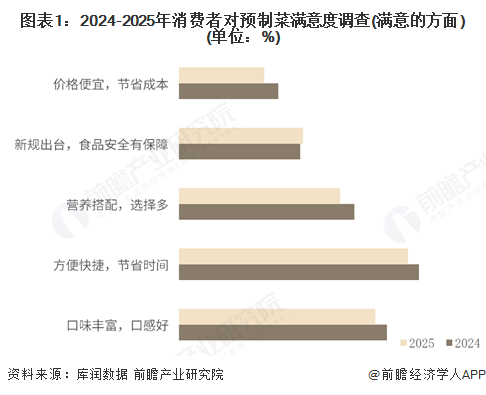
Core Insights - The article discusses the growing popularity of prepared dishes among consumers, highlighting their convenience and variety, while also addressing concerns regarding food safety, pricing, and nutritional balance [1][8]. Consumer Satisfaction - Consumer satisfaction regarding food safety is expected to increase slightly by 1% in 2025 compared to 2024, while satisfaction with pricing, nutrition, and meal preparation time is projected to decline [1]. - The primary concern for consumers remains the production source of prepared dishes, which has consistently ranked highest in improvement areas for two consecutive years [3]. Acceptance of Prepared Dishes - Acceptance of prepared dishes varies significantly by consumption scenario; over 80% of consumers are not open to prepared dishes for traditional family gatherings, while acceptance is highest for outdoor camping scenarios at 52.8% [5]. - Only 9.1% of consumers are completely opposed to prepared dishes, indicating a general openness to their use in everyday meals and snacks [5]. Demographics of Prepared Dish Consumers - The largest demographic of prepared dish consumers is aged 21-30, accounting for 43%, while those aged 41 and above represent only 19% [8]. - The "lazy" consumer segment constitutes the highest proportion at 29%, followed by office workers at 23%, homebodies at 8%, and mothers at 5% [9]. Lifestyle Influence - The rise of prepared dishes is closely linked to the fast-paced lifestyle of urban consumers, who often lack the time or desire to cook [9].
2025年中国低空物流行业区域竞争分析:深圳低空物流领域成绩斐然
Qian Zhan Wang· 2025-06-16 07:24
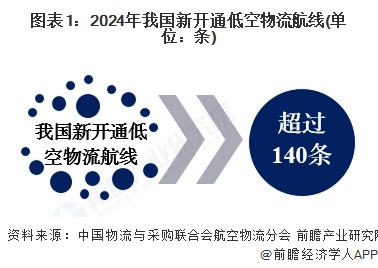
Core Insights - The article highlights the rapid development of low-altitude logistics in China, particularly in Shenzhen, which is becoming a leader in the low-altitude economy with significant advancements in logistics infrastructure and policy support. Group 1: Low-altitude Logistics Development - In 2024, over 140 new low-altitude logistics routes will be opened in China, with urban routes making up 90% of the total, primarily for last-mile delivery services [1] - Shenzhen has established a total of 250 drone logistics routes as of 2024, with a 27% year-on-year increase in drone cargo flights, reaching 776,000 flights [2] Group 2: Policy and Standards - Shenzhen is leading in the construction of a policy standard system for low-altitude economy, having introduced the first local legislation on low-altitude economy and a framework for standardization [4][5] - The city has initiated the compilation of 18 local standards for low-altitude economy, focusing on practical applications to drive high-quality development [5] Group 3: Smart Logistics Centers - The first "air-ground collaborative" smart logistics center in the country, located in Shenzhen, integrates drone delivery with ground logistics, significantly enhancing delivery efficiency [8] - This logistics center can deliver local packages within 2 hours and cross-city packages within 3 hours, showcasing the effectiveness of the air-ground integration model [9] Group 4: Future Goals and Initiatives - Shenzhen's 2024-2026 work measures aim to promote high-quality development in modern logistics, including the establishment of a national-level air traffic management pilot city and support for "air-ground combined" logistics models [10][11] - The goal is to create a low-altitude economic industrial cluster, with plans to exceed 420 logistics take-off and landing points by 2025 [11]
单只被炒到108万,Labubu在全球杀疯了!泡泡玛特创始人王宁:无用才是真正的永恒【附潮玩行业市场分析】
Qian Zhan Wang· 2025-06-16 06:37
Core Insights - The global toy market has seen a shift with Labubu from Pop Mart creating a buying frenzy, indicating a new breakthrough for the Chinese trendy toy industry [2][3] - Labubu's unique design and market positioning have resonated with contemporary youth, moving away from traditional "sweet" styles to a more quirky and rebellious aesthetic [3] - The success of Labubu is significantly driven by celebrity endorsements, which have exponentially increased its visibility and popularity among global fans [2][3] Market Dynamics - Labubu's blind box strategy enhances consumer engagement through surprise elements, leading to repeat purchases and a cycle of addiction [3] - According to a report, 46.78% of consumers cite the element of surprise as the main reason for purchasing trendy toys, highlighting the focus on social interaction and personal enjoyment rather than investment [4] - The secondary market for Labubu has seen significant price inflation, with original blind boxes priced at 99 yuan being resold for 200 to 600 yuan, and limited editions fetching prices as high as 820,000 yuan [6] Industry Outlook - The Chinese trendy toy industry is still in its growth phase, with rapid expansion observed in recent years, and the market size is projected to exceed 130 billion yuan by 2028 [9] - Pop Mart, as a leading player in the industry, has established a comprehensive supply chain and achieved significant revenue from its proprietary IPs, with over 50% of its annual revenue coming from self-owned IP products [6]


重磅!2025年中国及31省市润滑油行业政策汇总及解读(全)“打造高端润滑油和绿色清洁能源”
Qian Zhan Wang· 2025-06-16 04:50
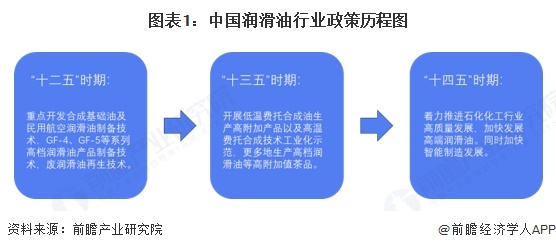
Core Viewpoint - The Chinese lubricating oil industry is guided by a series of government policies aimed at promoting high-end lubricating oil development and large-scale industrial growth, with a focus on green development and resource recycling. Policy History - The policy history indicates a continuous effort to guide the lubricating oil industry, emphasizing the development of synthetic base oils and recycling technologies during the "12th Five-Year Plan" period, encouraging low-temperature Fischer-Tropsch synthesis oil production during the "13th Five-Year Plan," and promoting high-quality development of the petrochemical industry in the "14th Five-Year Plan" [1]. National Policy Summary and Interpretation - The management of the lubricating oil industry is primarily reflected in the formulation of industrial policies, strategic planning, and optimization of the development environment, focusing on green development and supporting business operations [4]. Policy Details - A summary of key policies includes: - **2024.11**: Encouragement for high-end chemical manufacturing [5] - **2024.09**: Guidelines for agricultural machinery maintenance [5] - **2024.05**: Suspension of certain tariff reductions on lubricating oil products from Taiwan [5] - **2023.10**: Guidance on promoting green innovation in the refining industry [5] - **2022.08**: Establishment of a carbon emission accounting system [6] - **2021.11**: Promotion of clean production audits across various industries [6] Provincial Policy Summary - Various provinces are focusing on high-end lubricating oil development, with some also promoting high-end lubricating oil additives and foundational industries to enhance the entire lubricating oil supply chain towards high-end and green development [13]. Industrial Green Development Planning - The "14th Five-Year Plan for Industrial Green Development" aims for a 13.5% reduction in energy consumption per unit of industrial added value by 2025, with significant improvements in resource utilization and pollution reduction [10][11]. Energy Efficiency Standards - The 2023 version of the energy efficiency benchmark levels expands the scope of energy efficiency constraints, adding 11 new sectors, including the petrochemical industry, which accounts for approximately 80% of the total energy consumption in the industry [9]. Conclusion - The policies and plans outlined reflect a comprehensive approach to enhancing the lubricating oil industry in China, focusing on sustainability, innovation, and high-quality development, which are crucial for future growth and competitiveness in the global market [12][13].




【行业深度】洞察2025:中国城市供热行业竞争格局(附竞争梯队、市场集中度等)
Qian Zhan Wang· 2025-06-15 07:29
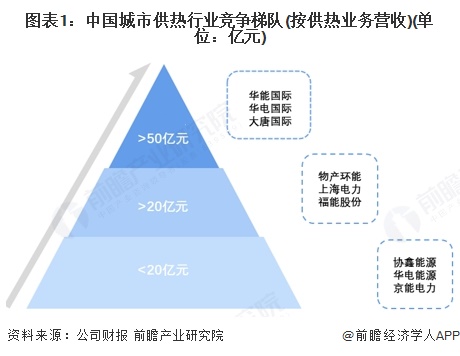
Group 1 - The core viewpoint of the article highlights the competitive landscape of China's urban heating industry, categorizing companies into three tiers based on their revenue from heating services [1][4]. - The first tier includes companies like Huaneng International, Huadian International, and Datang Power, each with heating revenue exceeding 5 billion yuan [1]. - The second tier consists of companies such as Wuchan Zhongda and Shanghai Electric, with heating revenue between 2 billion and 5 billion yuan [1]. - The third tier includes companies like GCL-Poly Energy and Jingneng Power, with heating revenue below 2 billion yuan [1]. Group 2 - The entry process of urban heating companies in China has evolved, with early entrants like GCL-Poly Energy and Ningbo Energy establishing a strong market presence due to their early market entry and capital support [3]. - Mid-tier companies like Lianmei Co. have significant capital backing, enhancing their competitive edge in the urban heating sector [3]. - Late entrants such as Ruina Intelligent and Chuncheng Heating have improved their financing capabilities, focusing on smart heating solutions [3]. Group 3 - The market concentration of the urban heating industry in China is currently low, with CR3 at 6.54%, CR5 at 7.34%, and CR10 at 9.49%, indicating a fragmented market [4]. - The industry is expected to see further consolidation as resources are integrated among providers capable of delivering comprehensive energy-saving solutions [4]. Group 4 - Companies like Jingneng Power and Ruina Intelligent are fully focused on urban heating, with Jingneng Power operating entirely in North China [5][8]. - Shanghai Electric's heating business is primarily concentrated in Shanghai, while Huitian Thermal Power serves the Liaoning province exclusively [5][8]. - Most companies operate in the Northeast and North China regions, indicating a strong regional focus in their service areas [8]. Group 5 - The competitive state of the urban heating industry in China is influenced by national policies and rising demand, presenting opportunities for new entrants [13]. - Significant fixed asset investments and technological advancements are required for companies in this sector, creating high barriers to exit [13]. - Established players in the renewable and traditional thermal power sectors possess advantages in operational and profit models, while smaller firms face intense competition in the low-end market [13].
2025年全球包装发展现状分析:包装可持续是当前发展重点
Qian Zhan Wang· 2025-06-13 05:09
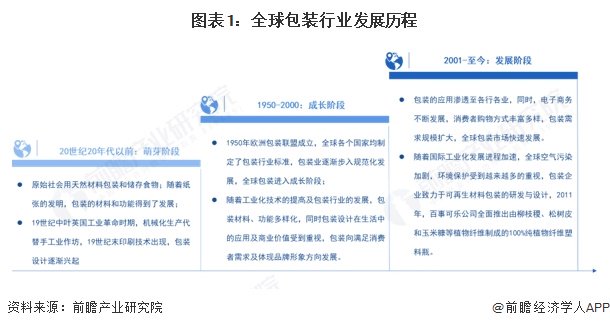
Core Insights - The global packaging industry is undergoing a significant transformation towards sustainability, with a focus on eco-friendly materials and practices [1][2][10] - The market size of the global packaging industry is projected to reach $1.22 trillion by 2024, showing a steady growth trend despite the pandemic's impact in 2020 [3][4] - Paper and cardboard packaging are expected to dominate the market, accounting for approximately 35% of the total market share by 2024, closely followed by plastic packaging at 33.39% [4][8] Market Trends - The global packaging market is experiencing rapid growth due to increased application demand across various industries and the rise of e-commerce, which has diversified consumer shopping methods [2][3] - Europe leads the green packaging market with a 40% share, driven by stringent environmental regulations and high consumer demand for sustainable packaging solutions [8][10] - The Asia-Pacific region is also witnessing strong growth in the packaging sector, fueled by a rising middle class and increasing consumer spending [12] Future Development Focus - Customization in packaging design is becoming prevalent due to advancements in digital printing technology, allowing for vibrant and variable data printing [12] - There is a growing emphasis on sustainable packaging technologies, with increased use of biodegradable materials and recyclable packaging to minimize waste [12] - Smart packaging is emerging as a trend, integrating sensors and QR codes to provide real-time data on product status and enhance consumer interaction [12]
2025年全球物联网芯片发展现状分析:全球物联网芯片行业市场规模将近5000亿美元
Qian Zhan Wang· 2025-06-12 04:24
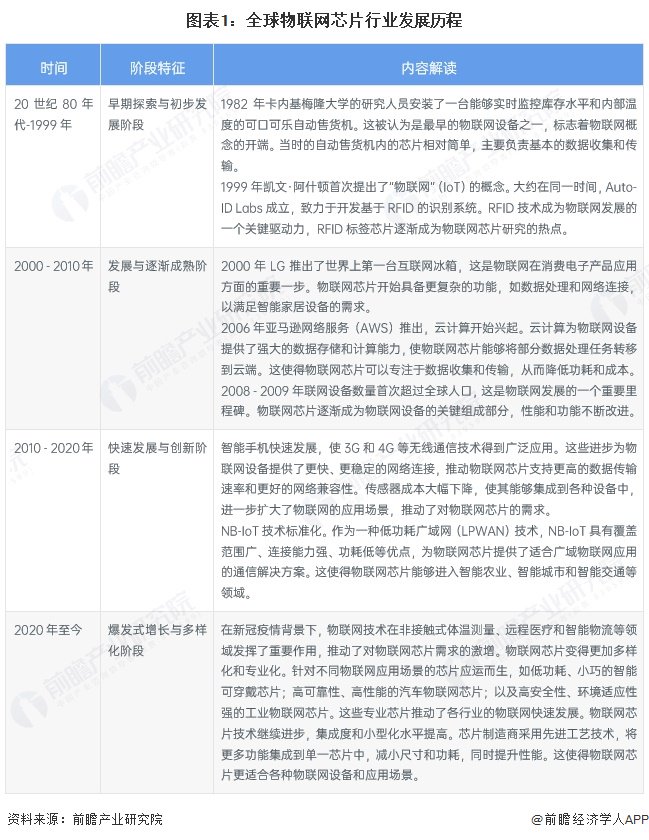
Group 1 - The global IoT chip market is expected to reach approximately $494.89 billion by 2024, with a year-on-year growth of 6% from 2020 to 2024, driven primarily by consumer electronics and building automation applications [4] - The development of smart transportation systems and the growth potential of connected vehicles are anticipated to boost the automotive and transportation application sectors for IoT chips [4] - The COVID-19 pandemic has accelerated the demand for IoT chips, particularly in non-contact temperature measurement, remote healthcare, and smart logistics, leading to increased diversification and specialization of IoT chips [3][4] Group 2 - The global cellular IoT chip market is highly concentrated, with the top 10 chip manufacturers holding over 98% market share, and six of these companies being Chinese, accounting for over 55% of the market [7] - Major players in the global IoT chip market include Intel, Qualcomm, STMicroelectronics, Texas Instruments, and MediaTek, employing various growth strategies such as partnerships, acquisitions, and new product launches to enhance their market presence [9] - The future trend in the global IoT chip market indicates significant growth in dedicated MCU and SoC designs [11]