Qian Zhan Wang

Search documents
【干货】2025年餐饮配送机器人行业产业链全景梳理及区域热力地图
Qian Zhan Wang· 2025-06-12 03:10
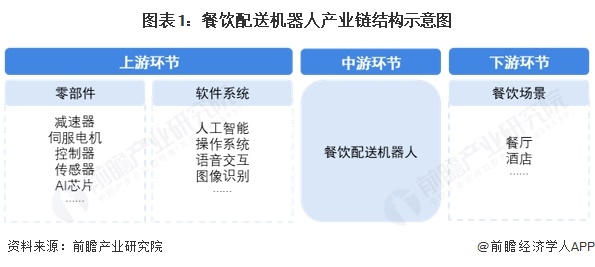
Industry Overview - The restaurant delivery robot industry has a long and closely connected supply chain, including upstream components and software systems, midstream manufacturing, and downstream application fields such as restaurants and hotels [1][2] - Key upstream suppliers for components include Cambrian, SenseTime, ABB, and Intel, while software system providers include Tianqi Co., iFlytek, and Guangzhou Liansheng [2] - Midstream companies involved in the research and production of restaurant delivery robots include Pangu Robot, PuduTech, Qianlang Intelligent, and Orion Star [2] Regional Distribution - The majority of restaurant delivery robot companies are concentrated in Jiangsu and Guangdong provinces, with Jiangsu hosting companies like Pangu Robot and Ninebot, and Guangdong housing PuduTech and Yingbo Intelligent [3][5] Company Performance - The main publicly listed companies in the restaurant delivery robot sector are Ninebot, Yijiahe, and Ecovacs, with Ecovacs reporting a service robot revenue of 3.397 billion yuan and a gross margin of 44.80% in 2024 [7][8] - Ninebot's total revenue for 2024 is projected at 14.196 billion yuan, with service robot revenue at 980 million yuan and a gross margin of 52.58% [8] - PuduTech leads the global commercial service robot market, with products sold in over 60 countries and regions, while Qianlang Intelligent has been recognized as a global unicorn for four consecutive years [7][9] Recent Developments - Companies in the restaurant delivery robot industry are increasing R&D investments and launching innovative products, contributing to the sector's growth and advancement [10] - Yijiahe has signed a comprehensive cooperation agreement with Huawei Cloud to explore advancements in embodied intelligence [11] - Pangu Robot is set to launch a new delivery robot in April 2025, integrating advanced technologies for seamless indoor and outdoor navigation [11] - PuduTech has introduced the world's first humanoid service robot for commercial scenarios, marking a significant step in the commercialization of service robots [11] - Qianlang Intelligent has released a humanoid service robot capable of completing various service tasks, enhancing operational efficiency [11]


【投资视角】启示2025:中国铝型材行业投融资及兼并重组分析(附投融资事件、产业基金和兼并重组等)
Qian Zhan Wang· 2025-06-12 02:09
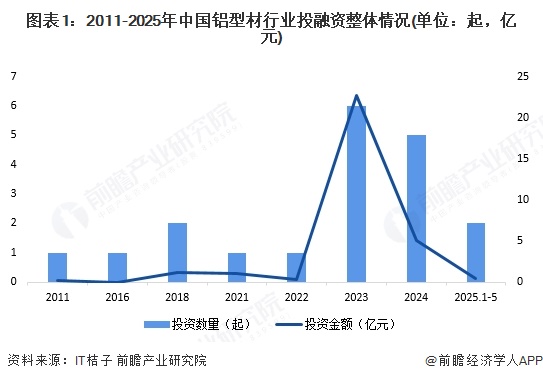
Investment Scale and Trends - The aluminum profile industry in China has experienced fluctuating investment events and amounts from 2011 to 2024, with a peak in 2023 where 6 financing events occurred, totaling 2.271 billion RMB, primarily driven by a strategic investment from Rusal in October 2023 [1] - In 2024, the investment activity slightly declined, with 5 events totaling 501 million RMB, and as of May 6, 2025, there have been 2 events amounting to 40 million RMB [1] Investment Rounds and Focus - The investment rounds in the aluminum profile industry are predominantly strategic investments, indicating a trend of resource integration and industry chain extension among mature companies rather than support for startups [3] - The focus of investments is on high-performance alloys, reflecting the industry's shift towards advanced materials [7] Regional Investment Concentration - The majority of financing events are concentrated in Jiangsu and Guangdong, with 8 and 3 events respectively, followed by Shandong, Anhui, and Zhejiang with 2 events each [5] - This concentration is attributed to the complete aluminum industry chain in these regions, which reduces transaction costs and enhances production efficiency, alongside a mature market environment and abundant financial resources [5] Investor Composition - The primary investors in the aluminum profile industry are capital organizations, accounting for 89% of the investment entities, with notable representatives including Huading Investment and Shijue Capital [12] - Only 11% of the investors are from industrial entities, such as Guangdong Hongtu and Rusal [12] Investment Funds - There are numerous private equity funds related to the aluminum industry, with 20 identified through the China Securities Investment Fund Association, indicating a robust investment landscape [11] Mergers and Acquisitions - The aluminum profile industry has seen significant horizontal acquisitions among midstream companies as a mainstream strategy for scale expansion, with several notable mergers and acquisitions recorded [15] - Recent acquisitions include China Aluminum's 100% acquisition of Qingdao Light Metal in March 2023, showcasing the trend of consolidation in the industry [15] Summary of Investment and M&A Activity - The investment activity in China's aluminum profile industry has been characterized by fluctuations, primarily concentrated in Jiangsu and Guangdong, with capital organizations leading the investments, and a trend towards horizontal mergers and acquisitions for scale expansion [16]



2025年中国润滑油配套产业分析:基础油产能扩张期结束,润滑油添加剂产量持续增长
Qian Zhan Wang· 2025-06-11 07:38
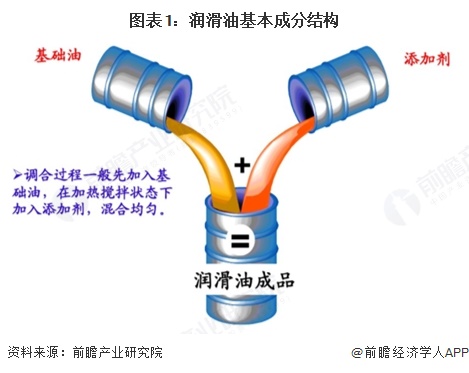
Group 1: Core Insights - The core composition of lubricating oil consists of base oil and additives, where base oil is the primary component determining the fundamental properties of the lubricating oil, while additives enhance and improve the performance of base oil [1] Group 2: Changes in China's Base Oil Capacity - The rapid expansion phase of China's base oil capacity has ended, with total capacity expected to reach 21.82 million tons per year by the end of 2024, reflecting a compound annual growth rate (CAGR) of 1% from 2020 to 2024 [3] - The growth in base oil capacity is shifting towards larger-scale production and the development of higher-grade base oils, such as Class II and Class III base oils [3] - A decline in base oil capacity growth is anticipated in 2024, primarily due to the removal of ineffective capacity and the shutdown of long-idled recycling oil facilities [3] Group 3: Regional Distribution of Base Oil Capacity - In 2024, the East China region is projected to have a capacity of 8.83 million tons, accounting for 40% of the total capacity, making it a major consumption area for base oil products [5] - The East China region benefits from favorable transportation conditions, facilitating the input of raw materials and the output of products, which supports the upstream and downstream industrial chain [5] Group 4: Supply and Demand of Lubricating Oil Additives - Domestic production of lubricating oil additives has increased from 583,000 tons in 2015 to 878,000 tons in 2022, with a CAGR of 6.02% [8] - The apparent consumption of lubricating oil additives in China was approximately 950,400 tons in 2022, with an annual average growth rate of 2.24% from 2015 to 2022 [8] - Preliminary estimates suggest that by 2024, the production and consumption of lubricating oil additives in China will reach 987,000 tons and 993,500 tons, respectively [8] Group 5: Impact of Supporting Industry Layout on Lubricating Oil Development - The layout of the base oil and additive industries significantly influences the development of the lubricating oil sector, as the quality and stability of base oil supply directly affect the performance and cost of lubricating oil [10] - China's increasing base oil production and decreasing reliance on imports provide a more stable supply of raw materials, which helps stabilize costs and ensure production [10] - Continuous technological advancements in the additive industry and accelerated domestic substitution processes enhance the overall competitiveness of the lubricating oil sector [10]




【干货】2025年稀土产业链全景梳理及区域热力地图
Qian Zhan Wang· 2025-06-11 06:11
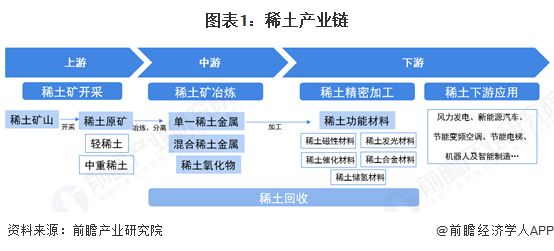
Group 1 - The rare earth industry chain is crucially linked to recycling, which has become an important part of the industry due to the non-renewable nature of rare earth resources [1][3] - The upstream of the rare earth industry includes the refractory raw material manufacturing sector, which involves the mining, smelting, and processing of inorganic non-metallic mineral raw materials [1] - The downstream processing of rare earth metals and oxides leads to the production of various materials used in wind power generation, electric vehicles, energy-saving air conditioners, and smart manufacturing [1] Group 2 - China's rare earth mining and smelting are controlled by four major groups, limiting the number of participants in the upstream and midstream sectors [3] - Representative companies in the downstream sector include Zhongke Sanhuan, Lingyi Zhi Zao, and Antai Technology, while recycling is represented by Huahong Technology and Southern Rare Earth [3] - The regional distribution of rare earth companies shows a concentration in Jiangxi, Inner Mongolia, and Zhejiang, with Jiangxi having the highest number of companies at 197, accounting for 16.4% of the national total [5][7] Group 3 - There are 17 major rare earth industrial parks in China, primarily located in Inner Mongolia, Fujian, Jiangxi, Shandong, Sichuan, and Ningxia, with Inner Mongolia having the highest concentration of 10 parks [9]


重磅!2025年中国及31省市低空物流行业政策汇总及解读(全)“政策助推行业快速发展”
Qian Zhan Wang· 2025-06-11 05:21
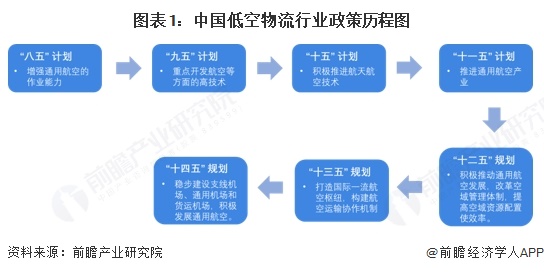
Core Viewpoint - The article discusses the development and policy framework of China's low-altitude logistics industry, highlighting its significance as part of the low-altitude economy and the strategic support from the government to foster growth in this sector [1][3]. Policy Development History - The low-altitude logistics sector is part of the broader low-altitude economy, which has evolved alongside macro policies related to low-altitude economic activities. Key plans such as the "Eighth Five-Year Plan" and the "Fourteenth Five-Year Plan" emphasize enhancing air transport capabilities and developing general aviation infrastructure [1]. National Policy Summary and Interpretation - The low-altitude economy relies on both manned and unmanned aerial vehicles, with the drone industry identified as a strategic emerging industry during the "Fourteenth Five-Year Plan." The government has introduced multiple policies to support and regulate the drone sector, marking low-altitude economy as a new growth engine in the 2024 government work report [3][4]. Policy Impact on Low-Altitude Logistics - The "Fourteenth Five-Year Plan" aims to deepen reforms in the low-altitude economy, enhance air traffic management, and optimize air route networks, which will provide strategic support for the low-altitude logistics industry [9]. - The "Regulations on the Management of Unmanned Aerial Vehicle Flights" establish a comprehensive framework for the operation of drones, promoting a safer and more efficient logistics environment [10][11]. Local Government Initiatives - Various provinces are actively promoting low-altitude logistics development, with initiatives such as building smart logistics systems and exploring drone transportation routes. For instance, Guangdong aims to create a leading low-altitude economic hub, while Beijing plans to establish innovation platforms in the sector [12][13][14]. Development Goals - Local governments have set specific targets for the low-altitude economy, including the establishment of infrastructure and the growth of industry scale. For example, by 2027, Hubei aims to achieve a low-altitude industry scale exceeding 100 billion yuan [15].
2025年中国多模态大模型行业硬件现状 AI芯片和AI服务器的需求在多模态大模型影响下加速增长【组图】
Qian Zhan Wang· 2025-06-11 05:17
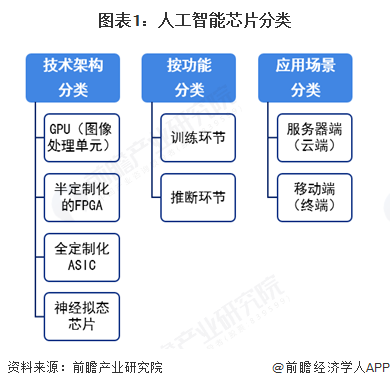
Core Insights - The AI chip market in China is projected to reach 168.8 billion yuan in 2024, reflecting a year-on-year growth of 40% due to increasing demand and technological advancements [5] - The AI server market is expected to grow significantly, with a projected market size of 11.5 billion USD in 2024 and 13.4 billion USD by 2027, indicating a compound annual growth rate of 22% from 2022 to 2027 [10] AI Chip Overview - AI chips are defined broadly as chips designed for artificial intelligence applications, with various designs and methods emerging to meet diverse demands [5] - The classification of AI chips can be based on technical architecture, functionality, and application scenarios [5] - Major companies in the AI chip sector include Huawei HiSilicon, Cambricon, Horizon Robotics, and others, focusing on applications in smart devices and security [7][8] AI Server Overview - AI servers are designed to support AI applications, consisting of components like DRAM, GPU, and acceleration chips, and can be categorized into deep learning training and intelligent application inference types [3] - The demand for AI servers is increasing due to rapid advancements in digital infrastructure and the rise of multimodal large models, which require enhanced computational capabilities [9] - Innovations in AI server technology are driven by the need for high-performance processors, large memory, and efficient cooling systems [9] Competitive Landscape - The AI chip market is concentrated among a few key players, with significant achievements in chip design and partnerships across various industries [7][8] - Companies like Huawei, Cambricon, and Horizon Robotics are actively collaborating with automotive and technology firms to expand their market presence [8]
2025年全球建筑节能行业发展现状 建筑行业的能源消费及碳排放比重下降【组图】
Qian Zhan Wang· 2025-06-11 04:28
Global Building Energy Efficiency Industry Overview - The global building energy efficiency industry has experienced a growth trend in investment from 2017 to 2023, despite a decline in 2018 due to the U.S. withdrawal from the Paris Agreement. In 2023, the investment scale decreased to $243.7 billion due to global economic uncertainties and geopolitical conflicts [4] - The International Energy Agency (IEA) reported that the share of renewable energy in global building energy consumption was only 6% in 2022, with a target to increase this to 18% by 2030. Achieving this target requires an annual compound growth rate of over 15%, leading to an estimated investment scale of approximately $280.3 billion in 2024 [4] Energy Consumption and Carbon Emissions - The building sector accounted for 34% of global energy consumption and 37% of global CO2 emissions in 2022. However, in 2023, the energy consumption share decreased to 28%, primarily due to reduced heating demand in warmer regions [5] - The building industry was the only sector to see a decrease in carbon emissions in 2023, with its share of global emissions dropping to 26%. The UN Environment Programme emphasized the urgent need for accelerated action in the building sector to meet global climate goals [5][7] - By 2035, the building sector is projected to contribute approximately 11% of the global emission reduction potential, equating to 4.2 Gt CO₂e [5] Energy Consumption Distribution - In 2022, global building energy consumption slightly increased to 132 exajoules (EJ), with electricity and natural gas being the primary sources. In 2023, this consumption decreased to 130 EJ, representing 32% of global energy demand [8] - The reliance on electricity continued to grow, accounting for 37% of total building energy demand in 2023, while natural gas consumption fell by over 4% [8] - The reduction in fossil fuel usage in buildings was influenced by geopolitical factors, particularly the war in Ukraine [8] Carbon Emissions Breakdown - In 2023, residential buildings accounted for the largest share of indirect carbon emissions at 10%, although this was a 1% decrease from 2022. Non-residential buildings and emissions from the construction process each contributed 8%, also down by 1% [11]
预见2025:《2025年中国智能手环行业全景图谱》(附市场现状和发展趋势等)
Qian Zhan Wang· 2025-06-11 02:18
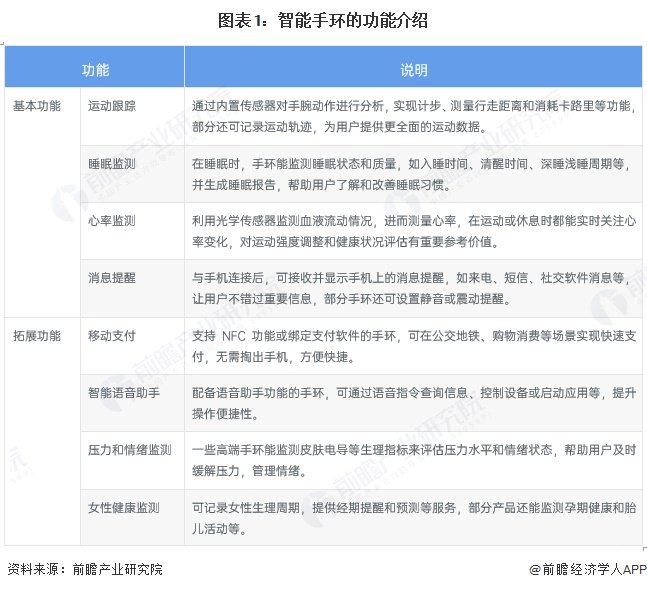
Industry Overview - The smart wristband is a wearable smart device that allows users to record real-time data related to exercise, sleep, and diet, syncing this data with their smartphones to guide a healthier lifestyle [1] - The smart wristband industry involves multiple segments, including upstream raw material and component suppliers, midstream device manufacturers, and downstream sales channels and application fields [4][5] Industry Development - The development of smart wristbands in China has progressed through several stages: initial phase, rapid growth phase, mature phase, and is currently in the innovation development phase, focusing on product differentiation and smart upgrades [6] - The market for smart wristbands is projected to grow at an annual rate of 18%, potentially reaching a market size of 21 billion yuan by 2030 [24] Market Size and Sales - In 2024, China's smart wristband market is expected to see a shipment volume of 17.99 million units, representing a year-on-year growth of 20.2% [14] - The total market size for smart wristbands in China is estimated to be approximately 7.78 billion yuan in 2024, driven by the "national subsidy" policy [15] Competitive Landscape - The smart wristband market is characterized by a "dual oligopoly" structure, with Xiaomi and Huawei dominating approximately 85% of the market share [21] - Xiaomi has emerged as the only brand among the top five to achieve growth, largely due to the successful launch of the Xiaomi Band 9, which has enhanced features and performance [21] Policy Support - The Chinese government has implemented various policies to support the development of wearable devices, particularly in health monitoring applications, encouraging advancements in technology and component manufacturing [11][12][13]

预见2025:《2025年中国融资租赁行业全景图谱》(附市场现状、竞争格局和发展趋势等)
Qian Zhan Wang· 2025-06-11 02:13
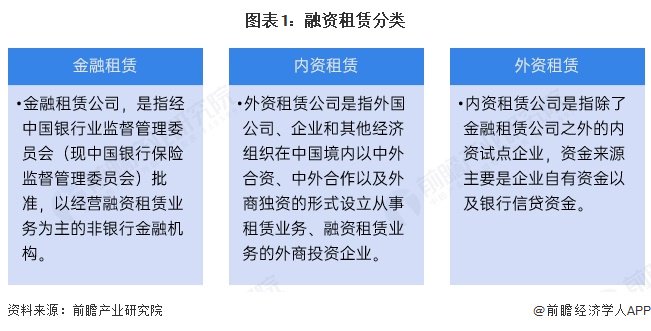
Industry Overview - The financing leasing industry is defined as a non-bank financial form where the lessor purchases the selected leased object from a third party at the request of the lessee and enters into a lease contract to rent it to the lessee for a fee [1] - Financing leasing can be categorized based on the nature of the enterprise into financial leasing, domestic leasing, and foreign leasing [2] Industry Chain Analysis - The industry chain involves three main parties: suppliers, lessors, and lessees. The upstream includes suppliers and banks providing financial support, the midstream consists of financing leasing companies, and the downstream lessees are primarily in sectors like aviation, construction, printing, medical, and automotive leasing [3] Industry Development History - The financing leasing business in China began around 1980, transitioning through various phases including initial growth, adjustment, and regulation. From 2011 to 2017, the industry experienced rapid growth, but since 2018, the number of enterprises has stabilized, and the total balance of leasing contracts has slightly declined, indicating a period of adjustment [7] Policy Background - The National Financial Regulatory Administration is the main regulatory body overseeing the financing leasing industry, responsible for formulating and implementing operational and regulatory rules. Recent government policies have focused on supporting green financing, equipment financing, and financing for small and medium-sized enterprises [10][12] Current Industry Status - The total balance of financing leasing contracts has been declining since 2019, with an estimated balance of approximately 54,600 billion RMB by the end of 2024, reflecting a decrease of about 1,800 billion RMB or 3.2% from 2023 [13] - Financial leasing continues to dominate the market, accounting for 43.0% of the total contract balance, while domestic leasing holds 35.5% and foreign leasing 17.3% as of mid-2024 [14] - The number of financing leasing enterprises is approximately 8,671, showing a stable trend overall [16] - Foreign leasing enterprises remain a significant force, but their proportion has slightly decreased, with domestic leasing enterprises increasing from 2.86% in 2016 to 5.19% by mid-2024 [17] Market Scale and Competition - The financing leasing market in China has shown stable demand, with a projected scale exceeding 30 trillion RMB in 2024. Major players include companies like Far East Horizon, China Merchants Jinling, and Industrial Bank Leasing [25] - The competitive landscape is characterized by a multi-tiered structure, with high-end markets predominantly led by international brands [21] Future Development Trends - The financing leasing industry is expected to evolve towards greater standardization, greening, digitization, and concentration, adapting to policy and market changes to promote sustainable growth [27][28] - Despite a slowdown in overall development since 2024, the market demand remains stable, with an anticipated annual growth rate of around 5% over the next six years [31]
不炒房不炒股!中国最硬气城市,强到让北上深杭集体学习
Qian Zhan Wang· 2025-06-11 02:10
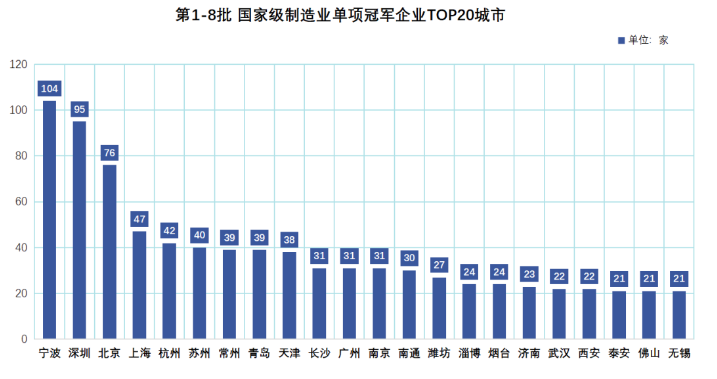
Core Insights - Ningbo has become a focal point for other developed cities in China, particularly in technology innovation, attracting delegations from major cities like Shanghai, Beijing, and Shenzhen for learning exchanges [1][2] - The city's GDP has significantly increased from 0.76 trillion to 1.81 trillion from 2014 to 2024, marking a growth of 10,545 billion [3] - Ningbo is recognized as the first "Champion City" in China, with 104 manufacturing champion enterprises, maintaining the top position for seven consecutive years [4] Economic Growth - Ningbo's GDP growth from 2014 to 2024 is notable, with an increase of 10,545 billion, positioning it as the second city in Zhejiang and aiming for the top ten in the "trillion club" [3] - The city has a strong manufacturing base, with a focus on specialized and high-quality production, contributing to its economic resilience [11][12] Manufacturing Excellence - Ningbo is home to several global leaders in niche manufacturing, such as Sunyu Optical, which supplies one-third of the world's Android phone lenses, and Bode High-Tech, which provides 40% of the world's precision cutting wire [9][10] - The city has made significant strides in critical technology sectors, including semiconductor materials and aerospace components, showcasing its role in national strategic projects [10] Business Environment - The historical business culture in Ningbo, characterized by a strong entrepreneurial spirit and a focus on specialized sectors, has fostered a vibrant private economy, with 97% of businesses being privately owned [11][12] - The government plays an active role in supporting champion enterprises, providing financial incentives and a favorable business environment, ranking fifth nationally for its business climate [19][20] Innovation and Collaboration - Ningbo has established a "big cluster + small specialty" model, promoting collaboration among enterprises within industrial chains, enhancing competitiveness and innovation [17][18] - The city has identified 100 industrial chains, with 18 leading enterprises acting as "chain masters" to drive development and innovation within their sectors [18] Champion Enterprises - The concept of "single champion" enterprises is central to Ningbo's strategy for high-quality development, with significant rewards and support for those achieving this status [22][23] - The city offers substantial financial rewards for national and local champion enterprises, with amounts reaching up to 500 million for national recognition [21]