Qian Zhan Wang

Search documents
重磅!2025年中国及31省市硅钢行业政策汇总及解读(全)政策支持发展高性能硅钢,实施生产低碳化改造
Qian Zhan Wang· 2025-04-27 09:30
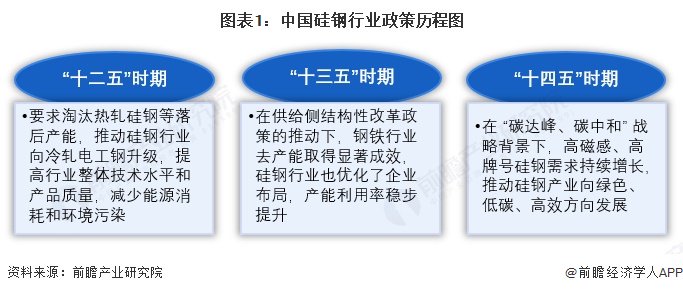
转自:前瞻产业研究院 行业主要上市公司:宝钢股份(600019);首钢股份(000959);望变电器(603191);沙钢股份(002075);鞍钢股份 (000898);太钢不锈(000825);马钢股份(600808);新钢股份(600782)等 本文核心数据:行业政策;地方政策;政策解读;政策关键词; 1、政策历程图 中国硅钢行业政策从十二五到十四五期间的政策历程如下:"十二五"期间淘汰落后产能,推动技术创 新:2012年,工信部发布相关文件,要求淘汰热轧硅钢等落后产能,推动硅钢行业向冷轧电工钢升级, 提高行业整体技术水平和产品质量,减少能源消耗和环境污染。鼓励企业加大研发投入,开发高磁感、 高牌号硅钢产品,提高产品性能和竞争力,满足新能源、高端装备制造等新兴产业对高性能硅钢的需 求。"十三五"期间供给侧结构性改革,能效标准提升:在供给侧结构性改革政策的推动下,钢铁行业去 产能取得显著成效,硅钢行业也优化了企业布局,提高了行业集中度,产能利用率稳步提升。陆续发布 了一系列针对家电、电机等领域的能效标准,对硅钢的性能和质量提出了更高要求,促使企业生产更高 能效的硅钢产品。"十四五"期间双碳战略引领,地方政 ...





2025年全球稀土行业发展现状分析:储量有所下滑,产量不断增长
Qian Zhan Wang· 2025-04-27 09:27
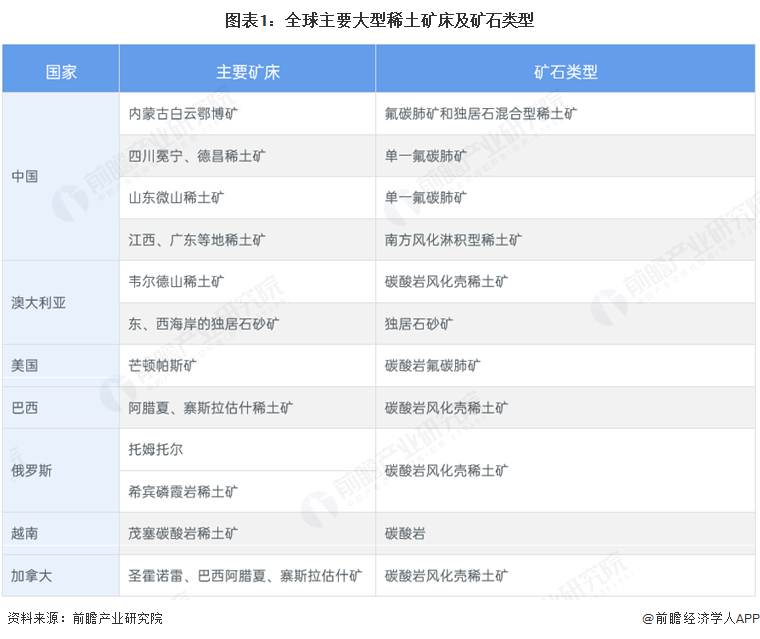
转自:前瞻产业研究院 行业主要上市公司:北方稀土(600111);中国稀土(000831);广晟有色(600259);厦门钨业(600549);中科三环 (000970);英洛华(000795)等 本文核心数据:全球稀土储量;全球稀土产量 全球主要大型稀土矿床及矿石类型 经过半个多世纪的超强度开采,中国稀土储量下降明显。除中国外,美国、澳大利亚、俄罗斯、巴西、加拿 大、印度等国的稀土资源也较为丰富。近年来,在越南也发现了大型稀土矿床。非洲大陆也蕴藏着丰富的稀 土资源。目前,全球大约有30多个国家和地方发现了稀土资源或从事稀土生产,主要稀土资源国中有一批大 型或以超大型稀土矿床。 全球稀土储量下滑,中国为最大稀土资源国 据美国地质调查局(USGS)数据,2024,全球已探明稀土资源储量0.9亿吨,已连续两年出现较大的下滑。 全球稀土资源部分不均,高度集中在中国、越南、巴西和俄罗斯四大国家。根据最新美国地质调查局 (USGS)数据显示,截至2024年末,全球已探明稀土资源储量9000万吨,其中,中国稀土资源储量4400万 吨,是世界最大稀土资源国;巴西稀土储量位列第二,为2100万吨;其次是印度和澳大利亚,稀土资 ...


【行业深度】洞察2025:中国纺织行业竞争格局(附竞争梯队、企业竞争力评价等)
Qian Zhan Wang· 2025-04-27 08:40
转自:前瞻产业研究院 行业主要上市公司:新澳股份(603889)、恒力石化(600346)、东方盛虹(000301)、浙文影业(601599)、恒 逸石化(000703)、百隆东方(601339)、华孚时尚(002042)、凤竹纺织(600493)、金鹰股份(600232)、华升 股份(600156)、嘉欣丝绸(002404)、彩蝶实业(603073)、华纺股份(600448)等 本文核心数据:企业竞争格局;区域竞争格局;行业竞争力评价 1、中国纺织行业整体竞争梯队 按纺织行业企业纺织业务营收规模来看,100亿元以上的企业有华孚时尚等等,营收在10亿元-100亿元 之间的企业有新澳股份、浙文影业、百隆东方和嘉欣丝绸等,营收在1-10亿元之间的企业有凤竹纺织、 金鹰股份、华升股份、彩蝶实业和宏达高科等。 2、中国纺织行业细分市场竞争格局 从细分领域来看,棉纺织领域以魏桥创业、天虹国际、华孚时尚、百隆东方等企业为主;麻纺织领域以 金鹰股份、华升股份和金达控股等企业为主;毛纺织领域以新澳股份、中鼎纺织和浙文影业等企业为主; 丝纺织领域以嘉欣丝绸、达利丝绸和金富春等企业为主;化纤纺织业有彩蝶实业、宏达高科和台华新材 ...


进口量连年“缩水”,进口车不香了?乘联分会崔东树:中国一季度进口车销量大跌39%【附新能源汽车行业市场分析】
Qian Zhan Wang· 2025-04-27 06:24
Core Viewpoint - The Chinese imported car market is experiencing a significant decline, with import volumes dropping from 1.24 million units in 2017 to 800,000 units in 2023, and projected to fall to 700,000 units in 2024, marking a 12% year-on-year decrease [2] Group 1: Market Trends - The imported car market has seen a sharp decline, with a 39% year-on-year drop in the first quarter of 2025, importing only 95,000 vehicles [2] - Domestic vehicles are rapidly gaining market share due to advancements in technology, quality, and design, while international brands are localizing production to reduce costs and better meet market demands [2] - The luxury car segment is currently the main support for the imported car market [3] Group 2: New Energy Vehicles (NEVs) - The average import price of NEVs in China has risen from $41,478.8 per unit in 2018 to $60,620.9 per unit in 2022, indicating a strong demand for high-end models [3] - China has maintained its position as the world's largest market for NEVs, with a market share of 24.4% in 2022, contributing to a global market share of 13.3% [6] - The Chinese government has set a target for NEVs to account for approximately 20% of total new car sales by 2025, with expected sales surpassing 13 million units [8] Group 3: Strategic Insights - The development of NEVs is a key national strategy for China, addressing issues like oil security and air pollution while enhancing industrial competitiveness [10] - The automotive industry is shifting towards a dual-driven model of domestic and international markets, with smart technology playing a crucial role in industry upgrades [10] - The establishment of specialized research institutions aims to provide comprehensive planning and consulting services for the NEV industry, focusing on data-driven insights and strategic development [10]

【前瞻分析】2018-2024年全球铅酸蓄电池行业市场规模
Qian Zhan Wang· 2025-04-27 05:43
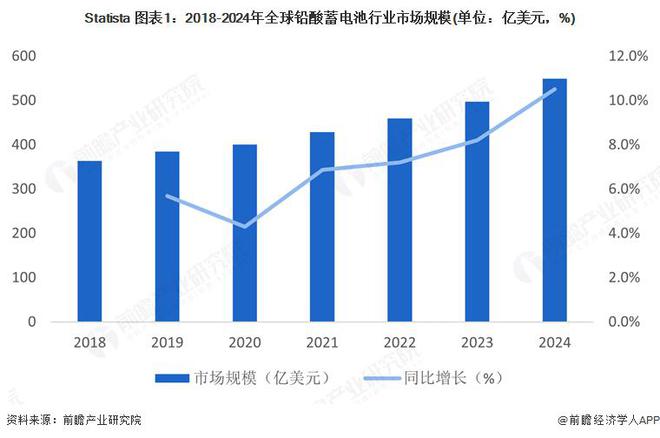
Group 1 - The global lead-acid battery market is steadily expanding, with a projected market size of $54.924 billion in 2024, reflecting a year-on-year growth of 10.5%, the highest growth rate in recent years [1] - The lead-acid battery industry is characterized by its low price, mature technology, excellent performance in high and low temperatures, reliability, and high safety, maintaining a significant market position globally [1] - The downstream demand for lead-acid batteries is primarily influenced by the automotive, electric vehicle, communication, and power sectors, with the starting power application market accounting for over 70% of the global lead-acid battery market in 2023 [5] Group 2 - The competitive landscape of the global lead-acid battery industry is highly concentrated, with Clarios holding a market share of 24%, followed by Exide and Yuasa at 10% each, resulting in a CR3 of 44% and a CR10 of 76% [2] - The lead-acid battery industry in China is currently in a mature stage, characterized by a slowdown in growth after a period of rapid expansion, with high entry barriers and a decreasing number of non-compliant manufacturers [7]
2025年中国新媒体行业重点细分市场竞争状况 头部平台聚集效应明显(组图)
Qian Zhan Wang· 2025-04-27 01:13
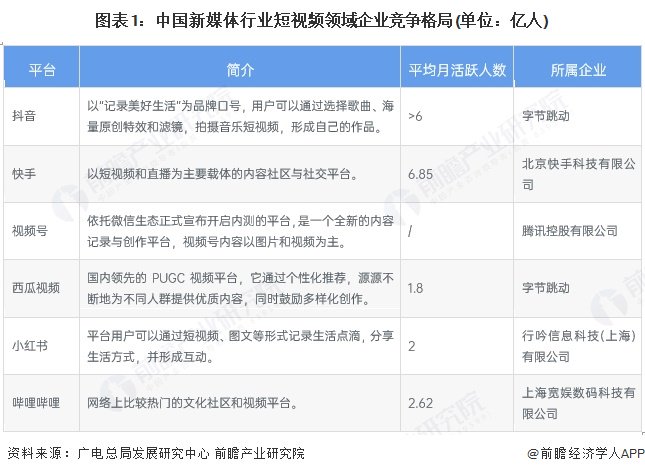
Short Video Sector - The competitive landscape of short video platforms has evolved from a "duopoly" to a "tripod" structure, with Douyin maintaining over 600 million daily active users, and Kuaishou achieving an average of 685 million monthly active users and 387 million daily active users, both reaching new highs [1][4] - WeChat Video Account has become a significant player in the short video market, integrating various features such as messaging, Moments, public accounts, mini-programs, and "Look" [1] - Other short video platforms like CCTV Video, Xigua Video, Tencent Weishi, and Haokan Video are carving out niches with average monthly active users ranging from 100 million to 300 million [1] Long Video Sector - In the long video sector, major platforms such as iQIYI, Tencent Video, Mango TV, Youku, Bilibili, and Migu Video account for nearly 93% of the market penetration [7] - As of August 2024, the top five video apps by monthly active users are iQIYI (394 million), Tencent Video (386 million), Mango TV (268 million), Bilibili (219 million), and Youku (199 million), with Youku lagging significantly behind the top three [10] Live Streaming Sector - The live streaming market is dominated by platforms like Douyu, Huya, and YY, which collectively hold a market share of 74.2%, indicating a strong concentration of users in entertainment and gaming live streaming [11] Gaming Sector - In the gaming industry, Tencent Games leads with a revenue of 48.505 billion yuan in the first half of 2024, followed by NetEase with 20.9 billion yuan in revenue for the first three quarters of 2024 [14][15]


【干货】多模态大模型产业链全景梳理及区域热力地图
Qian Zhan Wang· 2025-04-27 01:12
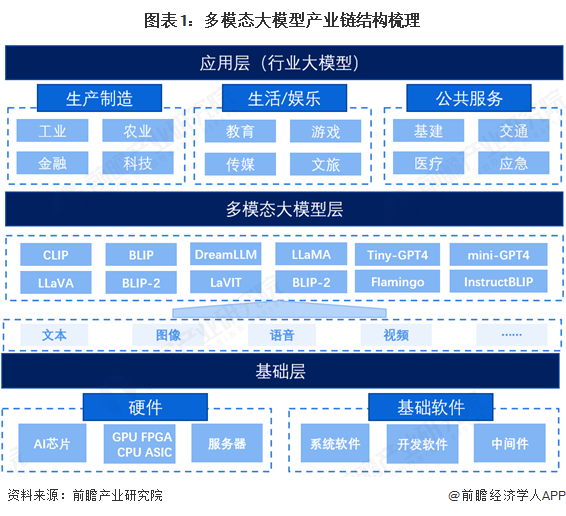
Core Insights - The article discusses the multi-modal large model industry chain, highlighting its complexity and the various layers involved, including the foundational layer, model layer, and application layer [1][3]. Industry Overview - The multi-modal large model industry chain consists of three main layers: foundational (hardware and basic software), model (various types of multi-modal large models), and application (industry-specific large models) [1]. - Key players in the foundational layer include Intel and NVIDIA, while foundational software participants include Huawei, Tencent, and Unisoc [3]. Regional Distribution - The multi-modal large model industry is concentrated in major cities such as Beijing, Shanghai, Suzhou, Hangzhou, and Shenzhen, with a strong presence of upstream companies in Beijing and Shenzhen [4]. - Upstream companies in Beijing include Cambricon, Lenovo, and Inspur, while Shenzhen hosts Unisoc, HiSilicon, and ZTE [4]. Revenue Insights - The revenue distribution in China's multi-modal large model sector shows a concentration among leading companies, with Alibaba Cloud generating over 110 billion yuan, accounting for approximately 15% of its group's revenue [7]. - Huawei Cloud and Tencent Cloud follow, with revenues of 68.8 billion yuan and 63.6 billion yuan, respectively, each contributing around 5-7% to their parent companies [7]. Cost Structure - The training costs for mainstream large models in China range from tens of millions to hundreds of millions of dollars, with major players like Baidu, Alibaba, and Tencent investing over 200 million dollars [10]. - Startups like Kimi and DeepSeek manage to lower their training costs to between 30 million and 60 million dollars through technological optimization [10]. Product Cost Details - The training and cloud hosting costs for various multi-modal large models are detailed, with notable examples including: - Pangu Model (Huawei): ≥ 100 million USD - Wenxin Model (Baidu): ≥ 300 million USD - Mix Yuan Model (Tencent): ≈ 250 million USD - Xinghuo Model (iFlytek): = 80 million CNY [12].



【全网最全】2025年中国卫星应用行业上市公司全方位对比(附业务布局汇总、业绩对比、业务规划等)
Qian Zhan Wang· 2025-04-26 03:11
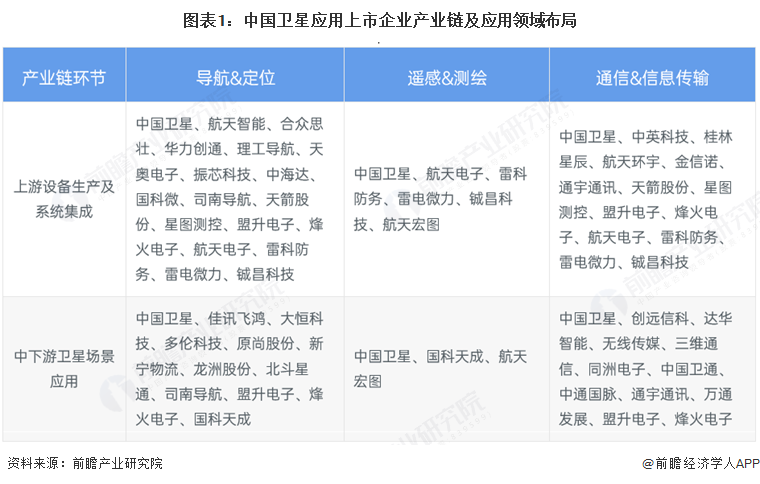
Summary of Key Points Core Viewpoint - The satellite application industry in China is characterized by a diverse and specialized development trend, with significant growth potential across various sectors including navigation, remote sensing, and communication [1][2]. Group 1: Overview of Listed Companies - China's satellite application listed companies cover a wide range of sectors, including navigation & positioning, remote sensing & surveying, and communication & information transmission [1]. - The industry features a strong presence of upstream equipment manufacturers and system integrators, while downstream applications are rich and varied, involving sectors like transportation, logistics, and communication [1][2]. - The navigation & positioning sector has the highest number of companies, indicating intense competition, while the remote sensing & surveying sector has fewer players but higher technical barriers [1][2]. Group 2: Company Performance Comparison - In the first half of 2024, notable performance differences were observed among listed companies in the satellite application navigation sector, with 华力创通 showing a revenue increase of 172.78% year-on-year, while 北斗星通 experienced a revenue decline of 66.42% [9][10]. - The overall performance of upstream companies was more volatile compared to downstream companies, which showed relatively stable performance [9][10]. Group 3: Business Planning and Development - Companies are actively expanding their business and innovating technologies, with 北斗星通 focusing on high-precision positioning services and 合众思壮 pursuing a global strategy [14]. - 中国卫通 is transitioning towards integrated information services, while 中海达 is enhancing its focus on high-precision applications of the BeiDou system [14]. - The diverse business strategies and planning of these companies are driving the continuous development of the satellite application industry in China [14].


预见2025:《2025年中国航空发动机行业全景图谱》(附市场现状、竞争格局和发展趋势等)
Qian Zhan Wang· 2025-04-26 01:11
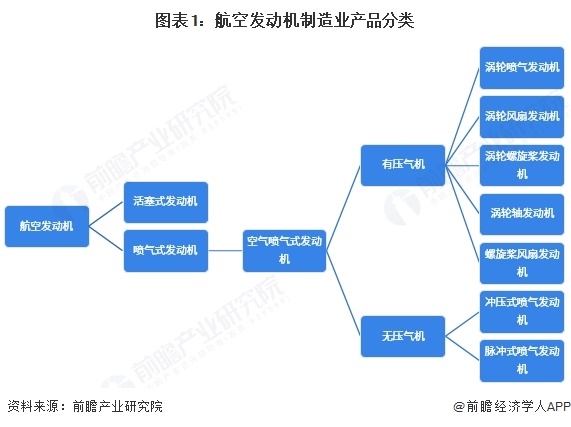
Industry Overview - The aviation engine industry is crucial for national economy and security, serving as the power source for various aircraft and representing a country's comprehensive strength [1] - Aviation engines can be categorized into several types based on thrust generation principles and oxidizer sources, including piston engines, rocket engines, ramjet engines, and turbine engines [1] Industry Chain Analysis - The aviation engine industry chain includes research and design, manufacturing (raw materials, components, complete machine manufacturing), operation, and maintenance [3] - China has established a complete research and production system for aviation engines, with key participants including universities and research institutes [4] Development History - The Chinese aviation engine industry has evolved from imitation to independent research and development, achieving significant self-innovation capabilities supported by national policies [5][8] Policy Background - The "14th Five-Year Plan" emphasizes accelerating the research and development of advanced aviation engine materials and technologies, promoting the development of civil large bypass ratio turbofan engines [10] Current Market Status - The aviation engine industry has vast market potential, with a global annual output of over 14,000 units and an estimated annual value of around $70 billion [12] - The Chinese commercial aviation engine market is expected to experience explosive growth, with projected deliveries reaching 19,000 units and a market value exceeding $300 billion over the next 20 years [12] Demand Trends - Both military and civil aviation sectors in China are witnessing an upward trend in aircraft numbers, with the military fleet expected to reach 3,309 aircraft by the end of 2024 [14] - The number of civil passenger and cargo aircraft in China has also been increasing, with approximately 4,400 aircraft expected in 2024 [15] Competitive Landscape - The aviation engine market is primarily dominated by foreign manufacturers, with significant gaps in capabilities compared to the US, Russia, and other military powers [17][19] - The global commercial aviation engine market is largely controlled by a few companies, with CFM International and Pratt & Whitney holding substantial market shares [20] Future Development Trends - The Chinese aviation engine manufacturing industry is expected to focus on independent innovation, quality improvement, international cooperation, and sustainable development [24]


2025年中国电线电缆行业技术环境分析:电线电缆行业专利申请热度减退,但上市企业技术研发投入整体增长
Qian Zhan Wang· 2025-04-25 04:09
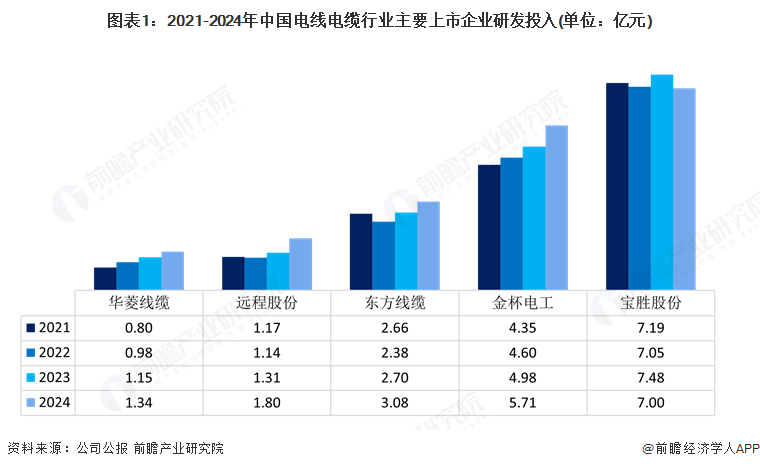
Core Insights - The overall R&D investment in the wire and cable industry has been increasing, with a focus on areas such as new energy and submarine cables [1][2] - The industry has seen a decline in patent application activity recently, with a concentration on conductive, insulating, or dielectric materials [4][6] - The application of new materials and clean energy demands is driving technological advancements in the wire and cable sector [10][11] R&D Investment Trends - R&D investments among major listed companies in the wire and cable industry have generally risen, with significant fluctuations observed in companies like Baoshan Co. and Jinbei Electric [1] - Key R&D directions include photovoltaic, electric vehicles, nuclear power plants, and submarine cables, indicating these areas are becoming increasingly important [2] Patent Application Activity - The number of patent applications in the wire and cable manufacturing sector has shown a fluctuating trend, peaking at 4,422 in 2020 and dropping to 2,195 in 2024 [4] - As of the first quarter of 2025, the most patents were filed in the field of cable conductors and insulating materials, totaling 10,580 [7] Technological Advancements - The wire and cable industry has made significant technological progress, particularly in the application of new materials and processes [10] - The development of new materials such as carbon fiber, graphene, and high-voltage direct current cable insulation has enhanced product safety and reliability [11] - The demand for clean energy and low-carbon economy initiatives is leading to the creation of new wire and cable products that meet specific requirements for renewable energy applications [11]