
Zhong Guo Zi Ran Zi Yuan Bao

Search documents
在温州海洋中心,赴一场科学与海洋的盛宴
Zhong Guo Zi Ran Zi Yuan Bao· 2025-09-04 02:09
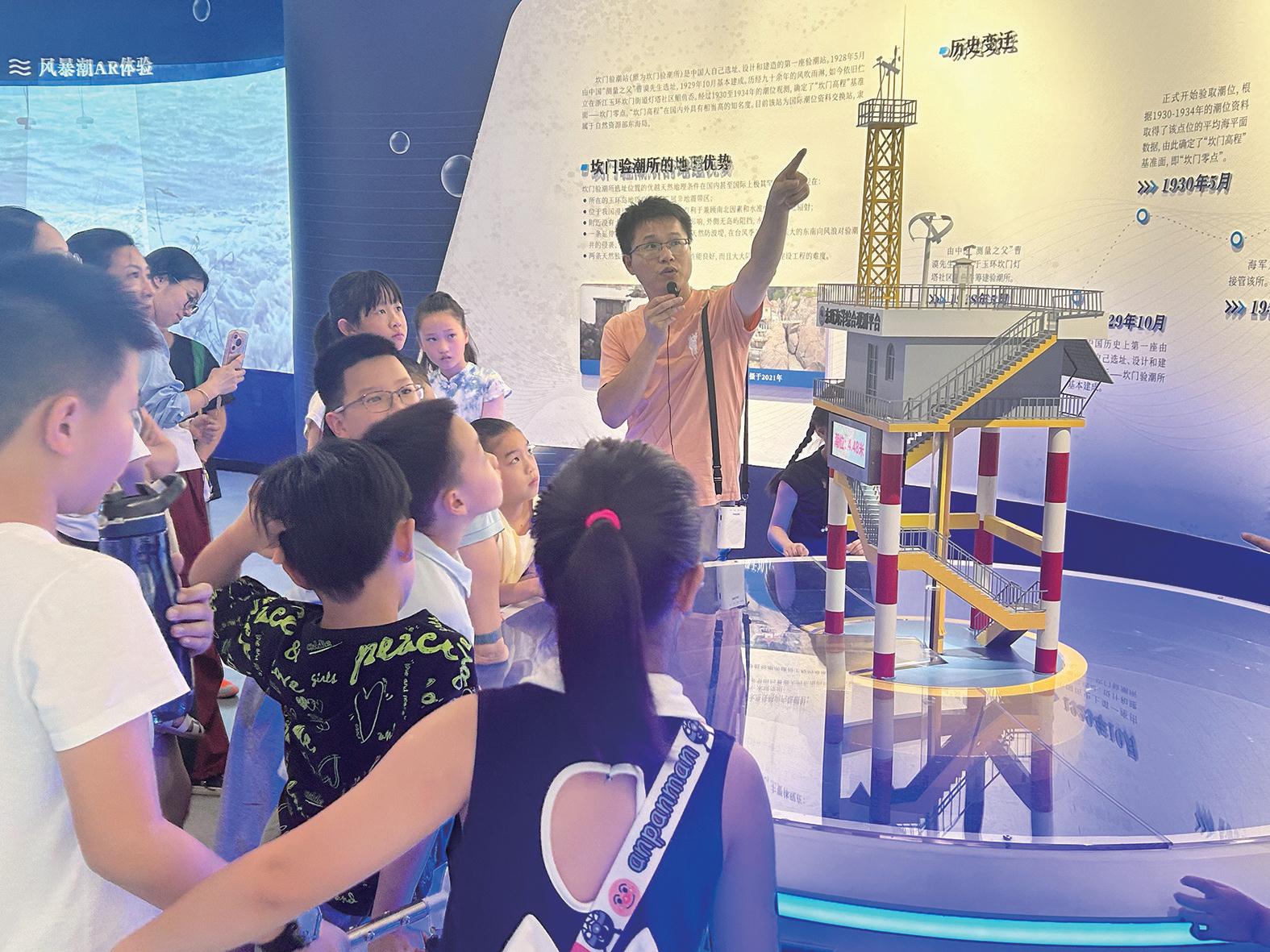
Core Insights - A group of over 20 students from Wenzhou, Zhejiang Province participated in a marine science exploration activity at the Wenzhou Ocean Center, focusing on immersive experiences and scientific exploration to enhance marine protection awareness [1] Group 1: Educational Activities - Students visited the marine science exhibition hall, where they engaged with interactive displays and learned about marine knowledge through easy-to-understand explanations from guides [1] - The interactive facilities at the Dong'ou Ocean Comprehensive Observation Platform allowed students to observe water level changes and understand the working principles of tide stations [1] - In the storm surge AR experience area, students experienced the power of storm surges while learning about disaster prevention and mitigation [1] Group 2: Environmental Awareness - The mangrove ecosystem display area educated students on the growth secrets of mangroves and their crucial role in carbon reduction and ecological regulation [1] - A 6-minute science film titled "The Legend of the Blue Ocean" was screened in the Blue Cinema, showcasing the beauty and mystery of the ocean, instilling the concept of ocean protection in the students [1] Group 3: Microscopic Exploration - Students explored marine biological specimens to appreciate the diversity of marine life [1] - Under the guidance of staff, students used professional microscopes to observe marine phytoplankton and zooplankton, marveling at the wonders of the microscopic world [1]

海洋一所为多国青年提供气候与海洋学培训
Zhong Guo Zi Ran Zi Yuan Bao· 2025-09-04 02:09
本次培训班由自然资源部第一海洋研究所(以下简称海洋一所)主办,为期2周,主题是海洋预报 系统应用。培训班由中心与国家重点研发计划政府间国际科技创新合作专项"金砖国家海洋预报模式的 改进与示范应用"项目、南亚海洋防灾减灾能力建设合作项目和爱思唯尔共同组织承办。 中心自2011年在海洋一所正式挂牌成立以来,共收到1617份申请,为全球56个国家的785名学员提 供了培训。本次培训共邀请了来自中国、英国、意大利等国家的11名专家,为来自尼日利亚等18个国家 的35名学员授课。培训采用专家授课、现场练习与研讨、小组讨论与汇报等多种方式,为气候与海洋领 域的青年学者,特别是为来自发展中国家的青年学者提供能力提升与合作研究平台。 9月1日,第14届联合国教科文组织政府间海洋学委员会海洋动力与气候区域培训和研究中心(以下 简称中心)培训班开班仪式在青岛举办。 ...
2025年自然资源卫星应用技术体系建设交流会召开
Zhong Guo Zi Ran Zi Yuan Bao· 2025-09-04 01:58
Core Insights - The conference focused on strengthening satellite remote sensing application capabilities to support the "One Map" initiative, highlighting the progress and experiences gained from the implementation of the "Three-Year Action Plan" for natural resource satellite remote sensing application [1] Group 1: Satellite Remote Sensing Application - The conference featured 11 typical reports that summarized the advancements made in satellite remote sensing application systems at various levels of government [1] - The "One Map" initiative is seen as a catalyst for deepening practical cooperation and enhancing satellite remote sensing application capabilities [1] Group 2: New Data Products and Platforms - The Natural Resources Ministry's satellite center introduced application-ready remote sensing data products and the SatAI V1.0 model for intelligent interpretation and analysis [2] - The application-ready remote sensing data products have significantly improved application efficiency by ensuring consistency and standardized processing from the data source [2] - The SatAI platform encompasses the entire process from sample collection to model training, and has been applied in various natural resource management tasks [2] Group 3: Future Directions - Future efforts will focus on building a high-quality governance system for application-ready remote sensing data and enhancing the value and application efficiency of remote sensing data [3] - There will be an emphasis on accelerating the iterative development of large models to improve dynamic sensing capabilities [3] - The collaboration between different levels of government will be leveraged to promote the construction of small satellite systems for natural resource management [3]
全国首个“云上珊瑚园”上线
Zhong Guo Zi Ran Zi Yuan Bao· 2025-09-03 09:36
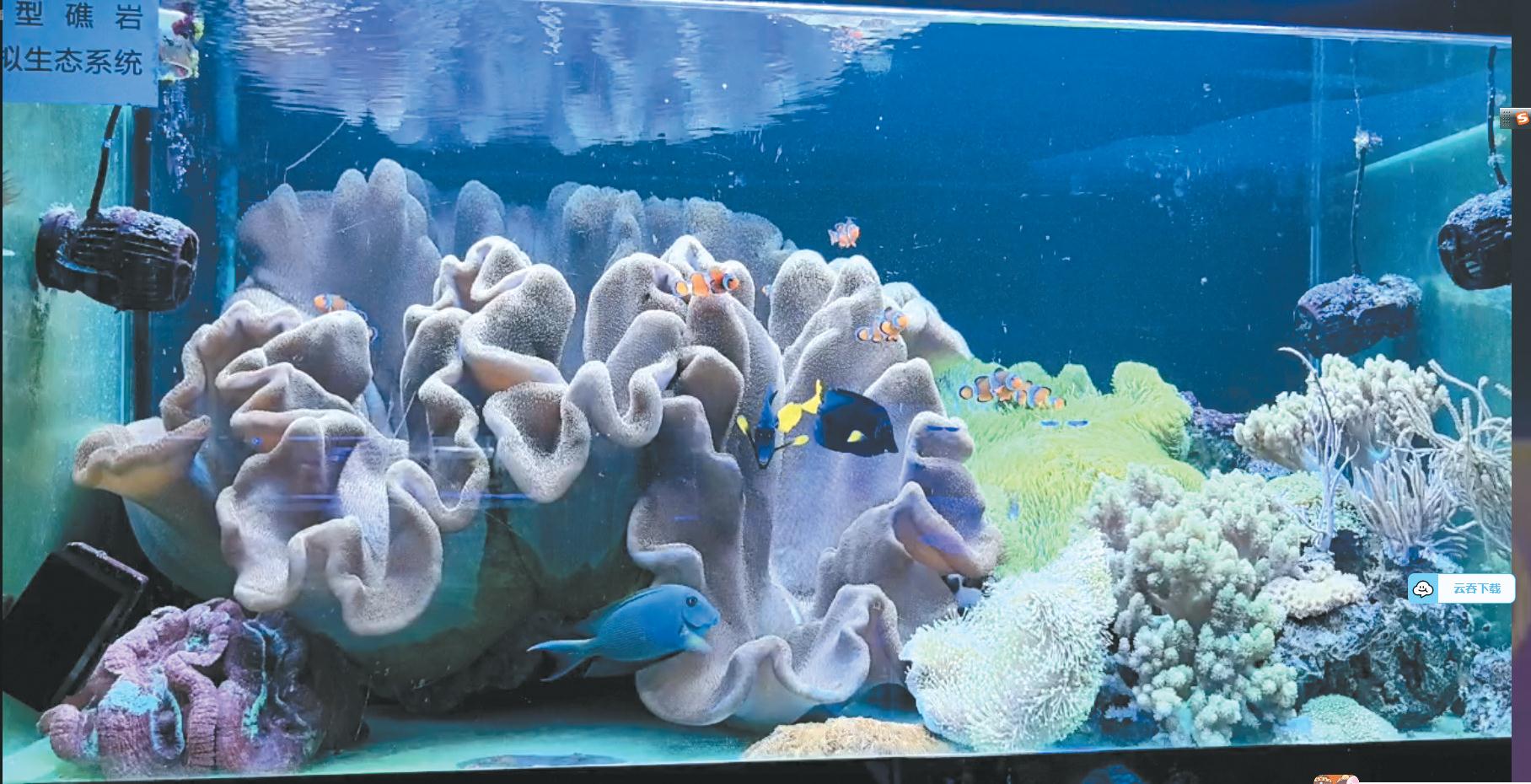
Core Insights - The "Cloud Coral Garden" has been officially launched, developed by the Third Institute of Oceanography under the Ministry of Natural Resources, in collaboration with the People's Court and People's Procuratorate of Tong'an District, Xiamen [3] - Coral reef ecosystems are among the most productive in the ocean, with all species of reef-building corals classified as national second-level protected wildlife [3] - The initiative aims to promote coral reef ecological protection through digital and immersive methods, combining scientific education and legal awareness [3] Summary by Sections - **Project Overview** - The "Cloud Coral Garden" is designed to introduce coral conservation knowledge and related laws through live broadcasts showcasing the coral conservation museum [3] - **Future Developments** - The next phase will involve linking indoor artificial nurseries with outdoor restoration bases, integrating multi-dimensional monitoring systems to create a panoramic, immersive, and interactive visualization system [3] - **Public Engagement** - The project aims to establish a "transparent laboratory" and "cloud ecological classroom" for public participation, allowing individuals to experience the entire process of coral cultivation and natural return, enhancing understanding of the scientific, systematic, and challenging nature of coral reef restoration [3]
黄河三角洲湿地生态数据平台发布
Zhong Guo Zi Ran Zi Yuan Bao· 2025-09-03 09:36
Core Viewpoint - The 2025 China International Big Data Industry Expo will be held from August 28 to 30 in Guiyang, where the Yellow River Delta Wetland Ecological Data Element Circulation Service Platform will be launched [1] Group 1: Platform Overview - The platform integrates over 1 billion multi-source data points, including bird, water quality, and soil data, through a "sky, land, sea" integrated monitoring network [1] - It establishes a service system that combines data integration, development, and quality control, creating service areas for ecological protection, scientific research, and industrial development [1] Group 2: Technological Innovations - Artificial intelligence technologies will be utilized to develop models for ecological health assessment and biodiversity indices, achieving a full-cycle loop of "monitoring - analysis - decision-making - application" [1] - The platform employs privacy computing and dynamic hierarchical authorization technologies to ensure data security while establishing a "data available but invisible" circulation mechanism [1] Group 3: Future Directions - The platform aims to break down departmental data barriers and promote cross-domain collaborative governance [1] - The management committee of the Shandong Yellow River Delta National Nature Reserve will continue to deepen "data + ecology" innovative practices to enhance wetland ecological management and contribute to ecological protection and high-quality development in the Yellow River Basin [1]
获2025年“全球道路成就奖”
Zhong Guo Zi Ran Zi Yuan Bao· 2025-09-03 09:36
Core Points - The "Global Road Achievement Award" for 2025 has recognized the "Huangmaohai Cross-Sea Corridor Design Innovation Practice" located in the Guangdong-Hong Kong-Macao Greater Bay Area [1] - This project serves as the western extension of the Hong Kong-Zhuhai-Macao Bridge, connecting Zhuhai and Jiangmen, with a total mainline length of approximately 31 kilometers and a cross-sea section of about 14 kilometers [1] - The key engineering feature, the Gaolan Port Bridge, is a double-tower cable-stayed bridge with a main span of 700 meters, while the Huangmaohai Bridge is noted as the world's largest completed three-tower cable-stayed bridge in terms of span [1] Industry Recognition - The "Global Road Achievement Award" is one of the most prestigious honors in the international transportation industry, encompassing 12 categories including design, research and development, construction methods, and environmental protection [1] - In the past five years, China has received this design category award for three projects, all located on the Yangtze River, making the Huangmaohai Cross-Sea Corridor the first marine engineering project to receive this honor [1]
探索“海上风电+”应用新场景
Zhong Guo Zi Ran Zi Yuan Bao· 2025-09-03 09:36
Core Viewpoint - The Guangxi Zhuang Autonomous Region government has issued an action plan to enhance and extend the supply chain of key advantageous manufacturing industries, focusing on clean energy development and technological advancements in various sectors [1] Group 1: Clean Energy Development - The action plan emphasizes the large-scale development of offshore wind power, photovoltaic power, nuclear energy, and biomass power, along with significant technological breakthroughs [1] - There is a push for integrated development of source, grid, load, and storage systems [1] Group 2: New Energy Storage Technologies - Guangxi aims to promote new energy storage technologies such as sodium-ion batteries and solid-state lithium-ion batteries [1] - Support will be provided for wind and photovoltaic power companies to build storage facilities, and industrial parks and enterprises are encouraged to deploy energy storage stations [1] Group 3: Core Product Development - The plan focuses on strengthening core products like wind turbines, blades, and towers, while also developing supporting materials such as steel for tower tubes and composite materials for blades [1] - Exploration of application scenarios combining offshore wind power with marine ranching, hydrogen energy, and tourism is encouraged [1] Group 4: Photovoltaic Manufacturing Enhancement - The action plan aims to enhance the technology upgrade and capacity optimization of core manufacturing processes for photovoltaic glass, components, and cells [1] - There is an active effort to attract supporting industries such as photovoltaic adhesive films, inverters, and maintenance equipment [1] Group 5: New Energy Battery Industry Focus - The new energy battery industry will concentrate on key areas such as anode and cathode materials, electrolytes, separators, and battery cells [1] - The plan includes initiatives to improve charging and swapping facilities in county areas and to promote a comprehensive layout for hydrogen energy production, storage, transportation, and utilization [1]
联合探测爪哇海沟俯冲带结构
Zhong Guo Zi Ran Zi Yuan Bao· 2025-09-03 09:36
Core Viewpoint - The joint geological and geophysical survey conducted by the Second Institute of Oceanography of the Ministry of Natural Resources and the National Research and Innovation Agency of Indonesia has successfully completed its scientific tasks, achieving significant results in the deep structure detection of the Java subduction zone [1] Group 1 - The survey lasted 17 days and covered a total distance of approximately 2,800 nautical miles, focusing on active source seismic and controlled source electromagnetic joint detection in the Java Trench subduction zone [1] - Seawater and sediment core samples were collected, and relevant scientific data was obtained during the survey [1] - The collaboration between Chinese and Indonesian scientists resulted in a 100% recovery rate of seabed observation equipment within a limited weather window [1] Group 2 - The seismic and electromagnetic data obtained from the Java Trench subduction zone will provide key evidence for a deeper understanding of the lithosphere's solid-fluid structure and dynamic processes in the region [1] - The Second Institute of Oceanography will closely collaborate with the National Research and Innovation Agency of Indonesia and Gadjah Mada University in subsequent data processing and scientific analysis [1] - This collaboration aims to enhance scientific understanding of the Southeast Asian circum-subduction system's plate convergence theory and the mechanisms of marine geological disasters [1]
向深向远激活海洋经济新动能
Zhong Guo Zi Ran Zi Yuan Bao· 2025-09-03 09:36
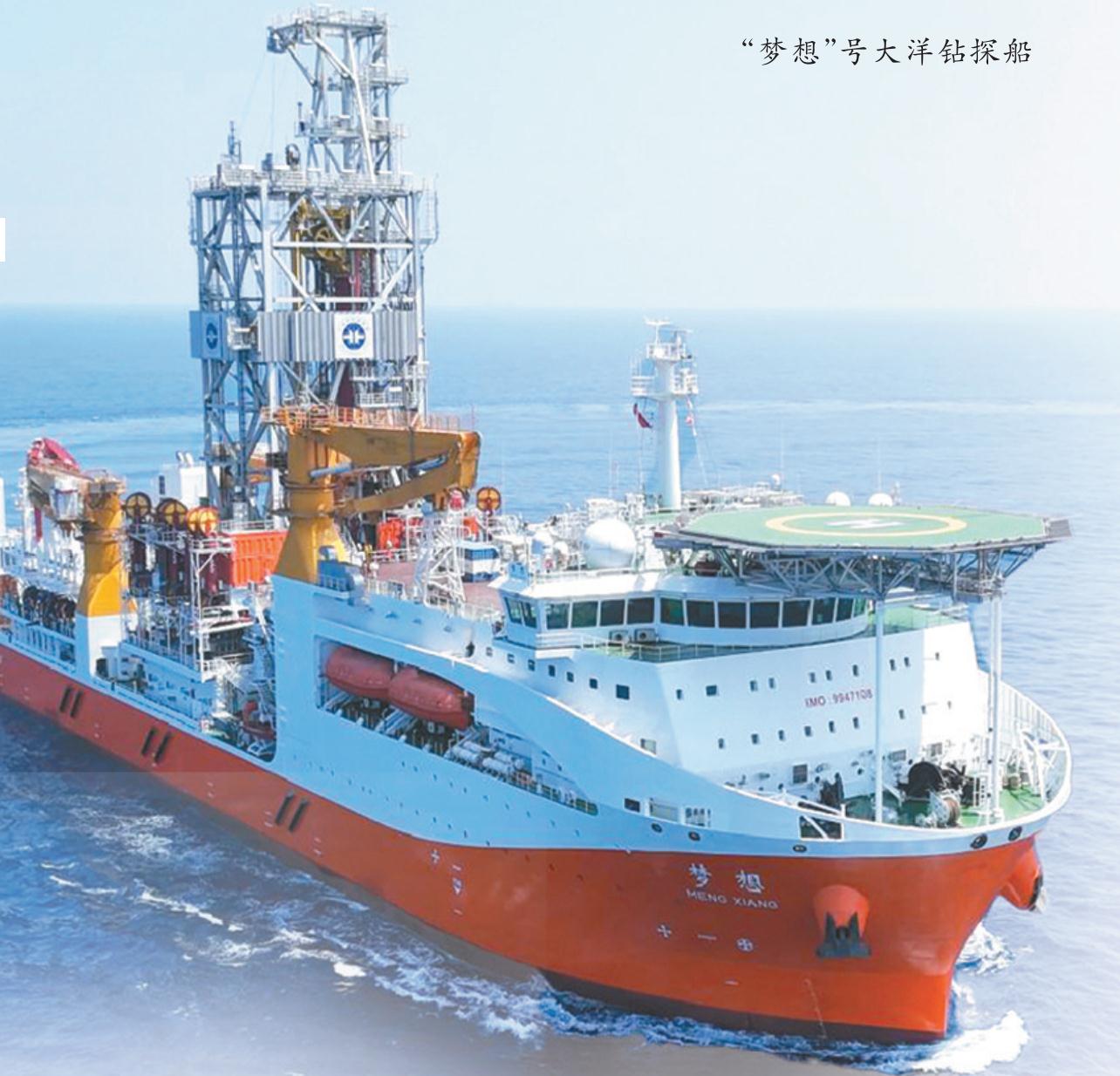
Core Viewpoint - Guangdong is accelerating its transition from a marine province to a marine power by focusing on deep-sea economic development, driven by technological innovation and strategic planning [3][5][6]. Group 1: Economic Development and Achievements - Guangdong's marine production value is projected to exceed 2 trillion yuan in 2024, accounting for approximately one-fifth of the national total [3]. - The province has made significant advancements in deep-sea exploration and technology, including the successful sea trial of the 6000-meter deep-sea remotely operated vehicle "Haiqin" and the completion of the first domestically designed deep-sea drilling vessel "Dream" [3][4]. - Guangdong's marine emerging industries are expected to achieve a value-added output of 41.1 billion yuan in 2024, with a nominal growth of 8% year-on-year [9]. Group 2: Strategic Focus on Deep-Sea Development - The deep sea is viewed as a new frontier for resource development, with significant untapped resources such as oil and gas fields located in waters deeper than 1000 meters [5]. - The province aims to enhance its marine economy by advancing into the deep sea, which offers vast space for marine industries and alleviates ecological pressure on coastal areas [5][6]. - Guangdong is positioning itself as a leader in deep-sea technology, with over 100 provincial-level marine laboratories and research centers supporting innovation [9]. Group 3: Policy and Planning Initiatives - The "Guangdong Provincial Land and Space Planning (2021-2035)" emphasizes the expansion of deep-sea space for economic development [13]. - Recent policies, such as the "Guangdong Provincial Regulations on Promoting High-Quality Development of the Marine Economy," encourage technological innovation in deep-sea wind power and aquaculture [14]. - The establishment of the Provincial Marine Strong Province Construction Working Committee aims to consolidate efforts for building a robust marine economy [15].
陕西超额完成“十四五”找矿目标任务 圈定找矿靶区122处,形成大中型矿产地35处
Zhong Guo Zi Ran Zi Yuan Bao· 2025-09-03 08:20
Core Viewpoint - Shaanxi Province has successfully exceeded its mineral exploration targets set for the "14th Five-Year Plan" by implementing 380 mineral exploration projects and identifying 122 target areas, resulting in the discovery of 35 large and medium-sized mineral deposits, with a potential economic value estimated at 300 billion yuan [1] Group 1: Exploration Achievements - A total of 133.12 tons of gold, 50,700 tons of copper, 24,000 tons of antimony, 42,270 tons of molybdenum, 30,800 tons of lithium, 778,200 tons of graphite, 410,890 tons of manganese, 20,790 tons of vanadium, 131,400 tons of fluorite, 9,110 tons of tungsten, 2,289 tons of cobalt, 68,800 tons of garnet, 4,211 tons of rare earth elements, 8 million tons of phosphorus, and 23,000 tons of lead and zinc have been newly added [1][1][1] Group 2: Strategic Initiatives - The Shaanxi Natural Resources Department has increased investment in key exploration projects, adopted a new group-based exploration model, and enhanced technological innovation and mineral formation theory research [1][1][1] - New comprehensive geophysical exploration technologies and methods have been applied to improve the quality and efficiency of strategic mineral exploration [1][1][1] Group 3: Notable Discoveries - Significant discoveries include the first sedimentary lithium mine in the northern margin of the Yangtze platform, a new type of copper-cobalt mine in the Fengtai gold-lead-zinc mining area, and a medium-sized gold mine in the Beiba rock mass of the Nanzheng District [1][1][1] - Additionally, high-purity quartz raw materials suitable for semiconductor crucibles and photovoltaic products have been found in the Danfeng-Shangnan area, and an independent helium gas reservoir has been discovered in the Weihe Basin [1][1][1]