
Zhong Guo Dian Li Bao

Search documents
哈电国际42年持续拓展高端电力装备国际版图
Zhong Guo Dian Li Bao· 2025-11-02 02:16
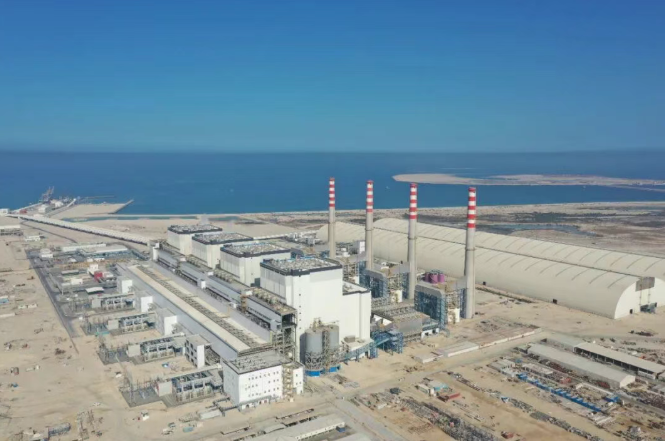
Core Viewpoint - The company, Harbin Electric International, has achieved significant milestones in various key projects under the Belt and Road Initiative, showcasing its commitment to international development and enhancing China's global influence in the energy sector [1][3][4]. Group 1: Project Achievements - The company has made notable progress in several projects, including the completion of the water pressure test conditions for the Uzbekistan Syr Darya Phase II 1.6 million kW combined cycle power plant and the concrete pouring for the foundation of the gas turbine and generator at the Saudi Narayia 2 combined cycle power plant [1]. - Harbin Electric International has executed a total of 66 large-scale overseas projects over the past 42 years, contributing to China's presence in the international market and enhancing its competitive edge [4][5]. Group 2: Strategic Development - Since the inception of the Belt and Road Initiative, the company has accelerated its global expansion, participating in the construction of the regional economic belt and enhancing the depth and breadth of global economic cooperation [3][6]. - The company has transitioned from general contracting to a more flexible business model, covering full lifecycle services and establishing international marketing service centers and regional headquarters across over 40 countries [5]. Group 3: Quality and Recognition - The company has prioritized project quality and adherence to international standards, achieving several world records in project delivery and operational efficiency, which has earned it numerous awards and recognition in the industry [7]. - Harbin Electric International has been recognized for its contributions to local communities, improving living standards and creating job opportunities in the regions where it operates [8].

南方电网新型电力系统发展白皮书正式发布
Zhong Guo Dian Li Bao· 2025-11-01 02:53
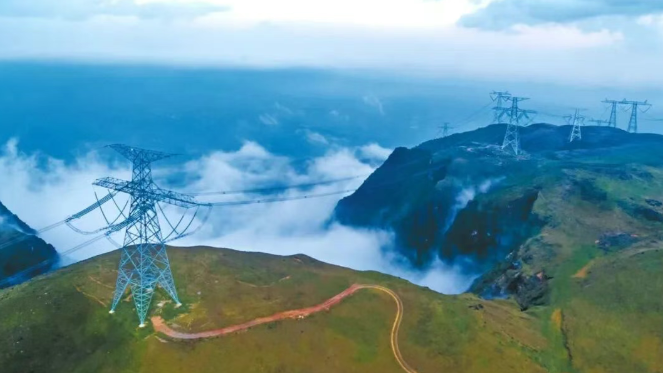
Core Insights - The Southern Power Grid Company has officially released a white paper detailing its achievements and innovations in the construction of a new power system during the 14th Five-Year Plan period [1] Group 1: Achievements in Power System Development - The company has built the world's largest AC-DC interconnected power grid, with a cumulative electricity transmission of over 950 billion kilowatt-hours [3] - The reliability of power supply in the Guangdong-Hong Kong-Macao Greater Bay Area has reached world-class levels, with over 220,000 registered market participants, accounting for one-fourth of the national total [3] - The installed capacity of renewable energy has exceeded 257 million kilowatts, a 3.5-fold increase since 2020, establishing a clean and low-carbon supply structure [4] Group 2: Green Energy Supply and Consumption - The electricity substitution volume in the five provinces has surpassed 240 billion kilowatt-hours, with electricity accounting for 34% of total energy consumption, 5 percentage points higher than the national average [5] - Over 100,000 charging piles have been installed across urban and rural areas, achieving full coverage in the Greater Bay Area [5] - The trading volume of green electricity certificates is expected to reach 250 billion kilowatt-hours by 2025, surpassing the total of the previous three years [5] Group 3: Collaborative Development of Power Sources and Storage - The company has implemented a system-wide approach to address supply-demand matching challenges, enhancing the efficiency of green electricity across the entire production, transmission, consumption, and storage chain [6] - The installed capacity of pumped storage and new energy storage has exceeded 15 million kilowatts, with demand-side response levels reaching 7.6% [7] - The establishment of 35 new power system demonstration zones and 36 near-zero carbon demonstration zones has provided replicable models for coordinated development [8] Group 4: Technological Innovations - The company has adopted advanced technologies such as cloud computing, big data, and artificial intelligence to transform the power grid from traditional to intelligent [9] - Over 99.5% of substations are now unmanned, and the coverage of distribution automation has increased to 99.72% [9] - The company has launched the first national pilot base for artificial intelligence applications in the energy sector, promoting the development of a digital power grid [10]
同比增长1.1倍!三季度绿证价格显著上涨
Zhong Guo Dian Li Bao· 2025-10-31 14:09
Core Insights - The green certificate market has shown significant growth in both volume and price, with a trading scale of 5.29 billion certificates from January to September, representing a year-on-year increase of 110% [1] - The average trading price of green certificates reached 5.06 yuan per certificate in the third quarter, marking a 210% increase compared to the first quarter [1] Market Dynamics - The increase in trading activity and prices is attributed to the continuous improvement of market mechanisms, including the introduction of long-term green power purchase agreements (PPAs), which have exceeded 30 billion kilowatt-hours in trading volume [1] - The demand for green certificates is expanding, driven by the implementation of energy laws and the promotion of minimum renewable energy consumption targets [1] International Recognition and Future Plans - The international recognition of Chinese green certificates has improved, with initiatives like "China Green Certificate: Smoothly Connecting China to the World" enhancing visibility in regions such as the Greater Bay Area and Yangtze River Delta [2] - The National Energy Administration plans to focus on cultivating demand for green certificates and promoting high-quality market development, including revising regulations and expanding application scenarios [2]

中国石油“十四五”重点工程,投产!
Zhong Guo Dian Li Bao· 2025-10-31 11:34
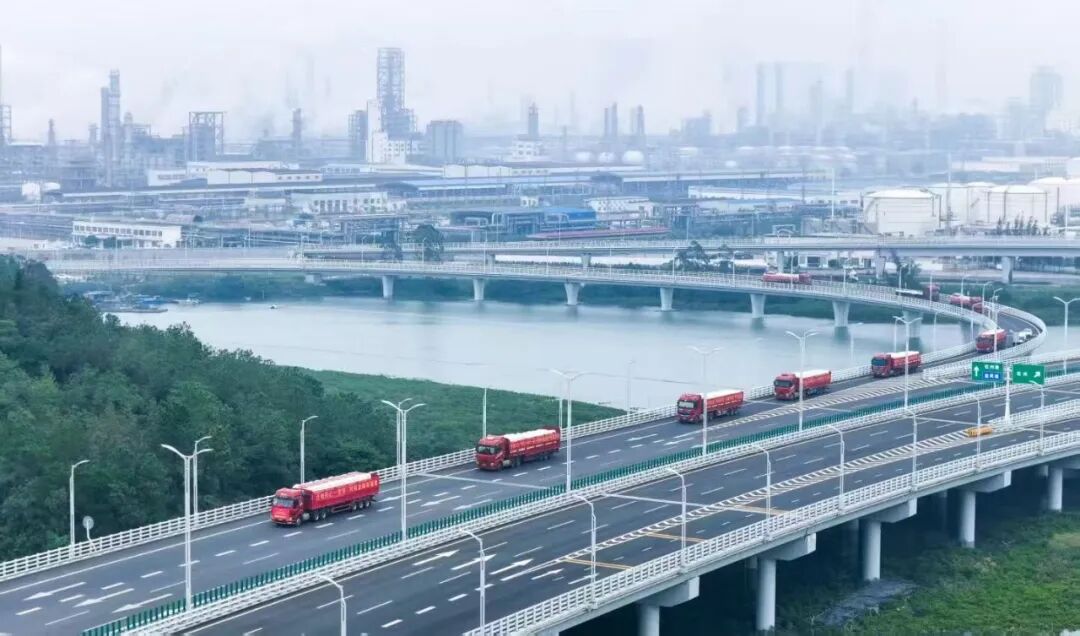
Core Viewpoint - The Guangxi Petrochemical Ethylene Project, a key initiative under China National Petroleum Corporation (CNPC) during the 14th Five-Year Plan, has been fully completed and is now operational, marking a significant milestone in China's petrochemical industry transformation [1][3]. Investment and Scale - The project has a total investment exceeding 30 billion yuan, establishing the largest million-ton ethylene facility in Southwest China, which signifies a critical shift from scale dependency to quality improvement in the petrochemical sector [3]. Technological Innovations - The project features several technological advancements, including the world's largest 200,000-ton diesel adsorption separation unit, which enhances raw material utilization efficiency by over 15% compared to traditional methods [22]. - It employs CNPC's proprietary technology for a 50,000-ton/year 1-hexene production unit, showcasing the company's capacity for independent technological development [10]. - The facility includes the first domestically designed and built 30000 cubic meter ethylene low-temperature tank, ensuring safe storage of ethylene at ultra-low temperatures [19]. Production and Environmental Impact - Upon full operation, the project is expected to reduce refined oil output by 3.49 million tons annually while increasing chemical product output by 3.06 million tons, addressing domestic supply gaps in functional rubber, high-end polyolefins, and advanced membrane materials [23]. - The project achieves 100% green electricity for its new power consumption, with energy consumption metrics for refining and ethylene units exceeding national benchmark standards, aligning with national green and low-carbon development goals [23]. Market and Economic Implications - The project is set to transform Guangxi's industrial landscape from basic chemicals to high-end chemical new materials, leveraging the Western Land-Sea New Corridor to expand market reach into Southwest China, South China, and ASEAN markets [23]. - It aims to create a trillion-yuan green chemical new materials industry cluster, stimulating downstream industries such as packaging, construction materials, and automotive sectors, fostering a "leading role and cluster development" industrial ecosystem [23].

国家能源局:全国可再生能源新增装机3.10亿千瓦
Zhong Guo Dian Li Bao· 2025-10-31 10:01
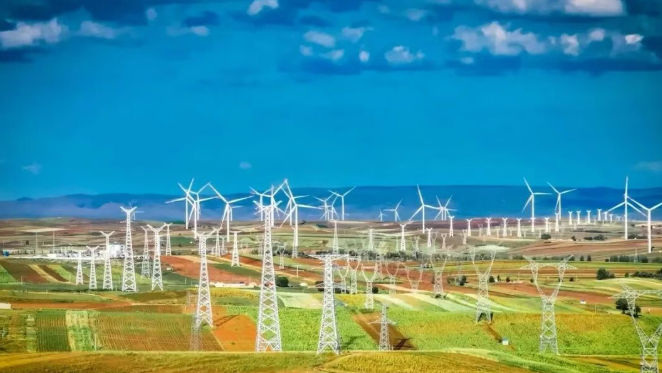
Core Insights - The National Energy Administration held a press conference to discuss the renewable energy grid operation situation for the first three quarters of the year, emphasizing the commitment to carbon peak and carbon neutrality goals [1] Renewable Energy Capacity Expansion - The installed capacity of renewable energy reached nearly 2.2 billion kilowatts, with wind and solar power exceeding 1.7 billion kilowatts [2] - In the first three quarters, the newly added renewable energy capacity was 31 million kilowatts, a year-on-year increase of 47.7%, accounting for approximately 84.4% of the total new capacity [2] - By the end of September, the total installed capacity of renewable energy was 2.198 billion kilowatts, a year-on-year increase of 27%, representing 59.1% of the total power generation capacity in China [2] Renewable Energy Generation Growth - Renewable energy generation increased steadily, accounting for about 60% of industrial electricity consumption [3] - The total renewable energy generation reached 2.89 trillion kilowatt-hours, a year-on-year increase of 15.5%, making up around 40% of total generation [3] - Wind and solar power generation combined reached 1.73 trillion kilowatt-hours, a year-on-year increase of 28.3%, representing 22% of total electricity consumption [3] Hydropower Development - In the first three quarters, the newly added hydropower capacity was 7.16 million kilowatts, with a total installed capacity of 443 million kilowatts by the end of September [3] - The cumulative hydropower generation was 997.1 billion kilowatt-hours, with an average utilization hour of 2,551 hours [3] Wind Power Development - The newly added wind power capacity was 61.09 million kilowatts, with a total installed capacity of 582 million kilowatts by the end of September [4] - The cumulative wind power generation was 813.7 billion kilowatt-hours, a year-on-year increase of 14.3%, with an average utilization rate of 94.0% [4] Solar Power Development - The newly added solar power capacity was 240 million kilowatts, with a total installed capacity of 1.125 billion kilowatts by the end of September [4] - The cumulative solar power generation was 916.3 billion kilowatt-hours, a year-on-year increase of 44.1%, with a utilization rate of 94.7% [4] Biomass Power Development - The newly added biomass power capacity was 1.05 million kilowatts, with a total installed capacity of 46.94 million kilowatts by the end of September [4] - The biomass power generation reached 166 billion kilowatt-hours, a year-on-year increase of 8.3% [4]
510亿!国家电投、华润、中煤等出资投向未来能源
Zhong Guo Dian Li Bao· 2025-10-31 09:04
Group 1 - The Central Enterprise Strategic Emerging Industry Development Fund, initiated by the State-owned Assets Supervision and Administration Commission (SASAC), has raised 51 billion yuan for its first phase, with contributions from major state-owned enterprises [1][2] - The fund aims to support state-owned enterprises in addressing industrial weaknesses and enhancing innovation in strategic emerging industries such as artificial intelligence, aerospace, and quantum technology [2] - The fund has a 5-year investment period and an 8-year management and exit period, with the possibility of extending the investment period by up to 2 years, totaling 15 years [1] Group 2 - The establishment of the fund is seen as a crucial step in accelerating the development of strategic emerging industries, which is a mission entrusted to central enterprises by the Communist Party of China [2] - The fund will focus on optimizing the capital chain to better serve the industrial and innovation chains, thereby aiding the structural adjustment of the state-owned economy [2]
烟威特高压线路工程首基铁塔组立
Zhong Guo Dian Li Bao· 2025-10-31 08:08
Core Points - The first tower of the Yanwei 1000 kV UHV transmission line has been successfully assembled, marking a significant milestone in the project [1] - The project is a major national strategic initiative aimed at enhancing the power transmission capacity from nuclear and offshore renewable energy sources in the Yanwei region [1] - The successful assembly of the first tower validates the construction plan and provides valuable experience for the safe and efficient assembly of the remaining towers [1] Summary by Sections Project Overview - The Yanwei and Haiyang Xinan Nuclear Power UHV project is a key national strategic project that will serve as the main channel for power transmission from nuclear and offshore renewable energy bases in the Yanwei region [1] - Upon completion, it will help establish the first provincial UHV "dual ring network" structure in Shandong, significantly contributing to the integration of renewable energy and the development of a reliable new power system [1] Technical Details - The first tower (01S138) is located in Changle County, Weifang City, Shandong Province, with a total height of 148 meters and a weight of 235.2 tons [1] - The construction of this segment was prioritized to ensure overall project progress and safety, coordinating with the existing 500 kV Letting I and II lines [1] Safety and Coordination Efforts - The Shandong Electric Power Company has implemented comprehensive safety and quality measures to support the project [2] - The project involves collaboration among various entities, including the State Grid Shandong Construction Company and Hunan Songbian Electric, ensuring effective coordination on-site [2]
中国首份央地共建新型电力系统省域示范实施方案发布
Zhong Guo Dian Li Bao· 2025-10-31 01:33
Core Viewpoint - The Hainan provincial government, in collaboration with the Southern Power Grid Company, has released the "Implementation Plan for the Construction of a New Power System in Hainan Clean Energy Island," aiming to establish Hainan as a leading area for new power system construction by 2030, supporting the province's carbon peak goals and the development of a free trade port and clean energy island [1][3]. Group 1: Clean Energy Development - Hainan has surpassed 12 million kilowatts of installed renewable energy capacity, making it the largest power source in the province, with a focus on offshore wind, solar, marine energy, and geothermal energy [4]. - The province will implement eight major projects to promote clean and low-carbon electricity supply, enhance digital grid resilience, upgrade green electricity consumption, and improve flexible regulation capabilities [3][4]. Group 2: Grid Safety and Reliability - By the end of this year, Hainan's 500 kV provincial digital grid project will be fully completed, utilizing IoT and AI technologies to enhance intelligent perception and create a robust flexible main grid [5]. - Plans include constructing new cross-sea transmission channels to strengthen power supply capabilities and integrate Hainan's island grid into the national electricity market [5]. Group 3: Green Electricity Consumption - Hainan will promote electric energy substitution projects in various sectors, including ports, airports, and electric vehicles, aiming to increase electrification levels across industries, transportation, commerce, and residential areas [6]. - The province has linked over 4,800 charging stations through the "Hainan Charging Pile" app, facilitating the development of a comprehensive charging network [6][7]. Group 4: Efficient Power Trading - In October, clean electricity from Inner Mongolia was successfully delivered to Hainan, enhancing the stability of local power supply during peak holiday periods and improving large-scale electricity delivery mechanisms [8]. - Hainan aims to refine cross-provincial electricity trading mechanisms and develop a market system tailored to the new power system, facilitating efficient integration with the Southern regional electricity market [8]. Group 5: Flexible System Regulation - To accommodate large-scale renewable energy integration, Hainan will enhance its intelligent scheduling system and optimize renewable energy operation modes [9]. - The province plans to accelerate the construction of pumped storage power stations and promote diversified development of new energy storage solutions, supporting various applications of energy storage technologies [9].
中国中煤党委书记、董事长王树东:推动国际化经营与品牌建设一体推进、同频共振
Zhong Guo Dian Li Bao· 2025-10-30 06:12
Core Viewpoint - Chinese energy companies need to deeply understand and respect the differences of host countries, implementing highly customized localization strategies to promote international operations and brand building in tandem [1] Group 1: Energy Cooperation and Belt and Road Initiative - Energy cooperation is a key area of the Belt and Road Initiative, with China Coal actively participating in energy project construction in Belt and Road countries, focusing on smart energy infrastructure and renewable energy development [1] - The company aims to create environmentally friendly and resource-efficient projects, contributing to climate change solutions with Chinese wisdom and proposals [1] Group 2: Green Development and Carbon Reduction Strategies - China Coal is committed to an ecological priority and green low-carbon high-quality development path, promoting the "coal production without carbon emissions" concept while extending into high-value material fields [3] - The company has built 51 intelligent coal mines, accounting for over 80% of its capacity, with a total production capacity exceeding 170 million tons [3] - The focus is on reducing energy consumption and emissions, enhancing system efficiency, and exploring new models for coal, electricity, and chemical integration [3][4] Group 3: Technological Innovations and Projects - The "100,000 tons/year liquid sunlight project" utilizes renewable energy to produce green hydrogen, which is then synthesized with captured CO2 to create methanol, showcasing significant negative carbon effects [6] - The "550-meter ultra-long-distance high-end scraper conveyor equipment" achieves reliable and high-strength continuous transportation in complex geological conditions, enhancing automation and reducing the number of devices needed [6] Group 4: International Cooperation and Localization - China Coal emphasizes understanding target market demands and brand positioning, conducting comprehensive due diligence before project decisions to avoid "water and soil incompatibility" [10] - The company advocates for deep localization throughout the project lifecycle, including increasing local employee ratios and engaging in community development [10][11] - The core principles of international cooperation include "mutual benefit and win-win," "technology leadership," "local integration," and "sustainable development" [13][14]
刷新纪录!首超30%
Zhong Guo Dian Li Bao· 2025-10-29 22:10
Industry News - In the first nine months of 2025, the national electricity market transaction volume increased by 7.2% year-on-year, with September's transaction volume reaching 573.2 billion kWh, a 9.8% increase compared to the previous year [4] - The "China Marine Economy Development Report 2025" was released, highlighting significant developments in coastal marine economies, including the establishment of major industrial clusters in Guangdong and successful trials of the world's first megawatt-level seawater electrolysis hydrogen production device [4] - A record was set as the efficiency of polycrystalline thin-film solar cells exceeded 30% for the first time, certified by Japan's Electric Safety and Environment Technology Laboratory [4] Corporate News - A 26 MW offshore wind turbine developed by Dongfang Electric has successfully connected to the grid, setting new records for single-unit capacity and rotor diameter, indicating China's leadership in high-end offshore wind equipment manufacturing [5] - The Tarim Oilfield has completed a 15.66 MW solar thermal project cluster, with the new systems expected to replace 100 tons of standard coal per well annually, achieving zero carbon emissions in oil and gas heating [6] - The world's highest dam and largest water head variation pumped storage power station has commenced commercial operation, with six units installed, expected to save approximately 140,000 tons of coal annually [6] - The Xinjiang Oilfield, China's first major oilfield, has produced 470 million tons of crude oil and 112.1 billion cubic meters of natural gas over 70 years, contributing significantly to national energy security [8] - Huadian International reported a 15.87% year-on-year increase in net profit for the third quarter, with revenues of 95.872 billion yuan, a decrease of 9.72% year-on-year [8] - Contemporary Amperex Technology Co., Ltd. (CATL) has become the top holding of public funds, with 1.408 billion shares held by 1,408 funds, a 45.78% increase in market value compared to the previous quarter [8] Local News - Fujian Province has released a plan to promote the sustainable development of renewable energy pricing mechanisms [9] - Over 60% of Inner Mongolia's natural gas is being transported to the Beijing-Tianjin-Hebei region, with a total proven recoverable reserve of 1.3 trillion cubic meters [9] International News - Uzbekistan showcased its "Mining-Metal-Market" full-chain model at the China International Mining Conference, attracting significant attention for its comprehensive approach to resource integration [11] - Ukraine requires financing of $1.9 billion to import over 4 billion cubic meters of natural gas for winter due to production losses from military actions [11]