
量子科技等

Search documents
深圳打造“双万基金”:数量超万家、规模超万亿
FOFWEEKLY· 2026-02-10 12:08
Group 1 - The core objective of Shenzhen's economic and social development during the "14th Five-Year Plan" period is to exceed a GDP of 5 trillion yuan, with a target GDP growth rate of 5% for the year [1] - Shenzhen aims to establish a diversified, relay-style financial service system that aligns with the entire lifecycle of enterprises, focusing on the growth of patient and long-term capital [1] - The "Double Ten Thousand Fund" initiative was introduced, targeting the establishment of over 10,000 innovation and entrepreneurship funds with a total scale exceeding 1 trillion yuan [2] Group 2 - The conference outlined plans for innovation, key core technology breakthroughs, and talent acquisition, including the construction of several high-level research institutions [2] - More than 150 key industrial R&D projects will be promoted this year, with an expected increase of over 10% in overall R&D investment [2] - The "Million Talents Gathering in South Guangdong" initiative will continue, optimizing the "Peacock Team" project to attract high-level talent in key fields such as integrated circuits, artificial intelligence, and biotechnology [2]


长三角议事厅·周报|超越赛事,“苏超”有了新使命
Xin Lang Cai Jing· 2026-02-09 07:58
Core Insights - The Jiangsu Super League (苏超) has transitioned from a popular event to a sustainable "service consumption infrastructure" as outlined in the Jiangsu provincial government work report for 2026, emphasizing its role in promoting cultural, tourism, and commercial integration [1] - The league's first season attracted significant attention, with 243.3 million live spectators and 22.2 billion online views, demonstrating its potential for economic impact [1] - The league's operational strategy is shifting from merely attracting viewers to retaining them, focusing on deepening engagement and expanding its influence beyond Jiangsu [1] Micro Activation - The 2026 season introduces a "green channel" for small and micro enterprises to participate, allowing them to sponsor the league at a low cost of 50,000 yuan, with potential market value benefits of around 3 million yuan [3][4] - The league aims to create a distributed sponsorship network that includes local businesses, enhancing the economic impact on community-level consumption [4] Mid-level Restructuring - The 2026 season's schedule is designed to enhance audience flow, with a focus on regular matches and a "home and away" system to balance visitor distribution across cities [5][6] - The league's structure encourages local tourism and consumption, with data showing significant increases in visitor numbers and spending during match days [5][6] Macro Anchoring - The introduction of U22 regulations aims to develop a talent supply chain by mandating the participation of younger players, thus transforming the league into a platform for nurturing future football talent [7][8] - This long-term strategy is expected to attract investment in youth training and related sectors, fostering a sustainable ecosystem around the league [9] Institutional Spillover - The Jiangsu model is positioned to serve as a replicable framework for regional integration in the Yangtze River Delta, focusing on collaborative governance and cross-province consumer engagement [10][11] - Key mechanisms for this spillover include mutual recognition of rules, regional consumption integration, and a closed-loop industry model that connects youth training with league operations [10][11]

开局定调,四川为何要说“过经过脉”?
Mei Ri Jing Ji Xin Wen· 2026-02-03 16:13
Core Insights - The Sichuan Provincial Government's work report emphasizes the need for actionable and detailed implementation of policies, moving from broad planning to specific execution [1][2] - The report sets a GDP growth target of approximately 5.5% for the year, highlighting the importance of consumer spending and investment in driving economic growth [2][6] Economic Development - Sichuan's social retail sales exceeded 2.9 trillion yuan, with a growth rate of 5.1%, ranking second among ten major economic provinces [2][6] - The government aims to stimulate consumption through various sectors, including transportation, home services, and digital entertainment, integrating youth-driven economic initiatives into new consumption categories [6][7] Tourism and Cultural Integration - Tourism is identified as a key driver for consumption, with over 1.1 billion visitors in the previous year, including 3.4 million international tourists [7][8] - The report outlines specific projects for cultural and tourism integration, such as optimizing "transportation-tourism" synergies and developing cultural-tech industry zones [8][9] Industrial Strategy - The report emphasizes a shift from project-based development to ecosystem-based strategies, focusing on proactive planning in rapidly evolving industries [9][10] - Specific actions include targeting key industries like integrated circuits and biomedicine, with plans to establish a commercial aerospace hub and promote innovation in various sectors [10][11] County-Level Economic Development - The report highlights the importance of county-level economies, proposing to empower 29 selected counties to achieve high-quality growth and develop distinct economic centers [12][15] - The strategy includes fostering leading industries in agriculture, manufacturing, and tourism to enhance regional economic balance and growth potential [15][16]

国资委政策加码!国资央企锚定新兴支柱产业
Hua Xia Shi Bao· 2026-01-29 11:52
Core Viewpoint - The State-owned Assets Supervision and Administration Commission (SASAC) is drafting a document to promote the cultivation of emerging pillar industries in central enterprises, aiming for a leap in development from major project investments to optimizing the overall layout of state-owned economies [2][4]. Group 1: Development Goals and Achievements - By the end of 2025, central enterprises are expected to have total assets exceeding 95 trillion yuan, with total profits and tax contributions both reaching 2.5 trillion yuan, and fixed asset investments of 5.1 trillion yuan [3]. - Strategic emerging industries are projected to become a core growth engine, with revenue exceeding 12 trillion yuan by 2025, achieving a steady annual growth of 1 trillion yuan [3]. - Cumulative investments in strategic emerging industries have surpassed 10 trillion yuan, increasing their share of total investments from 22% to over 40% since the beginning of the 14th Five-Year Plan [3]. Group 2: Policy Support and Strategic Directions - During the 14th Five-Year Plan, SASAC has introduced multiple measures to support the development of strategic emerging industries, including setting a revenue share target of no less than 30% for these industries [4]. - The upcoming document emphasizes a systematic and pillar-based approach to cultivate emerging industries, focusing on nurturing and supporting rather than just layout and development [4][7]. Group 3: Technological and Capital Investment - Central enterprises are expected to invest 1.1 trillion yuan in R&D by 2025, maintaining over 1 trillion yuan in R&D investment for four consecutive years [5]. - A total of 54 collaborative actions have been initiated to enhance the integration of industrial chains, involving nearly 1.6 million entities in collaborative innovation [5]. - The total scale of venture capital funds for central enterprises is nearing 100 billion yuan, with the first phase of a special fund raising 51 billion yuan to support emerging industries [5]. Group 4: Future Development Strategies - SASAC plans to enhance the layout of emerging industries through new policies in mergers, asset management, and innovation support [6]. - The focus will be on three main strategies: systematic layout and leapfrog development, tiered cultivation with differentiated strategies, and collaborative empowerment across the industry [7]. - The implementation of these strategies is expected to lead to a systematic reshaping of the development pattern of central enterprises during the 15th Five-Year Plan [8]. Group 5: Performance Goals for 2026 - By 2026, central enterprises aim to ensure continuous growth in value added and strive to match GDP growth rates, while also ensuring stable improvement in profit totals and operational efficiency [9].

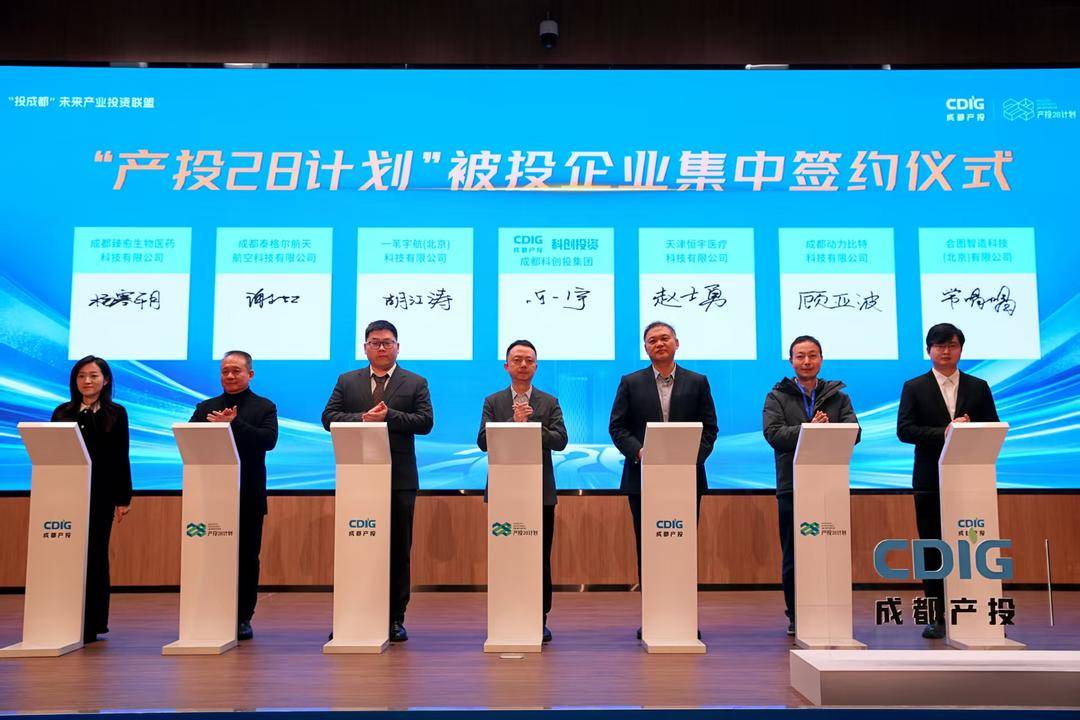
“国家队”资本入局构建“央地基金矩阵”,成都“产投28计划”迎来六位“重磅队友”
Sou Hu Cai Jing· 2026-01-29 02:46
Core Insights - Chengdu's future industry receives significant support from "national team" capital, enhancing the "Invest in Chengdu, Invest in the Future" initiative [1][3] - The "Industrial Investment 28 Plan" aims to establish a long-term industrial cultivation ecosystem by integrating national and local capital [3][9] Investment and Collaboration - The recent signing event resulted in a total contract amount of approximately 675 million yuan, with 12 companies participating [5][1] - Chengdu Future Industry Fund has partnered with six central enterprise investment platforms to create a "central-local fund matrix" [1][9] Project Focus and Quality - The "Industrial Investment 28 Plan" has attracted over 300 projects nationwide, with more than 50% from innovation hubs like Beijing, Shanghai, Guangzhou, and Shenzhen [4] - The signed projects cover key future industry sectors, including aerospace composite materials, commercial satellite manufacturing, and embodied intelligent robotics [5][4] Ecosystem Development - The initiative emphasizes a "patient capital" model, focusing on value discovery, enterprise growth, and industrial ecosystem cultivation [4][3] - The plan aims to transform traditional investment models into comprehensive services that support the entire lifecycle of innovation [10] Strategic Focus Areas - Quantum technology has been identified as a strategic focus area, with discussions on its development trends and investment opportunities [11] - The initiative continues to refine its approach by organizing specialized sessions on sectors like biomedicine, electronic information, and artificial intelligence [11] Resource Integration - The "Industrial Investment 28 Plan" serves as a comprehensive industrial service platform, linking resources and policies to address the needs of tech enterprises [10] - The collaboration with central enterprises is expected to enhance the depth of industrial capital and strategic resource connectivity in Chengdu [9]
国资央企发力2026年:推进并购重组,谋划新兴产业
Shang Hai Zheng Quan Bao· 2026-01-28 23:51
Core Viewpoint - The State-owned Assets Supervision and Administration Commission (SASAC) is focusing on promoting mergers and acquisitions, restructuring, and the development of emerging industries among central enterprises by 2026, with a significant emphasis on high-quality development and strategic planning for new industries [1][6]. Group 1: Mergers and Acquisitions - SASAC plans to concentrate on the "three concentrations" of state-owned capital, using restructuring as a key approach to optimize the layout and structure of state-owned enterprises, aiming to build more world-class companies [2][3]. - In 2025, SASAC successfully guided the establishment of China Yajiang Group and China Chang'an Automobile Group, enhancing competition in the automotive industry and promoting high-quality development in smart connected new energy vehicles [2][3]. Group 2: Industry Integration and Innovation - Professional integration is seen as a crucial method for optimizing the layout and structure of the state-owned economy, with SASAC supporting strong innovative enterprises to conduct horizontal and vertical integrations within the same industry [3][4]. - SASAC is facilitating high-quality mergers and acquisitions to acquire core elements and seize technological advantages, thereby accelerating the development of strategic emerging industries [3][4]. Group 3: Focus on Emerging Industries - SASAC is prioritizing sectors such as artificial intelligence, aerospace, quantum technology, and new materials, with plans to enhance the capabilities of central enterprises in these areas [4][5]. - The upcoming "AI+" initiative aims to advance the integration of artificial intelligence into various sectors, including energy and logistics, while promoting data resource openness for model optimization and application [4][5]. Group 4: Strategic Planning for New Industries - SASAC is drafting a document to guide central enterprises in cultivating emerging pillar industries, aiming for a leap in the overall layout of state-owned economy through significant project investments and breakthroughs in key areas [6][7]. - The new strategy will likely introduce innovative assessment mechanisms for long-term investments in key sectors, addressing the conflict between long-term strategies and short-term financial performance [6][7]. Group 5: Implementation Mechanisms - SASAC emphasizes a differentiated approach for various types of emerging industries, focusing on core tasks and implementation paths to create a resilient industrial ecosystem [7]. - The commission plans to deepen collaboration across the innovation chain and enhance the support for technological innovation through initiatives like industry collaborative innovation consortia and technology application demonstration scenarios [7].
科技创新能力稳步提升,创业创造活力充分释放
Xin Hua Ri Bao· 2025-12-16 23:48
Core Viewpoint - Jiangsu Province has achieved significant advancements in technological innovation during the "14th Five-Year Plan" period, ranking second nationally in regional innovation capabilities and demonstrating strong integration of technological and industrial innovation [1][2][8] Group 1: Innovation Achievements - Jiangsu's total R&D investment reached 459.75 billion yuan in the previous year, a 53% increase compared to the end of the "13th Five-Year Plan" [2] - The number of high-tech enterprises in Jiangsu is expected to exceed 61,000, an 85% increase from the end of the "13th Five-Year Plan" [2] - The output value of high-tech industries accounted for over 50% of the province's industrial output, rising to 52% by the end of November this year [2] Group 2: Foundation and Talent Support - Jiangsu's investment in basic research reached 24.07 billion yuan last year, nearly three times the amount at the end of the "13th Five-Year Plan" [3] - The province has over 1.26 million R&D personnel, with the highest number of national major scientific talent [3] - There are 1,801 research and innovation platforms established across the province, ensuring comprehensive coverage [3] Group 3: Integration of Technology and Industry - Jiangsu has built a robust innovation ecosystem centered around enterprises, with 3 national manufacturing innovation centers and 147 enterprise technology centers established [4] - The province has achieved breakthroughs in key innovation areas, including the approval of 49 innovative drugs, ranking first nationally [5] - Jiangsu has implemented a new technology and product promotion program, recognizing 276 first sets of equipment and promoting 258 first versions of software [5] Group 4: Reform and Exploration - Jiangsu is actively exploring reforms in the technology system, including pilot reforms in education and talent mechanisms [6] - The province has expanded the scope of technology achievement empowerment reforms to all universities and research institutions [6] - A total of 3,597 outstanding postdoctoral researchers have been funded since the beginning of the "14th Five-Year Plan" [6] Group 5: Technology Transfer and Application - Jiangsu has established a 1 billion yuan angel fund for technology transfer from universities, with over 60 technology financial products created [7] - The province has initiated a "double high collaboration" model between high-tech zones and universities, with over 300 R&D projects currently underway [7] - The total value of technology contracts in Jiangsu reached 530 billion yuan, more than double the amount at the end of the "13th Five-Year Plan" [5]

“十四五”时期江苏建设高水平科技强省成绩单发布科技创新能力稳步提升,创业创造活力充分释放
Xin Hua Ri Bao· 2025-12-16 23:09
Core Insights - Jiangsu Province has achieved significant advancements in technology innovation during the "14th Five-Year Plan" period, ranking second nationally in regional innovation capability [1][2] - The province's government has reported on its achievements in a press conference, highlighting the integration of technological and industrial innovation [1][9] Investment and Growth - Jiangsu's total R&D investment reached 459.75 billion yuan last year, a 53% increase compared to the end of the "13th Five-Year Plan" [2] - The R&D intensity increased to 3.36%, up by 0.43 percentage points from the end of the previous plan, placing it above average among innovative countries and regions [2] - The number of high-tech enterprises in Jiangsu is expected to exceed 61,000, an 85% increase from the end of the "13th Five-Year Plan" [2] Innovation and Research - Jiangsu's total investment in basic research reached 24.07 billion yuan last year, nearly three times the amount at the end of the "13th Five-Year Plan" [3] - The province has established a network of laboratories, including national and provincial key laboratories, to support foundational research [3] - The number of R&D personnel in Jiangsu exceeds 1.26 million, with the highest number of national major scientific talent [3] Industry Integration - Jiangsu has focused on creating an innovation ecosystem led by enterprises, integrating technology research and industrialization [4] - The province supports the establishment of national and provincial manufacturing innovation centers, enhancing collaboration between industry and academia [4] Breakthroughs in Key Areas - Jiangsu has achieved breakthroughs in various sectors, including the approval of 49 innovative drugs, leading the nation [5] - The province has filled domestic gaps in critical technologies such as photoresists and high-strength steel [5] - A total of 273 major projects in artificial intelligence, quantum technology, and biomedicine have been organized to drive further innovation [5] Policy and Regulation - Jiangsu has revised and introduced regulations to strengthen the legal framework for technology innovation and the connection between innovation and industry [6] - The province has established a new model for technology property transactions, facilitating the transformation of scientific achievements [6] Talent and Reform - Jiangsu has implemented reforms to enhance the innovation ecosystem, including expanding the scope of technology achievement rights [7] - The province has supported over 3,597 outstanding postdoctoral researchers since the beginning of the "14th Five-Year Plan" [7] Technology Transfer and Application - Jiangsu has established a national center for technology transfer and conversion, with significant financial backing to support innovation [8] - The province has promoted the application of 6,269 new technologies and products over the past five years [8] Future Outlook - Jiangsu aims to deepen the integration of technology and industry in the next five years, providing robust support for the modernization of the province [9]
下一个五年,湘鄂赣“中三省”准备怎么干?
Di Yi Cai Jing· 2025-12-05 06:12
Group 1: Core Perspectives - The central theme of the news is the strategic focus of the "Central Three Provinces" (Hunan, Hubei, Jiangxi) on expanding domestic demand, building a technological innovation hub, and serving as a model for regional coordinated development during the 14th Five-Year Plan period [1] Group 2: Economic Development Strategies - Hubei aims to accelerate consumption expansion by innovating consumption models and increasing the supply of quality goods, with a target of driving over 176 billion yuan in consumption through initiatives like trade-in programs [2] - Hunan emphasizes the integration of consumer welfare and investment, aiming to enhance the consumer market and support the development of regional consumption centers [3] - Jiangxi plans to actively create new demand and supply by leveraging its ecological and cultural resources to develop immersive consumption experiences [3] Group 3: Technological Innovation - All three provinces recognize technology as the primary productive force, with Hubei aiming to increase the number of high-tech enterprises to 35,000 and technology transaction volume to over 600 billion yuan by 2025 [4] - Hunan is focused on establishing itself as a competitive technological innovation hub, encouraging investment in fundamental research and breakthroughs in key technologies [5] - Jiangxi aims to build a nationally influential industrial technology innovation center, concentrating research efforts on areas like rare earth materials and modern agriculture [6] Group 4: Regional Coordination and Development - The news highlights the importance of the Yangtze River Middle Urban Agglomeration, with Hubei supporting the development of regional centers like Wuhan and Xiangyang to enhance economic collaboration [7] - Hunan plans to optimize its economic layout and promote coordinated regional development through new urbanization strategies [8] - Jiangxi is set to improve its regional coordination mechanisms to facilitate efficient resource flow and high-quality county-level economic development [8]
学习规划建议每日问答 |为什么要强化科学研究、技术开发原始创新导向
Xin Hua She· 2025-11-30 06:54
Group 1 - The core viewpoint emphasizes the importance of strengthening scientific research and original innovation to enhance self-reliance in technology and accelerate high-level technological independence [1][2] - Since the 18th National Congress, under the leadership of the central government, China has made historic achievements in science and technology, transitioning from a global participant to a leader in innovation [1][2] - In 2024, China's total R&D expenditure is expected to exceed 3.6 trillion yuan, maintaining the second position globally, with an R&D intensity of 2.69%, surpassing the EU average [1] Group 2 - A strong foundation in basic research and original innovation is essential for becoming a technological powerhouse, enabling the continuous output of significant and disruptive technological achievements [2][3] - The current global technological landscape is characterized by intense competition in fields such as integrated circuits and biotechnology, which are critical areas for China to address its "bottleneck" issues [2] - Basic research serves as the cornerstone for technological breakthroughs and is crucial for driving industrial transformation, providing both theoretical support and continuous momentum for industry upgrades [3]