
Zhong Guo Huan Jing Bao

Search documents
靖江首届生物多样性展绘就生态科普画卷
Zhong Guo Huan Jing Bao· 2025-09-25 01:33
Core Viewpoint - The article highlights the successful organization of the "Natural Harmony: Resonance of Life" biodiversity ecological science exhibition in Jiangsu Province, aimed at enhancing public awareness and responsibility for biodiversity conservation [2][14]. Group 1: Exhibition Overview - The exhibition took place over three weeks, integrating various scientific resources and innovative display methods to create an educational platform that is both scientific and communicative [2][14]. - Located in the Jiangsu Province library, the exhibition covered 500 square meters and attracted over 10,800 visitors, with a peak attendance of over 800 on weekends and an average of 300 on weekdays [3][6][17]. Group 2: Audience Engagement - The exhibition successfully engaged a diverse audience, with approximately 60% of attendees being students, showcasing its broad appeal across all age groups [3][17]. - Feedback from various demographics indicated a significant impact on public perception of biodiversity, with 90% of visitors reporting an increase in their understanding of biodiversity [21][22]. Group 3: Interactive Features - The exhibition featured a "micro life museum" displaying hundreds of insect specimens and over 120 plant specimens, allowing visitors to appreciate the richness of biodiversity [4][17]. - An interactive area with live specimens attracted 5,000 interactions, making it a highlight of the exhibition and facilitating direct engagement with nature [4][18]. Group 4: Educational Activities - The exhibition included three major supporting activities, such as expert lectures and workshops, which deepened the ecological education experience for over 1,000 attendees [5][21]. - A survey indicated that 85% of participants expressed a commitment to actively engage in ecological protection efforts following the exhibition [22]. Group 5: Future Directions - The exhibition is seen as a significant step in Jiangsu's ecological protection efforts, with plans to continue enhancing ecological education and promoting biodiversity conservation [22][13].

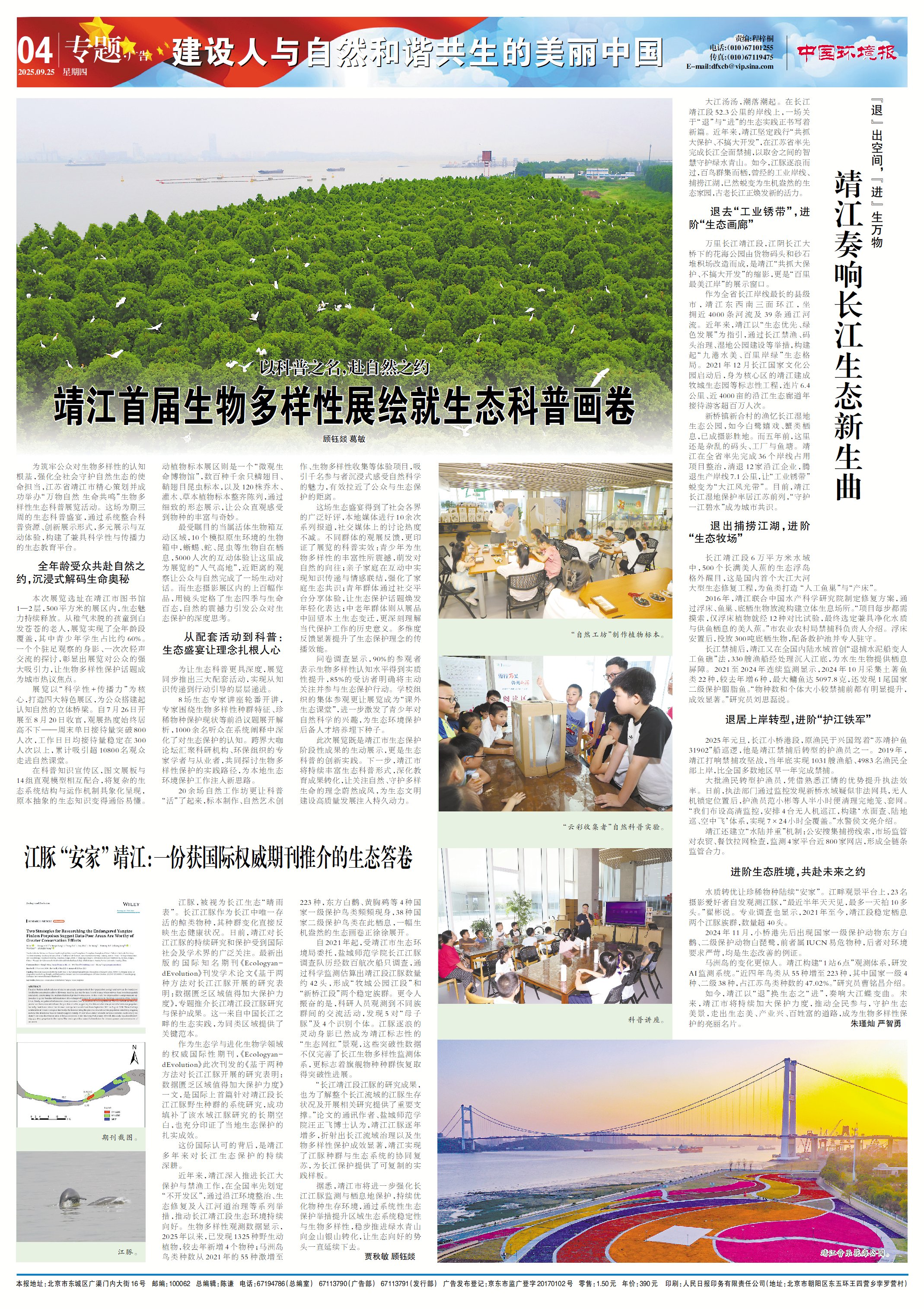
济宁微山县持续探索生态产品价值实现路径
Zhong Guo Huan Jing Bao· 2025-09-25 01:33
Core Viewpoint - The article highlights the ecological and economic development initiatives in Weishan County, emphasizing the integration of ecological preservation with industrial growth, particularly in tourism, fisheries, and renewable energy sectors [1][4][19]. Ecological Protection and Improvement - Weishan County has implemented a three-year action plan for ecological protection in the South Four Lakes area, ensuring continuous improvement in water quality for 21 consecutive years [3][17]. - The county has established biodiversity experience sites and wildlife protection areas, contributing to the proliferation of endangered species [3][17]. - Significant efforts in organic restoration include the creation of artificial wetlands and the release of over 500 million fish fry to enhance water quality [3][17]. Economic Development through Ecological Integration - The county is exploring the "ecology + industry" model, leveraging local ecological resources to drive sustainable economic growth [4][19]. - A comprehensive tourism strategy has been developed, resulting in the establishment of 66 scenic villages and recognition as a provincial tourism demonstration area [4][19]. - The fisheries sector has seen the development of a healthy aquaculture model, with an ecological farming area of 262,000 acres and a projected industry output value of 12.62 billion yuan by 2024 [4][19]. Renewable Energy Initiatives - Weishan County is advancing its renewable energy sector, with a focus on solar power and integrated agricultural practices, achieving a total installed capacity of 700 MW and an annual electricity generation of 830 million kWh [5][20]. Brand Development and Market Integration - The county is building an ecological product trading platform to enhance the market presence of local products, including the establishment of a dedicated sales center for Weishan Lake products [21]. - Innovative financial products have been introduced to support local fisheries and agriculture, with a total of 850 million yuan in guaranteed loans disbursed [21]. - Marketing efforts have led to the creation of a strong brand identity for local products, including the "Weishan Lake Crab," which has a brand value exceeding 9.5 billion yuan [21].
一泓清水润三晋 黄河奔腾谱新篇
Zhong Guo Huan Jing Bao· 2025-09-25 01:33
Core Viewpoint - Shanxi Province is actively implementing the "One Drop of Clear Water into the Yellow River" ecological protection project, aiming to enhance water quality and ecological safety in the Yellow River basin through systematic governance and comprehensive restoration efforts [2][3][10]. Group 1: Project Implementation and Progress - The "One Drop of Clear Water into the Yellow River" project was launched in June 2023, with plans to implement 285 projects over three years, focusing on water resource management, environmental protection, and ecological restoration [2]. - As of September 10, 2023, 230 projects have been completed, achieving a completion rate of 80.7% [2]. - The project includes various initiatives such as wetland restoration, rural sewage treatment, and livestock waste recycling, contributing to the vision of improved water quantity and quality [2][3]. Group 2: Technological and Systematic Innovations - Shanxi is employing a systematic approach to tackle ecological challenges, moving from point solutions to comprehensive strategies for river protection [3]. - The use of smart water management systems in wastewater treatment plants has led to significant improvements in water quality, with some facilities achieving near drinking water standards [9]. - The establishment of a robust institutional framework ensures effective project implementation, with a focus on top-down coordination and grassroots execution [7][8]. Group 3: Economic and Social Benefits - The ecological restoration efforts are creating new economic opportunities, such as the production of biomass fuel from livestock waste, which is in high demand and expected to generate significant revenue [11]. - Improved water quality has transformed rural areas, enhancing their attractiveness for tourism and local businesses, thereby contributing to rural revitalization [12][13]. - The project has fostered a culture of ecological education and community involvement, promoting awareness and participation in environmental protection among local residents [13]. Group 4: Future Outlook - Shanxi plans to continue enhancing its ecological monitoring systems and complete the remaining projects by the end of 2025, ensuring sustainable water quality improvements [13]. - The ongoing efforts aim not only to meet water quality standards but also to achieve long-term ecological sustainability and high-quality development in the region [10][13].
江西永新县在废弃物中探寻“宝藏”
Zhong Guo Huan Jing Bao· 2025-09-24 09:07
Core Viewpoint - The article highlights the effective environmental measures taken by Yongxin County in Ji'an City, Jiangxi Province, focusing on resource recycling and waste management through innovative practices and technologies [1][2]. Group 1: Waste Management and Resource Recycling - The company processes 21.9 million tons of household waste annually, generating 8,721.38 million kilowatt-hours of electricity [2]. - The waste incineration power project serves multiple regions, achieving over 80% in ecological waste reduction, resource utilization, and harmless treatment [2]. - As of the end of August, the company has processed 11.645 million tons of household waste, reducing carbon dioxide emissions by 4.658 million tons and generating 4,340 million kilowatt-hours of electricity [2]. Group 2: Innovative Practices in Hazardous Waste Management - Ji'an Julian Environmental Technology Co., Ltd. is a key player in hazardous waste management, implementing a "point-to-point" utilization model for hazardous waste [2][3]. - The company has reduced the resource recovery processing cycle for DMF waste from an average of 4 days to 2 days, achieving a processing efficiency of 99% [2][3]. - The recovered DMF can be reused, saving the company between 400,000 to 500,000 yuan annually while addressing long-standing environmental issues [3]. Group 3: Water Management Initiatives - The "one enterprise, one pipe" project has been implemented in the industrial park, effectively transforming wastewater into clean water [4]. - The project involved an investment of 31.33 million yuan to centralize wastewater treatment, enhancing monitoring and management capabilities [4][5]. - An intelligent wastewater treatment plant has been established, allowing for real-time monitoring and automatic control of wastewater discharge, ensuring environmental safety [5]. Group 4: Future Development Plans - Yongxin County plans to increase investment and leverage technology to further explore resource recycling potential, promoting sustainable development for enterprises [5].
商业价值能否与生态和谐共生?|关注青藏高原烟花秀事件
Zhong Guo Huan Jing Bao· 2025-09-24 01:46
Group 1 - The core idea is that commercial value and ecological protection can coexist, but a balance must be sought between the two [1][2] - Commercial activities are a significant driver of economic development, but they also exert pressure on ecological environments, leading to resource depletion and pollution [1] - The constraints of resource limitations and ecological protection are influencing the direction of commercial activities, pushing companies towards green development [1] Group 2 - Companies are increasingly transitioning from being creators of environmental issues to providers of solutions, becoming key drivers of environmental technology innovation [1] - The intrinsic value of resources and the environment can provide differentiated advantages and opportunities for commercial activities, such as eco-tourism and green agriculture [1] - To prevent incidents similar to the Himalayan fireworks event, companies should disclose relevant information to the public, understand local laws and customs, and establish effective communication with environmental organizations and local communities [2]
VR现场模拟执法,西安大练兵技能比武科技感十足
Zhong Guo Huan Jing Bao· 2025-09-24 00:35
Core Viewpoint - The recent ecological environment enforcement skills competition in Xi'an, Shaanxi Province, aims to enhance the operational capabilities of environmental enforcement teams through various innovative methods, including non-site inspections and the use of advanced technology like drones and VR simulations [1][3]. Group 1: Competition Overview - The competition featured five main subjects: non-site regulatory inspections, portable enforcement equipment application, drone operation, VR simulated enforcement, and cross-enforcement inspections [3]. - The cross-enforcement inspection involved randomly selected enterprises, where enforcement teams conducted checks on environmental assessment procedures, pollution permits, and self-monitoring reports [3]. Group 2: Technology Utilization - Drones were utilized to perform aerial inspections, with participants successfully executing maneuvers such as ascent, circling, and hovering at heights of up to 15 meters [3]. - In the non-site regulatory inspection segment, enforcement personnel analyzed simulated monitoring data to identify anomalies and potential causes [5]. - The VR simulated enforcement checks allowed participants to engage in a virtual environment, inspecting various scenarios across multiple industries, enhancing their problem-solving and analytical skills without disrupting normal business operations [6]. Group 3: Training and Development - The skills competition is designed to comprehensively assess the operational capabilities of enforcement personnel, including equipment handling and data analysis [6]. - The event aims to strengthen the enforcement team and improve overall enforcement effectiveness, as stated by the head of the legal team of the Xi'an Ecological Environment Protection Comprehensive Enforcement Team [6].
为何质疑声越来越大?|关注青藏高原烟花秀事件
Zhong Guo Huan Jing Bao· 2025-09-23 23:43
主办方称烟花所用的色粉为生物可降解材料,曾多次通过国内外成分与烟雾检测,确认其污染物排放符 合环保标准。但笼统的解释显然很难说服公众。由于可降解材料的降解速率与温度有很大关系,在生态 系统脆弱且温度较低的高海拔地区,生物降解材料的分解效率与平原地区并不能相提并论,因此在平原 地区符合环保标准不代表在高海拔地区也符合环保标准。而活动主办方也没有拿出详细真实的检测数 据,因此质疑声越来越大。 当地称此次烟花秀活动不需要进行环境评估,但需乡、村、县三级政府同意,当地政府此前开过多次会 议研究选址、评估调查周围有哪些野生动物等,最终的选址不属于生态保护区,周围无人居住。这一说 法也遭到质疑。根据相关法律法规,环境评估的适用对象是建设项目,而并非烟花秀这样的活动,但是 这并不能证明这场活动就是合法合规的。活动主办方以及当地至今未公开活动地点周边野生动物活动情 况的具体评估调查报告,对于活动具体地址和范围是否属于生态保护区也尚未出示明确的证据,这种无 理无据、讲不清道不明的回复,难以平复公众对活动选址的争议。 对于此次在青藏高原上举办的烟花秀,笔者认为,讲不清、辨不明是引发激烈争论的一个主要原因。 就在前段时间,某户外主 ...
秦岭违规穿越探险为何屡禁不止?这些问题必须关注!
Zhong Guo Huan Jing Bao· 2025-09-23 23:07
Core Viewpoint - The case of illegal crossing in the Qinling core protection area highlights the growing concern over ecological damage and safety risks associated with outdoor adventure activities in protected regions [1][2][3]. Ecological Impact - Illegal crossing activities have led to significant ecological damage, including soil compaction, vegetation trampling, water pollution, and disturbance of wildlife habitats [1][2]. - The presence of trash, such as plastic packaging and food waste, further harms the sensitive ecosystem, accelerating the degradation of fragile geological landscapes [1]. Safety Risks - The complex terrain and unpredictable weather in the Qinling region contribute to frequent safety incidents, with untrained adventurers facing risks such as hypothermia, getting lost, and altitude sickness [2]. - Rescue operations require substantial public resources and pose safety risks to rescue personnel [2]. Management Challenges - Current management efforts, including checkpoints and patrols, are often circumvented by violators using alternative routes and nighttime crossings [2][3]. - The proliferation of online guides and posts promoting illegal crossings complicates enforcement and increases the difficulty of managing these activities [2][3]. Underlying Factors - A lack of risk awareness among adventurers drives the trend of illegal crossings, with some seeking the thrill of conquering nature without understanding the associated dangers [3]. - Commercial interests from unqualified outdoor clubs and travel agencies exacerbate the issue by promoting illegal activities for profit, often neglecting participant qualifications and safety measures [3]. Regulatory Shortcomings - Existing laws provide insufficient deterrence against individual violations, primarily relying on minor fines and educational measures [3]. - The vastness of the Qinling area and the involvement of multiple management departments create challenges in coordination and effective oversight [3]. Media Influence - Media coverage often romanticizes adventure activities while downplaying the ecological damage and rescue costs, failing to provide adequate warnings and education [4]. Recommendations for Improvement - A comprehensive governance approach is suggested, including stricter legal enforcement and increased penalties for violators, such as blacklisting and financial accountability for rescue costs [5][6]. - Innovative monitoring technologies, such as satellite surveillance and drones, should be employed to enhance real-time oversight of protected areas [6]. - Development of safe, eco-friendly tourism alternatives is recommended to meet public demand for nature experiences while ensuring compliance with regulations [6]. - Continuous public education campaigns are essential to raise awareness about the importance of ecological protection and the risks of illegal activities [6].
从泉涌百亿到参香世界再到冰雪热土,白山“生态金钥匙”打开振兴新路
Zhong Guo Huan Jing Bao· 2025-09-23 05:53
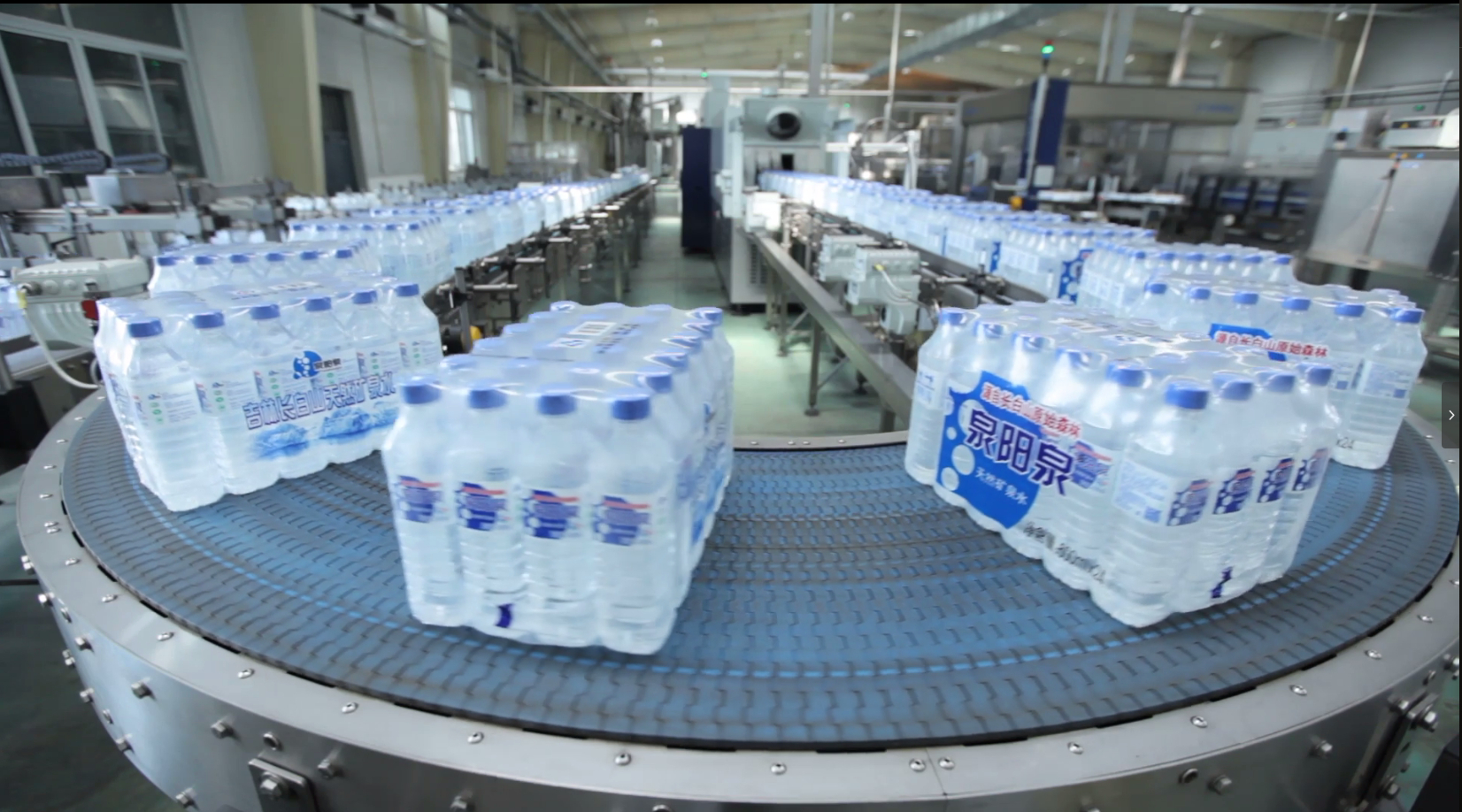
Group 1: Ecological Transformation and Development - Baishan City is undergoing a significant green transformation, emphasizing the principle that "lucid waters and lush mountains are invaluable assets" [1] - The city has established a collaborative mechanism involving party leadership, government guidance, departmental coordination, and public participation to promote ecological product value accounting and market compensation mechanisms [1] - Baishan has created two national-level "Two Mountains" practice innovation bases and three national ecological civilization construction demonstration zones [1] Group 2: Mineral Water Industry - The mineral water industry in Baishan is thriving, with the brand value of Changbai Mountain mineral water exceeding 10 billion yuan, positioning it as a "world-class golden water source" [2] - In 2024, the sales volume of Quanyuan Spring Beverage Company is expected to surpass 1.1 million tons, generating approximately 850 million yuan in revenue and 150 million yuan in profit [2] - Baishan has 47 mineral water production enterprises, with a projected output of 4.3 million tons in 2024, achieving a total output value of 4.156 billion yuan [2] Group 3: Ginseng Industry - Baishan is a core production area for ginseng, with 1/3 of Jilin Province's ginseng output and 70% of global trading volume occurring in Fushun County [6] - The total output value of the ginseng industry in Baishan is expected to reach 22.3 billion yuan in 2024, with the brand value of "Fushun Ginseng" exceeding 20.6 billion yuan [6][7] - The Wanliang National Changbai Mountain Ginseng Market is the largest trading hub in Asia, with an annual transaction volume of 6.35 billion yuan [6] Group 4: Tourism Development - Baishan is developing a "full-region, all-season" tourism model, with a 98.9% rate of good air quality in the central area, ranking first in Jilin Province [12] - In 2024, Baishan is expected to receive 21.03 million domestic tourists, a year-on-year increase of 67.45%, generating tourism revenue of 24.29 billion yuan, up 17.87% [12] - The city is enhancing its ecological environment while developing the ice and snow economy, with significant investments in ecological restoration projects [13] Group 5: Integrated Development - The integration of the ginseng industry with tourism and health care, along with the mineral water industry driving packaging and logistics development, reflects a comprehensive approach to economic growth [18] - The ecological benefits are being transformed into economic value, contributing to the revitalization of Northeast China [18]
小团体汇聚大力量,环保志愿服务的“南湖实践”值得借鉴
Zhong Guo Huan Jing Bao· 2025-09-23 02:11
Core Viewpoint - The article discusses the establishment of the "Ecological Environment Volunteer Service Standards" led by the Zhejiang Provincial Ecological Environment Publicity and Education Center, summarizing years of innovative volunteer service practices in environmental protection by the Nanhu District Environmental Protection Bureau [1] Group 1: Volunteer Service Structure - The Nanhu District has created a "total-subdivision + alliance" organizational structure, forming a district-level ecological environment volunteer service team and 11 sub-teams from towns and streets [1] - A comprehensive environmental volunteer service alliance has been established, integrating government, society, schools, enterprises, and families [1] - Over 70 ecological environment volunteer teams have been formed, including specialized groups like the Straw Pioneer Patrol Team and the Ecological Doctor Lecture Group [1] Group 2: Mechanisms and Projects - The focus is on standardizing, professionalizing, and branding volunteer services through mechanisms, teams, and projects [1] - Public environmental inspection teams and "environmental housekeeper" service teams have been established, with the "civilian river chief" and "civilian odor inspector" teams having identified and resolved over 400 ecological issues annually [1] - Unique projects such as "Ecological South Lake Public Visits" have been developed, featuring five distinctive exploration routes [1] Group 3: Resource Integration and Training - The "Four Links" mechanism integrates social resources, creating a comprehensive service system of "training + nurturing + excellence" [2] - Collaborations with the Jiaxing Environmental Protection Association enhance public participation in environmental protection through various training and educational activities [2] - The establishment of an ecological environment party member volunteer service team provides services in ecological education, energy conservation, and emergency response [2]