Zhong Guo Huan Jing Bao

Search documents
用好人工智能 为生态环保助力
Zhong Guo Huan Jing Bao· 2026-02-11 08:07
Group 1 - The core viewpoint emphasizes the implementation of the "Artificial Intelligence +" initiative to drive transformation in scientific research and integrate AI with various sectors, including environmental protection [1] - The application of AI in ecological and environmental monitoring can enhance the accuracy and speed of pollution detection, utilizing drones and AI-equipped remote-controlled boats for sampling in major rivers [1] - AI technology can improve safety and emergency response in chemical industries by providing continuous monitoring and early warning systems in areas prone to hazardous material incidents [1] Group 2 - The advancement of AI applications requires addressing talent shortages through recruitment and in-service training to develop professionals who understand both AI and environmental protection [2] - Collaboration among government, enterprises, universities, and research institutions is essential for overcoming technical challenges in AI applications within the environmental sector [2] - Building AI application infrastructure, including ecological databases and green computing centers, is necessary to support the widespread use of technology in environmental protection [2]
做好车辆“尘检” 避免扬尘入城
Zhong Guo Huan Jing Bao· 2026-02-11 06:45
Core Viewpoint - The sudden increase in PM10 concentration due to dust from agricultural vehicles highlights the need for effective measures to control dust pollution and improve air quality [1][2] Group 1: Air Quality Monitoring - A monitoring point showed a significant rise in dust concentration, turning the air quality indicator red due to agricultural vehicles passing by [1] - The presence of dust from agricultural vehicles contributes to air pollution and complicates urban road cleaning efforts [1] Group 2: Recommendations for Dust Control - It is crucial to promote public awareness regarding the cleaning of agricultural vehicles before they enter public roads to prevent dust pollution [2] - Local authorities are encouraged to enhance joint enforcement checks at major intersections, utilizing existing vehicle emission testing points to include washing facilities for dusty vehicles [2] - Implementing both preventive and corrective measures can effectively block the pathways for dust to enter urban areas [2]
重点排放单位应积极融入碳市场
Zhong Guo Huan Jing Bao· 2026-02-11 05:31
Group 1 - A recent case in Ningxia highlights that some key emission units lack a deep understanding of the carbon emission trading market and the importance of timely and full compliance with carbon emission quota payments [1] - The national carbon emission trading market aims to achieve China's "dual carbon" goals by enforcing mandatory emission reduction responsibilities among key emission units, promoting greenhouse gas reduction at the lowest social cost [1] - Since its launch in 2021, the national carbon market has completed three compliance submissions, maintaining a high overall compliance rate, although some key emission units have failed to meet their quota obligations on time [1] Group 2 - The "Interim Regulations on Carbon Emission Trading Management," effective from May 1, 2024, impose fines on key emission units that fail to comply with quota payments, with penalties ranging from five to ten times the average market transaction price of the unpaid quotas [2] - The regulations also outline requirements for carbon emission data quality and the supervision of technical service institutions, clarifying the penalties for violations [2] - The carbon market currently includes 3,378 key emission units and aims to cover major industrial sectors by 2027, with ongoing efforts to enhance the market structure and combat data fraud [2] Group 3 - The recent carbon emission penalty case serves as a reminder for key emission units to continuously understand and adapt to the evolving rules of the carbon market, emphasizing the need for legal awareness and proactive compliance [3] - Companies are encouraged to improve their carbon emission and asset management capabilities to contribute to sustainable development and the green transformation of the economy and society [3]
面对自媒体监督需保持理性
Zhong Guo Huan Jing Bao· 2026-02-11 03:18
Core Viewpoint - The rise of self-media has provided a supplementary role in monitoring ecological and environmental issues, but it also exposes flaws in the accuracy and objectivity of the information presented [1] Group 1: Self-Media's Role - Self-media has been instrumental in exposing issues such as polluted water bodies, illegal dumping, and corporate waste discharge, contributing positively to ecological supervision [1] - The involvement of self-media in environmental monitoring complements mainstream media and public reporting, aiding in the improvement of ecological quality [1] Group 2: Limitations and Challenges - Many self-media bloggers lack professional expertise in environmental science, leading to potential inaccuracies in their assessments of pollution situations [1] - Some self-media content may be exaggerated or generated by AI, lacking objectivity and potentially aiming to attract attention or extort businesses [1] Group 3: Recommendations for Authorities - Relevant authorities should take self-media reports seriously and actively address the ecological issues raised by the public [1] - A thorough and factual investigation should be conducted, with results communicated to the public and feedback solicited to enhance satisfaction [1] - Authorities should proactively identify and rectify similar environmental hazards to prevent issues from escalating [1] Group 4: Legal Measures - Legal action should be taken against malicious self-media that engage in defamation or extortion, ensuring that rational discourse prevails over baseless claims [1]
自主自愿申报绩效分级实施后,如何激发企业内生动力?
Zhong Guo Huan Jing Bao· 2026-02-11 01:48
Core Viewpoint - The joint issuance of the "Guiding Opinions on Strengthening the Graded Management of Air Environmental Performance in Key Industries" by the Ministry of Ecology and Environment, the People's Bank of China, and the State Taxation Administration aims to promote a win-win situation for air quality improvement and high-quality industry development, emphasizing a more pragmatic and flexible approach to performance management [1] Group 1: Performance Management Principles - "Voluntary" becomes one of the four principles of performance management, allowing enterprises to voluntarily report their performance levels based on actual conditions, rather than being subjected to administrative orders [1] - Concerns arise among regulators that some enterprises may lack motivation to participate in performance management, particularly those with good foundations in equipment, processes, pollution control technologies, monitoring, and environmental management [1] Group 2: Promotion and Guidance - Ecological environment departments at all levels should systematically learn the core content of the guiding opinions and clarify their roles in performance management, ensuring enterprises understand operational guidelines and available financial and tax incentives [2] - It is essential to create targeted promotional strategies that are easily understandable for enterprises, fostering a strong atmosphere for promoting green and low-carbon concepts and advancing performance management [2] Group 3: Differentiated Management - To stimulate enterprise participation in performance management, it is crucial to provide corresponding incentives in finance, taxation, electricity prices, and procurement for those willing to invest in environmental protection and improve pollution control technologies [3] - Specific measures include allowing A-level and above enterprises to independently take emission reduction measures during heavy pollution weather, while B-level enterprises may take fewer emergency reduction measures, and lower-rated enterprises must comply with strict regulations [3] - The implementation of differentiated management policies should be clearly documented and actively enforced, ensuring that qualifying enterprises fully benefit from these policies and are motivated to enhance their performance levels [3]
自然保护区条例修订草案即将实施,推动生态保护与民生发展相融互促
Zhong Guo Huan Jing Bao· 2026-02-11 00:29
国务院常务会议近日审议通过《中华人民共和国自然保护区条例(修订草案)》,为自然保护地治理注 入法治活水。此次法规修订立足现实需求,以精细化制度设计打破过去在一些方面存在的管理困局,推 动生态保护与民生发展更好地相融互促,进一步筑牢人与自然和谐共生的制度根基。 在推进精准化管理的同时,条例也注重推动治理主体从政府"单向管控"向政府、社区、科研机构、社会 公众等"多元协同"转变。生态保护不是简单的"堵",更需要做好兼顾发展的"疏"。此次修订将"生态保 护、绿色发展、民生改善相统一"明确为基本原则,着力破解保护与发展对立的难题。让守护者成为受 益者,才是可持续的保护之道。比如安徽扬子鳄国家级自然保护区通过生态修复持续改善环境,流转土 地发展生态农业,既帮助村集体增收,也为村民提供就近就业机会,真正让居民从生态环境保护中获 益,形成利益共享的共同体,充分体现了法治的温度与治理的智慧,彰显了以人为本、生态惠民的价值 导向。 此次修订不仅是单个条例的完善,而且是我国自然保护地法治体系完善的重要一步,有着体系性贡献。 随着今年1月1日《中华人民共和国国家公园法》正式施行,以国家公园为主体、自然保护区为基础、自 然公园为补充 ...
坚守“一城一策”理念,因地制宜推进美丽城市建设
Zhong Guo Huan Jing Bao· 2026-02-10 23:30
在生态环境部1月例行新闻发布会上,相关负责人明确表示,美丽城市建设要建立"一城一策"的分类管 理机制,制定美丽城市建设管理规程,引导各城市立足特色优势,研究提出综合性解决方案,体现精准 化、差异化、规范化要求。这为新一年各地因地制宜推进美丽城市建设指明了方向。 可以看出,在美丽城市建设的过程中持续强调 "因地制宜、一城一策",具有很强的现实意义和针对 性,有助于避免建设过程中的同质化倾向,同时引导各地立足自身,找准美丽城市建设的方向。 日前发布的第一批美丽城市先行区各具特色,为各地提供了宝贵经验。广西桂林坚守"山水甲天下"的生 态本底,以漓江保护为核心,通过生态修复筑牢南方生态屏障,推动生态旅游发展,让山水颜值与民生 福祉双向提升;辽宁大连作为北方沿海重要港口城市,将美丽城市建设与海洋生态保护、产业绿色转型 紧密结合,塑造山海相连、宜居宜业的滨海都市新风貌;新疆哈密坚持"生态立市",大力推动节水农业 与防沙治沙,同时依托丰富的风光资源建设国家大型新能源基地,探索出一条生态保护、能源转型与区 域发展相得益彰的干旱地区绿色崛起之路。这些实践生动诠释了人与自然和谐共生的理念,绘制出美丽 中国建设的多样化地方样本。这 ...
认养一棵树,深度参与生态环境保护
Zhong Guo Huan Jing Bao· 2026-02-10 03:30
当"守护绿色"从口号走向实践,公众该如何有效参与?武汉植物园日前推出了"在此养'武'树——认养一 棵树"计划,认养人可获得专属认养牌、认养证书及限定人数年卡等权益。此计划推出后引发市民广泛 关注,有部分公众将其简单等同于"花钱买棵树",实则这一认知存在偏差。认养协议的签署,是公众参 与公共绿化治理的行为方式,更是一份受法律保护的民事契约,背后蕴含着生态环境保护责任和深刻的 法治内涵。 法律框架下认养行为的权责边界 清晰界定认养双方权责,明确认养人参与养护的合理限度,维护园林生态资源公平享有的底线,是认养 计划可持续推行的关键前提。从权责边界来看,认养人与管理方的权利义务构成了认养计划的核心内 容。作为树木"守护者",认养人不仅享有冠名权、探视权,有权参与养护活动并监督管护情况,在发现 破坏绿化行为时,还能凭借"合同利益相关方"的身份获得更充分的监督底气。而武汉植物园作为管理 方,承担着专业养护、保障树木存活生长、公示认养资金用途及接受社会监督的法定责任与约定责任。 认养模式长效推行需持续优化与多方协同 武汉植物园推出的树木认养计划,是引导公众深度参与生态环境保护的有益探索。要推动这一模式长效 发展,有几点需要 ...
铜川市生态环境局刘战杰:在生态环境领域要素保障上发力,为产业升级“开路”
Zhong Guo Huan Jing Bao· 2026-02-10 02:13
Core Viewpoint - The ecological environment system in Tongchuan City, Shaanxi Province, is committed to the philosophy of "lucid waters and lush mountains are invaluable assets," focusing on ecological priority and green development to achieve high-quality transformation and development through environmental protection [1] Group 1: Ecological Environment Improvement - Tongchuan City has seen significant improvements in ecological environment quality and a solid foundation for green development in recent years [1] - The city faces limitations in environmental capacity due to a long-term reliance on traditional economic development models, resulting in high pollutant emissions and reduced space for emission reductions [1] Group 2: Expansion of Ecological Capacity - The city aims to expand ecological environment carrying capacity by implementing pollution reduction and carbon reduction plans, focusing on ultra-low emission retrofitting and performance upgrades in traditional industries [2] - A city-level total indicator reserve platform will be established to manage permanent emission reduction indicators from business closures, prioritizing allocation to high-quality projects [2] Group 3: Optimization of Approval and Supervision Processes - The project environmental pre-review system will be deepened to prevent the blind approval of high-pollution projects, with clear environmental access conditions for compliant projects [2] - A pilot program for integrated approval of environmental assessments and discharge permits will be explored to streamline the approval process [2] Group 4: Promoting Green Transformation - The city will focus on dynamic planning of policy funding projects and green finance initiatives to support green transformation in enterprises [3] - A "zero clearance action" for ongoing projects will be implemented to expand investment and achieve annual targets [3] Group 5: Enhancing Service Capabilities - A talent enhancement action for environmental assessment and approval capabilities will be implemented, establishing partnerships with research institutions and universities for training [3] - An expert advisory system will be created to provide technical consultation and support for major projects and environmental management decisions [3] Group 6: Collaborative Governance - A collaborative governance framework will be established, promoting joint efforts among departments and local governments to improve efficiency in approval processes [3] - Activities promoting a "Beautiful China" initiative will be advanced, encouraging community participation in green initiatives [3]
厚植生态底色 引领绿色转型——全力推动美丽宁夏建设迈出坚实步伐
Zhong Guo Huan Jing Bao· 2026-02-10 01:02
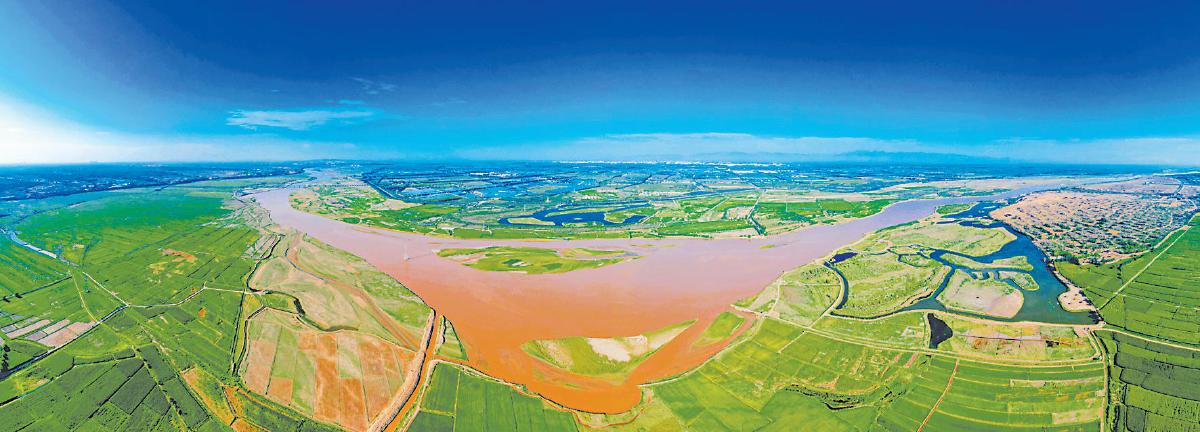
优良天数比率88.8%、PM2.5年均浓度25.9微克/立方米、黄河干流宁夏段连续9年保持Ⅱ类水质、空气质量连续8年达到国家二级标准、群众生态环境满意度 连续5年超90%……"十四五"规划收官之年,宁夏回族自治区以一组亮眼数据交出生态保护"硬核答卷",美丽中国先行区建设多点开花,污染防治攻坚成效 显著,美丽宁夏建设迈出坚实步伐。 2026年是"十五五"规划启幕之年,站在新的历史起点,宁夏将以生态环境保护治理攻坚年行动为抓手,聚焦美丽宁夏建设、生态环境保护督察反馈问题整 改、绿色低碳转型、生态环境安全等重点任务,真抓实干、持续奋进,确保"十五五"开好局、起好步。 生态安全形势保持平稳有序 宁夏生态"颜值"和环境"气质"双提升 2025年是"十四五"规划圆满收官的关键之年,更是宁夏生态环境保护事业攻坚克难、砥砺奋进的极不平凡之年。宁夏生态环境系统深入践行生态文明建设重 要理念,锚定核心任务精准发力,聚焦薄弱短板靶向攻坚,以"功成不必在我"的境界和"功成必定有我"的担当,推动"十四五"时期宁夏生态"颜值"持续提 升、环境"气质"稳步向好,圆满完成年度各项工作任务,顺利实现"十四五"生态环境保护规划圆满收官,为美丽宁 ...