
Zhong Guo Huan Jing Bao

Search documents
持续深入推进生态系统优化,不断把生态优势转化为发展优势
Zhong Guo Huan Jing Bao· 2026-01-26 05:38
在宏观尺度上,要基于生态安全格局优化生态系统空间布局,构建与国土空间格局相适应的生态安全网 络,守住自然生态安全边界。 实现这一目标,一要统筹"三区三线"空间布局。科学划定生态、农业、城镇空间,优化国土空间开发保 护格局,构建连续、完整、系统的生态安全屏障。二要推进自然保护地体系高质量发展。以国家公园建 设为引领,整合优化各类自然保护地,优化就地保护体系,完善迁地保护体系,提升对重点保护对象的 保护效能。三要强化生态保护红线的刚性约束。推动生态保护红线管控与国土空间规划有效衔接,实施 生态功能维护与系统保育,确保生态功能不降低。四要构建生态廊道与网络体系。通过建设跨区域生态 廊道,增强景观连通性,提升生态系统缓冲与屏障功能,不断完善生态安全网络体系。 党的二十届四中全会要求"加快经济社会发展全面绿色转型,建设美丽中国",明确指出"要持续深入推 进污染防治攻坚和生态系统优化"。"十四五"以来,我国生态环境治理体系不断完善,生态环境质量持 续改善。生态系统优化战略任务的提出,为更好实现美丽中国建设目标指明了路径。 改革开放以来,我国先后实施多项重大生态工程,生态恶化趋势得到根本扭转,国家生态安全屏障初步 形成。与 ...
AI重塑大气污染防治决策模式,北京大兴的“超脑”治污“进化史”
Zhong Guo Huan Jing Bao· 2026-01-26 01:53
Core Insights - The article discusses the integration of AI-assisted decision-making technology based on large language models in air pollution prevention, aiming to transform decision-making from reactive to proactive approaches [1]. Group 1: Technology Application and Initial Results - The Daxing District Ecological Environment Bureau has developed multiple air quality analysis agents, creating an intelligent closed-loop process of "perception-planning-execution-presentation" [2]. - The system can accurately identify user queries in natural language, such as pollution causes at specific locations and times, and link relevant meteorological data and pollution source information for deeper analysis [2]. - Workflow planning and routing have become more intelligent, allowing the system to break down complex requests into sub-tasks and automatically coordinate data queries and model calculations [2]. Group 2: Interactive Responses and Presentation of Results - The system generates readable and practical analysis results, including professional charts for PM2.5 events, and provides specific conclusions and recommendations for pollution inspection [3]. Group 3: Challenges and Issues - Limitations of large language models include risks of generating fabricated data and conclusions, which can affect decision-making accuracy [4]. - The current application of the intelligent agent is primarily focused on data queries and simple rule judgments, with decision accuracy in complex scenarios needing improvement [4][5]. - Data quality and heterogeneity issues hinder the intelligent agent's judgment and model simulation results, with current interactions being superficial rather than deeply integrated [5]. Group 4: System Optimization and Application Results - The Daxing District Ecological Environment Bureau has optimized the air quality analysis system by enhancing knowledge base construction and improving reasoning frameworks [6][7]. - A business-oriented AI-assisted decision-making platform has been established, integrating multiple intelligent agents for comprehensive analysis [8]. - The new system significantly improves data collection and analysis efficiency, allowing for rapid pollution source identification within five minutes [8]. Group 5: Future Outlook - The future of AI-assisted decision-making in air pollution prevention is expected to evolve with new scenarios and deeper functionalities, expanding from monitoring to comprehensive management systems [9]. - The integration of multi-source data and models will lead to a more intelligent and dynamic decision-making process, transitioning from experience-driven to intelligence-driven governance [9].
中山公用能源绿色转型的探索与实践
Zhong Guo Huan Jing Bao· 2026-01-26 01:14
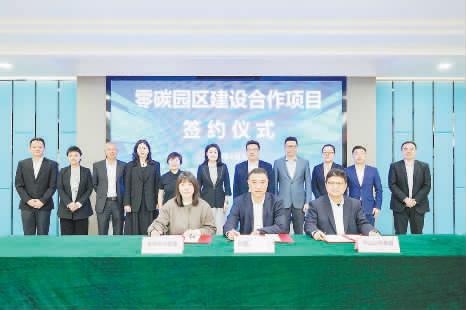
在国家"双碳"战略引领下,能源结构转型步入系统推进新阶段。广东省将"绿美广东"生态建设与"十五五"新 能源规划深度融合,为地方实践绘就蓝图。在此背景下,如何将战略蓝图转化为基层生动实践,成为关键课 题。中山公用能源发展有限公司(下称公用能源)以打造"城市绿色发展综合服务商"为目标,开展一系列富 有成效的探索,形成一套系统性强、操作性高的"公用能源实践"。 生态合作——公用能源与火炬工业集团签约。 生态合作——公用能源与中山市灯都智慧城市运营服务有限公司签约。 生态合作——公用能源与华为数字能源签约。 模式创新——构建绿色能源综合服务三步走路径 "公用能源实践"的首要特征,在于业务模式的递进式发展。从初期的绿色投资夯实资产基础,到构建智慧运 营能力实现效率跃升,进而通过生态合作整合资源、提供系统解决方案,最终形成协同发展的综合服务体 系。 绿色投资: 筑牢"压舱石",开拓"增长极" 公用能源以分布式光伏为核心抓手,坚持规模化发展,为向城市绿色发展综合服务商转型筑牢资产基石。 2023年成立至今,并网及在建的光伏、储能、充电桩项目累计容量突破400MWp,总投资规模超过15亿元, 总发电量达4.4亿千瓦时。 这份 ...


我们调查8174人后发现,激励青少年参与亲环境行为可以这样做……
Zhong Guo Huan Jing Bao· 2026-01-26 00:21
政策支持、奖惩机制等外部力量的有效规制可以引导个体形成稳定的亲环境行为。在培育青少年亲环境 行为的过程中,法律和政策作为社会规范能够为青少年的亲环境行为设定明确的标准,引导和限制其行 为,同时通过包括家庭、学校、社区、政府在内的多层次监督,形成"全景敞视"的监控效应,对青少年 环境行为施以可见性压力。通过设定奖励机制,可以有效激励青少年参与亲环境行为。同时,适当的惩 罚机制,如对破坏生态环境行为进行警告,能够有效抑制不当行为的发生。 作者单位:湖南科技大学 笔者所在课题组对8174位12岁—24岁青少年开展问卷调查发现,青少年亲环境行为呈现群体与空间的差 异化特征。调查发现,青少年亲环境行为处于高水平状态,但存在群体和空间上的差异性。从学历阶段 来看,中学阶段青少年的亲环境行为得分要高于大学阶段的青少年。从空间维度来看,青少年在个人、 公共生活空间和自然环境空间的亲环境行为表现存在差异。 调查认为,培育青少年亲环境行为的核心路径在于契合不同空间、不同学历段的培育需求,将内化模式 与外在模式协同推进。内化模式表现为"规范认知—规范认同—亲环境意愿—亲环境行为"的作用机制。 外在模式则通过惩戒监督机制、价值引导机 ...
“十五五”时期如何充分发挥生态环境政策对扩大内需、拉动增长的作用?
Zhong Guo Huan Jing Bao· 2026-01-25 23:33
Group 1: Economic Development Strategy - The core viewpoint emphasizes the importance of domestic demand-driven economic growth, with a focus on consumption and investment as key drivers for sustainable development [1] - The "15th Five-Year Plan" aims to enhance ecological policies to stimulate domestic demand and promote green transformation [1][3] Group 2: Green Investment and Infrastructure - The construction of ecological infrastructure is identified as a crucial engine for driving green domestic demand, with an estimated investment of 803.74 billion yuan in pollution control for 2024 [4] - The government is expected to play a leading role in guiding social capital towards ecological investments, creating new economic growth points [2][4] Group 3: Green Consumption and Standards - Activating green consumption is essential for linking high-level ecological protection with quality living, with new consumption scenarios emerging from the "Beautiful China" initiative [6][7] - The enhancement of ecological standards is necessary to stimulate greater green consumption, with a focus on electric vehicles and energy-efficient appliances [8][9] Group 4: Technological Innovation - Technological innovation is highlighted as a core driver for green transformation, with a focus on key technology breakthroughs and the commercialization of research outcomes [10] - The establishment of a national platform for ecological technology transfer aims to support enterprises in achieving green and low-carbon development [10] Group 5: Global Green Trade - The expansion of green trade is seen as a way to enhance domestic industries' international competitiveness, with projections indicating a significant market growth for green products by 2030 [11] - The strategy includes aligning domestic green standards with international ones to facilitate better integration into global green trade [11]
煤炭,不再只是燃料
Zhong Guo Huan Jing Bao· 2026-01-23 08:06
产业政策要协同发力。加快煤基新型合成材料、先进碳材料、可降解材料等高端化工产品技术的创新开 发与应用,并与绿电、绿氢、储能、二氧化碳捕集利用与封存等技术耦合发展,促进煤炭原料化与新能 源产业协同。 运用好创新激励机制,充分发挥骨干企业的引领带动作用。要鼓励企业、科研机构、高等院校跨领域深 度合作,构建产学研协同创新体系,加强煤炭清洁高效利用基础研究和核心技术攻关。争取和落实专用 装备、技术改造、资源综合利用等方面的优惠政策,加快企业改造升级步伐。要通过加大科技攻关力 度,突破制约煤炭从传统燃料向高附加值原料转变过程中的技术瓶颈,提升产品附加值。 笔者认为,企业作为煤炭产业转型主体,应该认清煤炭由燃料向原料转型的发展趋势,积极参与,主动 作为,既要从内部发力,也要努力争取外部支持。 转型的实现离不开多层次的政策支持。企业要积极争取、充分利用各级财政支持渠道,推进实施煤炭清 洁高效利用项目。相关部门要进一步健全完善相关金融政策,引导和吸引社会资本广泛参与煤炭清洁高 效利用项目,构建多元化的投融资渠道。 要发挥好技术标准的"指挥棒"作用。相关部门要系统明确煤炭清洁高效利用重点领域标杆水平和基准水 平,为煤化工企业指 ...
要蓝天也要腊味,给湘潭的做法点赞
Zhong Guo Huan Jing Bao· 2026-01-23 06:47
对一部分城市居民来说,享受腊味是传统,熏制腊味是生活的一部分,也是堵不住的民意。湘潭市的做 法就是"疏"的路径之一,很好地满足了居民亲自动手熏制腊味的愿望。保卫蓝天离不开必要的投资和项 目建设,地方政府要找准发力点,使投资效益最大化。居民也要积极参与、配合,牺牲一点便利,就近 使用公共设施,这种行为也是为生态环境改善做出自己的贡献。 城市的大气污染并不是哪一家企业或哪一个行业单独导致的,而是源于生产生活各方面的积累,既有工 厂排放的污染物,也与汽车尾气、餐饮油烟等关系密切。从这个意义上讲,大气污染物减排没有旁观 者,每一个人都置身其中,都应该为城市空气质量改善贡献力量。周围环境变好了,生活在其中的每一 个人也都会成为受益者。 湖南省湘潭市为满足居民熏制腊味的需要,设置了3个环保腊味集中熏制点,运行以来,已为80多户居 民提供免费服务。熏制点有柏树枝、米糠、谷壳等多种燃料可供选择,保留了腊制品的风味。熏制设备 全封闭作业,自动控温控湿,对油烟进行净化处理,污染少,火灾风险低,既保留了传统,又守护了蓝 天。 ...
落雪归林,北京公园的“顺势而为”藏着大智慧
Zhong Guo Huan Jing Bao· 2026-01-23 05:40
Core Insights - The "Snow Returns to the Forest" initiative in Beijing aims to transform snow from a waste product into an ecological resource, utilizing 70,200 cubic meters of snow for nurturing trees and promoting natural cycles [1][2] - This approach contrasts with traditional methods of snow removal that either harm the environment or waste valuable resources, showcasing a sustainable model for urban ecological management [1][2] Group 1: Ecological Practices - Beijing's parks, including the Summer Palace and the National Botanical Garden, have implemented strategies to retain snow for ecological benefits, such as using snow to hydrate plant roots and improve soil moisture [1] - The Summer Palace has converted ancient tree restoration wells into snow storage areas, while the National Botanical Garden has piled snow in tree areas to balance visitor access and water storage for trees [1] - The practices not only preserve the aesthetic value of snow but also enhance its ecological utility [1] Group 2: Long-term Ecological Strategies - The initiative serves as a replicable model for urban ecological governance, emphasizing the importance of adapting snow management to different regional functions [2] - The Beijing Park Management Center is establishing a long-term mechanism for utilizing rain and snow resources, aiming to ensure that every precipitation event contributes to ecosystem health [2] - The shift from reliance on de-icing agents to green snow removal practices highlights the significance of every action in ecological governance as a contributor to sustainable urban development [2]

无锡生态环境局的“换位跑”跑出什么?
Zhong Guo Huan Jing Bao· 2026-01-23 03:15
Group 1 - The core viewpoint emphasizes the importance of ecological environment supervision as a crucial measure to protect ecological boundaries and support enterprises in their green transformation [1][2] - The "immersive" approach taken by the Wuxi Ecological Environment Bureau, where officials experience the processes of hazardous waste management and permit applications, helps identify hidden challenges faced by enterprises [1][2] - The initiative fosters direct communication between government officials and enterprises, breaking down traditional barriers and allowing for genuine feedback on ecological regulatory needs [2][3] Group 2 - The Wuxi Ecological Environment Bureau plans to implement more precise regulatory measures in response to enterprises' requests for hazardous waste source control, enhancing the management of hazardous waste throughout its lifecycle [3] - Efforts will be made to streamline the radiation permit application process by simplifying materials, providing pre-application tutorials, and reducing procedural steps, thereby facilitating easier compliance for businesses [3] - The "position-switching" activity illustrates that understanding enterprises' perspectives can strengthen the synergy between ecological protection and economic development, encouraging more regions to adopt similar approaches for effective regulatory and service improvements [3]
别再忽视江河“毛细血管”!小微支流治理关乎你我亲水之乐
Zhong Guo Huan Jing Bao· 2026-01-23 01:43
Core Insights - The management of small and micro tributaries is crucial for improving water quality and achieving the goals of a beautiful China, but current governance shows significant shortcomings [1][2] Group 1: Current State of Water Environment - Major rivers and their tributaries have seen improvements in water quality and ecological governance, with many reaching the standards for beautiful rivers and lakes [1] - Small and micro tributaries face challenges such as pollution from dead livestock and garbage, inadequate monitoring, and poor water quality [1] Group 2: Causes of Poor Water Quality - Lack of awareness and emphasis on the importance of small tributaries leads to neglect of local water environments [1] - Absence of evaluation mechanisms for tributaries not included in national assessments contributes to poor management [1] - Illegal activities such as unauthorized excavation severely damage the ecology of small tributaries [1] Group 3: Recommendations for Improvement - Establish regular monitoring and evaluation mechanisms for key small tributaries at the municipal or county level to enhance environmental conditions [2] - Implement unified water resource management to prioritize urban and rural water needs while ensuring ecological water supply [2] - Promote wastewater recycling and conservation practices, and enhance public awareness of water conservation [2] Group 4: Deepening Water Environment Governance - Strengthen daily inspections and improve the cleanliness of riverbanks while enhancing sewage treatment capabilities [3] - Develop a monitoring system for pollution discharge points and conduct special actions to address black and odorous water bodies [3] - Implement ecological restoration measures and establish compensation mechanisms for ecological protection in river basins [3] Group 5: Promoting Water Culture - Enhance the understanding and promotion of water culture, utilizing local natural features and customs to strengthen cultural influence [3] - Initiate beautiful river and lake projects that cater to public needs for ecological spaces [3]