
Zhong Guo Huan Jing Bao

Search documents
“无证倒废料”不是小事!严管要注意这几点
Zhong Guo Huan Jing Bao· 2026-01-23 00:32
压紧压实产废单位主体责任。笔者发现有部分产废单位认为,相关法律法规仅要求从事危险废物收集、 贮存、利用、处置等活动的单位必须依法取得行政许可并符合相关条件,对固体废物产生单位相关责任 没有明确规定。实则不然,以工业固体废物为例,《中华人民共和国固体废物污染环境防治法》明确规 定,产生工业固体废物的单位委托他人运输、利用、处置工业固体废物的,应当对受托方的主体资格和 技术能力进行核实,依法签订书面合同,在合同中约定污染防治要求。因此,各地生态环境部门要压紧 压实产废单位主体责任,督促产废单位严禁将固体废物交给不具备相关主体资格和技术能力的个人处 置。对个人非法转移倾倒固体废物造成的法律后果,要依法追究产废单位的连带责任。 严格落实台账管理制度。随着我国经济社会发展和城镇化、工业化进程不断加快,产生的固体废物种 类、数量逐步增加,但实际管理中仍存在部分固体废物流向不明的问题。各地要督促固体废物处置相关 方做好台账管理工作,尤其是将固体废物交由具备相应主体资格和技术能力的机构处置的,产废单位的 管理台账要如实记录固体废物的种类、数量、流向等信息,处置机构的管理台账要如实记录固体废物运 输、利用、处置等信息。相关部门 ...
新标允许“协商排放”,企业为何还“不敢试”?
Zhong Guo Huan Jing Bao· 2026-01-22 23:24
Core Viewpoint - The new wastewater discharge standard for the food processing industry, effective from January 1, 2023, allows for collaborative agreements between food production companies and wastewater treatment plants, promoting a win-win situation, but companies express caution and concerns about implementation [1][2]. Group 1: Implementation Concerns - Companies are hesitant to experiment with the new standard due to fears of regulatory approval processes and potential penalties for exceeding discharge limits during trials [1][2]. - There is a significant anxiety regarding the clarity of the ecological environment regulatory and accountability system in supporting this innovative cooperative discharge model [2][3]. Group 2: Need for Clear Guidelines - The ecological environment department is urged to clarify approval processes and responsibility definitions to facilitate the transition to collaborative discharge [3][4]. - Establishing a transparent risk-sharing framework is essential, including a potential "pilot regulatory whitelist" for companies that comply with the new discharge agreements [3][4]. Group 3: Building Trust and Cooperation - Successful implementation of collaborative discharge depends on creating a "responsibility alliance" based on clear rules and mutual trust between companies and wastewater treatment plants [4]. - The ecological environment department must act as a fair arbiter and provide a safety net for compliant innovative attempts, transforming responsibility risks into predictable and manageable cooperative costs [4].
年轻干部“挑大梁”却遇三大难题?江苏射阳用“三招破局”
Zhong Guo Huan Jing Bao· 2026-01-22 06:44
为解决上述问题,射阳生态环境局坚持精准培育、实战锤炼、机制保障,赋能青年干部成长成才。 以精准培育提质,适配多元知识需求。构建精准培养体系,按岗位分类定制课程。对于执法岗位,强化 生态环境法律法规、行业生产工艺、无人机巡查等技能培训,增设"双碳"目标下生态环境监管模块;对 于监测岗位,聚焦大气、水质监测实操,以及新污染物检测技术等开展达标培训;对于管理岗位,侧重 培养跨部门协调、项目申报与政策解读能力。创新"线上+线下"模式,线上依托培训平台学习前沿知 识,线下复盘典型生态环境违法案件和应急处置事件,组织模拟执法办案、应急演练等,提升实战能 力。 随着美丽中国建设向纵深推进,对青年干部的培养也要及时跟进,使这支队伍兼具专业性、跨界视野与 创新能力,以胜任新形势下各项任务要求。 当前,县级生态环境部门在青年干部培养工作中面临一些挑战。一是基层实战能力不足,复杂场景应对 乏力。如江苏省盐城市射阳生态环境局部分年轻干部入职2年—3年便走上中层岗位,在面对跨部门协作 攻坚等任务时,常因统筹协调经验欠缺陷入被动。二是知识结构单一,岗位适配性不足。射阳生态环境 局年轻干部中,7人具备研究生学历,但多数专业局限于单一领域, ...
前瞻应对人工智能产业衍生的电子废物风险
Zhong Guo Huan Jing Bao· 2026-01-22 05:31
Core Insights - The rapid development of generative AI is driving a new wave of industrial transformation, becoming a significant force in the evolution of productive forces, but it heavily relies on computing infrastructure, particularly GPUs and servers, which are being updated at a pace far exceeding traditional IT equipment, leading to a surge in electronic waste and environmental risks [1][2] Group 1: Electronic Waste Generation - The lifespan of core AI hardware such as GPUs, CPUs, and server motherboards is typically short, facing obsolescence in about three years, which contributes to significant electronic waste generation [1] - It is predicted that from 2023 to 2030, electronic waste generated from generative AI could reach 5 million tons, including 1.5 million tons of printed circuit boards and 500,000 tons of server batteries, with an annual peak potentially reaching 2.5 million tons by 2030 [1] - The complex composition of this new type of waste includes precious metals like gold and silver, as well as hazardous substances such as lead, chromium, mercury, and polybrominated biphenyls, posing threats to soil, water, and human health if not disposed of properly [1] Group 2: Resource Misallocation and Waste - The rapid iteration of AI hardware, driven by Moore's Law and commercial competition, leads to the premature obsolescence of devices before they reach their physical lifespan, exacerbating resource misallocation and waste [2] - International technological barriers and supply chain disruptions force some regions to rely on outdated hardware to fill computing gaps, creating a vicious cycle of increased resource consumption and waste generation [2] - The phenomenon of redundant construction of computing power and repeated training of algorithms among enterprises further amplifies inefficient use of energy and hardware resources [2] Group 3: Governance and Policy Recommendations - Addressing the electronic waste risks from the AI industry is not merely an industry regulation issue but requires a comprehensive top-level design for solid waste management [3] - Recommendations include developing specialized management guidelines for AI-related electronic waste, incorporating core indicators into AI industry development plans, and establishing a lifecycle information traceability platform using IoT and blockchain technologies [3] - Policies should encourage green transformation in the industry through tools like green procurement and tax incentives, promoting eco-design practices among AI hardware manufacturers [4] - The responsibility for waste reduction and compliance in the AI hardware sector should be clearly defined, with large AI companies required to disclose key information regarding hardware ownership, retirement, and recycling [4]
深圳创新打造全国示范性核应急中心洗消站
Zhong Guo Huan Jing Bao· 2026-01-22 01:07
南海之滨,气象万千。在这里,改革开放的第一声春雷隆隆作响,也在这里,守护核安全的屏障被锻造得更加坚固。 近日,一项具有全国示范意义的核应急基础建设项目——深圳市大亚湾核应急中心洗消站,在紧锣密鼓地推进中呈现出清晰轮廓。这不仅是深圳市承接省级 下放46项核与辐射环境安全职权事项清单后,立足全国视野、率先打造的标杆性示范项目,更彰显了深圳市在核应急领域的担当与行动力。自接棒以来,深 圳市委、市政府高度重视,敢于担当,将核安全摆在突出位置,切实履行核安全责任,持续加大核安全投入与支持力度,深圳市生态环境局与大鹏新区立即 展开谋划,以勇于创新的精神,扎实推进建设,致力于将洗消站打造成为"全国标杆、全球领先"的核应急设施,充分展现深圳效率与先行示范的使命意识。 安全是发展的基石,核安全更是基石中的基石。核事故应急洗消是阻断放射性污染扩散、保障公众健康、恢复社会秩序的关键环节,洗消能力的短板,直接 影响到整个应急响应链条的最终效果与社会信心。"面对如此庞大的人口基数与高度复杂的应急撤离需求,现有依托早期建设的洗消设施,无论在容量、技 术还是布局上,都已难以有效支撑未来可能出现的大规模、高效率去污作业。"深圳市生态环境局核 ...

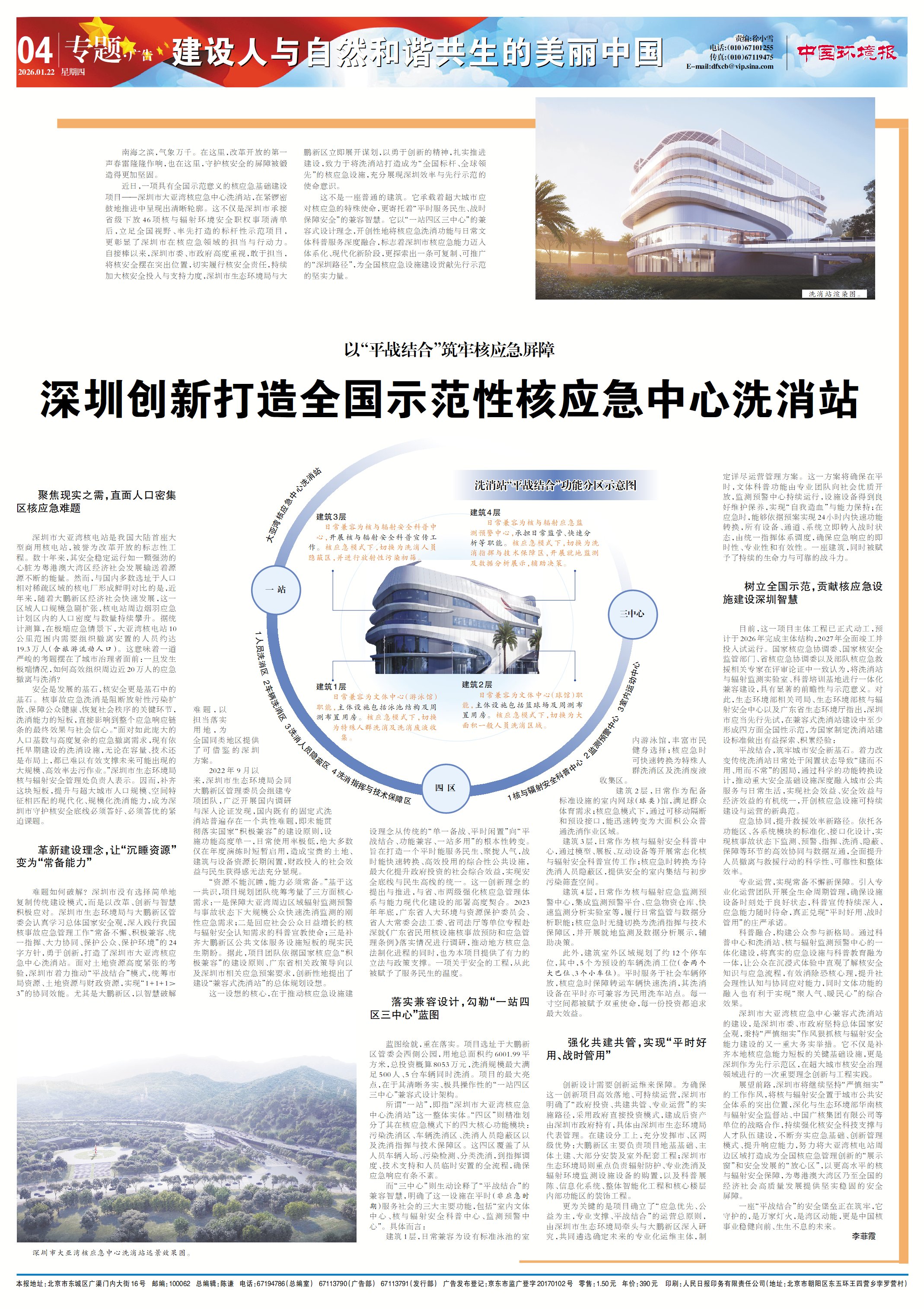
本报评论员:加快健全现代环境治理体系|贯彻落实全国生态环境保护工作会议精神④
Zhong Guo Huan Jing Bao· 2026-01-22 01:07
日前召开的全国生态环境保护工作会议指出,要加快健全现代环境治理体系,完善法律法规政策,持续 推进全民行动,不断加强队伍建设。新征程上,要进一步细化落实构建现代环境治理体系的目标任务和 政策措施,确保各项任务落地见效。 党的十八大以来,以习近平同志为核心的党中央开展了一系列根本性、开创性、长远性工作,加快推进 生态文明顶层设计和制度体系建设。刚刚过去的一年,生态环境法律法规标准体系进一步完善,积极编 纂生态环境法典,推动出台《生态环境监测条例》。开展生态环境保护全民行动,《关于进一步加强生 态文化建设的指导意见》印发实施,公布2025年"美丽中国,我是行动者"先进典型案例和新一批环保设 施向公众开放单位名单。干部队伍建设不断加强,以政治建设为统领,推进作风建设常态化、长效化, 持续锻造生态环境保护铁军。这一系列举措,为加快健全现代环境治理体系奠定了坚实基础。 党的二十届三中全会通过的《中共中央关于进一步全面深化改革、推进中国式现代化的决定》,对健全 生态环境治理体系作出专门部署,充分体现了党中央、国务院推进生态环境保护的坚定意志和坚强决 心,为更好聚焦美丽中国建设、健全生态环境治理体系提供了根本遵循。 今后五年 ...
如何推动碳普惠从激励工具向制度化机制转型?
Zhong Guo Huan Jing Bao· 2026-01-22 00:27
Core Insights - The article discusses the importance of integrating public and small-scale carbon reduction behaviors into the national carbon reduction system under the ongoing "dual carbon" goals, highlighting the carbon-inclusive mechanism as a significant institutional innovation that has shown positive results in engaging social participation but lacks a stable, sustainable market value realization mechanism [1][2] Group 1: Current Practices and Developments - The carbon-inclusive mechanism aims to quantify and visualize low-carbon behaviors of individuals, families, and small entities through digital accounting and incentives, thus creating a real incentive mechanism for climate governance [2][3] - Multiple provinces and cities have made progress in establishing carbon-inclusive systems, incorporating scenarios such as green travel, energy-saving behaviors, and low-carbon consumption into the accounting system, significantly enhancing public participation in carbon reduction [2][3] - The mechanism has raised public awareness of ecological protection and reinforced social recognition of green lifestyles, laying the groundwork for future integration with other systems and market development [3] Group 2: Challenges Faced - There are institutional issues that need to be addressed, such as the unclear boundaries between carbon-inclusive mechanisms and existing carbon emission trading markets, which could hinder the formation of market value [4][5] - The current design focuses on incentivizing participation without incorporating the carbon reduction achievements of the public and small enterprises into a tradable voluntary reduction system, leading to a lack of stable market signals and long-term participation expectations [4] - The connection between carbon-inclusive mechanisms and carbon finance remains insufficient, as most outcomes have not been integrated into financial product designs or green finance tools [5] Group 3: Policy Recommendations - It is suggested to clarify the usage boundaries of carbon-inclusive outcomes at the institutional level, ensuring that public and small enterprise carbon reduction results are recognized in broader voluntary reduction and carbon neutrality applications [6][7] - Establishing a trading mechanism for carbon-inclusive outcomes that allows quantified low-carbon behaviors to be realized in broader trading scenarios is recommended, requiring work on accounting standards and data traceability [6] - Accelerating the integration of carbon-inclusive outcomes into the green finance system is crucial for enabling financial institutions to recognize, assess, and price their value, thus supporting the sustainable development of the mechanism [7]
生态产品总值(GEP)核算制度建设的宜宾经验
Zhong Guo Huan Jing Bao· 2026-01-21 23:23
Core Insights - The article emphasizes the importance of ecosystem services such as clean air, clean water, and suitable climate as essential foundations for economic and social development, highlighting Yibin's role in ecological protection and green transformation [1][3] Group 1: GEP Accounting and Its Importance - Yibin has undertaken the accounting of Gross Ecosystem Product (GEP) as a strategic initiative to quantify ecological advantages and facilitate their conversion into economic benefits, providing a model for similar regions [1][3] - The GEP accounting results for 2023 and 2024 indicate a stable growth trend, demonstrating the supportive role of a high-quality ecological environment in regional development [3] - The value of regulation services is the highest among the GEP components, reflecting Yibin's successful ecological projects such as "Five Water Co-Governance" and land greening efforts [3] Group 2: Technical and Institutional Innovations - Yibin has implemented dual innovations in technical methods and institutional frameworks to enhance GEP accounting, focusing on accuracy, comparability, and usability [4][5] - The city has expanded the GEP accounting list to include local ecological products like solar energy and ancient trees, showcasing its unique ecological resources [4] - A dynamic localization calibration mechanism for parameters has been established, improving the accuracy and credibility of GEP accounting results [5] Group 3: Collaborative Framework and Data Management - A departmental responsibility division mechanism has been created, involving multiple government departments to ensure efficient and coordinated GEP accounting efforts [6] - A data collection and quality control mechanism has been developed, ensuring the authenticity and accuracy of GEP accounting data through standardized processes [6][7] - The "downward calculation" system allows for unified GEP accounting across districts, enhancing the quality of results and promoting regularized accounting practices [7] Group 4: Implications for Other Regions - Yibin's experience provides valuable insights for other cities facing similar challenges in GEP accounting, emphasizing the need for government commitment and inter-departmental coordination [8][9] - Localized technical adaptations and innovations are crucial for ensuring high-quality GEP results, encouraging other regions to adopt similar approaches [8] - The design of institutional frameworks should prioritize data reliability and application-oriented results, creating a complete feedback loop for continuous improvement in GEP accounting [9]
智慧监测、价值转化,丽水探索南方丘陵地区治水新路
Zhong Guo Huan Jing Bao· 2026-01-21 08:51
Core Viewpoint - Lishui City in Zhejiang Province has been recognized for its effective groundwater pollution prevention measures, achieving an "excellent" rating in a recent evaluation by the Ministry of Ecology and Environment, showcasing a successful transition from passive to proactive groundwater management [1][3]. Group 1: Groundwater Pollution Prevention Initiatives - Lishui became one of the first national pilot areas for groundwater pollution prevention in 2020, establishing a comprehensive governance system focused on "full-area investigation, smart monitoring, systematic prevention, and value transformation" [1][3]. - The city has implemented four pilot projects addressing various types of groundwater pollution, including the Suichang Huangtian Mine groundwater pollution control project and the Songyang landfill groundwater pollution prevention project [3][7]. Group 2: Monitoring and Data Collection - A comprehensive groundwater survey was initiated, covering 104 industrial enterprises and 10 drinking water sources, resulting in the establishment of a high-precision "groundwater environmental risk map" [8][10]. - Lishui has developed a monitoring network consisting of 38 online monitoring points and 205 manual monitoring points, enabling real-time analysis of groundwater quality and facilitating early warning systems [10][12]. Group 3: Technological Integration and Smart Management - The integration of IoT, big data, and AI into groundwater management has led to the establishment of a regulatory and resource management information system, enhancing the ability to trace pollution sources and predict trends [13][20]. - The "DMP Intelligent Protection" platform allows for real-time monitoring of groundwater parameters, ensuring rapid response to any anomalies detected [12][13]. Group 4: Economic Value and Sustainability - Lishui is exploring the inclusion of groundwater resources in the ecosystem GDP (GEP) accounting, aiming to quantify the ecological value of groundwater and promote sustainable management practices [20]. - The transformation of former pollution sites into educational and ecological resources demonstrates the potential for economic benefits derived from effective groundwater management [14][16].
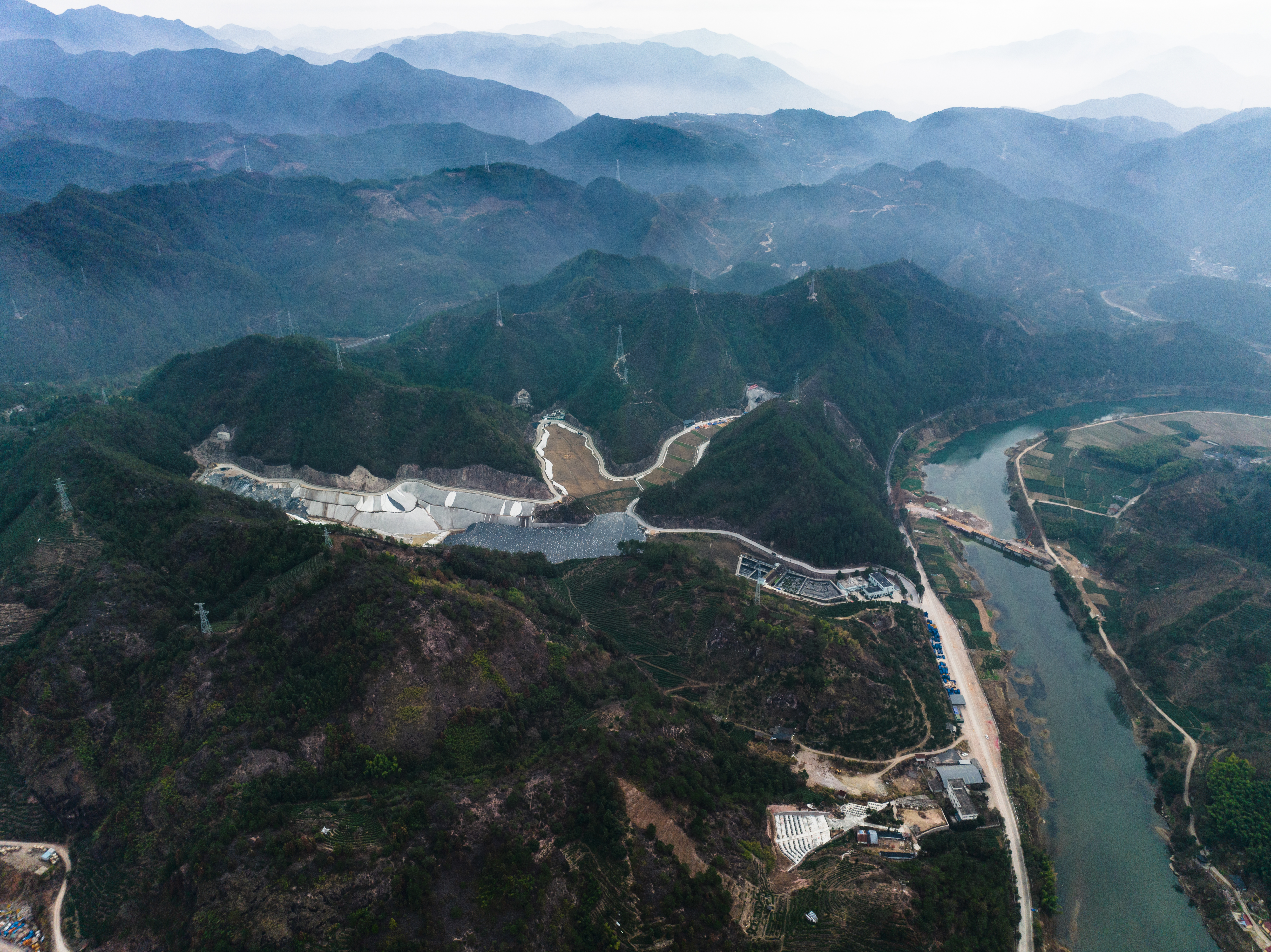
设在漓江支流边的考场,能否考出谁在“躺平”、谁在“攻坚”?
Zhong Guo Huan Jing Bao· 2026-01-21 05:50
干部是事业发展的中坚力量。精准识别敢担当、善作为、能攻坚的好干部,不仅关系队伍建设成效,更 直接影响事业发展成色。近年来,广西壮族自治区桂林市围绕漓江支流"消劣返清"攻坚战,探索建立组 织工作干部一线观察员机制,桂林市委组织部的一线观察员联合生态环境、水利等多部门组建专项观察 组,直插治理最前沿,在攻坚现场近距离、多维度考察干部,推动一批能扛事、善成事的干部在碧水保 卫战中脱颖而出。 考察识别干部,最终是为了用好干部、激发队伍活力。桂林着力打通"考察—使用—激励"闭环,让一线 实绩真正成为干部成长的"通行证"。通过鲜明树立"以实干论英雄、凭实绩用干部"的导向,打破论资排 辈的潜规则,倒逼干部主动走出"舒适区"、投身攻坚一线。当"躺平者"无处藏身、"实干者"脱颖而出, 队伍的精气神得到充分激发,就形成了比学赶超、争先创优的浓厚氛围。在这一机制的强力推动下,以 往耗时两年的治理任务,如今仅用8个月便全面告捷:5个治理项目、168个作业面悉数竣工,4条支流水 质稳定达标,直接惠及沿线18万居民。桂林还将观察纪实与干部选拔任用、培养储备、激励约束紧密挂 钩,对实绩突出、群众认可的干部,在提拔、晋升、评优等方面予以倾斜 ...